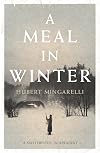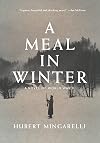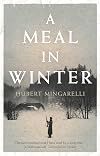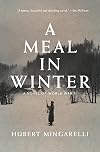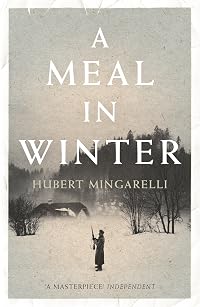
A Meal in Winter
by Hubert Mingarelli
On This Page
Description
This tale of the Holocaust "will make many think of the stories of Ernest Hemingway . . . a reminder of the power a short, perfect work of fiction can wield"(TheWall Street Journal).This timeless short novel begins one morning in the dead of winter, during the darkest years of World War II, with three German soldiers heading out into the frozen Polish countryside. They have been charged by their commanders with tracking down and bringing back for execution "one of them"—a Jew. Having show more flushed out a young man hiding in the woods, they decide to rest in an abandoned house before continuing their journey back to the camp. As they prepare food, they are joined by a passing Pole whose virulent anti-Semitism adds tension to an already charged atmosphere. Before long, the group's sympathies begin to splinter when each man is forced to confront his own conscience as the moral implications of their murderous mission become clear.
Described by Ian McEwan as "sparse, beautiful and shocking," A Meal in Winter is a "stark and profound" work by a Booker Prize nominated author (The New York Times).
"Sustains tension until the very last page." —Kirkus Reviews, starred review. show less
Tags
Recommendations












Member Recommendations
Member Reviews
A sparse little novella by French author Hubert Mingarelli, ably translated into English by Sam Taylor. Extremely short, like a one-act play, it tells us of one twenty-four hour period in occupied Poland in World War Two. Three ordinary German soldiers are part of a unit which is devoted to 'hunting' and 'shooting' duties: that is, either capturing Jews hiding in the area or executing those captured back at base. Disliking both, the three manoeuvre themselves into the more agreeable hunting duty, and set out into the winter wilderness.
What follows is a series of similar value judgments in which they weigh up the various pros and cons of their different actions, the story framed around the preparation of a simple meal of soup in an show more abandoned Polish hovel. These judgments don't take on a moralistic or philosophical tone – i.e. is it right or good to do such-and-such a thing – but rather focus on stuff like whether they are hungry, or sad, or reluctant to do hard work. This is the main strength of this short book – the actions taken by the characters are based on what ordinary, real people might do in those situations. These are not straw men erected by Mingarelli to lecture us on morality.
Consequently, despite the book's short length, we get some very real human characters sketched out and it all culminates in a vivid and uncomfortable image of our basic, and yet highly complex, humanity. The stark reality the characters face up to, admit to, and – sometimes – submit to, is the main impression we get from the book. Mingarelli is also great at conjuring in very few words a genuine feel for the surroundings: the reader feels the cold of the Polish winter and the hunger of the soldiers and their prisoner, the heat of the soup and the anticipation the soldiers feel towards their meal.
Despite the book being a good example of sparse storytelling – told in a way the likes of Hemingway might have done – It didn't impress me as much as I had thought it would. Maybe it was just overhyped – reviews of the book seem to be universally effusive – but I felt it could have been fleshed out a bit more. More than sparse it feels short, like a Reader's Digest version of a longer story. My conviction of this was particularly strong towards the end, when it seems like the soldiers' decision on the fate of the Jewish prisoner was wrapped up a bit too hastily.
My response to A Meal in Winter is unreservedly positive; considering how short it is, it is remarkable how much of it seeps into your bones in so short a time. I always feel that simple stories are the best, but this story took a complex idea and stripped it back just a little bit too much. I had the niggling feeling that even with just an extra ten or twenty pages I would be joining all the effusive critics. I'm still in their company, but I don't share their zeal. show less
What follows is a series of similar value judgments in which they weigh up the various pros and cons of their different actions, the story framed around the preparation of a simple meal of soup in an show more abandoned Polish hovel. These judgments don't take on a moralistic or philosophical tone – i.e. is it right or good to do such-and-such a thing – but rather focus on stuff like whether they are hungry, or sad, or reluctant to do hard work. This is the main strength of this short book – the actions taken by the characters are based on what ordinary, real people might do in those situations. These are not straw men erected by Mingarelli to lecture us on morality.
Consequently, despite the book's short length, we get some very real human characters sketched out and it all culminates in a vivid and uncomfortable image of our basic, and yet highly complex, humanity. The stark reality the characters face up to, admit to, and – sometimes – submit to, is the main impression we get from the book. Mingarelli is also great at conjuring in very few words a genuine feel for the surroundings: the reader feels the cold of the Polish winter and the hunger of the soldiers and their prisoner, the heat of the soup and the anticipation the soldiers feel towards their meal.
Despite the book being a good example of sparse storytelling – told in a way the likes of Hemingway might have done – It didn't impress me as much as I had thought it would. Maybe it was just overhyped – reviews of the book seem to be universally effusive – but I felt it could have been fleshed out a bit more. More than sparse it feels short, like a Reader's Digest version of a longer story. My conviction of this was particularly strong towards the end, when it seems like the soldiers' decision on the fate of the Jewish prisoner was wrapped up a bit too hastily.
My response to A Meal in Winter is unreservedly positive; considering how short it is, it is remarkable how much of it seeps into your bones in so short a time. I always feel that simple stories are the best, but this story took a complex idea and stripped it back just a little bit too much. I had the niggling feeling that even with just an extra ten or twenty pages I would be joining all the effusive critics. I'm still in their company, but I don't share their zeal. show less
A MEAL IN WINTER: A NOVEL OF WWII, by Hubert Mingarelli (translated from the French by Sam Taylor), is a stark, dark little book, a novella, actually, at less than 140 pages. But it packs an emotional punch with its small story of a German Army unit garrisoned in an unnamed Polish village in winter. Their mission is simple, to find Jews and summarily execute them. The method was also simple: lay the victim on his stomach and shoot him in the back of the head. The Holocaust after all was not just camps, gas chambers, and ovens. Sometimes it was just a bullet to the head.
Mingarelli's novel seems almost as simple. Three of the soldiers have become sickened by their work as executioners, and convince their commander to let them become the show more hunters instead. So they set off into the woods to find some Jews. If they succeed, they will be relieved of that other, more onerous chore of killing.
The three do find a young Jew hiding in a hole in the ground in the forest. They bring him to an abandoned hut where they seek shelter from the killing winter cold, manage to build a fire and put together a meal from ingredients pilfered from the unit mess - a salami, corn meal, an onion, bread. And later they add a generous portion of 'potato alcohol' contributed by a lone Polish soldier who shows up with his dog. There are subtle elements here of Hansel and Gretel, the Last Supper, and Stone Soup, as well as shreds of Remarque's THREE COMRADES, shown in the relationship between the three soldiers, who argue over whether to turn the Jew in, or let him go. After they allow their prisoner to share their meager meal, that decision becomes even harder.
The unnamed narrator is one of the soldiers; the other two, Emmerich and Bauer, are both older, over forty. Emmerich worries about his son. Bauer seems unpredictable and dangerous. The narrator might be considered the conscience of the group. He is telling the story looking back, as he already knows what will happen to the trio come Spring.
These characters are as real as life, a pretty good trick in under 150 pages. And the story itself, despite its brevity, is very unsettling, with its young narrator trying desperately to come to terms with what he's done -
"I wanted to remember a prayer I could say ... but all that came to mind were odd words, just little remnants of prayers ... I couldn't remember a whole prayer, but I did what I could with those remnants."
Because this is a book about conscience, about consequences - a tiny slice-of-life look at genocide, at the Holocaust. I will recommend it highly.
(P.S. This review is based on a reading of The New Press edition of 2016.)
- Tim Bazzett, author of the memoir, BOOKLOVER show less
Mingarelli's novel seems almost as simple. Three of the soldiers have become sickened by their work as executioners, and convince their commander to let them become the show more hunters instead. So they set off into the woods to find some Jews. If they succeed, they will be relieved of that other, more onerous chore of killing.
The three do find a young Jew hiding in a hole in the ground in the forest. They bring him to an abandoned hut where they seek shelter from the killing winter cold, manage to build a fire and put together a meal from ingredients pilfered from the unit mess - a salami, corn meal, an onion, bread. And later they add a generous portion of 'potato alcohol' contributed by a lone Polish soldier who shows up with his dog. There are subtle elements here of Hansel and Gretel, the Last Supper, and Stone Soup, as well as shreds of Remarque's THREE COMRADES, shown in the relationship between the three soldiers, who argue over whether to turn the Jew in, or let him go. After they allow their prisoner to share their meager meal, that decision becomes even harder.
The unnamed narrator is one of the soldiers; the other two, Emmerich and Bauer, are both older, over forty. Emmerich worries about his son. Bauer seems unpredictable and dangerous. The narrator might be considered the conscience of the group. He is telling the story looking back, as he already knows what will happen to the trio come Spring.
These characters are as real as life, a pretty good trick in under 150 pages. And the story itself, despite its brevity, is very unsettling, with its young narrator trying desperately to come to terms with what he's done -
"I wanted to remember a prayer I could say ... but all that came to mind were odd words, just little remnants of prayers ... I couldn't remember a whole prayer, but I did what I could with those remnants."
Because this is a book about conscience, about consequences - a tiny slice-of-life look at genocide, at the Holocaust. I will recommend it highly.
(P.S. This review is based on a reading of The New Press edition of 2016.)
- Tim Bazzett, author of the memoir, BOOKLOVER show less
This is a grim and grueling book, with overtones of "Waiting for Godot" and "Mother Courage". The narrator and his comrades are likeable enough, except for being Nazis, and the prosaic details of trying to cook a meal in the dead of winter makes them sympathetic, except that this is happening in the context of genocide. It's especially challenging to read now, when people in the majority white culture in the US are being confronted with their complicity in systemic racism: Bauer and Emmerich and the narrator seem like decent enough fellows, mostly concerned with eating and smoking and keeping warm and worried about Emmerich's son back home, troubled by participating in the murder of Jews; but they are unquestioning participants in show more genocide, trying to minimize their own complicity (better to hunt and retrieve Jews than actively shoot them!) but terrified of challenging their superiors in even small things, much less in the entire reason that they're stationed in Poland. It's a study in cowardice and humanity and complicity and obedience, in accepting one's part as a tiny cog in a giant wheel of evil cruelty and trying just to get by without suffering from too many nightmares for the compromises that we make. show less
An account of three German soldiers whose task on a bitterly cold winter day is to hunt down Jews in hiding and bring them back to the Polish concentration camp where they are based, for an inevitable end. This unenviable task is better than the alternative: staying in camp to shoot those who were found the previous day. They talk - about the teenage son of one of them - and they find just one Jew. Is he their enemy, deserving his fate, or is he just like them, a young man doing his best to survive? What if they return to camp with nobody to show for their day's hunting? As the men retreat to an abandoned cottage to prepare a meagre meal, their hatred and fear jostle with their well-submerged more humane feelings to provide the rest of show more the drama for this short, thought provoking book. show less
This short novel is both insidious and devastating – but you have to read it. It is insidious, because it tries to get you to empathise with three members of one of the Nazi “einsatzgruppen” operating in Poland during the second world war; and it is devastating because it illustrates how one group of human beings can convince themselves, and maintain the conviction, that others are less than human. The novel describes a day in the lives of one of the death squads that went out hunting and murdering Jews hidden in the forests. Rather than describing them as the archetypal heartless Nazi killers that we have become all too familiar with, the author treats them as real people, each with their own individual needs and problems. I show more found myself fighting the temptation to sympathise with their concerns.
Hitler’s propaganda machine prepared the way for the Shoah by the relentless repetition of the message that Jews were “untermenschen”, sub-human. It was this that allowed regular Germans to participate in mass-murder or – at best – close their eyes to it; and this same tactic has since been used by the perpetrators of other genocidal projects, like the Serbs’ in Bosnia and the Hutus’ in Ruanda. The apparent empathy with which our author strives to get inside the hearts and minds of the three SS protagonists – in contrast to the way that the Jew in the story is treated purely as an object with no subjective presence - in the end serves to expose the lies and the excuses. No one was really taken in by the propaganda; it served their own interests to pretend to believe it; but it required conscious effort and awareness in order to maintain that pretense. show less
Hitler’s propaganda machine prepared the way for the Shoah by the relentless repetition of the message that Jews were “untermenschen”, sub-human. It was this that allowed regular Germans to participate in mass-murder or – at best – close their eyes to it; and this same tactic has since been used by the perpetrators of other genocidal projects, like the Serbs’ in Bosnia and the Hutus’ in Ruanda. The apparent empathy with which our author strives to get inside the hearts and minds of the three SS protagonists – in contrast to the way that the Jew in the story is treated purely as an object with no subjective presence - in the end serves to expose the lies and the excuses. No one was really taken in by the propaganda; it served their own interests to pretend to believe it; but it required conscious effort and awareness in order to maintain that pretense. show less
In sparse, precise language, Mingarelli tells the tale of three Germans out hunting Polish Jews in order to avoid an activity which makes them sick--the mass shooting of Jews who have been brought into a camp. They are ordinary men doing truly terrible things. They know they are doing terrible things and it makes them sick. In the meantime, they worry about eating, and staying warm. They aren't hateful anti-semitics, but friends who care about each other and are just trying to get by the best they can in a horrible situation. However, when given the chance to do something humane, they choose to do what is easiest. It is a disturbing, but rather remarkable book.
Short and compelling, A Meal in Winter tells the story of three German soldiers hunting for Jews in the winter Polish landscape. They find one hiding in a hole and take him into custody, but then they decide to rest in an abandoned hovel and pool their meager resources to make a meal. Everything becomes about the food and the meal until the little group is joined by a passing, anti-Semitic Pole who adds plenty of tension to the situation.
I'm not sure I can explain why this book is so compelling. On the one hand this spare story is beautiful and haunting, on the other hand it is devastating and, as one reviewer put it, unconsoling. It may end up my book of the year.
I'm not sure I can explain why this book is so compelling. On the one hand this spare story is beautiful and haunting, on the other hand it is devastating and, as one reviewer put it, unconsoling. It may end up my book of the year.
Members
- Recently Added By
Lists

Top Five Books of 2020
982 works; 350 members

EU Fiction: 1950-2022
223 works; 70 members
Author Information

24 Works 531 Members
Some Editions
Awards and Honors
Common Knowledge
- Canonical title
- A Meal in Winter
- Original title
- Un repas en hiver
- Original publication date
- 2012 (Original French) (Original French); 2013 (English translation) (English translation)
- Important places
- Poland
- Important events
- World War II
- Original language
- French
Classifications
- Genres
- General Fiction, Fiction and Literature, Historical Fiction
- DDC/MDS
- 843.914 — Literature & rhetoric French Literature French fiction 1900- 20th Century 1945-1999
- LCC
- PQ2673 .I467 .R4713 — Language and Literature French, Italian, Spanish and Portuguese literatures French literature Modern literature 1961-2000
- BISAC
Statistics
- Members
- 287
- Popularity
- 112,477
- Reviews
- 26
- Rating
- (3.92)
- Languages
- 7 — Catalan, Dutch, English, French, German, Italian, Spanish
- Media
- Paper, Ebook
- ISBNs
- 19
- UPCs
- 1
- ASINs
- 7