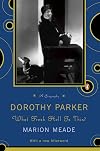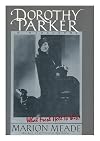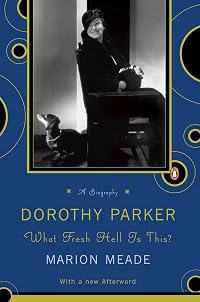
Dorothy Parker: What Fresh Hell Is This?
by Marion Meade
On This Page
Description
Chronicles the life of author and critic Dorothy Parker, discussing her literary influences, battle with alcohol, divorces, affairs, career highs and lows, suicide attempts, and other related topics.Tags
Recommendations














Member Reviews
It’s hard to figure out just what to make of Dorothy Parker. She was a charter member of the Algonquin Round Table, sort of a 20th century version of the Mermaid Tavern; one of the most incisive book and drama critics of her time (“This is not a book to be tossed aside lightly. It should be thrown with great force.”); an award-winning short story writer; and a poet of many memorable verses (in the “Portable” series of collected works, the only three that have continuously remained in print are The Portable William Shakespeare, The Portable King James Bible, and The Portable Dorothy Parker; that’s not bad company to be in).
At the same time, her personal life was disastrous. She was attracted first to aristocratic seducers show more and later to much younger men (“Ducking for apples – but for a typographical error, it’s the story of my life”); an alcoholic and chain-smoker; survivor of three suicide attempts (“Razors pain you / Rivers are damp / Acids stain you / Drugs cause cramp / Guns aren’t lawful / Nooses give / Gas smells awful / You might as well live”); pathologically unable to meet a deadline; a dog lover but unwilling to take the time to train them (when one of her dogs defecated on the carpet in a exclusive hotel, the manager rushed up and shouted “Mrs. Parker, look what your dog did!”. She looked him in the eye, replied “No, I did that” and stalked off.); and perennially sponging off her friends whether she was making money at the time or not.
As in most really good biographies, the author (Marion Meade) is transparent; she just reports the facts and lets the story tell itself. If you read this book without ever reading any of Dorothy Parker’s poetry, you might be puzzled how Parker could ever be thought worthy of any acknowledgement at all, much less a postage stamp; if you read her poetry without knowing her life story you’d be missing a lot. Do both.
“Life is a glorious cycle of song
A medley of extemporanea
And love is a thing that can never go wrong
And I am Marie of Roumania” show less
At the same time, her personal life was disastrous. She was attracted first to aristocratic seducers show more and later to much younger men (“Ducking for apples – but for a typographical error, it’s the story of my life”); an alcoholic and chain-smoker; survivor of three suicide attempts (“Razors pain you / Rivers are damp / Acids stain you / Drugs cause cramp / Guns aren’t lawful / Nooses give / Gas smells awful / You might as well live”); pathologically unable to meet a deadline; a dog lover but unwilling to take the time to train them (when one of her dogs defecated on the carpet in a exclusive hotel, the manager rushed up and shouted “Mrs. Parker, look what your dog did!”. She looked him in the eye, replied “No, I did that” and stalked off.); and perennially sponging off her friends whether she was making money at the time or not.
As in most really good biographies, the author (Marion Meade) is transparent; she just reports the facts and lets the story tell itself. If you read this book without ever reading any of Dorothy Parker’s poetry, you might be puzzled how Parker could ever be thought worthy of any acknowledgement at all, much less a postage stamp; if you read her poetry without knowing her life story you’d be missing a lot. Do both.
“Life is a glorious cycle of song
A medley of extemporanea
And love is a thing that can never go wrong
And I am Marie of Roumania” show less
This book reminds me of several others I've read about famous women - they're really good with the history, the details, the research, and well written - but because of the detail you know that this woman was NOT an easy person to really know, to befriend, or to be in the same room with. It's not just that Parker's depressions are sad - it's also that she could be a mean drunk, and loved to talk behind people's backs, even if those people were her friends. There's no denying that she could be self-centered and melodramatic. Add to this her inability to manage money and to make enough to support herself on her writing - not counting her Hollywood scriptwriting days. In fact it was that scriptwriting (and the many causes she gave time to) show more that probably kept her from producing more of her own writing.
You don't need to have read all or even a great deal of Parker's writing to find this book interesting. (Though it will make you want to read more, and I recommend this.) The woman definitely did not lead a dull life. You will have to read about suicide attempts, abortion, miscarriage, and many, many depressions. And lots of drinking. That was one of the side effects of Prohibition - lots of alcoholism. Everyone drank a lot, but the ones who made a career of it (and survived) were frightening.
Do I like Parker any less now that I know a bit more about how unlikeable she could be? Not really. I mean, I wouldn't want to live with the woman, that's for sure, but I still appreciate her writing, and really love her reviews of books and plays. There seem to be a large number of very creative people, many of them writers, who I feel the same about, once I read a really detailed biography. Especially one that gives you a lot of the facts, whether they make the subject look good or not. I'd actually rather have the whole of the person's history rather than the "edited to make the subject look good" type.
I also have to empathize with how much of her time was spent in wanting to write, yet procrastinating, yet hating that and wishing the writing was done, and yet hating to get around to writing. And she was a severe critic of herself, and would revise and rewrite constantly. A vicious cycle that reminds me of churning out work in graduate school. Sometimes it's good to be reminded that there is a lot of work done to produce even a little writing.
Really thorough endnotes on each chapter with citations, many of them interviews. Lots of evidence of research here. Well worth reading the notes for the occasional extra story and the cited books to track down. (They really will have to change future endnotes by page number - this does NOT work for ebook readers. It would take me forever to figure out where a numerical page is located unless I track down the paper book.)
Whenever I add this many quotes? You know I'm an engaged reader.
From the acknowledgments:
So the first take away, even before starting the book, is that Parker didn't make it easy for her biographers. This is also just the kind of information I appreciate a biographer passing along, both because it allows the reader an idea of how much work was done behind the scenes, and because it gives you a better idea of what references were used than just a written bibliography.
From Parker's job at Vogue writing captions for photos:
Discussing Parker's "Why I Haven't Married:"
Parker developing her writing style:
(20% in)
About Parker's writing process (20% in):
...Set asides! (I'll set aside various books sometimes, to pickup and read later.) 1) When things got a bit bleak and depressing in Parker's life and I needed to have something more upbeat to read for the holidays, and 2) I realized that reading a book on holiday around relatives meant being interrupted a LOT and for that type of reading a book like this was much better suited.
But I am really enjoying this biography, just want to be able to sit and read it uninterrupted, and the time is not right for that. Yet.
...Another thing keeping me from reading this quickly - things in the text that are referred to that I have to go look up. And, thanks to the wonder of YouTube, Parker's close friend Robert Benchley's films from the 1920s are online:
The Treasurer's Report: YouTube, Wikipedia
The Sex Life of the Polyp: YouTube, Wikipedia
...Marriage to second husband and work as screenwriting team (49% in):
...About Hellman's account of Parker testifying at HUAC (55% in):
...And I spoke too soon. Some paragraphs later (55% in):
...Randomly here're some modern photos (and an older one) of the Pennsylvania home Dorothy and Alan bought. "The house was modified and expanded in the 1990s; but the original parts of the home from the 18th and 19th Century are mostly intact." - so no more violent shades of red in the living room.
...Another reminder of why the book is sometimes hard (for me) to read - Parker is often depressed. And not mildly so. (58% in) After they'd liked in one California house in Coldwater Canyon for two years:
...It's really sad to me that Parker did so much fund raising work for (among other things) the Spanish Civil War, to help the Spanish Republicans who were fighting the fascists (for ambulances, milk for children, etc.), and then to help the refugees when the fascists won. Not a lot of attention was or is paid to this war in the US, and Parker was always very quiet about her work in this sort of thing. People were always very dismissive of her causes, and many insisted she didn't care about anyone but herself. Which I can't buy after reading about how much time she devoted to such charity work.
...Untangling the Algonquin Round Table attendee's lives after the table (64% in):
...I would bet that most people don't know this about Parker. When she's in her 70s and has various ailments (79% in):
...Frank Sullivan, letter to a friend (82% in):
You don't need to have read all or even a great deal of Parker's writing to find this book interesting. (Though it will make you want to read more, and I recommend this.) The woman definitely did not lead a dull life. You will have to read about suicide attempts, abortion, miscarriage, and many, many depressions. And lots of drinking. That was one of the side effects of Prohibition - lots of alcoholism. Everyone drank a lot, but the ones who made a career of it (and survived) were frightening.
Do I like Parker any less now that I know a bit more about how unlikeable she could be? Not really. I mean, I wouldn't want to live with the woman, that's for sure, but I still appreciate her writing, and really love her reviews of books and plays. There seem to be a large number of very creative people, many of them writers, who I feel the same about, once I read a really detailed biography. Especially one that gives you a lot of the facts, whether they make the subject look good or not. I'd actually rather have the whole of the person's history rather than the "edited to make the subject look good" type.
I also have to empathize with how much of her time was spent in wanting to write, yet procrastinating, yet hating that and wishing the writing was done, and yet hating to get around to writing. And she was a severe critic of herself, and would revise and rewrite constantly. A vicious cycle that reminds me of churning out work in graduate school. Sometimes it's good to be reminded that there is a lot of work done to produce even a little writing.
Really thorough endnotes on each chapter with citations, many of them interviews. Lots of evidence of research here. Well worth reading the notes for the occasional extra story and the cited books to track down. (They really will have to change future endnotes by page number - this does NOT work for ebook readers. It would take me forever to figure out where a numerical page is located unless I track down the paper book.)
Whenever I add this many quotes? You know I'm an engaged reader.
From the acknowledgments:
"Since Dorothy Parker herself left no correspondence, manuscripts, memorabilia, or private papers of any kind, I have had to reconstruct her life by talking to those who knew her and by retrieving material from various institutions, attics, trunks, and the personal files of people who considered her letters worth preserving. ...This biography was written with the cooperation of Lel Droste Iveson, Dorothy Parker's niece, who generously shared with me memories of her aunt an details of the family's history, as well as Parker's childhood letters, verse, and a scrapbook-photo album compiled over the course of many years.
So the first take away, even before starting the book, is that Parker didn't make it easy for her biographers. This is also just the kind of information I appreciate a biographer passing along, both because it allows the reader an idea of how much work was done behind the scenes, and because it gives you a better idea of what references were used than just a written bibliography.
From Parker's job at Vogue writing captions for photos:
(7% into the ebook) "..."There was a little girl who had a little curl, right in the middle of her forehead. When she was good she was very very good, and when she was bad she wore this divine nightdress of rose-colored mousseline de soie, trimmed with frothy Valenciennes lace." To presume that Vogue readers might be having sex was surely an idea to set Palm Beach and Newport reeling. ...Only at the last moment, in proofs, did someone catch and exterminate the subversive caption.That was around 1915-1919 - and what a long way our magazines have come in terms of content...
Discussing Parker's "Why I Haven't Married:"
(8% in) "...After skewering half a dozen men with the collective appeal of a dish of boiled turnips, she went on to present a final portrait, one of special interest because he was the only man to merit her praise. ...He was utterly confectionery, "an English-tailored Greek God, just masterful enough to be entertaining, just wicked enough to be exciting, just clever enough to be a good audience."And in reality this was apparently Edwin Pond Parker II, her future husband.
Parker developing her writing style:
(8% in) "...The formula, subsequently summed up by Robert Benchley as the Elevated Eyebrow School of Journalism, was by no means simple to master. You could write about practically any subject you wished, no matter how outrageous, so long as you said it in evening clothes.
...It took Dorothy only a few months to get the hang of Crownie's [Frank Crowninshield] style. Then she spent the next decade trying to unlearn it."
(20% in)
"...In her verse as in her fiction, she always wrote about herself or else drew portraits of people she knew, describing them so vividly that everyone in her circle knew exactly to whom she was referring. She was almost incapable of doing purely imagined characters or situationsThis may be why I've always had a really hard time reading Parker's short stories - there are parts of them that feel very painfully real, and you do feel that the author has somehow experienced them. And when I say painful I mean that in the way of emotional pain. I can only remember one or two stories of hers that were amusing - most were depressing. Which is why I love Parker's theater and book reviews so much more.
About Parker's writing process (20% in):
"Writing fiction was a torturous process for her. When she insisted that it took her six months to complete a story, it was often the case. Instead of making a first draft, she thought out each paragraph beforehand and then laboriously wrote it down in longhand sentence by sentence. She may have been careless about many aspects living, but she was obsessively careful, a perfectionist, in her writing. Nothing pleased her and she couldn't "write five words but that I change seven." She named her characters from the obituary columns or the telephone book..."
...Set asides! (I'll set aside various books sometimes, to pickup and read later.) 1) When things got a bit bleak and depressing in Parker's life and I needed to have something more upbeat to read for the holidays, and 2) I realized that reading a book on holiday around relatives meant being interrupted a LOT and for that type of reading a book like this was much better suited.
But I am really enjoying this biography, just want to be able to sit and read it uninterrupted, and the time is not right for that. Yet.
...Another thing keeping me from reading this quickly - things in the text that are referred to that I have to go look up. And, thanks to the wonder of YouTube, Parker's close friend Robert Benchley's films from the 1920s are online:
The Treasurer's Report: YouTube, Wikipedia
The Sex Life of the Polyp: YouTube, Wikipedia
...Marriage to second husband and work as screenwriting team (49% in):
"...Those who later claimed that Alan [Campbell] rode on Dorothy's coattails in Hollywood could not have been more mistaken... ...In Hollywood from the start he showed himself to be a dogged worker determined to master a new craft. His strength turned out to be construction. He would first block out a scene, then labor to pull it together on paper so that Dorothy could follow along and inject amusing dialog. Without her, Alan's scenes would have fallen flat, but without him there would have been no scene. As a team they were a perfect complement."After having read so much about Parker's depression and difficulties it's really a relief that she found Campbell and was happy with him. Well, at this point anyway.
...About Hellman's account of Parker testifying at HUAC (55% in):
"...As with so many of Lillian Hellman's memories, this simply was not true. Dorothy was not among those who received a pink slip in 1947, nor was she summoned as a witness in the HUAC hearings during the early fifties, because the government must have known that it had a weak case. Dorothy herself made two rather emphatic statements on the subject. ...Fourteen years later, she denied having ever been a party member, although it is easy to understand that the circumstances under which she made the statement might have warranted the stretching of the truth."Parker had been active in fundraising for various anti-Nazi and anti-fascist causes, and wasn't at all careful who she was affiliating herself with. But then a lot of people then weren't asking those sorts of questions, until the HUAC/Red Scare got rolling. After many accounts of her political leanings, attendance of speeches/meetings, and hosting dinners, it does seem amazing that she wasn't called before HUAC. Meade provides information on what the FBI had in its files about her - and it states that others said she was a party member, but there was no proof. So it seems a near miss for her, in light of how many other writers' careers were ruined.
...And I spoke too soon. Some paragraphs later (55% in):
"Accusations such as [Martin] Berkeley's destroyed Dorothy's career during the fifties. Unable to find work as a screenwriter, she paid dearly for her transgressions, real or invented, but she never called attention to her plight, never singled herself out as exception or in any way worthy of admiration."Meade then goes on to compare her to Hellman who was apparently one to "exalt her behavior." In 1950 Parker's name appeared in Red Channels and she was effectively blacklisted. She was called to testify - but not at HUAC. Instead a local NY legislative committee investigating fundraising by the Communist Party, because it was alleged that one of her fund raising groups was a front. She took the fifth when asked if she was ever a party member. The FBI eventually closed her file as (68% in) it didn't consider her dangerous to keep under watch.
...Randomly here're some modern photos (and an older one) of the Pennsylvania home Dorothy and Alan bought. "The house was modified and expanded in the 1990s; but the original parts of the home from the 18th and 19th Century are mostly intact." - so no more violent shades of red in the living room.
...Another reminder of why the book is sometimes hard (for me) to read - Parker is often depressed. And not mildly so. (58% in) After they'd liked in one California house in Coldwater Canyon for two years:
"...One day, she looked out the window and told Alan they would have to move immediately because there was "a suicide light" rippling on the hill behind the house.
They hastened back to the Garden of Allah, where the light did not make her think that it might be refreshing to be dead."
...It's really sad to me that Parker did so much fund raising work for (among other things) the Spanish Civil War, to help the Spanish Republicans who were fighting the fascists (for ambulances, milk for children, etc.), and then to help the refugees when the fascists won. Not a lot of attention was or is paid to this war in the US, and Parker was always very quiet about her work in this sort of thing. People were always very dismissive of her causes, and many insisted she didn't care about anyone but herself. Which I can't buy after reading about how much time she devoted to such charity work.
...Untangling the Algonquin Round Table attendee's lives after the table (64% in):
"...Marc Connelly, after years of frustration over his unrequited love for Margalo Gillmore, finally married a Mack Sennet bathing beauty, Madeline Hurlock, only to watch her fall in love with one of his best friends Robert Sherwood, who himself had been trapped in a turbulent sadomasochistic marriage with Mary Brandon."And that's just one sentence in several paragraphs of explaining "what happened to..." I admit to trying to found out more about Sherwood and Brandon's marriage but no dice, at least not in my googling.
...I would bet that most people don't know this about Parker. When she's in her 70s and has various ailments (79% in):
"...she told him that her estate, plus any copyrights and royalties from her writings were to go to the Reverend Martin Luther King, Jr., and in the event of his death, to the National Association of Colored People. ...As his [Oscar Bernstien,the lawyer drawing up the will] widow, Rebecca, said, "He understood completely what she had in mind. It seemed natural because she had no heirs, and racial injustice had always affected her very deeply." "I found this out from The Portable Parker, one of the preface essays.
...Frank Sullivan, letter to a friend (82% in):
"...And you said it, when you wrote: she was at war with herself all her life. Maybe most of us are and some negotiate cease fires occasionally, which seldom last. All the digs she took at people, friend and foe alike, were really digs at herself..."I'd give anything to read that whole letter. show less
Considering that Parker left few personal papers, Meade’s research was impressive. I took exception to Meade’s contention that all the Algonquinites had failed marriages; Harpo and Susan Marx were famously happy. And while Parker bequeathing her entire estate to MLK was a positive note after the sadness of her lonely demise, it left me wanting more info on how she followed the civil rights era of the 1950s and 60s; we hear much about her support of Sacco and Vanzetti, the Loyalists and refugees in the Spanish civil war, and various Communist Party groups, but nothing about civil rights for African Americans (even while she had AA servants). Lastly, while Parker could be infuriating in her personal conduct, with her backbiting and show more freeloading off of rich friends, Lillian Hellman takes the cake for self serving lies and hypocrisy. show less
A somewhat anecdotal, pedestrian account of what was undoubtedly a fascinating life. I did learn quite a bit about Parker—previously I'd known little more than that she'd coined the phrase 'Men seldom make passes at girls who wear glasses'—such as the fact that she had a fractious relationship with Hemingway, or that she willed all her estate to the NAACP. All of that made me think that she deserved a much more intelligent biographer—Meade was far too given to hamfisted armchair psychologising.
I only knew Parker through her writing and the Algonquin Round Table stories, but it turns out Parker's short stories are often fairly autobiographical. This was not an easy book to read because of Parker's depressions, flirtations with suicide and alcoholism. Read her work if you want laughs. Meade did surprise me: Parker and her second husband wrote most of the script for the original "A Star is Born" and other films. I associate her so much with New York that I never knew she spent considerable time in Hollywood as a screenwriter.
This was an enjoyable and informative bio on Dorothy Parker. Known for her wit and acerbic pen, she gave the impression of a tough-as-nails broad. This book tells of a much more complicated person.
A member of the Algonquin Round Table of the 1920s, she was just one of the number of famous writers in the group. Robert Benchley, Harold Ross (The New Yorker), Robert Sherwood, George Kaufman, and Alexander Woolcott were just a few of the critics, columnists, playwrights and authors of the group. The book tells of her relationships with these great writers of the era. Her involvement with the beginnings of The New Yorker magazine and the interesting fact that her writing did not come easy to her.
Marion Meade has done extensive research into show more Dorothy's background and life and really does bring Dorothy to life. Dorothy's commitment to human rights, her involvement with Communism and other political groups during WWII. Her personal life and how her destructive tendencies affected her marriages and friendships.
Breaking down the years into chapters, you see how Dorothy progresses through her career as light poetry writer to critic to writing for Hollywood. Her love/hate feelings for the Hollywood life and the difficulties she encountered during the McCarthy era.
A good read. show less
A member of the Algonquin Round Table of the 1920s, she was just one of the number of famous writers in the group. Robert Benchley, Harold Ross (The New Yorker), Robert Sherwood, George Kaufman, and Alexander Woolcott were just a few of the critics, columnists, playwrights and authors of the group. The book tells of her relationships with these great writers of the era. Her involvement with the beginnings of The New Yorker magazine and the interesting fact that her writing did not come easy to her.
Marion Meade has done extensive research into show more Dorothy's background and life and really does bring Dorothy to life. Dorothy's commitment to human rights, her involvement with Communism and other political groups during WWII. Her personal life and how her destructive tendencies affected her marriages and friendships.
Breaking down the years into chapters, you see how Dorothy progresses through her career as light poetry writer to critic to writing for Hollywood. Her love/hate feelings for the Hollywood life and the difficulties she encountered during the McCarthy era.
A good read. show less
A truly excellent and honest portrait of one of the best.
"Three be the things I shall never attain:
Envy, content, and sufficient champagne."
Marion Meade does justice to Dorothy, and it almost feels like an autobiography (except kinder than Ms Parker would have been).
"Three be the things I shall never attain:
Envy, content, and sufficient champagne."
Marion Meade does justice to Dorothy, and it almost feels like an autobiography (except kinder than Ms Parker would have been).
Members
- Recently Added By
Lists

100 Biographies & Memoirs to Read in a Lifetime
42 works; 18 members

100 Biographies and Memoirs to Read in a (Single) Lifetime
98 works; 12 members

Biographies: Women
112 works; 1 member
Author Information

17+ Works 2,607 Members
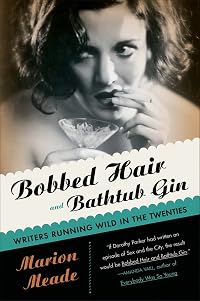
Marion Meade is the author of Dorothy Parker: What Fresh Hell Is This? and Bobbed Hair and Bathtub Gin: Writers Running Wild in the Twenties. She has also written biographies of Woody Allen, Buster Keaton, Eleanor of Aquitaine, Madame Blavatsky, and Victoria Woodhull, as well as two novels about medieval France.
Common Knowledge
- Canonical title
- Dorothy Parker: What Fresh Hell Is This?
- Original publication date
- 1988
- People/Characters
- Dorothy Parker
- Important places
- New York, New York, USA
- Important events
- Jazz Age
Classifications
- Genres
- Biography & Memoir, Literature Studies and Criticism
- DDC/MDS
- 818.5209 — Literature & rhetoric American literature in English American miscellaneous writings in English 20th Century 1900-1945 Biography
- LCC
- PS3531 .A5855 .Z77 — Language and Literature American literature American literature Individual authors 1900-1960
- BISAC
Statistics
- Members
- 914
- Popularity
- 29,482
- Reviews
- 16
- Rating
- (4.01)
- Languages
- English, Spanish
- Media
- Paper, Audiobook, Ebook
- ISBNs
- 17
- UPCs
- 1
- ASINs
- 6