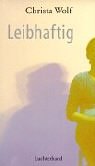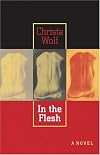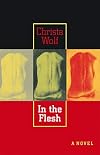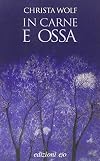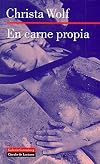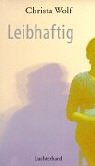
In the Flesh
by Christa Wolf
On This Page
Description
Suffering severe abdominal pain, a woman is rushed to the emergency room. Her soaring temperature, her deepening distress, her body's resistance to medicine confound her doctors, who operate repeatedly.Drifting in and out of consciousness, she endures a fitful fever dream in which the boundaries between wakefulness, memory, and delusion blur then totally break down. Old friends appear to her, comforting strangers materialize by her bedside, and her sense of self, of being an "I" who acts show more rather than a "she" who is acted upon, begins to slip away. Gurney rides through the hospital corridors become fantastic travels through the hallways of hell. Remembered snatches of Goethe's Faust and "Upbuilding" Communist propaganda provide a running commentary on her predicament. The scene, half real, half hallucinated, is the former East Germany, a country of secrets, silences, and unexplained disappearances. The time: just before the fall of the Berlin Wall.Christa Wolf's mesmerizing short novel ? already a best seller in Germany ? is a supreme work of political and philosophical insight by one of Europe's greatest living writers. Alive with myth and metaphor, rich in historical and literary allusion, it draws a nuanced, witty, and utterly compelling portrait of a person and a society close to death yet still capable of recovery. show lessTags
Recommendations









































Member Reviews
This is a book that already works brilliantly well if you simply take it at face value as a description of the experience of being sick and in hospital, the way the sacrifice of control over your own body radically alters your perception of your relationship with your body and with the surrounding world, and so on. There's a lot of very clever juggling of first and third-person narration, the stream-of-consciousness technique mixing dreams seamlessly with direct experience of the hospital environment. It's only when you get quite a long way into the book that you realise that there's a lot more going on, and that the narrator's illness is also an extended metaphor for the experience of living in a corrupt, collapsing political system. show more This is the sort of thing that could so easily be overdone, but Wolf keeps it at a very subtle, indirect level, forcing the reader to look for the parallels without more than a few very indirect hints. Beautifully done. show less
She's 60, East German, and it's winter 1989. Burst appendix that she's tried to ignore for far too long. Bouncing ambulance to the hospital. The doctors find an abdominal cavity full of infections and germs. Feverish months pass as she sweats away in her hospital bed, regularly taken for x-rays and surgery, again and again, and while they struggle to save her life she drifts between memories and real life, between first person and third person, one long near-death experience. Life flashing before her eyes.
She's 60 and East German in spring 1989. She remembers her aunt who loved a Jewish doctor and paid for it. She remembers other party members who disappeared, she remembers whispering every conversation that meant something. The doctors show more struggle to find a pair of GDR-made rubber gloves that don't break, and demand an explanation from her how her immune system can be in complete collapse like this.
And they call me "doctor" even though they know it's not my title. I don't need that title. They need it. The patient asks Kora if the medical director, the professor, is aware that he's hurting her, cutting in her flesh, to cure her, sure, cut the evil out of her since she can't be free of it herself.
She's 60 and East German in summer 1989 and she reads Goethe obsessively in the few moments of clarity between fever crests. She's worked in culture her whole life. Ideals, beauty, justice... They were supposed to build something on that, didn't they? Isn't it her job to find and cut out the evil from men's hearts? Every time they turn on the radio in her hospital room, it's news about death and kidnappings and terrorist attacks and collapse. What's to fight for? The story of survival itself, perhaps, not as a heroic act but as one of endurance, of prodding and exploratory prose. Abdominal surgery can't lay everything bare or everything would pour out onto the floor, even with modern equipment and computer tomography surgeons largely work by feel through the tiniest openings, much like poets.
I'm speaking of the cavities where emotions are born. I can't say how I know that. I realise I can't convince you of ever experience. They're not really born, emotions. They thaw. As if they were frozen. Or anaesthetized.
Anaesthetized by what.
By the shock that everything I say or write is falsified by what I don't say and don't write.
She's 60, German, fall 1989. Nobody survives serious illness unchanged. But scars and emaciated bodies have their own beauty, and her Russian nurse has a name that means "little hope". show less
She's 60 and East German in spring 1989. She remembers her aunt who loved a Jewish doctor and paid for it. She remembers other party members who disappeared, she remembers whispering every conversation that meant something. The doctors show more struggle to find a pair of GDR-made rubber gloves that don't break, and demand an explanation from her how her immune system can be in complete collapse like this.
And they call me "doctor" even though they know it's not my title. I don't need that title. They need it. The patient asks Kora if the medical director, the professor, is aware that he's hurting her, cutting in her flesh, to cure her, sure, cut the evil out of her since she can't be free of it herself.
She's 60 and East German in summer 1989 and she reads Goethe obsessively in the few moments of clarity between fever crests. She's worked in culture her whole life. Ideals, beauty, justice... They were supposed to build something on that, didn't they? Isn't it her job to find and cut out the evil from men's hearts? Every time they turn on the radio in her hospital room, it's news about death and kidnappings and terrorist attacks and collapse. What's to fight for? The story of survival itself, perhaps, not as a heroic act but as one of endurance, of prodding and exploratory prose. Abdominal surgery can't lay everything bare or everything would pour out onto the floor, even with modern equipment and computer tomography surgeons largely work by feel through the tiniest openings, much like poets.
I'm speaking of the cavities where emotions are born. I can't say how I know that. I realise I can't convince you of ever experience. They're not really born, emotions. They thaw. As if they were frozen. Or anaesthetized.
Anaesthetized by what.
By the shock that everything I say or write is falsified by what I don't say and don't write.
She's 60, German, fall 1989. Nobody survives serious illness unchanged. But scars and emaciated bodies have their own beauty, and her Russian nurse has a name that means "little hope". show less
“The problem is sometimes even hope runs out, has to run out, that has to be admitted, too.”
An ailing patient ruminates on mortality and morality while she's hospitalized. That would be my attempt to condense this short book into a short sentence. Of course, with Christa Wolf it's never as simple as that. For one, there's the shift in first, second, and third person narratives as the protagonist drifts in and out of consciousness. I thought that this was quite inventive, and I don't recall ever encountering the style before, especially when used to show different states of being and illness. Even more impressive is how this isn't as disorienting to read as one would expect given the different shifts in points of view.
In this state show more the protagonist not only confronts the suffering of her illness but the ghosts of her past, and death, and moving through feverish dreams and lucidity, the narrator traces the crucial events in her life, and in German history, that have led to her present moment. Like the typical Wolf book, this is one that looks into truths, regardless of the pain that results from the unflinching probing as our narrator says: “To abandon your defenses and follow the trail of pain, I tell her, would be worth the trouble.
Subtly and slowly we begin to realize that the protagonist is in a crumbling society, former East Germany to be exact. It’s a tough book, and one filled with lots of references (very glad for the notes available in this copy) but Wolf is yet to disappoint me for the effort and trust I place in her work even at its most challenging. A short but very good read.
Some other quotes I liked from the book:
' "Self", what a tottering, blurred concept.'
“Late that evening, she asks Kora Bachmann whether she knew that the pain one felt over a loss was the measure of the hope that one had had beforehand.”
“Art as a means of taming the wild impulses of mankind, it’s something to think about.”
“But here’s one thing you can’t argue with: since times long past, literature has been full of tedious descriptions of those efforts made by people lusting for death.”
“All I mean, I say, is that thinking can be so painful that you exchange it on the sly for other pains. A kind of horse-trading with yourself, as it were. Silence.” show less
An ailing patient ruminates on mortality and morality while she's hospitalized. That would be my attempt to condense this short book into a short sentence. Of course, with Christa Wolf it's never as simple as that. For one, there's the shift in first, second, and third person narratives as the protagonist drifts in and out of consciousness. I thought that this was quite inventive, and I don't recall ever encountering the style before, especially when used to show different states of being and illness. Even more impressive is how this isn't as disorienting to read as one would expect given the different shifts in points of view.
In this state show more the protagonist not only confronts the suffering of her illness but the ghosts of her past, and death, and moving through feverish dreams and lucidity, the narrator traces the crucial events in her life, and in German history, that have led to her present moment. Like the typical Wolf book, this is one that looks into truths, regardless of the pain that results from the unflinching probing as our narrator says: “To abandon your defenses and follow the trail of pain, I tell her, would be worth the trouble.
Subtly and slowly we begin to realize that the protagonist is in a crumbling society, former East Germany to be exact. It’s a tough book, and one filled with lots of references (very glad for the notes available in this copy) but Wolf is yet to disappoint me for the effort and trust I place in her work even at its most challenging. A short but very good read.
Some other quotes I liked from the book:
' "Self", what a tottering, blurred concept.'
“Late that evening, she asks Kora Bachmann whether she knew that the pain one felt over a loss was the measure of the hope that one had had beforehand.”
“Art as a means of taming the wild impulses of mankind, it’s something to think about.”
“But here’s one thing you can’t argue with: since times long past, literature has been full of tedious descriptions of those efforts made by people lusting for death.”
“All I mean, I say, is that thinking can be so painful that you exchange it on the sly for other pains. A kind of horse-trading with yourself, as it were. Silence.” show less
Christa Wolf's IN THE FLESH ( Leibhaftig ) is a fascinating allegory of the decline of communist East Germany as one woman's battle with disease.
On her way to an official preview of her latest work, a woman collapses with appendicitis and is driven to a hospital where over a period of time, she undergoes, not only an appendectomy, but a series of operations and treatments to kill the resultant bacterial infection.
The patient's fevered stream-of-consciousness narration drifts in and out of her dreams colored by Goethe's poetry, Greek myth and her memories, her observations of hospital procedures and personnel, and her real-time experiences in the hospital.
Of Wolf's other novels, this one most reminded me of ACCIDENT, A DAY'S NEWS which show more paralleled the Chernobyl disaster with the narrator's worry over her brother's ongoing brain surgery. In that book, however, the narrator, caught in the daily rounds of life, was observer and commentator. In this novel, the narrator embodies the dissolution of the East German state, just before the fall of the Berlin Wall. A brilliant vision that must carry Wolf's own self-examination. show less
On her way to an official preview of her latest work, a woman collapses with appendicitis and is driven to a hospital where over a period of time, she undergoes, not only an appendectomy, but a series of operations and treatments to kill the resultant bacterial infection.
The patient's fevered stream-of-consciousness narration drifts in and out of her dreams colored by Goethe's poetry, Greek myth and her memories, her observations of hospital procedures and personnel, and her real-time experiences in the hospital.
Of Wolf's other novels, this one most reminded me of ACCIDENT, A DAY'S NEWS which show more paralleled the Chernobyl disaster with the narrator's worry over her brother's ongoing brain surgery. In that book, however, the narrator, caught in the daily rounds of life, was observer and commentator. In this novel, the narrator embodies the dissolution of the East German state, just before the fall of the Berlin Wall. A brilliant vision that must carry Wolf's own self-examination. show less
Although it is only a relatively short 184 pages long, I found this book difficult going. There is no division into chapters, not even the occasional "blank line" between two paragraphs indicating a chance to stop and take a breath. The author chose to switch back and forth between the 1st person and the 3rd person - sometimes in mid-sentence - which makes it tricky to follow who is saying (or thinking) what about whom.
Nevertheless I rather liked it in spite of its "faults". There are some interesting thoughts about what I like to call "Life, the Universe and Everything".
Nevertheless I rather liked it in spite of its "faults". There are some interesting thoughts about what I like to call "Life, the Universe and Everything".
Jul 25, 2025 (Edited)English (UK)
De ik-vertelster, DDR-burger, ligt in het ziekenhuis na een heel zware blindedarmoperatie. Is die ontsteking, die veel te lang heeft doorgewoekerd, alleen maar een lichamelijke kwaal? Onder narcose daalt ze af in de Hades, in de periodes tussen waken en slapen gaan de gedachten naar een vroegere vriend, die is opgeklommen in de partij en daardoor zichzelf heeft moeten verloochenen. Uiteindelijk is hem dat toch fataal geworden. En waar kwam die blindedarmontsteking nu vandaan???
Jan 2, 2017Dutch
Aus der Amazon.de-Redaktion
Eine Frau erkrankt. Plötzlich gehen ihr die Worte aus: Da, wo vorher Sprache war, ist nun nur noch Schmerz. Die Frau wird eingeliefert, untersucht. Die erste Diagnose: Tachykardie. Ein Wort wie aus einer griechischen Tragödie, das Schlimmeres verheißt.
In Christa Wolfs neuer, in den 80er-Jahren spielender Erzählung Leibhaftig muss die lebensgefährlich Erkrankte, die immer wieder auch als Ich-Erzählerin fungiert, geduldig auf die rettenden Medikamente warten: Alles hängt davon ab, ob der Kurier via S-Bahn rechtzeitig nach Westdeutschland "übersetzen" und in einer dortigen Apotheke das Lebenselixier erstehen kann. Denn die Frau liegt im "Hades" einer Poliklinik, "drüben" in der DDR. In dieser "bleichen show more Zwischenwelt" eines geteilten Himmels, auf der krisenhaften Schwelle zwischen Leben und Tod, Früher und Heute, Ost und West, dämmert die Heldin vor sich hin. Minutiös registriert sie die mit ihr veranstalteten Prozeduren im Krankenhaus (dem "Spiegelbild der Gesellschaft"), denkt über frühere "Sünden" nach, und erinnert sich: an ihr Berliner Dasein, an den Grenzübergang Friedrichstraße und an den unverbesserlichen Zyniker Urban, mit dessen Leben sie schicksalhaft verbunden war -- damals, als sie noch von Staats wegen und nicht aus medizinischen Gründen unter Beobachtung stand.
In Leibhaftig kommen die Medikamente aus dem Westen rechtzeitig. Die Erzählerin überlebt -- anders als die Gesellschaft, in (und an?) der sie krank geworden ist. "Erzählen lässt sich nichts ohne Zeit", notiert sie in Leibhaftig: "Das Erzählen habe ich aufgegeben, zugleich mit dem Wissen, Fragen, Urteilen, mit dem Behaupten, Lehren und Verstehen." Wolf aber hat in permanentem Wechsel der Erzählperspektive ein großartiges Stück Prosa vorgelegt, menschliches Drama und Zeitdokument zugleich. Eine Krankheitsgeschichte aus den 80er-Jahren, die auch die Krankheitsgeschichte der 80er-Jahre -- und Bilanz einer Epoche -- geworden ist. --Thomas Köster show less
Eine Frau erkrankt. Plötzlich gehen ihr die Worte aus: Da, wo vorher Sprache war, ist nun nur noch Schmerz. Die Frau wird eingeliefert, untersucht. Die erste Diagnose: Tachykardie. Ein Wort wie aus einer griechischen Tragödie, das Schlimmeres verheißt.
In Christa Wolfs neuer, in den 80er-Jahren spielender Erzählung Leibhaftig muss die lebensgefährlich Erkrankte, die immer wieder auch als Ich-Erzählerin fungiert, geduldig auf die rettenden Medikamente warten: Alles hängt davon ab, ob der Kurier via S-Bahn rechtzeitig nach Westdeutschland "übersetzen" und in einer dortigen Apotheke das Lebenselixier erstehen kann. Denn die Frau liegt im "Hades" einer Poliklinik, "drüben" in der DDR. In dieser "bleichen show more Zwischenwelt" eines geteilten Himmels, auf der krisenhaften Schwelle zwischen Leben und Tod, Früher und Heute, Ost und West, dämmert die Heldin vor sich hin. Minutiös registriert sie die mit ihr veranstalteten Prozeduren im Krankenhaus (dem "Spiegelbild der Gesellschaft"), denkt über frühere "Sünden" nach, und erinnert sich: an ihr Berliner Dasein, an den Grenzübergang Friedrichstraße und an den unverbesserlichen Zyniker Urban, mit dessen Leben sie schicksalhaft verbunden war -- damals, als sie noch von Staats wegen und nicht aus medizinischen Gründen unter Beobachtung stand.
In Leibhaftig kommen die Medikamente aus dem Westen rechtzeitig. Die Erzählerin überlebt -- anders als die Gesellschaft, in (und an?) der sie krank geworden ist. "Erzählen lässt sich nichts ohne Zeit", notiert sie in Leibhaftig: "Das Erzählen habe ich aufgegeben, zugleich mit dem Wissen, Fragen, Urteilen, mit dem Behaupten, Lehren und Verstehen." Wolf aber hat in permanentem Wechsel der Erzählperspektive ein großartiges Stück Prosa vorgelegt, menschliches Drama und Zeitdokument zugleich. Eine Krankheitsgeschichte aus den 80er-Jahren, die auch die Krankheitsgeschichte der 80er-Jahre -- und Bilanz einer Epoche -- geworden ist. --Thomas Köster show less
Jan 1, 2012German
Members
- Recently Added By
Author Information

116+ Works 5,597 Members
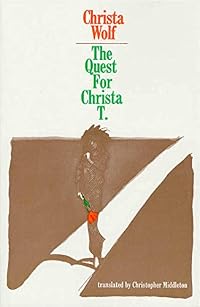
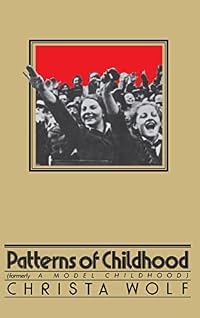
Christa Wolf was born on March 18, 1929, in Landsberg, which is now Gorzow, Poland. Her father joined the Nazi Party and she became a member of the girls' version of the Hitler Youth. In 1949, she joined the Socialist Unity Party and studied German literature at universities in Jena and Leipzig. She wrote numerous novels during her lifetime show more including The Divided Heaven, The Quest for Christa T., A Model Childhood, and Cassandra. She won several awards including the Heinrich Mann Prize in 1963 and Thomas Mann Prize for literature in 2010. She died on December 1, 2011 at the age of 82. (Bowker Author Biography) show less
Common Knowledge
- Canonical title
- In the Flesh
- Original title
- Leibhaftig : Erzählung
- Original publication date
- 2002
- First words*
- Verletzt.
- Last words*
- (Click to show. Warning: May contain spoilers.)Das, sagte ich, steht auch in einem Gedicht.
- Original language
- German
*Some information comes from Common Knowledge in other languages. Click "Edit" for more information.
Classifications
- Genres
- Fiction and Literature, General Fiction
- DDC/MDS
- 833.914 — Literature & rhetoric German & related literatures German fiction 1900- 1900-1990 1945-1990
- LCC
- PT2685 .O36 .L3613 — Language and Literature German, Dutch and Scandinavian literatures German literature Individual authors or works 1961-2000
- BISAC
Statistics
- Members
- 112
- Popularity
- 289,234
- Reviews
- 7
- Rating
- (3.92)
- Languages
- 13 — Arabic, Danish, Dutch, English, French, German, Italian, Norwegian (Bokmål), Norwegian, Polish, Croatian, Spanish, Swedish
- Media
- Paper, Audiobook
- ISBNs
- 16
- ASINs
- 2