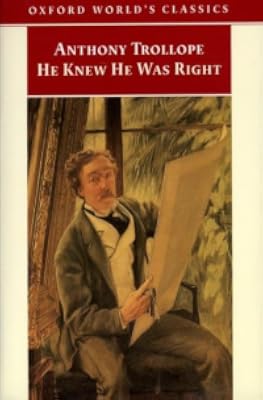
He Knew He Was Right
by Anthony Trollope
On This Page
Description
Widely regarded as one of Trollope's most successful later novels,He Knew He Was Right is a study of marriage and of sexual relationships cast against a background of agitation for women's rights.Tags
Recommendations
















Member Recommendations


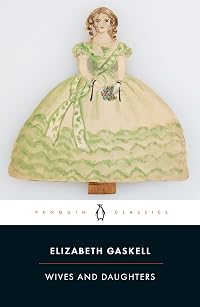
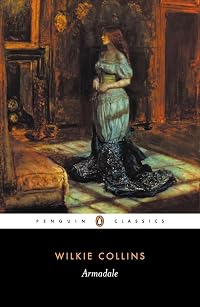
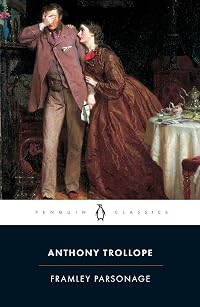
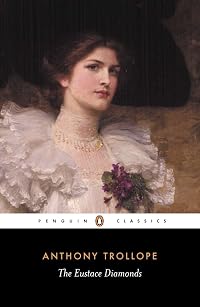
cmcarpenter One of Mrs. Oliphant's finest - portrait of a marriage in crisis.

potenza Both feature a Victorian bad marriage amidst female empowerment.
Member Reviews
After reading both the Barsetshire and Palliser series, this was my first foray into one of Trollope's standalone novels. It left me a little unsatisfied, I think because of the main topic, marriage.
The main storyline here involves the marriage of Louis and Emily Trevelyan who have been happily married for about 5 years and have a young son. Trevelyan becomes jealous of Emily's relationship with a friend of her father's, Colonel Osbourne and forbids her to see him anymore. She believes he is overreacting (which he is) but also can't see that Col Osborne is certainly flirting with her and sort of enjoying making the situation worse. At first I felt they were equally at fault, but then Trevelyan descends farther and farther into show more obsession and madness to the extent of banishing Emily from his house and hiring a private detective to watch her.
Contrasted with this portrait of marriage is Emily's sister's love for Hugh Stanbury. Stanbury works as a journalist for his income and here is another theme. Should a woman tie herself to a husband who doesn't have inherited income and has to work for a living - and not just work, but work in journalism instead of something like the clergy, a doctor, or a lawyer? And then there are a host of other women who treat marriage and love in different ways, but always the question is what is more important, love or financial security or independence. It doesn't seem possible to achieve all three of these things. In fact, Trollope seems intent on saying that women really need to worship their husbands (a troubling word and concept to me) for a marriage to be happy. Certainly this has come up before in his work, but I found it more pervasive here and harder to gloss over or accept.
Then again, I really loved some of the characters, particularly Miss Stanbury, and thought there were some really funny moments (especially the running "chignon" joke). I enjoyed this, but it wasn't my favorite of his novels. show less
The main storyline here involves the marriage of Louis and Emily Trevelyan who have been happily married for about 5 years and have a young son. Trevelyan becomes jealous of Emily's relationship with a friend of her father's, Colonel Osbourne and forbids her to see him anymore. She believes he is overreacting (which he is) but also can't see that Col Osborne is certainly flirting with her and sort of enjoying making the situation worse. At first I felt they were equally at fault, but then Trevelyan descends farther and farther into show more obsession and madness to the extent of banishing Emily from his house and hiring a private detective to watch her.
Contrasted with this portrait of marriage is Emily's sister's love for Hugh Stanbury. Stanbury works as a journalist for his income and here is another theme. Should a woman tie herself to a husband who doesn't have inherited income and has to work for a living - and not just work, but work in journalism instead of something like the clergy, a doctor, or a lawyer? And then there are a host of other women who treat marriage and love in different ways, but always the question is what is more important, love or financial security or independence. It doesn't seem possible to achieve all three of these things. In fact, Trollope seems intent on saying that women really need to worship their husbands (a troubling word and concept to me) for a marriage to be happy. Certainly this has come up before in his work, but I found it more pervasive here and harder to gloss over or accept.
Then again, I really loved some of the characters, particularly Miss Stanbury, and thought there were some really funny moments (especially the running "chignon" joke). I enjoyed this, but it wasn't my favorite of his novels. show less
This is the fourth novel by Anthony Trollope that I’ve read, and with each of his books that I read, I grow to love his work more and more. I loved the scope of this book, the way Trollope looked at marriage from so many angles, showing how in almost every case, the traditional ways have worked against people’s happiness. There are the obvious cases of women having to rely on others’ whims for their very survival, but there’s also the notion that men must always stay within certain bounds, following certain expectations. There’s a sense, though, that the book is depicting a pivot point in the state of marriage, when either the old ways must fall away or the youth of England must live in misery.
As ambitious and sprawling as the show more novel is, it still feels focused because each storyline comes back to the state of marriage and singlehood. And Trollope does a wonderful job with the tone. Almost all of the characters, even the comic ones, are given a psychology and a reason for being as they are—and they’re given opportunities to grow and change. In fact, a willingness to change seems to be the key to happiness. I think especially of Jemima Stanbury, who is old and imperious and set in her ways. She’s cruel and self-centered, but not without soft spots. Those soft spots enable her to change her attitudes in a way that brings happiness to others, including herself. On the other hand, Trevelyan’s complete lack of malleability is what breaks him. He becomes a victim of himself—and even more tragically, he takes his wife and son and sister-in-law along.
See more on my blog. show less
As ambitious and sprawling as the show more novel is, it still feels focused because each storyline comes back to the state of marriage and singlehood. And Trollope does a wonderful job with the tone. Almost all of the characters, even the comic ones, are given a psychology and a reason for being as they are—and they’re given opportunities to grow and change. In fact, a willingness to change seems to be the key to happiness. I think especially of Jemima Stanbury, who is old and imperious and set in her ways. She’s cruel and self-centered, but not without soft spots. Those soft spots enable her to change her attitudes in a way that brings happiness to others, including herself. On the other hand, Trevelyan’s complete lack of malleability is what breaks him. He becomes a victim of himself—and even more tragically, he takes his wife and son and sister-in-law along.
See more on my blog. show less
Louis Trevelyan is travelling the world and visits a British colony called the Mandarin Islands. He falls in love with the governor's eldest daughter, Emily, and proposes marriage. He also proposes to take her sister Nora to England with them so that Emily has company. All is well, right?
Well. Enter Colonel Osborne, a friend of Emily's father and known to be a bit of a roué. Trevelyan gets himself all in a lather because Osborne keeps coming to call, even though Emily has not given him a single reason to be jealous or suspicious; his suspicions come entirely from what he FEARS will happen and are fuelled by the gossip and speculation of others. So instead of just ignoring Osborne or treating him with excessive politeness, he treats show more Emily like she's already cheated on him and arranges a divorce and sends her away, all while moaning about how HE is being hard done by. Never mind that HE, as a man in Victorian society, at least has the opportunity to get a job; Emily is much more dependent on him, so her suffering is much worse. Also never mind that acting the way he does simply makes the gossip and speculation worse.
As you may have guessed from my summary, I have little sympathy for Louis Trevelyan. He had plenty of opportunities to apologize to his wife for making her feel like a disgraced woman, but instead he chose to be high-handed and authoritarian. Also he really should not have said, "I don't suspect you AS YET of any wrongdoing." Emily must have thought, "Gee, thanks for the vote of confidence."
All this is to say that I gave up on the book a quarter of the way through because Trevelyan was giving me a splitting headache and I kept finding excuses to avoid reading the book. Even Trollope himself was reportedly not very fond of this book, because of its protagonist. But I must give Trollope proper credit for creating a character that is able to provoke such a reaction, and the rest of the book was perfectly acceptable, hence the three-star rating. I would recommend this more to people who are less easily annoyed by fictional characters. If you're interested in the story but don't want to slog through the book, the TV adaptation featuring Bill Nighy as Colonel Osborne will do the job nicely. show less
Well. Enter Colonel Osborne, a friend of Emily's father and known to be a bit of a roué. Trevelyan gets himself all in a lather because Osborne keeps coming to call, even though Emily has not given him a single reason to be jealous or suspicious; his suspicions come entirely from what he FEARS will happen and are fuelled by the gossip and speculation of others. So instead of just ignoring Osborne or treating him with excessive politeness, he treats show more Emily like she's already cheated on him and arranges a divorce and sends her away, all while moaning about how HE is being hard done by. Never mind that HE, as a man in Victorian society, at least has the opportunity to get a job; Emily is much more dependent on him, so her suffering is much worse. Also never mind that acting the way he does simply makes the gossip and speculation worse.
As you may have guessed from my summary, I have little sympathy for Louis Trevelyan. He had plenty of opportunities to apologize to his wife for making her feel like a disgraced woman, but instead he chose to be high-handed and authoritarian. Also he really should not have said, "I don't suspect you AS YET of any wrongdoing." Emily must have thought, "Gee, thanks for the vote of confidence."
All this is to say that I gave up on the book a quarter of the way through because Trevelyan was giving me a splitting headache and I kept finding excuses to avoid reading the book. Even Trollope himself was reportedly not very fond of this book, because of its protagonist. But I must give Trollope proper credit for creating a character that is able to provoke such a reaction, and the rest of the book was perfectly acceptable, hence the three-star rating. I would recommend this more to people who are less easily annoyed by fictional characters. If you're interested in the story but don't want to slog through the book, the TV adaptation featuring Bill Nighy as Colonel Osborne will do the job nicely. show less
I allowed this to sit on my shelf for quite a while, in part because the title makes it sound almost like a parody of a Trollope plot. Is there any of his novels where we don't get stubborn men who stick to their opinions in the face of all reason and common-sense? Of course, it turns out that there's a bit more to this one than just that.
We do get the self-destructive stubbornness of Last chronicle of Barsetshire and the potentially tragic marital strife of Phineas Finn, both also written in the late 60s, but these are almost incidental to what turns out to be a big sweeping examination of the situation of (middle-class) women in mid-Victorian society. By the 60s, intelligent, educated young women were becoming accustomed to thinking show more of themselves as at least intellectually and morally the equals of men, but law and custom still treated them to a large extent as chattels of their fathers or husbands. Without a great deal of money to pay for servants and a “companion”, a respectable unmarried woman could not live by herself; to attempt to work for a living meant facing an irreparable loss of social standing. A married woman unfortunate enough to quarrel with her husband was automatically presumed by the courts and by her neighbours to be in the wrong, and stood to lose custody of her children unless she could prove actual criminal wrongdoing by her husband. Trollope invites his readers to reflect on these and other absurdities, without very much obvious polemic. His methods aren't always politically correct: the satirical picture of an American feminist poet in Florence, Wallachia Petrie “the Republican Browning”, certainly struck me as unnecessarily cruel to support his message that change happens because sensible people want it, not because fundamentalists bang on the table. Still, "poor Wallie" must be one of the first lesbian characters to have been slipped into a mainstream English novel. She was presumably based on one of his mother’s Florence friends, perhaps the sculptor Harriet Hosmer.
For once with Trollope it's the women characters who dominate the whole story. The ostensible central character, the stubborn husband Louis Trevelyan, is rather on the margins of the story, and we see him mainly through the women’s eyes. The other men are all fairly peripheral too: apart from a couple of entertaining old ladies, we have three very convincing, strong-minded young women at the centre of the plot, all of them prepared to stand up for themselves and make their own lives, as far as the world they live in will allow them to.
Of course, this is also a book that features a very sympathetic (if rather talkative) family of Americans called Spalding... show less
We do get the self-destructive stubbornness of Last chronicle of Barsetshire and the potentially tragic marital strife of Phineas Finn, both also written in the late 60s, but these are almost incidental to what turns out to be a big sweeping examination of the situation of (middle-class) women in mid-Victorian society. By the 60s, intelligent, educated young women were becoming accustomed to thinking show more of themselves as at least intellectually and morally the equals of men, but law and custom still treated them to a large extent as chattels of their fathers or husbands. Without a great deal of money to pay for servants and a “companion”, a respectable unmarried woman could not live by herself; to attempt to work for a living meant facing an irreparable loss of social standing. A married woman unfortunate enough to quarrel with her husband was automatically presumed by the courts and by her neighbours to be in the wrong, and stood to lose custody of her children unless she could prove actual criminal wrongdoing by her husband. Trollope invites his readers to reflect on these and other absurdities, without very much obvious polemic. His methods aren't always politically correct: the satirical picture of an American feminist poet in Florence, Wallachia Petrie “the Republican Browning”, certainly struck me as unnecessarily cruel to support his message that change happens because sensible people want it, not because fundamentalists bang on the table. Still, "poor Wallie" must be one of the first lesbian characters to have been slipped into a mainstream English novel. She was presumably based on one of his mother’s Florence friends, perhaps the sculptor Harriet Hosmer.
For once with Trollope it's the women characters who dominate the whole story. The ostensible central character, the stubborn husband Louis Trevelyan, is rather on the margins of the story, and we see him mainly through the women’s eyes. The other men are all fairly peripheral too: apart from a couple of entertaining old ladies, we have three very convincing, strong-minded young women at the centre of the plot, all of them prepared to stand up for themselves and make their own lives, as far as the world they live in will allow them to.
Of course, this is also a book that features a very sympathetic (if rather talkative) family of Americans called Spalding... show less
The beauties of conventional decency, and what lurks beneath
Trollope is the ideal Victorian, celebrating the conventional, but with a thoroughly worldly appreciation of the darker side of human psychology that's best kept bottled up. In this novel, he promotes over and over -- with not just one but three admirable ingenues who live happily ever after -- the virtues of romantic marriage, while putting his fourth heroine in a catastrophic union where stubborn self-assertion leads to separation, irrational jealousy, parental kidnaping and tragic dissolution. All unfolds with Trollope's characteristic insightful, gentle and funny writing style. The novel's 822 pages turn as easily as an entertainment, but with enough moral gravitas and show more incisive description of the world of the 1860's to keep the reader thinking and pondering amidst the pleasure of reading this wonderful novel. show less
Trollope is the ideal Victorian, celebrating the conventional, but with a thoroughly worldly appreciation of the darker side of human psychology that's best kept bottled up. In this novel, he promotes over and over -- with not just one but three admirable ingenues who live happily ever after -- the virtues of romantic marriage, while putting his fourth heroine in a catastrophic union where stubborn self-assertion leads to separation, irrational jealousy, parental kidnaping and tragic dissolution. All unfolds with Trollope's characteristic insightful, gentle and funny writing style. The novel's 822 pages turn as easily as an entertainment, but with enough moral gravitas and show more incisive description of the world of the 1860's to keep the reader thinking and pondering amidst the pleasure of reading this wonderful novel. show less
... Trollope has done no one any favours by distracting from what could have been an important novel.
Trollope’s story of a marriage and a life destroyed by the jealousy of a husband could have been a vivid portrayal of how delicately married life can be balanced. Instead, Trollope watered down a potentially powerful narrative with sub-plots and minor characters that only serve to underline Trollope’s trademark verbosity.
When Louis Trevelyan suspects his wife Emily of emotional adultery with Colonel Osbourne, an old family friend, the situation quickly gets out of hand. Louis’ lack of trust is met with Emily’s equal lack of humility. Despite there being nothing untoward in the initial exchanges, she undermines her position by show more going against her husband’s wishes and meeting Osbourne behind Louis’ back. Each spouse, when given the opportunity to pour water on the flames, decides instead to pour aviation fuel. The resulting conflagration not only costs them their marital harmony, it drives one of them out of their mind.
Trollope could have developed so much around this storyline. There’s the change in contemporary attitudes towards the role of women in marriage in Victorian England, there are the timeless issues faced by married couples from every era of humanity, there are great themes of jealousy, neglect, humility and of choosing others over yourself. All of these he deals with, but without plumbing the depths of any of them.
Instead, we’re whisked away to watch minor characters spar with each other and decide whether or not they want to spend the rest of their lives with each other. There doesn’t seem to be any connection between their commitment to lifelong matrimony and the rapidly unravelling Trevelyan household. It’s as if no one else realises how likely they too could find themselves in the mire of marital misunderstanding. Again, I feel Trollope missed an opportunity here.
So, while I welcome this rare glimpse into the reality of a disintegrating marriage in Victorian literature, Trollope has done no one any favours by distracting from what could have been an important novel. show less
Trollope’s story of a marriage and a life destroyed by the jealousy of a husband could have been a vivid portrayal of how delicately married life can be balanced. Instead, Trollope watered down a potentially powerful narrative with sub-plots and minor characters that only serve to underline Trollope’s trademark verbosity.
When Louis Trevelyan suspects his wife Emily of emotional adultery with Colonel Osbourne, an old family friend, the situation quickly gets out of hand. Louis’ lack of trust is met with Emily’s equal lack of humility. Despite there being nothing untoward in the initial exchanges, she undermines her position by show more going against her husband’s wishes and meeting Osbourne behind Louis’ back. Each spouse, when given the opportunity to pour water on the flames, decides instead to pour aviation fuel. The resulting conflagration not only costs them their marital harmony, it drives one of them out of their mind.
Trollope could have developed so much around this storyline. There’s the change in contemporary attitudes towards the role of women in marriage in Victorian England, there are the timeless issues faced by married couples from every era of humanity, there are great themes of jealousy, neglect, humility and of choosing others over yourself. All of these he deals with, but without plumbing the depths of any of them.
Instead, we’re whisked away to watch minor characters spar with each other and decide whether or not they want to spend the rest of their lives with each other. There doesn’t seem to be any connection between their commitment to lifelong matrimony and the rapidly unravelling Trevelyan household. It’s as if no one else realises how likely they too could find themselves in the mire of marital misunderstanding. Again, I feel Trollope missed an opportunity here.
So, while I welcome this rare glimpse into the reality of a disintegrating marriage in Victorian literature, Trollope has done no one any favours by distracting from what could have been an important novel. show less
This is the story of a marriage tormented by pathological jealousy, and also of several courtships, often with difficulties not of the couple's own making, that promise (or do they?) happier marriages.
In the main story line, the man who knew he was right, Louis Trevelyan, falls in love with Emily Rowley when he travels to the Mandarin Islands (a made-up British colony in the Caribbean), the daughter of its governor. They marry in England, but when Colonel Osborne, an old friend of Emily's father who has known her since she was a child, comes calling, Louis turns jealous. He is sure something is going on and wants Emily to apologize and say she won't see the colonel any more, or correspond with him, but Emily, who knows nothing has show more happened, refuses to apologize for something she hasn't done. Ultimately, they quarrel to such a degree that they can no longer live together, and Trevelyan arranges with his friend Hugh Stanbury that Emily and the son they now have and her sister Nora who has been staying with them take a house in the country with Stanbury's mother and sisters. But Trevelyan can't leave it at that. He hires a former policeman, Bozzle, to find out whether Emily is still seeing or corresponding with Osborne (who, partly, is trying to arrange for her parents to come from the Mandarins to talk to a government committee he serves on). Later, after complications arise, including a visit from Osborne, the sisters and the son go to live with their aunt and uncle, a parson, on the outskirts of London in a decidedly unfashionable neighborhood (and who have the unlikely name of Outhouse). Louis Trevelyan gets more and more obsessed with getting Emily to apologize.
Meanwhile, there are, in true Trollopian fashion, a whole variety of subplots. Nora, Emily's sister, has turned down the very rich Mr. Glascock (who will become Lord Peterborough when his father dies) because she is in love with the much poorer Hugh Stanbury, who writes for a "penny" paper. One of Hugh's sisters, Dorothy, goes to live with her very difficult aunt Stanbury who has previously had taken up Hugh and thrown him away when he went to work for the paper. During the visit, her aunt cooks up a scheme to marry Dorothy to the local minister, Mr. Gibson, but Dorothy turns him down because she doesn't love him. She ultimately falls in love with Brooke Burgess; the Burgesses were the source of Aunt Stanbury's fortune. She has quarreled with the Burgess who lives in the town she lives in but has determined to leave the money she got from the Burgesses to Brooke. But will she approve of Dorothy marrying Brooke when she has decided no Stanbury will get her money? Mr. Gibson, the minister, becomes embroiled in a soap opera with two local sisters, and Mr. Glascock goes to Italy where he meets the nieces of the American ambassador, one of whom he falls in love with. And that's just some of the subplots in this 800+-page tome.
Back to the main plot of Emily and Trevelyan, when Emily's parents ultimately arrive in England, Trevelyan hatches a plot to kidnap his son (he had been threatening, and even tried, to get the son away from Emily earlier) and then hightails it with the son, a toddler, to Italy where he for a time connects with Glascock. He is getting physically and emotionally sicker and sicker and winds up in some out-of-the-way village, on top of a very steep hill. Emily and Nora and their parents follow him, to try to get the son back.
The main plot and the subplots all ultimately resolve themselves, as is typical of Trollope. He apparently did not like this book, ostensibly because he didn't make Trevelyan, the man who knew he was right, sympathetic enough. I disagree that he ought to be sympathetic, although I understand why Trollope wanted him to be, and I thoroughly enjoyed this novel, as much for the very rich subplots as for the main one. show less
In the main story line, the man who knew he was right, Louis Trevelyan, falls in love with Emily Rowley when he travels to the Mandarin Islands (a made-up British colony in the Caribbean), the daughter of its governor. They marry in England, but when Colonel Osborne, an old friend of Emily's father who has known her since she was a child, comes calling, Louis turns jealous. He is sure something is going on and wants Emily to apologize and say she won't see the colonel any more, or correspond with him, but Emily, who knows nothing has show more happened, refuses to apologize for something she hasn't done. Ultimately, they quarrel to such a degree that they can no longer live together, and Trevelyan arranges with his friend Hugh Stanbury that Emily and the son they now have and her sister Nora who has been staying with them take a house in the country with Stanbury's mother and sisters. But Trevelyan can't leave it at that. He hires a former policeman, Bozzle, to find out whether Emily is still seeing or corresponding with Osborne (who, partly, is trying to arrange for her parents to come from the Mandarins to talk to a government committee he serves on). Later, after complications arise, including a visit from Osborne, the sisters and the son go to live with their aunt and uncle, a parson, on the outskirts of London in a decidedly unfashionable neighborhood (and who have the unlikely name of Outhouse). Louis Trevelyan gets more and more obsessed with getting Emily to apologize.
Meanwhile, there are, in true Trollopian fashion, a whole variety of subplots. Nora, Emily's sister, has turned down the very rich Mr. Glascock (who will become Lord Peterborough when his father dies) because she is in love with the much poorer Hugh Stanbury, who writes for a "penny" paper. One of Hugh's sisters, Dorothy, goes to live with her very difficult aunt Stanbury who has previously had taken up Hugh and thrown him away when he went to work for the paper. During the visit, her aunt cooks up a scheme to marry Dorothy to the local minister, Mr. Gibson, but Dorothy turns him down because she doesn't love him. She ultimately falls in love with Brooke Burgess; the Burgesses were the source of Aunt Stanbury's fortune. She has quarreled with the Burgess who lives in the town she lives in but has determined to leave the money she got from the Burgesses to Brooke. But will she approve of Dorothy marrying Brooke when she has decided no Stanbury will get her money? Mr. Gibson, the minister, becomes embroiled in a soap opera with two local sisters, and Mr. Glascock goes to Italy where he meets the nieces of the American ambassador, one of whom he falls in love with. And that's just some of the subplots in this 800+-page tome.
Back to the main plot of Emily and Trevelyan, when Emily's parents ultimately arrive in England, Trevelyan hatches a plot to kidnap his son (he had been threatening, and even tried, to get the son away from Emily earlier) and then hightails it with the son, a toddler, to Italy where he for a time connects with Glascock. He is getting physically and emotionally sicker and sicker and winds up in some out-of-the-way village, on top of a very steep hill. Emily and Nora and their parents follow him, to try to get the son back.
The main plot and the subplots all ultimately resolve themselves, as is typical of Trollope. He apparently did not like this book, ostensibly because he didn't make Trevelyan, the man who knew he was right, sympathetic enough. I disagree that he ought to be sympathetic, although I understand why Trollope wanted him to be, and I thoroughly enjoyed this novel, as much for the very rich subplots as for the main one. show less
Members
- Recently Added By
Lists

1001 Books You Must Read Before You Die
1,448 works; 1,134 members

Best Books With Sisters
130 works; 30 members

Mental health fiction
55 works; 18 members

Books Set in Great Britain
191 works; 13 members

19th Century
190 works; 15 members

Western World's Greatest Books - Project Gutenberg
295 works; 15 members
Out of Copyright
244 works; 14 members

Dysfunctional Families
133 works; 7 members

Love Triangles in Literature
108 works; 15 members

Books Read in 2023
5,547 works; 145 members
Victorian Period
113 works; 10 members

1860s
25 works; 4 members

Books Read in 2017
4,249 works; 129 members

Books With Complete Sentence Titles
374 works; 15 members

Books Read in 2019
4,052 works; 110 members

Tagged 19th Century
104 works; 7 members
Talk Discussions
Past Discussions
Group read: He Knew He Was Right by Anthony Trollope in 75 Books Challenge for 2017 (October 2020)
1815: Anthony Trollope - He Knew He Was Right in Literary Centennials (November 2015)
Author Information

348+ Works 50,529 Members
Anthony Trollope was born in London, England on April 24, 1815. In 1834, he became a junior clerk in the General Post Office, London. In 1841, he became a deputy postal surveyor in Banagher, Ireland. He was sent on many postal missions ending up as a surveyor general in the post office outside of London. His first novel, The Macdermots of show more Ballycloran, was published in 1847. His other works included Castle Richmond, The Last Chronicle of Barset, Lady Anna, The Two Heroines of Plumplington, and The Noble Jilt. He died after suffering from a paralytic stroke on December 6, 1882. (Bowker Author Biography) show less
Some Editions
Awards and Honors
Series
Belongs to Publisher Series
Work Relationships
Common Knowledge
- Canonical title
- He Knew He Was Right
- Original title
- He Knew He Was Right
- Original publication date
- 1869
- People/Characters
- Mr Bideawhile; Samuel Bozzle; Mr Bartholomew (Barty) Burgess (Barty); Brooke Burgess; Jonas Crump; Mrs Ellison (show all 33); Mrs French; Arabella French; Camilla French; Rev. Thomas Gibson; Mrs McHugh; Lady Milborough; Colonel Frederic Osborne; Mrs Outhouse; Rev. Oliphant Outhouse; Lord Peterborough (Charles Glascock); Lady Peterborough; Wallachia Petrie; Bishop Thomas Proudie; Lady Bessie Rowley; Sir Marmaduke Rowley; Nora Rowley; Jonas Spalding; Olivia Spalding; Dorothy (Dolly) Stanbury (Dolly); Priscilla Stanbury; Hugh Stanbury; Mrs Stanbury (of Nuncombe Putney); Mrs Emily Trevelyan; Mr Louis Trevelyan; Louey Trevelyan (jnr); Jackson Unthank; Caroline Spalding
- Important places
- Curzon Street, London, England, UK; Baker Street, London, England, UK; London, England, UK; Mandarin Islands; Exeter, Devon, England, UK; Florence, Tuscany, Italy (show all 7); Nuncombe Putney, Devon, England, UK
- Related movies
- He Knew He Was Right (2004 | IMDb)
- First words
- When Louis Trevelyan was twenty-four years old, he had all the world before him where to choose; and, among other things, he chose to go to the Mandarin Islands, and there fell in love with Emily Rowley, the daughter of Sir M... (show all)armaduke, the governor.
- Last words
- (Click to show. Warning: May contain spoilers.)It need only further be said that though Giles Hickbody and Martha are not actually married as yet,--men and women in their class of life always moving towards marriage with great precaution,--it is quite understood that the young people are engaged, and are to be made happy together at some future time.
- Original language*
- Engels
*Some information comes from Common Knowledge in other languages. Click "Edit" for more information.
Classifications
Statistics
- Members
- 1,064
- Popularity
- 24,102
- Reviews
- 28
- Rating
- (3.92)
- Languages
- Dutch, English
- Media
- Paper, Audiobook, Ebook
- ISBNs
- 51
- UPCs
- 1
- ASINs
- 22