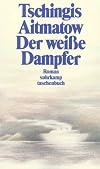
The White Steamship
by Tschingis Aitmatow
On This Page
Description
Den første roman er en beretning om en lille forældreløs kirgisisk drengs fantasiverden, som brydes mod en brutal virkelighed. I den anden, som foregår på Kasakhstans stepper, danner begravelsen af byen Boranlys gamle patriark Kazangap udgangspunkt for en række episoder. Begge er de som Ajtmatovs øvrige romaner dystert profetiske i forhold til menneskeslægtens selvdestruktion..Tags
Recommendations





























Member Reviews
A beautifully crafted and very sad novel set in mid-20th century Kyrgyzstan, The White Ship follows an unnamed child who lives with his extended family in a remote rural area. The boy is fascinated by the landscape, the history and the culture of his people, and it is partly his awareness of them which leads to tragedy. This is a book whose ending is telegraphed very early on, but it's so carefully set up and feels so inexorable that I couldn't be mad with Chingiz Aïtmatov about it, even as I found myself wincing in anticipation.
I have been so enthralled by Tchinguiz Aïtmatov’s novel “The white ship” ( 1970 ), that I gobbled it up in one single nocturnal reading. Incredible that it looks like I am the only one in the Librarything world who seems to own a book by this master story teller.
Born to a Kyrgyz father and Tatar mother, Aïtmatov was one of the most prominent writers during the last years of the USSR. Celebrated all through the Russian – speaking world and a national icon in his own Kyrgyzstan, the novelist assumed in the last years of his life the responsibilities of a high – level diplomat where he was both advisor and friend of the Soviet leader Mikhail Gorbachev.
Unlike the 20th century Russian writers who did become famous in the West, show more Aîtmatov never wrote openly against the system and he was branded by the West as a “communist” writer. Aîtmatov, who was orphaned at the age of 10 when he lost his father ( a civil servant ) in ’38 during the Stalinist purges, preferred to stick to “safer” themes when writing : the defense of local Asian populations against the encroaching Soviet mass – culture, an early advocate of wildlife protection and a defender of the weak against the new party- bullies running the Kolkhozes.
These three themes are intertwined in “The white ship”. It is a beautiful but very sad book and Aîtmatov’s descriptions shows he is a kind, sensitive and responsible writer.
The story brings us to the remote fringe of the Soviet state in the years just after the second world war. We are introduced to a small community of 8 people, all kin, from the Bagu tribe. They live high up in the Kyrgyz’ mountains and are the keepers of the surrounding protected forest.
The main character is a unnamed young boy, seven or eight years old. The kid, the only child in the tiny village, fills up his loneliness with stories and innocent fantasies. He has been abandoned by his parents, who fled to the city for a better life and is raised by a gentle grandfather, his second wife and two other childless families. Their lives are primitive and the small community is very poor. The only extra income that can be gained is when the violent Uncle Orozkoul illegally sells cut –down trees from the forests.
Soon enough we realize that the fantasy world in which the boy flees, not only fills his loneliness but also protects him from a terribly scary world of domestic abuse and violence. Two fantasies in particular order the child’s chaotic world and soften the emotional blows : one where the boy imagines himself a fish swimming down the raging mountain river not far from his house all the way down the mountain towards the giant lake Issyk Kul, on which a white boat sails and his father ( he imagines ) is a sailor. The other story, is the legend of the Mother Maral deer, the legendary ancestor of the Bagu people. The young boy has never seen one of those magnificent ruminants. They have all been slaughtered and exterminated by Soviet hunters.
His grandfather often tells him that these Marals are the true ancestors of the Bagu people, and hence the imaginary parents of the child.
Then comes a day, that a tree-selling scheme gone awry coincides with a spotting of three Maral – deer close to the village.
A beautiful book, but the most heart-breaking rendering of a child’s vulnerability I ever read. show less
Born to a Kyrgyz father and Tatar mother, Aïtmatov was one of the most prominent writers during the last years of the USSR. Celebrated all through the Russian – speaking world and a national icon in his own Kyrgyzstan, the novelist assumed in the last years of his life the responsibilities of a high – level diplomat where he was both advisor and friend of the Soviet leader Mikhail Gorbachev.
Unlike the 20th century Russian writers who did become famous in the West, show more Aîtmatov never wrote openly against the system and he was branded by the West as a “communist” writer. Aîtmatov, who was orphaned at the age of 10 when he lost his father ( a civil servant ) in ’38 during the Stalinist purges, preferred to stick to “safer” themes when writing : the defense of local Asian populations against the encroaching Soviet mass – culture, an early advocate of wildlife protection and a defender of the weak against the new party- bullies running the Kolkhozes.
These three themes are intertwined in “The white ship”. It is a beautiful but very sad book and Aîtmatov’s descriptions shows he is a kind, sensitive and responsible writer.
The story brings us to the remote fringe of the Soviet state in the years just after the second world war. We are introduced to a small community of 8 people, all kin, from the Bagu tribe. They live high up in the Kyrgyz’ mountains and are the keepers of the surrounding protected forest.
The main character is a unnamed young boy, seven or eight years old. The kid, the only child in the tiny village, fills up his loneliness with stories and innocent fantasies. He has been abandoned by his parents, who fled to the city for a better life and is raised by a gentle grandfather, his second wife and two other childless families. Their lives are primitive and the small community is very poor. The only extra income that can be gained is when the violent Uncle Orozkoul illegally sells cut –down trees from the forests.
Soon enough we realize that the fantasy world in which the boy flees, not only fills his loneliness but also protects him from a terribly scary world of domestic abuse and violence. Two fantasies in particular order the child’s chaotic world and soften the emotional blows : one where the boy imagines himself a fish swimming down the raging mountain river not far from his house all the way down the mountain towards the giant lake Issyk Kul, on which a white boat sails and his father ( he imagines ) is a sailor. The other story, is the legend of the Mother Maral deer, the legendary ancestor of the Bagu people. The young boy has never seen one of those magnificent ruminants. They have all been slaughtered and exterminated by Soviet hunters.
His grandfather often tells him that these Marals are the true ancestors of the Bagu people, and hence the imaginary parents of the child.
Then comes a day, that a tree-selling scheme gone awry coincides with a spotting of three Maral – deer close to the village.
A beautiful book, but the most heart-breaking rendering of a child’s vulnerability I ever read. show less
"...qualunque sorte ci attenda in questo mondo, la verità durerà eterna, finché al mondo ci saranno uomini che nascono e muoiono..."
(E anche dopo, aggiungo io, visto che la Terra ci sarebbe anche se noi homo sapiens un giorno non ci fossimo più.)
(E anche dopo, aggiungo io, visto che la Terra ci sarebbe anche se noi homo sapiens un giorno non ci fossimo più.)
Kitap, Kırgızistan’ın ıssız bir bölgesinde, dedesi ve birkaç işçiyle birlikte yaşayan isimsiz küçük bir çocuğun trajik hikâyesini anlatır. Çocuk, dünyadaki kötülüklerden, dedesinin anlattığı "Boynuzlu Maral Ana" efsanesine ve uzaktan dürbünle izlediği, onu kurtaracağına inandığı o "Beyaz Gemi"ye sığınır. Dedesi ona doğayı ve iyiliği öğretirken, yanında çalışan ve acımasızlaşmış, doğaya/insana saygısı kalmamış diğer yetişkinler (özellikle Orozkul) çocuğun saf dünyasını adım adım yıkar.
Masumiyetin, doğa sevgisinin ve vicdanın; hırs, bencillik ve cehaletle çarpıştığı bu hikâye, çocuğun hayal dünyasından gerçekliğin sert duvarlarına çarpışını ve en show more nihayetinde vicdanına yenik düşerek "balık olup gitmeyi" seçtiği o hüzünlü finalle biter. Hem bir doğa çığlığı hem de insanlığın yozlaşmasına bir başkaldırıdır. show less
Masumiyetin, doğa sevgisinin ve vicdanın; hırs, bencillik ve cehaletle çarpıştığı bu hikâye, çocuğun hayal dünyasından gerçekliğin sert duvarlarına çarpışını ve en show more nihayetinde vicdanına yenik düşerek "balık olup gitmeyi" seçtiği o hüzünlü finalle biter. Hem bir doğa çığlığı hem de insanlığın yozlaşmasına bir başkaldırıdır. show less
Mar 12, 2026Turkish
Was der Autor selbst über sein Buch schreibt, gefällt mir sehr gut:
"Er hatte zwei Märchen. Ein eigenes, von dem niemand wusste. Und ein zweites, das der Großvater erzählte. Am Ende blieb keins übrig. Davon handelt diese Erzählung."
Das Buch handelt von einem siebenjährigen Jungen, der in einem abgelegenen Forstbetrieb bei seinem Großvater aufwächst. Die Eltern haben ihn dort zurückgelassen, und in seinen Tagträumen malt er sich ein Wiedersehen mit ihnen aus. Die Realität ist hart, in der kleinen Gemeinschaft aus wenigen Häusern begegnet er Gleichgültigkeit, sogar Hass, Alkoholsucht, der Frustration der kinderlosen Tante und vor allem dem "unermüdlichen Momun", seinem Großvater, gutmütig und ausgenutzt.
Durchwoben wird show more diese reale Geschichte von der Sage der Gehörnten Hirschmutter:
Hier hielt die Blatternarbige Lahme Alte, stellte die Kleinen nebeneinander an den Rand des Abgrunds und sagte, bevor sie sie hinunterstieß: "O großer Fluss Enessai! Stürzt man einen Berg in deine Tiefe, dann verschwindet er wie ein Stein. Wirft man eine hundertjährige Kiefer hinunter, dann trägst du sie fort wie einen Span. Nimm zwei winzige Sandkörnchen in deine Fluten auf - zwei Menschenkinder. Auf Erden ist für sie kein Platz. Muss ich es dir erklären, Enessai? Würden die Sterne zu Menschen, dann würde ihnen der Himmel nicht reichen. Würden die Fische zu Menschen, dann würden ihnen die Flüsse und Meere nicht reichen. Muss ich dir das erklären, Enessai? Nimm sie, trag sie davon. Mögen sie unsere widerwärtige Welt in jungen Jahren reinen Herzens verlassen, mit kindlichem, von keinen bösen Vorsätzen und Taten befleckten Gewissen, auf dass sie nie menschliches Leid erfahren und selber andern keins zufügen. Nimm sie, nimm sie, großer Enessai..."
Das Buch hat mir gut gefallen, vor allem die Erzählweise und Sprache. Aitmatow hat eine archaische Poesie in seiner Erzählung, die doch stets stoisch bleibt, gleich wie sehr die Personen darin leiden oder fehlgehen. show less
"Er hatte zwei Märchen. Ein eigenes, von dem niemand wusste. Und ein zweites, das der Großvater erzählte. Am Ende blieb keins übrig. Davon handelt diese Erzählung."
Das Buch handelt von einem siebenjährigen Jungen, der in einem abgelegenen Forstbetrieb bei seinem Großvater aufwächst. Die Eltern haben ihn dort zurückgelassen, und in seinen Tagträumen malt er sich ein Wiedersehen mit ihnen aus. Die Realität ist hart, in der kleinen Gemeinschaft aus wenigen Häusern begegnet er Gleichgültigkeit, sogar Hass, Alkoholsucht, der Frustration der kinderlosen Tante und vor allem dem "unermüdlichen Momun", seinem Großvater, gutmütig und ausgenutzt.
Durchwoben wird show more diese reale Geschichte von der Sage der Gehörnten Hirschmutter:
Hier hielt die Blatternarbige Lahme Alte, stellte die Kleinen nebeneinander an den Rand des Abgrunds und sagte, bevor sie sie hinunterstieß: "O großer Fluss Enessai! Stürzt man einen Berg in deine Tiefe, dann verschwindet er wie ein Stein. Wirft man eine hundertjährige Kiefer hinunter, dann trägst du sie fort wie einen Span. Nimm zwei winzige Sandkörnchen in deine Fluten auf - zwei Menschenkinder. Auf Erden ist für sie kein Platz. Muss ich es dir erklären, Enessai? Würden die Sterne zu Menschen, dann würde ihnen der Himmel nicht reichen. Würden die Fische zu Menschen, dann würden ihnen die Flüsse und Meere nicht reichen. Muss ich dir das erklären, Enessai? Nimm sie, trag sie davon. Mögen sie unsere widerwärtige Welt in jungen Jahren reinen Herzens verlassen, mit kindlichem, von keinen bösen Vorsätzen und Taten befleckten Gewissen, auf dass sie nie menschliches Leid erfahren und selber andern keins zufügen. Nimm sie, nimm sie, großer Enessai..."
Das Buch hat mir gut gefallen, vor allem die Erzählweise und Sprache. Aitmatow hat eine archaische Poesie in seiner Erzählung, die doch stets stoisch bleibt, gleich wie sehr die Personen darin leiden oder fehlgehen. show less
Sep 20, 2014German
1
Das Buch ist sehr ergreifend und beeindruckend. Ein siebenjähriger Junge lebt bei seinen Großeltern in den kirgisischen Bergen. Die einzige Figur, die den elternlosen Jungen liebt, ist sein Großvater Momun, der ein liebenswerter und guter Mensch ist, doch gerade deswegen von allen verachtet wird,. V.a. sein Schwiegersohn, der Förster Oroskul, schickaniert ihn. Der Junge hörtvon seinem Großvater Märchen und Mythen. Besonders bedeutsam ist die "Gehörnte Hirschmutter", eine Maralkuh, die die kirgisischen Stämme beschützte und vor der Ausrottung bewahrte. Doch der tyrannische Oroskul, materialistisch eingestellt, glaubt nicht an die Legende und als vor der Försterei plötzlich Marale auftauchen, zwingt der herzlose Förster show more seinen Schwiegervater, die Maralkuh zu erschießen.
Die Geschichte ist herzzerreißend traurig und sie hat kein glückliches Ende. Dennoch ist sie zutiefst beeindruckend, denn sie zeugt von Menschlichkeit und Zuneigung in einer hartherzigen Welt. show less
Die Geschichte ist herzzerreißend traurig und sie hat kein glückliches Ende. Dennoch ist sie zutiefst beeindruckend, denn sie zeugt von Menschlichkeit und Zuneigung in einer hartherzigen Welt. show less
Feb 28, 2017German
C’è un villaggio tra foreste superbe e montagne impervie, c’è un torrente che piomba dalle rocce con rumore assordante e sfocia in un lago. C’è su questo lago un battello bianco.
Un bambino sogna di raggiungere quel battello. E’ orfano, affidato alle cure di un nonno ruvido e ubriacone. Un libro emblematico sulla capacità delle fiabe di rapirci dalla nostra stessa vita e di portarci lontano. Aitmatov ha scritto un piccolo capolavoro.
Un bambino sogna di raggiungere quel battello. E’ orfano, affidato alle cure di un nonno ruvido e ubriacone. Un libro emblematico sulla capacità delle fiabe di rapirci dalla nostra stessa vita e di portarci lontano. Aitmatov ha scritto un piccolo capolavoro.
Dec 3, 2010Italian
Members
- Recently Added By
Lists

Childhood: Books for or about children in different cultures around the wor
345 works; 17 members

Books featuring grandfathers
23 works; 3 members

Best public-transport fiction
72 works; 14 members
Books featuring grandfathers
24 works; 3 members

Books Read in 2020
4,379 works; 123 members

Central Asia
59 works; 2 members

Top Five Books of 2025
950 works; 302 members
Author Information

226 Works 3,406 Members
Aitmatov became well known for his Russian-language prose describing the life of his own Kirghiz people. He was born in Kirghiza, in present-day Kyrgyzstan, in 1928. His writings include the novel The White Steamship; the novella Farewell, Gulsary!; and a daring play titled The Ascent of Mount Fuji. Although he was a member of the Communist party, show more his works did not follow the narrow canons of socialist realism. With depth and sensitivity, Aitmatov presented the Kirghiz in the throes of societal change, dealt very broadly with ethical problems, and took up topics that were generally avoided in official Soviet literature. With time his criticism of Russification and collectivization on traditional Kirghiz society increased. In 1963, Aitmatov received the Lenin Prize for Literature and Fine Arts. (Bowker Author Biography) show less
Some Editions
Awards and Honors
Notable Lists
Series
Belongs to Publisher Series
Common Knowledge
- Canonical title
- The White Steamship
- Original title
- После сказки (Белый пароход) (Белый пароход)
- Alternate titles
- Il battello bianco: dopo la fiaba
- Original publication date
- 1970
- Important places*
- Kirgizië
- Original language*
- Russisch
*Some information comes from Common Knowledge in other languages. Click "Edit" for more information.
Classifications
- Genres
- Fiction and Literature, General Fiction
- DDC/MDS
- 891.7 — Literature & rhetoric Asian Literature East Indo-European and Celtic literatures Russian and East Slavic languages
- LCC
- PG3478 .I8 .B49 — Language and Literature Slavic languages and literatures. Baltic languages. Albanian language Slavic. Baltic. Albanian Russian literature Individual authors and works 1961-2000
Statistics
- Members
- 276
- Popularity
- 115,540
- Reviews
- 7
- Rating
- (4.13)
- Languages
- 13 — English, Estonian, Finnish, French, German, Hungarian, Italian, Norwegian (Bokmål), Portuguese, Russian, Spanish, Swedish, Turkish
- Media
- Paper
- ISBNs
- 38
- ASINs
- 6