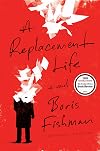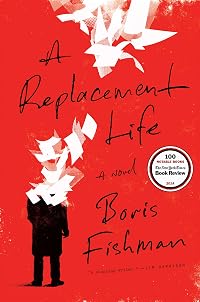
A Replacement Life
by Boris Fishman
On This Page
Description
Winner of the VCU Cabell First Novelist AwardWinner of the American Library Association's Sophie Brody Medal
Finalist for the National Jewish Book Award
A singularly talented writer makes his literary debut with this provocative, soulful, and sometimes hilarious story of a failed journalist asked to do the unthinkable: Forge Holocaust-restitution claims for old Russian Jews in Brooklyn, New York.
Yevgeny Gelman, grandfather of Slava Gelman, "didn't suffer in the exact way" he needs to have show more suffered to qualify for the restitution the German government has been paying out to Holocaust survivors. But suffer he has—as a Jew in the war; as a second-class citizen in the USSR; as an immigrant to America. So? Isn't his grandson a "writer"?
High-minded Slava wants to put all this immigrant scraping behind him. Only the American Dream is not panning out for him—Century, the legendary magazine where he works as a researcher, wants nothing greater from him. Slava wants to be a correct, blameless American—but he wants to be a lionized writer even more.
Slava's turn as the Forger of South Brooklyn teaches him that not every fact is the truth, and not every lie a falsehood. It takes more than law-abiding to become an American; it takes the same self-reinvention in which his people excel. Intoxicated and unmoored by his inventions, Slava risks exposure. Cornered, he commits an irrevocable act that finally grants him a sense of home in America, but not before collecting a price from his family.
A Replacement Life is a dark, moving, and beautifully written novel about family, honor, and justice.
. show less
Tags
Recommendations














Member Reviews
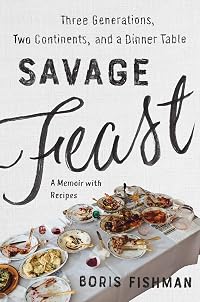
A marvelous debut novel from a writer who recently caught my eye with his riveting memoir called "Savage Feast" (2019). "A Replacement Life" is also quite autobiographical, although the names (and maybe certain other things) are changed. Boris Fishman's talent shines in both works.
In this novel, there is a moral dilemma, a love dilemma, an age-old dilemma of belonging and fitting in - for an immigrant (specifically here for an ex-Soviet Jewish person), and all this is crafted, with stirring insight, in the inimitable style of narration that draws you in from page one.
Here's an example of a poignant truth about numerous ex-Soviet immigrants in New York (all kinds, not just Jewish), offered by the author quite eloquently:
"These unlike show more people had been tossed together like salad by the cupidity of the Soviet government, and now, in America, they were forced to keep speaking Russian, their sole bond, if they wanted to understand each other.... The brethren who had remained in the old world had moved forward in history - they were now citizens of independent countries, their native languages withdrawn from under the rug, buffed, spit-shined, returned to first place, but here in Brooklyn, they were stuck forever in Soviet times. They have gotten marooned on a new island except for what their children would do..." show less
In this novel, there is a moral dilemma, a love dilemma, an age-old dilemma of belonging and fitting in - for an immigrant (specifically here for an ex-Soviet Jewish person), and all this is crafted, with stirring insight, in the inimitable style of narration that draws you in from page one.
Here's an example of a poignant truth about numerous ex-Soviet immigrants in New York (all kinds, not just Jewish), offered by the author quite eloquently:
"These unlike show more people had been tossed together like salad by the cupidity of the Soviet government, and now, in America, they were forced to keep speaking Russian, their sole bond, if they wanted to understand each other.... The brethren who had remained in the old world had moved forward in history - they were now citizens of independent countries, their native languages withdrawn from under the rug, buffed, spit-shined, returned to first place, but here in Brooklyn, they were stuck forever in Soviet times. They have gotten marooned on a new island except for what their children would do..." show less
Slava Gelman is a junior staffer at a magazine that isn't but might as well be The New Yorker, where his assignment is to ferret out and crack wise about absurd news items in small-town newspapers. Slava lives on the Upper East Side, which isn't but might as well be on the other side of the world from "Soviet Brooklyn" where he landed as a child on arrival from Minsk (as did Fishman), where his grandparents still live and which his parents fled for suburban New Jersey. When Slava's grandmother dies, he treks via subway to Brooklyn and before long is trekking regularly, roped by his scheming grandfather into crafting (he's a writer, isn't he?) a fictitious claim to the German government for a slice of the reparations pie earmarked for show more Holocaust survivors. So what if Grandfather didn't suffer precisely as required to be eligible? Didn't the Germans make sure to kill those who did? So begins Boris Fishman's darkly comic and very impressive debut novel.
Fishman pulls off a difficult feat in a first novel, even one so closely grounded in his own experience. He has written a book that is both funny and genuinely moving. The Jews of Brighton Beach, who survived the Nazis and the Soviets through cunning, luck and sheer force of will, are a brilliantly drawn tough lot, re-inventing themselves once again in a place where you can "afford to be decent." Slava wants to free himself from "the swamp broth of Soviet Brooklyn" and earn a byline by writing elegant prose but in borrowing true elements of his dead grandmother's life to fashion false narratives for his grandfather and his friends, he is drawn more deeply into the past and into the community he has longed to escape.
Poor, confused Slava, torn between past and present, loyalty and honor, skinny uptown Arianna and luscious childhood playmate Vera,...Is he being followed? Will his fraud be uncovered? At what cost? Will he do the right thing? I loved this book. Fishman tells a good story, one with moral ambiguity and conflicting loyalties, and his prose crackles with irony and wit. If you were in any danger of thinking that the immigrant experience has been exhaustively mined in fiction, think again. Boris Fishman is a welcome voice and "A Replacement Life" is a wholly original and worthy contribution. show less
Fishman pulls off a difficult feat in a first novel, even one so closely grounded in his own experience. He has written a book that is both funny and genuinely moving. The Jews of Brighton Beach, who survived the Nazis and the Soviets through cunning, luck and sheer force of will, are a brilliantly drawn tough lot, re-inventing themselves once again in a place where you can "afford to be decent." Slava wants to free himself from "the swamp broth of Soviet Brooklyn" and earn a byline by writing elegant prose but in borrowing true elements of his dead grandmother's life to fashion false narratives for his grandfather and his friends, he is drawn more deeply into the past and into the community he has longed to escape.
Poor, confused Slava, torn between past and present, loyalty and honor, skinny uptown Arianna and luscious childhood playmate Vera,...Is he being followed? Will his fraud be uncovered? At what cost? Will he do the right thing? I loved this book. Fishman tells a good story, one with moral ambiguity and conflicting loyalties, and his prose crackles with irony and wit. If you were in any danger of thinking that the immigrant experience has been exhaustively mined in fiction, think again. Boris Fishman is a welcome voice and "A Replacement Life" is a wholly original and worthy contribution. show less
I think that it is almost unfair to call this a brilliant debut novel, because in my opinion, Boris Fishman does not write like a debut novelist. Taken at face-value, this story is marvelous, with memorable, powerful, evocative characters and a stirring and gripping plot, not your typical story of immigration by a long shot. This story is one with the literary flavor of the ubiquitous onion, peeling away at multiple layers of one's sense of self, of history, of love, of connection across the generations, of the ability to sacrifice and to use within each person, of the variation in cultural definitions of lies and the truths that matter. On top of all of that, the ending is suspenseful and satisfying, and that is not always seen despite show more reading a great story, particularly in a debut novel. Upon completion, I can genuinely say that I think I gained some measure of new insight into the heart and mind of a new immigrant to the United States. Just read it! show less
first, my thanks to Harper for my advanced reader copy.
I had a great time with this novel and have already recommended it to a number of people; I've also put it on the list for my book group to read in 2015. Obviously, I liked it. A lot.
Slava Gelman comes from a family of Russian immigrants who had settled in Brooklyn. He'd made a conscious decision to "become an American," to leave his grandfather Yevgeny's "neighborhood of Russians, Belarussians, Ukrainians, Moldovans, Georgians and Uzbeks" and set his sights on working for Century, a longstanding and prestigious magazine, "older than The New Yorker and, despite a recent decline, forever a paragon." Staying in the neighborhood would keep him among the ranks of those who ". . . show more don't go to America," except for the DMV and Brodvei," or who "shop at marts that sold birch-leafed switches" to "whip yourself in the steam bath and rare Turkish shampoos that reversed baldness . . ." but this is not what Slava wants. He had to leave, in order to
"strip from his writing the pollution that repossed it every time he returned to the swamp broth of Soviet Brooklyn."
In short, to write for Century, he had to get away, to "Dialyze himself, like Grandmother's kidneys." So it's off to Manhattan and a sparsely-furnished, affordable studio apartment. As he's about to find out, getting away is not so easy.
As the novel opens, it's July, 2006, and just after 5 am, Slava is surprised by the ringing of the telephone. It's not because it's so early, but rather because no one ever calls him, not even his family, since he'd "forbidden" them to call. He doesn't answer it, but the second time it rings, it's his mother telling him that his "grandmother isn't." She'd died alone in the care facility. He hadn't seen Grandmother Sofia for about a month, and now she's gone, and as his mother puts it, it's the family's "first American death." After the funeral, Yevgeny asks him to write a narrative that would allow him to collect reparations as a victim of the Holocaust. He hands Slava an envelope, addressed to Sofia who was registered at Yad Vashem in Jerusalem. When Slava notes that this was for his grandmother, not his grandfather, his grandfather tells him to make it up. As he states,
"Maybe I didn't suffer in the exact way I need to have suffered ... but they made sure to kill all the people who did. "
Eventually Slava gives in, and he starts thinking about all of the things that his grandparents never told him, and how he really knew nothing about his grandmother's life and what she'd gone through. What little he does know goes into the narrative, and the rest, he invents but makes fit the story. His work is so good that word spreads, and Yevgeny pimps him out to write other narratives for friends. Each one builds a little more on the made-up, missing details of Sofia's life, and Slava begins to find it easier to lie, to fabricate, to make stuff up. He gets so good at it that he even starts doing it at his job at Century -- and it spills over into other parts of his life as well. However, the narratives he writes also have a few unintended results for Slava that he probably never could have predicted.
A Replacement Life made me laugh out loud in a few spots, especially when it came to the older folk in this book and the insider look at the Russian immigrant culture from someone who is part of it. On the other hand, it's also very touching, not only in terms of family relationships but also because of the history that's recalled in this book. Another positive: the Holocaust is a very large part of this story, but the terrors of the Holocaust, for the most part, are kept in check so you can focus on the modern-day narrative. And I don't understand why people have complained about the writing style: it's obvious that Mr. Fishman enjoys playing with language and playing with other writers' words in his own way. I found it very easy to read in terms of writing and style. This book I can definitely recommend -- and not simply as a summer read. show less
I had a great time with this novel and have already recommended it to a number of people; I've also put it on the list for my book group to read in 2015. Obviously, I liked it. A lot.
Slava Gelman comes from a family of Russian immigrants who had settled in Brooklyn. He'd made a conscious decision to "become an American," to leave his grandfather Yevgeny's "neighborhood of Russians, Belarussians, Ukrainians, Moldovans, Georgians and Uzbeks" and set his sights on working for Century, a longstanding and prestigious magazine, "older than The New Yorker and, despite a recent decline, forever a paragon." Staying in the neighborhood would keep him among the ranks of those who ". . . show more don't go to America," except for the DMV and Brodvei," or who "shop at marts that sold birch-leafed switches" to "whip yourself in the steam bath and rare Turkish shampoos that reversed baldness . . ." but this is not what Slava wants. He had to leave, in order to
"strip from his writing the pollution that repossed it every time he returned to the swamp broth of Soviet Brooklyn."
In short, to write for Century, he had to get away, to "Dialyze himself, like Grandmother's kidneys." So it's off to Manhattan and a sparsely-furnished, affordable studio apartment. As he's about to find out, getting away is not so easy.
As the novel opens, it's July, 2006, and just after 5 am, Slava is surprised by the ringing of the telephone. It's not because it's so early, but rather because no one ever calls him, not even his family, since he'd "forbidden" them to call. He doesn't answer it, but the second time it rings, it's his mother telling him that his "grandmother isn't." She'd died alone in the care facility. He hadn't seen Grandmother Sofia for about a month, and now she's gone, and as his mother puts it, it's the family's "first American death." After the funeral, Yevgeny asks him to write a narrative that would allow him to collect reparations as a victim of the Holocaust. He hands Slava an envelope, addressed to Sofia who was registered at Yad Vashem in Jerusalem. When Slava notes that this was for his grandmother, not his grandfather, his grandfather tells him to make it up. As he states,
"Maybe I didn't suffer in the exact way I need to have suffered ... but they made sure to kill all the people who did. "
Eventually Slava gives in, and he starts thinking about all of the things that his grandparents never told him, and how he really knew nothing about his grandmother's life and what she'd gone through. What little he does know goes into the narrative, and the rest, he invents but makes fit the story. His work is so good that word spreads, and Yevgeny pimps him out to write other narratives for friends. Each one builds a little more on the made-up, missing details of Sofia's life, and Slava begins to find it easier to lie, to fabricate, to make stuff up. He gets so good at it that he even starts doing it at his job at Century -- and it spills over into other parts of his life as well. However, the narratives he writes also have a few unintended results for Slava that he probably never could have predicted.
A Replacement Life made me laugh out loud in a few spots, especially when it came to the older folk in this book and the insider look at the Russian immigrant culture from someone who is part of it. On the other hand, it's also very touching, not only in terms of family relationships but also because of the history that's recalled in this book. Another positive: the Holocaust is a very large part of this story, but the terrors of the Holocaust, for the most part, are kept in check so you can focus on the modern-day narrative. And I don't understand why people have complained about the writing style: it's obvious that Mr. Fishman enjoys playing with language and playing with other writers' words in his own way. I found it very easy to read in terms of writing and style. This book I can definitely recommend -- and not simply as a summer read. show less
There is much to like in this debut novel by Fishman who, like his protagonist, came to this country from Minsk at the age of 10, but it didn't wow me as much as the New York Times reviewers (Book Review and daily paper) who raved about it.
Slava Gelman is trying to distance himself from his immigrant parents and grandparents and all the other Jews from the former Soviet Union who live in Brooklyn. He wants to be a writer and is working in a lowly job for the "Century," which is said to be older than The New Yorker but is clearly based on it. At the start of the novel, an early morning phone call from his mother (who, like the rest of the family, he has forbidden to call him) tells him his grandmother "isn't" -- that is, she has died. show more Thus begins Slava's journey back to his family, his family history, and immigrant Brooklyn, where the past lives on. But Slava is torn. Even as he becomes more entwined in the Russian immigrant community, starting with his grandfather who gets him involved in a scheme to get reparations money from the German government for Soviet Jews who didn't fall quite in the categories the money is supposed to be used for, and continuing with many in the community who scheme to get him involved with the luscious, vapid, but clever Vera, he also begins a relationship with Arianna, a very American (but still Jewish) coworker at the Century.
There were three things I really liked about this book: the characterization of the atmosphere and the inhabitants of Russified South Brooklyn, the questions of the nature of truth and justice that the novel raises, and the differences between the Russian immigrants, for whom the past informs the present, and the "Americans" who more or less live in the present. Slava's grandfather is a wonderful character, a man who "grew up in other people's gardens," as the Russian saying goes, meaning he found a way, even in Soviet Russia, to always be the one who could provide sausage, or vodka, or whatever people needed. Needless to say, this created a lot of people both indebted to him and resentful of him, people who also ended up in Brooklyn. (Incidentally, when I lived downtown, the owner of the laundromat I frequented was a Russian immigrant who complained to me once that he made a lot of money in the black market in the Soviet Union, and here, in New York, he had to run a laundromat.) The other people in the neighborhood are equally vividly brought to life, as is the life of the community itself.
The older generation of these Jewish immigrants suffered horribly, not only under the Soviets, but earlier during the Nazi takeover of eastern Europe; Slava's grandmother, whose horrific Holocaust story eventually emerges, had applied, legitimately, for German reparations, but the letter accepting her claim arrived a few days after she died. The grandfather twists Slava's arm to write ("you're a writer, right?") a claim for him, based on the grandmother's history, and one thing leads to another and Slava is soon writing claims for dozens of others. Of course, being partly American, he has qualms about this and worries about being found out, thinks he's being followed, and researches as discreetly as he can what the penalties for this kind of fraud might be. The former Russians view it differently: all the suffering was caused by the Germans, so why are some eligible for reparations and some not? And after all, as the grandfather points out, most of those who would be "eligible" were in fact murdered by the Nazis and their helpers. (One of the interesting things in this novel is the relationship between the Jewish immigrants from the former Soviet Union and the non-Jewish immigrants, many of whom were -- and may still be -- antisemitic.) All of this leads up to Slava being discovered -- but how? And how will he deal with it? What is truth? What is justice?
The parts that didn't work as well for me in this novel were the "American" parts -- Slava's work at the Century and especially his relationship with Arianna. I understand they were needed to develop Slava's character and to provide contrast with the immigrant community's attitudes, but the Russian material was just lots more vibrant, including the differences in the expressiveness of the language. show less
Slava Gelman is trying to distance himself from his immigrant parents and grandparents and all the other Jews from the former Soviet Union who live in Brooklyn. He wants to be a writer and is working in a lowly job for the "Century," which is said to be older than The New Yorker but is clearly based on it. At the start of the novel, an early morning phone call from his mother (who, like the rest of the family, he has forbidden to call him) tells him his grandmother "isn't" -- that is, she has died. show more Thus begins Slava's journey back to his family, his family history, and immigrant Brooklyn, where the past lives on. But Slava is torn. Even as he becomes more entwined in the Russian immigrant community, starting with his grandfather who gets him involved in a scheme to get reparations money from the German government for Soviet Jews who didn't fall quite in the categories the money is supposed to be used for, and continuing with many in the community who scheme to get him involved with the luscious, vapid, but clever Vera, he also begins a relationship with Arianna, a very American (but still Jewish) coworker at the Century.
There were three things I really liked about this book: the characterization of the atmosphere and the inhabitants of Russified South Brooklyn, the questions of the nature of truth and justice that the novel raises, and the differences between the Russian immigrants, for whom the past informs the present, and the "Americans" who more or less live in the present. Slava's grandfather is a wonderful character, a man who "grew up in other people's gardens," as the Russian saying goes, meaning he found a way, even in Soviet Russia, to always be the one who could provide sausage, or vodka, or whatever people needed. Needless to say, this created a lot of people both indebted to him and resentful of him, people who also ended up in Brooklyn. (Incidentally, when I lived downtown, the owner of the laundromat I frequented was a Russian immigrant who complained to me once that he made a lot of money in the black market in the Soviet Union, and here, in New York, he had to run a laundromat.) The other people in the neighborhood are equally vividly brought to life, as is the life of the community itself.
The older generation of these Jewish immigrants suffered horribly, not only under the Soviets, but earlier during the Nazi takeover of eastern Europe; Slava's grandmother, whose horrific Holocaust story eventually emerges, had applied, legitimately, for German reparations, but the letter accepting her claim arrived a few days after she died. The grandfather twists Slava's arm to write ("you're a writer, right?") a claim for him, based on the grandmother's history, and one thing leads to another and Slava is soon writing claims for dozens of others. Of course, being partly American, he has qualms about this and worries about being found out, thinks he's being followed, and researches as discreetly as he can what the penalties for this kind of fraud might be. The former Russians view it differently: all the suffering was caused by the Germans, so why are some eligible for reparations and some not? And after all, as the grandfather points out, most of those who would be "eligible" were in fact murdered by the Nazis and their helpers. (One of the interesting things in this novel is the relationship between the Jewish immigrants from the former Soviet Union and the non-Jewish immigrants, many of whom were -- and may still be -- antisemitic.) All of this leads up to Slava being discovered -- but how? And how will he deal with it? What is truth? What is justice?
The parts that didn't work as well for me in this novel were the "American" parts -- Slava's work at the Century and especially his relationship with Arianna. I understand they were needed to develop Slava's character and to provide contrast with the immigrant community's attitudes, but the Russian material was just lots more vibrant, including the differences in the expressiveness of the language. show less
Well written and quite funny for a novel about Holocaust reparations, this didn't quite work for me. I didn't find the story that compelling and there is a sameness to this kind of male, Jewish, Russian emigre, literary, Brooklynvs Manhattan, sex-obsessed voice.
The more I think about it, the more I think the novel was a bit too baggy and the interesting bits get lost in the ruminating. Maybe a little too fond of itself. Another instance of less would be more.
The more I think about it, the more I think the novel was a bit too baggy and the interesting bits get lost in the ruminating. Maybe a little too fond of itself. Another instance of less would be more.
I have a soft spot for ‘tragicomedies’ and A Replacement Life is a great example of the darker, more serious variety. Fishman establishes the ominous, yet ironic tone from the word go. This novel will really appeal to word and language enthusiasts. The sharp edges, surly demeanours and cunning of Fishman’s senior citizen characters are endearing in their authenticity. Read full review >>
Members
- Recently Added By
Author Information

9 Works 608 Members
Awards and Honors
Common Knowledge
- Canonical title
- A Replacement Life
- Original title
- A Replacement Life
- Original publication date
- 2014
- People/Characters*
- Slava Gelman; Jevgeni Gelman
- Important places*
- Brooklyn, New York, USA
- Important events
- Holocaust
- Epigraph*
- Al het schrijven is wraak.
- Reinaldo Arenas - Dedication*
- Voor mijn grootouders en mijn ouders
- First words*
- Even na vijf uur rinkelde de telefoon.
- Last words*
- (Click to show. Warning: May contain spoilers.)De witte pluisjes dwarrelen neer als zomersneeuw. Odoevanzjik.
*Some information comes from Common Knowledge in other languages. Click "Edit" for more information.
Classifications
Statistics
- Members
- 236
- Popularity
- 137,819
- Reviews
- 8
- Rating
- (3.38)
- Languages
- Dutch, English, German
- Media
- Paper, Audiobook, Ebook
- ISBNs
- 12
- ASINs
- 4