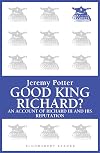
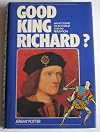
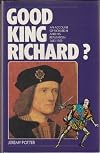
Good King Richard?
by Jeremy Potter
On This Page
Description
"Richard III, the so-called 'last English King of England' and the wicked uncle of popular tradition, is the most controversial and enigmatic of monarchs. Still the Great Debate between traditionalists and revisionists rages on. Was he an enlightened legislator out of his depth in the political intrigues of his time? Or was he simply, brutally, the 'gargoyle on the great cathedral of English history'? Searching for the man behind the portraits, Jeremy Potter adduces a formidable array of show more colourful and quarrelsome voices from St Thomas More to Laurence Olivier."--BOOK JACKET.Title Summary field provided by Blackwell North America, Inc. All Rights Reserved show lessTags
Recommendations























Member Reviews
The task this book undertakes is vital. It is also almost impossible.
Let us be clear: Richard III was certainly not the incarnation of evil portrayed by William Shakespeare, who took a piece of near-fiction and further fictionalized it. Neither was Richard III the near-saint found in books such as The Daughter of Time.
To try to learn the truth, we need not only to assess our very limited genuine sources (the Croyland Chronicle, Mancini, etc.) but also the way people have viewed Richard III over the years. We need to know this to be able to sift the evidence and analysis compiled since Richard's own time.
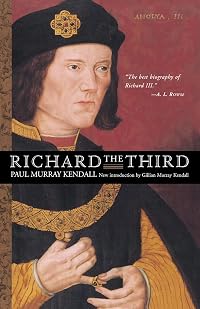
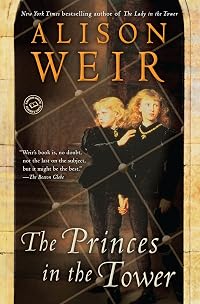
This book sets out to do that. But, sadly, it is compiled by an author who most emphatically belongs to the pro-Richard camp. I can't show more entirely disagree; I'm mildly pro-Richard myself. But it affects the course of Potter's arguments. The book is useful in many ways. But in the end, it joins the large pile of propagandistic books about Richard (e.g. the twentieth century opposing "biographies" by Paul Murray Kendall and Desmond Seward and the work-of-fiction-labelled-as-biography by Alison Weir) rather than the handful of genuine works of historiography.
It is possible to write good solid books about Richard III -- Charles Ross did it with a mostly anti-Richard volume, and Anthony Cheetham did it with his much kinder biography. If two such scholars had collaborated to edit a volume such as Potter's, it would do the historical world a genuine service. As it is -- this book is worth having, but it isn't going to resolve any of the great issues in Ricardian scholarship. show less
Let us be clear: Richard III was certainly not the incarnation of evil portrayed by William Shakespeare, who took a piece of near-fiction and further fictionalized it. Neither was Richard III the near-saint found in books such as The Daughter of Time.
To try to learn the truth, we need not only to assess our very limited genuine sources (the Croyland Chronicle, Mancini, etc.) but also the way people have viewed Richard III over the years. We need to know this to be able to sift the evidence and analysis compiled since Richard's own time.
This book sets out to do that. But, sadly, it is compiled by an author who most emphatically belongs to the pro-Richard camp. I can't show more entirely disagree; I'm mildly pro-Richard myself. But it affects the course of Potter's arguments. The book is useful in many ways. But in the end, it joins the large pile of propagandistic books about Richard (e.g. the twentieth century opposing "biographies" by Paul Murray Kendall and Desmond Seward and the work-of-fiction-labelled-as-biography by Alison Weir) rather than the handful of genuine works of historiography.
It is possible to write good solid books about Richard III -- Charles Ross did it with a mostly anti-Richard volume, and Anthony Cheetham did it with his much kinder biography. If two such scholars had collaborated to edit a volume such as Potter's, it would do the historical world a genuine service. As it is -- this book is worth having, but it isn't going to resolve any of the great issues in Ricardian scholarship. show less
It was once remarked that it appeared to be de rigeur for politicans to apologise for something. Similar, it seems to be now standard to look upon the brief life & reign of Richard of York in a kinder light than shone that by the Bard.
Written for for the quincentenary of the battle of Bosworth by the then-chairman of the Richard III Society, the book is a name-dropper's dream.Aside from the standard negative Tudor propagandists, Shakespeare & Sir Thomas More, the reader is treated to the wit, wisdom or othewise of Earl Walpole, a recently-exposed political charlatan, Phillipe de Commynes, various well-to-do families like the Pastons and even the odd aristocrat and monarch or two.
Written for for the quincentenary of the battle of Bosworth by the then-chairman of the Richard III Society, the book is a name-dropper's dream.Aside from the standard negative Tudor propagandists, Shakespeare & Sir Thomas More, the reader is treated to the wit, wisdom or othewise of Earl Walpole, a recently-exposed political charlatan, Phillipe de Commynes, various well-to-do families like the Pastons and even the odd aristocrat and monarch or two.
Ratings
Members
- Recently Added By
Author Information

15 Works 202 Members
Common Knowledge
- Canonical title
- Good King Richard?
- Original title
- Good King Richard?
- Original publication date
- 1983
- People/Characters
- Richard III, King of England; Henry VII, King of England
- Important events
- Wars of the Roses (1455 | 1485)
- First words
- History is not made by great men and women, nor by social and economic forces. It is made by historians.
Classifications
- Genres
- History, Nonfiction, General Nonfiction, Biography & Memoir
- DDC/MDS
- 942.04 — History & geography History of Europe England and Wales England Lancaster and York 1400-85
- LCC
- DA260 .P67 — History of Europe, Asia, Africa and Oceania Great Britain History of Great Britain England History By period Early and medieval to 1485 1154-1485. Angevins. Plantagenets.
- BISAC
Statistics
- Members
- 77
- Popularity
- 407,650
- Reviews
- 2
- Rating
- (3.93)
- Languages
- English
- Media
- Paper, Ebook
- ISBNs
- 4
- ASINs
- 3