On This Page
Description
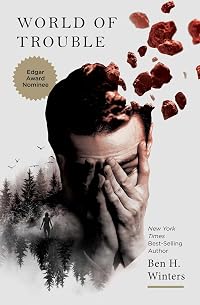
“A genre-defying blend of crime writing and science fiction.”—Alexandra Alter, The New York TimesThe explosive final installment in the Edgar® Award winning Last Policeman series.
With the doomsday asteroid looming, Detective Hank Palace has found sanctuary in the woods of New England, secure in a well-stocked safe house with other onetime members of the Concord police force. But with time ticking away before the asteroid makes landfall, Hank’s safety is only relative, and his show more only relative—his sister Nico—isn’t safe. Soon, it’s clear that there’s more than one earth-shattering revelation on the horizon, and it’s up to Hank to solve the puzzle before time runs out...for everyone. show less
Tags
Recommendations







Member Reviews
Spoiler-y.
Phew.
Disaster averted.
No, not the asteroid. The ending.
Toward the end of the middle book in the trilogy, it seemed that the earth might be snatched from the jaws of annihilation by some unlikely measure. Luckily, Winters didn’t wimp out and make a happy ending.
Then again, he kind of did. Not everything works out for Henry in this book, but he does complete the investigation that has consumed him; namely where is sister Nico and can they both meet their ends on better terms than last they met. He does find her, but those terms are left to stand. I felt that Henry finally became the policeman he longed to be in this final book. There’s more investigation, technique and dogged pursuit of clues. Along the way he meets the show more good, the bad and the trippy. It makes for some needed distraction from the grimness that permeates the rest of the story.
I especially liked the construct surrounding the Amish clan he meets. When he and Atlee first clash in the cornfield, I knew what Atlee was up to and didn’t blame him for trying to protect his family’s psyches in what only he knew would be their last days. Better to go out with your worldview intact instead of potentially becoming like all the other unshipped humans running amok. And I was glad about Houdini, too. Poor little mutt. Then again, he’s as innocent as Atlee’s family, so could be he’s not so poor.
Maybe it’s because I read a lot of crime thriller type books, but I suspected Jean/Lily as the real killer right away. I didn’t suspect the reasons why though. Just thought she might have flipped out. The real reason is more sinister and sadly more likely, given the state of humanity and the cruelty and manipulation we’re capable of. I was a little sad to see Cortez go out the way he did. I kind of liked his devious mind. The explanation Winters gave for the miraculous helicopter, Jordan’s internet access and the seemingly wide reach of Nico’s co-conspirators, was satisfactory, too. It blew off the whiff of implausibility that clung to it.
In reading reviews for the previous two books, people complain that Henry is too morose or angry. Well, what do you expect? Did you want some happy-go-lucky nincompoop who clings to denial in the face of reality? Did you want some twerp spouting platitudes about being positive and living life to the fullest? Henry has his illusions, but thankfully they’re not bound up in claptrap and false hope. I thought Henry was drawn well and his attitude seemed right and fitting given the impending doom. Not only that, but the deterioration of society as a whole seemed plausible.
It occurred to me while reading to wonder how Henry’s story got told if the whole world died...some sort of time capsule rescued by future generations of humans? Rescued by our replacements, evolved out of what came after? Aliens? Eh, after a bit, I let it go. show less
Phew.
Disaster averted.
No, not the asteroid. The ending.
Toward the end of the middle book in the trilogy, it seemed that the earth might be snatched from the jaws of annihilation by some unlikely measure. Luckily, Winters didn’t wimp out and make a happy ending.
Then again, he kind of did. Not everything works out for Henry in this book, but he does complete the investigation that has consumed him; namely where is sister Nico and can they both meet their ends on better terms than last they met. He does find her, but those terms are left to stand. I felt that Henry finally became the policeman he longed to be in this final book. There’s more investigation, technique and dogged pursuit of clues. Along the way he meets the show more good, the bad and the trippy. It makes for some needed distraction from the grimness that permeates the rest of the story.
I especially liked the construct surrounding the Amish clan he meets. When he and Atlee first clash in the cornfield, I knew what Atlee was up to and didn’t blame him for trying to protect his family’s psyches in what only he knew would be their last days. Better to go out with your worldview intact instead of potentially becoming like all the other unshipped humans running amok. And I was glad about Houdini, too. Poor little mutt. Then again, he’s as innocent as Atlee’s family, so could be he’s not so poor.
Maybe it’s because I read a lot of crime thriller type books, but I suspected Jean/Lily as the real killer right away. I didn’t suspect the reasons why though. Just thought she might have flipped out. The real reason is more sinister and sadly more likely, given the state of humanity and the cruelty and manipulation we’re capable of. I was a little sad to see Cortez go out the way he did. I kind of liked his devious mind. The explanation Winters gave for the miraculous helicopter, Jordan’s internet access and the seemingly wide reach of Nico’s co-conspirators, was satisfactory, too. It blew off the whiff of implausibility that clung to it.
In reading reviews for the previous two books, people complain that Henry is too morose or angry. Well, what do you expect? Did you want some happy-go-lucky nincompoop who clings to denial in the face of reality? Did you want some twerp spouting platitudes about being positive and living life to the fullest? Henry has his illusions, but thankfully they’re not bound up in claptrap and false hope. I thought Henry was drawn well and his attitude seemed right and fitting given the impending doom. Not only that, but the deterioration of society as a whole seemed plausible.
It occurred to me while reading to wonder how Henry’s story got told if the whole world died...some sort of time capsule rescued by future generations of humans? Rescued by our replacements, evolved out of what came after? Aliens? Eh, after a bit, I let it go. show less
 This review was written for LibraryThing Early Reviewers.
Note: There are no spoilers, except as clearly marked.
This is Book Three in a pre-apocalyptic/noir/police-procedural series set in more-or-less current times.
Henry (“Hank”) Palace, 29, is a police detective in Concord, New Hampshire, who got promoted from patrol officer because basically everybody else walked off the job. In fact, people all over the world walked off their jobs, because “Maia,” a 6.5-kilometer-diameter asteroid, is on a collision course with the earth. It will, according to reliable sources, cause a series of interlocking cataclysms resulting in the immediate death of at least half the world's population, with later deaths to follow.
In the first book in this trilogy, The Last Policeman, there were six months show more left until the date of collision. In Book Two, Countdown City, only 77 days remained. In this final installment of the series, there are 14 days left until impact.
In the previous books, we learned that many people have committed suicide, committed murder, joined religious sects, zoned out on drugs, or got to work stocking up a basement with any supplies that could be saved or stolen. But being a policeman is what has always made sense to Hank, so that’s what he still does, even without pay.
Now he is using what he thinks is his remaining time to find his younger sister Nico. Nico, long a rebel and an iconoclast, is part of a group that contends the path of the asteroid can be diverted by a pinpoint nuclear explosion, with a theoretical success probability of 85%. The group believes that the government has imprisoned the scientist who can make this “standoff burst” happen, and so they are working against the cosmic clock to try to free him and save the world.
In Book Two, Hank got impatient and angry with Nico:
"I told her this was delusional. I told her this was Santa Claus and the Tooth Fairy and she was being a fool, and then she disappeared and I let her go.”
In this book, although Hank still believes that he is right and Nico is wrong, he is obsessed with finding her in order to make up for their final bitter conversation, hug her, and apologize for letting her go. Hank and Nico are polar opposites, but they love each other; they are all each other has left of a family. Hank cannot bear to think of not reconciling before whatever is coming. But concurrent with his quest, he feels compelled to keep trying to help uphold the moral order and “do the right thing”, even though there is no longer much justification for any of it.
Spoilery Discussion:
WARNING: SKIP THIS NEXT SECTION TO AVOID SPOILERS AND SCROLL DOWN TO EVALUATION.
What makes this pre-apocalyptic trilogy unique is that Winters actually allows the apocalypse to happen. There are no last minute saves, no dei ex machina, no Bill Pullman getting in the fighter plane and taking out the enemy. The world ends. Before it does so, Winters takes us on a tour of most of the possible reactions you might see to impending doom by an approaching asteroid: religious hysteria, crime sprees, sex sprees, psychosis, drugs, denial - but then there is Hank Palace, keeping on keeping on, cycling through the country in search of his younger sister. He is almost oblivious to the dangers that keep getting thrown in his path; nothing can stop him in his crusade. And in the end, he experiences a kind of redemption, in a lovely bittersweet dénouement reminiscent of On the Beach by Nevil Shute (a story known to most people by the still-amazingly good 1959 movie adaptation starring Gregory Peck, Ava Gardner, Fred Astaire and Anthony Perkins).
END OF SPOILERS
Evaluation: I thought this third book was the best in the series, rather than following the usual pattern of a trilogy starting out great and then petering out by the end. Although I never really connected with either Hank or Nico, the story certainly is thought-provoking - what would you do, if you thought the world would end in six months? show less
This is Book Three in a pre-apocalyptic/noir/police-procedural series set in more-or-less current times.
Henry (“Hank”) Palace, 29, is a police detective in Concord, New Hampshire, who got promoted from patrol officer because basically everybody else walked off the job. In fact, people all over the world walked off their jobs, because “Maia,” a 6.5-kilometer-diameter asteroid, is on a collision course with the earth. It will, according to reliable sources, cause a series of interlocking cataclysms resulting in the immediate death of at least half the world's population, with later deaths to follow.
In the first book in this trilogy, The Last Policeman, there were six months show more left until the date of collision. In Book Two, Countdown City, only 77 days remained. In this final installment of the series, there are 14 days left until impact.
In the previous books, we learned that many people have committed suicide, committed murder, joined religious sects, zoned out on drugs, or got to work stocking up a basement with any supplies that could be saved or stolen. But being a policeman is what has always made sense to Hank, so that’s what he still does, even without pay.
Now he is using what he thinks is his remaining time to find his younger sister Nico. Nico, long a rebel and an iconoclast, is part of a group that contends the path of the asteroid can be diverted by a pinpoint nuclear explosion, with a theoretical success probability of 85%. The group believes that the government has imprisoned the scientist who can make this “standoff burst” happen, and so they are working against the cosmic clock to try to free him and save the world.
In Book Two, Hank got impatient and angry with Nico:
"I told her this was delusional. I told her this was Santa Claus and the Tooth Fairy and she was being a fool, and then she disappeared and I let her go.”
In this book, although Hank still believes that he is right and Nico is wrong, he is obsessed with finding her in order to make up for their final bitter conversation, hug her, and apologize for letting her go. Hank and Nico are polar opposites, but they love each other; they are all each other has left of a family. Hank cannot bear to think of not reconciling before whatever is coming. But concurrent with his quest, he feels compelled to keep trying to help uphold the moral order and “do the right thing”, even though there is no longer much justification for any of it.
Spoilery Discussion:
WARNING: SKIP THIS NEXT SECTION TO AVOID SPOILERS AND SCROLL DOWN TO EVALUATION.
What makes this pre-apocalyptic trilogy unique is that Winters actually allows the apocalypse to happen. There are no last minute saves, no dei ex machina, no Bill Pullman getting in the fighter plane and taking out the enemy. The world ends. Before it does so, Winters takes us on a tour of most of the possible reactions you might see to impending doom by an approaching asteroid: religious hysteria, crime sprees, sex sprees, psychosis, drugs, denial - but then there is Hank Palace, keeping on keeping on, cycling through the country in search of his younger sister. He is almost oblivious to the dangers that keep getting thrown in his path; nothing can stop him in his crusade. And in the end, he experiences a kind of redemption, in a lovely bittersweet dénouement reminiscent of On the Beach by Nevil Shute (a story known to most people by the still-amazingly good 1959 movie adaptation starring Gregory Peck, Ava Gardner, Fred Astaire and Anthony Perkins).
END OF SPOILERS
Evaluation: I thought this third book was the best in the series, rather than following the usual pattern of a trilogy starting out great and then petering out by the end. Although I never really connected with either Hank or Nico, the story certainly is thought-provoking - what would you do, if you thought the world would end in six months? show less
The Last Policeman series is simply awesome and underrated. And now the trilogy has come to a close.
Technically, these books would probably fit more comfortably in the Crime & Mystery/Police Procedural category. But there’s a twist. Imagine that for the past year, everyone has known that a giant killer asteroid is hurtling towards earth, set to impact in just a matter of days. On Boomsday, tsunamis will wipe out the coasts, atmospheric dust will black out the sun, and life as we know it would cease to exist.
Over time, society has degraded by degrees. As the probability of a direct hit gradually inched towards 100%, people abandoned jobs by droves to go bucket list or to reconnect with old friends and loved ones. Others sought show more religion. Some chose suicide. Everyone seems to have their own way of dealing with the end of the world. Protagonist Hank Palace has even developed a color-coded system for categorizing towns based on their populations’ reactions – “Blue-Towns” look abandoned, but are actually filled with scared, stricken people. “Green-Towns” are where residents have chosen to continue with a life of normalcy, or at least put up a good attempt. And “Red-Towns” are places where all hell has broken loose.
Hank used to be among the small minority who has decided to go on business as usual. But as a reader who has had the pleasure of following his character over the last couple of books, it’s interesting to see how his motivations have changed since the first installment. In The Last Policeman, I could see how his doggedness to solve a suicide-maybe-murder could be attributed to a dedication to his job as a small town detective, asteroid be damned. In Countdown City, the missing persons case he is hired to solve involved a close friend, so you could possibly chalk it up to loyalty. In World of Trouble, he sets off on a journey to track down his sister, whom we last saw was part of an underground initiative with plans to destroy the incoming asteroid with high-tech weaponry.
However, at this point Hank has become such an unreliable narrator, it’s hard to tell whether he’s driven purely out of love for his sister, or that he has thrown himself into an obsession due to his innate need for order, logic and rationality in this world of chaos. After all, some people can fall apart without any outward indications, and we’re back to the argument that everyone handles stress in a different way. Hank’s seems to be his tunnel vision about finding answers. Yet, even as I’m wondering at his mental state, his determination is contagious. Hank’s desperation becomes the reader’s desperation, and the result is a suspenseful page-turner. And don’t forget, all this time the minutes are also tick-tick-ticking away on the Boomsday timer.
I’ve never read a more unique series of mystery novels – or apocalyptic novels, for that matter. What makes this scenario different is that the story first begins when the asteroid’s landfall is still so far off, and so society doesn’t implode so much as it starts to slowly crumble away. In each book, Hank’s investigation takes center stage, but it’s all set against this backdrop of a nation slowly losing hope, and I like the author’s speculation of what might happen.
So yeah, for three books we’ve read about this asteroid. The Last Policeman: half a year until impact. Countdown City: still three months out. But with World of Trouble, it’s finally on earth’s doorstep. Everything finally comes to a head in this book, and I’m not going to spoil what happens. No way. You’ll just have to pick up this series and find out for yourself. Believe me, it’s worth the read. show less
Technically, these books would probably fit more comfortably in the Crime & Mystery/Police Procedural category. But there’s a twist. Imagine that for the past year, everyone has known that a giant killer asteroid is hurtling towards earth, set to impact in just a matter of days. On Boomsday, tsunamis will wipe out the coasts, atmospheric dust will black out the sun, and life as we know it would cease to exist.
Over time, society has degraded by degrees. As the probability of a direct hit gradually inched towards 100%, people abandoned jobs by droves to go bucket list or to reconnect with old friends and loved ones. Others sought show more religion. Some chose suicide. Everyone seems to have their own way of dealing with the end of the world. Protagonist Hank Palace has even developed a color-coded system for categorizing towns based on their populations’ reactions – “Blue-Towns” look abandoned, but are actually filled with scared, stricken people. “Green-Towns” are where residents have chosen to continue with a life of normalcy, or at least put up a good attempt. And “Red-Towns” are places where all hell has broken loose.
Hank used to be among the small minority who has decided to go on business as usual. But as a reader who has had the pleasure of following his character over the last couple of books, it’s interesting to see how his motivations have changed since the first installment. In The Last Policeman, I could see how his doggedness to solve a suicide-maybe-murder could be attributed to a dedication to his job as a small town detective, asteroid be damned. In Countdown City, the missing persons case he is hired to solve involved a close friend, so you could possibly chalk it up to loyalty. In World of Trouble, he sets off on a journey to track down his sister, whom we last saw was part of an underground initiative with plans to destroy the incoming asteroid with high-tech weaponry.
However, at this point Hank has become such an unreliable narrator, it’s hard to tell whether he’s driven purely out of love for his sister, or that he has thrown himself into an obsession due to his innate need for order, logic and rationality in this world of chaos. After all, some people can fall apart without any outward indications, and we’re back to the argument that everyone handles stress in a different way. Hank’s seems to be his tunnel vision about finding answers. Yet, even as I’m wondering at his mental state, his determination is contagious. Hank’s desperation becomes the reader’s desperation, and the result is a suspenseful page-turner. And don’t forget, all this time the minutes are also tick-tick-ticking away on the Boomsday timer.
I’ve never read a more unique series of mystery novels – or apocalyptic novels, for that matter. What makes this scenario different is that the story first begins when the asteroid’s landfall is still so far off, and so society doesn’t implode so much as it starts to slowly crumble away. In each book, Hank’s investigation takes center stage, but it’s all set against this backdrop of a nation slowly losing hope, and I like the author’s speculation of what might happen.
So yeah, for three books we’ve read about this asteroid. The Last Policeman: half a year until impact. Countdown City: still three months out. But with World of Trouble, it’s finally on earth’s doorstep. Everything finally comes to a head in this book, and I’m not going to spoil what happens. No way. You’ll just have to pick up this series and find out for yourself. Believe me, it’s worth the read. show less
This review was written for LibraryThing Early Reviewers.It’s September 27th. There’s less than a week to go before humanity ends.
And the spoiler here is that there’s no spoiler. Winters has the courage of his concept. There will be no last-minute reprieve.
But there’s dying alone in a ditch and dying with those you love, and our hero Hank Palace wants to die with Nico, his baby sister that he’s sworn to protect. They’re the last two members of their family in the world.
But Hank hasn’t seen Nico since she improbably saved him from bleeding out with a helicopter in the proceeding novel Countdown City. They had a falling out over truth. Hank held the world was doomed from a pending asteroid strike on October 3rd. Nico contended the shadowy group she was a part of had a plan and show more means (who else has a helicopter?) to divert the asteroid before impact.
When Concord, New Hampshire largely burned down, Hank and his friend and seeming new lover, Officer McConnell, fled to a mansion a bunch of law enforcement types and their families have stockpiled with goods to wait out the end. Cortez, a practical, cunning thief (and possible killer), buys his way into the compound with a supply of coffee beans and Hank’s vouchsafing.
Cortez encourages Hank to look for his sister and, following on the trail of the now vanished Jordan, Nico’s creepy, arrogant confederate, Hank learns she has fled to Rotary, Ohio to effect some scheme to save the Earth.
In Rotary’s deserted police station, the men discover Nico was there shortly before them. There’s a nearly dead woman found in the nearby woods, her throat cut and a patch of recently poured cement on the station’s floor. Convinced that the secret of Nico’s whereabouts is below, Hank sets off on a quest to find the tools to break through the cement.
Hank is running out of space to make notes in his last blue essay exam book, and he’s running out of purpose. Solving murders serves society by giving answers to it and deterring wrong doing. But what’s the point when society itself is dead? And is truth the highest value if it comes between you and those you love most?
And, when Hank returns to Rotary, more secrets will be revealed. Hank will ruefully note what a bad judge of character he can be, and every character will have, to borrow another author’s phrase, a death to die.
Winters’ trilogy is moving and memorable and unique and deserves its acclaim. show less
And the spoiler here is that there’s no spoiler. Winters has the courage of his concept. There will be no last-minute reprieve.
But there’s dying alone in a ditch and dying with those you love, and our hero Hank Palace wants to die with Nico, his baby sister that he’s sworn to protect. They’re the last two members of their family in the world.
But Hank hasn’t seen Nico since she improbably saved him from bleeding out with a helicopter in the proceeding novel Countdown City. They had a falling out over truth. Hank held the world was doomed from a pending asteroid strike on October 3rd. Nico contended the shadowy group she was a part of had a plan and show more means (who else has a helicopter?) to divert the asteroid before impact.
When Concord, New Hampshire largely burned down, Hank and his friend and seeming new lover, Officer McConnell, fled to a mansion a bunch of law enforcement types and their families have stockpiled with goods to wait out the end. Cortez, a practical, cunning thief (and possible killer), buys his way into the compound with a supply of coffee beans and Hank’s vouchsafing.
Cortez encourages Hank to look for his sister and, following on the trail of the now vanished Jordan, Nico’s creepy, arrogant confederate, Hank learns she has fled to Rotary, Ohio to effect some scheme to save the Earth.
In Rotary’s deserted police station, the men discover Nico was there shortly before them. There’s a nearly dead woman found in the nearby woods, her throat cut and a patch of recently poured cement on the station’s floor. Convinced that the secret of Nico’s whereabouts is below, Hank sets off on a quest to find the tools to break through the cement.
Hank is running out of space to make notes in his last blue essay exam book, and he’s running out of purpose. Solving murders serves society by giving answers to it and deterring wrong doing. But what’s the point when society itself is dead? And is truth the highest value if it comes between you and those you love most?
And, when Hank returns to Rotary, more secrets will be revealed. Hank will ruefully note what a bad judge of character he can be, and every character will have, to borrow another author’s phrase, a death to die.
Winters’ trilogy is moving and memorable and unique and deserves its acclaim. show less
This review was written for LibraryThing Early Reviewers.Rating: 4.5* of five
The Publisher Says: There are just 14 days until a deadly asteroid hits the planet, and America has fallen into chaos. Citizens have barricaded themselves inside basements, emergency shelters, and big-box retail stores. Cash is worthless; bottled water is valuable beyond measure. All over the world, everyone is bracing for the end.
But Detective Hank Palace still has one last case to solve. His beloved sister Nico was last seen in the company of suspicious radicals, armed with heavy artillery and a plan to save humanity. Hank's search for Nico takes him from Massachusetts to Ohio, from abandoned zoos and fast food restaurants to a deserted police station where he uncovers evidence of a brutal crime. With time running show more out, Hank follows the clues to a series of earth-shattering revelations.
The third novel in the Last Policeman trilogy, World of Trouble presents one final pre-apocalyptic mystery – and Hank Palace confronts questions way beyond whodunit: How far would you go to protect a loved one? And how would you choose to spend your last days on Earth?
My Review: If there is one series I can *COUNT*ON* not to have extra volumes, it's this one. I can't imagine I'm spoilering this for anyone. The world ends the same time the book does.
Leading up to that finale to end all finales is our buddy Hank doin' his Hankly duty: Looking for his sister Nico and finding the odds and sods of wherever he is in his way. Of course, he has erstwhile baddie Cortez and poor, sick Houdini the dog in tow. Each presents Hank with different kinds of drags on his none-too-swift progress. Each has some claim on him. All the way through these three novels, Hank Palace has been on the Hero's Journey, with all the trappings. It's more stark in this concluding (!) volume.
But there's a reason humans have kept this storyline around so long: It's riveting. Even with the literal end of the world looming, it matters, matters, that Hank finds his sister. We want him to succeed in his quest! What possible meaning can a quest have to people who will be discrete atoms in a matter of weeks, days, finally hours.
Put something in a pressure cooker and, when the lid's open, it's very obvious what it's made of. It's the same with people. Hank? He's made of stern, strong stuff. He's taken on the pain and the fear of each person he's met and he's done his level best to rid them of it; even when he can't he's changed the others to better fit around their pain.
In his own last hours, suffering mightily the curse of the strong to bear more burdens than their own, Hank seeks out the last human he knows whose strength matches his own. As Life ends, Hank holds the hand of a girl whose burdens are as his own, and they know that moment of glad sharing we all seek after for all our lives. show less
The Publisher Says: There are just 14 days until a deadly asteroid hits the planet, and America has fallen into chaos. Citizens have barricaded themselves inside basements, emergency shelters, and big-box retail stores. Cash is worthless; bottled water is valuable beyond measure. All over the world, everyone is bracing for the end.
But Detective Hank Palace still has one last case to solve. His beloved sister Nico was last seen in the company of suspicious radicals, armed with heavy artillery and a plan to save humanity. Hank's search for Nico takes him from Massachusetts to Ohio, from abandoned zoos and fast food restaurants to a deserted police station where he uncovers evidence of a brutal crime. With time running show more out, Hank follows the clues to a series of earth-shattering revelations.
The third novel in the Last Policeman trilogy, World of Trouble presents one final pre-apocalyptic mystery – and Hank Palace confronts questions way beyond whodunit: How far would you go to protect a loved one? And how would you choose to spend your last days on Earth?
My Review: If there is one series I can *COUNT*ON* not to have extra volumes, it's this one. I can't imagine I'm spoilering this for anyone. The world ends the same time the book does.
Leading up to that finale to end all finales is our buddy Hank doin' his Hankly duty: Looking for his sister Nico and finding the odds and sods of wherever he is in his way. Of course, he has erstwhile baddie Cortez and poor, sick Houdini the dog in tow. Each presents Hank with different kinds of drags on his none-too-swift progress. Each has some claim on him. All the way through these three novels, Hank Palace has been on the Hero's Journey, with all the trappings. It's more stark in this concluding (!) volume.
But there's a reason humans have kept this storyline around so long: It's riveting. Even with the literal end of the world looming, it matters, matters, that Hank finds his sister. We want him to succeed in his quest! What possible meaning can a quest have to people who will be discrete atoms in a matter of weeks, days, finally hours.
Put something in a pressure cooker and, when the lid's open, it's very obvious what it's made of. It's the same with people. Hank? He's made of stern, strong stuff. He's taken on the pain and the fear of each person he's met and he's done his level best to rid them of it; even when he can't he's changed the others to better fit around their pain.
In his own last hours, suffering mightily the curse of the strong to bear more burdens than their own, Hank seeks out the last human he knows whose strength matches his own. As Life ends, Hank holds the hand of a girl whose burdens are as his own, and they know that moment of glad sharing we all seek after for all our lives. show less
The 'Last Policeman' trilogy is a wonderful achievement. It considers what happens when all of us find out that we have no future. That, in a few months time, an asteroid is going to strike and the world is going to end. That all we have is now. That there is no later. What makes it unique is that the story is told through the eyes of Hank Palace, a neuroatypical man for whom the end of the world has brought the fulfilment of an ambition. He finally gets to be a homicide detective.
The first book, 'The Last Policeman' was a slow burner that I underestimated when I first read it but which was still glowing in my imagination months later. It wasn't the plot of Palace trying to solve a murder in a world that's falling apart that stuck with show more me. It was the overwhelming feelings of despair and desperation that the book was soaked in that clung to me like gasoline in my clothes.
Palace is the last policeman because it never occurs to him to stop. He has no social life. He knows he doesn't fit in, that he's different. All he has is police procedure and a stubborn determination to do his job.
The most disturbing thing for me was that I started to wonder how like Hank Palace I was. I was in my mid-fifties when I read the first book. I knew I was going to die. That everyone I knew is going to die. That nothing I did would last. That my personal world would end in a couple of decades or less and yet I plodded on doing my job. That's the power of Ben Winters' writing. To let you see the world through a first-person account from this passionate, neuroatypical man, knowing that you'll see the world Palace describes differently than Palace does but challenging you to consider how clear your own vision is.
I left it nearly a year before I read the second book in the series 'Countdown City' set seventy days before the asteroid strike. Here's what I wrote at the time.
“Countdown City” is not a very exciting book. It’s too realistic for that. Excitement is replaced by controlled despair, desperate hedonism, creative denial and a slow but inexorable ending of everything for everyone. What kept me turning the pages was Hank Palace. He is a strange man: honest, loyal, law-abiding and almost totally lost in the world he lives in. There were times I wanted to scream at him and slap him and make him wake up and face reality, except I think I prefer his reality to mine. In his place, I believe I would just stop. Hank creates purpose and meaning for himself and does his best to help others. If this makes him Quixotic then I guess that shows that Don Quixote was a nicer man than I am.
One of the things that started to emerge in 'Countdown City' was that Hank Palace, the man everyone thinks is odd, the man who sometimes struggles to understand other people's behaviour, has a firmer grasp on reality than the people around him. His sister, energetic, defiant, bright, and the only person he really feels connected to, is determined to save the world through the work of some secret cabal. Hank is completely incapable of seeing her efforts as anything other than self-delusion. As the end of the world approaches, it seems that for most of us, self-delusion is what keeps us going. Again, this got me thinking about how far that's true in my day-to-day life.
I bought the final book 'World Of Trouble' when I finished the second one back in 2015 and I found I was unable to read it. I understood that Ben Winters' version of the end of the world wouldn't be an adventure. It would be an entirely different kind of journey and there was too much going on in my own life for me to add in despair and I couldn't imagine an ending that wasn't a hope killer.
So here I am, seven years after reading the first book, finally having finished the trilogy. I'm glad I read it and I'm glad I waited,
Like the rest of the trilogy, it was a strange book that never quite went where I expected it to yet it always felt grounded and real. With only a few weeks to go, Hank Palace leaves behind the community he was offered shelter in at the end of 'Countdown City' and goes to find his sister, who he last saw being flown away on a helicopter on her mysterious and, Hank believes, bogus effort to save the world.
In this book, Hank finally starts to crack under the pressure of the impending end of everything. He becomes obsessed with finding his sister and uncovering the truth behind the organisation that whisked her away from him. He spends large parts of the novel deeply distressed and frustrated at his inability to work the problem, find his sister and solve one last case. Hank knows that he's no longer behaving rationally. That the chances of him finding his sister are slim. That his relentless, manic pursuit of clues may simple be a distraction from the imminence of the death of the world. But that doesn't mean he can stop. it simply makes him more desperate and increases his absolute need to know.
His search takes him to a deserted police station in a small town in Ohio. What he finds there, signs of his sister's presence, strange blood spatter and, eventually, a body does provide him with one last case to solve in the week before the end of the world.
One of the challenges of writing a trilogy is coming up with an ending that has enough punch. Something that justifies the three-book journey to that destination. Ben Winters delivered this perfectly. The book continued to be driven by Hank's obsessive quest to know. People's behaviour continued to get stranger and Hank is no closer to understanding them.
As he works on his puzzle Hank reflects on the people he met along the way, like the young couple he had to rescue because they'd set the zoo animals free and one of them had been chased up a tree by a tiger. Or the people, all wearing the same colour t-shirts who had organised themselves into looting gangs to empty malls of things that they didn't have enough days left to use.
My favourite moment was when he came across an isolated family group who had been shielded from the knowledge of the asteroid by their leader. As he has lunch with them, Hank realises that the strange, now unfamiliar thing he is seeing in their behaviour is the simple happiness that comes from knowing that you have a future. He wonders why he's only able to see that happiness because it has been taken from him.
The closer I got to the end, the more the tension in the book ramped up. The puzzle Hank is trying to solve is difficult, brutal and personal. The answers that he finds pull all of the storylines of the trilogy together but without the sense of triumph that solving a mystery is supposed to bring. Hank now knows what happened and with that knowledge, he can finally let go of his obsession and face the one day he has left.
I won't talk about the puzzle that Hank solves, except to say that it was very cleverly done and highly emotionally charged.
I won't share the ending either, although it burns bright in my memory. It was perfect. Deeply affecting and yet wonderful in its own way. I'll remember it for a long time.
I'm going to bask in the glow of the trilogy for a while and then I'm going to try out Ben Winters' next book 'Underground Airlines'. show less
This is the last book in the "Last Policeman" trilogy, and a good end to the story. All of these books have been solid 3.5-4 star reads for me. The main character, Hank Palace, is a former police officer who is set adrift as the end of the world approaches (a giant asteroid has been discovered headed straight for Earth). Hank is a Good Guy - upright, moral, just wanting to do the right thing. As civilization collapses, he tries to figure out how to maintain his sense of self amid the chaos.
The overarching story of the trilogy deals with Hank's sister, and her belief that the world can be saved. As Hank tried to save her (both from herself and from the weird group of conspiracy theorists she has taken up with), he is confronted by show more choices that test his ideas of right and wrong and force him into compromises with himself. Hank is a wonderful character and carries the story, even as the rest of it seems far-fetched and silly at times. I especially loved the end of this book and the peace that Hank finds. Winters has done an excellent job of asking what matters most in life and how one should confront the end; his exploration of possible answers makes for some good reading. show less
The overarching story of the trilogy deals with Hank's sister, and her belief that the world can be saved. As Hank tried to save her (both from herself and from the weird group of conspiracy theorists she has taken up with), he is confronted by show more choices that test his ideas of right and wrong and force him into compromises with himself. Hank is a wonderful character and carries the story, even as the rest of it seems far-fetched and silly at times. I especially loved the end of this book and the peace that Hank finds. Winters has done an excellent job of asking what matters most in life and how one should confront the end; his exploration of possible answers makes for some good reading. show less
This review was written for LibraryThing Early Reviewers.Members
- Recently Added By
Lists

Best Science Fiction Novels
816 works; 426 members

Best Crime Fiction
262 works; 39 members

Dystopian and Apocalyptic Literature
350 works; 74 members

Best 21st Century Books (So Far)
679 works; 86 members

MysteryCAT 2014
19 works; 1 member

Top Five Books of 2014
1,064 works; 398 members

It's the end of the world as we know it!
90 works; 23 members

Reading Group 2015 Winter
6 works; 1 member

Books Read in 2014
2,344 works; 89 members

Favourite Books
1,820 works; 308 members
To Read
617 works; 7 members
Author Information

40+ Works 11,108 Members
Writer Ben H. Winters graduated from Washington University in St. Louis, Missouri in 1998. He is a journalist and playwright as well as an author, and he co-wrote the New York Times bestseller Sense and Sensibility and Sea Monsters. (Bowker Author Biography)
Awards and Honors
Awards
Series

Common Knowledge
- Canonical title
- World of Trouble
- Original title
- World of Trouble
- Original publication date
- 2014-07-15
- People/Characters
- Henry "Hank" Palace; Nico Palace
- Important places
- Ohio, USA
- Epigraph
- "And I won't let go and I can't let go
I won't let go and I can't let go
I won't let go and I can't let go no more"
--Bob Dylan, "Solid Rock" - Dedication
- For Diana
"...I'm gonna love you
till the wheels come off
oh, oh yeah..." - First words
- Are you here about the dust?
- Quotations
- Nothing we ever did mattered, one way or another. This event has always been in the cards for man's planet, for the whole scope of our history, coming regardless of what we did or didn't do.
Almost always, things are exactly as they appear. People are continually looking at the painful or boring parts of life with the half-hidden expectation that there is more going on beneath the surface, some saving grace or de... (show all)eper meaning that will eventually be unveiled; we're waiting for the shocking reveal, the sudden twist of fate. But almost always things just are what they are, almost always there's no glittering ore hidden under the dirt.
...and I go on, explain the way I prefer to look at things: how it's tempting to place events in a pattern, name certain events as the causes of certain subsequent events--but then when you think again you realize that this i... (show all)s just the way that life happened to happen--like constellations, like you blink once and it's a warrior or a bear, blink again and it's a scattered handful of stars. - Last words
- (Click to show. Warning: May contain spoilers.)I hold Ruthie's hand and she holds my hand, we sit like that, giving each other strength, like strangers on a crashing plane.
- Blurbers
- Nancy Pearl
Classifications
Statistics
- Members
- 862
- Popularity
- 31,755
- Reviews
- 82
- Rating
- (3.97)
- Languages
- English, French, Polish, Turkish
- Media
- Paper, Audiobook, Ebook
- ISBNs
- 13
- ASINs
- 3