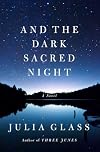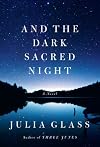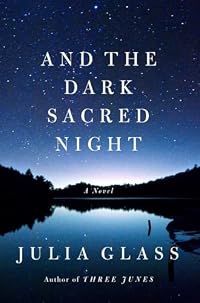
And the Dark Sacred Night
by Julia Glass
On This Page
Description
"Kit Noonan's life is stalled: unemployed, twins to support, a mortgage to pay--and a frustrated wife, who is certain that, more than anything else, Kit needs to solve the mystery of his father's identity. He begins with a visit to his former stepfather, Jasper, a take-no-prisoners Vermont outdoorsman. But it is another person who has kept the secret: Lucinda Burns, wife of a revered senior statesman and mother of Malachy (the journalist who died of AIDS in Glass's first novel, Three Junes). show more She and her husband are the only ones who know the full story: of an accident whose repercussions spread even further when Jasper introduces Lucinda to Kit. Immersing readers in a panorama that stretches from Vermont to the tip of Cape Cod, Glass weaves together the lives of Kit, Jasper, Lucinda and, ultimately, Fenno McLeod, the beloved protagonist of Three Junes (now in his sixties). An unforgettable novel about the youthful choices that steer our destinies, the necessity of forgiveness, and the surprisingly mutable meaning of family"-- show lessTags
Recommendations




Member Reviews
Past actions, memories and secrets combine to create a haunting tapestry of relationships in Julia Glass’s And the Dark Sacred Night. The past might define or redefine the present. And the urge to face it might be born of bravery or cowardice. But perhaps the hardest thing is knowing when to hold on and when to let go.
A middle-aged man who never knew his father, but loved his stepfather, embarks on a journey to find his roots. A young girl enthralled by music takes her own journey to find someone who’ll really see her. And a mother combines deeply religious conviction with deeply human need. Relationships found at great cost are lost in the blink of an eye. But all these relationships live on—past influencing the present; choice show more influencing hope, as this novel so movingly portrays.
Of all the characters, my favorites are the stepfather, the lover who so kindly cares for the children, and the father I thought I would hate. But every reader will find their own, so many lives reflected in these pages. Rich and poor, bound and free, creative and analytical… all need relationships, imperfectly connected as they are. And truth and sharing just might be overrated.
And the Dark Sacred Night is musical, lyrical and beautifully told. A slow, absorbing read, I really enjoyed it.
Disclosure: I’d read the Three Junes, and thought these books are related, it really didn’t matter that I can’t remember a thing about it. show less
A middle-aged man who never knew his father, but loved his stepfather, embarks on a journey to find his roots. A young girl enthralled by music takes her own journey to find someone who’ll really see her. And a mother combines deeply religious conviction with deeply human need. Relationships found at great cost are lost in the blink of an eye. But all these relationships live on—past influencing the present; choice show more influencing hope, as this novel so movingly portrays.
Of all the characters, my favorites are the stepfather, the lover who so kindly cares for the children, and the father I thought I would hate. But every reader will find their own, so many lives reflected in these pages. Rich and poor, bound and free, creative and analytical… all need relationships, imperfectly connected as they are. And truth and sharing just might be overrated.
And the Dark Sacred Night is musical, lyrical and beautifully told. A slow, absorbing read, I really enjoyed it.
Disclosure: I’d read the Three Junes, and thought these books are related, it really didn’t matter that I can’t remember a thing about it. show less
“And the Dark Sacred Night,” by Julia Glass, is a profoundly satisfying, character-driven novel with a simple story of everyday life at its core. The book swept me inside the interior lives of its four main characters, carried me through their present and into their past, and eventually, as soon as I got to the end, left me mourning the loss of these people I’d come to know and care about so intimately. I’ve read all of Glass’ novels with enormous pleasure. I am emotionally drawn to her body of work because everything she writes seems to increase my understanding about the interior lives of decent everyday people. For me, she is an astute psychologist of the human mind and a master literary craftsman of the human soul.
This show more new novel is meticulously constructed around the theme of how the past informs the present; indeed, how knowing one’s past may be absolutely essential in order for the present to unfold without undue distortion.
In this novel, action in the present often demands a shift backward to reveal something in the past that helps the character understand and deal with what is happening in the moment, i.e., the past communicates with the present giving added value and meaning to the present. If readers are impatient, they may feel like they are being pulled away from the arc of the present day plot into an onslaught of unnecessary background stories. But trust that each and every story from the past is necessary to the thematic scope of this novel and its affecting message.
There is a constant forward and backward motion within this novel. As a result, the arc of the present-day plot seems to be delivered in slow motion: each action forward in time, is accompanied by one or more lengthy memories from the past. Many readers may find this annoying, but it is an essential part of Glass’ carefully laid out plans in support her theme.
This book demands careful reading. No amount of detail within the plot is insignificant. Every dip into the past relates directly to what is happening, or will happen in the future. This is not a book where you’ll be able to skim the back-story in order to rush on with the present day plot. If you do, you’ll be missing half the beauty and a great deal of the psychological wisdom.
This book deals with how a single event—in this case, the birth of a child to two teenagers forty years ago—can ripple through the lives of so many people, completely altering absolutely everything.
The child is Christopher “Kit” Noonan, affectionately called “Kitten” by his strong-willed single mother, Daphne Browning. The book begins at a low point in Kit’s life. He is forty, without a job, and his marriage is falling apart. Nothing he does brings him any satisfaction; he’s apathetic and full of hopelessness. His wife feels strongly that the reason behind her husband’s inability to get anything accomplished is that he has no roots; he does not know who his biological father is because his mother has consistently withheld that information. He desperately wants to know; he needs to know; without this knowledge, he is paralyzed in the present without a significant part of his past to inform him about who he is.
The plot is Kit’s quest to find his father and connect with his past and, once this is accomplished, we see how this knowledge informs, shapes, and properly assists him in moving forward with his life.
It’s a meditative and intellectually satisfying premise for a book. In Julia Glass’ skillful hands it becomes a contemplative and artful literary gem.
I loved this novel. I was sad to see it end. For me, this was definitely a five-star jewel; however, I will not be surprised if many of Glass’ fans are a little bit disappointed and see only four-stars where I see five. The author’s emphasis on theme over plot and how she chose to play it out within the highly structured design of this novel is also its weakness, and perhaps, the main reason why some fans may knock it down a notch in comparison with her best works. Regardless, this is one terrific literary novel and I recommend it with enthusiasm. show less
This show more new novel is meticulously constructed around the theme of how the past informs the present; indeed, how knowing one’s past may be absolutely essential in order for the present to unfold without undue distortion.
In this novel, action in the present often demands a shift backward to reveal something in the past that helps the character understand and deal with what is happening in the moment, i.e., the past communicates with the present giving added value and meaning to the present. If readers are impatient, they may feel like they are being pulled away from the arc of the present day plot into an onslaught of unnecessary background stories. But trust that each and every story from the past is necessary to the thematic scope of this novel and its affecting message.
There is a constant forward and backward motion within this novel. As a result, the arc of the present-day plot seems to be delivered in slow motion: each action forward in time, is accompanied by one or more lengthy memories from the past. Many readers may find this annoying, but it is an essential part of Glass’ carefully laid out plans in support her theme.
This book demands careful reading. No amount of detail within the plot is insignificant. Every dip into the past relates directly to what is happening, or will happen in the future. This is not a book where you’ll be able to skim the back-story in order to rush on with the present day plot. If you do, you’ll be missing half the beauty and a great deal of the psychological wisdom.
This book deals with how a single event—in this case, the birth of a child to two teenagers forty years ago—can ripple through the lives of so many people, completely altering absolutely everything.
The child is Christopher “Kit” Noonan, affectionately called “Kitten” by his strong-willed single mother, Daphne Browning. The book begins at a low point in Kit’s life. He is forty, without a job, and his marriage is falling apart. Nothing he does brings him any satisfaction; he’s apathetic and full of hopelessness. His wife feels strongly that the reason behind her husband’s inability to get anything accomplished is that he has no roots; he does not know who his biological father is because his mother has consistently withheld that information. He desperately wants to know; he needs to know; without this knowledge, he is paralyzed in the present without a significant part of his past to inform him about who he is.
The plot is Kit’s quest to find his father and connect with his past and, once this is accomplished, we see how this knowledge informs, shapes, and properly assists him in moving forward with his life.
It’s a meditative and intellectually satisfying premise for a book. In Julia Glass’ skillful hands it becomes a contemplative and artful literary gem.
I loved this novel. I was sad to see it end. For me, this was definitely a five-star jewel; however, I will not be surprised if many of Glass’ fans are a little bit disappointed and see only four-stars where I see five. The author’s emphasis on theme over plot and how she chose to play it out within the highly structured design of this novel is also its weakness, and perhaps, the main reason why some fans may knock it down a notch in comparison with her best works. Regardless, this is one terrific literary novel and I recommend it with enthusiasm. show less
I chose this book for its title --poetic and a line from the Louis Armstrong song "Wonderful World" but just as a cover is not a good reason to judge a book, same goes with a title. The story was a little pedestrian: 40-something Kit (short for Christopher) Noonan is mired in place, married to Sandra with school-age twins and not working, and not earning his keep at home either. He's a native art scholar who is ABD in his field, can't find a job, won't teach HS, and is truly probably depressed. Sandra believes this is because he doesn't know who his real father is, so off Kit goes on a quest to discover this knowledge. His mother, Daphne is still living, but steadfastly refuses to divulge the info and insists the man is dead anyway. Her show more tryst was part of the prologue and has alternating chapters throughout the book, so the reader is in the know long before Kit gets a clue. Next stop is his ex-stepfather, Jasper Noonan, who married Daphne when Kit was 9 and has been the only father he's known. They divorced when Kit was 18, so Kit has lost touch after college, etc. Jasper lives in the mountains of Vermont, and is the most likeable character in the whole book! He has always treated Kit well as a stepson, adopted him when he was younger and has honored Daphne's wish not to tell him his true parentage. Until now. He sees how the (lack of) knowledge has impacted Kit and gives him a lead to go on. Kit's father is dead, this is true, but when he tracks down the name, he is able to re-unite with a host of people who care about him and want to honor his true father's legacy. This whole second family section is very heartwarming and helps to get Kit back on track with his own family. A few more surprises occur before the end, but mostly it is a predictable story arch with a happy ending, ultimately. There are some great lines: "Saints are tyrants in the kingdom of virtue." but my biggest criticism is there is too much description from how the coffee percolates to how the tree branches bend in the snow, to how the musicians at camp tune their instruments etc. It becomes an impediment to the novel's momentum. show less
I find Julia Glass to be an insightful observer of the sorts of lives I know a bit about from my own experience: white, middle class western families. In this book there's also quite a story of gay men, about whom I know much less. I will assume she's done a reasonable job of representing the gay male experience of that late 20th (including the AIDS crisis) and early 21st century. These days 'we' are all a little (or a lot) suspicious of writers who attempt to represent a life which is outside their person experience, and I am not sure how the LGBTIQ community would respond to these characters. Certainly the issue of sexual identity gets a solid workout in this novel and I was satisfied with the complexity with which Glass deals with show more it. I reckon many young people even now will spend some time being confused about their sexual identity, partly because of the expectations of people around them. This story shifts its focus as we go along, starting with Kit, his stepfather (Jasper), his wife and children, and then almost completely abandoning that aspect of the plot to focus on Kit's origins, the people associated with that time and then the sequellae. Actually, I enjoyed the first half of the book more than the second half, but I can see the necessity of the latter parts. Glass is making the point, I think, that the revelation of old family secrets won't be received equally well by everyone involved. And further, there are a lot more secrets kept than we might anticipate. It's not always easy to reveal aspects of your personal history to others, partly because that can mean coming to terms with your own past. As usual, I most enjoyed that parts and characters that I could most directly connect with, especially the almost retired, slightly disabled, old guy, Jasper. show less
Kit Noonan is an employed art professor who specializes in Inuit art. His wife tells him he needs to go find out who his father is. But this isn't really about Kit it's about families and all their beautiful, awful messiness but it also begs the question can you be whole person, or a successful person, if you don't know where you come from. Ms. Glass has an engaging style of writing that I enjoy. The reason I only gave the story three stars is because I just couldn't seem to care about the majority of the characters except for Jasper, Kit's step-father.
I do want to read this again because I think it's one if those stories that has so many nuances that to read again might give a person to catch the depth with which Ms. Glass writes.
I do want to read this again because I think it's one if those stories that has so many nuances that to read again might give a person to catch the depth with which Ms. Glass writes.
Told in three major sections with a few flashbacks, And the Dark Sacred Night is the story of Kit Noonan, whose wife Sandra convinces him to search for his biological father. Kit's search begins with a visit to his stepfather, Jasper Noonan, who was married for a time to Kit's mother Daphne. Daphne told Jasper a little about Kit's father's family, but she swore him to secrecy; nevertheless, Jasper sends Kit on to Lucinda Burns, his biological grandmother. Lucinda, in turn, connects Kit to Fenno McLeod (no relation, but someone who was close to Kit's father before he died). This unusual extended family comes together just in time for tragedy to strike one of its members.
And the Dark Sacred Night stands alone, but those who have read show more Three Junes or The Whole World Over will recognize some familiar characters. Glass's narration in close third person from different perspectives - young Daphne, Kit, Jasper, Lucinda, and Fenno - is as thoughtful and wise as ever. Knowing one's origins may be important, but connections between people - existing or newly forged - are more important.
Quotes
Maybe [his children] should grow up understanding that less than everything is often enough, even plenty... (Kit, 32)
"To change direction, to go somewhere entirely new, maybe you need to know exactly where it is you came from in the first place." (Sandra to Kit, 52)
"You do not get to know everything just because you want to know it." (Daphne to Kit, 58)
They made each other sweet; they made each other clever, funny, alluring, sexy as hell. Gave each other energy to spare, to love the children through the years when the children feigned indifference and scorn. They made each other bulletproof when it came to tough emotions. What was that if not so-called true love? Who said true meant forever? (Jasper and Daphne, 83)
Snow may fall without emitting a noise of its own, but it greedily consumes the sounds of whatever world it fills. (116)
You could think of promises as a series of nets: some hold for a lifetime; others give way, surprisingly flimsy, in no time at all. (Jasper, 150)
Some new things do not improve on their older models. (Lucinda, 187)
"A long time ago now." Though all that "long time" has done is move the pain to a more distant room. When she enters that room, though she does so less often, the pain still blinds her with its keen, diamondlike brilliance. (Lucinda, 191)
--yet if a mother thinks she somehow deserves to know everything, then she will have to know things that keep her up at night, won't she? (Lucinda, 247)
"Maybe you just can't stay friends with someone you feel has good reason not to forgive you." (Fenno to Kit about Lucinda, 280)
"Let me go home and give it all time. You know how I am, Kit. I work things out in my own good time. It's like rehearsing a piece. Takes me a while to get it right. A lot of that work I have to do alone." (Daphne, 321)
Americans refused to see accidents as accidental. They did not comprehend that while tragedy always exacts a formidable price, it rarely incurs a debt. (Fenno, 338)
The older Kit gets, the less confident he feels judging other people as spouses or parents. (359-360) show less
And the Dark Sacred Night stands alone, but those who have read show more Three Junes or The Whole World Over will recognize some familiar characters. Glass's narration in close third person from different perspectives - young Daphne, Kit, Jasper, Lucinda, and Fenno - is as thoughtful and wise as ever. Knowing one's origins may be important, but connections between people - existing or newly forged - are more important.
Quotes
Maybe [his children] should grow up understanding that less than everything is often enough, even plenty... (Kit, 32)
"To change direction, to go somewhere entirely new, maybe you need to know exactly where it is you came from in the first place." (Sandra to Kit, 52)
"You do not get to know everything just because you want to know it." (Daphne to Kit, 58)
They made each other sweet; they made each other clever, funny, alluring, sexy as hell. Gave each other energy to spare, to love the children through the years when the children feigned indifference and scorn. They made each other bulletproof when it came to tough emotions. What was that if not so-called true love? Who said true meant forever? (Jasper and Daphne, 83)
Snow may fall without emitting a noise of its own, but it greedily consumes the sounds of whatever world it fills. (116)
You could think of promises as a series of nets: some hold for a lifetime; others give way, surprisingly flimsy, in no time at all. (Jasper, 150)
Some new things do not improve on their older models. (Lucinda, 187)
"A long time ago now." Though all that "long time" has done is move the pain to a more distant room. When she enters that room, though she does so less often, the pain still blinds her with its keen, diamondlike brilliance. (Lucinda, 191)
--yet if a mother thinks she somehow deserves to know everything, then she will have to know things that keep her up at night, won't she? (Lucinda, 247)
"Maybe you just can't stay friends with someone you feel has good reason not to forgive you." (Fenno to Kit about Lucinda, 280)
"Let me go home and give it all time. You know how I am, Kit. I work things out in my own good time. It's like rehearsing a piece. Takes me a while to get it right. A lot of that work I have to do alone." (Daphne, 321)
Americans refused to see accidents as accidental. They did not comprehend that while tragedy always exacts a formidable price, it rarely incurs a debt. (Fenno, 338)
The older Kit gets, the less confident he feels judging other people as spouses or parents. (359-360) show less
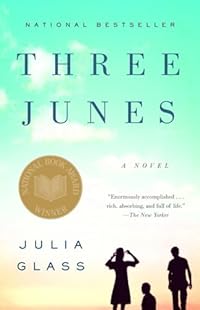
I wait eagerly for each new Glass novel, after being blown away by Three Junes. None of her subsequent books have matched the mastery of that one, but each is rewarding and engaging. This one had beautiful prose and startling sharp psychological insight. Plot and overall structure lacked something, and the main character was a sad sack. Interesting that so often there's a mother or mother-like female who is fiercely independent and withholding. I love the quotidian detail in her books. She reminds me of early Margaret Drabble or Barbara Pym in lovingly chronicling such things as putting together a meal or cleaning. She obviously loves food, children, animals, art and music. How can I resist that combo? She's also one of those very smart show more but also big hearted writers. She is generous and understanding of even her most unlikable characters. Always worthwhile. show less
Members
- Recently Added By
Author Information

10+ Works 8,461 Members
Julia Glass was born March 23, 1956, in Boston, Massachusetts. Her debut novel, Three Junes, won the National Book Award in 2002. Her latest novel is entitled, The Widower's tale. She grew up in Lincoln, MA, and graduated from Yale in 1978. She lives in Marblehead, Massachusetts with her partner, photographer Dennis Cowley. She has two children show more and works as a freelance journalist and editor. (Bowker Author Biography) show less
Some Editions
Common Knowledge
- Canonical title
- And the Dark Sacred Night
- Original publication date
- 2014
- People/Characters
- Fenno McLeod; Jasper Noonan; Kit Noonan; Lucinda Burns
- Epigraph
- Every knot was once straight rope.
- - James Lapine, Into the Woods - Dedication
- For Elliot:
the brother I always wanted . . .
and found out I had all along - First words
- She saw him through the trees, and she almost turned around.
- Quotations
- Losing your spouse to cancer might break your heart several times over, but from what Jasper's seen, it leaves you feeling as free as you feel bereft, like a diver breaking the surface of a lake after a drowning scare. You'r... (show all)e more careful about what comes next.
Classifications
Statistics
- Members
- 404
- Popularity
- 76,406
- Reviews
- 28
- Rating
- (3.69)
- Languages
- English, French
- Media
- Paper, Audiobook, Ebook
- ISBNs
- 10
- ASINs
- 5