Ingenious Pursuits: Building the Scientific Revolution
by Lisa Jardine
On This Page
Description
Today the 'two cultures' - art and science - have come to be treated as fundamentally opposed, their aims incompatible. Scientific research is castigated for its inhumane methods & lack of moral responsibility, while art is treated as an enduring source of essential guidance to society's spiritual well-being. Lisa Jardine makes clear in this remarkable book that this is a distinction which is both artificial & historically inaccurate. The intellectual revolution of the 17th & early 18th show more eighteenth centuries was the single most formative event in Western history, bringing together the humanities & natural sciences in an unprecedented ferment of conceptual & practical creativity. She documents the forces for change which brought the human & natural sciences together & gave them shape. Each of her series of key components - among them, precise time measurement, enhanced astronomical observation, selective animal & plant breeding & technological advances in navigation - lays a crucial part of the foundations for modern thought. INGENIOUS PURSUITS brilliantly illuminates the practice of science, its impact on the emerging modern world & its continuing relevance to society. show lessTags
Recommendations























Member Recommendations
ztutz The Baroque Cycle, historical fiction by Neal Stephenson, features the Royal Society prominently.
Member Reviews
As Lisa Jardine reckons here, science nowadays often hurts itself against serious ethical questions, at times stirring fear within the popular psyche. It's especially true when it comes, for example, to genetics and our advances in term of understanding the human genome, raising concerns involving from cloning to eugenics. Such concerns, of course, aren't new. Mary Shelley had already warned us about 'playing God' in her Frankenstein: The 1818 Text, a work that still resonates up to these days... and for a good reason! And yet...
And yet, this distrust, or, at least, suspicion of science and scientists and the technological advances resulting from their research is relatively new (Lisa Jardine blames WWII and its aftermath, when our show more power to destruct truly took another level). And in fact indeed, such mindset would have been completely alien to those who shaped the first Scientific Revolution, an era that she recounts here.
This book, I must say, is truly fascinating. First, of course, because of its subject and the cast of characters that it involves. But not only. What I personally found particularly engrossing was how practical needs led to unexpected results and discoveries in whole different fields, seemingly unrelated, to radically transform the world as it was. The whole narrative, in fact, starts with King Charles II of England setting up the Royal Observatory; an astronomical endeavour whose purpose was, mainly, to help determine longitude and allow for safer sailings. The impact, though, would be felt not only upon navigation, but, also, upon our understanding of planetary motions... with long-lasting consequences! It carries on with similar domino effects, whereas one discovery would spread out to affect others in very surprising ways. For example, I had no idea that the dome of St Paul's Cathedral had been inspired by how lights get filtered by the lenses of microscopes (another major discovery of the time); that deep-sea diving was initiated by the air-pumps experiments on animals; nor that the collections of wealthy botanists would be so crucial in transforming medical science, for instance when it comes to the increasing use of various plant remedies...
Another surprise (at least for me!) was the emphasis put on compilation of data, the (obsessive) practical work about various measuring instruments and taxonomies. We often associate such first revolution with physics and maths (Newton tend to have overshadowed the whole period!) but there was far more to it than that indeed.
In the end, then, if you like science this is a must read. It's not only about a set of discoveries and the genius polymaths who made them. Going back to the suspicious fear too often caused by scientific and technological progress it is, also, a portray of a whole era when science, on the contrary, was truly galvanising people, especially across an Europe then in the grip of a powerful intellectual movement that would shatter the world. Again: truly fascinating and engrossing! show less
And yet, this distrust, or, at least, suspicion of science and scientists and the technological advances resulting from their research is relatively new (Lisa Jardine blames WWII and its aftermath, when our show more power to destruct truly took another level). And in fact indeed, such mindset would have been completely alien to those who shaped the first Scientific Revolution, an era that she recounts here.
This book, I must say, is truly fascinating. First, of course, because of its subject and the cast of characters that it involves. But not only. What I personally found particularly engrossing was how practical needs led to unexpected results and discoveries in whole different fields, seemingly unrelated, to radically transform the world as it was. The whole narrative, in fact, starts with King Charles II of England setting up the Royal Observatory; an astronomical endeavour whose purpose was, mainly, to help determine longitude and allow for safer sailings. The impact, though, would be felt not only upon navigation, but, also, upon our understanding of planetary motions... with long-lasting consequences! It carries on with similar domino effects, whereas one discovery would spread out to affect others in very surprising ways. For example, I had no idea that the dome of St Paul's Cathedral had been inspired by how lights get filtered by the lenses of microscopes (another major discovery of the time); that deep-sea diving was initiated by the air-pumps experiments on animals; nor that the collections of wealthy botanists would be so crucial in transforming medical science, for instance when it comes to the increasing use of various plant remedies...
Another surprise (at least for me!) was the emphasis put on compilation of data, the (obsessive) practical work about various measuring instruments and taxonomies. We often associate such first revolution with physics and maths (Newton tend to have overshadowed the whole period!) but there was far more to it than that indeed.
In the end, then, if you like science this is a must read. It's not only about a set of discoveries and the genius polymaths who made them. Going back to the suspicious fear too often caused by scientific and technological progress it is, also, a portray of a whole era when science, on the contrary, was truly galvanising people, especially across an Europe then in the grip of a powerful intellectual movement that would shatter the world. Again: truly fascinating and engrossing! show less
Jardine's book is meticulously researched, throwing interesting light on the development of science in the 17th and 18th centuries. It shows that science is not some abstract pursuit, divorced from real concerns, but tied up with military ambitions, commerce, colonialism. The first authors of guides to aspects of the natural world - fishes, plants, insects - were as concerned with turning a profit from selling specimens and drugs as they were in furthering knowledge. Also, the first pioneer scientists are an eccentric bunch. Isaac Newton and Robert Boyle shared an interest in alchemy. Robert Hooke, the Royal Society's foremost inventor and experimenter, was a talented artist, who supplied the engravings for his own Micrographia, one of show more the first collections of everyday objects (fleas, plant seeds) as seen through the microscope. He was also a keen self-medicator, dosing himself with everything from opium to mercury and lead (a practice also maintained by many of his contemporaries). We also learn interesting facts: St Paul's Cathedral was originally designed with a view to providing means to conduct scientific experiments; scientific collaboration continued between scientists of different nationalities, even when their countries were at war. Lisa Jardine writes well, and succeeds in giving fresh life to this early stage of the scientific revolution, and the book is a worthy read for anyone interested in the history of science. However, I do feel that it lacks commentary, to an extent. Whilst tracing the complicated web of influences upon the development of science, she rarely stands back and draws any explicit lessons or contribute her own observations. Some may applaud this lack of editorialising. Personally, however, I think such a survey as this would have benefited from more of this type of commentary, without which the book tends to degenerate at times into a mass of data - a sea of names, projects, publications, incidents, dates. And the history of science, like science itself, is more than just data collection.
Gareth Southwell is a philosopher, writer and illustrator. show less
Gareth Southwell is a philosopher, writer and illustrator. show less
The theme of Jardine's Ingenious Pursuits is that scientific study and discovery most often occurs collaboratively or competitively, with information or theory or partial discovery by one person touching off experimentation or discovery by another. She focuses in this book on the late 17th and early 18th century in Europe, which saw an explosion of interest in science and the development of rigorous hypothesis and testing, with demonstrable, independently verified results.
Much like the wide-reaching interests of the Royal Society itself, Jardine ranges through an astonishing variety of subjects in this book--astronomy, microscopy, blood circulation, respiration, cellular structure, botany, air pressure, deep-sea diving--the list goes on show more and on. At times, I really wanted to wave my hands and beg her to slow down, so I could get more detail. This was what I found frustrating about the book, and it's certainly not the author's fault. It is by its nature an overview, so she couldn't get too in-depth about anything. However, I do fault her for bringing up the longitude problem several times, and various scientists' attempts to solve it, but never touching on John Harrison, who actually did invent a working marine chronometer.
The methods used by these scientists were fascinating and often crude, and in some instances stomach churning. The faint-of-heart should probably avoid the chapter that discusses circulation and respiration, since the studies on these were largely done via dog vivisection. Animal cruelty abounds in these pages, but the scientists also did quite a bit of study on themselves, particularly when they were testing medications.
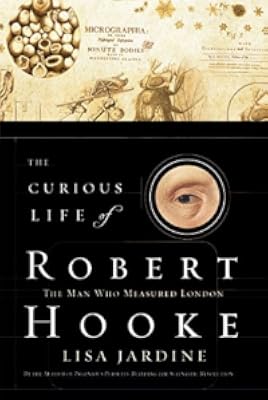
I've read a lot of fiction set in this time period, and I was delighted to read about the real-life work of some (mostly) minor characters from those books, including Robert Hooke, Robert Boyle, Isaac Newton, and John Wilkins (all of whom appeared in Neal Stephenson's wonderful Baroque Cycle); Charles Mason, Jeremiah Dixon, and Nevil Maskelyne (from Thomas Pynchon's Mason & Dixon); and many others. Robert Hooke holds a particular fascination for me, and I will be seeking out Jardine's biography of him, The Curious Life of Robert Hooke: The Man Who Measured London.
I would highly recommend Ingenious Pursuits to anyone with an interest in modern science as an essential look at its roots. show less
Much like the wide-reaching interests of the Royal Society itself, Jardine ranges through an astonishing variety of subjects in this book--astronomy, microscopy, blood circulation, respiration, cellular structure, botany, air pressure, deep-sea diving--the list goes on show more and on. At times, I really wanted to wave my hands and beg her to slow down, so I could get more detail. This was what I found frustrating about the book, and it's certainly not the author's fault. It is by its nature an overview, so she couldn't get too in-depth about anything. However, I do fault her for bringing up the longitude problem several times, and various scientists' attempts to solve it, but never touching on John Harrison, who actually did invent a working marine chronometer.
The methods used by these scientists were fascinating and often crude, and in some instances stomach churning. The faint-of-heart should probably avoid the chapter that discusses circulation and respiration, since the studies on these were largely done via dog vivisection. Animal cruelty abounds in these pages, but the scientists also did quite a bit of study on themselves, particularly when they were testing medications.
I've read a lot of fiction set in this time period, and I was delighted to read about the real-life work of some (mostly) minor characters from those books, including Robert Hooke, Robert Boyle, Isaac Newton, and John Wilkins (all of whom appeared in Neal Stephenson's wonderful Baroque Cycle); Charles Mason, Jeremiah Dixon, and Nevil Maskelyne (from Thomas Pynchon's Mason & Dixon); and many others. Robert Hooke holds a particular fascination for me, and I will be seeking out Jardine's biography of him, The Curious Life of Robert Hooke: The Man Who Measured London.
I would highly recommend Ingenious Pursuits to anyone with an interest in modern science as an essential look at its roots. show less
A year or so ago, I greatly enjoyed reading another book by Lisa Jardine, "Worldly Goods: A New History of the Renaissance", but I couldn't justify it for "Hal's Picks" because it didn't have much scientific content. When I heard about "Ingenious Pursuits", I bought it from a book club and read it right away. My regret is that I didn't buy the hardcover version, because this is a book that I will keep for a long time. Lisa Jardine is Professor of English at Queen Mary and Westfield College, University of London, but she is also a daughter of Jacob Bronowski, and she displays the independence of thought and the ability to view history in creative ways that characterized her late father. In "Ingenious Pursuits", she follows the early show more history of Western science (mostly 17th and 18th centuries) by focusing on the work of the inventors who created the equipment essential to the progress of science. Many of these names are already familiar: Hooke and Huygens, for example. I, for one, was unaware of the extent of the scientific interests of the famous architect, Christopher Wren, until I read this book. I also didn't know that many of the early experiments with vacuum pumps involved the asphyxiation of small animals, often for entertainment. Wren and Robert Boyle, famous to chemists for his contribution to gas laws, were involved in gruesome experiments to discover how respiration works by vivisecting large numbers of dogs. show less
I was attracted by Lisa Jardine’s book because of my interest both in the history of science and in 17th-century England. But I must avow that it deceived me. One of the reasons is that Jardine does not seem to be well-acquainted with science: even if she is able to discuss it at length, she lacks precision on some particular points, and I found this sometimes irritating.
However, the book contains some interesting anecdotes, especially the one about Newton and Flamsteed, and the way Newton insisted on publishing Flamsteed’s History of the Heavens without the consent of the author. The arguments raised by Newton—Flamsteed’s salary paid from the public purse—and those raised by Flamsteed—instruments paid by himself for his show more personal use—are finally very modern. I was glad to learn that Flamsteed eventually gained authorization to destroy the last three hundred copies of the unduly published book.
An example of errors I could spot in the book is provided by Jardine’s telling—in her chapter Running Like Clockwork—that Cassini’s method for computing the longitude of an observation site from the motion of the first moon of Jupiter was accurate within one degree, ‘a distance at France’s latitude of about 60 miles’. This is true for one degree in latitude; but for one degree in longitude at about 45° in latitude, the corresponding distance is to be multiplied by 0.7 approximately, that is: about 40 miles.
Another topic of dissatisfaction is the way chapters are organized, with the same story told over and over again, with the same details. Jardine gives the impression to have written her chapters separately, then to have put them together without realizing that they partly contained the same information. An example among others is the way the original Greenwich observatory was built, money having been raised by selling surplus gunpowder from the third Dutch war, with materials coming from old Ordnance stocks. The story is told at length in chapter 1, and again in chapter 4, just in case the reader had forgotten. Similar repetitions happen all through the book, which sometimes gives the reader the impression of ‘pedalling in sauerkraut’, to use an imaged French phrase.
In conclusion: some interesting anecdotes, but the book is too loosely written, with many events repeated in different chapters, and also scientific imprecision. I do not really commend it. show less
However, the book contains some interesting anecdotes, especially the one about Newton and Flamsteed, and the way Newton insisted on publishing Flamsteed’s History of the Heavens without the consent of the author. The arguments raised by Newton—Flamsteed’s salary paid from the public purse—and those raised by Flamsteed—instruments paid by himself for his show more personal use—are finally very modern. I was glad to learn that Flamsteed eventually gained authorization to destroy the last three hundred copies of the unduly published book.
An example of errors I could spot in the book is provided by Jardine’s telling—in her chapter Running Like Clockwork—that Cassini’s method for computing the longitude of an observation site from the motion of the first moon of Jupiter was accurate within one degree, ‘a distance at France’s latitude of about 60 miles’. This is true for one degree in latitude; but for one degree in longitude at about 45° in latitude, the corresponding distance is to be multiplied by 0.7 approximately, that is: about 40 miles.
Another topic of dissatisfaction is the way chapters are organized, with the same story told over and over again, with the same details. Jardine gives the impression to have written her chapters separately, then to have put them together without realizing that they partly contained the same information. An example among others is the way the original Greenwich observatory was built, money having been raised by selling surplus gunpowder from the third Dutch war, with materials coming from old Ordnance stocks. The story is told at length in chapter 1, and again in chapter 4, just in case the reader had forgotten. Similar repetitions happen all through the book, which sometimes gives the reader the impression of ‘pedalling in sauerkraut’, to use an imaged French phrase.
In conclusion: some interesting anecdotes, but the book is too loosely written, with many events repeated in different chapters, and also scientific imprecision. I do not really commend it. show less
This is a gem of a book. Basically a snapshot of science & scientists in the 1600's, it brings to life the sudden change in the intellectual world away from accepting received wisdom, and to the modern scientific age based on direct observation and experimentation. Loved it.
Read in Samoa June 2002
Read in Samoa June 2002
An excellent overview of the early days of scientific inquiry in seventeenth and eighteenth century England and Europe. Back then, everything was new, and the same people might work on astronomy, architecture, medicine, anatomy, clocks, chemistry, mathematics, and other areas, all overlapping, with advances in one field inspiring advances in others.
Members
- Recently Added By
Published Reviews
ThingScore 75
"seeks to show that the convergence of the humanities and natural sciences drove technological innovation in order to solve very real problems of the age"
added by wademlee
Lists

Club Read's Recommended Nonfiction Written by Women
618 works; 30 members

In Our Time books
4,934 works; 2 members
Author Information

24+ Works 3,341 Members
Lisa Jardine was born in Oxford, England on April 12, 1944. She studied mathematics and English at university receiving a MA in the literary theory of translation from the University of Essex and a PhD from the University of Cambridge with a thesis on the scientific genius of Francis Bacon. She taught English at Warburg Institute, the University show more of Essex, Cornell University, Cambridge University, and Queen Mary and Westfield College. She wrote several books during her lifetime including Francis Bacon: Discovery and the Art of Discourse, Ingenious Pursuits, Worldly Goods, Global Interests: Renaissance Art Between East and West, and Temptation in the Archives: Essays in Golden Age Dutch Culture. Going Dutch: How England Plundered Holland's Glory won the $75,000 Cundill International Prize in History in 2009. She received a Royal Society medal for popularizing science and was appointed CBE in 2005 for her contribution and commitment to state education. She died of cancer on October 25, 2015 at the age of 71. (Bowker Author Biography) show less
Awards and Honors
Common Knowledge
- Canonical title
- Ingenious Pursuits: Building the Scientific Revolution
- Original publication date
- 1999
- People/Characters
- Samuel Pepys; Elias Ashmole; Isaac Newton; Robert Hooke; Christiaan Huygens; Robert Boyle (show all 12); Christopher Wren; Gian Domenico Cassini; Jacob Bernoulli; Galileo Galilei; Edmond Halley; Antonie van Leeuwenhoek (as Antoni van Leeuwenhoek)
- Dedication
- For my father, Jacob Bronweski, who showed me the way, and for Freya and Zoe, who are the future
- First words
- At the end of the seventeenth century, a century and a half before the glare of electric street-lighting, the skies above London were dark at night.
- Last words
- (Click to show. Warning: May contain spoilers.)The questions have barely begun to be asked, but all of us will be implicated in the answers.
Classifications
Statistics
- Members
- 735
- Popularity
- 38,353
- Reviews
- 9
- Rating
- (3.45)
- Languages
- English
- Media
- Paper
- ISBNs
- 5
- ASINs
- 5