On This Page
Description
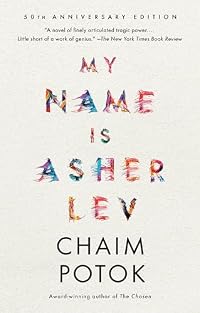
NATIONAL BESTSELLER • In this modern classic from the National Book Award–nominated author of The Chosen, a young religious artist is compulsively driven to render the world he sees and feels, even when it leads him to blasphemy.“A novel of finely articulated tragic power .... Little short of a work of genius.”—The New York Times Book Review
Asher Lev is a Ladover Hasid who keeps kosher, prays three times a day and believes in the Ribbono Shel Olom, the Master of the Universe. show more He grows up in a cloistered Hasidic community in postwar Brooklyn, a world suffused by ritual and revolving around a charismatic Rebbe. He is torn between two identities, the one consecrated to God, the other devoted only to art and his imagination, and in time, his artistic gift threatens to estrange him from that world and the parents he adores.
As it follows his struggle, My Name Is Asher Lev becomes a luminous, visionary portrait of the artist, by turns heartbreaking and exultant. show less
Tags
Recommendations








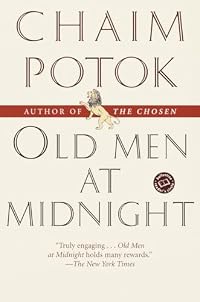



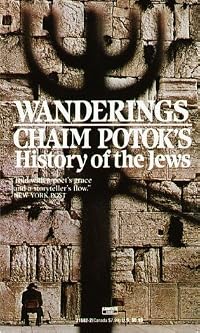






Member Recommendations

Member Reviews
A novel of great power and dark truth. From a very young age, Asher Lev exhibits a gift for drawing, and it consumes him, even in the face of his parents' disdain and discouragement. Drawing is foolishness, a waste of time, his father feels. When Asher wakes up to find he has drawn a disturbing portrait on the wall beside his bed without remembering it, when he drifts off in class and then realizes he has again been drawing unconsciously (this time in a sacred text), the matter becomes terribly serious for his father, a prominent member of Brooklyn's Hasidic community, a representative of the Ladover Rebbe in the halls of the US government and around the world. This must not continue. Asher protests that he must draw, that he cannot show more help himself, which only confirms his father's belief that this "gift" is from the Other Side, not from the Master of the Universe. Only animals cannot control themselves. Asher loves his parents, he observes the rituals and offers the prayers, he tries to apply himself to his secular and religious studies. Yet as he gets older the gift gets stronger; his talent is undeniable; his study of great art leads him away from the cloistered existence of his insular community, and exposes him to centuries of Christian and "pagan" images. What reconciliation of the two worlds is possible? Can an artist be true to his vision without causing grief? Faulkner said, "The writer's only responsibility is to his art. He will be completely ruthless if he is a good one. ... If a writer has to rob his mother, he will not hesitate; the Ode on a Grecian Urn is worth any number of old ladies." That's all well and good from the distance of a couple hundred years, but delving into the life of a young man grappling with this awful dilemma makes one wonder a bit. In the context of this story, I came away feeling that Asher Lev might have fulfilled his artistic responsibility, and yet have found a way to be slightly less brutal to his parents. Yes, he had to crucify his mother on canvas. OK. But he did not have to let his parents come upon that image unwarned in a public manner. He considered it cowardly not to express his mother's anguish in precisely that way, but did not realize it was also cowardly to avoid the uncomfortable conversation that would have spared both parents the shock and horror of seeing the result, which they could only view as blasphemy and a betrayal? Very often, when faced with a difficult question, Asher remains quiet, as if unable to speak when he knows his answer will be hurtful or unacceptable. In the end, his silence leads to what may be an irreparable rift. show less
Asher Lev, artist and painter of the controversial "Brooklyn Crucifixion" looks back on his life growing up as a Hasidic Jew. His father, an important man in their community who travels for the Rebbe, simply cannot understand why his son needed to draw, but even as a young child Asher had a gift. He discusses the experiences leading up to becoming the artist he is, and why an observant Jew would paint a crucifixion.
This is a quiet sort of story, almost a character study, in which I was surprised to find out how much I was invested in the family drama as Asher learns to carve his own path in life and art. I'm sure some references specific to Judaism teaching and thought went over my head, but at its heart it's a universal coming of age show more story in which a son has to decide whether to be true to himself or fall into line with what his father wants for him. I kept flipping back to the first few paragraphs, which essentially lay out the gist of the story, before Asher explains his family history, his experiences growing up, and ultimately what led to the notorious painting. show less
This is a quiet sort of story, almost a character study, in which I was surprised to find out how much I was invested in the family drama as Asher learns to carve his own path in life and art. I'm sure some references specific to Judaism teaching and thought went over my head, but at its heart it's a universal coming of age show more story in which a son has to decide whether to be true to himself or fall into line with what his father wants for him. I kept flipping back to the first few paragraphs, which essentially lay out the gist of the story, before Asher explains his family history, his experiences growing up, and ultimately what led to the notorious painting. show less
The fact is that gossip, rumors, mythmaking, and news stories are not appropriate vehicles for the communication of nuances of truth... So it is time for the defense, for a long session in demythology. But I will not apologize. It is absurd to apologize for a mystery.
"Here we go. Already," or something similar came out of my mouth after I read those lines, not even past the first page of My Name is Asher Lev by author Chaim Potok.
Remembering The Chosen all too well, one of my all-time favorite books by the same author, I expected this novel might take me on another profound journey. And there it started from the first page. Already.
The coming-of-age story of Asher, who begins discovering a mystery from his childhood: his urgent drive to show more draw and paint, even as his gift as an artist grates against his Hasidic Jewish observance. A story about the sacred, soulish tension between genius and responsibility, between the need to please and the calling to be.
A story about navigating relationships when you have no easy explanations for the people you love and respect.
No, I don't read many novels this stark and somber in their beauty. Yes, you do have to have an ear for nuance and the power of what's unsaid to hear and appreciate the music and poetry behind a narrative like this. And, no, even with my passion for arts and creation, I don't interpret all the matters here in the same way Asher does.
But I get it. I empathize. And it's a story that empathizes with me and the kind of impossible pain it's taken to make me into the creative I am, and am becoming.
A fine, raw, magnificent novel. I plan on reading more about Asher Lev. show less
"Here we go. Already," or something similar came out of my mouth after I read those lines, not even past the first page of My Name is Asher Lev by author Chaim Potok.
Remembering The Chosen all too well, one of my all-time favorite books by the same author, I expected this novel might take me on another profound journey. And there it started from the first page. Already.
The coming-of-age story of Asher, who begins discovering a mystery from his childhood: his urgent drive to show more draw and paint, even as his gift as an artist grates against his Hasidic Jewish observance. A story about the sacred, soulish tension between genius and responsibility, between the need to please and the calling to be.
A story about navigating relationships when you have no easy explanations for the people you love and respect.
No, I don't read many novels this stark and somber in their beauty. Yes, you do have to have an ear for nuance and the power of what's unsaid to hear and appreciate the music and poetry behind a narrative like this. And, no, even with my passion for arts and creation, I don't interpret all the matters here in the same way Asher does.
But I get it. I empathize. And it's a story that empathizes with me and the kind of impossible pain it's taken to make me into the creative I am, and am becoming.
A fine, raw, magnificent novel. I plan on reading more about Asher Lev. show less
1. My Name is Asher Lev by Chaim Potok (1972, 342 pages, read Jan 6-12)
A re-read for a book club at my synagogue. I first read this in 2000 and found it so depressing that I couldn’t enjoy it. It actually left a bad taste in my mouth - not the quality, but the hopelessness. So, I was mixed about re-reading it. But no worries, I loved it this time around. The story is sad, but I was focusing more on the writing and story construction this rather, rather than the plot and this I found inspiring, and I noticed an optimistic touch at the end that I hadn’t picked up on last time. It’s a better book than I appreciated.
I picked up on several aspects I had missed before, like the masterful world building. By about 50 pages in I was so show more thoroughly wrapped up in this world of Hasidic immigrants in New York, that I was moved by things that only had meaning because of how they referenced other parts of the book.
Also the many layers in the theme of loss of culture. Asher grows up in and learns to love this Hasidic culture, which is beautifully presented, yet he is driven away from it by his innate and culturally unacceptable artistic talents. He begins to learn his art from a Jewish, but nonreligious artist. The book reflect this theme many subtle ways. (Including a biblical theme I caught, and which impressed my book group.Asher is symbolically Joseph, sent to Egypt. Potok signs this to the reader through character names. His mother is Rivkah, which is Rebecca, and his aunt is Leah. His father isn’t Jacob, but his art mentor is, Jacob Kahn. The Biblical Joseph, first son of Rebecca by Jacob, is sold into slavery by his brothers. He ends up as key administrator for the Pharaoh in Egypt and later saves his family from famine by welcoming them to Egypt. So, he loses and yet saves his culture. )
Only in the book club meeting did I learn that this is semi-autobiographical. Potok was not Hasidic, but grew up very religious, and eventually become a rabbi. He was also a visual artist and studied under Jewish sculptor Jacques Lipchitz - the model for Jacob Kahn.And he painted "The Brooklyn Crucifixion", which appears in this book dramatically. I wouldn’t say knowing this adds complexity to the story, but it adds weight and some authenticity to both the Jewish aspects and the discussions about art.
Overall this was a great experience. And it could lead me to read more Potok, especially [The Gift of Asher Lev].
To view this on my 2014 LT thread, go here: http://www.librarything.com/topic/163456#4486390 show less
A re-read for a book club at my synagogue. I first read this in 2000 and found it so depressing that I couldn’t enjoy it. It actually left a bad taste in my mouth - not the quality, but the hopelessness. So, I was mixed about re-reading it. But no worries, I loved it this time around. The story is sad, but I was focusing more on the writing and story construction this rather, rather than the plot and this I found inspiring, and I noticed an optimistic touch at the end that I hadn’t picked up on last time. It’s a better book than I appreciated.
I picked up on several aspects I had missed before, like the masterful world building. By about 50 pages in I was so show more thoroughly wrapped up in this world of Hasidic immigrants in New York, that I was moved by things that only had meaning because of how they referenced other parts of the book.
Also the many layers in the theme of loss of culture. Asher grows up in and learns to love this Hasidic culture, which is beautifully presented, yet he is driven away from it by his innate and culturally unacceptable artistic talents. He begins to learn his art from a Jewish, but nonreligious artist. The book reflect this theme many subtle ways. (Including a biblical theme I caught, and which impressed my book group.
Only in the book club meeting did I learn that this is semi-autobiographical. Potok was not Hasidic, but grew up very religious, and eventually become a rabbi. He was also a visual artist and studied under Jewish sculptor Jacques Lipchitz - the model for Jacob Kahn.
Overall this was a great experience. And it could lead me to read more Potok, especially [The Gift of Asher Lev].
To view this on my 2014 LT thread, go here: http://www.librarything.com/topic/163456#4486390 show less
Asher Lev is obsessed with drawing from an early age, and his gift is obvious to all around him. But Asher’s gift is in conflict with the acceptable norms of his Hasidic Brooklyn community. Asher’s father is active in the Hasidic movement, traveling all over Europe to build schools and help Jewish people in need. Asher’s mother supports the family and pursues her own goals to help the community, but has also paid a high price in terms of her overall health and well-being. Asher’s commitment to his art is so strong that he feels compelled to stand up to his parents when they try to suppress it. Tensions are high in the Lev household, to say the least. The leader of their Hasidic community, known as the Rebbe, takes note of the show more family conflict and acts to mitigate the situation as best he can, providing Asher with a mentor, Jacob Kahn, who develops Asher’s talent as he grows up. He becomes quite successful, but the conflict -- especially with his father -- only worsens over time, leading to an intense climax and resolution.
This novel offered an interesting glimpse into the Hasidic community through its rich cast of characters. But after finishing this book, I am primarily left with some pretty powerful emotions. I wanted Asher to succeed, but also deeply felt his mother’s pain as she tried to navigate the ongoing conflict between her husband and son. I won’t soon forget Asher’s story. show less
This novel offered an interesting glimpse into the Hasidic community through its rich cast of characters. But after finishing this book, I am primarily left with some pretty powerful emotions. I wanted Asher to succeed, but also deeply felt his mother’s pain as she tried to navigate the ongoing conflict between her husband and son. I won’t soon forget Asher’s story. show less
I loved this novel. Upon completion, I set it aside and wondered what on earth I could read next, what could possibly follow this exquisite work? I am a distractible and restless reader; I always know how close I am to the end of a book and, regardless of how wonderful a book is, I am almost always ready to finish it and move on to whatever is next. Not this time. I was never restless reading this and I almost wept when it was done, both because it moved me so deeply and because I felt the loss of its company.
Asher Lev is a Ladover Hasid growing up in post-WWII Brooklyn with his parents and surrounded by a loving traditional community. His father travels for the Rebbe, working to assist Jews and establish Ladover Yeshivas in show more communities in Europe. Asher's mother is studying Russian so that she can assist her husband in his work. Asher is a bright, respectful, and loving boy whose irresistible impulse to draw at the expense of his schoolwork is counter to all that his parents value and believe. He is destined to create art and when he discovers art supplies in the store of a family friend this destiny takes on even greater power. His compulsion to create visual art rents the very fabric of his family as his parents struggle to understand what is, to them, unfathomable. His father particularly struggles, unable to resolve himself to the fact of his son's passion and identity. To the father, dedicating one's life to the creation of art is selfish and corrupt.
As Asher approaches maturity, the Rebbe intercedes and arranges for Asher to be taught by a Jewish artist who is respected and trusted despite the fact that he does not actively practice his faith. Thus begins a transformative relationship that enables Asher to flourish into himself as an artist. He travels to Florence and to Paris to study great masters and he wrestles with the omnipresence of Christian imagery in much great art. He also struggles with his compassion for the deep hurt he is causing his parents by being himself. Asher wrestles with these various challenges to his vision of the world, pulling the story toward a terrible climax that is simple, foreseeable, and inevitable.
The narrative style is deceptively simple, reading as an almost dispassionate first-person narration of life as it unfolds for Asher. This simplicity belies the richness of this novel's exploration of the artist's soul and the dreadful dilemma created when truth to oneself hurts those most loved. show less
Asher Lev is a Ladover Hasid growing up in post-WWII Brooklyn with his parents and surrounded by a loving traditional community. His father travels for the Rebbe, working to assist Jews and establish Ladover Yeshivas in show more communities in Europe. Asher's mother is studying Russian so that she can assist her husband in his work. Asher is a bright, respectful, and loving boy whose irresistible impulse to draw at the expense of his schoolwork is counter to all that his parents value and believe. He is destined to create art and when he discovers art supplies in the store of a family friend this destiny takes on even greater power. His compulsion to create visual art rents the very fabric of his family as his parents struggle to understand what is, to them, unfathomable. His father particularly struggles, unable to resolve himself to the fact of his son's passion and identity. To the father, dedicating one's life to the creation of art is selfish and corrupt.
As Asher approaches maturity, the Rebbe intercedes and arranges for Asher to be taught by a Jewish artist who is respected and trusted despite the fact that he does not actively practice his faith. Thus begins a transformative relationship that enables Asher to flourish into himself as an artist. He travels to Florence and to Paris to study great masters and he wrestles with the omnipresence of Christian imagery in much great art. He also struggles with his compassion for the deep hurt he is causing his parents by being himself. Asher wrestles with these various challenges to his vision of the world, pulling the story toward a terrible climax that is simple, foreseeable, and inevitable.
The narrative style is deceptively simple, reading as an almost dispassionate first-person narration of life as it unfolds for Asher. This simplicity belies the richness of this novel's exploration of the artist's soul and the dreadful dilemma created when truth to oneself hurts those most loved. show less
Why, if every Jewish soul has unutterable and absolute value, asks the schoolboy Asher Lev: why then does my own soul seem to have so little value to my parents, who exert and even break themselves for the sake of the Jews left far away in Europe? This is just after the death of Stalin, and Asher's father spends lots of time away from home as envoy from their Rabbi to the Hassidic communities which remain in Eastern Europe: back home in Brooklyn, his mother is a tired and struggling home-keeper without the patience to respond to all the little boy's endless questions. Asher finds his escape in art - itself, of course, forbidden. Again the boy asks 'Why?' - and receives no answers except that 'Torah says.'
This is an extraordinary, show more eloquent, and painful account of childhood in a deeply religious home: half-cherished, half un-noticed, the young Asher is confused by the encouragement he receives to cultivate his gift, and by the non-negotiable assertion of its demonic character. It is the Rabbi, himself, who sets Asher free - arranging for him to take the lessons which will turn him into the next Modigliani or Soutine; it is the Rabbi himself who, just at Asher's moment of arrival as an artist, instructs him to leave the community which his art subverts.
This is not a confused book; nor is it merely an account of paradox: it is an extremely nuanced and humane exposition of the best aspirations of the life of faith in the face of unanswerable questions, among which, of course, the Shoah itself lurks, unknown and incomprehensible to this small boy: it is a hugely gracious meditation on the ways in which our inheritance of faith may both bind us and at the same time set us free; and if it is in some ways an anguished, painful book to read - at least for one who, like Asher, was born to devout parents who sought to encourage their own child's sometimes self-subverting gifts - it is also an embodiment of the way in which among the curses there are blessings. show less
This is an extraordinary, show more eloquent, and painful account of childhood in a deeply religious home: half-cherished, half un-noticed, the young Asher is confused by the encouragement he receives to cultivate his gift, and by the non-negotiable assertion of its demonic character. It is the Rabbi, himself, who sets Asher free - arranging for him to take the lessons which will turn him into the next Modigliani or Soutine; it is the Rabbi himself who, just at Asher's moment of arrival as an artist, instructs him to leave the community which his art subverts.
This is not a confused book; nor is it merely an account of paradox: it is an extremely nuanced and humane exposition of the best aspirations of the life of faith in the face of unanswerable questions, among which, of course, the Shoah itself lurks, unknown and incomprehensible to this small boy: it is a hugely gracious meditation on the ways in which our inheritance of faith may both bind us and at the same time set us free; and if it is in some ways an anguished, painful book to read - at least for one who, like Asher, was born to devout parents who sought to encourage their own child's sometimes self-subverting gifts - it is also an embodiment of the way in which among the curses there are blessings. show less
Members
- Recently Added By
Lists

The Guardian's 1000 Novels Everyone Must Read
1,005 works; 549 members

Jewish Books
367 works; 24 members

Favorite Coming of Age Novels.
164 works; 51 members

Books Set in New York City
127 works; 21 members

Blue Pyramid 1,276 Best Books of All Time
1,248 works; 32 members

jewish themed novels
25 works; 5 members

1970s
657 works; 23 members

A Novel Cure
742 works; 23 members

Books with a Character's Name as the Title
129 works; 9 members

Book Riot's 100 must-read works of Jewish Fiction
100 works; 8 members

a picture or a thousand words
39 works; 5 members

Carole's List
445 works; 13 members

Amanda's Guaranteed Books
110 works; 5 members

Publisher's Weekly Bestsellers - Part II - 1940 - 1979
355 works; 5 members

Summer Reading
31 works; 2 members
American Lit for Eng 11 Research Project
368 works; 6 members

Books About the Arts that Aren't Art Books
21 works; 5 members

Books About Boys
175 works; 15 members

AP Lit
363 works; 6 members

The Torchlight List
95 works; 1 member

Read For Your Life
157 works; 1 member
Top-Rated Books on LibraryThing
272 works; 116 members
Author Information

35+ Works 23,122 Members
Chaim Potok was born in New York City in 1929. He graduated summa cum laude (with highest honors) from Yeshiva University in 1950, and received an advanced degree from Jewish Theological Seminary in 1954, when he also became an ordained Conservative rabbi. After two years of military service as a chaplain in Korea, Potok married Adena Sarah show more Mosevitsky in 1958. The couple had three children. Eventually Potok returned to school and received his Ph.D. from the University of Pennsylvania in 1965. Potok has held a variety of positions within the Jewish community, including directing a camp in Los Angeles, teaching at the University of Judaism in Los Angeles at a Jewish Theological Seminary in New York, and working as an editor on various religious publications, Potok's first novel, The Chosen, was published in 1967, and he quickly won acclaim for this best-selling book about tensions within the Orthodox and Hasidic Jewish communities. This and later books have been both critically and popularly successful. Many of them explore the meaning of Judaism in the modern era, focusing on the conflict between traditional teachings and the pressures of modern life. The Chosen was nominated for a National Book Award in 1967 and made into a successful film in 1982. Its sequel, The Promise (1969) was the winner of an Athenaeum Award. Potok is also the author of a nonfiction volume, Wanderings: Chaim Potok's History of the Jews (1978), as well as several short stories and articles that have been published in both religious and secular magazines. (Bowker Author Biography) show less
Some Editions
Awards and Honors
Distinctions
Series
Belongs to Publisher Series
rororo (14012)
Work Relationships
Has the adaptation
Has as a student's study guide
Common Knowledge
- Canonical title*
- Mein Name ist Ascher Lev
- Original title
- My Name Is Asher Lev
- Original publication date
- 1972
- People/Characters
- Asher Lev; Jacob Kahn; Aryeh Lev; Rivkeh Lev; The Rebbe; Reb Yudel Krinsky
- Important places
- Brooklyn, New York, New York, USA
- Epigraph
- "Art is a lie which makes us realize the truth." -Picasso
- First words
- My name is Asher Lev, the Asher Lev, about whom you have read in newspapers and magazines, about whom you talk so much at your dinner affairs and cocktail parties, the notorious and legendary Lev of the Brooklyn Cru... (show all)cifixion.
- Last words
- (Click to show. Warning: May contain spoilers.)My parents were still watching me through our living-room window.
- Original language
- English
*Some information comes from Common Knowledge in other languages. Click "Edit" for more information.
Classifications
Statistics
- Members
- 4,795
- Popularity
- 2,949
- Reviews
- 82
- Rating
- (4.20)
- Languages
- 14 — Czech, Dutch, English, Estonian, Finnish, French, German, Hungarian, Italian, Norwegian (Bokmål), Norwegian, Russian, Spanish, Swedish
- Media
- Paper, Ebook
- ISBNs
- 55
- ASINs
- 29