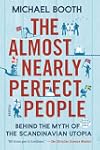
The Almost Nearly Perfect People: Behind the Myth of the Scandinavian Utopia
by Michael Booth
On This Page
Description
Journalist Michael Booth has lived among the Scandinavians for more than ten years, and he has grown increasingly frustrated with the rose-tinted view of this part of the world offered up by the Western media. In this timely book he leaves his adopted home of Denmark and embarks on a journey through all five of the Nordic countries to discover who these curious tribes are, the secrets of their success, and, most intriguing of all, what they think of one another. Why are the Danes so happy, show more despite having the highest taxes? Do the Finns really have the best education system? Are the Icelanders as feral as they sometimes appear? How are the Norwegians spending their fantastic oil wealth? And why do all of them hate the Swedes? In The Almost Nearly Perfect People Michael Booth explains who the Scandinavians are, how they differ and why, and what their quirks and foibles are, and he explores why these societies have become so successful and models for the world. Along the way a more nuanced, often darker picture emerges of a region plagued by taboos, characterized by suffocating parochialism, and populated by extremists of various shades. They may very well be almost nearly perfect, but it isn't easy being Scandinavian. show lessTags
Recommendations




































Member Reviews
«Почему «почти» идеальные?» — обиженно переспросил автора шведский собеседник. Мне, отучившемуся в Стокгольме, тоже не сразу пришли в голову какие-то недостатки местной системы. Господину Буту, женатому на датчанке, однако, поднадоели охи-ахи в отношении преуспевающих в международных рейтингах стран Северной Европы, и в особенности зашагавшее по планете уютненькое датское хюгге. Оставаясь безусловно show more очарованным скандинавскими реалиями, автор смог-таки показать, что неладно и в датском, и норвежском королевствах (шведам же он всыпал больше всех). Не ставя под вопрос их достижения, он предлагает посмотреть и на изнанку.
В Дании государство всеобщего благоденствия обкладывает народ налогами до 72%. Официально датчане только приветствуют это, однако более 20% трудоспособного населения не работают и живут на щедрые пособия. Остальные не особо надрываются — большинство уходит с работы в четыре-полпятого. Кронпринц и принцесса вообще посвящают исполнению своих официальных обязанностей в среднем около шести часов в год. Более половины покупают товары и услуги на черном рынке (там налогов нет). К частным, а не к содержащимся на налоги врачам обращается все больше народу. По уровню задолженности граждан Дания занимает одно из первых мест в мире. Учащиеся в успеваемости отстают от множества сверстников по миру, а показатели здоровья нации весьма тревожны. Датчане ксенофобы, а пресловутое хюгге трактуется как эскапизм, стремление ко всеобщему компромиссу и навязчивая атмосфера веселости и беззаботности — все признаки мелкобуржуазного самодовольства. Копенгаген против смертной казни, но, угадайте, кто поставляет в США препарат для смертельных инъекций? Странновато выглядит и защитница идеалов мира Швеция, восьмая в мире по продаже вооружений. Впрочем, узнать маленькие грязные секреты родины ABBA, а также Исландии, Финляндии и Норвегии я предоставлю вам самим.
Хотя нет, вот вам про крошечную очаровательную Исландию: несмотря на малое население (местное шоу талантов закрылось уже на третий сезон), там, оказывается, жуткий блат и кумовство. Это к вопросу об эгалитарности. Британский The Economist вообще назвал Скандинавию — «отличным местом, но... только для середнячков. Того, кто незауряден, раздавят, если он не успеет эмигрировать». show less
В Дании государство всеобщего благоденствия обкладывает народ налогами до 72%. Официально датчане только приветствуют это, однако более 20% трудоспособного населения не работают и живут на щедрые пособия. Остальные не особо надрываются — большинство уходит с работы в четыре-полпятого. Кронпринц и принцесса вообще посвящают исполнению своих официальных обязанностей в среднем около шести часов в год. Более половины покупают товары и услуги на черном рынке (там налогов нет). К частным, а не к содержащимся на налоги врачам обращается все больше народу. По уровню задолженности граждан Дания занимает одно из первых мест в мире. Учащиеся в успеваемости отстают от множества сверстников по миру, а показатели здоровья нации весьма тревожны. Датчане ксенофобы, а пресловутое хюгге трактуется как эскапизм, стремление ко всеобщему компромиссу и навязчивая атмосфера веселости и беззаботности — все признаки мелкобуржуазного самодовольства. Копенгаген против смертной казни, но, угадайте, кто поставляет в США препарат для смертельных инъекций? Странновато выглядит и защитница идеалов мира Швеция, восьмая в мире по продаже вооружений. Впрочем, узнать маленькие грязные секреты родины ABBA, а также Исландии, Финляндии и Норвегии я предоставлю вам самим.
Хотя нет, вот вам про крошечную очаровательную Исландию: несмотря на малое население (местное шоу талантов закрылось уже на третий сезон), там, оказывается, жуткий блат и кумовство. Это к вопросу об эгалитарности. Британский The Economist вообще назвал Скандинавию — «отличным местом, но... только для середнячков. Того, кто незауряден, раздавят, если он не успеет эмигрировать». show less
Since all 8 of my great-grandparents were born in Sweden (and emigrated to the US in the late 19th c), I felt somewhat obliged to explore what has happened in the last century to those who stayed behind in Scandinavia.
Booth is a British journalist who married a Dane and now lives in Copenhagen. He has a love/hate/ -- admire/satirize relationship with the Nordic peoples of Denmark, Norway, Iceland, Finland and Sweden. His book is often very funny and sometimes insightful.
He found himself somewhat baffled by the world-wide acclaim of the Scandinavians "happiest" and best educated people on earth: "One thing in particular about this new-found love of all things Scandinavian -- be it their free-form schools, whitewashed interior design, show more consensus-driven political systems or chunky jumpers -- which struck me as particularly odd: considering all this positive PR, and with awareness of the so-called Nordic miracle at all-time high, why wasn't everyone flocking to live here?... For all the crime literature and TV shows, why was our knowledge of Scandinavia so abysmally lacking?" So Booth set out to fill in some of the gaps by visiting each of the countries several times talking to "historians, anthopologists, jounalists, novelist, artists, politicians,philosophers, scientist, elf-watchers and Santa Claus."
If you are interested in how the Nordic peoples are different from each other, what values help to account for their successes and failures, and how "downright weird," they actually are, this is the book for you.
And in answer to why so few are moving to the North, one expert answered: "If you want to live in Norway there are a couple of things you need to make peace with: one is the cold and the darkness. If you can't cope with it, then go somewhere else. And the other is the equality of the genders." show less
Booth is a British journalist who married a Dane and now lives in Copenhagen. He has a love/hate/ -- admire/satirize relationship with the Nordic peoples of Denmark, Norway, Iceland, Finland and Sweden. His book is often very funny and sometimes insightful.
He found himself somewhat baffled by the world-wide acclaim of the Scandinavians "happiest" and best educated people on earth: "One thing in particular about this new-found love of all things Scandinavian -- be it their free-form schools, whitewashed interior design, show more consensus-driven political systems or chunky jumpers -- which struck me as particularly odd: considering all this positive PR, and with awareness of the so-called Nordic miracle at all-time high, why wasn't everyone flocking to live here?... For all the crime literature and TV shows, why was our knowledge of Scandinavia so abysmally lacking?" So Booth set out to fill in some of the gaps by visiting each of the countries several times talking to "historians, anthopologists, jounalists, novelist, artists, politicians,philosophers, scientist, elf-watchers and Santa Claus."
If you are interested in how the Nordic peoples are different from each other, what values help to account for their successes and failures, and how "downright weird," they actually are, this is the book for you.
And in answer to why so few are moving to the North, one expert answered: "If you want to live in Norway there are a couple of things you need to make peace with: one is the cold and the darkness. If you can't cope with it, then go somewhere else. And the other is the equality of the genders." show less
After almost nearly 400 pages of witty snark, I could have done without the wimpy epilogue which felt like either an afterthought or a 'wow, I've just insulted five entire countries so now I should apologize' realization. (I think that if you're going to take on an entire world region: own it). Either way, I thought that it detracted from this laugh-out-loud view of Scandinavia and the idea that it's the happiest region on earth. For many reasons, these countries are not perfect (because they are inhabited by, well, you know... people) and Booth travels to each one to report the good and the bad. I learned a lot (i.e. did you know that Finnish schools are some of the best in the world? Of course not. They don't brag about anything!) and show more enjoyed the entire trip. Highly recommended. show less
Interesting, but overlong, journey through the 5 countries of the Nordic region, highlighting their similarities and, more importantly, their differences. It already seems a bit outdated, but it does go a long way toward making these societies more comprehensible to an American who doesn't have any Nordic ancestry. The author isn't quite as funny as he thinks he is, but without the humor, this long series of observations and interviews would get pretty tedious. In the end, his best conclusion is that equal access to education is the secret to creating the egalitarian societies that make these countries stand out from the dog-eat-dog world of the United States. There is a lot we can learn here.
Nordic culture seems to have infiltrated our homes in a steady way over the past 10-15 years in particular (well, for the UK anyway). Scandi style interiors are everywhere, and I'm not just talking about Ikea and the twilight world of giving up 3 hours of your life to walk around every inch of a store that you only went into for a storage box. Nordic crime noir and woolly jumpers are ubiquitous (and for some reason seem to go hand-in-hand). And then there are the jollies that my kids teachers go on every year to learn from an education system that's supposedly head and shoulders above the rest of the world's.
So my interest in those intriguing people of the north was already piqued. Geographically they're relatively close neighbours to show more us, yet we don't generally holiday there in the numbers we do to, say, Italy or France, so there's a certain mystique to them. And then there's my newfound crush on Karl Ove Knausgaard. You get the idea.
Michael Booth is a Brit living in Denmark (married to a Dane), who has travelled extensively around all 5 Nordic countries. In this fascinating book he attempts to look under the rug of each country, so to speak, challenging each country's view of itself and their views of each other, all with a massive dollop of humour. It is laugh out loud hilarious in places. Commenting on the irony of Alfred Nobel setting up a peace prize after inventing dynamite which slaughtered of millions of people, he comments "...it is akin to King Herod sponsoring a beautiful baby competition".
In a nutshell (and I apologise to anyone Nordic reading this summary), I've learnt that Swedes are obsessed with following rules and being modern; Norwegians like dressing up in bizarre national dress, are well off and are quite happy to live far away from their nearest neighbour; Finns like alcohol, saunas, and aren't big on small talk; Icelanders are slightly feral and believe in elves; Danes are excessively into joining clubs and socialising and hate boasters.
All in all a funny, interesting read. I drop half a star or so as the section on Sweden got a little more political and a little less humorous, but generally I was glued to the page and this will definitely serve to further enhance my next Knausgaard read.
4 stars - humorous and informative. show less
So my interest in those intriguing people of the north was already piqued. Geographically they're relatively close neighbours to show more us, yet we don't generally holiday there in the numbers we do to, say, Italy or France, so there's a certain mystique to them. And then there's my newfound crush on Karl Ove Knausgaard. You get the idea.
Michael Booth is a Brit living in Denmark (married to a Dane), who has travelled extensively around all 5 Nordic countries. In this fascinating book he attempts to look under the rug of each country, so to speak, challenging each country's view of itself and their views of each other, all with a massive dollop of humour. It is laugh out loud hilarious in places. Commenting on the irony of Alfred Nobel setting up a peace prize after inventing dynamite which slaughtered of millions of people, he comments "...it is akin to King Herod sponsoring a beautiful baby competition".
In a nutshell (and I apologise to anyone Nordic reading this summary), I've learnt that Swedes are obsessed with following rules and being modern; Norwegians like dressing up in bizarre national dress, are well off and are quite happy to live far away from their nearest neighbour; Finns like alcohol, saunas, and aren't big on small talk; Icelanders are slightly feral and believe in elves; Danes are excessively into joining clubs and socialising and hate boasters.
All in all a funny, interesting read. I drop half a star or so as the section on Sweden got a little more political and a little less humorous, but generally I was glued to the page and this will definitely serve to further enhance my next Knausgaard read.
4 stars - humorous and informative. show less
Interesting look at the Utopian ideas projected on these nations by the rest of the world. Author is an Englishman who lives in Denmark. The nations are not the same; each has a history, a set of resources and politics of their own. Sweden is known for its cradle to grave security and openness to immigrants, Norway for new oil wealth, Finland for hard drinking and good educations. But the entire picture is more complex--surprise. Sweden owes prosperity to neutrality in WWII, Norway may have taken advantage of Denmark in mapping ocean floor for oil, etc. Interesting--I think it is clear that the US could not adopt Scandinavian system wholesale. It simply doesn't match our history and national character. But it could be a guide for steps show more to more equality. show less
https://nwhyte.livejournal.com/3356956.html
A Finnish friend was kind enough to give me this book as a Christmas present. I'm not very surprised - of the five countries and people Booth surveys, he gives the Finns much the best write-up (which is fine with me as I am more familiar with Finland than the others). He starts with a relatively long piece on the Danes (because he married one and lives there) and ends with a relatively long piece on the Swedes (because they are the biggest of the Nordic countries), and in between goes through Iceland, Norway and Finland in that order, combining interviews with experts and his own observations and, frankly, prejudices. Booth is mainly a food writer, and he is funniest about food, particularly show more Icelandic food:
"I shall fight for as long as I remain conscious to avoid ingesting håkarl again. Apparently, the shark meat caught in these parts is toxic if eaten fresh but, rather than giving up on the whole eating shark business altogether, they eventually hit upon the idea of burying it in the ground for between eighteen months and four years until it has decayed to the point where it becomes, in the very loosest sense of the word, edible. This is håkarl. I tried some at a bar in central Reykjavik. Clearly used to tourists 'just wanting a taste', a waitress brought me two small, sugar-cube sized chunks of unappetising-looking greyish meat in a sealed jar, 'Don't worry, it doesn't taste as bad as it smells,' she said, smiling. 'If you can get past the smell then that's the worst of it.' She was lying. True, the smell from quite some distance away as she opened the jar was indeed abominable: redolent of a multistorey carpark staircase on a hot summer's day, with accents of urine and vomit. But that wasn't the worst of it. The burning, fishy-cheese flavour was much, much worse. I concluded that håkarl's name was onomatopoeic. It was the noise one made upon eating it."
It's an interesting survey from someone who has taken the effort both to understand why the Nordic countries have such good reputations as placed to be alive, and also their flaws one by one. I think he is a bit harsh on Sweden, which is not really as close to a totalitarian society as he seems to argue, and maybe also on Iceland, which surely has some redeeming virtues; but in general its an entertaining survey, which reflects what the Nordic countries think of themselves and each other almost as much as his own prejudices. I think that fans of any of the Nordic countries will find stuff to recognise here, and those who don't know a lot about the Nordics may be inspired to find out more. show less
A Finnish friend was kind enough to give me this book as a Christmas present. I'm not very surprised - of the five countries and people Booth surveys, he gives the Finns much the best write-up (which is fine with me as I am more familiar with Finland than the others). He starts with a relatively long piece on the Danes (because he married one and lives there) and ends with a relatively long piece on the Swedes (because they are the biggest of the Nordic countries), and in between goes through Iceland, Norway and Finland in that order, combining interviews with experts and his own observations and, frankly, prejudices. Booth is mainly a food writer, and he is funniest about food, particularly show more Icelandic food:
"I shall fight for as long as I remain conscious to avoid ingesting håkarl again. Apparently, the shark meat caught in these parts is toxic if eaten fresh but, rather than giving up on the whole eating shark business altogether, they eventually hit upon the idea of burying it in the ground for between eighteen months and four years until it has decayed to the point where it becomes, in the very loosest sense of the word, edible. This is håkarl. I tried some at a bar in central Reykjavik. Clearly used to tourists 'just wanting a taste', a waitress brought me two small, sugar-cube sized chunks of unappetising-looking greyish meat in a sealed jar, 'Don't worry, it doesn't taste as bad as it smells,' she said, smiling. 'If you can get past the smell then that's the worst of it.' She was lying. True, the smell from quite some distance away as she opened the jar was indeed abominable: redolent of a multistorey carpark staircase on a hot summer's day, with accents of urine and vomit. But that wasn't the worst of it. The burning, fishy-cheese flavour was much, much worse. I concluded that håkarl's name was onomatopoeic. It was the noise one made upon eating it."
It's an interesting survey from someone who has taken the effort both to understand why the Nordic countries have such good reputations as placed to be alive, and also their flaws one by one. I think he is a bit harsh on Sweden, which is not really as close to a totalitarian society as he seems to argue, and maybe also on Iceland, which surely has some redeeming virtues; but in general its an entertaining survey, which reflects what the Nordic countries think of themselves and each other almost as much as his own prejudices. I think that fans of any of the Nordic countries will find stuff to recognise here, and those who don't know a lot about the Nordics may be inspired to find out more. show less
Members
- Recently Added By
Published Reviews
ThingScore 50
"When Booth is not taking the Scandinavians to task, he is being charmed by them, and when he is not doing that he is generalizing from their history. "
"The indulgence of half-baked theories is a minor offense, though. Booth’s project is essentially observational; it aspires to a comic genre that might be called Euro-exotica."
"The indulgence of half-baked theories is a minor offense, though. Booth’s project is essentially observational; it aspires to a comic genre that might be called Euro-exotica."
added by jodi
Lists

Books Read in 2017
4,249 works; 129 members

Book of the Month Selections 2016 to Present
130 works; 5 members
Author Information

14 Works 1,405 Members
Awards and Honors
Common Knowledge
- People/Characters
- Michael Booth
- Dedication
- To Lissen, Asger, and Emil
- First words
- Early one dark April morning a few years ago I was sitting in my living room in the Danish capital, Copenhagen, wrapped in a blanket and yearning for spring, when I opened that day's newspaper to discover that my adopted coun... (show all)trymen had been anointed the happiest of their species in something called the Satisfaction with Life Index, compiled by the Department of Psychology at the University of Leicester.
- Last words
- (Click to show. Warning: May contain spoilers.)Though, you are right, I probably am a snotty Brit.
Classifications
- Genres
- Travel, General Nonfiction, Nonfiction
- DDC/MDS
- 948.071 — History & geography History of Europe Northern Europe: Norway, Sweden, Denmark, Finland, Iceland Charles XIV (Bernadotte) 1818-
- LCC
- DL41 .B66 — History of Europe, Asia, Africa and Oceania Northern Europe. Scandinavia History of Northern Europe. Scandinavia Antiquities. Social life and customs. Ethnography
- BISAC
Statistics
- Members
- 782
- Popularity
- 35,516
- Reviews
- 40
- Rating
- (3.52)
- Languages
- 5 — Danish, English, German, Italian, Spanish
- Media
- Paper, Audiobook, Ebook
- ISBNs
- 15
- ASINs
- 8