On This Page
Description
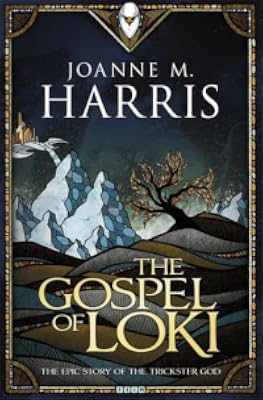
The trickster god Loki describes the rise and fall of the gods of the Norse, detailing how he left Chaos to serve Odin until the fall of Asgard.Tags
Recommendations
















Member Recommendations
Member Reviews
It’s been so many years since I read Chocolat, that for all intents and purposes The Gospel of Loki may as well be the first book I’ve ever read by Joanne Harris. Highly entertaining and original, this novel chronicles the epic rise of the Norse gods all the way through to the coming of Ragnarok, completely retold from the point of view of none other than the trickiest trickster of them all – Loki.
First thing you should know though, if you’re like me and sometimes you get that temptation to skip everything before the prologue in a book? Well, fight it! Be sure to read everything, including the character list. I had started skimming it initially, right up until I glimpsed Thialfi and Roskva, the two siblings in Norse mythology show more who are the servants of the god Thor, respectively described as a “fanboy” and a “fangirl”. Chuckling to myself, I went back and read everything more carefully. Glad I did! Aside from being absolutely hilarious, the forward material sets the tone of the novel perfectly, and I knew right away that I was going to enjoy this.
Now I don’t usually use quotes when I try to summarize a book, but in this case I’ll make an exception, simply because I doubt anyone else can describe the book better than our eponymous narrator. Plus, it gives a good idea what you’d be in for:
“Loki, that’s me. Loki, the Light-Bringer, the misunderstood, the elusive, the handsome and modest hero of this particular tissue of lies. Take it with a pinch of salt, but it’s at least as true as the official version and, dare I say it, more entertaining. So far, history, such as it is, has cast me in a rather unflattering role. Now it’s my turn to take the stage.”
Well, considering the legions who are now in love with Tom Hiddleston’s portrayal of Loki after the Thor movies, “unflattering role” might be debatable, but the rest I have to say is pretty spot on. The version of events presented here is indeed vastly more entertaining, our protagonist is as humorous as he’s not humble, and as he puts it, this is his story; at the end of the book, whether or not you feel sympathy towards Loki for some of his less savory actions is entirely up to you.
In many ways, the book is a retelling in the most honest and straightforward sense; it stays very close to the source material which are the well-known Norse myths, featuring stories about the giant mason who built Asgard’s Walls, Loki and Angrboda’s tryst and the subsequent births of the three Chaos Monsters, the theft of Idunn’s apples, the death of Balder by mistletoe dart, etc. None of the events described in this novel deviate all that much from the traditional versions, but the one major difference is the voice that tells us those tales. Loki chimes in with his own take of these stories, dropping little nuggets of wisdom, of the things he’s learned, even as he’s filling in the details. Although he’s unreliable as Hel and it’s in his nature to be up to no good, Loki nevertheless attempts to give us his reasons for the things he did, and admittedly, he can be quite convincing.
So if you were expecting a creative, “modernized” re-imagining of the myths or a brand new story, this is not that book, though the narrative does use present-day vernacular to great effect. I loved Loki’s voice in this, the way he delivers his lines with that silver tongue of his and such wonderfully dry humor. Harris has done a brilliant job hitting the sweet spot with Loki’s character, portraying him as the ultimate trickster without going overboard with his slippery, snarky ways. He’s exactly the way I would have pictured the god of mischief, and my hat’s off to the author for nailing it.
Overall, The Gospel of Loki succeeds in giving readers both something old and something new, and manages to be a lot of fun while doing it. A fantastic way to experience the major Norse myths, those with an interests in the topic are sure to delight in the engaging new way Harris has presented them in this novel. Highly recommended. show less
First thing you should know though, if you’re like me and sometimes you get that temptation to skip everything before the prologue in a book? Well, fight it! Be sure to read everything, including the character list. I had started skimming it initially, right up until I glimpsed Thialfi and Roskva, the two siblings in Norse mythology show more who are the servants of the god Thor, respectively described as a “fanboy” and a “fangirl”. Chuckling to myself, I went back and read everything more carefully. Glad I did! Aside from being absolutely hilarious, the forward material sets the tone of the novel perfectly, and I knew right away that I was going to enjoy this.
Now I don’t usually use quotes when I try to summarize a book, but in this case I’ll make an exception, simply because I doubt anyone else can describe the book better than our eponymous narrator. Plus, it gives a good idea what you’d be in for:
“Loki, that’s me. Loki, the Light-Bringer, the misunderstood, the elusive, the handsome and modest hero of this particular tissue of lies. Take it with a pinch of salt, but it’s at least as true as the official version and, dare I say it, more entertaining. So far, history, such as it is, has cast me in a rather unflattering role. Now it’s my turn to take the stage.”
Well, considering the legions who are now in love with Tom Hiddleston’s portrayal of Loki after the Thor movies, “unflattering role” might be debatable, but the rest I have to say is pretty spot on. The version of events presented here is indeed vastly more entertaining, our protagonist is as humorous as he’s not humble, and as he puts it, this is his story; at the end of the book, whether or not you feel sympathy towards Loki for some of his less savory actions is entirely up to you.
In many ways, the book is a retelling in the most honest and straightforward sense; it stays very close to the source material which are the well-known Norse myths, featuring stories about the giant mason who built Asgard’s Walls, Loki and Angrboda’s tryst and the subsequent births of the three Chaos Monsters, the theft of Idunn’s apples, the death of Balder by mistletoe dart, etc. None of the events described in this novel deviate all that much from the traditional versions, but the one major difference is the voice that tells us those tales. Loki chimes in with his own take of these stories, dropping little nuggets of wisdom, of the things he’s learned, even as he’s filling in the details. Although he’s unreliable as Hel and it’s in his nature to be up to no good, Loki nevertheless attempts to give us his reasons for the things he did, and admittedly, he can be quite convincing.
So if you were expecting a creative, “modernized” re-imagining of the myths or a brand new story, this is not that book, though the narrative does use present-day vernacular to great effect. I loved Loki’s voice in this, the way he delivers his lines with that silver tongue of his and such wonderfully dry humor. Harris has done a brilliant job hitting the sweet spot with Loki’s character, portraying him as the ultimate trickster without going overboard with his slippery, snarky ways. He’s exactly the way I would have pictured the god of mischief, and my hat’s off to the author for nailing it.
Overall, The Gospel of Loki succeeds in giving readers both something old and something new, and manages to be a lot of fun while doing it. A fantastic way to experience the major Norse myths, those with an interests in the topic are sure to delight in the engaging new way Harris has presented them in this novel. Highly recommended. show less
Entirely by accident, my fiction reading this Spring consisted of three retellings of various cultures' mythologies. First up was Joanne M. Harris's take on the Norse myths in The Gospel of Loki.
I went through something of a mythology phase as a teenager. Of all the myths and legends I perused, the Norse ones were amongst my favourites. Perhaps it was because I was a gloomy teenager and there's something inherently gloomy about Norse mythology. Sure it's full of heroic struggle like every other culture's myths, but there's also something futile about it all. The heroes struggle, but they fall. There are epic battles, but the bad guys win them. And then there's Ragnarok. This is how the world ends, not with a bang, but with creeping, show more inexorable ice.
Joanne Harris's take on the Eddur certainly doesn't try to sugar-coat her source materials' darkness. She chooses as narrator everyone's favourite Marvel supervillain: the trickster god Loki. He's a clever choice; as an inherent outsider amongst the other Norse gods we, the reader, get introduced to them as he does. He's also possessed of a tendency to get into scrapes and then think his way out of them, always fun to read.
So far so good, so why three stars and not five? Why isn't this review just one long squee of fangirl excitement? I mean fanboy. Probably. Mostly it's just that The Gospel of Loki falls a little short in every respect. The characters aren't totally flat stereotypes, but nor are they particularly interesting or fleshed out. Super-powers aside they could easily be the cast of a teen-comedy. Loki and Odin are the only ones who sidestep this issue, and it's no coincidence that they get the most page-time too. The story falls just short too. It's episodic rather than cumulative and is mostly a series of short stories pointing out either how hard done by Loki is or else how clever and awesome he is. I know he's an unreliable narrator and all that, and that the tales are based on the Eddur, but there we are.
For all that, The Gospel of Loki is a lot of fun, and on a good day the above gripes might only lower it to four stars. Except that is for Joanne Harris's incessant use of foreshadowing. Loki is narrating events after the fact, and every chapter has to remind us of this with a cheap “Coming next chapter, same bat-time, same bat-channel…” It's wholly unnecessary, and its non-stop usage only means that by the time any foreshadowed event rolls around you've completely forgot about it, having been bombarded with a dozen other teasers in the meantime. It doesn't kill the novel, but it certainly whacks it over the head a few times with a frying pan.
Oh well, I picked up the novel to pass the time while flying somewhere, and it succeeded in that aim. But it wasn't the only book to pass the time that flight… show less
I went through something of a mythology phase as a teenager. Of all the myths and legends I perused, the Norse ones were amongst my favourites. Perhaps it was because I was a gloomy teenager and there's something inherently gloomy about Norse mythology. Sure it's full of heroic struggle like every other culture's myths, but there's also something futile about it all. The heroes struggle, but they fall. There are epic battles, but the bad guys win them. And then there's Ragnarok. This is how the world ends, not with a bang, but with creeping, show more inexorable ice.
Joanne Harris's take on the Eddur certainly doesn't try to sugar-coat her source materials' darkness. She chooses as narrator everyone's favourite Marvel supervillain: the trickster god Loki. He's a clever choice; as an inherent outsider amongst the other Norse gods we, the reader, get introduced to them as he does. He's also possessed of a tendency to get into scrapes and then think his way out of them, always fun to read.
So far so good, so why three stars and not five? Why isn't this review just one long squee of fangirl excitement? I mean fanboy. Probably. Mostly it's just that The Gospel of Loki falls a little short in every respect. The characters aren't totally flat stereotypes, but nor are they particularly interesting or fleshed out. Super-powers aside they could easily be the cast of a teen-comedy. Loki and Odin are the only ones who sidestep this issue, and it's no coincidence that they get the most page-time too. The story falls just short too. It's episodic rather than cumulative and is mostly a series of short stories pointing out either how hard done by Loki is or else how clever and awesome he is. I know he's an unreliable narrator and all that, and that the tales are based on the Eddur, but there we are.
For all that, The Gospel of Loki is a lot of fun, and on a good day the above gripes might only lower it to four stars. Except that is for Joanne Harris's incessant use of foreshadowing. Loki is narrating events after the fact, and every chapter has to remind us of this with a cheap “Coming next chapter, same bat-time, same bat-channel…” It's wholly unnecessary, and its non-stop usage only means that by the time any foreshadowed event rolls around you've completely forgot about it, having been bombarded with a dozen other teasers in the meantime. It doesn't kill the novel, but it certainly whacks it over the head a few times with a frying pan.
Oh well, I picked up the novel to pass the time while flying somewhere, and it succeeded in that aim. But it wasn't the only book to pass the time that flight… show less
I settled down to this book with considerable anticipation. I'd relished Joanne Harris' "Gentlemen and Players" and "Chocolat", packed as they were with original ideas, strong characterization, and a slightly mystical view of the world. I've been fascinated with Loki since I was a child. I discovered him in his Marvel Comics incarnation and was always puzzled that people preferred the oafish Thor to the brilliant Loki . My fascination with Loki even led me to read some of the Norse Sagas which although sometime tedious were wonderfully amoral and extraordinarily blood thirsty.
What I got when I started reading was not at all what I expected. That, of course, is my problem, not the author's.
Perhaps I should have paid attention to the show more additional initial the author added to her name. I think now that she was flagging that Joanne M Harris was not going to write the kind of fiction Joanne Harris is famous for.
I should also have paid attention to the title "The Gospel of Loki: The Epic Story of the Trickster God". Epic tales have a particular form and the idea that any story about Loki could be a Gospel, literally Good News, has to be a conceit or a trick.
There are lots of good things in this book: the language and the imagery are rich without being obtrusive, the original Norse stories are faithfully
rendered but made new by being seen through Loki (admittedly lying) eyes, and the scale and the pace of the book are epic. Perhaps the most admirable thing is the way Harris positions Loki, the ultimate unreliable narrator, to reveal some hard truths: that Chaos and Order cannot abide or even begin to understand one another, that humour is an honest but misunderstood act of rebellion and that not trusting anyone is a limitation and not a strength.
And yet I found myself wanting something more or different than I was being served. The book did not engage my emotions. It did not provide the intense intimacy that a novel told in the first person normally provides.
Then I realized that this book is so "novel" that it is not a novel at all but something much stranger and original.
It has now been some weeks since I finished the book and my memory of it is still fresh and bright. Harris' Loki has taken up residence in my imagination. I don't like him as much as my childhood Loki but I believe in him more. Surprisingly, I find that I have compassion for Harris' Loki. Although he is an inveterate trickster, he is also the victim of a trick by Odin that ripped him from Chaos and bound him to a world that could never truly be home.
This is not a book to read if you are looking for escapist fantasy. It is a long song about the nature of chaos and order and the betrayal that is inevitable when the two meet. It is about fate and destiny and sustaining power of humour. It is, in fact, exactly what is says on the cover: an epic tale of a trickster god, except the real trickster is Odin. show less
What I got when I started reading was not at all what I expected. That, of course, is my problem, not the author's.
Perhaps I should have paid attention to the show more additional initial the author added to her name. I think now that she was flagging that Joanne M Harris was not going to write the kind of fiction Joanne Harris is famous for.
I should also have paid attention to the title "The Gospel of Loki: The Epic Story of the Trickster God". Epic tales have a particular form and the idea that any story about Loki could be a Gospel, literally Good News, has to be a conceit or a trick.
There are lots of good things in this book: the language and the imagery are rich without being obtrusive, the original Norse stories are faithfully
rendered but made new by being seen through Loki (admittedly lying) eyes, and the scale and the pace of the book are epic. Perhaps the most admirable thing is the way Harris positions Loki, the ultimate unreliable narrator, to reveal some hard truths: that Chaos and Order cannot abide or even begin to understand one another, that humour is an honest but misunderstood act of rebellion and that not trusting anyone is a limitation and not a strength.
And yet I found myself wanting something more or different than I was being served. The book did not engage my emotions. It did not provide the intense intimacy that a novel told in the first person normally provides.
Then I realized that this book is so "novel" that it is not a novel at all but something much stranger and original.
It has now been some weeks since I finished the book and my memory of it is still fresh and bright. Harris' Loki has taken up residence in my imagination. I don't like him as much as my childhood Loki but I believe in him more. Surprisingly, I find that I have compassion for Harris' Loki. Although he is an inveterate trickster, he is also the victim of a trick by Odin that ripped him from Chaos and bound him to a world that could never truly be home.
This is not a book to read if you are looking for escapist fantasy. It is a long song about the nature of chaos and order and the betrayal that is inevitable when the two meet. It is about fate and destiny and sustaining power of humour. It is, in fact, exactly what is says on the cover: an epic tale of a trickster god, except the real trickster is Odin. show less
Look, I'm going to name-drop now. Deal with it.
I bought Joanne Harris's latest book, The Gospel of Loki, at its launch. Joanne signed it for me (look, Joanne signed my book!). Joanne also gave me some blurb for my second book, and was one of the judges when I won Literary Death Match.
Yes, look at me, I am awesome. I know Joanne Harris, and I'm hugely grateful to her as a new author who's received her prestigious support.
So take what comes next with as much salt as you want, but The Gospel of Loki is magnificent. Take the darkly rich Norse mythology of Odin and Asgard, and transmit it through the amoral, witty and restless voice of Loki, birthed in and birther of chaos. What you get is a series of Tales and Trickery, by the end of which show more you are at home with some of the weirdest and imaginative beings which ever sprang from human hearts trying to explain what was outside in the Dark.
The book it reminded me of most was Robert Graves' The Greek Myths, not because of any essential similarity in the telling, but because in both a writer with a singular voice and attitude brings alive a world with such energy and assurance that you wonder how these myths were ever told without that voice. It took the endless Northern nights of telling and drinking to give birth to Loki; it took Joanne Harris to rescue the trickster from Marvel Comics and make him speak again. First class stuff. show less
I bought Joanne Harris's latest book, The Gospel of Loki, at its launch. Joanne signed it for me (look, Joanne signed my book!). Joanne also gave me some blurb for my second book, and was one of the judges when I won Literary Death Match.
Yes, look at me, I am awesome. I know Joanne Harris, and I'm hugely grateful to her as a new author who's received her prestigious support.
So take what comes next with as much salt as you want, but The Gospel of Loki is magnificent. Take the darkly rich Norse mythology of Odin and Asgard, and transmit it through the amoral, witty and restless voice of Loki, birthed in and birther of chaos. What you get is a series of Tales and Trickery, by the end of which show more you are at home with some of the weirdest and imaginative beings which ever sprang from human hearts trying to explain what was outside in the Dark.
The book it reminded me of most was Robert Graves' The Greek Myths, not because of any essential similarity in the telling, but because in both a writer with a singular voice and attitude brings alive a world with such energy and assurance that you wonder how these myths were ever told without that voice. It took the endless Northern nights of telling and drinking to give birth to Loki; it took Joanne Harris to rescue the trickster from Marvel Comics and make him speak again. First class stuff. show less
Even before I joined Loki’s Army after Avengers, I’d always been a fan of the myth version. “The Trickster” appears in many cultures because the chaotic archetype is so universal. So I ordered The Gospel of Loki as soon as I learned of it. Those looking for the Marvel version may be disappointed, but I found Harris’ interpretation wonderful.
The book doesn’t cover much new ground Vis-à-vis the original myth and the Lokasenna. The oft-heard events are all here: sewing his lips closed, Thor in drag, his various monstrous offspring, et al. What made this book stand out for me was how well Harris captured Loki’s voice. He is irreverent, humorous, sarcastic, and above all, sassy. When he first refers to himself as “Yours show more Truly,” I laughed aloud because it was so spot on. The books has a lot of funny moments, such as his ruminations on sex and how can anyone enjoy it with so many restrictions? Naturally, each of the main events are told from his POV so there’s some twisting to what readers expect to happen, but always in a way that can be explained by perception, instead of the black and white of “truth.” Our “Humble Narrator” even implies that everything he says can’t be trusted; but neither can anyone else.
One place where Harris did go beyond the myth was to provide Loki with an origin, how did he come to be in Asgard, the “brother” of Odin? I loved her explanation, and how it underlay everything that comes after. The book ends with Raganarok, but I truly hope Loki’s story doesn’t end with it. I would love for him to tell more tales.
Overall, I loved the book and intend to read the others in the series (Runemark and Runelight) though I doubt either could possibly be as entertaining without Yours Truly. Highly recommended to fans of myth, mischief or re-imagined fairytales. show less
The book doesn’t cover much new ground Vis-à-vis the original myth and the Lokasenna. The oft-heard events are all here: sewing his lips closed, Thor in drag, his various monstrous offspring, et al. What made this book stand out for me was how well Harris captured Loki’s voice. He is irreverent, humorous, sarcastic, and above all, sassy. When he first refers to himself as “Yours show more Truly,” I laughed aloud because it was so spot on. The books has a lot of funny moments, such as his ruminations on sex and how can anyone enjoy it with so many restrictions? Naturally, each of the main events are told from his POV so there’s some twisting to what readers expect to happen, but always in a way that can be explained by perception, instead of the black and white of “truth.” Our “Humble Narrator” even implies that everything he says can’t be trusted; but neither can anyone else.
One place where Harris did go beyond the myth was to provide Loki with an origin, how did he come to be in Asgard, the “brother” of Odin? I loved her explanation, and how it underlay everything that comes after. The book ends with Raganarok, but I truly hope Loki’s story doesn’t end with it. I would love for him to tell more tales.
Overall, I loved the book and intend to read the others in the series (Runemark and Runelight) though I doubt either could possibly be as entertaining without Yours Truly. Highly recommended to fans of myth, mischief or re-imagined fairytales. show less
Picked this up in an Amazon sale earlier this year and have now got around to reading it. Basically, it's the Norse myths from Loki's perspective. Rather fun, Loki comes across as this amoral sarcastic character who's too clever for his own good and ends up being gunned for by absolutely everyone. Apparently, it's the prequel to Runemarks and Runelight.
The Gospel According to Loki, by Joanne Harris, is told from the point of view in the voice of bad boy Trickster Loki. The Trickster’s captivating ability to tell a tale is almost bewitching enough to elicit an inkling of sympathy from the reader, yet anyone who has ever read Norse mythology knows how the story ends. Loki is never the hero. Maybe he could have been if the tale had unfolded differently, if the tables had been turned a bit in his favor. Destined to be more of a villain and an anti-hero, he is still able to persuade us to wish for a glimmer of hope at the end. Loki’s personality, cunning, and self-admiration shine through his words in this fun romp celebrating the glorious days and the final moments of Odin, Thor, show more Loki, and the rest of the Aesir in Asgard. show less
Members
- Recently Added By
Lists

2016 Hugo Eligible Novels
90 works; 32 members

Books Read in 2015
3,299 works; 129 members
Books Read in 2016
4,666 works; 197 members

Overdue Podcast
808 works; 9 members
Author Information

52+ Works 32,191 Members
Joanne Harris was born in Barnsley, Yorkshire, England on July 3, 1964. She studied Modern and Mediaeval Languages at St Catharine's College, Cambridge. While working as a teacher for fifteen years, she published three novels: The Evil Seed (1989), Sleep, Pale Sister (1993) and Chocolat (1999), which was made into a film starring Juliette Binoche show more and Johnny Depp. Her other works include Blackberry Wine, Five Quarters of the Orange, Coastliners, Holy Fools, The Lollipop Shoes and Runemarks. She also co-wrote two cookbooks with cookery writer Fran Warde: The French Kitchen and The French Market. (Bowker Author Biography) show less
Some Editions
Awards and Honors
Awards
Series

Common Knowledge
- Canonical title
- The Gospel of Loki
- Original title
- The Gospel of Loki
- Original publication date
- 2014-02-13
- People/Characters
- Loki; Odin; Thor; Freyja; Sif; Balder (show all 59); Heimdall; Gullveig (Gullveig-Heid); Surtur (as Surt); Tyr (Týr); Njord (Njörd); Frey; Hel; Fenris; Jormungand; Skadi; Angrboda; Frigg; Idun; Mani; Sol (Sól); Hod (Hoder); Mimir; Honir; Aegir; Ran; Dvalin; Brokk; Thiassi; Thialfi; Roskva; Svadilbari (horse); Sleipnir (horse); Gymir; Hugin; Munin; Gerda; Vali; Narvi; Thrym; Skrymir; Utgard-Loki; Logi; Hugi; Elli; Geirrod; Gjalp; Ereip; Grid; Hreidmar; Fafnir; Regin; Otter; Aegir; Ran; Andvari; Nanna; Skol (Skól); Hati
- Important places
- Asgard
- Dedication
- To Anouchka, again, again.
- First words
- OK. Stop. Stop right there.
- Last words
- (Click to show. Warning: May contain spoilers.)Let there be...
- Original language
- English
Classifications
Statistics
- Members
- 1,230
- Popularity
- 20,171
- Reviews
- 49
- Rating
- (3.56)
- Languages
- 8 — Dutch, English, French, Italian, Polish, Spanish, Turkish, Portuguese (Portugal)
- Media
- Paper, Audiobook, Ebook
- ISBNs
- 31
- ASINs
- 17