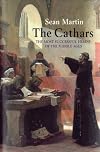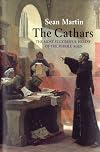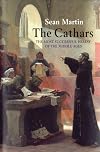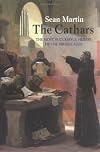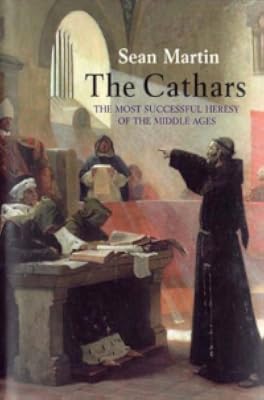
The Cathars: The Most Successful Heresy of the Middle Ages
by Sean Martin
On This Page
Description
The gripping, tragic true story of a peaceful sect who were wiped out in Europe's first genocide Catharism was the most successful heresy of the Middle Ages. Flourishing principally in the Languedoc and Italy, the Cathars taught that the world is evil and must be transcended through a simple life of prayer, work, fasting, and non-violence. They believed themselves to be the heirs of the true heritage of Christianity going back to apostolic times, and completely rejected the Catholic Church, show more regarding it as the Church of Satan; Cathar services and ceremonies, by contrast, were held in fields, barns, and people's homes. Finding support from the nobility in the fractious political situation in southern France, the Cathars also found widespread popularity among peasants and artisans. And again unlike the Church, the Cathars respected women, and women played a major role in the movement. Alarmed at the success of Catharism, the Church founded the Inquisition and launched the Albigensian Crusade to exterminate the heresy. The Crusade was the first to be directed against fellow Christians, and was also the first European genocide. With the fall of the Cathar fortress of Monts gur in 1244, Catharism was largely obliterated, although the faith survived into the early 14th century. Today, the mystique surrounding the Cathars is as strong as ever, and Sean Martin recounts their story and the myths associated with them in this lively and gripping book. show lessTags
Recommendations













Member Recommendations

Member Reviews
This book does what the title suggests It is a quick history of the Cathars ...especially those in France but also including those in Italy and some coverage of the Bogomils in Serbia. There is a rather brief review of the origins of dualist ideas in the Middle East and in the early Christian church. What is especially interesting to me is the way that a well established, and, seemingly, highly regarded religion could be exterminated ...more or less entirely. Pretty clearly one of the earlier examples of genocide ..and in this case largely at the behest of the catholic church. I have earlier read Montaillou: by Emmanuel Le Roy Laurie and this was pretty much a horror book about the atrocities incurred upon the poor, illiterate, show more inhabitants of a remote village in the Pyrenees by the Inquisition. It made quite an impression on me ...especially as I had travelled through this section of the Pyrenees a little bit earlier and could see what a hard life these people had.
The book delves a little into the origin of dualist ideas ...which probably pre-date Christianity ...and were certainly held by some of the earliest Christians. Interesting, in fact that they should have proven so tenacious but I guess they helped to explain how it was possible for there to be evil in the world.....which has been a constant challenge for Christian theologists to deal with....including Augustine of Hippo. After all, a good god who is omnipotent could scarcely be responsible for introducing evil into the world?
Pope Innocent initiated the crusade against the Cathars.....ironic that he should have adopted the name of "innocent" because it's hard to credit him with clean hands after the massacres and burnings of children and whole families of good people.
As a recipe for wiping out a religion the methodology was incredibly efficient:
1. Declare a holy crusade against the Cathars
2. The crusaders only have to "work" for 40 days anyway
3. They get to keep all the loot from the inhabitants they slaughter and their lands
5. Introduce an inquisition run by the likes of Bernard Gui.....who ensnare and entrap the illiterate and uneducated as well as the educated Cathars who are unable to lie. If a forebear is found to be heretical his bones are exhumed and the whole family is tainted.
It was a political war as well as a religious war and the French king was basically able to depose all the dukes and princes of Southern France and take over their lands.
I wonder what the economic cost of all this was? Obviously huge. The result was that France was more or less united and the petty wars between the counts of the south ...presumably reduced or eliminated. The religion was also unified and another potential source of conflict removed. The cost? Thousands killed, many barbarically by burning or other horrific measures involving torture. Cities destroyed. Crops destroyed...with starvation presumably following. Wholesale robbery and rape inflicted upon the south.
The Cathar beliefs frankly seem pretty harmless to me. And their way of life was regarded by all who came up against them (well nearly all) as "holier" than that of the catholics ...especially the priesthood. A good god who created the perfect world and an evil god (Satan) who created the world we inhabit. So everything of the world is necessarily evil....or to be abhorred...including marriage and procreation.
It's not a really detailed history of the Cathars but does what it purports to do. I give it 4 stars. show less
The book delves a little into the origin of dualist ideas ...which probably pre-date Christianity ...and were certainly held by some of the earliest Christians. Interesting, in fact that they should have proven so tenacious but I guess they helped to explain how it was possible for there to be evil in the world.....which has been a constant challenge for Christian theologists to deal with....including Augustine of Hippo. After all, a good god who is omnipotent could scarcely be responsible for introducing evil into the world?
Pope Innocent initiated the crusade against the Cathars.....ironic that he should have adopted the name of "innocent" because it's hard to credit him with clean hands after the massacres and burnings of children and whole families of good people.
As a recipe for wiping out a religion the methodology was incredibly efficient:
1. Declare a holy crusade against the Cathars
2. The crusaders only have to "work" for 40 days anyway
3. They get to keep all the loot from the inhabitants they slaughter and their lands
5. Introduce an inquisition run by the likes of Bernard Gui.....who ensnare and entrap the illiterate and uneducated as well as the educated Cathars who are unable to lie. If a forebear is found to be heretical his bones are exhumed and the whole family is tainted.
It was a political war as well as a religious war and the French king was basically able to depose all the dukes and princes of Southern France and take over their lands.
I wonder what the economic cost of all this was? Obviously huge. The result was that France was more or less united and the petty wars between the counts of the south ...presumably reduced or eliminated. The religion was also unified and another potential source of conflict removed. The cost? Thousands killed, many barbarically by burning or other horrific measures involving torture. Cities destroyed. Crops destroyed...with starvation presumably following. Wholesale robbery and rape inflicted upon the south.
The Cathar beliefs frankly seem pretty harmless to me. And their way of life was regarded by all who came up against them (well nearly all) as "holier" than that of the catholics ...especially the priesthood. A good god who created the perfect world and an evil god (Satan) who created the world we inhabit. So everything of the world is necessarily evil....or to be abhorred...including marriage and procreation.
It's not a really detailed history of the Cathars but does what it purports to do. I give it 4 stars. show less
This is the best book on the Cathars I have read. It is about the religion and its history. Other books say they are about the Cathars but the books are just about the battles of the Albigensian Crusade and its politics. Other Cathar books are mystical new age books about secret eastern knowledge, the holy grail, the Knights Templar or Mary Magdalene. Other books say the Cathar belief were mysterious and sprang from nowhere. This book traces a straightforward chain from Paulicians, to Bogomils to the Cathars. It gives a transcript of a consolamentum, the "secret and mysterious" sacrament that is the core of the practice of Catharism. I guess it takes some of the romance out of the legends around Catharism but I like that it makes show more understanding it much easier.
The only hard part about the history in the book is that almost everyone involved is named Raymond. There is a Raymond V, Raymond VI, Raymond VII. There is a Raymond Roger Count of Foix. There is another Raymond Roger Trencavel. When people are not named Raymond, they are named Peter. Peter II, Peter of Bruys, Peter of Castelnau and Peter Roger of Mirepoix (another Roger). There were even women named Raymonde (with an e) who had affairs with guys named Peter. It is very hard to keep the players straight.
That being said, if you want to know what Catharism was, where it came from and what happened to it, this is the book to read. show less
The only hard part about the history in the book is that almost everyone involved is named Raymond. There is a Raymond V, Raymond VI, Raymond VII. There is a Raymond Roger Count of Foix. There is another Raymond Roger Trencavel. When people are not named Raymond, they are named Peter. Peter II, Peter of Bruys, Peter of Castelnau and Peter Roger of Mirepoix (another Roger). There were even women named Raymonde (with an e) who had affairs with guys named Peter. It is very hard to keep the players straight.
That being said, if you want to know what Catharism was, where it came from and what happened to it, this is the book to read. show less
This short book explains the origins of the Cathar movement of medieval Languedoc, Italy and the Balkans, placing it in the context of different theological approaches that had grown up in preceding centuries in both eastern and western European Christianity. Of course it also covers the appallingly violent - and, in some places and at some times near genocidal - and ultimately successful campaign by the Catholic Church and Inquisition to eliminate the Cathars both as a theological current within and opposed to the mainstream church, and to eliminate physically the Perfect, the Cathar equivalent to the priesthood, through mass burnings while giving others the opportunity to recant. The whole experience is a classic illustration of the show more vast gulf between the Medieval and modern mindset in assuming the measures that are appropriate in even a civilised society to decide which of two (or more) competing views of the world will prevail - a stark and somewhat depressing affirmation of the old adage that "the past is a different country, they do things differently there". show less
A good, and easy to read, introduction to the Cathar heresy and suppression by the French and Italian inquisitions.
Ratings
Members
- Recently Added By
Published Reviews
Dok je većina takozvanih jeretičkih grupa u srednjem veku bila brzo otkrivana i uništavana od strane crkve, katarizam je cvetao kao alternativa katolicizmu skoro dvesta godina. Prvi pisani podaci o ovoj gnostičkoj zajednici pojavljuju se 1143. Katari su tvrdili da katolička crkva ne samo da je lažna, već i sasvim zla, a čak su je nazivali i crkvom Satane.
Katarski sledbenici smatrali su show more sebe istinskim naslednicima Hristovog učenja, koje je preneseno direktno od apostola. Katari su se držali dualističkog učenja, vere koja je starija od hrišćanstva, i to u svom najjednostavnijem obliku, a koje uči da postoji Svetlost i Tama i da su to dva jednaka, suprotstavljena i večna principa i sile. U knjizi, Šon Martin iznosi validne istorijske činjenice o ovoj „najuspešnijoj jeresi srednjeg veka“. show less
Katarski sledbenici smatrali su show more sebe istinskim naslednicima Hristovog učenja, koje je preneseno direktno od apostola. Katari su se držali dualističkog učenja, vere koja je starija od hrišćanstva, i to u svom najjednostavnijem obliku, a koje uči da postoji Svetlost i Tama i da su to dva jednaka, suprotstavljena i večna principa i sile. U knjizi, Šon Martin iznosi validne istorijske činjenice o ovoj „najuspešnijoj jeresi srednjeg veka“. show less
added by Sensei-CRS
Dok je većina takozvanih jeretičkih grupa u srednjem veku bila brzo otkrivana i uništavana od strane crkve, katarizam je cvetao kao alternativa katolicizmu skoro dvesta godina. Prvi pisani podaci o ovoj gnostičkoj zajednici pojavljuju se 1143. Katari su tvrdili da katolička crkva ne samo da je lažna, već i sasvim zla, a čak su je nazivali i crkvom Satane.
Katarski sledbenici smatrali su show more sebe istinskim naslednicima Hristovog učenja, koje je preneseno direktno od apostola. Katari su se držali dualističkog učenja, vere koja je starija od hrišćanstva, i to u svom najjednostavnijem obliku, a koje uči da postoji Svetlost i Tama i da su to dva jednaka, suprotstavljena i večna principa i sile. U knjizi, Šon Martin iznosi validne istorijske činjenice o ovoj „najuspešnijoj jeresi srednjeg veka“. show less
Katarski sledbenici smatrali su show more sebe istinskim naslednicima Hristovog učenja, koje je preneseno direktno od apostola. Katari su se držali dualističkog učenja, vere koja je starija od hrišćanstva, i to u svom najjednostavnijem obliku, a koje uči da postoji Svetlost i Tama i da su to dva jednaka, suprotstavljena i večna principa i sile. U knjizi, Šon Martin iznosi validne istorijske činjenice o ovoj „najuspešnijoj jeresi srednjeg veka“. show less
added by Sensei-CRS
Lists

al.vick-parents books
301 works; 1 member
Author Information

9 Works 996 Members
Sean Martin is a filmmaker, poet and writer. His poems have appeared in numerous magazines, and he has just directed his second feature film, The Notebooks of Cornelius Crow
Common Knowledge
- Canonical title
- The Cathars: The Most Successful Heresy of the Middle Ages
- Original title
- The Cathars: The Most Successful Heresy of the Middle Ages
- People/Characters
- Arnaud Amaury (Arnold Amaury); Arnold of Brescia; Peter Autier; William Autier; Basil the Physician; Jacob Bech (show all 67); William Bélibaste; Bernard of Clairvaux; Arnold Catalan; Peter Clergue; Alexius Comnenus; Conrad of Marburg; Constantine the Great; Geoffrey d'Ablis; Gentille d'Ascou; Hugh de Lusignon; Guilhem de Minerve; Amaury de Montfort; Simon de Montfort; Antonio Di Galosna; Romano di San Angelo; Eckbert; James Fournier; Frederick II, Holy Roman Emperor; Folquet de Marseille (Fulk of Marseilles); Peter Garcias; Pope Gregory IX; Bernard Gui; Arthur Guirdham; Henry III of England; Henry of Lausanne; Henry II of Seyn; Hugh of Arcis; Innocent III, Pope; John Judeus; Kulin; Louis XIII, King of France; Mani; Mark; Nicetas; Olivier; Paul, the Apostle; Peter II of Aragon; Peter of Castelnau; Peter of Florence; Peter Roger of Mirepoix; Napoléon Peyrat; William Peyre; Philip II Augustus, King of France; William Prunel; Armanno Pungilupo; Otto Rahn; Ralph; Raymond VI of Toulouse; Raymond VII of Toulouse; Robert of Bulgaria; Déodat Roché; Roger Bernard of Foix; Satan; Arnold Sicre; Stephen de Saint-Thibéry; Prades Tavernier; Oliver Termes; Raymond Trencavel; Raymond Roger Trencavel; Wolfram von Eschenbach; Zoroaster
- Important places
- Languedoc, France; Albi, Tarn, Occitanie, France; Ax-les-Thermes, France; Béziers, Hérault, Occitanie, France; Carcassonne, Aude, Occitanie, France; Lombers, France (show all 15); Minerve, France; Montségur, France; Quéribus, France; Toulouse, Haute-Garonne, Occitanie, France; Bosnia; Concorezzo, Italy; Lombardy, Italy; Desenzano del Garda, Italy; Rhineland, Germany
- Important events
- Albigensian Crusade (1209 | 1229); Fourth Lateran Council (1215)
- Epigraph
- Throughout human history, believers have waged war against one another. Gnostics and mystics have not. People are only too prepared to kill on behalf of a theology or faith. They are less disposed to do so on behalf of knowle... (show all)dge. Those prepared to kill for faith will therefore have a vested interest in stifling the voice of knowledge.Michael Baigent and Richard Leigh, The Inquisition
Bishop Fulk, asking the knight why he did not expel heretics, received the classic answer: 'We cannot. We have been reared in their midst. We have relatives among them and we see them living lives of perfection.'Malcolm Lambe... (show all)rt, The Cathars
Salvation is better achieved in the faith of these men called heretics than in any other faith.Anonymous French peasant, quoted in Emmanuel Le Roy Ladurie, Montaillou - Dedication
- For all the Good Christians, past and present
and
In Memory of My Father, whose feet tread the lost aeons - First words
- It was the Feast Day of St Mary Magdalene, 22 July 1209, and an all-out massacre had not been planned.
- Last words
- (Click to show. Warning: May contain spoilers.)But we are not yet healed.'
- Original language
- English
Classifications
- Genres
- History, Religion & Spirituality, Nonfiction, General Nonfiction
- DDC/MDS
- 272.3 — Religion History of Christianity Persecutions in church history Waldenses and Albigenses (11th-12th century)
- LCC
- BX4876.3 .M37 — Philosophy, Psychology and Religion Christian Denominations Christian Denominations Protestantism Pre-Reformation Waldenses and Albigenses
- BISAC
Statistics
- Members
- 338
- Popularity
- 93,798
- Reviews
- 4
- Rating
- (3.76)
- Languages
- 7 — Dutch, English, French, German, Serbian, Spanish, Turkish
- Media
- Paper, Ebook
- ISBNs
- 16
- ASINs
- 10