
On This Page
Description
Sixteen-year-old Jacques Rebiere is living a humble life in rural France, studying butterflies and frogs by candlelight in his bedroom. Across the Channel, in England, the playful Thomas Midwinter, also sixteen, is enjoying a life of ease, resigned to follow his father's wishes and to pursue a career in medicine. A fateful seaside meeting four years later sets the two young men on a profound course of friendship and discovery; they will become pioneers in the burgeoning field of psychiatry. show more But when a female patient at the doctors' Austrian sanatorium becomes dangerously ill, the two men's conflicting diagnoses threaten to divide them and to undermine all their professional achievements. show lessTags
Recommendations










































Member Recommendations
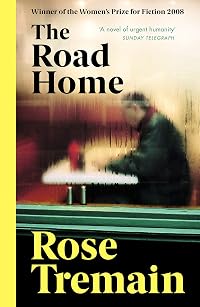
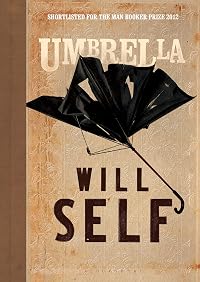
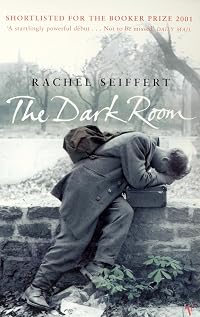
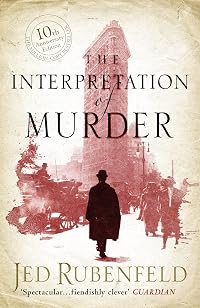
hilge Philosophy, psychology, and sanatorium are key features in both books. Which are both really nice and long in the very best sense.
Member Reviews
I’ve always enjoyed reading Sebastian Faulks and had high hopes for Human Traces, a story about the lives and loves, hopes and ambitions, turmoil and anguish of Jacques Rebière, Thomas Midwinter and his sister Sonia spanning 1860 – 1920.
Meeting by chance in Deauville aged 14, Thomas and Jacques swear allegiance to one another and the pursuit of “the way in which functions the mind of the human”. Despite their different backgrounds, training and viewpoints Thomas and Jacques become qualified ‘mad doctors’, form a partnership and open their first sanatorium with the indispensable help of Sonia.
The descriptions of a Victorian lunatic asylum - its patients, tunnels and ball; the African expedition – its footprints, mutiny, show more brains and all; Torrington House - upstairs and downstairs; Jacque’s childhood - silent stepmother, distant father and schizophrenic older brother moved, horrified, amused and saddened me by turn leaving me with vivid mental images.
Although the different schools of thought on psychiatry, psychoanalysis, psychotherapy and how the brain works are key to the development of the personal and professional relationship between Thomas and Jacques I found these passages too frequent, long and detailed so 4.5 stars for an otherwise outstanding work of fiction.
Descriptive, emotive, informative. Well worth reading. show less
Meeting by chance in Deauville aged 14, Thomas and Jacques swear allegiance to one another and the pursuit of “the way in which functions the mind of the human”. Despite their different backgrounds, training and viewpoints Thomas and Jacques become qualified ‘mad doctors’, form a partnership and open their first sanatorium with the indispensable help of Sonia.
The descriptions of a Victorian lunatic asylum - its patients, tunnels and ball; the African expedition – its footprints, mutiny, show more brains and all; Torrington House - upstairs and downstairs; Jacque’s childhood - silent stepmother, distant father and schizophrenic older brother moved, horrified, amused and saddened me by turn leaving me with vivid mental images.
Although the different schools of thought on psychiatry, psychoanalysis, psychotherapy and how the brain works are key to the development of the personal and professional relationship between Thomas and Jacques I found these passages too frequent, long and detailed so 4.5 stars for an otherwise outstanding work of fiction.
Descriptive, emotive, informative. Well worth reading. show less
This isn't a book you can dip in and out of, it requires some serious attention. But that's not to say it doesn't reward you for spending the time on it. There are passages that are a delight to read, capturing perfectly the emotional peaks and troughs of being human. The text is somewhat technical, with lots of discussion of psychology, physiology, neurology and the like. A glossary would have helped, I feel. There is something of that nature, but it appears at about page 175, by which time you've already got a little confused.
Tells the story of a lifetime of effort with the aspiration to cure the insane. Two young men meet in France in 1870s, from very different backgrounds and groundings, but both unite in their goal. Jaques is from show more a French peasant family and is inspired by science - and trying to bring his brother back from his own personal hell. Thomas is from a well to do English family and has gravitated to trying to discover the secrets of madness from discovering the depictions of madness in literature. And there you have the two opposing approaches to finding the soul - is it a physical thing, or a thing of poetry and something too will-o-the-wisp to pin down.
The book follows these two boys from their youth to their old age as they try, from different points and with differing degrees of success, to cure the insane. It's an impossible task, and the book ends with one of them succumbing to one of the diseases they've been involved in looking for. There are touches of brilliance, Jaques declaring his love makes the heart leap with pleasure, the case of Kitty has you fearing for their future, while one of them describing his imminent dementia was heart breaking. It was shortly followed by what I'd call a "Wonderful Life" scenario - while they may not have achieved what they set out to do, they haven't found a cure for madness, they have achieved something that is overlooked, but vitally important - they've made the lives of many people better - and that can't be considered insignificant.
It is a bit long and the technical language can get pretty dense, but it is worth persisting with. The idea of what is it that makes us human is a question that we still don't have an answer and the surmise that madness is the evolutionary accompaniment of madness is an attractive one (for those that don't fall unlucky in the genetic lottery). This certainly makes you think, not only about the big questions of what it is to be human, but about the emotions that each human undergoes through a lifetime. There is something very beautiful in this book. show less
Tells the story of a lifetime of effort with the aspiration to cure the insane. Two young men meet in France in 1870s, from very different backgrounds and groundings, but both unite in their goal. Jaques is from show more a French peasant family and is inspired by science - and trying to bring his brother back from his own personal hell. Thomas is from a well to do English family and has gravitated to trying to discover the secrets of madness from discovering the depictions of madness in literature. And there you have the two opposing approaches to finding the soul - is it a physical thing, or a thing of poetry and something too will-o-the-wisp to pin down.
The book follows these two boys from their youth to their old age as they try, from different points and with differing degrees of success, to cure the insane. It's an impossible task, and the book ends with one of them succumbing to one of the diseases they've been involved in looking for. There are touches of brilliance, Jaques declaring his love makes the heart leap with pleasure, the case of Kitty has you fearing for their future, while one of them describing his imminent dementia was heart breaking. It was shortly followed by what I'd call a "Wonderful Life" scenario - while they may not have achieved what they set out to do, they haven't found a cure for madness, they have achieved something that is overlooked, but vitally important - they've made the lives of many people better - and that can't be considered insignificant.
It is a bit long and the technical language can get pretty dense, but it is worth persisting with. The idea of what is it that makes us human is a question that we still don't have an answer and the surmise that madness is the evolutionary accompaniment of madness is an attractive one (for those that don't fall unlucky in the genetic lottery). This certainly makes you think, not only about the big questions of what it is to be human, but about the emotions that each human undergoes through a lifetime. There is something very beautiful in this book. show less
I did not particularly love or enjoy this book, but I admired it greatly. I was awestruck by Faulks's ability to accumulate a vast amount of historical scientific knowledge and build around it the story of the lives of two fictional characters, one English and one French, who set out with the bold ambition of curing madness.
This is an incredibly incredibly ambitious and thoughtful, much more subtle and wide-ranging than the previous works by Faulks that I've read. It deals with some of the same issues that he's dealt with in his previous works—the spectre of the First World War hangs over this as it does in Birdsong—but this is a much more expansive book, one which looks at sanity and insanity, what it is to be human, what it is to think.
This can, admittedly, make the book a little heavy-going at times, especially since Faulks manages a very admirable pastiche of the kind of writing to which medical researchers were prone in the nineteenth century, but I found it fascinating and thought-provoking, sufficiently so that I devoured it in the departure show more lounge/on the plane—which is definitely a sign of approval given that it's over six hundred pages long, and the flight was very much a short haul one.
The prose is beautifully lucid, evocative without ever being anything like purple, and Faulks somehow manages the feat of shifting the tone of the novel almost imperceptibly as it progresses, so that the opening feels very appropriate to its setting (the early 1870s) while its conclusion is very much of the twentieth century. If the novel has a flaw, it is that its characters always take second place to its ideas; Thomas and Jacques, Sonia and Kitty, though finely drawn, are never characters which seize the imagination. show less
This can, admittedly, make the book a little heavy-going at times, especially since Faulks manages a very admirable pastiche of the kind of writing to which medical researchers were prone in the nineteenth century, but I found it fascinating and thought-provoking, sufficiently so that I devoured it in the departure show more lounge/on the plane—which is definitely a sign of approval given that it's over six hundred pages long, and the flight was very much a short haul one.
The prose is beautifully lucid, evocative without ever being anything like purple, and Faulks somehow manages the feat of shifting the tone of the novel almost imperceptibly as it progresses, so that the opening feels very appropriate to its setting (the early 1870s) while its conclusion is very much of the twentieth century. If the novel has a flaw, it is that its characters always take second place to its ideas; Thomas and Jacques, Sonia and Kitty, though finely drawn, are never characters which seize the imagination. show less
This novel proved to be quite a challenging read, hardly surprising given the subject of mental illness, not to mention the descriptions of its institutionalised treatment in the 19th century. I am not all that sure that a novel about the loves and lives of one family works all that well as a vehicle for an exploration of the development of different schools of psychiatric treatment, and some of the joins in the story jarred a bit. Bits seemed unlikely, such as poorly-educated residents of a barred institution in England becoming staff members in a sanitorium in Carinthia. When the narrative focuses on an individual, as with Olivier's switch to a first-person voice, then with Daniel, you know it is a prelude to the author killing them show more off. In the case of Daniel fighting in WWI, it seemed strange (given the theme of the novel) that he was killed rather than traumatised by shell-shock - perhaps the author was just too fond of the character and could not have him suffer.
My walks during lockdown have included a footpath through the grounds of the local mental hospital, huge gothic structures set up in 1843 in what was then country, as a radical change from the city centre poor house (work house) it replaced - fee-paying patients admitted to the grander of the two buildings, and probably treated there rather differently. The issue of the cost of psychiatric treatment is mentioned in "Human Traces", but not satisfactorily addressed. Once the two doctors had founded their sanitorium, we are told that the fee-paying residents subsidise others, but the narrative otherwise ignores them.
Other oddities of the novel are that the large institution in England is described in detail, as is Schloss Seeblick in Carinthia, which makes it striking that the replacement building up the mountain actually designed by the doctors is less clearly described. Both doctors take sabbaticals, and both seem somewhat implausible, indeed, I found it unlikely that Jacques Rebière would cross America to investigate cable cars, but ignore the opportunity to meet colleagues. I understand another novel set in the sanatorium at Schloss Seeblick in the 1930s ("Snow Country") has recently been published, which is puzzling if I am correct in thinking the sanatorium in the schloss, so lovingly evocated in "Human Traces", had closed decades earlier. As you see, although I do not find this a flawless book, it has given me a lot to think about, particularly when I walk through the grounds of the mental hospital. show less
My walks during lockdown have included a footpath through the grounds of the local mental hospital, huge gothic structures set up in 1843 in what was then country, as a radical change from the city centre poor house (work house) it replaced - fee-paying patients admitted to the grander of the two buildings, and probably treated there rather differently. The issue of the cost of psychiatric treatment is mentioned in "Human Traces", but not satisfactorily addressed. Once the two doctors had founded their sanitorium, we are told that the fee-paying residents subsidise others, but the narrative otherwise ignores them.
Other oddities of the novel are that the large institution in England is described in detail, as is Schloss Seeblick in Carinthia, which makes it striking that the replacement building up the mountain actually designed by the doctors is less clearly described. Both doctors take sabbaticals, and both seem somewhat implausible, indeed, I found it unlikely that Jacques Rebière would cross America to investigate cable cars, but ignore the opportunity to meet colleagues. I understand another novel set in the sanatorium at Schloss Seeblick in the 1930s ("Snow Country") has recently been published, which is puzzling if I am correct in thinking the sanatorium in the schloss, so lovingly evocated in "Human Traces", had closed decades earlier. As you see, although I do not find this a flawless book, it has given me a lot to think about, particularly when I walk through the grounds of the mental hospital. show less
[This is a review I wrote in 2007]
**A very involved, complex and philosophical novel.**
This novel is a true literary work of art. It's deep and complex, and Faulks approaches the minefield of "the mind" in a clear and sensitive way. He also writes "Human Traces" in a style quite reminiscent of the literary greats of the nineteenth century, so you have to be careful not to try and rush it along as you're reading.
The characters are likeable and believable from the beginning. There's young Sonia who almost as soon as the novel begins, finds herself in a clearly unsuitable marriage, her bright brother Thomas, to whom she is devoted, and the ambitious French lad Jacques who comes from a quite different background. The boys meet by chance show more and, overcoming the language barrier, discover their mutual passion for science and the human mind. They are kindred souls, and their quest for understanding the mind is to take them along many, and sometimes different, paths - the Salpetriere in Paris, a county lunatic asylum in England, and across Europe, until they are considered quite renowned in their field of psychiatry.
Faulks's novel traverses one of the most illuminating periods in the history of psychiatry - the transitional phase from the late nineteenth century across into the twentieth and the First World War. Covering changes in care from restraint, to moral treatment, to psychiatry and neurological and drug treaments, the novel is a really good introduction to the history of psychiatry and one of its' major developmental phases.
In a way its' strength is also its' weakness. There are just a few places where I wished that Faulks had concentrated slightly less on the psychiatry and slightly more on the plot and characters. The depth of detail about the psychiatry can be bewildering and is probably not of interest to everyone. However, it's a small criticism and overall I can highly recommend the book. show less
**A very involved, complex and philosophical novel.**
This novel is a true literary work of art. It's deep and complex, and Faulks approaches the minefield of "the mind" in a clear and sensitive way. He also writes "Human Traces" in a style quite reminiscent of the literary greats of the nineteenth century, so you have to be careful not to try and rush it along as you're reading.
The characters are likeable and believable from the beginning. There's young Sonia who almost as soon as the novel begins, finds herself in a clearly unsuitable marriage, her bright brother Thomas, to whom she is devoted, and the ambitious French lad Jacques who comes from a quite different background. The boys meet by chance show more and, overcoming the language barrier, discover their mutual passion for science and the human mind. They are kindred souls, and their quest for understanding the mind is to take them along many, and sometimes different, paths - the Salpetriere in Paris, a county lunatic asylum in England, and across Europe, until they are considered quite renowned in their field of psychiatry.
Faulks's novel traverses one of the most illuminating periods in the history of psychiatry - the transitional phase from the late nineteenth century across into the twentieth and the First World War. Covering changes in care from restraint, to moral treatment, to psychiatry and neurological and drug treaments, the novel is a really good introduction to the history of psychiatry and one of its' major developmental phases.
In a way its' strength is also its' weakness. There are just a few places where I wished that Faulks had concentrated slightly less on the psychiatry and slightly more on the plot and characters. The depth of detail about the psychiatry can be bewildering and is probably not of interest to everyone. However, it's a small criticism and overall I can highly recommend the book. show less
This very satisfying novel chronicles the life-long relationship of Jacques Rebiére and Thomas Midwinter, two men in the early vanguard of psychiatry and psychology in the late 19th and early 20th centuries. Rebiére and Thomas Midwinter met as boys when Thomas vacationed in Breton near where Jacques lived. Both were intellectually curious and scientifically minded. Jacques’s interest in the human mind was triggered by his older brother, Olivier, who as a young adult was committed to an asylum following a psychotic breakdown. Thomas was drawn to literature, particularly Shakespeare, as a means to examine the human condition. Thomas’s sister Sonia will play a large role in the story as explained later.
The boys developed a deep bond show more from their shared interest in science. They vowed they would someday partner in a practice of medicine focusing on mental illness. Sonia in an arranged marriage with Richard Prendergast experienced an unhappy life with the vain and failed Richard. They divorced under a deal with Sonia’s father in which he essentially pays Richard to set her free from the marriage.
As they grew into adulthood Jacques and Thomas completed their studies in London and Paris. Thomas took a job as a junior doctor in a large asylum where his dream to help the profoundly ill patients was soon dashed by the dearth of anything that medicine could offer the inmates. Thomas realized the only course of any worth was kind sympathy to their suffering. Jacques studies in Paris where he is particularly interested in the neurological causes of mental disorders, a focus then in vogue.
Jacques visited Thomas at the Midwinter’s country home. Jacques and Sonia fall immediately in love and, when he has finished his studies, they marry. The couple and Thomas move to Paris where the men opened a fledgling practice, treating mostly well-to-do neurotic patients.
Their dream of a clinic is realized when they find a schloss in Austria that they open as a clinic where they treat mostly patients with mild disorders. They devote a portion of their practice to the chronically and severely mentally ill and they bring Olivier from the asylum in France to their hospital.
An attractive young Viennese woman experiencing various symptoms arrives at the clinic. Jacques examines Katharina and concludes that her physical symptoms are manifestations of repressed traumatic memories. Jacques had become enamored with the emerging field of psychoanalysis. Despite her denial of past life traumatic events he determines to treat her using psychoanalytic therapies. He shares her case history with Thomas who is shocked by the descriptions of her symptoms and rushes her to the local hospital where she undergoes emergency surgery for large ovarian cysts. He writes a scathing rebuttal to Jacques’s mistaken conclusions, but does not give it to him. Jacques is aware that he has misdiagnosed Katharina and this creates tension between he and Thomas that will ripen over the ensuring years. The differences of views they hold on the value of psychoanalysis clouds their friendship.
Katharina and Thomas fall in love and marry. Despite the misdiagnosis that nearly cost her her life she remains gracious to Jacques and forms a deep bond with Sonia. Sonia gave birth to Daniel after several miscarriages and Katharina to twin girls.
The lease on the schloss is set to expire and they locate an estate high on a mountain. Jacques takes a sabbatical to visit California where he tours a sanitarium and spa located above Pasadena accessed by a cable-cog railway tram, a means of conveyance ideal for their new clinic. While in California he met Roya, a mysterious Russian beauty of noble descent. (Thomas had met Roya years earlier while traveling as a personal physician to a wealthy patron.)
Returning to Austria the partners commence work on their lofty hospital. Thomas futilely treats Olivier whose insanity is intractable. While at the construction site Olivier responding to voices throws himself to his death from a precipice. Olivier’s condition has sparked an idea that Thomas will explore further – that the psychotic mind is a product of the evolution of the human mind closely related to the creativity and imagination inherent in human thinking. Darwin’s theory of evolution, now about thirty-years old has captivated Thomas.
From a chance encounter with an amateur paleontologist Thomas takes a sabbatical to safari in Africa in search of primal human fossils. It is there that Thomas concludes that the evolution of man is the key to understanding modern human intellect. Leaving the main party to return to Europe Thomas has a near death experience when his party becomes lost.
Back in Austria the clinic is a success. While at a society event, Jacques encounters Roya who has settled in the area with a rich husband (a little too much coincidence here). He is deeply attracted to her and they begin an affair, although he remained loyal to Sonia.
Thomas unlike Jacque had not published a professional paper. Drawing on this ruminations about the origins of schizophrenia (as it has become called) as the result of natural selection gone slightly awry he prepares a treatise on his conclusions. He noted that despite being massively dysfunctional the malady continues to persist in humans; it did not die out as non-sustaining traits would usually do. As the condition is distributed evenly across the world its genesis must have occurred before the human diaspora many millennial ago. Thomas gave a lengthy talk on his conception during which he explicitly critiqued the psychoanalytic school gaining adherents at the time. His speech was not well-received, particularly by Jacques who viewed it as a slap at him. Their rift opened further and deeper.
Thomas and Jacques ultimately decide to dissolve their partnership. Jacques’s and Sonia’s son Daniel has grown to manhood and enlists in the war where he is killed in Italy. Jacques grieves deeply and in desperation visits a medium whose cruel phoniness in summoning spirits shames and insults him. Thomas starts a practice in London, but begins to experience the onset of the disease now known as Alzheimer’s dementia. The two men emotionally wish each other good bye.
Faulk’s work is well-constructed and quite riveting. I thought the periodic reappearance of Roya was a bit contrived and unnecessary to the plot. What was most impressive was how Faulks described the emerging trends in psychiatry while avoiding anachronisms of advances that occurred after the period. The shifting bonds of friendship between the men and their families were a major theme of the novel.
I found the particularly interesting the description of the asylum where Thomas worked as a young doctor. I started my professional career in the mid-1970’s as an administrator in such an asylum in upstate New York. This was near the end of the era of large psychiatric institutions. The main building on the sprawling grounds was built in 1840. On the ground floor as you entered you first encountered the so-called “show wards”. These had the ambience of a graceful, sedate old person’s home. But further on, seldom visited by anyone, were the “back wards” where the most chronic affected and deeply disabled were housed. Although the introduction of psychotropic drugs two decades earlier had drastically reduced the population of severely mentally ill persons by this time, the residual patients with the most intractable illness remained. I recall the notion of providing a “therapeutic milieu” in the hospital, which, as in Thomas’s time, involved treating people with kindness and decency. Active treatment was limited to large doses of medication that had little effect other than to tranquilize. I directed a project called “humanization” (what a terrible term!) that involvement providing privacy and a bit less sterile environment for the residents.
That era is over. By the late 1990’s the hospital of 2,800 individuals was closed, along with a neighboring facility of over 3,000. One would like to think that this was the result of miraculous advances in treatment efficacious, but the record here is certainly not stellar. show less
The boys developed a deep bond show more from their shared interest in science. They vowed they would someday partner in a practice of medicine focusing on mental illness. Sonia in an arranged marriage with Richard Prendergast experienced an unhappy life with the vain and failed Richard. They divorced under a deal with Sonia’s father in which he essentially pays Richard to set her free from the marriage.
As they grew into adulthood Jacques and Thomas completed their studies in London and Paris. Thomas took a job as a junior doctor in a large asylum where his dream to help the profoundly ill patients was soon dashed by the dearth of anything that medicine could offer the inmates. Thomas realized the only course of any worth was kind sympathy to their suffering. Jacques studies in Paris where he is particularly interested in the neurological causes of mental disorders, a focus then in vogue.
Jacques visited Thomas at the Midwinter’s country home. Jacques and Sonia fall immediately in love and, when he has finished his studies, they marry. The couple and Thomas move to Paris where the men opened a fledgling practice, treating mostly well-to-do neurotic patients.
Their dream of a clinic is realized when they find a schloss in Austria that they open as a clinic where they treat mostly patients with mild disorders. They devote a portion of their practice to the chronically and severely mentally ill and they bring Olivier from the asylum in France to their hospital.
An attractive young Viennese woman experiencing various symptoms arrives at the clinic. Jacques examines Katharina and concludes that her physical symptoms are manifestations of repressed traumatic memories. Jacques had become enamored with the emerging field of psychoanalysis. Despite her denial of past life traumatic events he determines to treat her using psychoanalytic therapies. He shares her case history with Thomas who is shocked by the descriptions of her symptoms and rushes her to the local hospital where she undergoes emergency surgery for large ovarian cysts. He writes a scathing rebuttal to Jacques’s mistaken conclusions, but does not give it to him. Jacques is aware that he has misdiagnosed Katharina and this creates tension between he and Thomas that will ripen over the ensuring years. The differences of views they hold on the value of psychoanalysis clouds their friendship.
Katharina and Thomas fall in love and marry. Despite the misdiagnosis that nearly cost her her life she remains gracious to Jacques and forms a deep bond with Sonia. Sonia gave birth to Daniel after several miscarriages and Katharina to twin girls.
The lease on the schloss is set to expire and they locate an estate high on a mountain. Jacques takes a sabbatical to visit California where he tours a sanitarium and spa located above Pasadena accessed by a cable-cog railway tram, a means of conveyance ideal for their new clinic. While in California he met Roya, a mysterious Russian beauty of noble descent. (Thomas had met Roya years earlier while traveling as a personal physician to a wealthy patron.)
Returning to Austria the partners commence work on their lofty hospital. Thomas futilely treats Olivier whose insanity is intractable. While at the construction site Olivier responding to voices throws himself to his death from a precipice. Olivier’s condition has sparked an idea that Thomas will explore further – that the psychotic mind is a product of the evolution of the human mind closely related to the creativity and imagination inherent in human thinking. Darwin’s theory of evolution, now about thirty-years old has captivated Thomas.
From a chance encounter with an amateur paleontologist Thomas takes a sabbatical to safari in Africa in search of primal human fossils. It is there that Thomas concludes that the evolution of man is the key to understanding modern human intellect. Leaving the main party to return to Europe Thomas has a near death experience when his party becomes lost.
Back in Austria the clinic is a success. While at a society event, Jacques encounters Roya who has settled in the area with a rich husband (a little too much coincidence here). He is deeply attracted to her and they begin an affair, although he remained loyal to Sonia.
Thomas unlike Jacque had not published a professional paper. Drawing on this ruminations about the origins of schizophrenia (as it has become called) as the result of natural selection gone slightly awry he prepares a treatise on his conclusions. He noted that despite being massively dysfunctional the malady continues to persist in humans; it did not die out as non-sustaining traits would usually do. As the condition is distributed evenly across the world its genesis must have occurred before the human diaspora many millennial ago. Thomas gave a lengthy talk on his conception during which he explicitly critiqued the psychoanalytic school gaining adherents at the time. His speech was not well-received, particularly by Jacques who viewed it as a slap at him. Their rift opened further and deeper.
Thomas and Jacques ultimately decide to dissolve their partnership. Jacques’s and Sonia’s son Daniel has grown to manhood and enlists in the war where he is killed in Italy. Jacques grieves deeply and in desperation visits a medium whose cruel phoniness in summoning spirits shames and insults him. Thomas starts a practice in London, but begins to experience the onset of the disease now known as Alzheimer’s dementia. The two men emotionally wish each other good bye.
Faulk’s work is well-constructed and quite riveting. I thought the periodic reappearance of Roya was a bit contrived and unnecessary to the plot. What was most impressive was how Faulks described the emerging trends in psychiatry while avoiding anachronisms of advances that occurred after the period. The shifting bonds of friendship between the men and their families were a major theme of the novel.
I found the particularly interesting the description of the asylum where Thomas worked as a young doctor. I started my professional career in the mid-1970’s as an administrator in such an asylum in upstate New York. This was near the end of the era of large psychiatric institutions. The main building on the sprawling grounds was built in 1840. On the ground floor as you entered you first encountered the so-called “show wards”. These had the ambience of a graceful, sedate old person’s home. But further on, seldom visited by anyone, were the “back wards” where the most chronic affected and deeply disabled were housed. Although the introduction of psychotropic drugs two decades earlier had drastically reduced the population of severely mentally ill persons by this time, the residual patients with the most intractable illness remained. I recall the notion of providing a “therapeutic milieu” in the hospital, which, as in Thomas’s time, involved treating people with kindness and decency. Active treatment was limited to large doses of medication that had little effect other than to tranquilize. I directed a project called “humanization” (what a terrible term!) that involvement providing privacy and a bit less sterile environment for the residents.
That era is over. By the late 1990’s the hospital of 2,800 individuals was closed, along with a neighboring facility of over 3,000. One would like to think that this was the result of miraculous advances in treatment efficacious, but the record here is certainly not stellar. show less
Members
- Recently Added By
Lists

Favourite Books
1,820 works; 311 members

Dishonourable Mentions of 2013
189 works; 63 members

Blue Pyramid 1,276 Best Books of All Time
1,248 works; 32 members
Author Information

40+ Works 21,503 Members
Sebastian Faulks is the author of Where My Heart Used to Beat, which made the New Zealand Best Seller List 2015. (Bowker Author Biography)
Series

Common Knowledge
- Canonical title
- Human Traces
- Original publication date
- 2005
- People/Characters
- Jean-Martin Charcot; Dr. Thomas Midwinter
- Important places
- Brittany, France; Paris, France; France; Carinthia, Austria; Austria
- Important events
- World War I
Classifications
Statistics
- Members
- 1,385
- Popularity
- 17,225
- Reviews
- 32
- Rating
- (3.35)
- Languages
- English, French, Swedish
- Media
- Paper, Audiobook, Ebook
- ISBNs
- 27
- ASINs
- 11