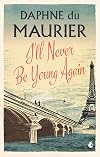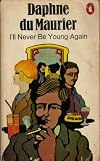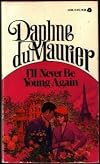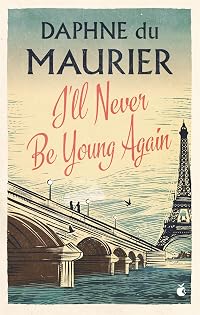
I'll Never Be Young Again
by Daphne du Maurier
On This Page
Description
Classic Literature. Fiction. Literature. Thriller. HTML:As far as his father, a famous writer, is concerned, Richard will never amount to anything, and so he decides to take his fate into his own hands. But at the last moment he is saved by Jake, who appeals to Richard not to waste his life. Together they set out for adventure, working their way through Europe, eventually arriving in bohemian Paris, where Richard meets Hesta, an entrancing music student.Daphne du Maurier's second novel is a show more masterpiece of narration, showcasing for the first time in her career the male voice she would use to stunning effect in four subsequent novels, including My Cousin Rachel.
"A magician, a virtuoso. She can conjure up tragedy, horror, tension, suspense, the ridiculous, the vain, the romantic."-Good Housekeeping. show less
Tags
Recommendations
























Member Reviews
In the way that D.H. Lawrence amazes me with his ability to write the experiences of a young woman, du Maurier has done this with writing the experiences of a young man. He is irritating and egotistical, and on the whole not all that likeable. But I think this is how it is supposed to be. It's an illustration of youth and the immunity it affords us, the chances it gives us, and the excuses. I remember thinking and feeling all that this young man does when I was 20 - 21. And I thought that I would never change, that my opinions and my personality were formed. At first I wished I had read this book back then, but I think it is the separation that has given me the affiliation. I would not have been able to see my reflection when I was at show more the closer point. show less
Dick is contemplating throwing himself off a bridge, but is 'saved' by Jake. They take a long, rambling journey through Norway, and possibly some other places, but I don't know for sure because I just couldn't read it anymore. Dick is trying to escape the influence of his 'famous poet' father, but it seems like the book is an excuse for du Maurier to feature her poetic descriptions of the fjords. Dick himself seems to be suffering from bi-polar disorder, alternately in love with and disenchanted by any experience he engages in often swinging from moody to moodier almost instantly. It's enough to make the reader just as crazy.
"But then dreams are apart from the business of living; they are things we shed from us gently as we grow older"
Du Maurier's second novel begins in London as Richard (Dick) is snatched from attempting to take his own life by wanderer Jake. The two men strike up an instant friendship and begin a devil-may-care look at life and jump on the first ship leaving town and head for Sweden. They trek the mountains and party with tourists as a steamboat cruises the fjords until they finally end up in a brawl that sends them catching the first boat out of Stockholm - although that boat is destined for a fate that forever separates the two friends.
Adrift again but no longer suicidal, Dick leads a shiftless life in Paris drifting from job to job show more as he dreams of becoming a writer like his famous father, until one day he meets young music student Hesta and they settle into a relationship - although Dick still shrugs responsibility and puts off writing his "great book". Dick eventually begins to mature through his relationship with Hesta, but the relationship becomes strained as Dick's influence in her life changes her from a sensible grounded student into a carefree partying drifter no longer interested in her music lessons.
Ironic, isn't it? But so true to life - didn't we all hate our parents and do really stupid things when we were young? I believe this is the first time Du Maurier used her famous "male voice" and she shows remarkable insight into Dick's not so very likeable character (I did want to smack him on Hesta's behalf a few times). While not up to what she wrote in her later years, if you're a fan of Du Maurier's you might want to give this one a whirl - It’s one that will definitely stay with you for a bit as you reflect back on your own misspent youth. I almost gave it three stars, but then it _is_ Du Maurier after all. 4/5 stars. show less
Du Maurier's second novel begins in London as Richard (Dick) is snatched from attempting to take his own life by wanderer Jake. The two men strike up an instant friendship and begin a devil-may-care look at life and jump on the first ship leaving town and head for Sweden. They trek the mountains and party with tourists as a steamboat cruises the fjords until they finally end up in a brawl that sends them catching the first boat out of Stockholm - although that boat is destined for a fate that forever separates the two friends.
Adrift again but no longer suicidal, Dick leads a shiftless life in Paris drifting from job to job show more as he dreams of becoming a writer like his famous father, until one day he meets young music student Hesta and they settle into a relationship - although Dick still shrugs responsibility and puts off writing his "great book". Dick eventually begins to mature through his relationship with Hesta, but the relationship becomes strained as Dick's influence in her life changes her from a sensible grounded student into a carefree partying drifter no longer interested in her music lessons.
Ironic, isn't it? But so true to life - didn't we all hate our parents and do really stupid things when we were young? I believe this is the first time Du Maurier used her famous "male voice" and she shows remarkable insight into Dick's not so very likeable character (I did want to smack him on Hesta's behalf a few times). While not up to what she wrote in her later years, if you're a fan of Du Maurier's you might want to give this one a whirl - It’s one that will definitely stay with you for a bit as you reflect back on your own misspent youth. I almost gave it three stars, but then it _is_ Du Maurier after all. 4/5 stars. show less
I'll Never Be Young Again was Daphne du Maurier's second novel, written when she was only twenty three years old. It's different from the other books of hers that I've read so far. It doesn't have the suspense or the gothic feel of some of her other works – this is more of a psychological, character-driven book. It's the story of Richard, a young man who has grown up in the shadow of his famous father, and his struggle to find his own identity. I'm not really a fan of 'coming-of-age' novels, b...more I'll Never Be Young Again was Daphne du Maurier's second novel, written when she was only twenty three years old. It's different from the other books of hers that I've read so far. It doesn't have the suspense or the gothic feel of some show more of her other works – this is more of a psychological, character-driven book. It's the story of Richard, a young man who has grown up in the shadow of his famous father, and his struggle to find his own identity. I'm not really a fan of 'coming-of-age' novels, but I'm glad I chose to read this one. It certainly seems to be one of her least well known novels - and I was concerned that this might mean it wasn’t very good. Well, I can tell you that it is good and I enjoyed it a lot more than I was expecting to.
The book opens with Richard – or Dick as he prefers to call himself – standing on a bridge, preparing to jump. Immediately the reader is intrigued, wondering what has happened to drive him to suicide. At the last minute Dick feels a hand on his shoulder – this is Jake, a complete stranger who saves his life and becomes his closest friend. The first half of the book follows the adventures of Dick and Jake as they leave England and sail to Scandinavia together in search of a new life. The second half is the story of Dick’s relationship with Hesta, a girl he meets in Paris.
The whole book is written in the first person from Dick's perspective, which is significant as it was apparently the first time Daphne du Maurier wrote from a man's point of view – and I thought she captured the male voice perfectly. The only problem I had was that I just didn't like Dick very much. I found his immaturity and whining very irritating – although I understood that the point of the book was to follow his development from an insecure, selfish youth into a sensible, mature adult. Eventually he does begin to grow up and want different things out of life, but this comes too late in the book for me to be able to warm to him. However, the book is so well-written I could still enjoy it even with such an unsympathetic narrator. Her writing is absolutely beautiful and quite dreamlike, as she lets us get right inside Dick's head and share his thoughts and emotions. There are also some vivid descriptions of the mountains and fjords of Norway and the other places that the characters visit, particularly Paris with its cafés and boulevards.
This would probably not be the best Daphne du Maurier book for a newcomer to begin with, but it's a good choice for someone who wants to venture away from Rebecca and read one of her less popular novels. A word of warning, though – if you're going to read the Virago Modern Classics edition, leave the introduction until last as it gives away the entire plot, including the ending (this is good advice with any book – I’ve learned from experience never to read the introduction first) show less
The book opens with Richard – or Dick as he prefers to call himself – standing on a bridge, preparing to jump. Immediately the reader is intrigued, wondering what has happened to drive him to suicide. At the last minute Dick feels a hand on his shoulder – this is Jake, a complete stranger who saves his life and becomes his closest friend. The first half of the book follows the adventures of Dick and Jake as they leave England and sail to Scandinavia together in search of a new life. The second half is the story of Dick’s relationship with Hesta, a girl he meets in Paris.
The whole book is written in the first person from Dick's perspective, which is significant as it was apparently the first time Daphne du Maurier wrote from a man's point of view – and I thought she captured the male voice perfectly. The only problem I had was that I just didn't like Dick very much. I found his immaturity and whining very irritating – although I understood that the point of the book was to follow his development from an insecure, selfish youth into a sensible, mature adult. Eventually he does begin to grow up and want different things out of life, but this comes too late in the book for me to be able to warm to him. However, the book is so well-written I could still enjoy it even with such an unsympathetic narrator. Her writing is absolutely beautiful and quite dreamlike, as she lets us get right inside Dick's head and share his thoughts and emotions. There are also some vivid descriptions of the mountains and fjords of Norway and the other places that the characters visit, particularly Paris with its cafés and boulevards.
This would probably not be the best Daphne du Maurier book for a newcomer to begin with, but it's a good choice for someone who wants to venture away from Rebecca and read one of her less popular novels. A word of warning, though – if you're going to read the Virago Modern Classics edition, leave the introduction until last as it gives away the entire plot, including the ending (this is good advice with any book – I’ve learned from experience never to read the introduction first) show less
I loved the first part of this book but was left disappointed by the second part. The first had so much life and adventure, while the second was much more somber and portrayed Richard in a fairly negative light. He turned into a whiny, petulant, selfish child. I understand that this was a part of the story the author intended, but it did not flow as well as the beginning of the book. Though I appreciate how Richard ultimately ended up, I don't necessarily think the story needed to flow in the direction that it did. Who am I to question the story a particular author chooses to tell though? This certainly wasn't as good as Jamaica Inn or Rebecca, but was still mostly enjoyable.
Even though there are no sinister characters and not one glimpse of Cornwall, I still loved this book. This is the most introspective du Maurier novel I have read yet. I loved it.
Ratings
Members
- Recently Added By
Lists

Favourite Virago Modern Classics
183 works; 38 members

Books Read in 2006
424 works; 8 members

Read in 2006
140 works; 1 member
Author Information

209+ Works 57,759 Members
Daphne Du Maurier was born in London on May 13, 1907 and educated in Paris. In 1932, she married Lieutenant-General Sir Frederick Browning. She began writing short stories of mystery and suspense for magazines in 1928, a collection of which appeared as The Apple Tree in 1952. Her first novel, The Loving Spirit, was published in 1931. Her tightly show more woven, highly suspenseful plots and her strong characters make her stories perfect for adaptation to film or television. Among her many novels that were made into successful films are Jamaica Inn (1936), Rebecca (1938), Frenchman's Creek (1941), Hungry Hill (1943), My Cousin Rachel (1952), and The Scapegoat (1957). Her short story, The Birds (1953), was brought to the screen by director Alfred Hitchcock in a treatment that has become a classic horror-suspense film. She died on April 19, 1989 at the age of 81. (Bowker Author Biography) show less
Some Editions
Series
Belongs to Publisher Series
Work Relationships
Is contained in
Common Knowledge
- Canonical title
- I'll Never Be Young Again
- Original title
- I'll Never Be Young Again
- Original publication date
- 1932
- People/Characters*
- Richard; Jake; Hesta
- Epigraph
- 'If it must be so, let's not weep nor complain
If I have failed, or you, or life turned sullen.
We have had these things, they do not come again,
But the flag still flies and the city has not fallen.'
Humbert ... (show all)Wolfe - First words
- When the sun had gone, I saw that the water was streaked with great patches of crimson and gold.
Devotees of Daphne du Maurier will find in I'll Never Be Young Again a rich source of self-revelatory material. (Introduction) - Last words
- (Click to show. Warning: May contain spoilers.)He seems to be saying; 'I'll never be young again - I'll never be young again.'
(Click to show. Warning: May contain spoilers.)Most of all, these Trophy Editors gave Virginia, Edna and Daphne the respect, adoration and veneration due to them. (Introduction) - Original language
- English
*Some information comes from Common Knowledge in other languages. Click "Edit" for more information.
Classifications
Statistics
- Members
- 421
- Popularity
- 73,726
- Reviews
- 6
- Rating
- (3.31)
- Languages
- 8 — Czech, English, Estonian, French, German, Italian, Romanian, Swedish
- Media
- Paper, Audiobook, Ebook
- ISBNs
- 26
- UPCs
- 2
- ASINs
- 23