
Elaine Dundy (1921–2008)
Author of The Dud Avocado
About the Author
Writer Elaine Dundy was born in New York City in 1921. She studied acting at Sweet Briar College in Virginia. After graduating, she moved to Europe and lived in Paris and later London. She married legendary critic Kenneth Tynan in 1951 and they divorced in 1964. She worked as an actress with only show more moderate success and Tynan suggested she try writing a novel. The end result was The Dud Avocado published in 1958. She wrote two more novels and a couple of plays before focusing on biography in 1980. Her other works include Finch, Bloody Finch; Elvis and Gladys; Ferriday, Louisiana; and Life Itself! She died because of a heart attack on May 1, 2008. (Bowker Author Biography) show less
Image credit: Illustration by Jim McDermott
Series
Works by Elaine Dundy
My Place 1 copy
Associated Works
Tagged
Common Knowledge
- Canonical name
- Dundy, Elaine
- Legal name
- Dundy, Elaine Rita
- Other names
- Brimberg, Elaine Rita (birth)
- Birthdate
- 1921-08-01
- Date of death
- 2008-05-01
- Gender
- female
- Education
- Sweet Briar College (BA|1943)
Mills College - Occupations
- novelist
actor
biographer
short story writer
journalist
playwright - Organizations
- Army Signal Corps (WWII)
- Relationships
- Tynan, Kenneth (husband)
Tynan, Tracy (daughter) - Short biography
- At the end of World War II, Elaine Dundy went to live in Paris before settling in London. In 1951, she married the critic Kenneth Tynan; they divorced in 1964. She became a novelist and short story writer, as well as a writer for the BBC's satirical show That Was the Week That Was. She went back to living in New York and wrote for The New York Times.
- Cause of death
- heart attack
- Nationality
- USA
- Birthplace
- New York, New York, USA
- Places of residence
- London, Middlesex, England, UK
Paris, Île-de-France, France
Los Angeles, California, USA - Place of death
- Los Angeles, California, USA
- Burial location
- Westwood Village Memorial Park Cemetery, Los Angeles, California, USA
- Associated Place (for map)
- USA
Members
Discussions
Elaine Dundy in Virago Modern Classics (January 2014)
Reviews
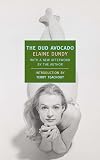
I am a complete sucker for a beautifully bound book. How could I resist a Virago Modern Classic with such a gorgeous hardback cover? I felt rather retro and special reading this small sized book, set mainly in 1950s Paris. Sally Jay Gorce (what a wonderful name) has struck a deal with her rich uncle – to be financially supported for two years while she sees the world and, oh, does she see it!
Sally Jay comes across as rather empty-headed at first as her days revolve around men, drinking, show more dancing and sex. There’s a little acting in there too at first. As Sally Jay’s relationships become more tangled, things start to get a bit more interesting. I would suggest persevering through Part One, as the pace and themes pick up greatly in the latter parts.
Sally Jay’s talent for losing things and getting entangled with a strange lot come to the fore later in the book. It’s at this time that you realise you’re no longer reading a tale about a silly young girl entertaining herself in Paris, but a girl who is getting into something more sinister. It was this part I enjoyed the most, as Sally Jay has to use her mettle to escape without putting her foot in it any further!
The ending is somewhat surprising (random characters disappear and reappear all the time in The Dud Avocado) but surprisingly, traditional. Sally Jay prides herself on being avant-garde – no better seen than in the conversations with the vapid Judy – why did she settle? I’ll leave you to read that in Sally Jay’s own words.
The title of The Dud Avocado refers to Sally Jay herself – she realises that sometimes she makes silly choices, but she’s kind of mysterious and exotic, like an avocado seemed back then. This is part of what makes Sally Jay such a likeable character despite all the scrapes she finds herself in! Her self-depreciating humour often made me smile.
Funny and wry, a lot of the observations Dundy makes are still relevant today. I loved the part about the types of tourists! It’s fun and frothy on the surface, but much darker towards the end. I was pleasantly surprised to read how modern the book felt.
http://samstillreading.wordpress.com show less
Sally Jay comes across as rather empty-headed at first as her days revolve around men, drinking, show more dancing and sex. There’s a little acting in there too at first. As Sally Jay’s relationships become more tangled, things start to get a bit more interesting. I would suggest persevering through Part One, as the pace and themes pick up greatly in the latter parts.
Sally Jay’s talent for losing things and getting entangled with a strange lot come to the fore later in the book. It’s at this time that you realise you’re no longer reading a tale about a silly young girl entertaining herself in Paris, but a girl who is getting into something more sinister. It was this part I enjoyed the most, as Sally Jay has to use her mettle to escape without putting her foot in it any further!
The ending is somewhat surprising (random characters disappear and reappear all the time in The Dud Avocado) but surprisingly, traditional. Sally Jay prides herself on being avant-garde – no better seen than in the conversations with the vapid Judy – why did she settle? I’ll leave you to read that in Sally Jay’s own words.
The title of The Dud Avocado refers to Sally Jay herself – she realises that sometimes she makes silly choices, but she’s kind of mysterious and exotic, like an avocado seemed back then. This is part of what makes Sally Jay such a likeable character despite all the scrapes she finds herself in! Her self-depreciating humour often made me smile.
Funny and wry, a lot of the observations Dundy makes are still relevant today. I loved the part about the types of tourists! It’s fun and frothy on the surface, but much darker towards the end. I was pleasantly surprised to read how modern the book felt.
http://samstillreading.wordpress.com show less
"Last night was one of THOSE evenings. I wouldn't know what to call it. Eventful in an uneventful way. Boring; but interesting. Nothing much happening on the surface and everybody seething and stewing underneath---changing character all over the place." Page 180
I don't think I've read another novel where the protagonist came roaring off the page like Sally Jay Gorce does in this book. A twenty year old American girl who is spending the year (1958) in Paris, she is so fresh, so dynamic, so show more filled with energy that I couldn't help cheer her on as she faced one disaster after another. Lots of books have been written about Americans abroad but this one is the one that will stand out for me. All the characterizations are great but Sally Jay will stay with me for sure. Wild and wonderful.Enhanced by the terrific Backlisted podcast. show less
I don't think I've read another novel where the protagonist came roaring off the page like Sally Jay Gorce does in this book. A twenty year old American girl who is spending the year (1958) in Paris, she is so fresh, so dynamic, so show more filled with energy that I couldn't help cheer her on as she faced one disaster after another. Lots of books have been written about Americans abroad but this one is the one that will stand out for me. All the characterizations are great but Sally Jay will stay with me for sure. Wild and wonderful.Enhanced by the terrific Backlisted podcast. show less
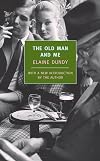
It’s hard to read Elaine Dundy’s The Old Man and Me without comparing it to her previous novel, The Dud Avocado. I hate to do so, when I really think they’re quite different, but some superficial characteristics just beg for it. Namely, the whole “young American girl in Paris” converted to “young American girl in London” business.
Our narrators do sound a bit similar, but really everything else is different. Sally Jay Gorce isn’t half as ballsy as Honey Flood—or is that even show more her real name? No, as Dundy says in her introduction to her second novel, Honey is a “Bad Girl,” an “Angry Young Woman,” an antiheroine who “hates everything English,” “operating on a short fuse.”
So while Sally Jay goes on a wild, directionless romp in France, pushed and pulled only by the tides of friends, mood, and whim, Honey is on a mission: to seduce and kill C.D. McKee, the eponymous old man. Their tone and sense of humor is similar, but where Sally Jay gets played, Honey is the one doing the playing.
C.D. is a real character. Getting on in years, wealthy, a patron of the arts. Known for his unimaginable rudeness, which, in these circles, is really saying something. But he takes a real shine to Honey straight away, and the reader, who can gleefully watch the objects of his derision without danger of becoming one herself, is mostly charmed. For example, to a waiter, who has swapped his and Honey’s drinks: “‘May I recommend that a little ordinary commonsense brought to your job might help you in overcoming your either real or psychological deafness, young man?’ he bellowed. ‘Who at this table looks young enough to risk a midday martini? Who looks wise enough to choose an aperitif?’”
Honey spins her tales, but C.D. is pretty canny, and their affair never makes it seem like he’s been duped, just like they’re having an affair. Our antiheroine gets to manipulate a lot more successfully when it comes to her flatmate, the pathetic Dody who’s just been left by her husband. She can’t make a decision to save her life but trusts Honey, who moves in and begins engineering things so the husband won’t come back and ruin her thrifty housekeeping arrangement. Honey really isn’t cruel to Dody, but she’s not much of a friend either—“I knew that pain was making her selfish but at that moment I really hated her. I was so bored.” But it’s true, Dody really is sad, pathetic, and boring; Honey may be using her, but she does have to sit through hours of unbearable girl talk to do it.
Dundy also notes in her introduction that, at the time the novel was written, publishers were giving writers freedom to be more explicit about sexual matters, and that is a firm break from The Dud Avocado and almost jarring. But then, these scenes do add, I think, to our view of Honey as a mature, scheming woman, a bit mad but with a purpose. The origins of that purpose, across the ocean in Honey’s family history, are interesting as well—the creation of a Bad Girl. From start to finish, a bit darker and less light-hearted than Dundy’s first novel. For me, that’s an improvement, but I’m still glad to have the earlier, more frolicking work at well.
(more at http://www.bibliographing.com/2009/06/02/old-man-me-elaine-dundy_review/ ) show less
Our narrators do sound a bit similar, but really everything else is different. Sally Jay Gorce isn’t half as ballsy as Honey Flood—or is that even show more her real name? No, as Dundy says in her introduction to her second novel, Honey is a “Bad Girl,” an “Angry Young Woman,” an antiheroine who “hates everything English,” “operating on a short fuse.”
So while Sally Jay goes on a wild, directionless romp in France, pushed and pulled only by the tides of friends, mood, and whim, Honey is on a mission: to seduce and kill C.D. McKee, the eponymous old man. Their tone and sense of humor is similar, but where Sally Jay gets played, Honey is the one doing the playing.
C.D. is a real character. Getting on in years, wealthy, a patron of the arts. Known for his unimaginable rudeness, which, in these circles, is really saying something. But he takes a real shine to Honey straight away, and the reader, who can gleefully watch the objects of his derision without danger of becoming one herself, is mostly charmed. For example, to a waiter, who has swapped his and Honey’s drinks: “‘May I recommend that a little ordinary commonsense brought to your job might help you in overcoming your either real or psychological deafness, young man?’ he bellowed. ‘Who at this table looks young enough to risk a midday martini? Who looks wise enough to choose an aperitif?’”
Honey spins her tales, but C.D. is pretty canny, and their affair never makes it seem like he’s been duped, just like they’re having an affair. Our antiheroine gets to manipulate a lot more successfully when it comes to her flatmate, the pathetic Dody who’s just been left by her husband. She can’t make a decision to save her life but trusts Honey, who moves in and begins engineering things so the husband won’t come back and ruin her thrifty housekeeping arrangement. Honey really isn’t cruel to Dody, but she’s not much of a friend either—“I knew that pain was making her selfish but at that moment I really hated her. I was so bored.” But it’s true, Dody really is sad, pathetic, and boring; Honey may be using her, but she does have to sit through hours of unbearable girl talk to do it.
Dundy also notes in her introduction that, at the time the novel was written, publishers were giving writers freedom to be more explicit about sexual matters, and that is a firm break from The Dud Avocado and almost jarring. But then, these scenes do add, I think, to our view of Honey as a mature, scheming woman, a bit mad but with a purpose. The origins of that purpose, across the ocean in Honey’s family history, are interesting as well—the creation of a Bad Girl. From start to finish, a bit darker and less light-hearted than Dundy’s first novel. For me, that’s an improvement, but I’m still glad to have the earlier, more frolicking work at well.
(more at http://www.bibliographing.com/2009/06/02/old-man-me-elaine-dundy_review/ ) show less
 This review was written for LibraryThing Early Reviewers.
Introductions to books often bore me, I'll admit it. I'm the one who will skip them nine times out of ten. For some reason I didn't skip Dundy's introduction to The Old Man and Me and I'm very glad I didn't. I appreciated her explanation of who Honey Flood is, why Honey is the way she is (think Jessica Rabbit, "I'm not bad. I'm just drawn that way"), and why she wanted Honey that way. Dundy wants her reader to know the purpose of Honey in Old Man is as a response to the male anti-heroes of show more the era. By creating the female counterpart, Honey Flood is the Angry Young Woman who hates everything English. Additionally, Miss Flood is opinionated, hot-tempered, easy annoyed, more often than not, sarcastically irritated and a liar to boot. As Dundy explains, "But what I hope I had going for me is that Bad Girls are more interesting that Good ones" (p ix). Amen to that. So, about Honey...she's out to seduce an older man. She'll go to great lengths to land an interview with him, including befriending people she can't stand. Why? He married her stepmother after her father's death and by default (stepmum later committed suicide), has all Honey's inheritance. In short, Honey wants her money back. True to Dundy's intro, Honey is nothing short of nasty. There were surprises within Old Man and Me that popped up unexpectedly. show less
Lists
Awards

You May Also Like


Associated Authors
Statistics
- Works
- 8
- Also by
- 3
- Members
- 2,051
- Popularity
- #12,539
- Rating
- 3.6
- Reviews
- 68
- ISBNs
- 40
- Languages
- 2
- Favorited
- 5
