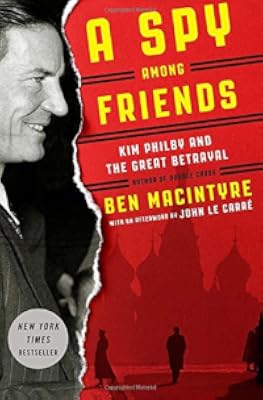
A Spy Among Friends: Kim Philby and the Great Betrayal
by Ben Macintyre
On This Page
Description
NEW YORK TIMES BESTSELLER • The true story of Kim Philby, the Cold War's most infamous spy, from the master espionage writer and author of The Spy and the Traitor.Who was Kim Philby? Those closest to him—like his fellow MI6 officer and best friend since childhood, Nicholas Elliot, and the CIA’s head of counterintelligence, James Jesus Angleton—knew him as a loyal confidant and an unshakeable patriot. Philby was a brilliant and charming man who rose to head Britain’s show more counterintelligence against the Soviet Union. Together with Elliott and Angleton he stood on the front lines of the Cold War, holding Communism at bay. But he was secretly betraying them both: He was working for the Russians the entire time.
Every word uttered in confidence to Philby by his colleagues in the West made its way to Moscow, leading countless missions to their doom and subverting American and British attempts to subdue the Soviet threat. So how was this cunning double-agent finally exposed? In A Spy Among Friends, Ben Macintyre expertly weaves the heart-pounding tale of how Philby almost got away with it all—and what happened when he was finally unmasked.
Based on personal papers and never-before-seen British intelligence files, this is Ben Macintyre’s epic telling of one of the greatest spy stories ever, a Cold War history that will keep you on the edge of your seat. show less
Tags
Recommendations
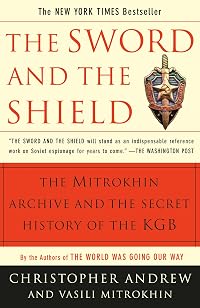
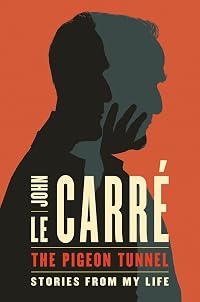
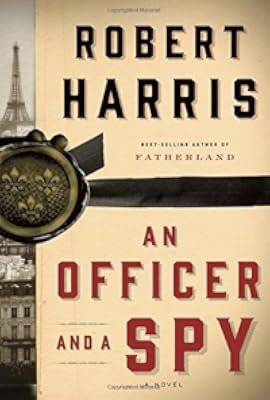
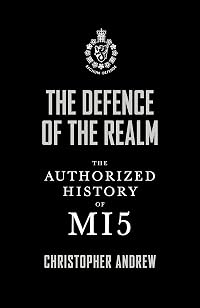



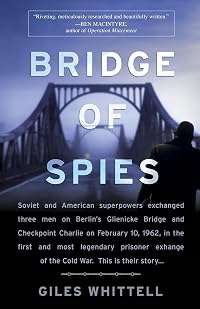
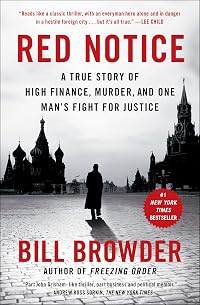

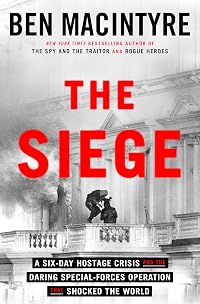
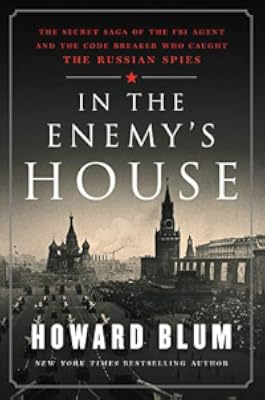


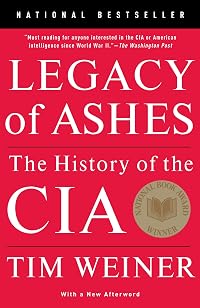
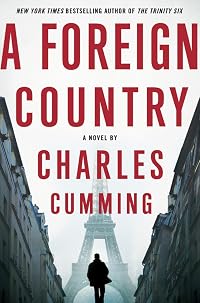

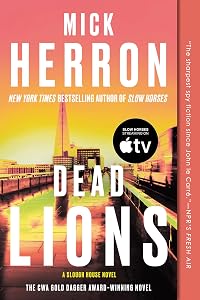
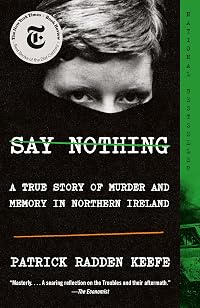
Member Recommendations
Member Reviews
Absolutely one of the best biographies I've ever read, and about one of the most fascinating and mysterious individuals of the past 150 years. It still is really hard for me to believe it was always ideology, willfully ignoring the reality of Stalin's Soviet Union, but there you have it. I can't imagine how disillusioned he must have felt upon arriving in Moscow knowing he would be there the rest of his life... Additionally, it's almost incomprehensible to consider the massive damage done to the CIA, the USA and its Russian efforts over a period of decades simply due to his friendship with one man...
Before I read this book, if you had asked me to play a word association game and given me "Kim Philby," my immediate response would have been "spy." And that would have covered everything I knew about the man. I didn't even know which side he was on or where he was from. (Don't judge.)
That's what made A Spy Among Friends a real-live page-turner for me. I had to keep reading to find out how Kim Philby conned everyone, even his closest friends. Ben Macintyre has created a riveting read that follows Philby from his beginnings as a Soviet agent until his ultimate fate. (Are you like me and don't know the story? I won't spoil the surprise!)
I think what I found most interesting was how the spying seemed less like a James Bond action-adventure show more kind of job, and more like a Nick Charles witty repartee kind of job. Macintyre's description of Istanbul after WWI, where all the spies from all the sides seemed to know each other and dined and drank in the same restaurants, was especially vivid. Everybody was seemingly watching everyone else and writing home about it in encrypted letters.
This book really held my attention from beginning to end, which, by the way, includes a fascinating postscript from John LeCarre who worked in British intelligence at the same time as Philby. A fascinating book made all the more tantalizing by the fact that it's all true.
Highly recommended! show less
That's what made A Spy Among Friends a real-live page-turner for me. I had to keep reading to find out how Kim Philby conned everyone, even his closest friends. Ben Macintyre has created a riveting read that follows Philby from his beginnings as a Soviet agent until his ultimate fate. (Are you like me and don't know the story? I won't spoil the surprise!)
I think what I found most interesting was how the spying seemed less like a James Bond action-adventure show more kind of job, and more like a Nick Charles witty repartee kind of job. Macintyre's description of Istanbul after WWI, where all the spies from all the sides seemed to know each other and dined and drank in the same restaurants, was especially vivid. Everybody was seemingly watching everyone else and writing home about it in encrypted letters.
This book really held my attention from beginning to end, which, by the way, includes a fascinating postscript from John LeCarre who worked in British intelligence at the same time as Philby. A fascinating book made all the more tantalizing by the fact that it's all true.
Highly recommended! show less
 This review was written for LibraryThing Early Reviewers.
If the Kim Philby spying scandal didn't have such serious consequences--not the least of which being that his betrayals undoubtedly led to the death of hundreds by Soviet counterintelligence--it would have many of the elements of a farce.
For one thing, Philby wasn't the only one spying for the Russians at the highest levels of British intelligence. He was only one of five--all contemporaries who knew each other as students at Cambridge. Yet how did they win their ways into their positions? Their vetting consisted of nothing more than others recommending them because they were of the "right class," had gone to the "right schools," belonged to the "right clubs." MI-6 from the 30s through the 60s was such an insular "old boys club"--quite show more the opposite of a professional meritocracy--that disaster was bound to happen. The only thing that prevented the Soviets from completely running away with the store is that on the Russian side, Stalin was so paranoid he purged his own intelligence services of some of his best operatives.
There have been many books written about the Philby debacle, but since MacIntire has no particular axes to grind, he tells the story in such a way that both the tragic and farcical elements come through. In the end, the word "intelligence" used in conjunction with the spying agencies feels like it carries a heavy irony. show less
For one thing, Philby wasn't the only one spying for the Russians at the highest levels of British intelligence. He was only one of five--all contemporaries who knew each other as students at Cambridge. Yet how did they win their ways into their positions? Their vetting consisted of nothing more than others recommending them because they were of the "right class," had gone to the "right schools," belonged to the "right clubs." MI-6 from the 30s through the 60s was such an insular "old boys club"--quite show more the opposite of a professional meritocracy--that disaster was bound to happen. The only thing that prevented the Soviets from completely running away with the store is that on the Russian side, Stalin was so paranoid he purged his own intelligence services of some of his best operatives.
There have been many books written about the Philby debacle, but since MacIntire has no particular axes to grind, he tells the story in such a way that both the tragic and farcical elements come through. In the end, the word "intelligence" used in conjunction with the spying agencies feels like it carries a heavy irony. show less
Another great page-turner from Macintyre, whose last two books are among my favorites. This one is a biography of Kim Philby told as the story of the friendship between him and fellow MI6er Nicholas Elliott. It's very much about the British class system and a rivalry between Britain's two intelligence agencies as well as the development of the CIA. I loved this book: Macintyre brings these people to life and brings to life the cold war in all its cloak-and-dagger insanity. Another great work of popular history from the reliable Ben Macintyre. My full review: http://www.bostonbibliophile.com/2014/11/review-spy-among-friends-by-ben.html
This review was written for LibraryThing Early Reviewers.This enjoyable and informative book gives us an insight into the life of Kim Philby and the dark corridors of the secret world he inhabited. During and after the Second World War Philby was employed by Britain's Secret Intelligence Service (SIS or MI6), but was all the time secretly working for the Russian secret service, which had recruited him in the 1930s.
Macintyre knows how to write a good book about the workings of the secret services, as is shown by his previous forays, "Agent Zigzag", "Operation Mincemeat" and "Double Cross". This book matches them: the narrative flows rapidly, pulling the reader along with it.
Macintyre focuses not just on Philby's deceit of SIS, but also on his deceit of his friends. He does this by telling the show more parallel stories of Philby and of his friend and colleague in SIS, Nicholas Elliot. Philby and Elliot came from similar privileged backgrounds, but whereas Elliot stayed loyal to the British state and ruling class, Philby threw in his lot with Stalin.
For me, what makes Philby interesting is that he was motivated by political principles. He genuinely believed that by spying for the USSR he was advancing the cause of a fairer and more peaceful world. Like many others in the 1930s he could see that capitalism was a system based on exploitation and inequality, a system which was dragging the world into economic crisis and war, and a system which had given birth to the monstrosity of fascism. (We see similar developments today.)
But what Macintyre does not make clear is that the Russian state that Philby decided to serve had moved a long way from genuine Marxism. The 1917 Russian Revolution, led by Lenin, Trotsky and the Bolsheviks, had been a genuine workers' revolution, with working people exercising power through the "soviets" (elected workers' councils). But by the late 1920s any remnants of the gains and democracy of the revolution had been destroyed by Stalin and the bureaucratic ruling class that had usurped power and turned Russia into a state capitalist tyranny.
Philby's tragedy is that he dedicated his life to a totalitarian state which called itself socialist, but which was just as exploitive a system as the one in the West. Perhaps there was some excuse in the early 1930s for Philby being unaware of the true nature of the USSR, but he stuck loyally by the Stalinist regime even when its crimes could not be ignored, right up to his death in 1988. (Whereas genuine Marxists had long been advocating the slogan of "Neither Washington Nor Moscow But International Socialism", and pointing out that "The Free World is not really free and the Communist World is not really communist".)
In his own autobiography ("My Silent War"), Philby acknowledges that at one point he saw that "much was going badly wrong in the Soviet Union", but he says that he decided to "stick it out, in the confident faith that the principles of the Revolution would outlive the aberration of individuals, however enormous." Sadly, what had gone wrong in the USSR was not just an "aberration", it was a full-scale counter-revolution.
Finally, although it can be entertaining to get a glimpse of the secret world by reading books like Macintyre's, we need to remember that the real world of the secret services is a nasty one. They do not just spy on each other. They spy on (and often persecute) dissenting voices within their own countries, and they conduct dirty tricks such as the toppling of elected governments (as the CIA did in Chile). The secret services on both sides of Philby's "silent war" are villains. show less
Macintyre knows how to write a good book about the workings of the secret services, as is shown by his previous forays, "Agent Zigzag", "Operation Mincemeat" and "Double Cross". This book matches them: the narrative flows rapidly, pulling the reader along with it.
Macintyre focuses not just on Philby's deceit of SIS, but also on his deceit of his friends. He does this by telling the show more parallel stories of Philby and of his friend and colleague in SIS, Nicholas Elliot. Philby and Elliot came from similar privileged backgrounds, but whereas Elliot stayed loyal to the British state and ruling class, Philby threw in his lot with Stalin.
For me, what makes Philby interesting is that he was motivated by political principles. He genuinely believed that by spying for the USSR he was advancing the cause of a fairer and more peaceful world. Like many others in the 1930s he could see that capitalism was a system based on exploitation and inequality, a system which was dragging the world into economic crisis and war, and a system which had given birth to the monstrosity of fascism. (We see similar developments today.)
But what Macintyre does not make clear is that the Russian state that Philby decided to serve had moved a long way from genuine Marxism. The 1917 Russian Revolution, led by Lenin, Trotsky and the Bolsheviks, had been a genuine workers' revolution, with working people exercising power through the "soviets" (elected workers' councils). But by the late 1920s any remnants of the gains and democracy of the revolution had been destroyed by Stalin and the bureaucratic ruling class that had usurped power and turned Russia into a state capitalist tyranny.
Philby's tragedy is that he dedicated his life to a totalitarian state which called itself socialist, but which was just as exploitive a system as the one in the West. Perhaps there was some excuse in the early 1930s for Philby being unaware of the true nature of the USSR, but he stuck loyally by the Stalinist regime even when its crimes could not be ignored, right up to his death in 1988. (Whereas genuine Marxists had long been advocating the slogan of "Neither Washington Nor Moscow But International Socialism", and pointing out that "The Free World is not really free and the Communist World is not really communist".)
In his own autobiography ("My Silent War"), Philby acknowledges that at one point he saw that "much was going badly wrong in the Soviet Union", but he says that he decided to "stick it out, in the confident faith that the principles of the Revolution would outlive the aberration of individuals, however enormous." Sadly, what had gone wrong in the USSR was not just an "aberration", it was a full-scale counter-revolution.
Finally, although it can be entertaining to get a glimpse of the secret world by reading books like Macintyre's, we need to remember that the real world of the secret services is a nasty one. They do not just spy on each other. They spy on (and often persecute) dissenting voices within their own countries, and they conduct dirty tricks such as the toppling of elected governments (as the CIA did in Chile). The secret services on both sides of Philby's "silent war" are villains. show less
With his latest book, Ben Macintyre turns his attention to what is perhaps the most infamous spy story in history, that of Kim Philby. And while there have been numerous other books written about Philby, including one by the man himself (My Silent War), Macintyre particularly examines how the friendships Philby cultivated during his time working for the British Secret Intelligence Service played such an extraordinary role in allowing him to continue spying for the Soviet Union for so many years.
As Macintyre is careful to point out, his research is based on declassified records and first-hand accounts of the events, and those first-hand accounts are often from people who spent their lives fooling others, so the facts of this story may show more never be fully known. But with that caveat in mind, Macintyre does a masterful job of bringing this story of friendship and betrayal to light.
The relationship most closely examined here is between Philby and Nicholas Elliot, Philby's drinking buddy, colleague, and friend. It was Elliot's staunch defense of his friend that in very real ways helped keep Philby active as a double agent for so long. And it was Elliot who felt that betrayal most deeply when it was finally revealed.
The first half of this book recounts the early years of friendship between the two men, and yet in some ways, their friendship did not seem to quite take shape on the page until things start to go pear-shaped. This slightness in the narrative didn't seem to come from any lack of research or depth of friendship, but more from circumstances themselves. When most of what happens is "they worked together and drank together a lot", there is often not much else to say. There is rather more of their individual stories to this point. But as the story progresses, and Philby's actions start to catch up with him, the strength of their relationship also becomes much more clear.
On the one hand, you can't help but wonder how Elliot and others like him were so taken in by Philby for so long; but on the other, when are any of us more blind than when it comes to those we care about? Macintyre's account is a first-rate look at this tragic, frightening story of friendship and lies. show less
As Macintyre is careful to point out, his research is based on declassified records and first-hand accounts of the events, and those first-hand accounts are often from people who spent their lives fooling others, so the facts of this story may show more never be fully known. But with that caveat in mind, Macintyre does a masterful job of bringing this story of friendship and betrayal to light.
The relationship most closely examined here is between Philby and Nicholas Elliot, Philby's drinking buddy, colleague, and friend. It was Elliot's staunch defense of his friend that in very real ways helped keep Philby active as a double agent for so long. And it was Elliot who felt that betrayal most deeply when it was finally revealed.
The first half of this book recounts the early years of friendship between the two men, and yet in some ways, their friendship did not seem to quite take shape on the page until things start to go pear-shaped. This slightness in the narrative didn't seem to come from any lack of research or depth of friendship, but more from circumstances themselves. When most of what happens is "they worked together and drank together a lot", there is often not much else to say. There is rather more of their individual stories to this point. But as the story progresses, and Philby's actions start to catch up with him, the strength of their relationship also becomes much more clear.
On the one hand, you can't help but wonder how Elliot and others like him were so taken in by Philby for so long; but on the other, when are any of us more blind than when it comes to those we care about? Macintyre's account is a first-rate look at this tragic, frightening story of friendship and lies. show less
This review was written for LibraryThing Early Reviewers.This is a gripping tale of espionage at its best. It reads like a thriller, more fiction than reality. Yet all along the reader is made aware that every twist and turn in the plot is true, that the events occurred as described. Ben Macintyre, a journalist who writes for the Times of London, has produced a superb story based on primary sources including diaries, and British and American archives. Kim Philby, of ten described as "the greatest spy in history," is the hero, or should I say the evil protagonist of this book. He is an upper class Englishman who rises to the very top of British Intelligence, MI6, all the while betraying his country, his friends, his wives, and his institution. He is the consummate traitor whose double life is show more played on a stage of dramatic international conflict and war, extending from the Spanish Civil War through World War II, and into the first decades of the Cold War. The cost of his treason is incalculable, as he was responsible for the torture and deaths of innumerable people who tried to end Communism by helping the West. What is most intriguing, perhaps, is the fact that those closest to him never suspected him - they believed that since "he was one of them," had gone to the right schools, had graduated from Cambridge, was the son of a British colonial administrator in India, he could never betray them. Even as the net closed around him his closest friends still defended him. The book contains a very revealing "Afterword" by John Le Carre, that sheds some light on this "social blindness" that allowed Philby to continue working for the Soviets for so long. I strongly recommend this book. Mary-Jane Deeb show less
This review was written for LibraryThing Early Reviewers.Members
- Recently Added By
Published Reviews
ThingScore 100
When devouring this thriller about Kim Philby, the high-level British spymaster who turned out to be a Russian mole, I had to keep reminding myself that it was not a novel. It reads like a story by Graham Greene, Ian Fleming or John le Carré
added by danielx
Lists

Top Five Books of 2014
1,064 works; 397 members
Top Five Books of 2016
795 works; 229 members

My TBR list
38 works; 1 member

Allie's List of Books I Want To Read
93 works; 1 member

The Hive Recommends
62 works; 2 members

Books Read in 2022
5,226 works; 115 members

Top Five Books of 2023
767 works; 317 members

Books Read in 2025
4,128 works; 98 members
Author Information

Some Editions
Awards and Honors
Awards
Distinctions
Work Relationships
Common Knowledge
- Canonical title
- A Spy Among Friends: Kim Philby and the Great Betrayal
- Original title
- A Spy Among Friends: Kim Philby and the Great Betrayal
- Original publication date
- 2014-03-03
- People/Characters
- Kim Philby; Nicholas Elliott; Robert Vansittart; Basil Fisher; Nevile Bland; John King (show all 62); Jona von Ustinov; Wolfgang Gans zu Putlitz; Hugh Trevor-Roper; Ian Fleming; Engelbertus Fukken; Peter Tazelaar; Herman Giskes; Guy Burgess; Donald Maclean; Alice Kohlman; Arnold Deutsch; Wilhelm Reich; Stewart Menzies; Guy Liddell; Graham Greene; James Jesus Angleton; Elyesa Bazna; Paul Leverkühn; Erich Vermehren; Jane Archer; Igor Gouzenko; Boris Krötenschield; Konstantin Dmitrievich Volkov; Chantry Hamilton Page; Virgilio Scattolini; Valentine Vivian; Aileen Furse; King Zog; Enver Hoxha; Bido Kuka; David de Crespigny Smiley; Reinhard Gehlen; Meredith Gardner; Yuri Modin; Jack Easton; Walter Bedell Smith; Bill Harvey; Helenus Patrick Joseph Milmo; Anthony Blunt; Tomás Harris; William Skardon; Vladimir Petrov; J. Edgar Hoover; Richard Brooman-White; Harold Macmillan; Marcus Lipton; Lionel Crabb; Anthony Eden; David Astor; Miles Copeland, Jr.; George Blake; Anatoliy Golitsyn; Peter Lunn; Flora Solomon; Peter Wright; John Cairncross
- Important places
- Soviet Union; Cambridge University
- Important events
- Cold War
- Related movies
- A Spy Among Friends (2022 | IMDb)
- Epigraph
- Friends: noun, general slang for members of an intelligence service; specifically British slang for members of the Secret Intelligence Service [or MI6] -International Spy Museum
If I had to choose between betraying my ... (show all)country and betraying my friends, I hope I should have the guts to betray my country. Such a choice may scandalize the modern reader, and he may stretch out his patriotic hand to the telephone at once and ring up the police. It would not have shocked Dante, though. Dante places Brutus and Cassius in the lowest circle of Hell because they had chosen to betray their friend Julius Caesar rather than their country Rome. -E.M. Forster, 1938 - Dedication
- In memory of Rick Beeston
- First words
- Two middle-aged spies are sitting in an apartment in the Christian Quarter, sipping tea and lying courteously to each other, as evening approaches.
- Last words
- (Click to show. Warning: May contain spoilers.)It was a joke that only two people could have fully appreciated: Nicholas Elliott, and Kim Philby.
- Publisher's editor
- Fishwick, Michael
- Blurbers
- Grann, David; Jacobsen, Annie; Olson, Lynne; Bird, Kai; Fraser, Antonia
- Original language
- English
Classifications
- Genres
- General Nonfiction, History, Biography & Memoir, Nonfiction
- DDC/MDS
- 327.1247041092 — Society, government, & culture Political science International Relations: Spies Foreign policy and specific topics in international relations Espionage and subversion Intelligence Gathering - Europe
- LCC
- UB271 .R92 .P435 — Military Science Military administration Military administration Intelligence
- BISAC
Statistics
- Members
- 1,814
- Popularity
- 12,076
- Reviews
- 142
- Rating
- (4.08)
- Languages
- 9 — Dutch, English, Estonian, French, Italian, Portuguese, Russian, Spanish, Swedish
- Media
- Paper, Audiobook, Ebook
- ISBNs
- 38
- ASINs
- 17
