
John le Carré (1931–2020)
Author of The Spy Who Came in From the Cold
About the Author
David John Moore Cornwell was born in Poole, Dorsetshire, England in 1931. He attended Bern University in Switzerland from 1948-49 and later completed a B.A. at Lincoln College, Oxford. He taught at Eton from 1956-58 and was a member of the British Foreign Service from 1959 to 1964. He writes show more espionage thrillers under the pseudonym John le Carré. The pseudonym was necessary when he began writing, in the early 1960s because, at that time, he held a diplomatic position with the British Foreign Office and was not allowed to publish under his own name. When his third book, The Spy Who Came in from the Cold, became a worldwide bestseller in 1964, he left the foreign service to write full time. His other works include Call for the Dead; A Murder of Quality; Tinker, Tailor, Soldier, Spy; The Honourable Schoolboy; and Smiley's People. He has received numerous awards for his writing, including the Grand Master Award from the Mystery Writers of America in 1986 and the Diamond Dagger from the Crime Writers Association in 1988. In 2011 he accepted the Goethe Medal. And in 2020, he accepted the Olof Palme Prize. Ten of his books have been adapted for television and motion pictures including The Spy Who Came in from the Cold, The Russia House, The Constant Gardener, A Most Wanted Man, and Our Kind of Traitor. Le Carré's memoir, The Pigeon Tunnel: Stories from my Life, became a New York Times bestseller in 2016. In 2019, he published a spy thriller, Agent Running in the Field. John Le Carré died on December 12, 2020 from pneumonia at the age of 89. (Bowker Author Biography) John le Carre was born in 1931. After attending the univesities of Berne and Oxford, he spent five years in the British Foreign Service. He's the author of eighteen novels, translated into twenty-five languages. He lives in England. (Publisher Provided) show less
Disambiguation Notice:
John le Carré is a pen name of David John Moore Cornwell.
Series
Works by John le Carré
The Quest for Karla: Tinker, Tailor, Soldier, Spy; The Honourable Schoolboy; Smiley's People (1982) 538 copies, 3 reviews
Call for the Dead + A Murder of Quality + The Spy who came in from the Cold + The Looking-Glass War + A Small Town in Germany (1961) 218 copies, 1 review
Call for the Dead + A Murder of Quality + The Spy Who Came In From the Cold (1961) 146 copies, 3 reviews
Three Complete Novels: The Spy Who Came in from the Cold / A Small Town in Germany / The Looking Glass War (1983) 113 copies, 1 review
Three Complete Novels: A Perfect Spy / The Russia House / The Secret Pilgrim (1996) 70 copies, 1 review
Call for the Dead + A Murder of Quality + The Spy who came in from the Cold + The Looking-Glass War + Tinker, Tailor, Soldier, Spy + The Honourable Schoolboy + Smiley's People +… (-0001) — Original author — 34 copies
Penguin Readers Level 6: The Spy Who Came in from the Cold (Penguin Readers (graded readers)) (2019) — Original author — 11 copies
Header-Le Carre Generic 5 copies
JOHN le CARRE 4 copies
The Spy who came in from the Cold + Tinker Tailor Soldier Spy {2009 radio dramas} (2009) — Original author — 4 copies
The George Smiley Reader 2 copies
the constant gardener 2 copies
O venerável espião (I) 2 copies
Call for the Dead + A Murder of Quality + The Spy who came in from the Cold + The Looking Glass War (1961) 2 copies
Schatten von Gestern; Der Spion der aus der Kälte kam; Krieg im Spiegel; Ein Mord erster Klasse (1986) 2 copies
Piken med trommestikkene 1 1 copy
LLAMADA PARA EL MUERTO 1 copy
Um espião perfeito 1 copy
Za późno na wojnę 1 copy
La Casa Rusia [2003 film] 1 copy
Piken med trommestikkene 2 1 copy
By John le Carre - Call for the Dead by le Carre, John ( Author ) ON Nov-03-2011, Paperback (2011) 1 copy
Our kind of traitor 1 copy
The Þhonourable schoolboy 1 copy
John Le Carré : Notre jeu - Le Tailleur de Panama - Single & Single, coffret de 3 volumes (2000) 1 copy
Tajny pielgrzym 1 copy
O espião que saiu do frio 1 copy
Spion buiten dienst 1 copy
Un crim de qualitat 1 copy
Jego uczniowska mość 1 copy
Z przejmującego zimna 1 copy
Bizim Oyun 1 copy
In geheimer Mission. Die besten Spionagegeschichten von John le Carré & Co, 5 Audio-CDs (2009) 1 copy
O venerável espião (II) 1 copy
The spy who came in from the cold; Nightmare '66; The looking-glass war; The growth of Marie-Louise; George Smiley goes home (1982) 1 copy
Seelord 1 copy
spionage-omnibus 1 copy
tweede carre omnibus 1 copy
Taylor's Run 1 copy
Abide with me 1 copy
Call for the Dead + The Spy who came in from the Cold + the Looking Glass War + The Honourable Schoolboy + Smiley's People + (1961) 1 copy
O espi♯ao que saiu do frio 1 copy
Vakoojan perintö 1 copy
Gece Müdürü 1 copy
Küçük Trampetçi Kız 1 copy
John le Carre's The Spy who came in from the Cold : Adapted for the stage (2024) — Original author — 1 copy
Njósnarinn í þokunni 1 copy
Gerente noturno 1 copy
um assassínio de categoria 1 copy
Le directeur de nuit - Collection "Best-sellers" - Traduction de Mimi et Isabelle Perrin (1994) 1 copy
Köstebek 1 copy
Golf Is Our Game 1 copy
Coffret - La constance du jardinier / Le Tailleur de Panama / La Taupe - John le Carré (2018) 1 copy
O espi©Đo que saiu do frio 1 copy
la constance du jardinier. tome 1, [edition en gros caractères] : Tome 1, [Edition en gros caractères] (2003) 1 copy
Quella talpa è figlia mia 1 copy
Agent Running In The Fiekd 1 copy
Den gode tolk 1 copy
Associated Works
A Spy Among Friends: Kim Philby and the Great Betrayal (2014) — Afterword, some editions — 1,802 copies, 141 reviews
The New Annotated Sherlock Holmes: The Complete Short Stories (2004) — Introduction — 887 copies, 8 reviews
The New Annotated Sherlock Holmes: The Short Stories, Volume 1 of 2 (The Adventures of Sherlock Holmes + The Memoirs of Sherlock Holmes) (2005) — Introduction — 247 copies, 2 reviews
Reader's Digest Condensed Books 1964 v03: Father to the Man / The Spy Who Came in from the Cold / Gold Fever / The Vine and The Olive / The Flight of the Phoenix (1964) — Author — 38 copies
Reader's Digest Best Sellers 1965: Captain Newman, M.D. | When the Cheering Stopped | Spy Who Came in From the Cold | Song of Sixpence (1965) — Author — 13 copies
Reader's Digest Condensed Books: The Island / Wolfpack / Joy in the Morning / The Spy Who Came in From the Cold (1965) 4 copies
Reader's Digest Auswahlbücher: Die Libelle / Mein Leben, mein Dorf / Tollkühn / Begegnung am Bussardhügel (1986) 3 copies
Livros Condensados: O Inverno do Nosso Descontentamento | O Pequeno John Willie | O Espião Que Veio do Frio | Entre os Elefantes — Author; Author — 2 copies
A Perfect Spy by John le Carré {notes} — Author — 1 copy
De overwinning op de Dru; Spion aan de muur; De stille strijd; Erfgenaam van Kirkland — Author — 1 copy, 1 review
Tagged
Common Knowledge
- Canonical name
- le Carré, John
- Legal name
- Cornwell, David John Moore
- Other names
- le Carré, John
- Birthdate
- 1931-10-19
- Date of death
- 2020-12-12
- Gender
- male
- Education
- University of Bern (German)
University of Oxford (BA|1956 - Lincoln College) - Occupations
- language teacher
novelist - Organizations
- British Intelligence Service
Eton College - Awards and honors
- MWA Grand Master (1984)
Cartier Diamond Dagger (1988)
Man Booker International Prize Finalist (2011)
Goethe medal (2011)
Olof Palme prize (2020) - Agent
- William Loverd
- Relationships
- Harkaway, Nick (son)
Green, V. H. H. (tutor - Oxford)
Cornwell, Jessica (granddaughter)
Cornwell, Rupert (half-brother) - Cause of death
- pneumonia
- Nationality
- UK
Ireland (naturalized, and via maternal grandmother) - Birthplace
- Poole, Dorset, England, UK
- Places of residence
- St. Buryan, Cornwall, England, UK
Bern, Switzerland
Oxford, Oxfordshire, England, UK
Eton, Berkshire, England, UK
Bonn, Germany
Hamburg, Germany - Place of death
- Truro, Cornwall, England, UK
- Map Location
- England, UK
- Disambiguation notice
- John le Carré is a pen name of David John Moore Cornwell.
Members
Discussions
Happy Birthday, John le Carré in Book talk (October 2025)
Tinker Tailor Soldier Spy LE??! in Folio Society Devotees (October 2023)
John e Carre - Smiley novels in British & Irish Crime Fiction (July 2011)
Reviews
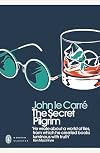
The eighth book in the series, written more than a decade after the previous entry, Smiley’s People (which has since been declared the final book of the “Karla Trilogy”). But le Carré was nothing if not willing to play with the expectations of his readers, and if the nine Smiley novels (until son Nick Harkaway’s recent addition) don’t always feature George Smiley as the central character, he is at least in there somewhere influencing events…
Which is not strictly true here. Or show more rather, it is. Sort of.
The narrator of The Secret Pilgrim is an ex-agent of the Circus, active during the events recounted in the Karla novels, and now the director of the Service’s spy school, Sarratt. He has invited Smiley, long since retired, to give a talk to the graduating class. And each reminiscence and bon mot uttered by Smiley during his after-dinner speech triggers a recollection by the narrator of a past mission for the Circus…
It’s a good read, and typical le Carré, in as much as it makes an impressive number of serious points about British society and its over-reliance on the inbred scions of its over-educated and under-gifted upper echelons… but it still feels a bit like filler material from a campaign module for Smiley’s World™.
And if that sounds unfair, then it likely is, if only because The Secret Pilgrim is presented as if it were part of the Smiley story arc when it is at best a pendant to it. Again, it’s a good read, and on a par with other books in the series, but it’s only just a George Smiley novel.
Le Carré has been praised by many, but is still I think under-appreciated. He was popular, in the way popular crime novel series are popular, which leads many to underestimate just how clever, and how critical of the UK establishment, his novels were. It’s easy enough to dismiss him as a writer of spy fiction, and especially convoluted spy fiction at that (compared to, well, Fleming), if the response to The Spy Who Came in from the Cold is any indication.
Like Fleming, le Carré wore his politics on his sleeve. Unlike Fleming, they weren’t the usual Tory reactionary bollocks by those sucking up to, with a complete lack of self-awareness, the aristocracy, but an educated, thoughtful and critical view of British society and the establishment. When Fleming told some dowager duchess he was writing a novel, she told him not to because “You’re not clever enough, Ian”, which tells you how the aristocracy viewed themselves and how they viewed those who sought their company and approval. But then the British have always confused education with intelligence, much as the Americans have always confused wealth with intelligence. Le Carré was intelligent - and the proof is there in his novels. Fleming wasn’t - and, again, the proof is there in his novels.
Guess which has earned the most money…
Read le Carré. You can’t go wrong with his novels. You might even learn something about being British as well (although you may not like being British afterwards). show less
Which is not strictly true here. Or show more rather, it is. Sort of.
The narrator of The Secret Pilgrim is an ex-agent of the Circus, active during the events recounted in the Karla novels, and now the director of the Service’s spy school, Sarratt. He has invited Smiley, long since retired, to give a talk to the graduating class. And each reminiscence and bon mot uttered by Smiley during his after-dinner speech triggers a recollection by the narrator of a past mission for the Circus…
It’s a good read, and typical le Carré, in as much as it makes an impressive number of serious points about British society and its over-reliance on the inbred scions of its over-educated and under-gifted upper echelons… but it still feels a bit like filler material from a campaign module for Smiley’s World™.
And if that sounds unfair, then it likely is, if only because The Secret Pilgrim is presented as if it were part of the Smiley story arc when it is at best a pendant to it. Again, it’s a good read, and on a par with other books in the series, but it’s only just a George Smiley novel.
Le Carré has been praised by many, but is still I think under-appreciated. He was popular, in the way popular crime novel series are popular, which leads many to underestimate just how clever, and how critical of the UK establishment, his novels were. It’s easy enough to dismiss him as a writer of spy fiction, and especially convoluted spy fiction at that (compared to, well, Fleming), if the response to The Spy Who Came in from the Cold is any indication.
Like Fleming, le Carré wore his politics on his sleeve. Unlike Fleming, they weren’t the usual Tory reactionary bollocks by those sucking up to, with a complete lack of self-awareness, the aristocracy, but an educated, thoughtful and critical view of British society and the establishment. When Fleming told some dowager duchess he was writing a novel, she told him not to because “You’re not clever enough, Ian”, which tells you how the aristocracy viewed themselves and how they viewed those who sought their company and approval. But then the British have always confused education with intelligence, much as the Americans have always confused wealth with intelligence. Le Carré was intelligent - and the proof is there in his novels. Fleming wasn’t - and, again, the proof is there in his novels.
Guess which has earned the most money…
Read le Carré. You can’t go wrong with his novels. You might even learn something about being British as well (although you may not like being British afterwards). show less

Apparently, many people read John Le Carré’s spy novels for a glimpse at what the world of international espionage is really like; in other words, they read them like a kind of journalism about the shady world of Intelligence Services. And there certainly is something to it – we’ve grown used to a more realistic perspective on secret services, but we can still imagine what it must have been like to read a novel like The Spy Who Came In from the Cold for someone whose idea of spy show more thrillers were Ian Fleming’s James Bond novels. Le Carré profoundly debunked the myths about the spy trade, showing it to be a world not of elegant womanizers lounging in luxurious surroundings, but of middle-aged men holding bureaucratic meetings in dull offices, not of noble deeds and lofty aims but of petty infighting and political maneuvering. The novels of Le Carré were filled with detailed descriptions and precise observations, and had authenticity written all over them and thoroughly destroyed any conception of glamour clinging to the spy profession – today, nobody would consider a James Bond novel anything but fantasy.
The Honourable Schoolboy lends itself with particular ease to such a journalistic reading due to the place and time it is set in: a very large part of the novel takes place in Hong Kong and South-East Asia during the retreat of the United States from Vietnam and a lot of room is given to highly atmospheric descriptions of the situation, of the feelings of uncertainty, unrest and frustration pervading the area during that period – making this by far the longest book of Le Carré’s so far. Even though Le Carré’s account is fictional, he appears to have done an impressive amount of research for it, and I doubt any journalistic, presumably non-fictional report could do a better job at painting a picture that is both authentic and immersive.
Therefore, one might consider The Honourable Schoolboy worth reading on those merits alone. But Le Carré’s ambition for this and his other novels does not extend to merely being reportage, this novel, like his previous ones, aims for something more, and I think that it is this which makes them stand out. And this is not just true for the novels’ content but for their form, too – quite often, the apparently realistic exterior of Le Carré’s spy novels conceals inner mechanisms that do not run by the same rules governing realistic narratives but are structurally quite experimental. The Honourable Schoolboy is another example of this – its main thematic concern is with truth and its uses, and the novel’s forms reflects this, even if it is by adding its own distortions in the process.
Towards the end of the novel, one of the characters quotes from a poem by John Donne:
This, even if it comes late in the novel, after its plot and its protagonists have taken many turns about and about, constitutes something like the motto for The Honourable Schoolboy. Indeed the whole novel could be taken as a variation on the poem those lines comes from, Donne’s Satire III, to the point where it feels that one might place both works next to each other and draw in the correspondences. Correspondence is part of the novel’s theme, too, as it is set not just in Asia but has London as a major setting too, and the events in both spheres, while never shown to result from each other immediately, do influence each other in oblique ways that had me think more than once of the Renaissance alchemy concept of correspondence, where things not directly connected still work upon each other by way of mystic similarities. Except, of course, that there is nothing mystical at place here, but the driving forces are mostly political in nature – but not really any less obscure for that.
There is a recurring image in the novel of truth as a small circle or kernel, surrounded by layers upon layers of untruth that grow steadily larger, up to the outer ring which is a vast area of rumour and obfuscation. The novel in fact starts with out rumours, and continues to refer to them, in the plot and by way of its anonymous narrator who tries to pierce through the mist of lies and half-truths surrounding “Operation Dolphin” to arrive at its kernel of truth. And both Jerry Westerby and George Smiley, the novel’s main protagonists, are surrounded by rumours, putting the reader in a very similar position of having to cross through obfuscation to arrive at the truth. A truth that becomes ever more elusive the further the novel proceeds, and it eventually becomes clear that for all its descriptive vividness and journalistic authenticity, the novel lets us see its kernel of truth only through a thick haze of distraction and misinformation. In fact, its undoubtedly brilliant journalistic element might constitute precisely that haze – one can hardly consider it accidental that so much of the novel takes place among journalist and that one of its main protagonists is a journalist who has no scruples to manipulate the truth when it serves his purposes and who in turn is manipulated by his employers in London. By the end of The Honourable Schoolboy it is by no means that there every was any kernel of truth at all, and if there was, it might be impossible to find – but not for epistemological reasons but because it has been so distorted and hidden under layers and layers of obfuscation by political power plays that it is simply gone, and the wanderer, when he takes that last turn that last turn that will take him up to the summit of that hill, finds himself on top of a sheer cliff, stepping off into the air. show less
The Honourable Schoolboy lends itself with particular ease to such a journalistic reading due to the place and time it is set in: a very large part of the novel takes place in Hong Kong and South-East Asia during the retreat of the United States from Vietnam and a lot of room is given to highly atmospheric descriptions of the situation, of the feelings of uncertainty, unrest and frustration pervading the area during that period – making this by far the longest book of Le Carré’s so far. Even though Le Carré’s account is fictional, he appears to have done an impressive amount of research for it, and I doubt any journalistic, presumably non-fictional report could do a better job at painting a picture that is both authentic and immersive.
Therefore, one might consider The Honourable Schoolboy worth reading on those merits alone. But Le Carré’s ambition for this and his other novels does not extend to merely being reportage, this novel, like his previous ones, aims for something more, and I think that it is this which makes them stand out. And this is not just true for the novels’ content but for their form, too – quite often, the apparently realistic exterior of Le Carré’s spy novels conceals inner mechanisms that do not run by the same rules governing realistic narratives but are structurally quite experimental. The Honourable Schoolboy is another example of this – its main thematic concern is with truth and its uses, and the novel’s forms reflects this, even if it is by adding its own distortions in the process.
Towards the end of the novel, one of the characters quotes from a poem by John Donne:
On a huge hill,
Cragged and steep, Truth stands, and he that will
Reach her, about must and about must go,
And what the hill’s suddenness resists, win so.
This, even if it comes late in the novel, after its plot and its protagonists have taken many turns about and about, constitutes something like the motto for The Honourable Schoolboy. Indeed the whole novel could be taken as a variation on the poem those lines comes from, Donne’s Satire III, to the point where it feels that one might place both works next to each other and draw in the correspondences. Correspondence is part of the novel’s theme, too, as it is set not just in Asia but has London as a major setting too, and the events in both spheres, while never shown to result from each other immediately, do influence each other in oblique ways that had me think more than once of the Renaissance alchemy concept of correspondence, where things not directly connected still work upon each other by way of mystic similarities. Except, of course, that there is nothing mystical at place here, but the driving forces are mostly political in nature – but not really any less obscure for that.
There is a recurring image in the novel of truth as a small circle or kernel, surrounded by layers upon layers of untruth that grow steadily larger, up to the outer ring which is a vast area of rumour and obfuscation. The novel in fact starts with out rumours, and continues to refer to them, in the plot and by way of its anonymous narrator who tries to pierce through the mist of lies and half-truths surrounding “Operation Dolphin” to arrive at its kernel of truth. And both Jerry Westerby and George Smiley, the novel’s main protagonists, are surrounded by rumours, putting the reader in a very similar position of having to cross through obfuscation to arrive at the truth. A truth that becomes ever more elusive the further the novel proceeds, and it eventually becomes clear that for all its descriptive vividness and journalistic authenticity, the novel lets us see its kernel of truth only through a thick haze of distraction and misinformation. In fact, its undoubtedly brilliant journalistic element might constitute precisely that haze – one can hardly consider it accidental that so much of the novel takes place among journalist and that one of its main protagonists is a journalist who has no scruples to manipulate the truth when it serves his purposes and who in turn is manipulated by his employers in London. By the end of The Honourable Schoolboy it is by no means that there every was any kernel of truth at all, and if there was, it might be impossible to find – but not for epistemological reasons but because it has been so distorted and hidden under layers and layers of obfuscation by political power plays that it is simply gone, and the wanderer, when he takes that last turn that last turn that will take him up to the summit of that hill, finds himself on top of a sheer cliff, stepping off into the air. show less
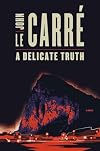
In this book, Le Carré continues his theme of updating the spy novel by focusing on its contemporary forms. In this case, his target is the private broker trading information and muscle with government operators who prefer to keep things out of the public eye.
With his usual understated style, he directs considerable anger at those who do undercover operations for money – clearly separating them from those in the official business who do necessary bad stuff on principle. In his cold war show more novels, there is a distinct ambivalence about doing nasty things in the service of the state. You do what you have to do to prevent a worse outcome, but you become morally compromised and that bothers you. The novels with more modern themes don’t have that ambivalence. The perpetrators are self-interested venal thieves and murderers with links into the spy world. In this story, they have enticed an ambitious, and equally venal, junior minister into a poorly judged and poorly executed scheme. The minister loses his political future, his staffers are shifted out to plumb positions where they won’t be around to raise any questions, and the private brokers carry on in apparent luxury. Interestingly, it seems to be the state security service who cleans things up to avoid embarassing the government.
While this is the scene, the attention is really on the decent Britons who are entrapped in the scheme without being aware of it. When they get wind that things did not go as they were told, they want to put things right. Of course, this will involve significant cost to themselves, and the barriers they have to overcome make up the bulk of the novel. This part is Le Carré’s familiar storytelling, low-key spycraft slowly leading to a conclusion. His oblique style of dialogue is also familiar here, with characters carefully saying one thing in a chummy middle-class voice and meaning something other. Perhaps this is how it’s done in this world.
For Le Carré, these decent Britons are the flawed heros of the story. They are not perfect – they have second thoughts, they wonder if it’s worth it, they are distracted. For this novel, they seem a bit too decent. They choose to do the right thing, knowing that there will be consequences. In his other novels, Le Carré’s characters seem to do what they have to do because they don’t have a choice. The situations force them to make the only choice they can short of selling out. While I don’t doubt that there are decent honorable civil servants in Britain, this sort of purity makes the story line a little questionable.
And then there’s the moral dis-equivalency. State agencies, including the British security services, carry out operations to protect their interests and the interests of their political superiors. To what extent does it matter that the operations are carried out by mercenaries? Are the controls really set to a higher standard for state actors than for their hirelings? I do think that there is a potential for greater control when government oversight is involved but there’s also a potential for greater self-justification. But does that justify the level of outrage that Le Carré reflects here? Or, to go deeper, how is the combination of state and private action in this story different from the machinations against the operations of the Cold War enemies? Is it worse now because the targets are vaguely defined potential terrorists from a string of Muslim countries? Le Carré seems to think so, and perhaps he is right, but with a writer who seems to insist on a moral standard these are questions that make me question the initial premiss of the book.
In any case, at least these are questions that the story raises, unlike the action-oriented focus of many other spy stories. show less
With his usual understated style, he directs considerable anger at those who do undercover operations for money – clearly separating them from those in the official business who do necessary bad stuff on principle. In his cold war show more novels, there is a distinct ambivalence about doing nasty things in the service of the state. You do what you have to do to prevent a worse outcome, but you become morally compromised and that bothers you. The novels with more modern themes don’t have that ambivalence. The perpetrators are self-interested venal thieves and murderers with links into the spy world. In this story, they have enticed an ambitious, and equally venal, junior minister into a poorly judged and poorly executed scheme. The minister loses his political future, his staffers are shifted out to plumb positions where they won’t be around to raise any questions, and the private brokers carry on in apparent luxury. Interestingly, it seems to be the state security service who cleans things up to avoid embarassing the government.
While this is the scene, the attention is really on the decent Britons who are entrapped in the scheme without being aware of it. When they get wind that things did not go as they were told, they want to put things right. Of course, this will involve significant cost to themselves, and the barriers they have to overcome make up the bulk of the novel. This part is Le Carré’s familiar storytelling, low-key spycraft slowly leading to a conclusion. His oblique style of dialogue is also familiar here, with characters carefully saying one thing in a chummy middle-class voice and meaning something other. Perhaps this is how it’s done in this world.
For Le Carré, these decent Britons are the flawed heros of the story. They are not perfect – they have second thoughts, they wonder if it’s worth it, they are distracted. For this novel, they seem a bit too decent. They choose to do the right thing, knowing that there will be consequences. In his other novels, Le Carré’s characters seem to do what they have to do because they don’t have a choice. The situations force them to make the only choice they can short of selling out. While I don’t doubt that there are decent honorable civil servants in Britain, this sort of purity makes the story line a little questionable.
And then there’s the moral dis-equivalency. State agencies, including the British security services, carry out operations to protect their interests and the interests of their political superiors. To what extent does it matter that the operations are carried out by mercenaries? Are the controls really set to a higher standard for state actors than for their hirelings? I do think that there is a potential for greater control when government oversight is involved but there’s also a potential for greater self-justification. But does that justify the level of outrage that Le Carré reflects here? Or, to go deeper, how is the combination of state and private action in this story different from the machinations against the operations of the Cold War enemies? Is it worse now because the targets are vaguely defined potential terrorists from a string of Muslim countries? Le Carré seems to think so, and perhaps he is right, but with a writer who seems to insist on a moral standard these are questions that make me question the initial premiss of the book.
In any case, at least these are questions that the story raises, unlike the action-oriented focus of many other spy stories. show less
Three Complete Novels: Call for the Dead / A Murder of Quality / The Spy Who Came in from the Cold by John le Carré

While belonging to the same series, these 3 novels cannot be more different.
The first deals with spies but has a murder mystery at its heart (until it turns into a spy novel), the second is a straight mystery - very English and proper, and the third is a classic spy novel (you really cannot get more classic than that). Overall they show an author getting more confident in his craft and developing a style that people either love or hate.
George Smiley is an unlikely hero - he is almost show more retired at the start (and completely retired by the end of the first novel), he is not handsome or rich and he is not in control of anyone. In the third novel he does not even show up properly - we get a glimpse of him here and there but for the most part, he is behind the scenes. And yet, it is unquestionably a Smiley novel.
In his introduction to the second novel, Otto Penzler points out that despite most of the novels being espionage novels, Smiley is primarily a detective - his methods are closer to those of a detective than the spies that come before him. That's not far from the truth - especially in the first 2 novels here but also later.
In the first novel, a man dies when he really should not have and Smiley goes investigating. There was an interview, it all ended well - and yet the man killed himself. Everyone is ready to close the book on that but Smiley knows that something is just wrong so off he goes, often against the orders of his own department, untangling a death that just does not make sense. The first half of the novel is pure detective procedural; it is just the later chapters that bring the story back into the espionage circles. Along the way we meet a lot of the supporting characters of the series to come -- all the backstory needed for all of them gets tucked into this book so they can emerge and help when needed later.
But it will be later - because A Murder of Quality finds Smiley retired and on an errant for a friend - a letter by a woman who is afraid that she will be murdered turns into a murder and Smiley is off to a small village to investigate. It is an old fashioned British mystery - with the village and the public school next door (in Britain that means private and very expensive...) and two communities which never merge and meet. And yet, they somehow managed to.
And then comes The Spy Who Came in from the Cold - the novel that made le Carré's name. It is a espionage masterpiece in more than one way although it can also be frustrating if one expects action - the only action we really get is in the first and last chapters (both chapters at the Wall); for most of the novel we get secrets, plotting and never knowing what anyone knows or what the truth may be. Even knowing the twist at the end does not take away from the novel's magic (although not knowing it will make it a different kind of reading). And Leamas is even more unlikely hero than Smiley - and yet, he is the only type of a spy who could have pulled off the whole thing. It is almost the opposite of a Bond novel - where Bond is all flash and action; this one is all plotting and carefully constructing the truth.
Overall a good start of the series - not perfect but enjoyable and I am curious to see where le Carré goes next. show less
The first deals with spies but has a murder mystery at its heart (until it turns into a spy novel), the second is a straight mystery - very English and proper, and the third is a classic spy novel (you really cannot get more classic than that). Overall they show an author getting more confident in his craft and developing a style that people either love or hate.
George Smiley is an unlikely hero - he is almost show more retired at the start (and completely retired by the end of the first novel), he is not handsome or rich and he is not in control of anyone. In the third novel he does not even show up properly - we get a glimpse of him here and there but for the most part, he is behind the scenes. And yet, it is unquestionably a Smiley novel.
In his introduction to the second novel, Otto Penzler points out that despite most of the novels being espionage novels, Smiley is primarily a detective - his methods are closer to those of a detective than the spies that come before him. That's not far from the truth - especially in the first 2 novels here but also later.
In the first novel, a man dies when he really should not have and Smiley goes investigating. There was an interview, it all ended well - and yet the man killed himself. Everyone is ready to close the book on that but Smiley knows that something is just wrong so off he goes, often against the orders of his own department, untangling a death that just does not make sense. The first half of the novel is pure detective procedural; it is just the later chapters that bring the story back into the espionage circles. Along the way we meet a lot of the supporting characters of the series to come -- all the backstory needed for all of them gets tucked into this book so they can emerge and help when needed later.
But it will be later - because A Murder of Quality finds Smiley retired and on an errant for a friend - a letter by a woman who is afraid that she will be murdered turns into a murder and Smiley is off to a small village to investigate. It is an old fashioned British mystery - with the village and the public school next door (in Britain that means private and very expensive...) and two communities which never merge and meet. And yet, they somehow managed to.
And then comes The Spy Who Came in from the Cold - the novel that made le Carré's name. It is a espionage masterpiece in more than one way although it can also be frustrating if one expects action - the only action we really get is in the first and last chapters (both chapters at the Wall); for most of the novel we get secrets, plotting and never knowing what anyone knows or what the truth may be. Even knowing the twist at the end does not take away from the novel's magic (although not knowing it will make it a different kind of reading). And Leamas is even more unlikely hero than Smiley - and yet, he is the only type of a spy who could have pulled off the whole thing. It is almost the opposite of a Bond novel - where Bond is all flash and action; this one is all plotting and carefully constructing the truth.
Overall a good start of the series - not perfect but enjoyable and I am curious to see where le Carré goes next. show less
Lists
Best Spy Fiction (14)
MysteryCAT 2014 (1)
Take Four Books (1)
Europe (1)
Edgar Award (1)
First Novels (1)
Finished in 2021 (1)
Finished in 2019 (1)
Next in Series (1)
Books for Dustin (1)
Overdue Podcast (1)
A Novel Cure (1)
Read in 2014 (1)
discontinued (1)
Unread books (1)
Books for Birute (1)
. (1)
Five star books (2)
Favourite Books (2)
Folio Society (3)
Reading LIst (8)
Book wishlist (3)
1970s (1)
1980s (1)
100 New Classics (1)
Best Audiobooks (1)
stories at work (2)
Classics (2)
. (1)
Fiction For Men (1)
Big Jubilee List (1)
Which house? (1)
Awards


You May Also Like


Associated Authors
Statistics
- Works
- 208
- Also by
- 33
- Members
- 98,970
- Popularity
- #92
- Rating
- 3.8
- Reviews
- 2,137
- ISBNs
- 3,162
- Languages
- 39
- Favorited
- 239


