
On This Page
Description
It is winter in Area X. A new team embarks across the border on a mission to find a member of a previous expedition who may have been left behind. As they press deeper into the unknown, navigating new terrain and new challenges, the threat to the outside world becomes more daunting.Tags
Recommendations












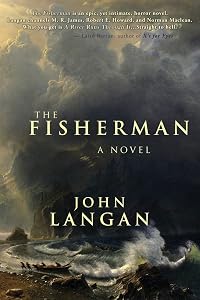

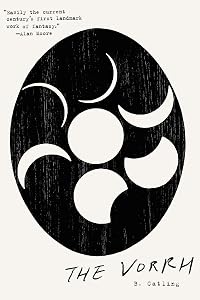
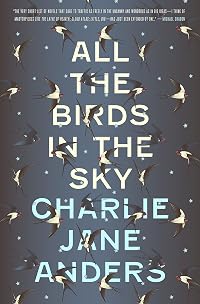




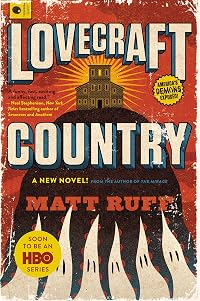















Member Recommendations
sturlington I feel VanderMeer must have been reading early Jonathan Lethem when he wrote the Southern Reach trilogy, as well as watching old episodes of Lost.
Member Reviews
Undeniably one of speculative fiction's "events" of 2014, The Southern Reach trilogy comes to (strangling) fruition with the publication of Acceptance (FSG Originals, September 2014). ("Strangling" because of the strange text explorers find in Area X's most remote environs, "Where lies the strangling fruit that came from the hand of the sinner..." Get it? Oh, never mind.)
The speculative fiction community has rapturously received The Southern Reach trilogy, due perhaps, in part, to Jeff VanderMeer's obvious literary ambitions. This ain't your granddad's science fiction; Annihilation, Authority, and Acceptance are well-written (and slickly packaged) commentaries on the developing global environmental crisis, as well as examinations of the show more nature of "weird fiction" itself. The Southern Reach has enjoyed more muted success beyond its genre. The reviewer for The New York Times (definitely not a cutting-edge resource for speculative fiction news) was decidedly mixed in his reaction to Annihilation.
Full disclosure: I thoroughly enjoyed Annihilation and, having now completed the trilogy, consider it the best entry in the series. Annihilation seemed, at least in comparison to its successors, to be the most "distilled" essence of what VanderMeer was trying to accomplish. I suspect this is due in part to the origins of the story (it came to VanderMeer in a dream), but it is also related to the structure of the story: If Annihilation serves as the "setup," and the establishment of the mystery of Area X, then Authority is the "bridge" to Acceptance, the "resolution" to the story. I use quotes here because, of course, resolution is a relative term. Given the constraints of the genre, as well as simple good storytelling sense, VanderMeer was forced to walk the line between spelling out his vision for readers and providing them no answer at all. Some readers will be disappointed that VanderMeer hews more to the latter than the former.
Of course, all of this goes to show the ways in which the separate volumes in a trilogy (or series) ultimately become subsumed into the larger story. Would Acceptance stand on its own? I wouldn't recommend reading it without having first read Annihilation and Authority. Acceptance follows in the wake of its preceding "chapters." Even were it not the concluding volume in what amounts to a serial novel, though, Acceptance isn't quite up to snuff, at least when compared to Annihilation, but it's certainly head-and-shoulders above most other entries in the genre.
Acceptance alternates perspectives between Ghost Bird (the Area X produced doppelganger of the biologist from Annihilation), Saul (the lighthouse keeper), and Gloria, the former director of the Southern Reach--related to the reader in the second person, an effectively unsettling decision on VanderMeer's part. The threads of the story bring together different timelines (pre-Area X, post-Authority, etc.), further disorienting the reader. Ultimately, the effect is to mask the nature of Area X to the reader, who will be busy trying to figure out just what the hell is going on. But VanderMeer uses the technique to build tension, too, moving the story forward, keeping the reader guessing, if not always successfully--after all, the reader knows how Gloria's story will end, and, to some degree, Saul's. Of course, it's the "why" and the "how" the reader is chasing here, not the "what."
VanderMeer employs in Acceptance the same recursive, elliptical syntax he began building toward in Annihilation and Authority. His sentences uncoil outward, clause upon a clause, lending them a strangely hypnotic quality well-suited to the subject matter. There are times when VanderMeer's flow works against him. For instance, some of the sections discussing Gloria's involvement with the Southern Reach, and her bureaucratic in-fighting with Lowry, can tend toward tedium, but, as with his examination of institutional decrepitude in Authority, that may well be the point. VanderMeer's prose demands patience of the reader.
That patience may or may not be rewarded in the book's conclusion. How satisfactory a reader will find the ending of Acceptance is, of course, a matter of personal taste. That said, it's safe to say that readers who expect definitive answers or resolution from their narratives are better off steering clear of The Southern Reach. Answers of a sort are given, and the fates of characters decided. Word is VanderMeer may further develop the ending with a follow-up novella.
The Southern Reach is successful both because of its actual achievements, which are sometimes limited, and its ambitions, which push forward the boundaries of speculative fiction as a genre. Readers still on the fence in regards to whether or not they should read the trilogy are advised to consider how patient they are and to what degree they require definitive endings; VanderMeer asks much but dispenses little. That said, there are great things to be found in Area X, especially in Annihilation and Acceptance. A highly accomplished, if flawed, series that is recommended to most speculative fiction readers, especially those who appreciate atmosphere and character over plot. show less
The speculative fiction community has rapturously received The Southern Reach trilogy, due perhaps, in part, to Jeff VanderMeer's obvious literary ambitions. This ain't your granddad's science fiction; Annihilation, Authority, and Acceptance are well-written (and slickly packaged) commentaries on the developing global environmental crisis, as well as examinations of the show more nature of "weird fiction" itself. The Southern Reach has enjoyed more muted success beyond its genre. The reviewer for The New York Times (definitely not a cutting-edge resource for speculative fiction news) was decidedly mixed in his reaction to Annihilation.
Full disclosure: I thoroughly enjoyed Annihilation and, having now completed the trilogy, consider it the best entry in the series. Annihilation seemed, at least in comparison to its successors, to be the most "distilled" essence of what VanderMeer was trying to accomplish. I suspect this is due in part to the origins of the story (it came to VanderMeer in a dream), but it is also related to the structure of the story: If Annihilation serves as the "setup," and the establishment of the mystery of Area X, then Authority is the "bridge" to Acceptance, the "resolution" to the story. I use quotes here because, of course, resolution is a relative term. Given the constraints of the genre, as well as simple good storytelling sense, VanderMeer was forced to walk the line between spelling out his vision for readers and providing them no answer at all. Some readers will be disappointed that VanderMeer hews more to the latter than the former.
Of course, all of this goes to show the ways in which the separate volumes in a trilogy (or series) ultimately become subsumed into the larger story. Would Acceptance stand on its own? I wouldn't recommend reading it without having first read Annihilation and Authority. Acceptance follows in the wake of its preceding "chapters." Even were it not the concluding volume in what amounts to a serial novel, though, Acceptance isn't quite up to snuff, at least when compared to Annihilation, but it's certainly head-and-shoulders above most other entries in the genre.
Acceptance alternates perspectives between Ghost Bird (the Area X produced doppelganger of the biologist from Annihilation), Saul (the lighthouse keeper), and Gloria, the former director of the Southern Reach--related to the reader in the second person, an effectively unsettling decision on VanderMeer's part. The threads of the story bring together different timelines (pre-Area X, post-Authority, etc.), further disorienting the reader. Ultimately, the effect is to mask the nature of Area X to the reader, who will be busy trying to figure out just what the hell is going on. But VanderMeer uses the technique to build tension, too, moving the story forward, keeping the reader guessing, if not always successfully--after all, the reader knows how Gloria's story will end, and, to some degree, Saul's. Of course, it's the "why" and the "how" the reader is chasing here, not the "what."
VanderMeer employs in Acceptance the same recursive, elliptical syntax he began building toward in Annihilation and Authority. His sentences uncoil outward, clause upon a clause, lending them a strangely hypnotic quality well-suited to the subject matter. There are times when VanderMeer's flow works against him. For instance, some of the sections discussing Gloria's involvement with the Southern Reach, and her bureaucratic in-fighting with Lowry, can tend toward tedium, but, as with his examination of institutional decrepitude in Authority, that may well be the point. VanderMeer's prose demands patience of the reader.
That patience may or may not be rewarded in the book's conclusion. How satisfactory a reader will find the ending of Acceptance is, of course, a matter of personal taste. That said, it's safe to say that readers who expect definitive answers or resolution from their narratives are better off steering clear of The Southern Reach. Answers of a sort are given, and the fates of characters decided. Word is VanderMeer may further develop the ending with a follow-up novella.
The Southern Reach is successful both because of its actual achievements, which are sometimes limited, and its ambitions, which push forward the boundaries of speculative fiction as a genre. Readers still on the fence in regards to whether or not they should read the trilogy are advised to consider how patient they are and to what degree they require definitive endings; VanderMeer asks much but dispenses little. That said, there are great things to be found in Area X, especially in Annihilation and Acceptance. A highly accomplished, if flawed, series that is recommended to most speculative fiction readers, especially those who appreciate atmosphere and character over plot. show less
Not long ago, two young women took shelter from the heavy rain beneath a tree. It was in a park, in the middle of a large city. Lightning struck the tree and killed them both.
Two other young women, hiking in the rain forest in Panama, probably slipped on a mountain slope and fell to their deaths. Only a few of their bones were found.
What if nature is not only dangerous, but actively hostile to you? What if you'd never know if you're alive past the next tree or swamp? What if it could turn you into a part of it, in a more than horrendous way? What if you decided to accept it, because, after all, you were created there? Would you accept the hostility of your birth ground?
Acceptance, the last part of the trilogy, gives some answers about show more the "what" and "why". For some people it wasn't enough. For me it was more than enough. Area X should remain an absolute riddle with only the faintest hint that it might have been an accident from our perspective, but a logical step from the view of Area X. And in some way, it's also a bit sad what happened to Area X.
Jeff VanderMeer has written a nice mix of science fiction and horror, which leaves you wondering about our own relation to uncivilized nature. The idea of nature being a malevolent force in itself, for those of us who are the uninitiated. Those who have science and measurements, not accepting unwilling anti-technology. Those of us who don't believe that nature can triumph science, getting disoriented about the logic of their lives and ultimately cynical about the meaning of it when nature strikes with precision.
Maybe you should read the trilogy as a story of man coping with an environment he has been estranged from, and the final acceptance by the few who start to understand, because they realize that in the end they're cut from the same cloth. show less
Two other young women, hiking in the rain forest in Panama, probably slipped on a mountain slope and fell to their deaths. Only a few of their bones were found.
What if nature is not only dangerous, but actively hostile to you? What if you'd never know if you're alive past the next tree or swamp? What if it could turn you into a part of it, in a more than horrendous way? What if you decided to accept it, because, after all, you were created there? Would you accept the hostility of your birth ground?
Acceptance, the last part of the trilogy, gives some answers about show more the "what" and "why". For some people it wasn't enough. For me it was more than enough. Area X should remain an absolute riddle with only the faintest hint that it might have been an accident from our perspective, but a logical step from the view of Area X. And in some way, it's also a bit sad what happened to Area X.
Jeff VanderMeer has written a nice mix of science fiction and horror, which leaves you wondering about our own relation to uncivilized nature. The idea of nature being a malevolent force in itself, for those of us who are the uninitiated. Those who have science and measurements, not accepting unwilling anti-technology. Those of us who don't believe that nature can triumph science, getting disoriented about the logic of their lives and ultimately cynical about the meaning of it when nature strikes with precision.
Maybe you should read the trilogy as a story of man coping with an environment he has been estranged from, and the final acceptance by the few who start to understand, because they realize that in the end they're cut from the same cloth. show less
So here we are at the end of the trilogy, and we learned everything there is to know about Area X.
ha ha ha!
just kidding!
Granted, we know a lot about the people involved with the whole situation, but in the end, Area X remains as mysterious as it has been all along. Did it come from outer space? Is it a worm hole? Is it a portal to another dimension or alternate universe? Maybe! Yes! No! Who knows?
(Granted, in spite of the fact that I'm not actually all that dumb, sometimes I am remarkably.... DENSE... at noticing things, or making connections or just GETTING it. So take that as a disclaimer that maybe I'm totally wrong and everything is spelled out as clearly as if it were written on the walls in glowing fungus)
This book had quite a bit show more of creepiness to it, and sadness and WTF-ery (WTF-iness?), which is all more-or-less my jam, and I enjoyed it quite a bit. Even if I'm still clueless about a lot of it. But I guess if it was all entirely clear then it wouldn't be considered WEIRD, huh? show less
ha ha ha!
just kidding!
Granted, we know a lot about the people involved with the whole situation, but in the end, Area X remains as mysterious as it has been all along. Did it come from outer space? Is it a worm hole? Is it a portal to another dimension or alternate universe? Maybe! Yes! No! Who knows?
(Granted, in spite of the fact that I'm not actually all that dumb, sometimes I am remarkably.... DENSE... at noticing things, or making connections or just GETTING it. So take that as a disclaimer that maybe I'm totally wrong and everything is spelled out as clearly as if it were written on the walls in glowing fungus)
This book had quite a bit show more of creepiness to it, and sadness and WTF-ery (WTF-iness?), which is all more-or-less my jam, and I enjoyed it quite a bit. Even if I'm still clueless about a lot of it. But I guess if it was all entirely clear then it wouldn't be considered WEIRD, huh? show less
When people talk about the great science fiction novels of human environmental destruction, they often talk about John Brunner's The Sheep Look Up. I wonder if one day the Southern Reach Trilogy will be talked about the same way? It's much more elliptical in its approach, but the three books are drenched in landscape and environment, in the atmospheric conditions of the natural world. All the more to accentuate the unnatural ecology of Area X, the eerie strangeness it exerts om all the characters and all the readers, but Area X is not just an invasive environment, it is a cleansing one, a transformative one. The inability to grasp the secrets of Area X matches the inability to act as custodians for our own world, even that failure is as show more destructive as anything Area X can do. Only Ghost Bird can operate without secret strategies or hidden agendas or fixed objectives. Without those the others - Control, Grace, the Director - are lost, struggling to grasp something that cannot be comprehended. Obsessed with conquering something that cannot be conquered, spying on something that can spy back, taking samples of things that takes samples of its own, obsessing over something that that barely notices them at all, instead of living with it. In the world that reads the Southern Reach trilogy from the outside, we are Area X. show less
So that's it? That's all we get?
I wish I had known. I wouldn't have wasted my time.
With this frustrating final book in the trilogy, I alternated between anger (because VanderMeer continued to stuff the pages with useless, time-wasting back stories), and annoyance (because the story wasn't going anywhere for the most part), with frequent side-trips into unadulterated boredom. There were large swaths of narrative that my eyes slid over but my brain couldn't get the gumption up to care about.
I'm entirely sick of novels that are trumpeted as the next evolution in horror, or the logical offspring to this author or that author...novels where the author has some talent (and VanderMeer does, when he tries), and some imagination (as VanderMeer show more also does), but, through the course of the story, not only does NOT bring it home, but steadfastly refuses to, instead choosing to deepen the mystery instead of attempting to clear the cobwebs.
Let me be clear: When you finish this novel, you will have gained very few answers to all the questions set up in the first two novels. But you will be treated to pages and pages and pages and pages of backstory, of telling versus showing, of annoying second-person point of view, and not much else.
I'm actually a fairly willing reader. I understand that there's times when an author wants to scatter clues and let the reader figure some stuff out. I'm a fan of that. It makes the reader feel like they're part of the story. But when you drop a single, ambiguous clue about once every hundred pages? No.
If you want to be left scratching your head, knowing far more about the characters than is needed, and knowing far less about the mysteries of Area X than you wanted, go ahead, read the books. But if you want a satisfying conclusion to a story, seriously, go read something else. This is not the trilogy you're looking for. show less
I wish I had known. I wouldn't have wasted my time.
With this frustrating final book in the trilogy, I alternated between anger (because VanderMeer continued to stuff the pages with useless, time-wasting back stories), and annoyance (because the story wasn't going anywhere for the most part), with frequent side-trips into unadulterated boredom. There were large swaths of narrative that my eyes slid over but my brain couldn't get the gumption up to care about.
I'm entirely sick of novels that are trumpeted as the next evolution in horror, or the logical offspring to this author or that author...novels where the author has some talent (and VanderMeer does, when he tries), and some imagination (as VanderMeer show more also does), but, through the course of the story, not only does NOT bring it home, but steadfastly refuses to, instead choosing to deepen the mystery instead of attempting to clear the cobwebs.
Let me be clear: When you finish this novel, you will have gained very few answers to all the questions set up in the first two novels. But you will be treated to pages and pages and pages and pages of backstory, of telling versus showing, of annoying second-person point of view, and not much else.
I'm actually a fairly willing reader. I understand that there's times when an author wants to scatter clues and let the reader figure some stuff out. I'm a fan of that. It makes the reader feel like they're part of the story. But when you drop a single, ambiguous clue about once every hundred pages? No.
If you want to be left scratching your head, knowing far more about the characters than is needed, and knowing far less about the mysteries of Area X than you wanted, go ahead, read the books. But if you want a satisfying conclusion to a story, seriously, go read something else. This is not the trilogy you're looking for. show less
Rating: 4* of five
It's a frustrating thing to wait for a book, a series, an idea to cohere. When it fails to happen, the result is usually a sense of letdown at the very least, and not infrequently outrage and betrayal. And here I am rating this incoherent (in the nice and accurate sense) final volume as the best of the lot.
Wonders will never cease.
The Big Reveal of this series doesn't need to be coherent (again used in the nice and accurate sense). It is big enough, titanic in fact, that any attempt to fit it into a pleasantly proportioned package would merely be absurd. This is a rare case of a resolution needing enough room to encompass the beginning all over again, since there is no conceivable way the results of Area X's existence show more for the reasons it exists will stop reverberating in each and every iteration of each and every possible future that flows from it.
Was that vague enough for you? See, there's nothing I can be specific about except at the certainty of spoilering every development in each book. That being the modern era's Worst Imaginable Sin, I'm avoiding the lynch mobs that roam freely over the internet. Let me give you a clue that won't be a clue unless you've read the series: The parable that seemed tantalizingly just beyond reach is here full-blown at last. What Area X represents in all its strangeness and its inscrutability can't be made any clearer than it is in the book, even though as you're turning the last few pages you're going to have a raft more questions than you started the book with. And that's a good thing.
Philosophically VanderMeer's point, well one of his points anyway, could not possibly be more timely than it is right now on the cusp of the Arctic's final descent into deglaciation. A piece of the planet is in reality changing before our (appalled) gaze into something that isn't quite set yet. The reasons aren't mysterious, in the case of the Arctic, but the consequences are equally bizarre, unpredictable, random. The planet isn't going to remain the same. The consequences for some, even many, individuals are going to be as condign as they are in the book. The authorities are as nugatory in the face of out planetary changes as they are in the book. The public is as...oblivious? unconcerned? flip?...as is the shadowy, gesturally indicated public of the book.
This series of books isn't a Rubik's cube of a story. It's a Seurat painting of lore. Enjoy that? This is a series for you. show less
It's a frustrating thing to wait for a book, a series, an idea to cohere. When it fails to happen, the result is usually a sense of letdown at the very least, and not infrequently outrage and betrayal. And here I am rating this incoherent (in the nice and accurate sense) final volume as the best of the lot.
Wonders will never cease.
The Big Reveal of this series doesn't need to be coherent (again used in the nice and accurate sense). It is big enough, titanic in fact, that any attempt to fit it into a pleasantly proportioned package would merely be absurd. This is a rare case of a resolution needing enough room to encompass the beginning all over again, since there is no conceivable way the results of Area X's existence show more for the reasons it exists will stop reverberating in each and every iteration of each and every possible future that flows from it.
Was that vague enough for you? See, there's nothing I can be specific about except at the certainty of spoilering every development in each book. That being the modern era's Worst Imaginable Sin, I'm avoiding the lynch mobs that roam freely over the internet. Let me give you a clue that won't be a clue unless you've read the series: The parable that seemed tantalizingly just beyond reach is here full-blown at last. What Area X represents in all its strangeness and its inscrutability can't be made any clearer than it is in the book, even though as you're turning the last few pages you're going to have a raft more questions than you started the book with. And that's a good thing.
Philosophically VanderMeer's point, well one of his points anyway, could not possibly be more timely than it is right now on the cusp of the Arctic's final descent into deglaciation. A piece of the planet is in reality changing before our (appalled) gaze into something that isn't quite set yet. The reasons aren't mysterious, in the case of the Arctic, but the consequences are equally bizarre, unpredictable, random. The planet isn't going to remain the same. The consequences for some, even many, individuals are going to be as condign as they are in the book. The authorities are as nugatory in the face of out planetary changes as they are in the book. The public is as...oblivious? unconcerned? flip?...as is the shadowy, gesturally indicated public of the book.
This series of books isn't a Rubik's cube of a story. It's a Seurat painting of lore. Enjoy that? This is a series for you. show less
i cannot BELIEVE i forgot to write a review but this is now the third book that has ever made me cry - congratulations acceptance! congratulations saul evans for giving me SO many emotions! in general though i think acceptance is for sure the best book of the trilogy - they're each really different, but where annihilation and authority do one thing and do it well, acceptance is ambitious, overarching, bringing together so many threads and doing it with extraordinary style. i wasn't bored a single moment. the language is lush; the part that sticks in my memory is control and ghost bird's crossing to the island, and of course the biologist's return, both some of the most exquisite writing i've ever read. i love every character. i show more especially love control and whitby and gloria and of course saul. i think gloria is the most convincing 9 year old in fiction i've ever read, though of course she's great as an adult too. i just. LOVE this book. with my whole heart. if you want to read some good writing and immerse yourself in something that'll mess you up just a little, this is the book. show less
Members
- Recently Added By
Published Reviews
ThingScore 100
[T]he real accomplishment of these books lies less in their well-designed plots than in VanderMeer’s incredibly evocative, naturalist eye....
At its best, VanderMeer’s language is precise, metaphorical but rigorous, and as fertile as good loam. More than mere atmosphere, the rich natural details are the trilogy’s most powerful technique — and, in some ways, its point....
With Area X, show more VanderMeer has created an immersive and wonderfully realized world; I wouldn’t be surprised if he revisits it. If so, I’ll happily sign up for the next expedition. show less
At its best, VanderMeer’s language is precise, metaphorical but rigorous, and as fertile as good loam. More than mere atmosphere, the rich natural details are the trilogy’s most powerful technique — and, in some ways, its point....
With Area X, show more VanderMeer has created an immersive and wonderfully realized world; I wouldn’t be surprised if he revisits it. If so, I’ll happily sign up for the next expedition. show less
added by zhejw
One peculiar satisfaction of being a reader is seeing an author you have followed for a long time finally break into the big time. VanderMeer has been a favourite among aficionados of New Weird fiction for more than a decade, exploring his fascinations with fungi, subterranean spaces and decay across half a dozen books. But with his Southern Reach trilogy – Annihilation, Authority and show more Acceptance, all released in 2014 – he has finally hit the bestseller lists. And with good reason. This trilogy is a modern mycological masterpiece.
Finding a way satisfactorily to pay off so much mysteriously tense apprehension is no small challenge for a writer – and VanderMeer manages to avoid banality and opacity both, and generates some real emotional charge while he's about it. show less
Finding a way satisfactorily to pay off so much mysteriously tense apprehension is no small challenge for a writer – and VanderMeer manages to avoid banality and opacity both, and generates some real emotional charge while he's about it. show less
added by zhejw
Lists

Best Science Fiction Novels
816 works; 430 members

Dystopian and Apocalyptic Literature
350 works; 74 members

SFFCat 2015
35 works; 1 member

Books Read in 2015
3,299 works; 126 members
Books Read in 2016
4,666 works; 197 members

Put a Bird On It
75 works; 12 members

To Read
617 works; 7 members

2021
26 works; 1 member

Books Read in 2019
4,052 works; 108 members
Talk Discussions
Past Discussions
The Southern Reach in The Weird Tradition (January 2025)
Author Information

165+ Works 39,720 Members
Jeffrey Scott VanderMeer was born in Bellefonte, Pennsylvania on July 7, 1968. He is an editor, writer, teacher, and publisher. He is the founding editor and publisher of the Ministry of Whimsy Press. He is the author of several books including City of Saints, Madmen, Finch, and The Southern Reach Trilogy. His novel Annihilation won the Nebula show more Award for Best Novel in 2014. (Bowker Author Biography) show less
Some Editions
Series

Work Relationships
Is contained in
Common Knowledge
- Canonical title
- Acceptance
- Original title
- Acceptance
- Original publication date
- 2014-09
- People/Characters
- Saul Evans; John Rodriguez / Control; the biologist / Ghost Bird; Brad Delfino; Gloria / Cynthia / The Director; Gloria Jenkins / Cynthia / La directrice (show all 10); Grace Stevenson; Trudi Jenkins; Whitby Allen; James Lowry
- Important places
- Area X; The Forgotten Coast
- Dedication
- For Ann
- First words
- Just out of reach, just beyond you: the rush and froth of the surf, the sharp smell of the sea, the crisscrossing shape of the gulls, their sudden, jarring cries.
- Last words
- (Click to show. Warning: May contain spoilers.)I never did forget about you; I just took a long time coming back.
Love,
Gloria
(who lived dangerous on the rocks and pestered you true) - Publisher's editor
- McDonald, Sean
- Blurbers
- King, Stephen; Jemisin, N.K.; Laura Miller; Sara Sklaroff
- Original language
- English
Classifications
Statistics
- Members
- 3,445
- Popularity
- 4,877
- Reviews
- 151
- Rating
- (3.61)
- Languages
- 13 — Chinese, Czech, Danish, Dutch, English, Finnish, French, German, Italian, Polish, Portuguese, Romanian, Spanish
- Media
- Paper, Audiobook, Ebook
- ISBNs
- 44
- ASINs
- 12