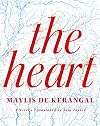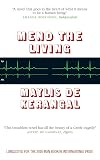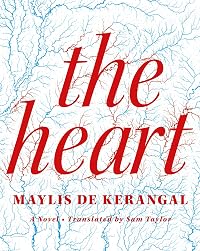
The Heart
by Maylis de Kerangal
On This Page
Description
"Just before dawn on a Sunday morning, three teenage boys go surfing. Returning home, exhausted, the driver lets the car drift off the road into a tree. Two of the boys are wearing seat belts; one is sent through the windshield. He is declared brain-dead shortly after arriving at the hospital. His heart is still beating. The Heart takes place over the twenty-four hours surrounding a fatal accident and a resulting heart transplant as life is taken from a young man and given to a woman close show more to death. In gorgeous, ruminative prose it examines the deepest feelings of everyone involved--grieving parents, hardworking doctors and nurses--as they navigate decisions of life and death. As stylistically audacious as it is emotionally explosive, Maylis de Kerangal's The Heart has mesmerized readers in France, where it has been hailed as the breakthrough work of a new literary star"-- "An audacious novel about the 24 hours surrounding a heart transplant"-- show lessTags
Recommendations


















Member Reviews
I was transfixed by this book. At first, I didn't want to read it. A three hundred word opening sentence? Really? But I was immediately seduced, and continued to be seduced by the atmosphere - the atmospheres - that de Karangal creates as she introduces us to Simon, the boy who loves to surf, but who dies in a road accident as he and his friends return from an early morning assignment with the waves.
He's brain-dead. His perfect body is there for his mother, his father to see, lying on his hospital bed. Thanks to technology, he breathes, as if in dreamless sleep. But he's dead. And his parents need to decide whether his organs can be 'harvested' so others might live.
'How could they even envision it, Simon’s death, when his complexion show more still flushes pink, and supple, when his nape still bathes in cool blue watercress and he is stretched out with his feet in the gladiolus.'
Now, they must decide now, watching their son calmly 'sleeping'. This is their story. It's the story of the hospital staff, medical and otherwise, charged with his care, coming into work from their messy day-to-day lives. They leave behind them evenings of unsatisfactory sex, of football matches missed, and it's business as usual for them. It's the story of Simon's girlfriend, cross that he's preferred to go surfing than snatch a few more hours with her. It's the story of the woman destined to receive his heart.
The life and death of Simon's heart impacts on so many others, and de Karangal explores this in affecting, poetic language. The emotional consequences overlie the whole book, but she's also researched, quite meticulously, the whole process of transplant from the moment that a patient is recognised as a possible donor, to the time when the heart is successfully transferred to the body of someone else. So many, many people are involved. And it all has to happen so quickly.
This is no medical manual. It's poetic, beautiful, lyrical, rhythmical - and audacious: a quality which seemed to identify the book for me as 'very French'. And I want to single out the quality of the translation. I haven't read the original, but I have read the translator's notes. Moore seems to have successfully been 'sensing in two languages, with the English sentences lain like a transparency over the original'. She has rendered into wonderfully expressive English a work with many of the qualities of French cinema: a narrative alongside an intimate exploration of what it is to be human. show less
He's brain-dead. His perfect body is there for his mother, his father to see, lying on his hospital bed. Thanks to technology, he breathes, as if in dreamless sleep. But he's dead. And his parents need to decide whether his organs can be 'harvested' so others might live.
'How could they even envision it, Simon’s death, when his complexion show more still flushes pink, and supple, when his nape still bathes in cool blue watercress and he is stretched out with his feet in the gladiolus.'
Now, they must decide now, watching their son calmly 'sleeping'. This is their story. It's the story of the hospital staff, medical and otherwise, charged with his care, coming into work from their messy day-to-day lives. They leave behind them evenings of unsatisfactory sex, of football matches missed, and it's business as usual for them. It's the story of Simon's girlfriend, cross that he's preferred to go surfing than snatch a few more hours with her. It's the story of the woman destined to receive his heart.
The life and death of Simon's heart impacts on so many others, and de Karangal explores this in affecting, poetic language. The emotional consequences overlie the whole book, but she's also researched, quite meticulously, the whole process of transplant from the moment that a patient is recognised as a possible donor, to the time when the heart is successfully transferred to the body of someone else. So many, many people are involved. And it all has to happen so quickly.
This is no medical manual. It's poetic, beautiful, lyrical, rhythmical - and audacious: a quality which seemed to identify the book for me as 'very French'. And I want to single out the quality of the translation. I haven't read the original, but I have read the translator's notes. Moore seems to have successfully been 'sensing in two languages, with the English sentences lain like a transparency over the original'. She has rendered into wonderfully expressive English a work with many of the qualities of French cinema: a narrative alongside an intimate exploration of what it is to be human. show less
******* Some spoilers***********
So much of what we feel is essentially inexpressible. What words, for instance, can describe the sudden death of a nineteen-year-old boy? In what way can grief be actually expressed? Is there a way to convey the sense of hope that can arise from such a tragedy?
Such are the questions that author Maylis de Kerangal tackles in the profound yet fleeting novel The Heart. Tracing the 24 hours after the death of teenager Simon Limbres, it tells of things that usually escape description. Yet, and that is the astounding thing, she somehow manages to come very close.
At many points in the book I wanted to close it and weep. How else to cope with the image of Simon, rising at dawn, exhilarated at the prospect of a show more surfing session on what would become the last day of his life? Then there's the struggle of his parents to reach the decision to donate his organs. Or their request to the surgeon: at the moment you stop his heart, play him the sound of the sea, tell him we're thinking of him...
We also get slim vignettes of the people who carry out the extraordinary transplant process and the hair-splitting precision involved. Then the procedures themselves, from paperwork to actual extraction, are laid out in full detail. At one point I put down the book and said to J, "This is the most terrible, wonderful thing I've read in a long time." (Simon's body was on the operating table. His heart had just been removed.)
Still, life goes on. We don't get to hear the story of Claire, who finally gets the heart. But that, I fear, may have pushed me over the edge. This book runs deep: today when I feel the warmth of the pendant I wear against my beating heart, I feel a wave of emotion.
For more of my reviews please visit https://devikamenon.blogspot.com/search/label/books show less
So much of what we feel is essentially inexpressible. What words, for instance, can describe the sudden death of a nineteen-year-old boy? In what way can grief be actually expressed? Is there a way to convey the sense of hope that can arise from such a tragedy?
Such are the questions that author Maylis de Kerangal tackles in the profound yet fleeting novel The Heart. Tracing the 24 hours after the death of teenager Simon Limbres, it tells of things that usually escape description. Yet, and that is the astounding thing, she somehow manages to come very close.
At many points in the book I wanted to close it and weep. How else to cope with the image of Simon, rising at dawn, exhilarated at the prospect of a show more surfing session on what would become the last day of his life? Then there's the struggle of his parents to reach the decision to donate his organs. Or their request to the surgeon: at the moment you stop his heart, play him the sound of the sea, tell him we're thinking of him...
We also get slim vignettes of the people who carry out the extraordinary transplant process and the hair-splitting precision involved. Then the procedures themselves, from paperwork to actual extraction, are laid out in full detail. At one point I put down the book and said to J, "This is the most terrible, wonderful thing I've read in a long time." (Simon's body was on the operating table. His heart had just been removed.)
Still, life goes on. We don't get to hear the story of Claire, who finally gets the heart. But that, I fear, may have pushed me over the edge. This book runs deep: today when I feel the warmth of the pendant I wear against my beating heart, I feel a wave of emotion.
For more of my reviews please visit https://devikamenon.blogspot.com/search/label/books show less
Keep on Searching
Media:Audio
Read by Steven Jay Cohen
Length: 8 hrs and 49 mins
I bought this book after reading Eastbound. I’d been so overwhelmed by that novella that I needed more of de Kerangal than the two hours that Eastbound had given me.
Unfortunately I could not finish The Heart. The six hours about the day in the life of a heart transplant was beyond me. Yes the writing is mesmerizing and the detail finessed. Yet somehow it wasn’t enough. But it wasn’t so bad that it doesn’t deserve a mention, and I’m sure others will like it more than I could.
A young boy, a surfer dies in a car accident. His young healthy heart is made available for a transplant. Everyone involved is a subject of de Kerangal’s attention. The surgeons, show more the hospital and care workers, the relatives of the donor and the donee all play a part in this perfectly chronicled choreographed feat of modern medicine. Every detail of the participants’ lives in the twenty for hours is described, accurately and efficiently. From the cup of coffee the head nurse drinks, from the assistant hospital orderly’s intake of her cigarette, to the donor’s mother’s inner feelings come to the reader as if we are in the room with the participants.
Despite my enthusiasm at finding a new writer to follow, I had a problem with The Heart. The poetic language seemed at odds with the subject matter. The symbolism and softness of the beating heart didn’t sit well in the stark sterility of the operating theater. Feeling and technology didn’t mix. For me at least.
I suppose I was expecting something along the lines of Eastbound - short and softly emotional. The Heart is a novel three times longer than the novella. What worked on a train trip didn’t work for me in a hospital setting.
Still I look forward to reading more of this writer’s work. It is just that Eastbound set such a high bar, and maybe my heart wasn’t in this one. show less
Media:Audio
Read by Steven Jay Cohen
Length: 8 hrs and 49 mins
I bought this book after reading Eastbound. I’d been so overwhelmed by that novella that I needed more of de Kerangal than the two hours that Eastbound had given me.
Unfortunately I could not finish The Heart. The six hours about the day in the life of a heart transplant was beyond me. Yes the writing is mesmerizing and the detail finessed. Yet somehow it wasn’t enough. But it wasn’t so bad that it doesn’t deserve a mention, and I’m sure others will like it more than I could.
A young boy, a surfer dies in a car accident. His young healthy heart is made available for a transplant. Everyone involved is a subject of de Kerangal’s attention. The surgeons, show more the hospital and care workers, the relatives of the donor and the donee all play a part in this perfectly chronicled choreographed feat of modern medicine. Every detail of the participants’ lives in the twenty for hours is described, accurately and efficiently. From the cup of coffee the head nurse drinks, from the assistant hospital orderly’s intake of her cigarette, to the donor’s mother’s inner feelings come to the reader as if we are in the room with the participants.
Despite my enthusiasm at finding a new writer to follow, I had a problem with The Heart. The poetic language seemed at odds with the subject matter. The symbolism and softness of the beating heart didn’t sit well in the stark sterility of the operating theater. Feeling and technology didn’t mix. For me at least.
I suppose I was expecting something along the lines of Eastbound - short and softly emotional. The Heart is a novel three times longer than the novella. What worked on a train trip didn’t work for me in a hospital setting.
Still I look forward to reading more of this writer’s work. It is just that Eastbound set such a high bar, and maybe my heart wasn’t in this one. show less
I first heard about this book from Bill Gates' annual list (and Melinda loved it too - at the time). Translated from French, the story is essentially just one day long -almost 24 hours exactly, but it packs in a lot of emotion, issues, and insight. Simon Limbres is in a car accident with his two surfing buddies. They survive; he does not - he is brain dead (a coma depasse). That happens in the first 10 pages and the rest of the novella is literally about his heart and the life it will give to someone else. His other organs are donated too - in France, the law implies consent, unless people opt out on a official registry, but his parents have the final say. The narrator's objective omniscience that lets us engage with the emotion to the show more extent we want, and it is an empathetic portrayal of the range of feelings from all parties involved. The essence of the book is a fascinating account of the process of heart transplant, of all the tiny variables that must be aligned for it to happen successfully. The book gives us an interior look at the surgeons - multiple specialists for the multiple organs, the coordinator, the recipient, and the donor's family and does an excellent job of switching from once to another to maintain the timeline and the simultaneous action. The places all the organs travel for transplant is not unlike the body's own system of veins and arteries moving blood and life. This book is a beautiful reflection of science but also of all the associations we have with the heart: courage, love, strength, power, and life. show less
The protagonist of Maylis de Kerangal’s remarkable novel is not a person at all, but is the heart of Simon Limbres. Simon suffers irreversible brain damage in an auto accident while returning from an early morning surfing excursion with two friends. With exquisite attention to detail and character development, de Kerangal tracks the events following that tragic accident. Throughout, she manages to maintain a high degree of dramatic tension while also achieving a cinematic documentary narrative style.
The intent of the novel is to show how the miracle of heart transplantation occurs today. But the wonder of this novel is how de Kerangal achieves that aim while also taking the reader close to all of the people involved. We learn how a show more family copes with the strange reality of seeing a loved one appearing to be quietly asleep, while knowing that “death” has already occurred. Simon’s parents are forced to struggle with his death while also being asked to consider donating his organs. Marianne and Sean Limbres are portrayed realistically as they pass through the inevitable stages of coping with the death of a much-loved son. Simon’s girlfriend (Juliette) and little sister (Lou) also are presented, but more superficially.
De Kerangal depicts the health care workers whose task it is to successfully achieve the transplant not only as caring and highly competent professionals, but also as real people with personal quirks and interests outside their jobs.
Pierre Revol, the ICU doctor struggles with how to tell Simon’s parents that their son is brain dead and will never recover. It is clear that he has done this before, but still is not very good at it.
Cordelia Owl is the ICU nurse who does her job despite being hung over and continuously waiting for a call from the guy she was with the previous night.
Thomas Remige is the most appealing character in the book. He has the unenviable task of convincing Simon’s parents to donate his organs. De Kerangal shows Thomas as a sensitive and honest man, who loves goldfinches, is willing to carry out the families request to remind Simon that he is much loved and to play the sounds of surf through ear buds just before his organs are taken. Thomas also restores the body following the removal as promised.
Marthe Carrare is a 60 year-old overweight woman struggling with a smoking addiction whose task is to allocate Simon’s organs to the best possible recipients.
Emmanuel Harfang, the transplant surgeon, comes from a long line of surgeons. He is a workaholic and narcissistic, but extremely competent. He is much admired by his residents, who he happily overworks and then takes on long bike rides during their down time, much to the dismay of their wives.
Virgilio Breva is an egotistical misogynist and soccer fanatic. Notwithstanding these flaws, he is portrayed as an extremely skilled surgeon who orchestrates the multiple organ removal procedures and transports Simon’s heart to Paris for transplantation.
Claire Mejan is in her fifties and is failing due to myocarditis. She is forced to live alone in a crummy apartment near the hospital. Her whole existence revolves around waiting for an appropriate heart to replace hers. Her family visits, but she has an intense desire to return to her country home and life as a translator.
The novel is set in Northern France and occurs over one day. De Kerangal masterfully depicts just how complicated and time dependent these procedures are while maintaining a high degree of tension. The scenes depicting the multiple organ removals and heart transplant are particularly well done. show less
The intent of the novel is to show how the miracle of heart transplantation occurs today. But the wonder of this novel is how de Kerangal achieves that aim while also taking the reader close to all of the people involved. We learn how a show more family copes with the strange reality of seeing a loved one appearing to be quietly asleep, while knowing that “death” has already occurred. Simon’s parents are forced to struggle with his death while also being asked to consider donating his organs. Marianne and Sean Limbres are portrayed realistically as they pass through the inevitable stages of coping with the death of a much-loved son. Simon’s girlfriend (Juliette) and little sister (Lou) also are presented, but more superficially.
De Kerangal depicts the health care workers whose task it is to successfully achieve the transplant not only as caring and highly competent professionals, but also as real people with personal quirks and interests outside their jobs.
Pierre Revol, the ICU doctor struggles with how to tell Simon’s parents that their son is brain dead and will never recover. It is clear that he has done this before, but still is not very good at it.
Cordelia Owl is the ICU nurse who does her job despite being hung over and continuously waiting for a call from the guy she was with the previous night.
Thomas Remige is the most appealing character in the book. He has the unenviable task of convincing Simon’s parents to donate his organs. De Kerangal shows Thomas as a sensitive and honest man, who loves goldfinches, is willing to carry out the families request to remind Simon that he is much loved and to play the sounds of surf through ear buds just before his organs are taken. Thomas also restores the body following the removal as promised.
Marthe Carrare is a 60 year-old overweight woman struggling with a smoking addiction whose task is to allocate Simon’s organs to the best possible recipients.
Emmanuel Harfang, the transplant surgeon, comes from a long line of surgeons. He is a workaholic and narcissistic, but extremely competent. He is much admired by his residents, who he happily overworks and then takes on long bike rides during their down time, much to the dismay of their wives.
Virgilio Breva is an egotistical misogynist and soccer fanatic. Notwithstanding these flaws, he is portrayed as an extremely skilled surgeon who orchestrates the multiple organ removal procedures and transports Simon’s heart to Paris for transplantation.
Claire Mejan is in her fifties and is failing due to myocarditis. She is forced to live alone in a crummy apartment near the hospital. Her whole existence revolves around waiting for an appropriate heart to replace hers. Her family visits, but she has an intense desire to return to her country home and life as a translator.
The novel is set in Northern France and occurs over one day. De Kerangal masterfully depicts just how complicated and time dependent these procedures are while maintaining a high degree of tension. The scenes depicting the multiple organ removals and heart transplant are particularly well done. show less
As Bill Gates noted, The Heart is “poetry disguised as a novel.” It is a 242-page love letter to words and language. De Kerangal’s sentences roll in your mouth like chocolates, melt as the eyes caress the sentences. I was enraptured with this book; however, it will not be everyone’s—or most people’s—cup of tea.
The entirety of the “action” in the book occurs in a twenty-four hour span of time as nineteen year-old Simon Limbres rises early to surf and unexpectedly meets his end returning from the waves with his two friends who survive the accident. His parents rage, whimper, and rage again until, quietly, they agree to donate his organs. To donate his heart. The book concludes as the heart is restarted in the chest of show more Claire, a translator with three children. This barebones action serves as the scaffolding around which de Kerangal wraps her words, conjuring the depths of grief juxtaposed with the clinical efficiency of a hospital preparing for an organ transplant. The book is driven primarily by language and character rather than plot/action.
Full review: http://lisaannreads.wpengine.com/review-the-heart/ show less
The entirety of the “action” in the book occurs in a twenty-four hour span of time as nineteen year-old Simon Limbres rises early to surf and unexpectedly meets his end returning from the waves with his two friends who survive the accident. His parents rage, whimper, and rage again until, quietly, they agree to donate his organs. To donate his heart. The book concludes as the heart is restarted in the chest of show more Claire, a translator with three children. This barebones action serves as the scaffolding around which de Kerangal wraps her words, conjuring the depths of grief juxtaposed with the clinical efficiency of a hospital preparing for an organ transplant. The book is driven primarily by language and character rather than plot/action.
Full review: http://lisaannreads.wpengine.com/review-the-heart/ show less
This novel is a great example of how simplicity can be transformed via some kind of alchemy known as "great writing" into high art. I'm reminded of Picasso's "Bouquet of Peace." The story of [b:The Heart|25664510|The Heart|Maylis de Kerangal|https://d.gr-assets.com/books/1442067870s/25664510.jpg|30021099] is so basic that I almost gave the novel a pass after reading the book jacket--the plot is the stuff of straight-to-video movies--and yet in Kerangal's hands it transforms itself into a story that is exquisitely particular and full of humanity. I'm in awe of her storytelling skills and I'm grateful to her translator Sam Taylor for making this novel easily accessible for me.
In addition to good writing and its deep sense of humaneness, show more yet another feature that makes The Heart work is its meticulous attention to medical detail. Another work of great skill that I thought of while reading The Heart was "Mrs. Kelly's Monster," a nonfiction feature article written by Jon Franklin that won a Pulitzer in 1979, and that Franklin has graciously republished on his blog, here:
http://jonfranklin.com/stories-2/mrs-kellys-monster/ show less
In addition to good writing and its deep sense of humaneness, show more yet another feature that makes The Heart work is its meticulous attention to medical detail. Another work of great skill that I thought of while reading The Heart was "Mrs. Kelly's Monster," a nonfiction feature article written by Jon Franklin that won a Pulitzer in 1979, and that Franklin has graciously republished on his blog, here:
http://jonfranklin.com/stories-2/mrs-kellys-monster/ show less
Members
- Recently Added By
Lists

Top Five Books of 2022
736 works; 272 members

Top Five Books of 2016
795 works; 229 members

Novels set over the course of a single day (or less)
72 works; 8 members

Les 50 meilleurs livres de langue française de 1900 à aujourd’hui
69 works; 2 members

BBC World Book Club
265 works; 5 members

World Book Club (BBC World Service)
212 works; 1 member
Author Information

32+ Works 1,712 Members
Some Editions
Awards and Honors
Awards
Distinctions
The Guardian Book of the Day (2016-03-05)
Series
Belongs to Publisher Series
Work Relationships
Common Knowledge
- Canonical title
- The Heart
- Original title
- Réparer les vivants
- Alternate titles
- Mend the Living
- Original publication date
- 2013
- People/Characters
- Simon Limbres
- Important places
- Le Havre, Normandy, France
- Related movies
- Réparer les vivants (2016 | IMDb)
- Blurbers
- Senior, Jennifer; Gawande, Atul
- Original language
- French
Classifications
Statistics
- Members
- 653
- Popularity
- 44,278
- Reviews
- 38
- Rating
- (4.03)
- Languages
- 11 — Catalan, Dutch, English, Estonian, Finnish, French, German, Italian, Portuguese, Spanish, Swedish
- Media
- Paper, Audiobook, Ebook
- ISBNs
- 43
- ASINs
- 11