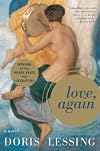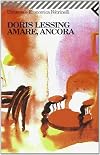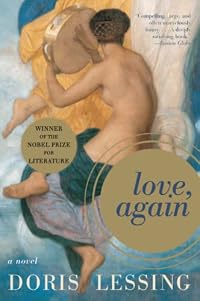
Love, Again
by Doris Lessing
On This Page
Description
An old woman falls in love with a man who could be her grandson. She is Sarah Durham, 65, a widow working in the theater in England and she develops a passion for a young actor. A look at love in the golden age by the author of The Golden Notebook.Tags
Recommendations

















Member Reviews
You have got to be over 60 years old to really appreciate this novel (and it would help if you or a friend had ever suffered from depression). If you think people over 60 don’t fall in love (again) or spend much of their time thinking about sex, well you gotta believe that this ain’t necessarily so. Doris Lessing was in her seventies when she wrote this novel and so had time to think about her feelings and sexuality when she was in her sixties. This is pertinent because, many of her novels appear to draw down from her own life experiences. Of course her science fiction novels found her in a different place, but Love Again set firmly in the 1980’s brought her right back down to earth.
We find Sarah Durham in her mid sixties; her show more husband had died over twenty years ago and since his death she has thrown herself into her work. She is running a professional theatre group with three other people who have worked together to make a success of the Green Bird theatre company. Her group carry out research on the life of Julie Vairon, a beautiful quadroon girl from Martinique as material for a new play. It becomes Sarah’s project as she uses material from Julie’s diaries and music that she composed. Julie lived in Belles Rivieres in a small house in the woods on the French Mediterranean coast. She had love affairs with three Frenchmen, the first two caused major disquiet within the community and the young men were dispatched into the army by their families, the third affair was with a master printer but this ended in tragedy when Julie was found dead at the bottom of a rock pool. The story of Julie Vairon’s life had become a major event for the modern town of Belles Riviéres attracting tourists and now Sarah finds herself being caught up in the almost mythic tale, however when she meets Stephen a financial backer for the project she finds someone more affected than her; Stephen is hopelessly in love with the dead Julie Vairon.
The Julie Vairon project comes to fruition; actors are hired an American director is in place and musicians are rehearsing Julie’s songs and music. Sarah and Stephen become ‘hands on’ involved with the practical side of the production and Sarah finds a latent sexual desire burning through her defences, first with the handsome young actor Bill Collins who plays Tom, Julie’s first lover and then with Henry the American director. Passionate intense feelings almost take over Sarah and she finds that both Bill and Henry are attracted to her and serious flirting, battles with trying to get the project completed. Julie Vairon the play will open in Belles Riviéres and the troupe decamp to the little town in preparation and Sarah wishes that first Bill and then Henry might be knocking on her hotel bedroom door. Later Sarah finds that Andrew the actor playing Julies third lover the master printer desperately wants to sleep with her. The handsome Bill Collins proves to be bisexual and he hooks up with another man and Henry who has a wife and son at home in America cannot bring himself to be unfaithful. Sarah cannot contemplate Andrew and so her life in effect mirrors Julie Vairon, meanwhile her soul-mate Stephen is sinking further into terminal depression.
Love, lust, sexual desire are themes that run through the novel along with mental illness; Lessing repeatedly asks the question throughout the book as to just how much is love the result of mental illness, what is the connection, This is Sarah in her hotel room alone with her thoughts:
“For people are often in love and they are not in love equally, or even at the same time. They fall in love with people not in love with them as if there was a law about it, and this leads to……….if the condition she was in were not tagged with the innocuous “in love” then her symptoms would be those of real illness.”
Sarah as a young women was attractive and was never short of admirers, she is still attractive in her mid sixties and although she may not be turning heads anymore, men are still interested in her.
“Millions spend their lives trapped behind ugly masks, longing for the simplicities of love known to attractive people. There is now no difference between me and those people barred from love, but this is the first time it has been brought home to me that all my youth I was in a privileged class sexually, but never thought about it or what it must mean not to be. Yet no matter how unfeeling or callous one is when young, everyone but everyone will learn what it is to be in a desert of deprivation, and it is just as well, travelling so fast towards old age, that we don’t know it yet………….. There is a terrible arrogance that goes with physical attractiveness, and far from criticising it, we even admire it”
Family, a familiar theme of Lessing is again present in the novel. Hal, Sarah’s bother is a successful surgeon with a practice in Harley Street, one of his daughters (Joyce) is a wayward teenager full of problems bordering on mental illness and Hal parks her on Sarah when he has enough of her. Joyce keeps turning up at Sarah’s door and has to be dealt with, meanwhile Sarah is trying to help the wealthy Stephen whose own family life is in ruins. Family, work-life balance and the ‘social life’ within a close knit working group are all given the Lessing treatment and make fascinating reading for anyone who has read her early novels.
As usual with a Lessing novel it takes time to get into the book, patience is required especially here where the story of Julie Vairon takes precedence in the first part. This is largely the back story to the novel, but this is the part that I found less than convincing. If it was Lessing’s aim to interweave the story of the modern day Sarah with that of Julie Vairon then for me she doesn’t pull it off, essential though it is, Julie Vairon remains a back story and I never felt the connection.
All in all I found myself loving this novel for large stretches, but then finding some of it not quite working. I was convinced by the depiction of a sixty five year old woman falling in love again. I have read some criticisms of this being faintly ridiculous, with the thought that how could younger men find her attractive or how could a woman of that age have feelings of lust and love to such an extent that they threaten to overwhelm her. What I would say to such criticism is ‘just wait till you get to sixty five’ and of course young men are attracted to older women; look at President Macron here in France.
I also loved Lessing’s writing about the cafe culture in France and the atmosphere she was able to create of the small busy town that was also an epitome of a more relaxed social environment, which suited the bonhomie created amongst the theatre group. Lessing found the magic here if she did not quite find it in the story of Julie Vairon. Lessing once again pushes and probes into modern life, admittedly into the lives of people who are less than worried about money problems, but much of it rings true. Thoughts and ideas dominate the proceedings of this very literate novel and if Lessing has not quite found all of the magic then she has written a book that has great appeal to us older citizens - and why not we are in the majority. 4 stars. show less
We find Sarah Durham in her mid sixties; her show more husband had died over twenty years ago and since his death she has thrown herself into her work. She is running a professional theatre group with three other people who have worked together to make a success of the Green Bird theatre company. Her group carry out research on the life of Julie Vairon, a beautiful quadroon girl from Martinique as material for a new play. It becomes Sarah’s project as she uses material from Julie’s diaries and music that she composed. Julie lived in Belles Rivieres in a small house in the woods on the French Mediterranean coast. She had love affairs with three Frenchmen, the first two caused major disquiet within the community and the young men were dispatched into the army by their families, the third affair was with a master printer but this ended in tragedy when Julie was found dead at the bottom of a rock pool. The story of Julie Vairon’s life had become a major event for the modern town of Belles Riviéres attracting tourists and now Sarah finds herself being caught up in the almost mythic tale, however when she meets Stephen a financial backer for the project she finds someone more affected than her; Stephen is hopelessly in love with the dead Julie Vairon.
The Julie Vairon project comes to fruition; actors are hired an American director is in place and musicians are rehearsing Julie’s songs and music. Sarah and Stephen become ‘hands on’ involved with the practical side of the production and Sarah finds a latent sexual desire burning through her defences, first with the handsome young actor Bill Collins who plays Tom, Julie’s first lover and then with Henry the American director. Passionate intense feelings almost take over Sarah and she finds that both Bill and Henry are attracted to her and serious flirting, battles with trying to get the project completed. Julie Vairon the play will open in Belles Riviéres and the troupe decamp to the little town in preparation and Sarah wishes that first Bill and then Henry might be knocking on her hotel bedroom door. Later Sarah finds that Andrew the actor playing Julies third lover the master printer desperately wants to sleep with her. The handsome Bill Collins proves to be bisexual and he hooks up with another man and Henry who has a wife and son at home in America cannot bring himself to be unfaithful. Sarah cannot contemplate Andrew and so her life in effect mirrors Julie Vairon, meanwhile her soul-mate Stephen is sinking further into terminal depression.
Love, lust, sexual desire are themes that run through the novel along with mental illness; Lessing repeatedly asks the question throughout the book as to just how much is love the result of mental illness, what is the connection, This is Sarah in her hotel room alone with her thoughts:
“For people are often in love and they are not in love equally, or even at the same time. They fall in love with people not in love with them as if there was a law about it, and this leads to……….if the condition she was in were not tagged with the innocuous “in love” then her symptoms would be those of real illness.”
Sarah as a young women was attractive and was never short of admirers, she is still attractive in her mid sixties and although she may not be turning heads anymore, men are still interested in her.
“Millions spend their lives trapped behind ugly masks, longing for the simplicities of love known to attractive people. There is now no difference between me and those people barred from love, but this is the first time it has been brought home to me that all my youth I was in a privileged class sexually, but never thought about it or what it must mean not to be. Yet no matter how unfeeling or callous one is when young, everyone but everyone will learn what it is to be in a desert of deprivation, and it is just as well, travelling so fast towards old age, that we don’t know it yet………….. There is a terrible arrogance that goes with physical attractiveness, and far from criticising it, we even admire it”
Family, a familiar theme of Lessing is again present in the novel. Hal, Sarah’s bother is a successful surgeon with a practice in Harley Street, one of his daughters (Joyce) is a wayward teenager full of problems bordering on mental illness and Hal parks her on Sarah when he has enough of her. Joyce keeps turning up at Sarah’s door and has to be dealt with, meanwhile Sarah is trying to help the wealthy Stephen whose own family life is in ruins. Family, work-life balance and the ‘social life’ within a close knit working group are all given the Lessing treatment and make fascinating reading for anyone who has read her early novels.
As usual with a Lessing novel it takes time to get into the book, patience is required especially here where the story of Julie Vairon takes precedence in the first part. This is largely the back story to the novel, but this is the part that I found less than convincing. If it was Lessing’s aim to interweave the story of the modern day Sarah with that of Julie Vairon then for me she doesn’t pull it off, essential though it is, Julie Vairon remains a back story and I never felt the connection.
All in all I found myself loving this novel for large stretches, but then finding some of it not quite working. I was convinced by the depiction of a sixty five year old woman falling in love again. I have read some criticisms of this being faintly ridiculous, with the thought that how could younger men find her attractive or how could a woman of that age have feelings of lust and love to such an extent that they threaten to overwhelm her. What I would say to such criticism is ‘just wait till you get to sixty five’ and of course young men are attracted to older women; look at President Macron here in France.
I also loved Lessing’s writing about the cafe culture in France and the atmosphere she was able to create of the small busy town that was also an epitome of a more relaxed social environment, which suited the bonhomie created amongst the theatre group. Lessing found the magic here if she did not quite find it in the story of Julie Vairon. Lessing once again pushes and probes into modern life, admittedly into the lives of people who are less than worried about money problems, but much of it rings true. Thoughts and ideas dominate the proceedings of this very literate novel and if Lessing has not quite found all of the magic then she has written a book that has great appeal to us older citizens - and why not we are in the majority. 4 stars. show less
Doris Lessing's novel, love, again, plays itself out in a theatrical setting. At sixty-something, Sarah Durham, one of the Founding Four of the Green Bird Theatre has reached a successful plateau in her life. Widowed with grown children, she is totally immersed in running the alternative theatre she helped to found. She considers herself to have reached "those heights of common sense .... the evenly lit unproblematical uplands where there are no surprises." At the opening of the book, she is just about to embark upon the production of an ambitious theatrical piece, underwritten with American, French and English money, which she has co-authored with Stephen Ellington-Smith. In the fevered atmosphere of rehearsals and productions, the show more illusions and realities of love and grief become inextricably entwined.
Julie Vairon: An Entertainment presents the story of a nineteenth-century quadroon girl from Martinque who fell in love with a young French officer, Paul Imbert. The intelligent and talented Julie convinced her lover to take her back to France with him. Although his family refused to accept their liaison and had him sent to Indo-China, Paul's father helped Julie get employment as a tutor in art and music to the daughters of the respectable families in the Provençal town of Belles Riviéres. Inevitably she had a long and intense affair with the youngest son of the local nobility, Rémy Rostand, which finally ended in the same manner as the earlier episode with Paul. Five years later, the master of the printing works, Phillipe Angers, proposed marriage to her. A week before the ceremony, after a year of planning the wedding and marriage, she drowned herself in a pool near her forest cottage.
The romantic story was "hardly unusual. Beautiful young women without family support, and disadvantaged -- in this case double, being both illegitimate and coloured -- have this kind of history," and remained little more than local lore until the Rostand descendants discovered some of Julie's musical compositions among their papers and in the provincial museum. When her music was played at a local festival, attended by Stephen Ellington-Smith, the discovery of a new talent was proclaimed. But her genius was not limited to music. Her watercolors granted her reputation "a small but secure niche" in the art world, and her journals published in French and in an English abridgement brought favorable comparison with Madame de Sévigné.
Fascinated by Julie Vairon's journals and haunted by her music, Sarah Durham begins a dramatic treatment for a Green Bird production. As the project develops, Julie's music is added to the words of her journal, and another play about Julie's life arrives at the theatre -- a romantic treatment by Stephen Ellington-Smith, the patron who had worked with such great success to ensure the reputation of Julie Vairon that he had become known as Julie's Angel. When Sarah meets Stephen to discuss collaboration, he declares that "I am hopelessly in love with Julie .... I am besotted with her." But he doesn't like her journals with their cold intelligent commentaries. Despite their disagreements about Julie's character, Sarah and Stephen agree that she will adapt his dialogue into her treatment; they will be listed as co-authors, and he will continue his support of the production. They also become fast friends. Their companiable partnership belies the emotional storms about to ensue.
The first rumble of thunder, in the person of Sarah's niece Joyce Millgreen, arrives on the doorstep just as Sarah is leaving to visit Stephen and his wife in Oxfordshire. Joyce is recognizable as one of Lessing's familiar characters -- an individual totally disoriented in contemporary society. By turns anorexic, lost, misled and dependent, Joyce disappears and reappears on the fringes of the narrative, reminding the reader of the fragility of a stable life.
Another storm cloud appears when Sarah visits Queen's Gift, Stephen's wife's estate, the site of an ongoing music festival. A successful artistic partnership, the husband and wife team falter in matrimony. Each seek emotional satisfaction elsewhere -- Stephen in his obsession with Julie Vairon and his wife Elizabeth in a relationship with her companion Norah.
But the tempests begin with the rehearsals for Julie Vairon. The talented cast gels quickly as an ensemble under the energetic direction of Henry Bisley:
Already they were inside the feeling of conspiracy, faint but unmistakable, the we-against-the-world born out of the vulnerability of actors in the face of criticism so often arbitrary, or lazy, or ignorant, or spiteful -- against the world outside, which was them and not we, the world which they would conquer.... How easily, how recklessly we join this group or that, religious, political, theatrical, intellectual -- any kind of group: that most potent of witches' brews, charged with the possibilities for harm and for good, but most often for illusion.
Lessing has set the stage for what could be an elegant comedy of manners as the company members, including Sarah and Stephen, fall in and out of love with each other while they prepare for a triumphant, if brief, run of Julie Vairon in her adopted town of Belles Rivières.
The preenings, the flirtations, and the physical desires that flourish in close proximity are precisely detailed, and Lessing weaves in allusions both to the literature and pop culture of love that enrich the texture of the relationships and point out generational and cultural differences in the players.
Julie Vairon's music, reminiscent of the love songs of Provençal troubadours and trouvères, adds a heady emotional accompaniment. Of course, the loves are doomed -- the lovers have real lives outside the artificial world of the production -- other lovers, families, and obligations which insistently beckon when the heat of production cools. However, Lessing further complicates the course of these illusory loves by adding another production at stage of Queen's Gift. Because of prior engagements, some of the actors must be replaced so the dynamics of the relationships change.
Stephen, predictably, becomes infatuated with the two actresses who play Julie -- Molly McGuire is kind but less interested than her replacement Susan Craig, but finally it is the elusive Julie who claims Stephen. Sarah, unpredictably, is wildly attracted to the charming and adrogynous Bill Collins, nearly forty years her junior. The attraction wakens desires in her that she had thought long dead; she is by turns embarrassed and flattered by Bill's attentions which are fleeting and end with the close of the production at Belles Rivières. However, she then begins a richer, if no less frustrating, relationship with the American director Henry Bisley. These experiences force her to confront longing, grief and despair that had been deeply buried in her psyche. But Lessing's attention is not entirely focused on Sarah and Stephen -- each of the characters in the novel illumines another facet in this prismatic examination of love.
At times the reader may become annoyed with the seeming fecklessness of the characters -- too many of them seem to race headlong into certain disaster. But perhaps this flaw is due less to character development than to the author's equivocal tone wavering between tragic and comic -- does the reader laugh or cry at the plight of love's victims? While one can enjoy the tweakings at cultural peculiarities, a wince may arise at the seeming obligatory psycho-babble ranging from the neglected inner child to the paralysis of depression. The wide-ranging focus gives the novel a messy feel -- so many ends are left untied and situations unresolved -- but, then, life is inherently messy, and what Lessing has presented in love, again is a slice of life.
We are not often offered a novel that explores the passage into old age. Indeed, our society tries to gloss over that journey with its cheerful portrayal of "active senior citizens."
Lessing confronts the issue unsentimentally, and often, ironically. Sarah Durham is, at the end of this novel, an old woman -- not doddering or dependent, but cognizant of her age and the significant change in her life. show less
Julie Vairon: An Entertainment presents the story of a nineteenth-century quadroon girl from Martinque who fell in love with a young French officer, Paul Imbert. The intelligent and talented Julie convinced her lover to take her back to France with him. Although his family refused to accept their liaison and had him sent to Indo-China, Paul's father helped Julie get employment as a tutor in art and music to the daughters of the respectable families in the Provençal town of Belles Riviéres. Inevitably she had a long and intense affair with the youngest son of the local nobility, Rémy Rostand, which finally ended in the same manner as the earlier episode with Paul. Five years later, the master of the printing works, Phillipe Angers, proposed marriage to her. A week before the ceremony, after a year of planning the wedding and marriage, she drowned herself in a pool near her forest cottage.
The romantic story was "hardly unusual. Beautiful young women without family support, and disadvantaged -- in this case double, being both illegitimate and coloured -- have this kind of history," and remained little more than local lore until the Rostand descendants discovered some of Julie's musical compositions among their papers and in the provincial museum. When her music was played at a local festival, attended by Stephen Ellington-Smith, the discovery of a new talent was proclaimed. But her genius was not limited to music. Her watercolors granted her reputation "a small but secure niche" in the art world, and her journals published in French and in an English abridgement brought favorable comparison with Madame de Sévigné.
Fascinated by Julie Vairon's journals and haunted by her music, Sarah Durham begins a dramatic treatment for a Green Bird production. As the project develops, Julie's music is added to the words of her journal, and another play about Julie's life arrives at the theatre -- a romantic treatment by Stephen Ellington-Smith, the patron who had worked with such great success to ensure the reputation of Julie Vairon that he had become known as Julie's Angel. When Sarah meets Stephen to discuss collaboration, he declares that "I am hopelessly in love with Julie .... I am besotted with her." But he doesn't like her journals with their cold intelligent commentaries. Despite their disagreements about Julie's character, Sarah and Stephen agree that she will adapt his dialogue into her treatment; they will be listed as co-authors, and he will continue his support of the production. They also become fast friends. Their companiable partnership belies the emotional storms about to ensue.
The first rumble of thunder, in the person of Sarah's niece Joyce Millgreen, arrives on the doorstep just as Sarah is leaving to visit Stephen and his wife in Oxfordshire. Joyce is recognizable as one of Lessing's familiar characters -- an individual totally disoriented in contemporary society. By turns anorexic, lost, misled and dependent, Joyce disappears and reappears on the fringes of the narrative, reminding the reader of the fragility of a stable life.
Another storm cloud appears when Sarah visits Queen's Gift, Stephen's wife's estate, the site of an ongoing music festival. A successful artistic partnership, the husband and wife team falter in matrimony. Each seek emotional satisfaction elsewhere -- Stephen in his obsession with Julie Vairon and his wife Elizabeth in a relationship with her companion Norah.
But the tempests begin with the rehearsals for Julie Vairon. The talented cast gels quickly as an ensemble under the energetic direction of Henry Bisley:
Already they were inside the feeling of conspiracy, faint but unmistakable, the we-against-the-world born out of the vulnerability of actors in the face of criticism so often arbitrary, or lazy, or ignorant, or spiteful -- against the world outside, which was them and not we, the world which they would conquer.... How easily, how recklessly we join this group or that, religious, political, theatrical, intellectual -- any kind of group: that most potent of witches' brews, charged with the possibilities for harm and for good, but most often for illusion.
Lessing has set the stage for what could be an elegant comedy of manners as the company members, including Sarah and Stephen, fall in and out of love with each other while they prepare for a triumphant, if brief, run of Julie Vairon in her adopted town of Belles Rivières.
The preenings, the flirtations, and the physical desires that flourish in close proximity are precisely detailed, and Lessing weaves in allusions both to the literature and pop culture of love that enrich the texture of the relationships and point out generational and cultural differences in the players.
Julie Vairon's music, reminiscent of the love songs of Provençal troubadours and trouvères, adds a heady emotional accompaniment. Of course, the loves are doomed -- the lovers have real lives outside the artificial world of the production -- other lovers, families, and obligations which insistently beckon when the heat of production cools. However, Lessing further complicates the course of these illusory loves by adding another production at stage of Queen's Gift. Because of prior engagements, some of the actors must be replaced so the dynamics of the relationships change.
Stephen, predictably, becomes infatuated with the two actresses who play Julie -- Molly McGuire is kind but less interested than her replacement Susan Craig, but finally it is the elusive Julie who claims Stephen. Sarah, unpredictably, is wildly attracted to the charming and adrogynous Bill Collins, nearly forty years her junior. The attraction wakens desires in her that she had thought long dead; she is by turns embarrassed and flattered by Bill's attentions which are fleeting and end with the close of the production at Belles Rivières. However, she then begins a richer, if no less frustrating, relationship with the American director Henry Bisley. These experiences force her to confront longing, grief and despair that had been deeply buried in her psyche. But Lessing's attention is not entirely focused on Sarah and Stephen -- each of the characters in the novel illumines another facet in this prismatic examination of love.
At times the reader may become annoyed with the seeming fecklessness of the characters -- too many of them seem to race headlong into certain disaster. But perhaps this flaw is due less to character development than to the author's equivocal tone wavering between tragic and comic -- does the reader laugh or cry at the plight of love's victims? While one can enjoy the tweakings at cultural peculiarities, a wince may arise at the seeming obligatory psycho-babble ranging from the neglected inner child to the paralysis of depression. The wide-ranging focus gives the novel a messy feel -- so many ends are left untied and situations unresolved -- but, then, life is inherently messy, and what Lessing has presented in love, again is a slice of life.
We are not often offered a novel that explores the passage into old age. Indeed, our society tries to gloss over that journey with its cheerful portrayal of "active senior citizens."
Lessing confronts the issue unsentimentally, and often, ironically. Sarah Durham is, at the end of this novel, an old woman -- not doddering or dependent, but cognizant of her age and the significant change in her life. show less
In lots of ways, this is probably a 3 star book. It's not very exciting. Most things that are suggested may happen never happen. But as with the other Lessing book I've read, the quality of the insight is so good that it can't be discounted. Usually I copy my favorite passages from dog-eared pages into my Goodreads review, but this time there were 20 of those pages and they required their own Google Doc. And, like with the other book, they're a little scary.
I liked this book right away, because a lot of what I like is right in the bones of the thing. It's kind of a miraculous recipe. I heartily approved of Sarah and all of the threads in her life. Her work at the theater is tantalizingly realistic (there is such a thing). Her quick show more friendship with Stephen is wonderful and touching right away. Her unusual obligation to raising her niece Joyce, though Joyce's parents are perfectly viable but unwilling, felt immediately serious to me. And the exposition of Julie Vairon, the thread stitching everything here together, was extremely appealing.
The characters spend the book at work on a play (with music) about Julie Vairon, an obscure 19th century (fictional) figure who became famous after death as a composer, artist and diarist, of a background "like Napoleon's Josephine". She lived alone in a forest outside a small French town, had a few serious love affairs, and drowned herself while in her thirties.
I am pretty sure that if this all were true, I would really like Julie Vairon the figure. She seems extremely real and I can really imagine the way she would be appreciated now. A Women's History Month kind of person. I don't think however I would like Julie Vairon the play very much, but I suspended disbelief enough to let the characters think so. The play's evolution is one of the book's major signals -- the characters all have very distinct ways of relating to Julie, and their "take" on the play is the way we place them in Sarah's moral spectrum. France and England are characterized by their different responses to the productions, and at the end, we are bitterly disappointed when someone wants to make a musical.
The atmosphere of the book is a really strong element, first the portion during the production in Julie's semi-hometown in France, and then the portion where Sarah becomes a welcome guest of Stephen's English country estate where the next production happens. That place and their relationships to it reminded me a little of Brideshead. I wished she'd spent even more time there, as all the time spent absorbing Stephen's life was excellent, his quiet psychosis and strange marital situation. Really good.
What's funny about this book is that in a lot of ways the plot -- older woman falls in love with younger men, twice -- makes it sound really Oprah-friendly. But Lessing is such a brutal writer. It seems there's always some dark insanity involved. A bit of danger, as these people will never recover from this ordinary pain.
Sarah goes through so much pain with these feelings it's almost enough to disconnect you from the story. All this for Bill, really? Bill sucks! Henry doesn't suck. Henry is great. But much, much time is spent in the detail of her unconsummated passions, which really go nowhere. For all the self-referential comparisons to bedroom farce, not one single bed gets hopped this whole time. (Well, one off-screen, and not Sarah's.) I suppose that's part of the point, but France was mildly oppressive to read through with all of this. (Though maybe because I really didn't care about Bill, at all.)
Once those are over, though, what she's left with is moving, as is her effort at caring for Stephen on his parallel paths. Between Stephen and her brother and Julie, so much of the thematic purpose of the novel comes together in the last 50 pages, it's so strong. A little odd because it seems it wasn't present earlier, but really it was, just quietly. In the scene when Elizabeth is so angry, and says it's so irresponsible, I really thought she was directing the reproach at Sarah, because it sounded exactly like the senseless blame her brother always levied about his daughter. Her reflections on being alone at the end go really deep.
So I'm really glad I read this, even though "nothing happened". show less
I liked this book right away, because a lot of what I like is right in the bones of the thing. It's kind of a miraculous recipe. I heartily approved of Sarah and all of the threads in her life. Her work at the theater is tantalizingly realistic (there is such a thing). Her quick show more friendship with Stephen is wonderful and touching right away. Her unusual obligation to raising her niece Joyce, though Joyce's parents are perfectly viable but unwilling, felt immediately serious to me. And the exposition of Julie Vairon, the thread stitching everything here together, was extremely appealing.
The characters spend the book at work on a play (with music) about Julie Vairon, an obscure 19th century (fictional) figure who became famous after death as a composer, artist and diarist, of a background "like Napoleon's Josephine". She lived alone in a forest outside a small French town, had a few serious love affairs, and drowned herself while in her thirties.
I am pretty sure that if this all were true, I would really like Julie Vairon the figure. She seems extremely real and I can really imagine the way she would be appreciated now. A Women's History Month kind of person. I don't think however I would like Julie Vairon the play very much, but I suspended disbelief enough to let the characters think so. The play's evolution is one of the book's major signals -- the characters all have very distinct ways of relating to Julie, and their "take" on the play is the way we place them in Sarah's moral spectrum. France and England are characterized by their different responses to the productions, and at the end, we are bitterly disappointed when someone wants to make a musical.
The atmosphere of the book is a really strong element, first the portion during the production in Julie's semi-hometown in France, and then the portion where Sarah becomes a welcome guest of Stephen's English country estate where the next production happens. That place and their relationships to it reminded me a little of Brideshead. I wished she'd spent even more time there, as all the time spent absorbing Stephen's life was excellent, his quiet psychosis and strange marital situation. Really good.
What's funny about this book is that in a lot of ways the plot -- older woman falls in love with younger men, twice -- makes it sound really Oprah-friendly. But Lessing is such a brutal writer. It seems there's always some dark insanity involved. A bit of danger, as these people will never recover from this ordinary pain.
Sarah goes through so much pain with these feelings it's almost enough to disconnect you from the story. All this for Bill, really? Bill sucks! Henry doesn't suck. Henry is great. But much, much time is spent in the detail of her unconsummated passions, which really go nowhere. For all the self-referential comparisons to bedroom farce, not one single bed gets hopped this whole time. (Well, one off-screen, and not Sarah's.) I suppose that's part of the point, but France was mildly oppressive to read through with all of this. (Though maybe because I really didn't care about Bill, at all.)
Once those are over, though, what she's left with is moving, as is her effort at caring for Stephen on his parallel paths. Between Stephen and her brother and Julie, so much of the thematic purpose of the novel comes together in the last 50 pages, it's so strong. A little odd because it seems it wasn't present earlier, but really it was, just quietly. In the scene when Elizabeth is so angry, and says it's so irresponsible, I really thought she was directing the reproach at Sarah, because it sounded exactly like the senseless blame her brother always levied about his daughter. Her reflections on being alone at the end go really deep.
So I'm really glad I read this, even though "nothing happened". show less
This was a difficult read and I am not sure whether it was the lengthy paragraphs or the many characters and keeping them clear in my mind. One discussion from the novel that stays with me is one when a younger man falls in love with an older women won't her less attractive physical attributes be a deterrent to his desire to have sex with her. When I was younger I did assume this would probably be true. Now, while I am older than my lover, I still find her at the age of 70 plus to be very beautiful and definitely sexually desirable.
Ünlü yazar "Doris Lessing" bu romanında orta yaşı aşkın bir kadın yazarın, Sarah Durham'ın ağzından aşkı işliyor, çocukluktan başlayarak dostluğa, romantizme, cinsel tutkuya, hatta pornografiye kadar her yönüyle aşkı. Sarah Durham, intihar ettiği söylenen bir kadın sanatçının, Julie Vairon'un müziğinden, güncelerinden ve resimlerinden yola çıkarak bir oyun yazmıştır. Oyunun çeşitli ülkelerde sergilenişi sırasında tiyatro ekibi ve seyirciler üstündeki etkileri Lessing'e çağdaş toplumları eleştirme olanağı tanıyor. Yazarın, son romanı olan "Gene Aşk"ta irdelediği gibi, yaşam boyu kişinin yakasını bırakmayan aşk bir hastalık mı yoksa?
Read during Spring 2003
A play about an unknown French/African woman and her music is the catalyst for everything that is horrible and wretched and perhaps only slightly nessecary about crushes and falling in love and examining your life. Particularly when you love someone who is so very much at a different time of life.
A play about an unknown French/African woman and her music is the catalyst for everything that is horrible and wretched and perhaps only slightly nessecary about crushes and falling in love and examining your life. Particularly when you love someone who is so very much at a different time of life.
I read this a while ago, but remember it as being so true, and believable, and and I fell in love with the persnickety and fussy main character.
Members
- Recently Added By
Author Information

260+ Works 37,023 Members
Doris Lessing was born in Kermanshah, Persia (later Iran) on October 22, 1919 and grew up in Rhodesia (the present-day Zimbabwe). During her two marriages, she submitted short fiction and poetry for publication. After moving to London in 1949, she published her first novel, The Grass Is Singing, in 1950. She is best known for her 1954 Somerset show more Maugham Award-winning experimental novel The Golden Notebook. Her other works include This Was the Old Chief's Country, the Children of Violence series, the Canopus in Argos - Archives series, and Alfred and Emily. She has received numerous awards for her work including the 2001 Prince of Asturias Prize in Literature, the David Cohen British Literature Prize, and the 2007 Nobel Prize for Literature. She died on November 17, 2013 at the age of 94. (Bowker Author Biography) show less
Awards and Honors
Series
Belongs to Publisher Series
Common Knowledge
- Canonical title*
- L'amor, una altra vegada
- Original title
- Love, again
- Original publication date
- 1995
- People/Characters
- Sarah Durham
- First words
- Easy to think this was a junkroom, silent and airless in a warm dusk, but then a shadow moved, someone emerged from it to pull back curtains and throw open windows.
- Quotations
- But why describe it, since there is no one who has not felt the mix of anguish, incredulity, and - at the height of the illness - a sick sweet submersion in pain because it is inconcievable that anything so terribly desired c... (show all)annot be given, and if you relinquish the pain, then the hope of bliss is abandoned too.
- Last words
- (Click to show. Warning: May contain spoilers.)"Please don't be too nice to him," Briony said to Sarah, "or we'll never get him married again."
*Some information comes from Common Knowledge in other languages. Click "Edit" for more information.
Classifications
Statistics
- Members
- 751
- Popularity
- 37,261
- Reviews
- 11
- Rating
- (3.50)
- Languages
- 13 — Catalan, Danish, Dutch, English, French, German, Greek, Italian, Norwegian (Bokmål), Portuguese, Spanish, Swedish, Turkish
- Media
- Paper, Audiobook, Ebook
- ISBNs
- 43
- ASINs
- 12