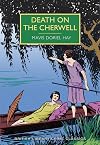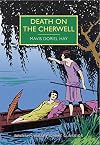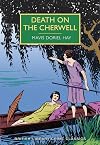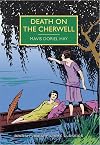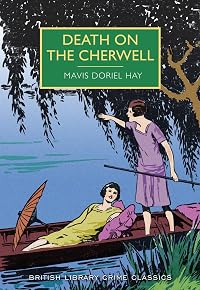
Death on the Cherwell
by Mavis Doriel Hay
On This Page
Description
For Miss Cordell, principal of Persephone College, there are two great evils to be feared: unladylike behavior among her students, and bad publicity for the college. So her prim and cozy world is turned upside down when a secret society of undergraduates meets by the river on a gloomy January afternoon, only to find the drowned body of the college bursar floating in her canoe.Tags
Recommendations


























Member Reviews
This jolly murder mystery had the misfortune to appear in the same year as the book which became the gold standard for Oxford detective stories, Gaudy Night. Which is probably part of the reason you've never heard of Mavis Doriel Hay. And it's a shame, because it's actually quite a respectable, well-written sort of book. It's streets ahead of most modern pastiches of 1930s crime fiction, even if it doesn't come anywhere near the technical complexity and depth of characterisation that you get in genuine Dorothy L. Sayers.
Like Sayers, Hay sets the story in a fictional Oxford women's college with a strong family resemblance to her own alma mater (Hay was at St Hilda's, Sayers at Somerville). However, her "Persephone College" is placed at show more a rather surprising spot on the map, in a field on the Marston side of the river opposite the bottom end of the University Parks. There's a carefully buried joke here: anyone who knew Oxford would be able to work out that this would give the ladies of Persephone an unrivalled view from their windows of one of the city's most famous institutions, Parson's Pleasure (a nude bathing-place for men, sadly closed down in 1991).
The murder mystery itself is rather thin: everyone involved is frightfully nice, so there aren't all that many convincing suspects, there's a lot of fuss about exact timings that turns out not to be all that relevant in the end, and the eventual solution, which is more of a lucky guess than anything else, can be seen coming a long way off. The modern phobia about "spoilers" obviously didn't trouble Hay too much, as on several occasions she gives away what's about to happen in her chapter headings. But that's not what you read this sort of book for: its charm is all in the period Oxford atmosphere and especially in the undisguised vicarious pleasure Hay has in putting herself back in the shoes (and hats!) of the impetuous and enterprising young women of Persephone. Don't look for Sayers' commitment to the ideal of women's education here: none of Hay's undergraduates (male or female) display any real interest in whatever they are supposed to be studying, and her version of Oxford is all about escapism and being young. And why not? show less
Like Sayers, Hay sets the story in a fictional Oxford women's college with a strong family resemblance to her own alma mater (Hay was at St Hilda's, Sayers at Somerville). However, her "Persephone College" is placed at show more a rather surprising spot on the map, in a field on the Marston side of the river opposite the bottom end of the University Parks. There's a carefully buried joke here: anyone who knew Oxford would be able to work out that this would give the ladies of Persephone an unrivalled view from their windows of one of the city's most famous institutions, Parson's Pleasure (a nude bathing-place for men, sadly closed down in 1991).
The murder mystery itself is rather thin: everyone involved is frightfully nice, so there aren't all that many convincing suspects, there's a lot of fuss about exact timings that turns out not to be all that relevant in the end, and the eventual solution, which is more of a lucky guess than anything else, can be seen coming a long way off. The modern phobia about "spoilers" obviously didn't trouble Hay too much, as on several occasions she gives away what's about to happen in her chapter headings. But that's not what you read this sort of book for: its charm is all in the period Oxford atmosphere and especially in the undisguised vicarious pleasure Hay has in putting herself back in the shoes (and hats!) of the impetuous and enterprising young women of Persephone. Don't look for Sayers' commitment to the ideal of women's education here: none of Hay's undergraduates (male or female) display any real interest in whatever they are supposed to be studying, and her version of Oxford is all about escapism and being young. And why not? show less
So much unfulfilled potential.
An Oxford setting, a mysterious death, college intrigue, and an underlying issue that is worthy of discussion and that would still have been a taboo at the time of writing. Seriously, there was so much in this book that should have been the foundation of an excellent book.
However, the potential was spoiled by TSTL characters that dominated the first half of the book for no reason - absolutely none! - and was made worse by (if that is possible with TSTL characters) by pretty explicit racism. I know, I know, it was acceptable at the time...yadda, yadda.
But here is the thing...it contributed absolutely nothing to the story. What was the point? It only made the characters more stupid than they were already. show more Tho, granted, that was a feat on the part of the author that I had not expected.
It doesn't help, of course, that the book was published in the same year and has a very similar setting to Gaudy Night, which is one of the best books I have read this year and is now firmly placed on the list of my all-time favourite books.
Where Sayers showed us how to write a Golden Age mystery set in Oxford, Hay showed us how not to do it.
If it had not been for familiarity with Oxford from either personal experience or other sources, I am not sure that Oxford setting really came to the fore in Hay's book. Sure, we have punting, a river, and a fairly nondescript college, but where is the description of the city? Where is the atmosphere? The closest I found to an Oxford description was when two of the students discuss Blackwell's bookshop. That was all.
Just as ubiquitous yellow fog does not create a Victorian London setting, there is more to Oxford than Blackwell's and punting.
I expected more.
There are issues with the mystery, too.
Again, the main characters were too immature - childish even - to pass for first-year students. The police were too all-knowing and presumptive to pass for detectives.
The real issue I have, however, is that the actual interesting plot twist is left to the last chapters of the book and is not actually used to discuss the intricacies of the deficiencies in the mores of the time. Sure, it would have been a topic that was unmentionable at the time, but if the author didn't want to discuss it and the hypocrisy around it, why would she use it as the underlying reason for the entire story?
I expected more. Much more. show less
An Oxford setting, a mysterious death, college intrigue, and an underlying issue that is worthy of discussion and that would still have been a taboo at the time of writing. Seriously, there was so much in this book that should have been the foundation of an excellent book.
However, the potential was spoiled by TSTL characters that dominated the first half of the book for no reason - absolutely none! - and was made worse by (if that is possible with TSTL characters) by pretty explicit racism. I know, I know, it was acceptable at the time...yadda, yadda.
But here is the thing...it contributed absolutely nothing to the story. What was the point? It only made the characters more stupid than they were already. show more Tho, granted, that was a feat on the part of the author that I had not expected.
It doesn't help, of course, that the book was published in the same year and has a very similar setting to Gaudy Night, which is one of the best books I have read this year and is now firmly placed on the list of my all-time favourite books.
Where Sayers showed us how to write a Golden Age mystery set in Oxford, Hay showed us how not to do it.
If it had not been for familiarity with Oxford from either personal experience or other sources, I am not sure that Oxford setting really came to the fore in Hay's book. Sure, we have punting, a river, and a fairly nondescript college, but where is the description of the city? Where is the atmosphere? The closest I found to an Oxford description was when two of the students discuss Blackwell's bookshop. That was all.
Just as ubiquitous yellow fog does not create a Victorian London setting, there is more to Oxford than Blackwell's and punting.
I expected more.
There are issues with the mystery, too.
Again, the main characters were too immature - childish even - to pass for first-year students. The police were too all-knowing and presumptive to pass for detectives.
The real issue I have, however, is that the actual interesting plot twist is left to the last chapters of the book and is not actually used to discuss the intricacies of the deficiencies in the mores of the time. Sure, it would have been a topic that was unmentionable at the time, but if the author didn't want to discuss it and the hypocrisy around it, why would she use it as the underlying reason for the entire story?
I expected more. Much more. show less
I was only a few chapters in when I realized I didn't like any of the characters presented thus far. The college coeds are a bunch of smug, self-centered, spoiled brats who apparently can't abide the idea that someone (the murder victim) would impose rules on them. A terrible and useless lot of them.
Still I spent $13 on this so I figured I should hang in there and try to get my money's worth. Only then came Chapter 9 where we get a group of equally obnoxious frat boys and, after that I called it quits.
Honestly what is it about these British Crime Classics or their authors that they can't give us clean, honorable, everyday people instead of the stupid, stuck-up snobs that are generally presented? Maybe I can recoup some of my loss at the show more used book store. show less
Still I spent $13 on this so I figured I should hang in there and try to get my money's worth. Only then came Chapter 9 where we get a group of equally obnoxious frat boys and, after that I called it quits.
Honestly what is it about these British Crime Classics or their authors that they can't give us clean, honorable, everyday people instead of the stupid, stuck-up snobs that are generally presented? Maybe I can recoup some of my loss at the show more used book store. show less
Death on the Cherwell is golden age mystery set at a the fictional Persephone College at Oxford. A group of first years is conducting a secret meeting on the boathouse roof when they spot a canoe drifting down the Cherwell River. They drag it ashore only to discover that it contains the body of the highly disliked college bursar. She appears to have drowned, but how do you drown in a dry canoe? Our secret society decides to dedicate itself to detection work and find out—with a little help from the police. You get a strong feel for Oxford student life here. There's not a lot of studying, but there sure are student high-jinks.
The book came out the same year as another, very different, mystery set at an Oxford women's college: Dorothy show more L. Sayer's Gaudy Night. Despite the obvious temptation to compare the two, they are really very little alike, with Hay's novel having a much lighter feel to it. This is probably the result of having student heroines instead of older adult protagonists. So don't judge it by its contemporary, but on it's own merits. Highly recommended for fans of golden age mysteries, Oxford, or mysteries with student detectives. show less
The book came out the same year as another, very different, mystery set at an Oxford women's college: Dorothy show more L. Sayer's Gaudy Night. Despite the obvious temptation to compare the two, they are really very little alike, with Hay's novel having a much lighter feel to it. This is probably the result of having student heroines instead of older adult protagonists. So don't judge it by its contemporary, but on it's own merits. Highly recommended for fans of golden age mysteries, Oxford, or mysteries with student detectives. show less
A well-written murder mystery. It doesn't sabotage itself through determination to preserve a twist ending, but lets the truth bubble slowly to the surface. Hay makes good use of multiple viewpoint characters, allowing the reader to know more than any one character does, and giving different fragments of insight into the characters.
I must say, I have little patience nowadays for characters who deliberately keep evidence from the police, especially when it's obviously making things more suspicious rather than less. But it's an old book. On the plus side, I liked the competent, pleasant police officers who dealt professionally with an array of unhelpful Oxfordians.
For me personally, the Oxford trappings aren't much of a plus and are show more occasionally tiresome (self-indulgently Oxfordish undergraduates bore me). It also has unfortunately outdated depiction of a Yugoslavian character, whose stereotype is upheld by both the other characters, and more importantly by the text. Neither problem is a sticking-point, but they do mean I only rate this as a solid rather than a good book. show less
I must say, I have little patience nowadays for characters who deliberately keep evidence from the police, especially when it's obviously making things more suspicious rather than less. But it's an old book. On the plus side, I liked the competent, pleasant police officers who dealt professionally with an array of unhelpful Oxfordians.
For me personally, the Oxford trappings aren't much of a plus and are show more occasionally tiresome (self-indulgently Oxfordish undergraduates bore me). It also has unfortunately outdated depiction of a Yugoslavian character, whose stereotype is upheld by both the other characters, and more importantly by the text. Neither problem is a sticking-point, but they do mean I only rate this as a solid rather than a good book. show less
Messing about in boats can be a dangerous pastime. So it appears when the bursar of Persephone College, Oxford, is found dead in her canoe as it floats down the River Cherwell. She is found by a group of Persephone students, who decide to launch their own investigation. Led by Sally Watson, whose sister Betty featured in Hay's previous novel, Murder Underground, the girls attempt to solve the mystery before the local police do.
This was an enjoyable mystery in terms of setting and tone. Oxford is evoked well, thanks to Hay's own experience at St Hilda's College, and the tone is contemplative and affectionate, especially when the third-person omniscient narrator comments on the doings of undergraduates. It was somewhat predictable -- I show more figured out a key development long before anyone in the book did -- but it was a relaxing read that saw me through most of a snowy Saturday.
Recommended if you like fiction based in Oxford, the Golden Age of crime fiction, or Gaudy Night. show less
This was an enjoyable mystery in terms of setting and tone. Oxford is evoked well, thanks to Hay's own experience at St Hilda's College, and the tone is contemplative and affectionate, especially when the third-person omniscient narrator comments on the doings of undergraduates. It was somewhat predictable -- I show more figured out a key development long before anyone in the book did -- but it was a relaxing read that saw me through most of a snowy Saturday.
Recommended if you like fiction based in Oxford, the Golden Age of crime fiction, or Gaudy Night. show less
Nice story. I thought that, for once, I had spotted the murderer...but no! Surprise.
Good.
The setting was cool. The characters were fairly well differentiated and had relatively clear voices.
I'll read this again, I'm sure.
Good.
The setting was cool. The characters were fairly well differentiated and had relatively clear voices.
I'll read this again, I'm sure.
Members
- Recently Added By
Lists

Books Read in 2014
2,343 works; 89 members

Books Read in 2016
4,666 works; 197 members

Best School Stories
219 works; 22 members

Books Read in 2017
4,249 works; 130 members

Books Read in 2021
5,361 works; 114 members

2021 Christmas Gifts
66 works; 13 members

#JustTheFacts2023Gold
60 works; 1 member
Author Information
9 Works 1,208 Members
Some Editions
Series
Belongs to Publisher Series
British Library Crime Classics (Novel)
Common Knowledge
- Canonical title
- Death on the Cherwell
- Original publication date
- 1935
- People/Characters
- Basil Pongleton; Daphne Loveridge; Gwyneth Pane; Nina Harson; Sally Watson
- Important places
- Oxford, Oxfordshire, England, UK
- First words
- A sloping roof of cold, corrugated iron, above the sliding, brownish waters of the river Cherwell and beneath the stark boughs of a willow, might not appeal to a sane adult human being as an ideal resort at four o'clock on a ... (show all)gloomy January afternoon.
- Last words
- (Click to show. Warning: May contain spoilers.)I can only pray that she may show that same high courage which her mother had, and that she may make her own life so fine an achievement that in the general scheme of things it may be counted as atonement for her father's failure.
- Original language
- English
Classifications
Statistics
- Members
- 340
- Popularity
- 93,186
- Reviews
- 18
- Rating
- (3.23)
- Languages
- English
- Media
- Paper, Audiobook, Ebook
- ISBNs
- 11
- ASINs
- 6