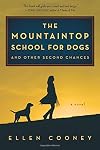
The Mountaintop School for Dogs and Other Second Chances
by Ellen Cooney
On This Page
Description
"Love is a great teacher and we are all a little unadoptable. Readers of Garth Stein and Carolyn Parkhurst will adore this" (Library Journal).A People Best New Book of the Week
The Sanctuary is a refuge for strays and rescued dogs. Evie has joined a training program there despite knowing almost nothing about animals. Like the greyhound who won't move, the Rottweiler with attitude problems, or the hound who might be a candidate for search-and-rescue, Evie has a troubled past. But as they show more all learn, no one should stay prisoner to a life they didn't choose.
Heartfelt and hilarious in turn, this is a deeply moving novel of the countless ways in which humans and canines help each other find new lives, new selves, and new hope.
. show less
Tags
Recommendations








































Member Reviews
Sweet, But Sometimes Problematic
(Full disclosure: I received a free ARC for review through Goodreads' First Reads program.)
Evie. Female. Twenty-four. Petite in stature and preppy in appearance - yet surprisingly strong and resilient. Has low self esteem and abandonment issues due to a divorce in the home. Graduated from college with a degree in literature and an addiction to cocaine; dropped out of graduate school. Neat, organized, and motivated to learn. Can be a self-starter, if given the opportunity. Sometimes too quick to give up. Needs guidance and a sense of belonging.
Lucille. Female. Fifty. Divorced. Will only answer to "Mrs. Auberchon." Prim, prickly, and slow to disclose personal information (or any information). Does not make show more friends easily, resulting in a self-perpetuating cycle of loneliness and alienation. When given a job, will take to it fastidiously. Needs a purpose and a nice, cozy role to retire into. Potentially aggressive, occasionally paranoid. Anxiety meds should be considered.
Like so many strays before her - both human and canine - Evie is adrift when she arrives at the Sanctuary. Fresh out of rehab (a little too fresh, some might say), Evie is searching for direction, guidance - a new purpose in life. Though she's never been interested in dogs - never even been owned by a dog, in point o' facts - she impulsively answers a dog training ad she spotted while browsing classifieds on the internet. ("Would you like to become a dog ?") With a little finagling and fudging of the truth, her application is accepted - Evie is headed to the mountaintop school for dogs!
Upon Evie's arrival, she's temporarily waylaid at the inn at the base of the mountain. It's here that her training begins - Evie just doesn't know it yet. One by one she's introduced to her future students: Josie, a nippy little lady who lost her longtime home to the new baby. Shadow, who spent most of his life on the end of the chain and is now training (somewhat unsuccessfully) to be a search and rescue dog. Hank, who doesn't take kindly to wooden objects and can't stop obsessively pacing back and forth, back and forth. Tasha, a chronically depressed and anxious Rottweiler who was dumped from a car.
Observing Evie's progress with skepticism is the tight-lipped Mrs. Auberchon, who runs the inn and also serves as Warden. It's her voice that dogs sequestered due to medical or behavioral issues hear at night, reading to them from story books mostly free of human characters. Even though she's devoted much of her middle-aged life to the Sanctuary, Mrs. Auberchon hasn't been up on the mountain - not once. That is, until an especially despondent and stubborn Scottish terrier named Dora forces her hand.
Mrs. Auberchon would be the last to admit it, but she's just as lost and adrift as Evie. From need and circumstance, the two women form a tentative, unspoken connection - to each other, and to the Sanctuary that they've both come to call home.
Things that made me want to fall in love with The Mountaintop School for Dogs and Other Second Chances:
Ellen Cooney's writing is captivating: rich, detailed, and beautiful, with just the right balance of humor, heartbreak, kindness, and righteous indignation. There's a certain self-awareness to the story that's both gentle and sometimes cringe-worthy. While I exist somewhere in the space between the two, I found that I was able to relate to both Evie and Mrs. Auberchon, in ways both expected and not.
Cooney's physical descriptions of the dogs are especially evocative; and her observations of the dogs' inner lives are downright enchanting.
For example, the story opens on a note that's fit to warm any dog lover's heart:
"It was dusk on a winter day, and from high on the mountain came barking, drifting down above the snow like peals of a bell, one, two, three, four, more, just to say the light was leaving, but that was all right: here I am, I'm a dog, all is well."
I want to live on that mountain. Don't you?
And, in her DIY dog care encyclopedia, Evie makes the following entry:
"Loneliness. There is no worse loneliness than the loneliness of a dog who never was anything but lonely, because the loneliness is normal, like a heartbeat. Do you think it's easy to go to the place inside a dog where the loneliness is, when you can't even do it with yourself?"
Cooney has a knack for making my heart hurt in all the right places. Or maybe it's all those dogs.
(I have five of my own rescue dogs: Peedee, Rennie, Jayne, Mags, and Finnick. It was seven for a brief stretch of time, but the oldest two - Ralphie and Kaylee - passed away last year. I also foster and live with one ex-stray cat. So yeah, I'm what you'd call a "dog person." Or maybe an "animal person with an especially mushy spot for dogs.")
The Sanctuary eschews the "Dog Whisperer" style of dog training, in which dogs are bullied and terrified into submission, in favor of a kind and compassionate (yet firm when need be) approach that's tailored to each individual dog and his or her life experiences. I loved watching Evie and the sisters coax a depressed or hostile dog into lowering his defenses, if even for a moment.
And when Shadow finally got his bark on? Or Alfie tore ass around the yard just because he wanted to? My heart damn near burst with happiness.
Likewise, the characters are uniformly against methods of training that cause pain or rely on punishment. Choke collars, shock collars (including those used in invisible fencing), the jerk method - all are interrogated and dismissed as cruel.
The Sanctuary is a no-kill shelter that only takes on the most hard luck cases. The dogs here have been abused, neglected, and exploited. They come from breeders, race tracks, and dog fighting operations. (In fact, the whole story unfolds against the backdrop of a pending pit bull rescue - what's sure to be the worst of the worst.) They are aggressive, depressed, anxious, neurotic, even catatonic. Yet none of them are broken beyond hope. Just like humans, they are capable of redemption. And not merely capable, but deserving - for all of what was done to them, was done by humans; in many cases, humans they once loved and trusted.
Dora, Shadow, Hank, Josie, Tasha, Alfie, and Dapple - through these dogs, Cooney puts a face to just a few of the two to four million dogs (and cats!) who are killed in so-called animal "shelters" every year in the U.S. alone. If Cooney can persuade just one reader to adopt a rescue...well, it won't change the world, but it will change that dog's world. It's a start.
The Sanctuary and its Network of volunteers sometimes engages illegal activities, many of which would be considered "terrorism" under the Animal Enterprise Terrorism Act (AETA). For example, after a tip from the adult children of Dapple's owners, they liberate ("steal") Dapple - but not before she can be forcibly impregnated yet again. After the angry couple kidnaps Dapple back (arguably assaulting one of the elderly sisters in the process), Evie and Giant George liberate her a second time, after which Dapple enters the underground Network and is placed in an anonymous home far, far away from her abusers.
And this is far from the first (or most dicey) direct action taken by the Sanctuary: on previous rescues, volunteers have been shot at. On a larger scale, two of the wealthier volunteers bankrolled the rescue of dozens of pit bulls from a dogfighting operation; the rescue unfolds in such a way that it appears clandestine and possibly illegal.
Despite the prevailing political climate, these illegal activities are portrayed in a positive light. As Natasha Lennard observed in a recent piece on the Green Scare ("With Two New Terror Indictments, The Green Scare Is Far From Over," Vice News, 7/11/14), "I've never seen terrified property. I've never seen a window scream, nor a broken padlock cry. I don't believe that vehicles feel pain, even when on fire; I have not seen fear in a handful of dust. It takes little more than an online glance to find evidence of animals in terror, however — although even the existence of this evidence is itself under threat."
Language. Time and again, Cooney affirms the power of language to shape our thoughts and feelings. "Euthanasia" is just a nice way of saying "killing," when it's done in anything but the dog's best interests (i.e., to end her suffering due to a terminal illness). "Most unsocialized" is a kind and hopeful way of referring to the most dangerous rescued pitties - whose previous owners won't say that they were abused, but rather "conditioned."
(This is also why I was so disappointed that Cooney used the term "housebreaking" instead of "housetraining" - as if something in the dog, her will or very spirit maybe, needs to be broken before she can learn that peeing in the house is a no-no. Or as if dogs are objects to be "broken in," like shoes or a new car.)
Things that turned me off:
While the staff and volunteers at the Sanctuary have a bottomless well of compassion and respect for dogs, these considerations are not extended to other nonhuman animals. Nearly everyone can be seen consuming the dead and dismembered bodies of farmed animals, even though these animals are (mis)treated in much the manner as the dogs they dedicate their lives to rescuing. Cows, pigs, and chickens are forcibly impregnated, only to have their sons and daughters stolen from them shortly after birth - just like poor Dapple. Egg laying hens and pigs are confined to tiny crates, denied even the space to stretch their wings or turn around - again, just like Dapple and the pitties. When egg laying hens are "spent," they are discarded like so much waste - just as under-performing fighting or racing dogs are discarded when they're no longer considered profitable.
To be fair, none of this came as a surprise. I'm an ethical vegan; most Americans are not. I've learned to compartmentalize and dissociate, at least when it comes to having my pop culture and enjoying it too. I was ready to gloss over the meaty meals which I was sure would be served at the animal "sanctuary." And yet.
Evie is a vegetarian. Of two months. And after just a few hours at the inn, she quickly folds, done in by (what else?) the smell of frying bacon. (Bacon is our Kryptonite, apparently.) She feels no qualms or regret after reverting to her omni ways, her growing affection for animals other than herself be damned.
Evie's alleged vegetarianism is not in away way related to the plot, and is never mentioned again. It's such a throwaway detail that it rather feels like an intentional poke in the eye to those of us who follow a plant-based diet: nyah nyah nyah! Thanks, but no. We need greater representation, but not like this.
When Evie first arrives, the Sanctuary is preparing to send a litter of Huskies out into the world. They're being adopted...by a dog sled school.
Between this and Evie the lapsed vegetarian, I nearly abandoned The Mountaintop School for Dogs just twenty pages in.
The life of a sled dog (especially those used for racing; and yes, the Iditarod is name dropped, and it an positive manner, at that) is a hard one: since teams of dogs consist of numerous animals, the dogs typically live in kennels, which house anywhere from 20 to 150 dogs. Dogs may be housed outdoors, either with their own house or tethered on a rope or chain. (See: Shadow.) If a dog is too weak or old to perform his job, he's "culled." Make no mistake: this is a business, not a home, and dogs are not treated like members of the family.
If anything, this is the sort of situation that the Sanctuary would be rescuing dogs from - not placing them into. And while my concerns were kinda-sorta vindicated when Giant George finds Rocky, the runt of the litter, listed for adoption at an Alaskan pound, it's too little, too late. The whole plot line had me scratching my head: these are puppies! Highly adoptable! No way the sisters would just give them to an animal exploiter.
During her probationary stay at the inn, Evie is introduced to some of the Sanctuary's canine residents...without any human guidance or even supervision. Hank appears in the outdoor pen as if by magic. Likewise, Josie materializes on her bed. Each dog comes with a sheet of notes - which Evie doesn't always see and read prior to interacting with said dog. Can you say "recipe for disaster"?
I'm sure that this is meant to be cute and quirky, but pairing problem dogs with an untrained trainee just struck me as stupid and irresponsible - and unfair to all parties involved. Indeed, when Evie attempts to pet the hard-of-hearing Josie, she startles the dog so badly that Josie bites her on the wrist. Evie is fine, but in a different scenario she might not have been so lucky. And why scare these already-traumatized dogs unnecessarily, anyway?
The Mountaintop School for Dogs is clearly meant for dog people; animal people, not so much. But if you can set the speciesism aside, it's actually a touching and heartfelt story.
Read from: the bottom of a dog pile.
http://www.easyvegan.info/2014/08/06/the-mountaintop-school-for-dogs-and-other-s... show less
(Full disclosure: I received a free ARC for review through Goodreads' First Reads program.)
Evie. Female. Twenty-four. Petite in stature and preppy in appearance - yet surprisingly strong and resilient. Has low self esteem and abandonment issues due to a divorce in the home. Graduated from college with a degree in literature and an addiction to cocaine; dropped out of graduate school. Neat, organized, and motivated to learn. Can be a self-starter, if given the opportunity. Sometimes too quick to give up. Needs guidance and a sense of belonging.
Lucille. Female. Fifty. Divorced. Will only answer to "Mrs. Auberchon." Prim, prickly, and slow to disclose personal information (or any information). Does not make show more friends easily, resulting in a self-perpetuating cycle of loneliness and alienation. When given a job, will take to it fastidiously. Needs a purpose and a nice, cozy role to retire into. Potentially aggressive, occasionally paranoid. Anxiety meds should be considered.
Like so many strays before her - both human and canine - Evie is adrift when she arrives at the Sanctuary. Fresh out of rehab (a little too fresh, some might say), Evie is searching for direction, guidance - a new purpose in life. Though she's never been interested in dogs - never even been owned by a dog, in point o' facts - she impulsively answers a dog training ad she spotted while browsing classifieds on the internet. ("Would you like to become a dog ?") With a little finagling and fudging of the truth, her application is accepted - Evie is headed to the mountaintop school for dogs!
Upon Evie's arrival, she's temporarily waylaid at the inn at the base of the mountain. It's here that her training begins - Evie just doesn't know it yet. One by one she's introduced to her future students: Josie, a nippy little lady who lost her longtime home to the new baby. Shadow, who spent most of his life on the end of the chain and is now training (somewhat unsuccessfully) to be a search and rescue dog. Hank, who doesn't take kindly to wooden objects and can't stop obsessively pacing back and forth, back and forth. Tasha, a chronically depressed and anxious Rottweiler who was dumped from a car.
Observing Evie's progress with skepticism is the tight-lipped Mrs. Auberchon, who runs the inn and also serves as Warden. It's her voice that dogs sequestered due to medical or behavioral issues hear at night, reading to them from story books mostly free of human characters. Even though she's devoted much of her middle-aged life to the Sanctuary, Mrs. Auberchon hasn't been up on the mountain - not once. That is, until an especially despondent and stubborn Scottish terrier named Dora forces her hand.
Mrs. Auberchon would be the last to admit it, but she's just as lost and adrift as Evie. From need and circumstance, the two women form a tentative, unspoken connection - to each other, and to the Sanctuary that they've both come to call home.
Things that made me want to fall in love with The Mountaintop School for Dogs and Other Second Chances:
Cooney's physical descriptions of the dogs are especially evocative; and her observations of the dogs' inner lives are downright enchanting.
For example, the story opens on a note that's fit to warm any dog lover's heart:
"It was dusk on a winter day, and from high on the mountain came barking, drifting down above the snow like peals of a bell, one, two, three, four, more, just to say the light was leaving, but that was all right: here I am, I'm a dog, all is well."
I want to live on that mountain. Don't you?
And, in her DIY dog care encyclopedia, Evie makes the following entry:
"Loneliness. There is no worse loneliness than the loneliness of a dog who never was anything but lonely, because the loneliness is normal, like a heartbeat. Do you think it's easy to go to the place inside a dog where the loneliness is, when you can't even do it with yourself?"
Cooney has a knack for making my heart hurt in all the right places. Or maybe it's all those dogs.
(I have five of my own rescue dogs: Peedee, Rennie, Jayne, Mags, and Finnick. It was seven for a brief stretch of time, but the oldest two - Ralphie and Kaylee - passed away last year. I also foster and live with one ex-stray cat. So yeah, I'm what you'd call a "dog person." Or maybe an "animal person with an especially mushy spot for dogs.")
And when Shadow finally got his bark on? Or Alfie tore ass around the yard just because he wanted to? My heart damn near burst with happiness.
And this is far from the first (or most dicey) direct action taken by the Sanctuary: on previous rescues, volunteers have been shot at. On a larger scale, two of the wealthier volunteers bankrolled the rescue of dozens of pit bulls from a dogfighting operation; the rescue unfolds in such a way that it appears clandestine and possibly illegal.
Despite the prevailing political climate, these illegal activities are portrayed in a positive light. As Natasha Lennard observed in a recent piece on the Green Scare ("With Two New Terror Indictments, The Green Scare Is Far From Over," Vice News, 7/11/14), "I've never seen terrified property. I've never seen a window scream, nor a broken padlock cry. I don't believe that vehicles feel pain, even when on fire; I have not seen fear in a handful of dust. It takes little more than an online glance to find evidence of animals in terror, however — although even the existence of this evidence is itself under threat."
(This is also why I was so disappointed that Cooney used the term "housebreaking" instead of "housetraining" - as if something in the dog, her will or very spirit maybe, needs to be broken before she can learn that peeing in the house is a no-no. Or as if dogs are objects to be "broken in," like shoes or a new car.)
Things that turned me off:
To be fair, none of this came as a surprise. I'm an ethical vegan; most Americans are not. I've learned to compartmentalize and dissociate, at least when it comes to having my pop culture and enjoying it too. I was ready to gloss over the meaty meals which I was sure would be served at the animal "sanctuary." And yet.
Evie is a vegetarian. Of two months. And after just a few hours at the inn, she quickly folds, done in by (what else?) the smell of frying bacon. (Bacon is our Kryptonite, apparently.) She feels no qualms or regret after reverting to her omni ways, her growing affection for animals other than herself be damned.
Evie's alleged vegetarianism is not in away way related to the plot, and is never mentioned again. It's such a throwaway detail that it rather feels like an intentional poke in the eye to those of us who follow a plant-based diet: nyah nyah nyah! Thanks, but no. We need greater representation, but not like this.
Between this and Evie the lapsed vegetarian, I nearly abandoned The Mountaintop School for Dogs just twenty pages in.
The life of a sled dog (especially those used for racing; and yes, the Iditarod is name dropped, and it an positive manner, at that) is a hard one: since teams of dogs consist of numerous animals, the dogs typically live in kennels, which house anywhere from 20 to 150 dogs. Dogs may be housed outdoors, either with their own house or tethered on a rope or chain. (See: Shadow.) If a dog is too weak or old to perform his job, he's "culled." Make no mistake: this is a business, not a home, and dogs are not treated like members of the family.
If anything, this is the sort of situation that the Sanctuary would be rescuing dogs from - not placing them into. And while my concerns were kinda-sorta vindicated when Giant George finds Rocky, the runt of the litter, listed for adoption at an Alaskan pound, it's too little, too late. The whole plot line had me scratching my head: these are puppies! Highly adoptable! No way the sisters would just give them to an animal exploiter.
I'm sure that this is meant to be cute and quirky, but pairing problem dogs with an untrained trainee just struck me as stupid and irresponsible - and unfair to all parties involved. Indeed, when Evie attempts to pet the hard-of-hearing Josie, she startles the dog so badly that Josie bites her on the wrist. Evie is fine, but in a different scenario she might not have been so lucky. And why scare these already-traumatized dogs unnecessarily, anyway?
The Mountaintop School for Dogs is clearly meant for dog people; animal people, not so much. But if you can set the speciesism aside, it's actually a touching and heartfelt story.
Read from: the bottom of a dog pile.
http://www.easyvegan.info/2014/08/06/the-mountaintop-school-for-dogs-and-other-s...
The first dog book in which no dogs die at the end is cause for great celebration! This novel seems so real, albeit with a strong mystical undertone. I had heard of the real life monks of New Skete, who raise and train German Shepherds. Here we meet the fictional ex-nuns of The Sanctuary and their rehab projects - damaged rescued dogs and people. Evie, a young former drug addict, veteran of many "programs", sees an unusual online ad and responds. She finds herself in The Inn, home of The Warden, Mrs. Auberchon, and surrounded by five dogs who becomes her pupils. She also literally finds herself.
As much about people as dogs, this is a grand journey, filled with doubt and humor and learning to allow oneself to accept guidance in whatever show more guise it appears. I hope for a sequel so we can find out what happens to the Sanctuary and the canines we end up drooling over. show less
As much about people as dogs, this is a grand journey, filled with doubt and humor and learning to allow oneself to accept guidance in whatever show more guise it appears. I hope for a sequel so we can find out what happens to the Sanctuary and the canines we end up drooling over. show less
2.5 stars
Evie has travelled to work (or volunteer?) at a dog rescue at the top of a mountain. However, she lied and said she had experience training dogs. Meanwhile, she looks things up online to help herself out. She is delayed for a while at the bottom of the mountain where she meets Mrs. Auberchon, who is in charge of the lodge she is temporarily at, and “Giant George”, a teenager who also works/volunteers at the rescue. And she meets a few of the dogs on their way to the rescue.
I listened to the audio. Although I liked the idea of the dog rescue and some of the issues that the book brings to light as to some of the awful ways dogs are sometimes treated and why they might end up at a rescue, I wasn’t impressed with this rescue show more – seems to me this is a pretty disreputable place. They let Evie go straight in and start training without training her themselves? They stole at least one dog (the new Evie and teenager George were sent to do this), probably more. I didn’t really like Evie, and I wasn’t interested in her background, so I mostly tuned that out. The 2.5 stars is for the dogs and the general information about dogs included in the book. show less
Evie has travelled to work (or volunteer?) at a dog rescue at the top of a mountain. However, she lied and said she had experience training dogs. Meanwhile, she looks things up online to help herself out. She is delayed for a while at the bottom of the mountain where she meets Mrs. Auberchon, who is in charge of the lodge she is temporarily at, and “Giant George”, a teenager who also works/volunteers at the rescue. And she meets a few of the dogs on their way to the rescue.
I listened to the audio. Although I liked the idea of the dog rescue and some of the issues that the book brings to light as to some of the awful ways dogs are sometimes treated and why they might end up at a rescue, I wasn’t impressed with this rescue show more – seems to me this is a pretty disreputable place. They let Evie go straight in and start training without training her themselves? They stole at least one dog (the new Evie and teenager George were sent to do this), probably more. I didn’t really like Evie, and I wasn’t interested in her background, so I mostly tuned that out. The 2.5 stars is for the dogs and the general information about dogs included in the book. show less
Evie is 24 and a mess. She needs a job, but even more she needs a second chance in a place where she can start over. Scouring the internet she finds something that peaks her interest the ad says “Would you like to become a dog _____?” That missing word pulls her in; she loves words, and reading books, so filling in that blank is like a puzzle. After some thought she figures out the blank is the word trainer, as in dog trainer; the only problem with dog training is that she has never had a pet. The web site is for a place called the Sanctuary, an old ski lodge up at the top of a snowy mountain, where they rescue dogs. Dog rescue was another thing that Evie has no clue about, but that doesn’t stop her from applying. On arrival, her show more first stop is the Inn at the bottom of the mountain which is run by the formidable Mrs. Auberchon; a stoic woman of few words who basically points her to a room upstairs and then leaves her alone. Without guidance, Evie turns to her books and the internet to learn about breeds of dogs and dog rescue and how to train abused dogs, while she waits for someone to take her to the Sanctuary. Everyday she spends time writing what she’s learning in a journal, and then slowly she starts meeting some wounded canines. Mrs. Auberchon won’t tell her when her real training to become a trainer begins, and her cryptic answers leave Evie wondering what she’s gotten involved in.
Besides Mrs. Auberchon and Evie, this compelling novel is made more so because of the dogs, each with their sad stories and compulsive behaviors that will have you praying that they can find a safe loving home. Then there is also George, a teenager who lives at the Sanctuary, and who thinks of himself as Giant George, a extra large and famous Great Dane. This is a 5 star novel that can be enjoyed by older teens and adults. In Evie, the author has created an original and quirky voice that I related too. Funny and heart warming, it’s my new favorite and one that I want to read again. show less
Besides Mrs. Auberchon and Evie, this compelling novel is made more so because of the dogs, each with their sad stories and compulsive behaviors that will have you praying that they can find a safe loving home. Then there is also George, a teenager who lives at the Sanctuary, and who thinks of himself as Giant George, a extra large and famous Great Dane. This is a 5 star novel that can be enjoyed by older teens and adults. In Evie, the author has created an original and quirky voice that I related too. Funny and heart warming, it’s my new favorite and one that I want to read again. show less
A refreshing and heart-warming novel about dog and human rescues. Evie's needs as a child were met mostly by books. The adults in her life simply didn't hear or take her seriously; they were self-involved.
Now as a naive and young adult she has taken the next step of repairing and rehabilitating herself in a sanctuary for abused dogs.
Without any animal training, her natural intuition with bewildered and humiliated dogs allows her to quickly strategize to reach their minds and hearts helping them learn how to be normal, lovable dogs. And eventually get adopted.
While very intelligent, communicating with humans is difficult for her. Very sensitive to any criticism, she depends on facts from books, and online research, rather than from show more people whom she doesn't trust, but she thinks emotionally.
The Mountaintop School for Dogs is a novel about animal rescue and rehabilitation. But... one can argue that is it is more about how the various 'lost souls' both running the school, as well as students who come to learn dog training transform and improve themselves and each other.
I found the beginning of the book a bit confusing which mirrored Evie's confusion of staying at the inn and not receiving clear instructions, or an orientation. The middle and concluding parts were more enjoyable because Evie was gaining confidence, and skills, and speaking with more people.
Great read! show less
Now as a naive and young adult she has taken the next step of repairing and rehabilitating herself in a sanctuary for abused dogs.
Without any animal training, her natural intuition with bewildered and humiliated dogs allows her to quickly strategize to reach their minds and hearts helping them learn how to be normal, lovable dogs. And eventually get adopted.
While very intelligent, communicating with humans is difficult for her. Very sensitive to any criticism, she depends on facts from books, and online research, rather than from show more people whom she doesn't trust, but she thinks emotionally.
The Mountaintop School for Dogs is a novel about animal rescue and rehabilitation. But... one can argue that is it is more about how the various 'lost souls' both running the school, as well as students who come to learn dog training transform and improve themselves and each other.
I found the beginning of the book a bit confusing which mirrored Evie's confusion of staying at the inn and not receiving clear instructions, or an orientation. The middle and concluding parts were more enjoyable because Evie was gaining confidence, and skills, and speaking with more people.
Great read! show less
This is a very quick read. It kept me up at night because I wanted to see how a "dog trainer" with no knowledge of dogs could work with rescued animals. It turns out she as broken as the animals she's introduced and put in charge of. On page 22 you're given a hint of Evie's background when she spills sugar on the tablecloth. After she leaves Mrs. Auberchon goes over to the table and finds it in a line. "The line was perfectly straight, as if formed with a sharp, flat too." Then there's Giant George, a fifteen-year old who has his own background that he doesn't want to talk about. The author reveals different layers to the characters which also keeps you engaged with the plot and you want to know how things are going to work out not just show more for the people but the dogs that they're rescuing, rehabbing, and hopefully re-homing. Totally enjoyed it. show less
I don’t know what to make of The Mountaintop School for Dogs by Ellen Cooney. I read a good review somewhere and since I like dogs, I thought what the heck. I might as well try it. Hmmm!
Evie is 24 and has had an unsettling life. She’s just left some kind of “program”. Against everyone’s better judgment, she applies to the Sanctuary to become a dog trainer…and gets accepted…despite leaving half the application questions unanswered. The Sanctuary is on some remote mountain and they rescue dogs. (One might say they rescue people as well.)
Her first stop is the inn at the bottom of the mountain run by Mrs. Auberchon, a 60-70 year old who’s been running the inn for years. She vascillates between relishing her solitude on the show more premise that recruits always leave a mess (there weren’t any recruits prior to Evie arriving) and relishing company.
It seems like Evie is not really going to receive much in the way of training. She’ll merely have to experiment to learn how to train dogs.
While learning how Evie comes to terms with her life, one also learns of the horrendous cruelty some people perpetrate against dogs: dog fights, choke collars, beatings. Your heart will go out to our four footed friends who typically give unconditional love. Can Evie make them forget about their past. Can they make her forget about her past?
Evie and Mrs. Auberchon are memorable characters. Boomer, an old golden retriever, took my heart. But are they enough to carry the book? I’m just not sure. show less
Evie is 24 and has had an unsettling life. She’s just left some kind of “program”. Against everyone’s better judgment, she applies to the Sanctuary to become a dog trainer…and gets accepted…despite leaving half the application questions unanswered. The Sanctuary is on some remote mountain and they rescue dogs. (One might say they rescue people as well.)
Her first stop is the inn at the bottom of the mountain run by Mrs. Auberchon, a 60-70 year old who’s been running the inn for years. She vascillates between relishing her solitude on the show more premise that recruits always leave a mess (there weren’t any recruits prior to Evie arriving) and relishing company.
It seems like Evie is not really going to receive much in the way of training. She’ll merely have to experiment to learn how to train dogs.
While learning how Evie comes to terms with her life, one also learns of the horrendous cruelty some people perpetrate against dogs: dog fights, choke collars, beatings. Your heart will go out to our four footed friends who typically give unconditional love. Can Evie make them forget about their past. Can they make her forget about her past?
Evie and Mrs. Auberchon are memorable characters. Boomer, an old golden retriever, took my heart. But are they enough to carry the book? I’m just not sure. show less
Members
- Recently Added By
Lists

Top Five Books of 2014
1,064 works; 398 members

Favorite Animal Fiction
359 works; 156 members

Summer Reads 2014
207 works; 70 members

Best Books About Animals
143 works; 48 members
Author Information
13 Works 646 Members
Ellen Cooney taught creative writing at Boston College, MIT, Harvard, and the University of Maine.
Some Editions
Classifications
Statistics
- Members
- 186
- Popularity
- 176,149
- Reviews
- 17
- Rating
- (3.69)
- Languages
- English
- Media
- Paper, Audiobook, Ebook
- ISBNs
- 10
- ASINs
- 4