
Susan Wilson (1) (1951–)
Author of One Good Dog
For other authors named Susan Wilson, see the disambiguation page.
About the Author
Susan Wilson lives in Martha's Vineyard with her husband & two daughters. (Bowker Author Biography)
Works by Susan Wilson
Associated Works
Reader's Digest Select Editions 2000 v05 #251: Ghost Moon / The Empty Chair /Hawke's Cove / The Color of Hope (2000) 30 copies, 1 review
Reader's Digest Select Editions 2004 v03 #273: The Wedding/ The Conspiracy Club / Summer Harbor / The Sight of the Stars (2004) 26 copies, 1 review
Bevroren tegoed; Gestrand op Hawke's cove; Korte metten; Het spook van het meer — Author — 1 copy, 1 review
Az utolsó esküdt, Egy összeesküvés hálójában, sorsfordító, Vérvörös égbolt — some editions — 1 copy
Tagged
Common Knowledge
- Birthdate
- 1951-10-18
- Gender
- female
- Education
- Tufts University (BA, MA | History)
- Occupations
- photographer
author
educator - Organizations
- Martha's Vineyard Times
Dukes County Intelligencer - Nationality
- USA
- Places of residence
- Cambridge, Massachusetts, USA
Wellfleet, Massachusetts, USA - Associated Place (for map)
- Massachusetts, USA
Members
Reviews

Normally, a story about a guy who was raised in foster homes, made it to Harvard to do an MBA and then turned himself into a rich, privileged asshole who manages by fear and is wound so tight that the anger that he feeds daily was bound to explode at some point, wouldn't be my thing. Why should I care whether a single act of violence by a man like that brings his over-privileged, emotionally hollow world down around his ears?
Can you feel my lack of empathy? Maybe even my contempt? Perhaps I show more shouldn't look too closely at my own often anger-driven working life or I might see unpleasant similarities that trigger my dislike for this guy.
Yet I read the whole book, had my emotions twisted and enjoyed it. I never really got to like Adam March, even when he earned ex-assshole status and joined the human race. What kept me reading was the dog. Him I cared about.
The dog is a pitbull-cross who was raised in a cage an trained to fight to the death. Not pretty, especially with scars and not needy either. He's an independent dog and proud of it. Yet, unlike me, he is willing to give Adam March a chance.
The chapters in "One Good Dog" alternate between a first-person narrative from the dog and a first-person narrative from Adam March. It's perhaps a sign of the quality of the writing that I was engaged in March's story even when what he thought, felt and did annoyed me. The dog chapters skillfully avoid fluffy Disney anthropomorphisation while still helping me getting inside the living-in-the-here-and-now world of the dog.
If you're a dog person, you'll love this. If you're not a dog person, you may begin to wonder why that is.
I recommend the audio version of "One Good Dog". The dog and March each have their own narrator and both of them do a great job. show less
Can you feel my lack of empathy? Maybe even my contempt? Perhaps I show more shouldn't look too closely at my own often anger-driven working life or I might see unpleasant similarities that trigger my dislike for this guy.
Yet I read the whole book, had my emotions twisted and enjoyed it. I never really got to like Adam March, even when he earned ex-assshole status and joined the human race. What kept me reading was the dog. Him I cared about.
The dog is a pitbull-cross who was raised in a cage an trained to fight to the death. Not pretty, especially with scars and not needy either. He's an independent dog and proud of it. Yet, unlike me, he is willing to give Adam March a chance.
The chapters in "One Good Dog" alternate between a first-person narrative from the dog and a first-person narrative from Adam March. It's perhaps a sign of the quality of the writing that I was engaged in March's story even when what he thought, felt and did annoyed me. The dog chapters skillfully avoid fluffy Disney anthropomorphisation while still helping me getting inside the living-in-the-here-and-now world of the dog.
If you're a dog person, you'll love this. If you're not a dog person, you may begin to wonder why that is.
I recommend the audio version of "One Good Dog". The dog and March each have their own narrator and both of them do a great job. show less
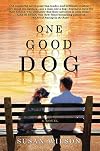
One Good Dog by Susan Wilson shows the power of connection to change lives and bring us to our best selves. I found it really hard to sympathize with Adam March's loss of wealth and social standing even as his story progressed through facing his losses and dealing with a past that he'd worked so hard to suppress he'd adopted the role of the man he wanted to be instead of the man he was. In fact, I related more with the chapters told the dog's point of view. I felt his pain. I felt his desire show more to change. I felt his will to survive. I felt his need to serve a purpose. The dog represented everything I wanted to feel for March but struggled to feel. Wilson pulled me into the lives of the characters to the point I wanted to influence their decisions and push them to do the right thing. One Good Dog illustrates how easy it is to let perception lead to biases based on the superficial parts of life. show less

Skye Mitchell has bought a small hotel, the Lakeview, in the Berkshires of western Massachusetts, and moved her daughter, Cody, there from Holyoke. It wasn't planned that way, but events so develop that they make the move almost immediately after Randy Mitchell, Cody's father and Skye's ex-husband, is shot dead in a back alley.
It's six months later, and the Lakeview has turned out to be a money pit. A money pit with real potential, but a money pit. Skye is barely making ends meet while show more repairs and upgrades proceed slowly. And Cody, previously an open and loving girl, has become cold and withdrawn and increasingly hostile. Is it just an especially awful case of teenager-hood? No. In fact, Cody is keeping a terrible secret she has no idea how to cope with, and doesn't dare share with her mother.
Then on a cold, rainy, awful night for driving, Adam March, a fundraiser for nonprofit organizations, arrives in the Lakeview's reception area. He had planned to continue on to the Holiday Inn, where he had reservations, but the driving on the curving country roads in the storm is just too bad to make it worth the risk. The Lakeview has entirely too many empty rooms, but Adam has his dog Chance with him, a pit bull he describes as his "therapy dog." We'll come back to that description later. Now, no decent hotelier who can't be fired by someone higher up would refuse shelter to a person traveling with a well-behaved, quiet dog in a frightening storm like the one Adam arrives in, but Skye tries. She really, really tries. But it's obviously an inhumane thing to do, and Adam is happy to accept the worst room in the nearly-empty hotel, and pay a $50 "cleaning fee" surcharge for it. Skye folds, because she needs the business.
You can probably tell I didn't start out liking Skye, although we are clearly supposed to. I did warm up to some over the course of the story, though.
The story is told in four voices: Skye, Cody, Adam, and Chance. Skye and Chance's sections are in first person; Cody and Adam's are in third person.
Adam is there to help get a fundraising plan started for the Art Center, the one good thing Cody has found in this area. She has no friends, all the kids in her class have been friends since first grade, and where she spends an awful lot of time working in the hotel as chambermaid and general dogsbody. But at the Art Center, the artists tolerate her and she's able, a little bit, to develop her art. Adam is a grieving widower, his wife dead only three months at the start of this book.
Over the next several months, Adam becomes a regular guest at the Lakeview, and gradually learns that Cody is spending far more time at the Art Center than her mother is aware of, and trading chores and posing for art lessons from the head of the center, Mosley Finch. Chance keeps his main focus on his own human, Adam, as is only appropriate, but he senses Cody's sadness and tries to comfort her, too. At school, Cody makes a sort-of friend called "Black Molly" (because she dresses in all black, all the time), who turns out to be bad news. Yet a kid who is being bullied by everyone that matters in school doesn't easily turn away even a poor choice of friend, especially when she doesn't feel she can open up to her mother. (Cody's high school experiences remind me all too much of my own in junior high. However, my parents were imperfect, they were a lot more available than Skye often is, and I didn't have a traumatic secret to keep. That may be what protected me from potential "friends" such as Molly.)
And then one day at the Art Center, Adam asks Cody to take Chance out for a potty break. Outside, Chance hears a dog in great distress. He runs off in that direction, and Cody follows.
They find a crack house, with an older boy unconscious from OD'ing, and a dog chained to the wall. Cody does the sensible thing, calling both 911 and Adam.
Everyone in this book has problems, and they all struggle with them. Chance and the dog in the crack house are both dogs who were previously fought. Adam and Mingo, the boy who overdosed, but survived due to Cody and Chance's timely arrival, each rescued their dogs, and really ought to recognize their kindred spirits faster than they do. I like the character development, yes, even Skye, who does learn, and it's an involving and in the end satisfying story.
I said we'd talk about that description of Chance as a "therapy dog." That's the description most often used, though Adam sometimes refers to him as a service dog, and we're told that Chance has a service dog vest that he wears when Adam will be taking him to places where it's needed to avoid unnecessary hassles. "Therapy dog" and "service dog" don't mean the same thing. A therapy dog and its handler help other people. Often they visit hospitals, nursing homes, old age centers. Some participate in school or library programs for children with reading difficulties. Some are trained to participate in Animal Assisted Therapy with professional therapists to help their patients. Some are "comfort dogs" who are brought to people under stress, such as after a traumatic event.
Therapy dogs are wonderful dogs.
Therapy dogs are not service dogs, and don't have the public access rights of service dogs.
Service dogs are trained to help their handler, their person, cope with a variety of otherwise-disabling or dangerous problems. Guide dogs and mobility assistance dogs are service dogs. Dogs who alert to low or high blood sugar in diabetics are service dogs, as are hearing assistance dogs for the deaf. The dogs trained to assist returned combat veterans with PTSD are service dogs. Without going through every permutation of medical service dog, the kind most relevant here are the dogs trained to help people with significant emotional and psychiatric problems.
We're both told and shown over the course of this book that Chance helps Adam manage his rage and reactivity, so that he can function reasonably in public. He couldn't do his job without Chance to help keep him balanced and functional, and Chance needs to be with him to do that.
Chance is a service dog. Federal law, specifically the ADA, guarantees the right of a disabled person to bring their service dog with them essentially everywhere. I've had my service dog with me in the hospital during hospital stays.
When Adam arrives at the Lakeview Hotel and Skye tried to deny him a room based on her No Pets policy, had Adam spoken up clearly and more precisely, saying that Chance was his service dog, she might have realized that the ADA meant she couldn't refuse him a room based on the dog. In a perfect world, I'd have recommended that he put Chance's service dog vest on, even though it's not legally required, because it tends to make life easier. It's all about clear communication, often. The fact that Wilson has Adam mostly refer to Chance as a therapy dog and never has him explain Chance's importance to his ability to function normally, really makes me wonder if she knows any of this.
It's perhaps also important to note that a service dog must behave appropriately. You can't be told to remove your service dog from the premises because someone else objects to the dog, but you can be required to remove your service dog if it behaves inappropriately. If it barks excessively, or harasses other people, or pees or poops in a place where it's not allowed. My first stop on getting out of the car with my service dog is a spot where she can potty before we go into any business--even Petco or Petsmart, which are equipped to cope with potty mistakes and won't freak and throw us out. It's just proper behavior, for any dog whom you bring in anywhere. If your dog can't handle this, your dog is not yet adequately trained to be a service dog.
At no point do we see chance doing anything inappropriate for a service dog.
Anyway, I did really enjoy this book, and you may enjoy it even more than I did, if the distinctions between therapy dogs and service dogs seem like minor details to you. (Which, admittedly, they probably do, if you aren't dependent on a service dog to be able to function normally!
Recommended.
I bought this audiobook. show less
It's six months later, and the Lakeview has turned out to be a money pit. A money pit with real potential, but a money pit. Skye is barely making ends meet while show more repairs and upgrades proceed slowly. And Cody, previously an open and loving girl, has become cold and withdrawn and increasingly hostile. Is it just an especially awful case of teenager-hood? No. In fact, Cody is keeping a terrible secret she has no idea how to cope with, and doesn't dare share with her mother.
Then on a cold, rainy, awful night for driving, Adam March, a fundraiser for nonprofit organizations, arrives in the Lakeview's reception area. He had planned to continue on to the Holiday Inn, where he had reservations, but the driving on the curving country roads in the storm is just too bad to make it worth the risk. The Lakeview has entirely too many empty rooms, but Adam has his dog Chance with him, a pit bull he describes as his "therapy dog." We'll come back to that description later. Now, no decent hotelier who can't be fired by someone higher up would refuse shelter to a person traveling with a well-behaved, quiet dog in a frightening storm like the one Adam arrives in, but Skye tries. She really, really tries. But it's obviously an inhumane thing to do, and Adam is happy to accept the worst room in the nearly-empty hotel, and pay a $50 "cleaning fee" surcharge for it. Skye folds, because she needs the business.
You can probably tell I didn't start out liking Skye, although we are clearly supposed to. I did warm up to some over the course of the story, though.
The story is told in four voices: Skye, Cody, Adam, and Chance. Skye and Chance's sections are in first person; Cody and Adam's are in third person.
Adam is there to help get a fundraising plan started for the Art Center, the one good thing Cody has found in this area. She has no friends, all the kids in her class have been friends since first grade, and where she spends an awful lot of time working in the hotel as chambermaid and general dogsbody. But at the Art Center, the artists tolerate her and she's able, a little bit, to develop her art. Adam is a grieving widower, his wife dead only three months at the start of this book.
Over the next several months, Adam becomes a regular guest at the Lakeview, and gradually learns that Cody is spending far more time at the Art Center than her mother is aware of, and trading chores and posing for art lessons from the head of the center, Mosley Finch. Chance keeps his main focus on his own human, Adam, as is only appropriate, but he senses Cody's sadness and tries to comfort her, too. At school, Cody makes a sort-of friend called "Black Molly" (because she dresses in all black, all the time), who turns out to be bad news. Yet a kid who is being bullied by everyone that matters in school doesn't easily turn away even a poor choice of friend, especially when she doesn't feel she can open up to her mother. (Cody's high school experiences remind me all too much of my own in junior high. However, my parents were imperfect, they were a lot more available than Skye often is, and I didn't have a traumatic secret to keep. That may be what protected me from potential "friends" such as Molly.)
And then one day at the Art Center, Adam asks Cody to take Chance out for a potty break. Outside, Chance hears a dog in great distress. He runs off in that direction, and Cody follows.
They find a crack house, with an older boy unconscious from OD'ing, and a dog chained to the wall. Cody does the sensible thing, calling both 911 and Adam.
Everyone in this book has problems, and they all struggle with them. Chance and the dog in the crack house are both dogs who were previously fought. Adam and Mingo, the boy who overdosed, but survived due to Cody and Chance's timely arrival, each rescued their dogs, and really ought to recognize their kindred spirits faster than they do. I like the character development, yes, even Skye, who does learn, and it's an involving and in the end satisfying story.
I said we'd talk about that description of Chance as a "therapy dog." That's the description most often used, though Adam sometimes refers to him as a service dog, and we're told that Chance has a service dog vest that he wears when Adam will be taking him to places where it's needed to avoid unnecessary hassles. "Therapy dog" and "service dog" don't mean the same thing. A therapy dog and its handler help other people. Often they visit hospitals, nursing homes, old age centers. Some participate in school or library programs for children with reading difficulties. Some are trained to participate in Animal Assisted Therapy with professional therapists to help their patients. Some are "comfort dogs" who are brought to people under stress, such as after a traumatic event.
Therapy dogs are wonderful dogs.
Therapy dogs are not service dogs, and don't have the public access rights of service dogs.
Service dogs are trained to help their handler, their person, cope with a variety of otherwise-disabling or dangerous problems. Guide dogs and mobility assistance dogs are service dogs. Dogs who alert to low or high blood sugar in diabetics are service dogs, as are hearing assistance dogs for the deaf. The dogs trained to assist returned combat veterans with PTSD are service dogs. Without going through every permutation of medical service dog, the kind most relevant here are the dogs trained to help people with significant emotional and psychiatric problems.
We're both told and shown over the course of this book that Chance helps Adam manage his rage and reactivity, so that he can function reasonably in public. He couldn't do his job without Chance to help keep him balanced and functional, and Chance needs to be with him to do that.
Chance is a service dog. Federal law, specifically the ADA, guarantees the right of a disabled person to bring their service dog with them essentially everywhere. I've had my service dog with me in the hospital during hospital stays.
When Adam arrives at the Lakeview Hotel and Skye tried to deny him a room based on her No Pets policy, had Adam spoken up clearly and more precisely, saying that Chance was his service dog, she might have realized that the ADA meant she couldn't refuse him a room based on the dog. In a perfect world, I'd have recommended that he put Chance's service dog vest on, even though it's not legally required, because it tends to make life easier. It's all about clear communication, often. The fact that Wilson has Adam mostly refer to Chance as a therapy dog and never has him explain Chance's importance to his ability to function normally, really makes me wonder if she knows any of this.
It's perhaps also important to note that a service dog must behave appropriately. You can't be told to remove your service dog from the premises because someone else objects to the dog, but you can be required to remove your service dog if it behaves inappropriately. If it barks excessively, or harasses other people, or pees or poops in a place where it's not allowed. My first stop on getting out of the car with my service dog is a spot where she can potty before we go into any business--even Petco or Petsmart, which are equipped to cope with potty mistakes and won't freak and throw us out. It's just proper behavior, for any dog whom you bring in anywhere. If your dog can't handle this, your dog is not yet adequately trained to be a service dog.
At no point do we see chance doing anything inappropriate for a service dog.
Anyway, I did really enjoy this book, and you may enjoy it even more than I did, if the distinctions between therapy dogs and service dogs seem like minor details to you. (Which, admittedly, they probably do, if you aren't dependent on a service dog to be able to function normally!
Recommended.
I bought this audiobook. show less
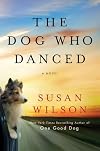
I usually cry when reading a book about a dog. This time, tears were cascading down my face. Those were tears of happiness instead of sorrow. I don’t know how Susan Wilson did it, but she created the perfect ending!
In ‘The Dog Who Danced’, the dog, Mack has his share of telling the story but it is as the author could get inside the dog and know he perceives the world. Most importantly through the sense of smell and without the benefit of some abilities like place orientation, Susan show more Wilson excels at portraying a dog's thoughts. I fell in love with Mack and wanted him to come out of the book and be my dog! I have always admired shelties. I have seen freestyle dancing with dogs in competitions but these books takes you inside what it means for the dog to do this.
This book is more than a dog book though; it is one of mystery, sorrow and forgiveness. There are two central women. Justine Meade is the first one we meet. She lost her mother at a very young age, so young that she couldn’t remember very much about her. Her father married the woman next door, the evil step mother and her life felt snuffed out from then on. She lost an emotional connection with her father; her father now loved Paul, her step brother. Paul was the son that her father always wanted and never had. Her step mother, Adele, was cold and demanding. She talked all the time but never said the important words that a step daughter craves.
Justine got married very young and had a son, Tony. She hasn’t seen him for years either. Why did this relationship fail?
When Justine gets a call that her father, who she had not seen for so long, is dying, she doesn’t want to go but her friend persuades her to go. Since she is broke, she cannot afford to fly there and pays $300 to a truck driver to go from California to her parent’s home out east. When she has to go to restroom to wash the dust out of her hair and body, the truck driver takes off. He has her dog, Mack in the back but he doesn’t realize it. Justine panics and is desperate to find her dog. Her dog is her only companion, her only close friend.
An elderly couple find Mack and though they didn’t intend that, established a bond with Mack who they called Buddy. Their marriage was lifeless. They had a daughter in the past. What happened to her? The description of their life is done through their actions and lack of actions. They really need this dog to help them learn how to continue with their lives. You will want to push this couple together as Mack/Buddy did.
Mack/Buddy is the sheltie that you will love. He is polite, gentle, intelligent and loving. He even knows how to dance
.
‘The Dog Who Danced ‘is a page turner and emotional wringer, especially at the end. Who will live/love this book? Anyone who loves dogs has had a broken family relationship or enjoys a great story. This book will make you look at shelties with wonder and think about ways to heal broken relationships.
I received this book from Amazon Vine, but that in no way influenced my review. show less
In ‘The Dog Who Danced’, the dog, Mack has his share of telling the story but it is as the author could get inside the dog and know he perceives the world. Most importantly through the sense of smell and without the benefit of some abilities like place orientation, Susan show more Wilson excels at portraying a dog's thoughts. I fell in love with Mack and wanted him to come out of the book and be my dog! I have always admired shelties. I have seen freestyle dancing with dogs in competitions but these books takes you inside what it means for the dog to do this.
This book is more than a dog book though; it is one of mystery, sorrow and forgiveness. There are two central women. Justine Meade is the first one we meet. She lost her mother at a very young age, so young that she couldn’t remember very much about her. Her father married the woman next door, the evil step mother and her life felt snuffed out from then on. She lost an emotional connection with her father; her father now loved Paul, her step brother. Paul was the son that her father always wanted and never had. Her step mother, Adele, was cold and demanding. She talked all the time but never said the important words that a step daughter craves.
Justine got married very young and had a son, Tony. She hasn’t seen him for years either. Why did this relationship fail?
When Justine gets a call that her father, who she had not seen for so long, is dying, she doesn’t want to go but her friend persuades her to go. Since she is broke, she cannot afford to fly there and pays $300 to a truck driver to go from California to her parent’s home out east. When she has to go to restroom to wash the dust out of her hair and body, the truck driver takes off. He has her dog, Mack in the back but he doesn’t realize it. Justine panics and is desperate to find her dog. Her dog is her only companion, her only close friend.
An elderly couple find Mack and though they didn’t intend that, established a bond with Mack who they called Buddy. Their marriage was lifeless. They had a daughter in the past. What happened to her? The description of their life is done through their actions and lack of actions. They really need this dog to help them learn how to continue with their lives. You will want to push this couple together as Mack/Buddy did.
Mack/Buddy is the sheltie that you will love. He is polite, gentle, intelligent and loving. He even knows how to dance
.
‘The Dog Who Danced ‘is a page turner and emotional wringer, especially at the end. Who will live/love this book? Anyone who loves dogs has had a broken family relationship or enjoys a great story. This book will make you look at shelties with wonder and think about ways to heal broken relationships.
I received this book from Amazon Vine, but that in no way influenced my review. show less
Lists
You May Also Like


Associated Authors
Statistics
- Works
- 15
- Also by
- 5
- Members
- 2,229
- Popularity
- #11,503
- Rating
- 3.9
- Reviews
- 122
- ISBNs
- 170
- Languages
- 8
- Favorited
- 1


