
Susan Wiggs
Author of The Lost and Found Bookshop
About the Author
After graduating from Harvard University, Susan Wiggs became a math teacher. While working, she started writing her first novel which was published in 1987. She has written numerous romance novels since then including Home Before Dark, A Summer Affair, The Charm School and Candlelight Christmas. show more She has won three RITA awards for Lakeside Cottage, Lord of the Night and The Mistress. She has written a number of notable series, including; Lakeshore Chronicles and Bella Vista Chronicles. Susan's title, Family Tree, is a New York Times, USA Today, Toronto Globe and Mail, and Publisher Weekly bestseller. (Bowker Author Biography) show less
Series
Works by Susan Wiggs
That Summer Place: Old Things, Private Paradise, Island Time (1998) — Contributor — 426 copies, 3 reviews
Summer Brides: The Borrowed Bride, A Bridge to Dreams, Sister of the Bride (2016) — Author — 130 copies, 2 reviews
More Than Words: Stories of Courage (2008 Publication, 3-in-1) (2008) — Contributor — 63 copies, 1 review
It Happened One Christmas: The St. James Affair, A Catered Affair, A Philadelphia Affair (2003) — Contributor — 60 copies, 1 review
How I Planned Your Wedding: The All-True Story of a Mother and Daughter Surviving the Happiest Day of Their Lives (2011) 36 copies, 3 reviews
The Summer It Begins: The Goodbye Quilt / A Wedding on Primrose Street (2019) — Contributor — 26 copies
Lakeshore Chronicles, Books 1-3 (Summer at Willow Lake / The Winter Lodge / Dockside) (2015) 2 copies
Lakeshore Chronicles, Books 4-6 (Snowfall at Willow Lake / Fireside / Lakeshore Christmas) (2015) 2 copies
Lakeshore Chronicles, Books 7-9 (The Summer Hideaway / Marrying Daisy Bellamy / Return to Willow Lake) (2016) 2 copies
Schitterende ijsster 1 copy
Το στοίχημα της αγάπης 1 copy
Dicht bij het vuur 1 copy
Puppy onder de kerstboom 1 copy
Susan Wiggs The Lakeshore Chronicles Series: Books 7-8: The Summer Hideaway & Marrying Daisy Bellamy (2017) 1 copy
Passion sous la neige: Rendez-vous sous le gui - Un Noël princier - Réveillon surprise (2020) 1 copy
Two Hearts in the Snow (Cinderfella | Next Time...Forever | Dating Her Boss | A Groom for Red Riding Hood) (2014) — Contributor — 1 copy
The Tycoon's Secret Affair aka The Affair (M. Banks) | A Man in a Million (J. Bird) | Island Time (S. Wiggs) (2013) — Contributor — 1 copy
Fallen Angel 1 copy
Susan Wiggs The Lakeshore Chronicles Series: Books 1-2: Summer at Willow Lake & The Winter Lodge (2017) 1 copy
HISTORICAL ROMANCES - HR 1 copy
Per ordine del re 1 copy
Associated Works
A Purrfect Romance: Out of the Dark, A Wish and a Prayer, Belling the Cat (1995) — Contributor — 27 copies
The Secrets of Bella Vista [2022 TV movie] — Writer — 3 copies
Reader's Digest Select Editions 2018 v07 #361: The Disappeared / Dear Mrs. Bird / The Echo Killing / Between You & Me (2018) — Author — 1 copy
Bem Escondido; Entre Nós; Ecos de um Crime; A Enfermeira do Tenente — Contributor — 1 copy
Tagged
Common Knowledge
- Canonical name
- Wiggs, Susan
- Other names
- Childress, Susan Marie
- Birthdate
- 1959-05-17
- Gender
- female
- Education
- Harvard University (M.Ed)
- Occupations
- novelist
- Organizations
- Romance Writers of America
Authors Guild
Field's End
Novelists Inc.
Bainbridge Island Land Trust
West Sound Wildlife Shelter (show all 8)
P.O.E.M.
Purple Amoeba - Awards and honors
- RITA Award (1993, 2000, 2001,2006)
Holt Medallion
Blue Boa Award
Colorado Award of Excellence - Agent
- Meg Ruley
Peggy Gordijn
Reka Rubin - Relationships
- Wiggs, Jay (husband)
Wiggs, Elizabeth (daughter) - Short biography
- Using blunt scissors, pages from a Big Chief tablet, a borrowed stapler and a Number Two pencil, Susan Wiggs self-published her first novel at the age of eight. A Book About Some Bad Kids [I still have this-CL] was based on the true-life adventures of Susan and her siblings, and the first printing of one copy was a complete sell-out.
Due to her brother's extreme reaction to that first prodigious effort, Susan went underground with her craft, entertaining her friends and offending her siblings with anonymously-written stories of virtuous sisters and the brothers who torment them. The first romance she ever read was Shanna by the incomparable Kathleen Woodiwiss, which she devoured while slumped behind a college vector analysis textbook. Armed with degrees from SFA and Harvard, and toting a crate of "keeper" books by Woodiwiss, Roberta Gellis, Laurie McBain, Rosemary Rodgers, Jennifer Blake, Bertrice Small and anything with the words "flaming" and "ecstasy" in the title, she became a math teacher, just to prove to the world that she did have a left brain.
Late one night, she finished the book she was reading and was confronted with a reader's worst nightmare—She was wide awake, and there wasn't a thing in the house she wanted to read. Figuring this was the universe's way of taking away her excuses, she picked up a Big Chief tablet and a Number Two pencil, and began writing her novel with the working title, A Book About Some Bad Adults. Actually, that was a bad book about some adults, but Susan persevered, learning her craft the way skydiving is learned—by taking a blind leap and hoping the chute will open.
Her first book was published (without the use of blunt scissors and a stapler) by Zebra in 1987, and since then she has been published by Avon, Tor, HarperCollins, Harlequin, Warner and Mira Books. Unable to completely abandon her beloved teaching profession, Susan is a frequent workshop leader and speaker at writers' conferences, including the literary institution Fields End and the legendary Maui Writers Conference. Her novel The Charm School was voted one of RWA's Favorite Books of the Year. She is the proud recipient of three RITA awards for Lakeside Cottage, Lord of the Night and The Mistress, and is often a finalist for the prestigious award. Her books appear regularly on numerous "Best Of" lists.
Susan enjoys many hobbies, including sitting in the hot tub while talking to her mother on the phone, kickboxing, cleaning the can opener, sculpting with butter and growing her hair. She lives on an island in the Pacific Northwest with her family. - Nationality
- USA
- Birthplace
- Olean, New York, USA
- Places of residence
- Bainbridge Island, Washington, USA
- Map Location
- New York, USA
Members
Discussions
An Author Interview with Susan Wiggs in Talk about LibraryThing (July 2025)
Contemporary Romance, husband "dies" in car accident in Name that Book (September 2016)
Reviews
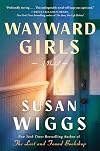
Wayward Girls is a devastating, unforgettable novel that shines a bright light on a dark, largely hidden corner of American history. Set in Buffalo, New York, in the late 1960s, it follows six teenage girls who are confined at the Good Shepherd, a so-called reform institution operated by the Sisters of Charity. In reality, it’s anything but a school—it’s a prison disguised by religious authority, where girls are sent to be silenced, hidden, and exploited.
What makes this novel so show more effective is how personal it feels from the very first pages. The girls—Mairin, Angela, Helen, Odessa, Denise, and Janice—are not flat archetypes. They are fully realized young women with layered backstories, distinct voices, and different reasons for ending up at Good Shepherd. Whether it’s Angela being punished for her sexuality, Mairin being “protected” from her stepfather, or Odessa caught in a racially charged police sweep, the common thread is that these girls were discarded by the people and systems meant to protect them. And once inside Good Shepherd, they’re subjected to forced labor, physical punishment, emotional abuse, and total isolation.
The author does not sugarcoat what happened at institutions like this. She take inspiration from a real reform school in Buffalo and from first hand interviews with survivors. That foundation in truth adds a layer of gravity that never leaves the page. The abuse these girls suffered—being locked in closets without food or water, forced to work without pay, separated from their babies after forced births, punished for acts as small as speaking out—may seem hard to believe. But it all happened. The novel forces readers to confront the fact that institutions like this existed not just in Ireland or some faraway place, but right here in the United States. And the Catholic Church, which ran these places under the guise of charity and discipline, has never truly been held accountable.
What elevates Wayward Girls is the way it balances this brutality with hope. At the heart of the story is Mairin, a spirited, rebellious girl who refuses to be broken. Her determination to escape and to protect her friends becomes the emotional engine of the story. The friendships formed among the girls—built in secret, in stolen glances, whispered conversations, and acts of solidarity—are deeply moving. These girls are each other’s only lifeline. They aren’t just surviving together; they’re teaching each other what it means to resist, to care, and to dream beyond their prison.
The writing is sharp and emotionally charged, but never sentimental. The author trust the reader to sit with the discomfort, to wrestle with the injustice, and to absorb the full emotional impact without softening the edges. There are moments in this book that will make you furious, that will make you cry, and that will stay with you long after you close the cover.
And the story doesn’t end in the 1960s. One of the most poignant parts of the novel is how it follows the women decades later, as they slowly reconnect and realize they were part of something far bigger than they ever understood at the time. They begin to share their stories, fight for recognition, and work toward healing. It’s a testament to the human spirit and to the idea that even when justice is delayed, it’s still worth fighting for.
This is a book that should be required reading. It forces us to reckon with how society has treated women—especially young, poor, marginalized women—under the guise of morality and order. It asks hard questions about complicity, silence, and institutional power. And it honors the courage of those who endured, who survived, and who are finally being heard.
Wayward Girls is harrowing, honest, and beautifully written. It’s historical fiction at its most urgent—gripping as a novel, and vital as a reflection of our past. If you’ve read about the Magdalene Laundries in Ireland, this will feel familiar—but perhaps even more shocking when you realize it happened here, too. Read this book. show less
What makes this novel so show more effective is how personal it feels from the very first pages. The girls—Mairin, Angela, Helen, Odessa, Denise, and Janice—are not flat archetypes. They are fully realized young women with layered backstories, distinct voices, and different reasons for ending up at Good Shepherd. Whether it’s Angela being punished for her sexuality, Mairin being “protected” from her stepfather, or Odessa caught in a racially charged police sweep, the common thread is that these girls were discarded by the people and systems meant to protect them. And once inside Good Shepherd, they’re subjected to forced labor, physical punishment, emotional abuse, and total isolation.
The author does not sugarcoat what happened at institutions like this. She take inspiration from a real reform school in Buffalo and from first hand interviews with survivors. That foundation in truth adds a layer of gravity that never leaves the page. The abuse these girls suffered—being locked in closets without food or water, forced to work without pay, separated from their babies after forced births, punished for acts as small as speaking out—may seem hard to believe. But it all happened. The novel forces readers to confront the fact that institutions like this existed not just in Ireland or some faraway place, but right here in the United States. And the Catholic Church, which ran these places under the guise of charity and discipline, has never truly been held accountable.
What elevates Wayward Girls is the way it balances this brutality with hope. At the heart of the story is Mairin, a spirited, rebellious girl who refuses to be broken. Her determination to escape and to protect her friends becomes the emotional engine of the story. The friendships formed among the girls—built in secret, in stolen glances, whispered conversations, and acts of solidarity—are deeply moving. These girls are each other’s only lifeline. They aren’t just surviving together; they’re teaching each other what it means to resist, to care, and to dream beyond their prison.
The writing is sharp and emotionally charged, but never sentimental. The author trust the reader to sit with the discomfort, to wrestle with the injustice, and to absorb the full emotional impact without softening the edges. There are moments in this book that will make you furious, that will make you cry, and that will stay with you long after you close the cover.
And the story doesn’t end in the 1960s. One of the most poignant parts of the novel is how it follows the women decades later, as they slowly reconnect and realize they were part of something far bigger than they ever understood at the time. They begin to share their stories, fight for recognition, and work toward healing. It’s a testament to the human spirit and to the idea that even when justice is delayed, it’s still worth fighting for.
This is a book that should be required reading. It forces us to reckon with how society has treated women—especially young, poor, marginalized women—under the guise of morality and order. It asks hard questions about complicity, silence, and institutional power. And it honors the courage of those who endured, who survived, and who are finally being heard.
Wayward Girls is harrowing, honest, and beautifully written. It’s historical fiction at its most urgent—gripping as a novel, and vital as a reflection of our past. If you’ve read about the Magdalene Laundries in Ireland, this will feel familiar—but perhaps even more shocking when you realize it happened here, too. Read this book. show less
 This review was written for LibraryThing Early Reviewers.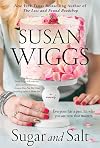
Thanks to LibraryThing, Wm Morrow & Company and the author for sending me an ARC of this book.
I've loved Susan Wiggs' Bella Vista Chronicles from the first book and this next installment was another amazing and emotional story. Be warned this is not a light hearted love story and trigger warnings for graphic, violent rape scene. It will take you on an emotional journey with rich characters who all have stories of grief and healing.
This one is probably the most heart wrenching book of the show more series. Wiggs does a great job at telling a story of tragedy and the long journey to recovering from life altering events. She tells about all too real and horrible circumstances. It is a glimpse into a broken system that failed our main character. Despite this she survives and finds love in both herself and those around her.
I would highly recommend the book but would warn anyone to be prepared for a heavy story. show less
I've loved Susan Wiggs' Bella Vista Chronicles from the first book and this next installment was another amazing and emotional story. Be warned this is not a light hearted love story and trigger warnings for graphic, violent rape scene. It will take you on an emotional journey with rich characters who all have stories of grief and healing.
This one is probably the most heart wrenching book of the show more series. Wiggs does a great job at telling a story of tragedy and the long journey to recovering from life altering events. She tells about all too real and horrible circumstances. It is a glimpse into a broken system that failed our main character. Despite this she survives and finds love in both herself and those around her.
I would highly recommend the book but would warn anyone to be prepared for a heavy story. show less
This review was written for LibraryThing Early Reviewers.
Okay, disclaimer time: This review is my own opinion. I had friends who liked this book very much, and that's great! If you got something out of it, more power to you! It was well-written, and I was invested, especially at the beginning. I cared enough about it to feel justified holding it a high standard, and it just didn't live up to it for me. If the whole thing had been bad, I wouldn't have cared. But it was just good enough, and its premise just interesting enough, to make me feel show more disappointed at the clumsy way in which the plot was handled. Okay, on to the review!
There is a Marx Brothers movie called A Night At the Opera. In one scene, someone sabotages the orchestra by placing the score of "Take Me Out To the Ball Game" inside the score of the operatic music they were scheduled to perform. The orchestra starts out with some gentle classical music, but when the conductor turns the page, the musicians switch gears dramatically and start the other song in a completely different style. It's funny for many reasons, not least of which is that no matter what happens, the musicians are together. They all change songs at the exact same time. There is no chaos, no discordant notes: just an immediate switch from one song to another, radically different, one.
This book is kind of like that. Instead of two musical scores getting merged together, it's as though there were two different manuscripts for two different novels, and someone put them together in the same briefcase and mixed up the pages, and then published them as a single hybrid volume. I felt like I was reading one novel, and then I'd turn a page and find myself reading a few chapters that didn't even feel like the same book.
To continue the metaphor, one of those briefcase manuscripts might have been something special.
This could have been a story about a supermodel in a high-stakes world struggling with drug addiction, or an immigrant in an abusive relationship who doesn't have any recourse, or children whose mother dies. When the main character finds herself raising her dead friend's two children, and she moves back across the country to her parents' home to give the kids some stability. She chucks her career, her home, her established life, in order to give the children everything that they need. Her whole world is reframed around those whom she's been entrusted to protect and nurture. If that had been the focus, it might have made a memorable novel. Her parents and grown siblings shine as supportive relatives. The young children understand that their mother is gone, and they are now leaving behind everything they know. One of the children is worried about going to a new school in a small town so homogeneous that he and his sister will be "the only brown kids" amidst a sea of white faces. And this is on top of the domestic violence and personal tragedy he's already endured. A woman with no experience working with children suddenly becomes the center of their lives. Supportive adults (therapists, social workers, teachers, etc.) help the children grow beyond trauma. This might have been interesting.
And then there's the rest of it.
The other story in my tw0-novels-got-spliced metaphor is a romance novel. The main character arrives in her hometown with these two traumatized newly orphaned children and runs smack into her old (married) middle school crush. Will he still like her? Is he still attractive? And of course, the story is peppered with flashbacks to her childhood moments of pining for him. Will he be at the school dance? Will her lip gloss still be shiny in an hour? Aw, gee! The suspense! (Spoiler alert: no. She has to reapply it every hour. Seriously. That's part of the story.) What about now? Does her dress match her earrings? Does her purse clash with her shoes? Whose ponytail is bouncier? Whose skin is clearer? Will he ever notice her? (Spoiler alert: yes. Also, duh.)
Okay, so I'm being harsh. I can see that, and I'm probably not quite being fair. But here are some issues:
• She's not really any more mature as an adult than she was as a kid. Her character is the same in both the past and present storylines.
• The author set up some tough issues early on in the book. How am I supposed to feel invested in shiny lip gloss (or really, any of this) while characters with real problems are suddenly getting sidelined?
• Also, the book takes potshots at religion. I am so tired of the cliché where anyone who is religious is either stupid or mean.
• Also, the book takes potshots at youth. At one point, the heroine even says that teens only go to youth group meetings to make out. It's as though she thinks teens aren't capable of being spiritual, or that they don't have any actual problems that would prompt them to find a trusted adult. This is coming from a character who leads a support group for victims of domestic violence. I would expect a bit less generalization about everybody's home life.
• And what about the heroine? For someone who's given up everything to care for these orphans, she gets to be pretty self-absorbed as soon as HE enters the picture.
• And what about the love interest? The guy is married. To her best friend. With whom, apparently, she's never been completely honest.
I think we're supposed to cheer when he dumps his wife and sleeps with the heroine. The weird thing about it is that his marriage might have made an interesting focus. (Again, if only!) At the beginning of the novel, they both still love each other, but they're starting to realize that they want different things in life. She's a model in her mid-30s, near the end of her career, and she's terrified of losing her livelihood, her friends, her independence, her world. He's former military, so they've spent years of their marriage living apart. Now he's home permanently, and they need to find out who they are together. Of course, this novel isn't supposed to be about them. I think the author must have realized that the wife character was starting to have more depth than the heroine, because near the end of the novel, she starts lying to her husband and stuff, so that he can leave her without the readers feeling too sorry for her.
It's too bad the romance portion, which was mediocre, was the focus.
It's too bad the heroes are all perfect and the villains are all cartoonish.
It's too bad that the problems set up early in the story get sidelined for the bulk of the novel.
The other big problem is that these serious issues turn out to be very easily solved at the end.
Her career is on the skids? No worries! She'll just fly back across the country, embarrass the guy who fired her, get the media on her side with no difficulty, organize a bunch of people to support her, accidentally befriend a millionaire, and create her own business that was even better. Hooray!
Her best friend is divorced? That's okay! She'll step in to console the husband! Hooray!
Her adopted son is worried about school? Not a problem! She'll make him a new T-shirt. Hooray!
She knows some women who have been victims of domestic abuse? Easily solved! She'll make her own support group for them! I think they might even have a few pages of plot here and there. You know, in between the lip gloss scenes.
It's all just a little too pat. It's a bit insulting. To be fair, I don't think that the novel was trying to suggest that the boy would never have any problems as long as he can have fancy new T-shirts. However, that bit with the T-shirt is the happy moment that wraps up his subplot. It's as though the author wanted everything to be resolved so that she could focus on the love story at the end of the book. That child has been through a lot of tragedy, and he will have ups and downs for a long time.
I felt similarly cheated by the humilates-the-bad-guy-and-fixes-her-career-after-being-blackballed subplot. Her career tanks early on in the novel, and she tries to fight back against the unethical businessman who sabotaged her, but he's too powerful and too well-connected, and she has no evidence to back her claims. After her defeat, she adopts the kids, moves away, and starts a new life. I liked that. Things are often hard and unfair in real life, and after we've lost something, we have a chance to rediscover who we are, and to be strong. The instant-happy ending undid any character growth she'd undergone. Who is she without her career? Who is she with a different career? Who is she when she endures humiliation and doesn't let it define her? Who is she when she fight to uphold dignity and honor for herself? I guess it doesn't matter, because when life hands her a get-out-of-every-problem-free card, she just doesn't have to worry about much of anything.
Parts of this book were quite good. It's just that the good stuff was never the focus. show less
There is a Marx Brothers movie called A Night At the Opera. In one scene, someone sabotages the orchestra by placing the score of "Take Me Out To the Ball Game" inside the score of the operatic music they were scheduled to perform. The orchestra starts out with some gentle classical music, but when the conductor turns the page, the musicians switch gears dramatically and start the other song in a completely different style. It's funny for many reasons, not least of which is that no matter what happens, the musicians are together. They all change songs at the exact same time. There is no chaos, no discordant notes: just an immediate switch from one song to another, radically different, one.
This book is kind of like that. Instead of two musical scores getting merged together, it's as though there were two different manuscripts for two different novels, and someone put them together in the same briefcase and mixed up the pages, and then published them as a single hybrid volume. I felt like I was reading one novel, and then I'd turn a page and find myself reading a few chapters that didn't even feel like the same book.
To continue the metaphor, one of those briefcase manuscripts might have been something special.
This could have been a story about a supermodel in a high-stakes world struggling with drug addiction, or an immigrant in an abusive relationship who doesn't have any recourse, or children whose mother dies. When the main character finds herself raising her dead friend's two children, and she moves back across the country to her parents' home to give the kids some stability. She chucks her career, her home, her established life, in order to give the children everything that they need. Her whole world is reframed around those whom she's been entrusted to protect and nurture. If that had been the focus, it might have made a memorable novel. Her parents and grown siblings shine as supportive relatives. The young children understand that their mother is gone, and they are now leaving behind everything they know. One of the children is worried about going to a new school in a small town so homogeneous that he and his sister will be "the only brown kids" amidst a sea of white faces. And this is on top of the domestic violence and personal tragedy he's already endured. A woman with no experience working with children suddenly becomes the center of their lives. Supportive adults (therapists, social workers, teachers, etc.) help the children grow beyond trauma. This might have been interesting.
And then there's the rest of it.
The other story in my tw0-novels-got-spliced metaphor is a romance novel. The main character arrives in her hometown with these two traumatized newly orphaned children and runs smack into her old (married) middle school crush. Will he still like her? Is he still attractive? And of course, the story is peppered with flashbacks to her childhood moments of pining for him. Will he be at the school dance? Will her lip gloss still be shiny in an hour? Aw, gee! The suspense! (Spoiler alert: no. She has to reapply it every hour. Seriously. That's part of the story.) What about now? Does her dress match her earrings? Does her purse clash with her shoes? Whose ponytail is bouncier? Whose skin is clearer? Will he ever notice her? (Spoiler alert: yes. Also, duh.)
Okay, so I'm being harsh. I can see that, and I'm probably not quite being fair. But here are some issues:
• She's not really any more mature as an adult than she was as a kid. Her character is the same in both the past and present storylines.
• The author set up some tough issues early on in the book. How am I supposed to feel invested in shiny lip gloss (or really, any of this) while characters with real problems are suddenly getting sidelined?
• Also, the book takes potshots at religion. I am so tired of the cliché where anyone who is religious is either stupid or mean.
• Also, the book takes potshots at youth. At one point, the heroine even says that teens only go to youth group meetings to make out. It's as though she thinks teens aren't capable of being spiritual, or that they don't have any actual problems that would prompt them to find a trusted adult. This is coming from a character who leads a support group for victims of domestic violence. I would expect a bit less generalization about everybody's home life.
• And what about the heroine? For someone who's given up everything to care for these orphans, she gets to be pretty self-absorbed as soon as HE enters the picture.
• And what about the love interest? The guy is married. To her best friend. With whom, apparently, she's never been completely honest.
I think we're supposed to cheer when he dumps his wife and sleeps with the heroine. The weird thing about it is that his marriage might have made an interesting focus. (Again, if only!) At the beginning of the novel, they both still love each other, but they're starting to realize that they want different things in life. She's a model in her mid-30s, near the end of her career, and she's terrified of losing her livelihood, her friends, her independence, her world. He's former military, so they've spent years of their marriage living apart. Now he's home permanently, and they need to find out who they are together. Of course, this novel isn't supposed to be about them. I think the author must have realized that the wife character was starting to have more depth than the heroine, because near the end of the novel, she starts lying to her husband and stuff, so that he can leave her without the readers feeling too sorry for her.
It's too bad the romance portion, which was mediocre, was the focus.
It's too bad the heroes are all perfect and the villains are all cartoonish.
It's too bad that the problems set up early in the story get sidelined for the bulk of the novel.
The other big problem is that these serious issues turn out to be very easily solved at the end.
Her career is on the skids? No worries! She'll just fly back across the country, embarrass the guy who fired her, get the media on her side with no difficulty, organize a bunch of people to support her, accidentally befriend a millionaire, and create her own business that was even better. Hooray!
Her best friend is divorced? That's okay! She'll step in to console the husband! Hooray!
Her adopted son is worried about school? Not a problem! She'll make him a new T-shirt. Hooray!
She knows some women who have been victims of domestic abuse? Easily solved! She'll make her own support group for them! I think they might even have a few pages of plot here and there. You know, in between the lip gloss scenes.
It's all just a little too pat. It's a bit insulting. To be fair, I don't think that the novel was trying to suggest that the boy would never have any problems as long as he can have fancy new T-shirts. However, that bit with the T-shirt is the happy moment that wraps up his subplot. It's as though the author wanted everything to be resolved so that she could focus on the love story at the end of the book. That child has been through a lot of tragedy, and he will have ups and downs for a long time.
I felt similarly cheated by the humilates-the-bad-guy-and-fixes-her-career-after-being-blackballed subplot. Her career tanks early on in the novel, and she tries to fight back against the unethical businessman who sabotaged her, but he's too powerful and too well-connected, and she has no evidence to back her claims. After her defeat, she adopts the kids, moves away, and starts a new life. I liked that. Things are often hard and unfair in real life, and after we've lost something, we have a chance to rediscover who we are, and to be strong. The instant-happy ending undid any character growth she'd undergone. Who is she without her career? Who is she with a different career? Who is she when she endures humiliation and doesn't let it define her? Who is she when she fight to uphold dignity and honor for herself? I guess it doesn't matter, because when life hands her a get-out-of-every-problem-free card, she just doesn't have to worry about much of anything.
Parts of this book were quite good. It's just that the good stuff was never the focus. show less
The Charm School
2 Stars
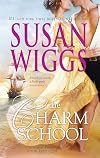
Socially inept and isolated, Isadora Peabody is an ugly duckling in a family of peacocks. Deciding to make a change, Isadora finagles her way on to The Silver Swan bound for Rio and ends up charming the pants off the surly captain, Ryan Calhoun, and his eccentric crew.
To begin with, the book synopsis bears very little resemblance to the actual storyline. Isadora doesn't "sneak aboard"; she is hired as a translator. Ryan doesn't "barely register" Isadora; he is smitten show more virtually from the start. The crew doesn't "teach her the charms of a lady"; she befriends them and they treat her as an equal.
***Spoilers Ahead***
The basic premise of the story has potential, yet there are several elements that grate on the nerves. To begin with, the "hero" has sex with several prostitutes throughout his acquaintance with the heroine. Technically, they aren't together yet, but it is annoying.
In addition, Ryan and Isadora's first time together occurs when she is stoned out of her mind. Can we say "dubious consent"?
Isadora is supposedly an intelligent and well-read young woman, yet she believes herself in love with a superficial and vapid moron simply because he is handsome and popular? She has several TSTL moments that risk her life and constantly accuses Ryan of abusing her when it is obvious that he is trying to ensure her safety on board.
Ryan is supposedly a charming rogue but actually comes across as a self-indulgent, foppish playboy and womanizer who is determined to rescue the family of his childhood friend (whom Ryan owned and set free) from slavery. While this appears to be laudable, it is undermined by the fact that the focus is on how this quest is Ryan's responsibility, and the affect it has on his life. Journey has no agency of his own, which is paternalistic and condescending.
Overall, a disappointing read and I'm not interested enough in Ryan's down on his luck half-brother to continue with the series. show less
2 Stars
Socially inept and isolated, Isadora Peabody is an ugly duckling in a family of peacocks. Deciding to make a change, Isadora finagles her way on to The Silver Swan bound for Rio and ends up charming the pants off the surly captain, Ryan Calhoun, and his eccentric crew.
To begin with, the book synopsis bears very little resemblance to the actual storyline. Isadora doesn't "sneak aboard"; she is hired as a translator. Ryan doesn't "barely register" Isadora; he is smitten show more virtually from the start. The crew doesn't "teach her the charms of a lady"; she befriends them and they treat her as an equal.
***Spoilers Ahead***
The basic premise of the story has potential, yet there are several elements that grate on the nerves. To begin with, the "hero" has sex with several prostitutes throughout his acquaintance with the heroine. Technically, they aren't together yet, but it is annoying.
In addition, Ryan and Isadora's first time together occurs when she is stoned out of her mind. Can we say "dubious consent"?
Isadora is supposedly an intelligent and well-read young woman, yet she believes herself in love with a superficial and vapid moron simply because he is handsome and popular? She has several TSTL moments that risk her life and constantly accuses Ryan of abusing her when it is obvious that he is trying to ensure her safety on board.
Ryan is supposedly a charming rogue but actually comes across as a self-indulgent, foppish playboy and womanizer who is determined to rescue the family of his childhood friend (whom Ryan owned and set free) from slavery. While this appears to be laudable, it is undermined by the fact that the focus is on how this quest is Ryan's responsibility, and the affect it has on his life. Journey has no agency of his own, which is paternalistic and condescending.
Overall, a disappointing read and I'm not interested enough in Ryan's down on his luck half-brother to continue with the series. show less
Lists
Awards


You May Also Like


Associated Authors
Statistics
- Works
- 118
- Also by
- 14
- Members
- 23,181
- Popularity
- #910
- Rating
- 3.7
- Reviews
- 693
- ISBNs
- 1,366
- Languages
- 19
- Favorited
- 48


