On This Page
Description
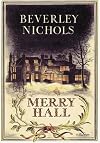
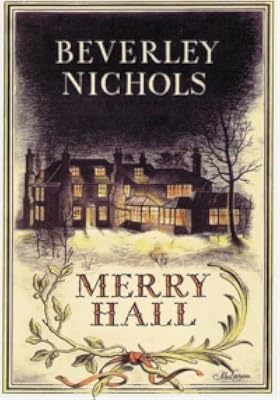
First in a trilogy, Merry Hall is the account of the restoration of a house and garden in post-war England. Though Mr. Nichols's horticultural undertaking is serious, his writing is high-spirited, riotously funny, and, at times, deliciously malicious.Tags
Recommendations






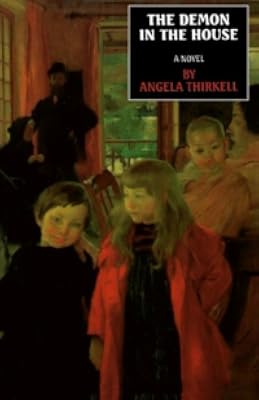









Member Recommendations
Member Reviews
Merry Hall is a new all time favorite book, and a very enthusiastic 5 stars! I had a good feeling about it the second I held it in my hands, because I noticed there was a smooth groove where many thumbs had been, turning pages, and that is a sure sign that a book has been loved by the masses. It couldn’t have been better! Merry Hall was published in 1951, and takes place in post-war England. If P.G. Wodehouse was to have written a nonfiction book about his experience with gardening, this would be the book!
Although people who love gardening will recognize many of the plants and trees referenced in Merry Hall, you don’t actually need to know anything about gardening to enjoy this one. Beverley Nichols is hilariously snarky, and he show more had me continuously pausing to cackle. I loved the cast of characters he encounters and captures in minute detail; from his talented but curmudgeonly gardener Oldfield, to his two nosy neighbors Miss Emily and “Our Rose.” Also, the way he writes about his cats “One” and “Four” is a true delight, and so accurate to how cats are.
Even amidst the snarky tone of Merry Hall, the deep admiration he has for nature shines through - there are moments in here that are genuinely beautiful and touching. Apparently Nichols wrote a whole bunch of these books, so I’m definitely planning on reading every single one! show less
Although people who love gardening will recognize many of the plants and trees referenced in Merry Hall, you don’t actually need to know anything about gardening to enjoy this one. Beverley Nichols is hilariously snarky, and he show more had me continuously pausing to cackle. I loved the cast of characters he encounters and captures in minute detail; from his talented but curmudgeonly gardener Oldfield, to his two nosy neighbors Miss Emily and “Our Rose.” Also, the way he writes about his cats “One” and “Four” is a true delight, and so accurate to how cats are.
Even amidst the snarky tone of Merry Hall, the deep admiration he has for nature shines through - there are moments in here that are genuinely beautiful and touching. Apparently Nichols wrote a whole bunch of these books, so I’m definitely planning on reading every single one! show less
Husband: What's that you're reading?
Me: *holds book up* It's about a guy gardening.
Husband: *looks confused* Is it a novel?
Me: Nope. Like a memoir. Guy buys a big Georgian house in the country in England and builds a garden.
Husband: So it's like the most boring book ever written?
Me: It's interesting actually.
Husband: Uh huh. Nonfiction. Pshaw.
Me: You're reading nonfiction. You're reading three thousand pages on the Civil War.
Husband: That's different.
As delightfully exasperating as that conversation was, it does encapsulate most of what I have to say about Merry Hall. It has no plot, no thrust, it sounds like it ought be terribly dry, and it seems that there's little point (it's not even a how-to book--in fact, it would be worse than show more useless as a how-to book). And yet, it is a fabulously entertaining read--provided you like England and the English, find details compelling, and are content to be pulled along by voice. I do, I do, and I am. If you also do and are as well, you'll like Merry Hall, too. Falls short of five-star territory because Nichols is just a touch racist and a heap misogynistic and the (mostly brief) moments when those attitudes touch the pages make the book less than perfectly pleasant. They are not deal-breakers, however, as they seem to be, for the first, an unfortunate product of the time that we can almost excuse because there seems to be no malice in it, and, for the second, a disposition rather than an ideology and one which causes little harm in Nichols's mostly-male world. show less
Me: *holds book up* It's about a guy gardening.
Husband: *looks confused* Is it a novel?
Me: Nope. Like a memoir. Guy buys a big Georgian house in the country in England and builds a garden.
Husband: So it's like the most boring book ever written?
Me: It's interesting actually.
Husband: Uh huh. Nonfiction. Pshaw.
Me: You're reading nonfiction. You're reading three thousand pages on the Civil War.
Husband: That's different.
As delightfully exasperating as that conversation was, it does encapsulate most of what I have to say about Merry Hall. It has no plot, no thrust, it sounds like it ought be terribly dry, and it seems that there's little point (it's not even a how-to book--in fact, it would be worse than show more useless as a how-to book). And yet, it is a fabulously entertaining read--provided you like England and the English, find details compelling, and are content to be pulled along by voice. I do, I do, and I am. If you also do and are as well, you'll like Merry Hall, too. Falls short of five-star territory because Nichols is just a touch racist and a heap misogynistic and the (mostly brief) moments when those attitudes touch the pages make the book less than perfectly pleasant. They are not deal-breakers, however, as they seem to be, for the first, an unfortunate product of the time that we can almost excuse because there seems to be no malice in it, and, for the second, a disposition rather than an ideology and one which causes little harm in Nichols's mostly-male world. show less
Nichols is the comfort read of gardeners because his books, although full of village characters and quirky neighbours, are ultimately about his garden. In this favourite reread, he has returned from service in India after the war and is trying to find a house outside of London. Happily for both author and reader, he not only finds Merry Hall itself but with it its gardener, Oldfield, and a property much in need of Nichols' tender care. Well, not so tender, as the book describes the antics involved with burning down a holly hedge, chopping down ancient elms whose roots are sucking the goodness out of the soil for miles and the demolition of a scum-filled pond.
This is book one of a trilogy about Merry Hall and it might be one of my show more favourite Nichols books. A writer, decorator, garden designer, pianist of no small accomplishment if he can play Chopin as he does throughout the book, Nichols was one of those creative beings who had a compulsion to make beautiful everything around him. I love him because he can be so hissy spitty deliciously catty at times but also because his is a soul which craves the beautiful and works hard to make it happen.
This isn't heavy stuff. The heavens won't open and the finger of enlightenment won't give you a flick on your third eye. But if you are ever laid low by a bug and would like some companionship, Nichols is your man. It would help if you are also a gardener because he has the excellent habit of saying what his plants are in Latin. Ooooh, a gardener after my own heart.
Afterthought: a friend commented that Nichols gets compared to E.F. Benson quite often but I want to say, quite firmly, that he isn't really in Benson's league. The latter is dry, wry, elegant and refined. Nichols can be quite waspish and is NOT subtle. He can also be quite openly campy (which I love). But he is a gardener and that's what I connect to. If you don't garden, I can't speak to whether or not this book would be hopelessly dated 40s stuff or not. show less
This is book one of a trilogy about Merry Hall and it might be one of my show more favourite Nichols books. A writer, decorator, garden designer, pianist of no small accomplishment if he can play Chopin as he does throughout the book, Nichols was one of those creative beings who had a compulsion to make beautiful everything around him. I love him because he can be so hissy spitty deliciously catty at times but also because his is a soul which craves the beautiful and works hard to make it happen.
This isn't heavy stuff. The heavens won't open and the finger of enlightenment won't give you a flick on your third eye. But if you are ever laid low by a bug and would like some companionship, Nichols is your man. It would help if you are also a gardener because he has the excellent habit of saying what his plants are in Latin. Ooooh, a gardener after my own heart.
Afterthought: a friend commented that Nichols gets compared to E.F. Benson quite often but I want to say, quite firmly, that he isn't really in Benson's league. The latter is dry, wry, elegant and refined. Nichols can be quite waspish and is NOT subtle. He can also be quite openly campy (which I love). But he is a gardener and that's what I connect to. If you don't garden, I can't speak to whether or not this book would be hopelessly dated 40s stuff or not. show less
The first in a trilogy, this lovely book chronicles Nichols' search for and purchase of a country freehold not too far from London where he can garden. Taking place not too long after the end of the Second World War, not only is this a delightful and enchanting book about plants and gardening, but it is awonderful snapshot of a time long since past. Nichols' garden is his main focus but he also introduces the reader to his eccentric neighbors, his elderly gardener, and various other people about the place. He discusses the folly and joys that came with purchasing his estate. And he generally injects enough light humor in all areas that this was a wonderful, completely appealing read. There are certainly instances that firmly place this show more in its time period but it has aged well and was a wonderfully diverting book to cozy in with for an afternoon. I have to actually physically restrain myself from jumping immediately into the second book in the trilogy, wanting to draw out the pleasure a bit by savoring the anticipation of an equally lovely amount of time spent with it. And don't skip over this book thinking that you aren't a gardener and don't want to read about gardening. Anyone who lights a hedge on fire on purpose and scorches the heck out of his new albeit slightly dilapidated home should be able to entertain any and all non-fiction readers with ease. show less
I'm no Anglophile, and I'm not 100% sure where I stand on reading abuot other people's gardens, but I loved this one. Straightforward, arch, and surprisingly sweet, an awesome garden book even for the non-winter months (which is when I think it's more traditional to read them, but so what). And it's a beautiful reprint, with an almost letterpress look and absolutely sumptuous paper stock.
We begin oddly enough with a wealth of old oak. This unpleasant phrase will be found engraved on the hearts of all those who, in contemporary Britain, have ever bought, or tried to buy, or thought of buying a house. . . . I was one of those who were trying to buy a house [1946]. Therefore I went around the London house agents, as one demented, in search of a "desirable" country freehold. And all I found was a wealth of old oak. It was quite extraordinary—the way in which this phrase crept into every catalogue, loomed over every prospectus, and dominated every discussion. It was a house agent's "must." Was there anything peculiar—not to say bizarre—about the drains? Never mind; there was a Wealth of Old Oak. Was the garden small, show more triangular, and entirely surrounded by large red trams, which in their turn, were filled with large red women in mackintoshes? Maybe. But there was a Wealth, a Veritable Treasury, of Old Oak. Did it face over the wall and would a sensitive spaniel have howled itself to death at the mere sight of it on a rainy night? Yes sir. It did. And there was. And it would. All quite correct. But kindly remember, there was a Wealth of Old Oak. Or, as I began to think of it, a W. of O.O.
—Beverley Nichols, Merry Hall
Following WWII and tired of London after several years of roaming, Beverley Nichols is a man in search of a garden, or rather a place to build a garden. And not just any garden, mind you, but a large a large garden—several acres in fact. Since a garden demands a house, Nichols must also find a house that will provide a suitable setting for the garden. And thus the adventure to find Merry Hall begins.
After a number of false starts involving, you guessed it, quantities of old oak, but no suitable place for a garden, Nichols sees an advertisement for Merry Hall, a Georgian freehold with five acres . . . at a reasonable price. Now, Georgian the house indeed is . . . with some additions by previous owners. Well one previous owner, the aesthetically challenged but dead Mr. Stebbing, whose dictatorship continues long after his demise. Despite the house's shortcomings, namely the Excrescence ("a weird sort of summer house, circa 1900") and the Wart (a square bow window distinctly not Georgian), Nichols falls in love at first sight. Never mind the naysaying of his friend Bob, who grumbles, "this house should be psychoanalyzed."
For the rest of the review, go to Club Balzac show less
—Beverley Nichols, Merry Hall
Following WWII and tired of London after several years of roaming, Beverley Nichols is a man in search of a garden, or rather a place to build a garden. And not just any garden, mind you, but a large a large garden—several acres in fact. Since a garden demands a house, Nichols must also find a house that will provide a suitable setting for the garden. And thus the adventure to find Merry Hall begins.
After a number of false starts involving, you guessed it, quantities of old oak, but no suitable place for a garden, Nichols sees an advertisement for Merry Hall, a Georgian freehold with five acres . . . at a reasonable price. Now, Georgian the house indeed is . . . with some additions by previous owners. Well one previous owner, the aesthetically challenged but dead Mr. Stebbing, whose dictatorship continues long after his demise. Despite the house's shortcomings, namely the Excrescence ("a weird sort of summer house, circa 1900") and the Wart (a square bow window distinctly not Georgian), Nichols falls in love at first sight. Never mind the naysaying of his friend Bob, who grumbles, "this house should be psychoanalyzed."
For the rest of the review, go to Club Balzac show less
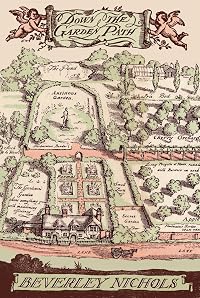
I'm not sure where I heard about Beverly Nichols' gardening books... such as Down the Garden Path and Merry Hall, but I did get my mitts on one and began reading it just when a little bit of arch post-war gay country gardener would do me the best good.
Nichols, a bachelor, in search of his perfect and last home with garden, buys basically a mansion in post-war (WWII) England, whose 5 acre grounds have much potential. He moves in with his two cats and devoted manservant (in the hired staff sense, my dear, this was published in the 1950s for general consumption!) begins plotting the garden, recruits friends and laborers to help with removing what's wrong, and slowly gains the trust of his gardener, a brilliant agriculturist who has been show more there more than 40 years and is disinclined to alter the plans of the previous 40 years worth of families. He also spars with Miss Emily, a rather encroaching neighbor, and Our Rose, a rather artsy floral designer, living in the neighborhood.
If you're familiar with Angela Thirkell*, there is a certain amount ofThirkell's reckless small scale politics to it, plus a rather extravagant archness as well as a genuine love of gardening. It was transparently obvious to the modern reader that Nichols was as gay as a tree full of monkeys on nitrous oxide, and his plans for the garden immediately called to mind Wade Rouse: "The first thing that gay men must do when they move to the country is rearrange the woods" (At least in the city someone would hear me scream). Some of his prose is purple, he would be embarrassed posthumously to see how much has become quaint and twee, and he's a class snob and a misogynist of the first order, but he clearly loved his garden, had as sense of humor about it and wrote beautifully about it.
* I do find myself wondering if Thirkell ever pilloried Nichols in her novels... there are a number of characters that might have been based on him. show less
Nichols, a bachelor, in search of his perfect and last home with garden, buys basically a mansion in post-war (WWII) England, whose 5 acre grounds have much potential. He moves in with his two cats and devoted manservant (in the hired staff sense, my dear, this was published in the 1950s for general consumption!) begins plotting the garden, recruits friends and laborers to help with removing what's wrong, and slowly gains the trust of his gardener, a brilliant agriculturist who has been show more there more than 40 years and is disinclined to alter the plans of the previous 40 years worth of families. He also spars with Miss Emily, a rather encroaching neighbor, and Our Rose, a rather artsy floral designer, living in the neighborhood.
If you're familiar with Angela Thirkell*, there is a certain amount ofThirkell's reckless small scale politics to it, plus a rather extravagant archness as well as a genuine love of gardening. It was transparently obvious to the modern reader that Nichols was as gay as a tree full of monkeys on nitrous oxide, and his plans for the garden immediately called to mind Wade Rouse: "The first thing that gay men must do when they move to the country is rearrange the woods" (At least in the city someone would hear me scream). Some of his prose is purple, he would be embarrassed posthumously to see how much has become quaint and twee, and he's a class snob and a misogynist of the first order, but he clearly loved his garden, had as sense of humor about it and wrote beautifully about it.
* I do find myself wondering if Thirkell ever pilloried Nichols in her novels... there are a number of characters that might have been based on him. show less
Members
- Recently Added By
Lists

Garden-essays and books on gardening
53 works; 10 members

Mustich's 1000 Books to Read Before You Die: A Life Changing List
1,001 works; 19 members
Author Information

69+ Works 3,131 Members
Beverley Nichols (1898-1983) was a prolific writer on subjects ranging from religion to politics and travel, in addition to authoring six novels, five detective mysteries, four children's stories, six autobiographies, and six plays. He is perhaps best remembered today for his gardening books
Some Editions
Awards and Honors
Notable Lists
Series

Belongs to Publisher Series
Common Knowledge
- Canonical title
- Merry Hall
- Original publication date
- 1951
- People/Characters
- Beverley Nichols
- Important places
- Surrey, England, UK; Ashtead, Mole Valley, Surrey, England, UK
- Epigraph
- Bind me ye Woodbines in your 'twines,
Curle me about ye gadding Vines,
And Oh so close your Circles lace,
That I may never leave this Place:
But, lest your Fetters prove too weak,
Ere I your Silken Bondage brea... (show all)k,
Do you, O Brambles, chain me too,
And courteous Briars nail me though.
Andrew Marvell,
Upon Appleton House, to my Lord Fairfax - First words
- Some fall in love with women; some fall in love with art; some fall in love with death.
I fall in love with gardens, which is much the same as falling in love with all three at once.
For a garden is a mistress, an... (show all)d gardening is a blend of all of the arts,
and if it is not the death of me, sooner or later,
I shall be much surprised.
Classifications
- Genres
- Home & Garden, Nonfiction, Biography & Memoir
- DDC/MDS
- 635.09422 — Applied science & technology Agriculture Garden crops (Horticulture) modified standard subdivisions History, geographic treatment, biography Europe England & Wales
- LCC
- SB455 .N57 — Agriculture Horticulture. Plant propagation. Plant breeding Plant culture Gardens and gardening
- BISAC
Statistics
- Members
- 389
- Popularity
- 80,349
- Reviews
- 17
- Rating
- (3.99)
- Languages
- English, French
- Media
- Paper, Ebook
- ISBNs
- 8
- ASINs
- 9