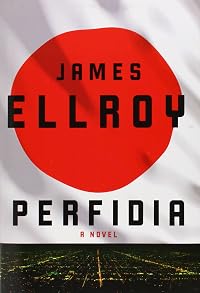
On This Page
Description
NATIONAL BESTSELLERAN NPR BEST BOOK OF THE YEAR
It is December 6, 1941. America stands at the brink of World War II. Last hopes for peace are shattered when Japanese squadrons bomb Pearl Harbor. Los Angeles has been a haven for loyal Japanese-Americans—but now, war fever and race hate grip the city and the Japanese internment begins.
The hellish murder of a Japanese family summons three men and one woman. William H. Parker is a captain on the Los Angeles Police Department. show more He’s superbly gifted, corrosively ambitious, liquored-up, and consumed by dubious ideology. He is bitterly at odds with Sergeant Dudley Smith—Irish émigré, ex-IRA killer, fledgling war profiteer. Hideo Ashida is a police chemist and the only Japanese on the L.A. cop payroll. Kay Lake is a twenty-one-year-old dilettante looking for adventure. The investigation throws them together and rips them apart. The crime becomes a political storm center that brilliantly illuminates these four driven souls—comrades, rivals, lovers, history’s pawns.
Perfidia is a novel of astonishments. It is World War II as you have never seen it, and Los Angeles as James Ellroy has never written it before. Here, he gives us the party at the edge of the abyss and the precipice of America’s ascendance. Perfidia is that moment, spellbindingly captured. It beckons us to solve a great crime that, in its turn, explicates the crime of war itself. It is a great American novel. show less
Tags
Recommendations

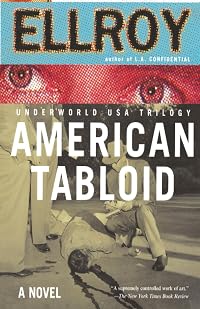
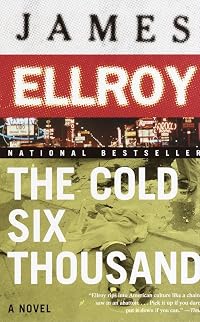




Member Recommendations
Member Reviews
Epic reprise of Ellroy's favourite time and setting, a return to 1940s Los Angeles and Dudley Smith and Will Parker and Kay Lake and introducing Hideo Ashida, native-born of Japanese descent, brilliant police chemist whose life is made beyond uncomfortable when the Japanese bomb Pearl Harbour and anti-Japanese sentiment ignites across the country, and in LA, there's talk of round-ups and internment. On the day before the attack, a Japanese family of four is horribly murdered in a gory, ritualistic fashion. The investigation, in the midst of war-time hysteria, racial hatred, crazed eugenics, fascist politics, police corruption and brutality, opportunistic players from every level of society moving in to exploit the coming confusion and show more officially mandated injustice, proves nightmarish for all involved. Someone will have to take the fall, but will the guilty get away with it?
Written mostly in the terse, hard-boiled tough-cop drawl that Ellroy has perfected, this falls somewhere between LA Confidential and American Tabloid in terms of style, and aspires to be a return to LA Confidential in terms of being a sprawling but tightly-plotted murder mystery. Of course, the most amazing thing about LA Confidential when you first read it, is that there was nothing else like LA Confidential, not even in the LA Quartet. So there's that. Familiarity doesn't exactly breed contempt, but when one of the attractions of Ellroy is his originality, it tends to be missed. On the other hand, Ellroy's been clawing his way back from over-extending his style and his theme in Cold Six Thousand. So: compulsively readable, paced like an express train, twisty and turny and packed with profanity and racism and horrible violence and more depravity than you could believe even a near 800 page crime saga could contain. show less
Written mostly in the terse, hard-boiled tough-cop drawl that Ellroy has perfected, this falls somewhere between LA Confidential and American Tabloid in terms of style, and aspires to be a return to LA Confidential in terms of being a sprawling but tightly-plotted murder mystery. Of course, the most amazing thing about LA Confidential when you first read it, is that there was nothing else like LA Confidential, not even in the LA Quartet. So there's that. Familiarity doesn't exactly breed contempt, but when one of the attractions of Ellroy is his originality, it tends to be missed. On the other hand, Ellroy's been clawing his way back from over-extending his style and his theme in Cold Six Thousand. So: compulsively readable, paced like an express train, twisty and turny and packed with profanity and racism and horrible violence and more depravity than you could believe even a near 800 page crime saga could contain. show less
I can't help seeing his Los Angeles-based characters as an annoying pack of overly dramatic, self-involved, utterly tiring people who don't know when to STFU. Ellroy's LA denizens are social-climbing monkeys picking nits from the hair of those they consider their betters. They cling to their facades even in the face of personal devastation. They love to name-drop and then insult anyone who doesn't worship them.
I love the way Ellroy writes. It's timeless.
Perfidia lays bare the way that Americans with Japanese heritage were treated at the onset of World War II. He also gave it nuance, which I appreciated. War is a horrible thing that turns normal people into monsters and gives monsters a platform. The corruption and graft lay waste to the show more lie of that 'more innocent' time. America was never innocent. It was always a country with sins, and Perfidia shows the arrogance in its bones.
Edit 6/16/2017: I just reread The Black Dahlia because I had so many questions after reading Perfidia. I'm upping the stars to five because I can now see what he was doing with this book. It's his apology tour. It is Ellroy trying to make amends with himself and for the treacherous way he treated the women who populated The Black Dahlia. He gives them agency in Perfidia. He gives them back their voice, and he gives them strength in both their innocence and sin. show less
I love the way Ellroy writes. It's timeless.
Perfidia lays bare the way that Americans with Japanese heritage were treated at the onset of World War II. He also gave it nuance, which I appreciated. War is a horrible thing that turns normal people into monsters and gives monsters a platform. The corruption and graft lay waste to the show more lie of that 'more innocent' time. America was never innocent. It was always a country with sins, and Perfidia shows the arrogance in its bones.
Edit 6/16/2017: I just reread The Black Dahlia because I had so many questions after reading Perfidia. I'm upping the stars to five because I can now see what he was doing with this book. It's his apology tour. It is Ellroy trying to make amends with himself and for the treacherous way he treated the women who populated The Black Dahlia. He gives them agency in Perfidia. He gives them back their voice, and he gives them strength in both their innocence and sin. show less
James Ellroy’s Perfidia is both fascinating and infuriating. It’s a gift for Ellroy fans, though, because it features characters from his seven previous novels. (The dramatis personae in the appendix is 5 pages long.) But it’s the kind of ambitiously maximalist doorstop that an editor—sufficiently uncowed and ready to stare down Ellroy and his excesses—would’ve wisely suggested to pare down. Not this case. The plot is ridiculously complicated, so much so that Ellroy needs to have a character recite an 8-page recap. (One of the conspiracies, involving plastic surgery (there’s a similar racket in L.A. Confidential) is so absurdly perverse, you wonder if it’s supposed to be an elaborate running joke on the reader.) The show more prose isn’t as blunt and staccato as the telegraphic shock of White Jazz (which I enjoyed), so it’s a little more readable, but his characters are given to speaking in the same declamatory diction. The scatology and casual racism is torrential and not for the faint of heart. I’ve always recommended Ellroy, if at all, with misgivings; this one I can’t recommend to anyone at all, though I’ll probably be reading the next one after this book, then the next. show less
James Ellroy's Los Angeles books (The 1st LA Quartet, the Underworld USA Trilogy and the 2nd LA Quartet of which Perfidia is the first volume) are a dystopian science fiction drama in reverse. Instead of the future, Ellroy paints a dystopian vision of society on the past. Specifically, the past of Los Angeles from the bombing of Pearl Harbour in December 1941 through to 1972, when Ellroy believes that all history ended with the Martin Luther King and Bobby Kennedy assassinations. Fictional characters are interwoven with real life events and people surrounding key points or milestones in Ellroy's slicing of the putrid underbelly of American life.
Perfidia is set in Los Angeles in December 1941 immediately before and after the bombing of show more Pearl Harbour and centres on the hysteria surrounding the motives of the large and long time settled Japanese community in California. In those early days of war all Japanese were seen as Fifth Column saboteurs.
As always, Ellroy serves up a vast array of characters in an intricate plot presented in a mix of 1st and 3rd person narratives and vicious rapid-fire jump cuts. Everyone is at the bottom of the barrel, morals wise - alcoholic, junkie, murderer, corrupt or just plain nasty - and that is the good guys.
Ellroy writes with a passion tied to a iron control of his story at a pace that is hard to kick. If you like this sort of thing, this is the sort of thing you will like. show less
Perfidia is set in Los Angeles in December 1941 immediately before and after the bombing of show more Pearl Harbour and centres on the hysteria surrounding the motives of the large and long time settled Japanese community in California. In those early days of war all Japanese were seen as Fifth Column saboteurs.
As always, Ellroy serves up a vast array of characters in an intricate plot presented in a mix of 1st and 3rd person narratives and vicious rapid-fire jump cuts. Everyone is at the bottom of the barrel, morals wise - alcoholic, junkie, murderer, corrupt or just plain nasty - and that is the good guys.
Ellroy writes with a passion tied to a iron control of his story at a pace that is hard to kick. If you like this sort of thing, this is the sort of thing you will like. show less
Perfidious Profiteers
A review of the Vintage paperback (July 7, 2015) of the Knopf hardcover original (September 9, 2014).
{A 3-star rating which is not so much a Like as an appreciation of the book's relentlessness.]
The self-described "demon dog of American literature" returns with the opening book of a supposed* 2nd L.A. Quartet as a prequel to the original L.A. Quartet (1987-1992) and the Underworld USA Trilogy (1995-2009).
Perfidia is set in December 1941 and opens on the eve of the Japanese show more attack on Pearl Harbor which brought the United States into the Second World War. Ellroy's trademark staccato, telegram, bullet-point style** relates a tale of widespread corruption and exploitation by politicians, policemen and public figures seeking to profit from the oncoming internments of American Japanese civilians.
As in the other Ellroy books, the characters are a mix of real-life and fiction. Prominent among the non-fictional figures are various former, current and future Los Angeles Police Chiefs, the then current L.A. Mayor, dozens of movie stars, and the occasional criminal. All of these are portrayed in an unflattering light. Whether the stories are true or are fictitious because dead people can't sue for defamation is left to the imagination of the reader. Major fictional parts are those of L.A. police officers Dudley "Dudster" Smith, Dwight "Bucky" Bleichert and Leland "Lee" Blanchard who all return in the original L.A. Quartet which is set several years later.
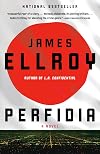
See photograph at https://atomikaztex.wordpress.com/wp-content/uploads/2012/01/little-tokyo2.jpg?w...
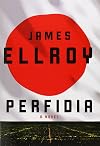
A photograph of Little Tokyo, Los Angeles, 1941, which was cropped for use on the cover of the Vintage edition of "Perfidia." Image sourced from Atomikaztex.
I had read all of early James Ellroy in my pre-Goodreads and pre-reviewing days. The increasing length of the later books started to wear on me. It requires a degree of determination to work your way through epic-length texts written in Ellroy's style. I now finally read Perfidia due to a Long Books Challenge with several GR Friends in which we tackle our lengthier TBR books. I can say that I not only read Perfidia, I survived it. 😅
Footnotes
* At the 2023 L.A. Festival of Books, Ellroy said that the series would now be an L.A. Quintet. Reference from Wikipedia.
** Examples of the style can be read in my occasional status updates below or here if you are reading outside of Goodreads.
Soundtrack
The song/tune Perfidia (1939 orig music & lyrics by Alberto Dominguez/English lyrics by Milton Leeds) is heard as the background to several scenes in the book either on the radio or in nightclubs. The popular version in 1941 was by the Glenn Miller Orchestra which you can listen to on YouTube here or on Spotify here. show less
A review of the Vintage paperback (July 7, 2015) of the Knopf hardcover original (September 9, 2014).
Land grabs, plastic surgery, blood libel. Rogue cops, sub attacks, a lynch-mob massacre. Pay phones. A white man in a purple sweater. Secret radios and feigned seppuku. The haughty Left and the bellicose Right. A grand alliance of war profiteers.
{A 3-star rating which is not so much a Like as an appreciation of the book's relentlessness.]
The self-described "demon dog of American literature" returns with the opening book of a supposed* 2nd L.A. Quartet as a prequel to the original L.A. Quartet (1987-1992) and the Underworld USA Trilogy (1995-2009).
Perfidia is set in December 1941 and opens on the eve of the Japanese show more attack on Pearl Harbor which brought the United States into the Second World War. Ellroy's trademark staccato, telegram, bullet-point style** relates a tale of widespread corruption and exploitation by politicians, policemen and public figures seeking to profit from the oncoming internments of American Japanese civilians.
As in the other Ellroy books, the characters are a mix of real-life and fiction. Prominent among the non-fictional figures are various former, current and future Los Angeles Police Chiefs, the then current L.A. Mayor, dozens of movie stars, and the occasional criminal. All of these are portrayed in an unflattering light. Whether the stories are true or are fictitious because dead people can't sue for defamation is left to the imagination of the reader. Major fictional parts are those of L.A. police officers Dudley "Dudster" Smith, Dwight "Bucky" Bleichert and Leland "Lee" Blanchard who all return in the original L.A. Quartet which is set several years later.
See photograph at https://atomikaztex.wordpress.com/wp-content/uploads/2012/01/little-tokyo2.jpg?w...
A photograph of Little Tokyo, Los Angeles, 1941, which was cropped for use on the cover of the Vintage edition of "Perfidia." Image sourced from Atomikaztex.
I had read all of early James Ellroy in my pre-Goodreads and pre-reviewing days. The increasing length of the later books started to wear on me. It requires a degree of determination to work your way through epic-length texts written in Ellroy's style. I now finally read Perfidia due to a Long Books Challenge with several GR Friends in which we tackle our lengthier TBR books. I can say that I not only read Perfidia, I survived it. 😅
Footnotes
* At the 2023 L.A. Festival of Books, Ellroy said that the series would now be an L.A. Quintet. Reference from Wikipedia.
** Examples of the style can be read in my occasional status updates below or here if you are reading outside of Goodreads.
Soundtrack
The song/tune Perfidia (1939 orig music & lyrics by Alberto Dominguez/English lyrics by Milton Leeds) is heard as the background to several scenes in the book either on the radio or in nightclubs. The popular version in 1941 was by the Glenn Miller Orchestra which you can listen to on YouTube here or on Spotify here. show less
Perfidia by James Ellroy (spoilers within)
I do not kill innocent bystanders because it’s a mitzvah not to and because I adhere to the Ten Commandments except when it is bad for business.
Mickey Cohen in L.A. Confidential
That’s James Ellroy in his prime, slipping with ease into flamboyant gangster talk. In the same book, you get his scattergun police reports, hard-boiled dialogue with convincing variations such as the Irish brogue of the Dudster, and the neon lavender prose of Hush Hush magazine, not to mention the occasional straight news story. Known for his darkness—no one is good in Ellroy’s novels and gets away with it—Ellroy should also be known for his polyphonic technique, not to mention his astonishing intellectual show more range, delivered like .38 rounds in virtually every scene, holes in the wall that leave a code deciphered: this man is an extremely widely read genius. Ellroy is also as knowledgeable about his environment, in all aspects, as any crime writer, and his books would fit well in sociology classes, particularly those intent on investigating the Eisenhower years to reveal the state of the union as it really was. Mentioning Eisenhower is apropos, for the dark fraud of his highway program is best studied through L.A., and Ellroy is all over it. He also, in his relentless portrayal of pragmatism run amok in the fight to get rich, and the fight against crime, brilliantly displays the corruption of the American soul itself—we forget that we really oughtn’t love the Mickster—he’s a cold-blooded killer—but so are his brothers in arms, the L.A. police. He also unflinchingly portrays truths about darktown L.A. that resonate as much today and are as relevant as ever. You want to know about Ferguson? Read Ellroy. You want to know why Chicago is so fucked up? Read Ellroy.
Ellroy’s L.A. tetralogy: The Black Dahlia, The Big Nowhere, L.A. Confidential, and White Jazz, is also remarkable for the way his books get better sequentially. The Black Dahlia is on a par with the best crime books written today (and introduces Ellroy’s side themes, particular the intersection of sex and brutality), The Big Nowhere takes a leap into full Ellroy as we know him mode, fat books with plots all the more feasible for the social realism of their play, and with character upon character who could carry their own books. His books are dense. After the quartet, Ellroy took a few of his characters and zoomed off into the Kennedy assassination and a broader Americana, and the books got fatter, the prose more scattergun, the truths every bit as scorching. Particularly admirable is his ability to use enormous personae in his scenes. Hoover, Kennedy, Howard Hughes—none of which escape his keen indictment of the corrupt nexus of foreign policy and domestic politics.
Now he’s decided to take his characters and his attention back in time, delivering Perfidia, the first of a projected trilogy that precedes the Black Dahlia. The book opens on the cusp of war, convincingly portraying a cop-slummed L.A. on the brink of being attacked at Pearl Harbor. The plot hinges on the slaughter of a Japanese family on the day before the attack, and rides the theme via the one Japanese cop on the payroll, a labman extraordinaire. Naturally, the book is worth the read, if only for Ellroy’s examination of the treatment of the Japanese during the war. If you haven’t read a history on the internment, you’ve read nothing as dark and real as Ellroy’s treatment. He provides convincing details of the machinations involved, of the breadth of the conspiracy. He also provides a rather typical fat Ellroy crime book, that, unfortunately, in my view, uses a number of characters from previous books, and for the most part to ill effect. If you love Ellroy, you will certainly want to read about a younger Dudley Smith, but you will not want to learn that the victim in the Black Dahlia is his illegitimate daughter. What’s the need? (She’s Ellroy’s mother, isn’t she?) Worst of all, Kay Lake, from L.A. Confidential is not only included, she is deeply embedded in the plot, given a diary and a fleshed out personality and story that make little sense. There is no need for her to bite the nose off a bull-dyke in a jail cell to titillate us Ellroy fans. Nor, in fact, does that scene make any sense. Ellroy writes a great deal about the Reds and the powers coming down on them, but here he is an Ellroy I have never met before, a boring Ellroy, and his cynicism, as he concentrates on a meaningless cell of actual reds doesn’t jibe with the corrupt L.A. of the Hollywood Ten. Perhaps the problem is personal. We know from his intense memoir about his murdered mother that he has issues with woman and murder, and I suspect he fell in love with Kay Lake, who stands out in his ouvre as the one hero (now at least)—on occasion there is redemption available for, say, her lover Bud White in L.A. Confidential, but it’s redemption in service of plot resolution and it comes with grotesque debilitation. Kay Lake, I suspect, is the only woman Ellroy the writer could love, a woman elusive, unpredictable and involved deeply in devious and dark events—I think it’s Ellroy biting the nose off the rapist prison matron more than it’s Kay Lake. Kay Lake in that spot doesn’t work. Ellroy does.
I’m going to leave a lot out and end this here. The book deserves to be read because Ellroy has earned your loyalty, and he pays it back by remaining very much Ellroy, if a hair skewed as a novelist, and pays it back double for his reportage of the intricacies of the internment of the Japanese. And you didn’t hear it here first, for Ellroy is lingering always in the minds of his readers, on the record, way way off the QT, and anything but hush hush. show less
I do not kill innocent bystanders because it’s a mitzvah not to and because I adhere to the Ten Commandments except when it is bad for business.
Mickey Cohen in L.A. Confidential
That’s James Ellroy in his prime, slipping with ease into flamboyant gangster talk. In the same book, you get his scattergun police reports, hard-boiled dialogue with convincing variations such as the Irish brogue of the Dudster, and the neon lavender prose of Hush Hush magazine, not to mention the occasional straight news story. Known for his darkness—no one is good in Ellroy’s novels and gets away with it—Ellroy should also be known for his polyphonic technique, not to mention his astonishing intellectual show more range, delivered like .38 rounds in virtually every scene, holes in the wall that leave a code deciphered: this man is an extremely widely read genius. Ellroy is also as knowledgeable about his environment, in all aspects, as any crime writer, and his books would fit well in sociology classes, particularly those intent on investigating the Eisenhower years to reveal the state of the union as it really was. Mentioning Eisenhower is apropos, for the dark fraud of his highway program is best studied through L.A., and Ellroy is all over it. He also, in his relentless portrayal of pragmatism run amok in the fight to get rich, and the fight against crime, brilliantly displays the corruption of the American soul itself—we forget that we really oughtn’t love the Mickster—he’s a cold-blooded killer—but so are his brothers in arms, the L.A. police. He also unflinchingly portrays truths about darktown L.A. that resonate as much today and are as relevant as ever. You want to know about Ferguson? Read Ellroy. You want to know why Chicago is so fucked up? Read Ellroy.
Ellroy’s L.A. tetralogy: The Black Dahlia, The Big Nowhere, L.A. Confidential, and White Jazz, is also remarkable for the way his books get better sequentially. The Black Dahlia is on a par with the best crime books written today (and introduces Ellroy’s side themes, particular the intersection of sex and brutality), The Big Nowhere takes a leap into full Ellroy as we know him mode, fat books with plots all the more feasible for the social realism of their play, and with character upon character who could carry their own books. His books are dense. After the quartet, Ellroy took a few of his characters and zoomed off into the Kennedy assassination and a broader Americana, and the books got fatter, the prose more scattergun, the truths every bit as scorching. Particularly admirable is his ability to use enormous personae in his scenes. Hoover, Kennedy, Howard Hughes—none of which escape his keen indictment of the corrupt nexus of foreign policy and domestic politics.
Now he’s decided to take his characters and his attention back in time, delivering Perfidia, the first of a projected trilogy that precedes the Black Dahlia. The book opens on the cusp of war, convincingly portraying a cop-slummed L.A. on the brink of being attacked at Pearl Harbor. The plot hinges on the slaughter of a Japanese family on the day before the attack, and rides the theme via the one Japanese cop on the payroll, a labman extraordinaire. Naturally, the book is worth the read, if only for Ellroy’s examination of the treatment of the Japanese during the war. If you haven’t read a history on the internment, you’ve read nothing as dark and real as Ellroy’s treatment. He provides convincing details of the machinations involved, of the breadth of the conspiracy. He also provides a rather typical fat Ellroy crime book, that, unfortunately, in my view, uses a number of characters from previous books, and for the most part to ill effect. If you love Ellroy, you will certainly want to read about a younger Dudley Smith, but you will not want to learn that the victim in the Black Dahlia is his illegitimate daughter. What’s the need? (She’s Ellroy’s mother, isn’t she?) Worst of all, Kay Lake, from L.A. Confidential is not only included, she is deeply embedded in the plot, given a diary and a fleshed out personality and story that make little sense. There is no need for her to bite the nose off a bull-dyke in a jail cell to titillate us Ellroy fans. Nor, in fact, does that scene make any sense. Ellroy writes a great deal about the Reds and the powers coming down on them, but here he is an Ellroy I have never met before, a boring Ellroy, and his cynicism, as he concentrates on a meaningless cell of actual reds doesn’t jibe with the corrupt L.A. of the Hollywood Ten. Perhaps the problem is personal. We know from his intense memoir about his murdered mother that he has issues with woman and murder, and I suspect he fell in love with Kay Lake, who stands out in his ouvre as the one hero (now at least)—on occasion there is redemption available for, say, her lover Bud White in L.A. Confidential, but it’s redemption in service of plot resolution and it comes with grotesque debilitation. Kay Lake, I suspect, is the only woman Ellroy the writer could love, a woman elusive, unpredictable and involved deeply in devious and dark events—I think it’s Ellroy biting the nose off the rapist prison matron more than it’s Kay Lake. Kay Lake in that spot doesn’t work. Ellroy does.
I’m going to leave a lot out and end this here. The book deserves to be read because Ellroy has earned your loyalty, and he pays it back by remaining very much Ellroy, if a hair skewed as a novelist, and pays it back double for his reportage of the intricacies of the internment of the Japanese. And you didn’t hear it here first, for Ellroy is lingering always in the minds of his readers, on the record, way way off the QT, and anything but hush hush. show less
For me personally, having read all of the LA Quartet and Ellroy's next trilogy, this was probably a 3, maybe 3 1/2. But, I really can't recommend it — much better to read one of his earlier books.
Anyway, set in LA, a couple of weeks around Pearl Harbor. Fin de siécle abandon, and the beginning of Japanese internment camps. Plenty of opportunity for casual racism, violence, corruption, wanton behavior. Somewhere in there there's a murder plot, but that becomes so, so peripheral to the book, even while it is a major plot-thread. Not that it's just forgotten — Ellroy wants us to still wants us to care about the case, I believe, and that is probably the central failing of the book.
He wants the murder case to be the loose thread that show more ties everything together, the lead which, in following, illustrates the whole corrupt LA society, the dangling end which when tugged causes everything to unravel; unfortunately, all that importance is too much for this flimsy plot point to withstand. In short, it makes no sense.
This is not entirely unknown in an Ellroy novel — there's often a point where I'm like "wait, was I supposed to have remembered that? Why is that happening now? Ah, well, just go with it". But that is way more pronounced in this book — in fact there is a multi-page confessional, written by one of the implicated parties, explaining for the reader how everything tied together. I can only imagine that passage was pressed upon Ellroy by a desperate editor, and, while that urge is understandable, it really highlights the deficiencies of the book rather than remedies them. Better by far to have just created a better plot.
Other notes: multiple characters from the previous books, which is kinda interesting. As ever, dialogue not his strong suit. As ever Ellroy revels in the milieu of a racist, sexist, corrupt, greedy society — the line between glorifying and exposing is never so blurry as with Ellroy. Over long. show less
Anyway, set in LA, a couple of weeks around Pearl Harbor. Fin de siécle abandon, and the beginning of Japanese internment camps. Plenty of opportunity for casual racism, violence, corruption, wanton behavior. Somewhere in there there's a murder plot, but that becomes so, so peripheral to the book, even while it is a major plot-thread. Not that it's just forgotten — Ellroy wants us to still wants us to care about the case, I believe, and that is probably the central failing of the book.
He wants the murder case to be the loose thread that show more ties everything together, the lead which, in following, illustrates the whole corrupt LA society, the dangling end which when tugged causes everything to unravel; unfortunately, all that importance is too much for this flimsy plot point to withstand. In short, it makes no sense.
This is not entirely unknown in an Ellroy novel — there's often a point where I'm like "wait, was I supposed to have remembered that? Why is that happening now? Ah, well, just go with it". But that is way more pronounced in this book — in fact there is a multi-page confessional, written by one of the implicated parties, explaining for the reader how everything tied together. I can only imagine that passage was pressed upon Ellroy by a desperate editor, and, while that urge is understandable, it really highlights the deficiencies of the book rather than remedies them. Better by far to have just created a better plot.
Other notes: multiple characters from the previous books, which is kinda interesting. As ever, dialogue not his strong suit. As ever Ellroy revels in the milieu of a racist, sexist, corrupt, greedy society — the line between glorifying and exposing is never so blurry as with Ellroy. Over long. show less
Members
- Recently Added By
Lists

Folio Prize 2015 Longlist
79 works; 2 members
Author Information

96+ Works 31,056 Members
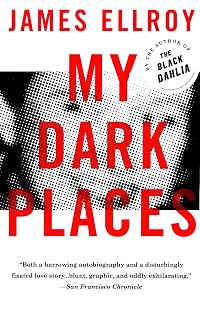
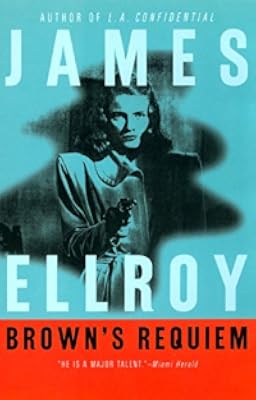
James Ellroy was born in Los Angeles in 1948. His L. A. Quartet novels - "The Black Dahlia", "The Big Nowhere", "L. A. Confidential", & "White Jazz" - were international best-sellers. His novel "American Tabloid" was Time magazine's Novel of the Year for 1995; his memoir, "My Dark Places", was a "Time" Best Book of the Year & a "New Yorker Times" show more Notable Book for 1996. He lives in Kansas City. (Publisher Provided) James Ellroy was born in Los Angeles, California on March 4, 1948. His parents were divorced and he moved in with his father after his mother was murdered in 1958. The story of his mother's unsolved murder would become the basis for his 1996 nonfiction work entitled My Dark Places. He attended Fairfax High School, where he sent Nazi pamphlets to girls he liked and criticized JFK, while advocating the reinstatement of slavery. He was eventually expelled for preaching Nazism in his English class. He joined the army after his expulsion from school, but after realizing that he did not belong there, he faked a stutter and convinced the army psychologist that he was not mentally fit for combat. After three months, he received a dishonorable discharge and returned home. His father died soon thereafter. He was thrown in juvenile hall for stealing a steak from the local market. When he got out, his father's friend became his guardian, but by the age of eighteen, he was back on the streets. He was sleeping outside, stealing, drinking and experimenting with drugs. It wasn't long before he was thrown in jail for breaking into a vacant apartment. When he got out of jail, he started a job at an adult book store, his addictions growing progressively larger. He was misusing the drug Benzedrex, a sinus inhalent which nearly drove him to Schizophrenia and his drinking was ruining his health. He contracted pneumonia twice as well as a condition called post-alchohol brain syndrome. Fearing for his sanity, he joined AA, became sober and found a job as a golf caddy. At the age of 30, he wrote his first novel entitled Brown's Requiem, which was published in 1981. His other works include Clandestine, Blood on the Moon, Because the Night, Suicide Hill, Killer on the Road, and The Cold Six Thousand. His works The Black Dahlia and L. A. Confidential were adapted into feature films. Ellroy's title, Perfidia, made the New York Times bestseller list in 2014. 030i show less
Some Editions
Awards and Honors
Series

Belongs to Publisher Series
Stile libero [Einaudi] (Big)
Common Knowledge
- Canonical title
- Perfidia
- Original title
- Perfidia
- Original publication date
- 2014-09-09
- People/Characters
- William H. Parker; Dudley Smith; Kay Lake; Hideo Ashida; Lee Blanchard
- Important places*
- Los Angeles, California, USA
- Important events
- World War II (1939 | 1945); World War II, Pacific Theater (1941-12-07 | 1945-09-02); Attack on Pearl Harbor (1941-12-07); Japanese-American Internment (1942 | 1945)
- Epigraph
- Envy thou not the oppressor,
And choose none of his ways.
- Proverbs 3:31 - Dedication
- TO LISA STAFFORD
- First words
- Fifth column: noun, and a popular colloquialism of 1941 America. The term derived from the recent Spanish Civil War. Four columns of soldiers were sent into battle. The Fifth Column stayed at home and performed industrial sab... (show all)otage, the dissemination of propaganda, and numerous other forms of less detectable subversion. Fifth Columnists sought to remain anonymous; their ambiguous and/or fully unidentified status made them seem as dangerous or more dangerous than the four columns engaged in day-to-day war.
The Jew Control Apparatus mandated this war - and how it's our whether we want it or not. It has been said that no news is good news, but that maxim predates the wondrous invention of radio, with its power to deliver all ... (show all) news - good and bad - at rocket-ship speed. Regrettably, tonight's new is all bad, for the Nazis and the Japs are on a ripsnorting rampage - and the war is rapidly heading our war. -The Thunderbolt Broadcast, Gerald L.K. Smith / K-L-A-N Radio, Los Angeles / Bootleg Transmitter, Tiajuana, Mexico / Friday, December 5, 1941 - Last words
- (Click to show. Warning: May contain spoilers.)He touched her face and said, "Katherine, love."
- Blurbers
- Grimson, Todd; King, Stephen
- Original language*
- Inglese
- Canonical DDC/MDS
- 813.54
- Canonical LCC
- PS3555.L6274
*Some information comes from Common Knowledge in other languages. Click "Edit" for more information.
Classifications
- Genres
- Fiction and Literature, Mystery, General Fiction, Historical Fiction
- DDC/MDS
- 813.54 — Literature & rhetoric American literature in English American fiction in English 1900-1999 1945-1999
- LCC
- PS3555 .L6274 — Language and Literature American literature American literature Individual authors 1961-
- BISAC
Statistics
- Members
- 795
- Popularity
- 35,141
- Reviews
- 31
- Rating
- (3.46)
- Languages
- 9 — English, Finnish, French, German, Greek, Italian, Polish, Spanish, Swedish
- Media
- Paper, Audiobook, Ebook
- ISBNs
- 36
- ASINs
- 12