On This Page
Description
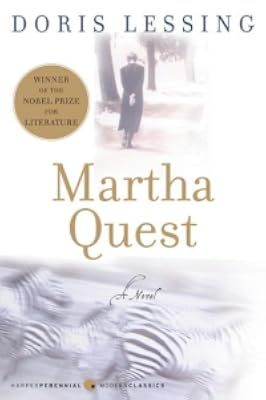
Intelligent, sensitive, and fiercely passionate, Martha Quest is a young woman living on a farm in Africa, feeling her way through the torments of adolescence and early womanhood. She is a romantic idealistic in revolt against the puritan snobbery of her parents, trying to live to the full with every nerve, emotion, and instinct laid bare to experience. For her, this is a time of solitary reading daydreams, dancing -- and the first disturbing encounters with sex. The first of Doris Lessing's show more timeless Children of Violence novels, Martha Quest is an endearing masterpiece. show lessTags
Recommendations



















Member Recommendations


Member Reviews
In Lessing's own words: Martha Quest has a simple plot. She has a childhood in the bush, quarrels with her mother, is taught politics by the Cohen boys, reads, escapes into a big town, Salisbury (Rhodesia), learns shorthand typing, plans all kinds of attractive futures, but is swept away into dancing and good times, and marries a suitable young civil servant while the drums are beating for the second world war. Lessing says in her autobiography "Under my Skin":
In short when I wrote Martha Quest I was being a novelist and not a chronicler. But if the novel is not the literal truth, then it is true in atmosphere, feeling more true than this record is trying to be factual
Martha Quest is Doris Lessing and it is amazing how closely the novel show more keeps to those facts revealed in her autobiography. I read the autobiography earlier this year and reading Martha Quest felt like a re-read of it, but with Lessing revealing much more about herself and the people around her. It is no secret that she used people from her life in Africa as models for her characters, what is surprising is that her memories of them in her autobiography were so similar to those is Martha Quest.
The novel starts with Martha's life as a 15 year old, already struggling with her overbearing mother and semi invalid father. They have a small farm out in the veld and are barely able to scrape a living, but it is not their hardships that are described but Martha's love of the landscape and the freedom to be herself. Racial tensions are evident not only between the White rulers and the black Africans, but more potently as far as Martha is concerned between the English, the Afrikaans and the Jews. It is the Jewish family that provide her in her seventeenth year with a means of escape to the town, by securing for her a place as a typist in their relative's law firm. At last she is free from her mother, but soon falls in with the crowd at the Rugby club. From the books that she has been devouring she is aware of racism in Africa, but the sight of a group of black prisoners chained together in town provides her with a reality check. Just as she was out of step with her parents, she finds herself out of step with the crowd at the Rugby club and it is only her alcohol fuelled life style that tides her over. She is a confused young woman, deeply conscious that the society that has embraced her is horribly at fault and some of Lessing's best writing centres around this confusion. It is a mad whirl of a life with alliances that define the young peoples place in their own devil may care society, but for Martha/Lessing undercutting all this is her need to revolt. She takes a Jewish musician as her first lover, but this feels more like a revolt and it cannot be sustained. Martha/Lessing reveals more of herself in these passages than she ever did in her biography; she comes across as prickly, super critical; this is her thoughts on Douglas the man that she will marry and the only person she meets at the Rugby club that thinks remotely like her:
She was still capable of being critical. For several days they were together for all their leisure time and she looked surreptitiously at him, with a feeling of disloyalty, and the round rather low forehead struck her unpleasantly-there was something mean about it, something commonplace; the shallow dry lines across it affected her; as for his hands, they were large and clumsy, rather red, heavily freckled, and covered with hair. Soon she averted her eyes from his hands, she did not see them, she did not see his forehead, with those unaccountably unpleasant lines, like the lines of worry on an elderly face.
This is fine writing, because it mirrors what Martha must keep hidden from herself concerning the colonial attitudes around her, in order to survive. It also reveals something of Lessing's own character as one gets the feeling she is describing her first husband. Reality, memories, feelings become inextricably linked as Lessing delves deeply into her life to write this novel. Martha sees her forthcoming marriage to Douglas as another escape. As a couple they will be able to forge a path for themselves and she will have the security she needs; she will be accepted, however she knows she does not love him and is aware she is deluding herself with the idea of a perfect marriage.
Martha Quest is an excellent study of one woman's struggle to be articulate and to make herself heard. She cannot escape the pressures of being a young single attractive woman in a society, where not only do men reign supreme, but they are in the majority. It is of course Lessing's own struggle and as such portrays brilliantly, life in an African colony just before the outbreak of world war II when attitudes are hardening and the only means of survival for someone like Lessing is to flee the country. This book is the first part of Lessing's children of violence series and I am looking forward to reading the next three. A four star read. show less
In short when I wrote Martha Quest I was being a novelist and not a chronicler. But if the novel is not the literal truth, then it is true in atmosphere, feeling more true than this record is trying to be factual
Martha Quest is Doris Lessing and it is amazing how closely the novel show more keeps to those facts revealed in her autobiography. I read the autobiography earlier this year and reading Martha Quest felt like a re-read of it, but with Lessing revealing much more about herself and the people around her. It is no secret that she used people from her life in Africa as models for her characters, what is surprising is that her memories of them in her autobiography were so similar to those is Martha Quest.
The novel starts with Martha's life as a 15 year old, already struggling with her overbearing mother and semi invalid father. They have a small farm out in the veld and are barely able to scrape a living, but it is not their hardships that are described but Martha's love of the landscape and the freedom to be herself. Racial tensions are evident not only between the White rulers and the black Africans, but more potently as far as Martha is concerned between the English, the Afrikaans and the Jews. It is the Jewish family that provide her in her seventeenth year with a means of escape to the town, by securing for her a place as a typist in their relative's law firm. At last she is free from her mother, but soon falls in with the crowd at the Rugby club. From the books that she has been devouring she is aware of racism in Africa, but the sight of a group of black prisoners chained together in town provides her with a reality check. Just as she was out of step with her parents, she finds herself out of step with the crowd at the Rugby club and it is only her alcohol fuelled life style that tides her over. She is a confused young woman, deeply conscious that the society that has embraced her is horribly at fault and some of Lessing's best writing centres around this confusion. It is a mad whirl of a life with alliances that define the young peoples place in their own devil may care society, but for Martha/Lessing undercutting all this is her need to revolt. She takes a Jewish musician as her first lover, but this feels more like a revolt and it cannot be sustained. Martha/Lessing reveals more of herself in these passages than she ever did in her biography; she comes across as prickly, super critical; this is her thoughts on Douglas the man that she will marry and the only person she meets at the Rugby club that thinks remotely like her:
She was still capable of being critical. For several days they were together for all their leisure time and she looked surreptitiously at him, with a feeling of disloyalty, and the round rather low forehead struck her unpleasantly-there was something mean about it, something commonplace; the shallow dry lines across it affected her; as for his hands, they were large and clumsy, rather red, heavily freckled, and covered with hair. Soon she averted her eyes from his hands, she did not see them, she did not see his forehead, with those unaccountably unpleasant lines, like the lines of worry on an elderly face.
This is fine writing, because it mirrors what Martha must keep hidden from herself concerning the colonial attitudes around her, in order to survive. It also reveals something of Lessing's own character as one gets the feeling she is describing her first husband. Reality, memories, feelings become inextricably linked as Lessing delves deeply into her life to write this novel. Martha sees her forthcoming marriage to Douglas as another escape. As a couple they will be able to forge a path for themselves and she will have the security she needs; she will be accepted, however she knows she does not love him and is aware she is deluding herself with the idea of a perfect marriage.
Martha Quest is an excellent study of one woman's struggle to be articulate and to make herself heard. She cannot escape the pressures of being a young single attractive woman in a society, where not only do men reign supreme, but they are in the majority. It is of course Lessing's own struggle and as such portrays brilliantly, life in an African colony just before the outbreak of world war II when attitudes are hardening and the only means of survival for someone like Lessing is to flee the country. This book is the first part of Lessing's children of violence series and I am looking forward to reading the next three. A four star read. show less
Other people commented on the plot, so I will leave that out.
Whenever I read Lessing's work, I am amazed with how she manages to write about one thing, and say another. I like that she constructs her own language to reveal old issues in a new light; To me, she illuminates that moral positions are rarely taken because people agree or disagree with them. People may think one or another thing, but they make certain morally charged acts because of other things that happen in their lives. It's so easy to allow the rhythm of the everyday life to take you here or there, and so difficult to break from it, because when you do, there is a serious possibility you'll be left alone.
I think what I like best is that she portrays how being with show more people - having a family, and a social circle - does not lead to a fulfilled life but serves as a tampon against overwhelming loneliness. You take what you can get, and do what you can with it...
Dark and caring, that's how I would describe the guiding point of view in this, and other Lessing's books. show less
Whenever I read Lessing's work, I am amazed with how she manages to write about one thing, and say another. I like that she constructs her own language to reveal old issues in a new light; To me, she illuminates that moral positions are rarely taken because people agree or disagree with them. People may think one or another thing, but they make certain morally charged acts because of other things that happen in their lives. It's so easy to allow the rhythm of the everyday life to take you here or there, and so difficult to break from it, because when you do, there is a serious possibility you'll be left alone.
I think what I like best is that she portrays how being with show more people - having a family, and a social circle - does not lead to a fulfilled life but serves as a tampon against overwhelming loneliness. You take what you can get, and do what you can with it...
Dark and caring, that's how I would describe the guiding point of view in this, and other Lessing's books. show less
Not exactly your average coming-of-age novel, but a witty, subtle look at the complexities of growing up. There may be hundreds of novels about intelligent, politically-aware young people trapped in stultifying environments, but very few of them give such a clear insight into what it's really like to be caught between abstract ideals and the pressure to conform. Lessing as narrator is very good at steering us into seeing what is wrong with Martha's decisions and the racist colonial society she lives in, without it ever feeling like gratuitous hindsight.
A Portrait of Settler Colonial Life in The Twentieth Century
Martha Quest, the protagonist of this book, is a young white woman coming of age in a deeply and violently racist and very anti-semitic African British colonial society south of the equator. The story starts in the period before the second world war, during the Spanish civil war, and ends during Hitler's invasion of Bohemia. Living on a farm, with her British family of impoverished farmers parented by a father constantly reliving his first world war experiences and a controlling mother, Martha spends her days reading books and daydreaming. While Martha detests the racist conditions and reacts against her parents with rebellious comments that align with her leftist position, show more she's helpless to the society she finds herself in. The native Black population has been dispossessed, segregated, and repressed by use of the colonial police state; their only relationship to the settlers being one of master-servant, they are treated inhumanely with hostility, suspicion or as sources of amusement. Reading books provided by the Cohen brothers who are her Jewish friends, Martha continues developing the political stances that sharpen her sense of injustice. All the while she feels stifled by the relationship with her parents, particularly her mother, who insists on a maintenance of the status quo which has the British at the top, then the Afrikaans, then the Jewish, and finally the Black native population at the bottom. When a job opportunity arrives that provides Martha the opportunity of escape to the city, she leaves her farm life but soon finds herself entrapped in yet another society with its own conventions not so different from the one she's escaped.
This book provides an interesting look into settler life. All those social rules, some more pronounced than others, that go into the build up of a society. While she had done that before with [b:The Grass Is Singing|130115|The Grass Is Singing|Doris Lessing|https://i.gr-assets.com/images/S/compressed.photo.goodreads.com/books/1358325519l/130115._SY75_.jpg|1401383], her debut novel, there's more detail of the societal structures furnished in this book. Also interesting here is the pull a society has on an individual despite detesting what it stands for. For instance that Martha participates in the institutions she abhors, keeps company with people who share racist and anti-semitic views, and her search for individual freedom and fun clash with her views leaving her annoyed and guilty.
This book was published in 1952 and during this time; the British Empire despite losing India still existed; the first apartheid laws were being passed in South Africa; American schools weren't desegrated yet, and the racist structures that exist today were more pronounced and more blatant in their violence. With this historical backdrop, the story of the political and individual development of a young white woman, exploring her leftist ideas and sexual awakening probably wasn't the most popular of narratives then. To add to that fact that Lessing took parts of her own life in creating the story makes it even more fascinating. The reader is so immersed in the time and place and in Martha's head, that at times I forgot this was a third-person narrative and wasn't in first-person. show less
Martha Quest, the protagonist of this book, is a young white woman coming of age in a deeply and violently racist and very anti-semitic African British colonial society south of the equator. The story starts in the period before the second world war, during the Spanish civil war, and ends during Hitler's invasion of Bohemia. Living on a farm, with her British family of impoverished farmers parented by a father constantly reliving his first world war experiences and a controlling mother, Martha spends her days reading books and daydreaming. While Martha detests the racist conditions and reacts against her parents with rebellious comments that align with her leftist position, show more she's helpless to the society she finds herself in. The native Black population has been dispossessed, segregated, and repressed by use of the colonial police state; their only relationship to the settlers being one of master-servant, they are treated inhumanely with hostility, suspicion or as sources of amusement. Reading books provided by the Cohen brothers who are her Jewish friends, Martha continues developing the political stances that sharpen her sense of injustice. All the while she feels stifled by the relationship with her parents, particularly her mother, who insists on a maintenance of the status quo which has the British at the top, then the Afrikaans, then the Jewish, and finally the Black native population at the bottom. When a job opportunity arrives that provides Martha the opportunity of escape to the city, she leaves her farm life but soon finds herself entrapped in yet another society with its own conventions not so different from the one she's escaped.
This book provides an interesting look into settler life. All those social rules, some more pronounced than others, that go into the build up of a society. While she had done that before with [b:The Grass Is Singing|130115|The Grass Is Singing|Doris Lessing|https://i.gr-assets.com/images/S/compressed.photo.goodreads.com/books/1358325519l/130115._SY75_.jpg|1401383], her debut novel, there's more detail of the societal structures furnished in this book. Also interesting here is the pull a society has on an individual despite detesting what it stands for. For instance that Martha participates in the institutions she abhors, keeps company with people who share racist and anti-semitic views, and her search for individual freedom and fun clash with her views leaving her annoyed and guilty.
This book was published in 1952 and during this time; the British Empire despite losing India still existed; the first apartheid laws were being passed in South Africa; American schools weren't desegrated yet, and the racist structures that exist today were more pronounced and more blatant in their violence. With this historical backdrop, the story of the political and individual development of a young white woman, exploring her leftist ideas and sexual awakening probably wasn't the most popular of narratives then. To add to that fact that Lessing took parts of her own life in creating the story makes it even more fascinating. The reader is so immersed in the time and place and in Martha's head, that at times I forgot this was a third-person narrative and wasn't in first-person. show less
Martha is an irritating yet endearing character. She is desperate to escape the stultifying, violently prejudiced culture of apartheid Rhodesia, yet in her adolescent confusion makes choices that trap her further. This is the first of the five volumes of Lessing's Children of Violence series.
Recently I was trying to remember the title of this book. I read it as an adult during a period when I was catching up on so-called "books for girls/women". Yes, even raised in the heyday of bra burning and the toppling of male chauvinist social pillars, I still experienced a deprived adolescence during which I wasn't really exposed to books by females about females. This book was OK. There's no question: Ms Lessing can write, very well indeed; and the prose is lovely. The problem I had was mainly that the protagonist (Martha) felt really wimpy to me. I didn't find her strong enough, interesting enough, or compelling enough to grip me firmly. Maybe that sounds weird, but that's how I felt. So my two stars really are simply because I show more thought the book was OK but it wasn't really my thing. Needless to say, I didn't continue on to read the rest of the series. show less
This first novel in the 'Children of Violence' series is a vivid, beautifully written, and at times uncomfortable account of a young girl, Martha Quest, growing up in a British colony in Africa just before World War II. Martha is a wonderful character; stubborn and resilient - and full of bitter adolescent resentment and self-consciousness. Although her ideas are radical for the time, Martha is also subject to her own uncertainty and insecurities, which allow her to be swept along with the tide. Without consciously meaning to, she conforms to the expectations of society and her contemporaries - as a result, she finds herself in a world she doesn't understand, and in the company of those she feels little but contempt for. Inevitably, she show more succumbs to the way of life that has for so long repulsed her. Simmering beneath the surface is the racism and hypocrisy prevalent in the colonies, and the gradual acceptance that elsewhere in the world, a war is brewing.
This is a superb novel and makes for compulsive reading. There is much truth that can be taken from the book, and I highly recommend it: especially for all those who know that sometimes it can be hard to find your place in the world. show less
This is a superb novel and makes for compulsive reading. There is much truth that can be taken from the book, and I highly recommend it: especially for all those who know that sometimes it can be hard to find your place in the world. show less
Members
- Recently Added By
Lists

20th Century Literature
1,161 works; 55 members

Best African Books
126 works; 46 members

Female Protagonist
1,056 works; 57 members

Women's Stories
88 works; 13 members

1950s
340 works; 22 members

Book Riot's 100 must-read works of Jewish Fiction
100 works; 8 members

Fiction with Women's Names in the Title
378 works; 15 members
Author Information

262+ Works 37,097 Members
Doris Lessing was born in Kermanshah, Persia (later Iran) on October 22, 1919 and grew up in Rhodesia (the present-day Zimbabwe). During her two marriages, she submitted short fiction and poetry for publication. After moving to London in 1949, she published her first novel, The Grass Is Singing, in 1950. She is best known for her 1954 Somerset show more Maugham Award-winning experimental novel The Golden Notebook. Her other works include This Was the Old Chief's Country, the Children of Violence series, the Canopus in Argos - Archives series, and Alfred and Emily. She has received numerous awards for her work including the 2001 Prince of Asturias Prize in Literature, the David Cohen British Literature Prize, and the 2007 Nobel Prize for Literature. She died on November 17, 2013 at the age of 94. (Bowker Author Biography) show less
Some Editions
Series

Belongs to Publisher Series
Klett-Cotta im dtv (10446)
Work Relationships
Common Knowledge
- Canonical title*
- Martha Quest
- Original title
- Martha Quest
- Original publication date
- 1952
- People/Characters
- Martha Quest
- Important places
- Africa; Zimbabwe (Rhodesia)
- Epigraph
- I was so tired of it, and also tired of the future before it comes
- Olive Schreiner
Part One.
The worst of a woman is that she expects you to make love to her, or to pretend to make love to her
- Baron Corvo
Part Two.
In the lives of most women everything, even the greatest sorrow, resolves itself into a question of 'trying on'.
- Proust
Part Three.
But far within him something cried
For the great tragedy to start,
The pang of lingering mercy fall
And sorrow break his heart.
- Edwin Muir
Part Four. - Dedication
- [None]
- First words
- Two elderly women sat knitting on that part of the veranda which was screened from the sun by a golden shower creeper; the tough stems were so thick with flower it was as if the glaring afternoon was dammed against them in a ... (show all)surf of its own light made visible in the dripping, orange-coloured clusters.
- Last words
- (Click to show. Warning: May contain spoilers.)He began thinking, with the wistfulness of a lonely and ageing man, of possible grandchildren; for to a man like Mr. Maynard a son like Binkie is as good as having no son at all.
- Original language*
- Engels
*Some information comes from Common Knowledge in other languages. Click "Edit" for more information.
Classifications
Statistics
- Members
- 1,153
- Popularity
- 21,780
- Reviews
- 14
- Rating
- (3.64)
- Languages
- 13 — Danish, Dutch, English, Finnish, German, Italian, Korean, Norwegian (Bokmål), Polish, Portuguese, Spanish, Swedish, Turkish
- Media
- Paper, Ebook
- ISBNs
- 45
- ASINs
- 19