On This Page
Description
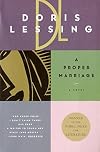
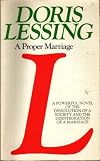
The second book in the Nobel Prize for Literature winner's 'Children of Violence' series tracing the life of Martha Quest from her childhood in colonial Africa to old age in post-nuclear Britain. 'A Proper Marriage' sees twenty-something Martha beginning to realise that her marriage has been a terrible mistake. Already the first passionate flush of matrimony has begun to fade; sensuality has become dulled by habit, blissful motherhood now seems no more than a tiresome chore. Caught up in a show more maelstrom of a world war she can no longer ignore, Martha's political consciousness begins to dawn, and, seizing independence for the first time, she chooses to make her life her own. show lessTags
Recommendations






















Member Recommendations

Member Reviews
C'è un mondo diviso in zone, incompatibili e incomprensibili l'una all'altra.
Ogni zona è quasi lo stereotipo di un comportamento umano, dal naturalismo pacifista e matriarcale della Zona Tre, al militarismo sfrenato e molto maschilista della Zona Quattro, all'anarchia feroce della Zona Cinque.
Questi modi di vivere stereotipati e fossilizzati portano inesorabilmente a un declino nella qualità morale della vita, reso visibile dalla sterilità, così i Tutori di questo mondo decidono di movimentare un po' le cose con una serie di matrimoni tra i regnanti delle varie zone, che porteranno a una nuova circolazione delle idee, e alla fecondità dei corpi e delle anime.
Una parabola in bilico tra new age e fantascienza contro show more l'incomunicabilità, la mancanza di curiosità e la cecità provocata dall'arroccamento nelle proprie convinzioni. show less
Ogni zona è quasi lo stereotipo di un comportamento umano, dal naturalismo pacifista e matriarcale della Zona Tre, al militarismo sfrenato e molto maschilista della Zona Quattro, all'anarchia feroce della Zona Cinque.
Questi modi di vivere stereotipati e fossilizzati portano inesorabilmente a un declino nella qualità morale della vita, reso visibile dalla sterilità, così i Tutori di questo mondo decidono di movimentare un po' le cose con una serie di matrimoni tra i regnanti delle varie zone, che porteranno a una nuova circolazione delle idee, e alla fecondità dei corpi e delle anime.
Una parabola in bilico tra new age e fantascienza contro show more l'incomunicabilità, la mancanza di curiosità e la cecità provocata dall'arroccamento nelle proprie convinzioni. show less
This is page after page after page of close, conscientious fiction-writing, of the old-fashioned sort that tries unironically to put you in the mind of someone else. So successful is Lessing that after reading two books in this sequence, I genuinely feel like I've experienced growing up as a woman in 1930s Rhodesia. I can recommend the experience!
Having watched Martha Quest grow from a girl into a young woman during book one, here we see her grapple with the emotions of marriage, pregnancy and motherhood. Martha is not happily married but her unhappiness comes just as much from her own responses and expectations as from her dopey spouse; she second-guesses herself constantly, and spends hours analysing the extent to which she lives up, show more or down, to society's idea of a woman.
After hours of determined concentration she would emerge with the phrase, ‘Women hate men who take them for granted.’ It would have done for a story in a magazine. But that impersonal ‘women’ was a comfort – briefly, for no sooner had she reached it than she saw the image that the words conjured up: something sought, wooed, capricious, bestowing favours. No, there was something extremely distasteful about that capricious female; no sooner had Martha caught a glimpse of her than she must repudiate her entirely: she was certainly from the past! The suggestion of coyness was unbearable.
From the moment we realise Martha is going to have a baby – which is to say within the first twenty pages or so – we are in a frenzy of anticipation at the prospect of seeing this meticulous, forensic prose style brought to bear on the experience of childbirth. When it comes, it's a true tour-de-force – Lessing is equal to the challenge as no other writer I've encountered has been, at least to my (disinterested male) mind.
Martha no longer had the energy to achieve a mild amusement. The small lit place in her brain was dimming most alarmingly with the pains. Every time, the light nearly went out; always, it flickered precariously and shone up again. Martha noted that something new was happening to time. The watch that lay six inches from her nose on her crooked arm said the pains were punctual at two minutes. But from the moment that the warning hot wave of pain swept up her back, she entered a place where there was no time at all. An agony so unbelievable gripped her that her astounded and protesting mind cried out it was impossible such pain should be. It was a pain so violent that it was no longer pain, but a condition of being. Every particle of flesh shrieked out, while the wave spurted like an electric current from somewhere in her backbone and went through her in shock after shock. The wave receded, however, just as she had decided she would disintegrate under it, and then she felt the fist that gripped her slowly loosen. Through the sweat in her eyes she saw that ten seconds had passed…
This goes on and on for several pages of sustained unsentimentality. Indeed Lessing's entire depiction of motherhood is an unsentimental one – Martha is determined to be independent, and though she loves her daughter, the child, like the husband, is in the final analysis an impediment to her freedom. One by one the misty-eyed clichés are dismantled, with an almost perverse need to uncover the negative realities.
That phrase, ‘having a baby’, which was every girl's way of thinking of a first child, was nothing but a mask to conceal the truth. One saw a flattering image of a madonna-like woman with a helpless infant in her arms; nothing could be more attractive. What one did not see, what everyone conspired to prevent one seeing, was the middle-aged woman who has done nothing but produce two or three commonplace and tedious citizens in a world that was already too full of them.
(In many of Lessing's sentences there is a single word choice that lifts the whole thought on to a higher level; here, I think, it's ‘citizens’.) I suspect there are probably few women, however fulfilled and delighted with their own choices, who won't see at least some aspects of truth in Martha's postpartum-depressive ruminations. Even now this is not a subject well covered in fiction, and in part this seems to have been Lessing's motivation for writing – one throwaway remark gives you a clue to the genesis of the whole book:
But what is most difficult is this: If you read novels and diaries, women didn't seem to have these problems. Is it really conceivable that we should have turned into something quite different in the space of about fifty years? Or do you suppose they didn't tell the truth, the novelists? In the books, the young and idealistic girl gets married, has a baby – she at once turns into something quite different; and she is perfectly happy to spend her whole life bringing up children with a tedious husband.
I was riveted by my exposure to the mores and prejudices of this peculiar time and place; and even in its most boring moments, that livewire feeling of access to another person's mind, another person's thought processes, kept me hooked. Love Martha or hate her, but it's heady stuff. show less
Having watched Martha Quest grow from a girl into a young woman during book one, here we see her grapple with the emotions of marriage, pregnancy and motherhood. Martha is not happily married but her unhappiness comes just as much from her own responses and expectations as from her dopey spouse; she second-guesses herself constantly, and spends hours analysing the extent to which she lives up, show more or down, to society's idea of a woman.
After hours of determined concentration she would emerge with the phrase, ‘Women hate men who take them for granted.’ It would have done for a story in a magazine. But that impersonal ‘women’ was a comfort – briefly, for no sooner had she reached it than she saw the image that the words conjured up: something sought, wooed, capricious, bestowing favours. No, there was something extremely distasteful about that capricious female; no sooner had Martha caught a glimpse of her than she must repudiate her entirely: she was certainly from the past! The suggestion of coyness was unbearable.
From the moment we realise Martha is going to have a baby – which is to say within the first twenty pages or so – we are in a frenzy of anticipation at the prospect of seeing this meticulous, forensic prose style brought to bear on the experience of childbirth. When it comes, it's a true tour-de-force – Lessing is equal to the challenge as no other writer I've encountered has been, at least to my (disinterested male) mind.
Martha no longer had the energy to achieve a mild amusement. The small lit place in her brain was dimming most alarmingly with the pains. Every time, the light nearly went out; always, it flickered precariously and shone up again. Martha noted that something new was happening to time. The watch that lay six inches from her nose on her crooked arm said the pains were punctual at two minutes. But from the moment that the warning hot wave of pain swept up her back, she entered a place where there was no time at all. An agony so unbelievable gripped her that her astounded and protesting mind cried out it was impossible such pain should be. It was a pain so violent that it was no longer pain, but a condition of being. Every particle of flesh shrieked out, while the wave spurted like an electric current from somewhere in her backbone and went through her in shock after shock. The wave receded, however, just as she had decided she would disintegrate under it, and then she felt the fist that gripped her slowly loosen. Through the sweat in her eyes she saw that ten seconds had passed…
This goes on and on for several pages of sustained unsentimentality. Indeed Lessing's entire depiction of motherhood is an unsentimental one – Martha is determined to be independent, and though she loves her daughter, the child, like the husband, is in the final analysis an impediment to her freedom. One by one the misty-eyed clichés are dismantled, with an almost perverse need to uncover the negative realities.
That phrase, ‘having a baby’, which was every girl's way of thinking of a first child, was nothing but a mask to conceal the truth. One saw a flattering image of a madonna-like woman with a helpless infant in her arms; nothing could be more attractive. What one did not see, what everyone conspired to prevent one seeing, was the middle-aged woman who has done nothing but produce two or three commonplace and tedious citizens in a world that was already too full of them.
(In many of Lessing's sentences there is a single word choice that lifts the whole thought on to a higher level; here, I think, it's ‘citizens’.) I suspect there are probably few women, however fulfilled and delighted with their own choices, who won't see at least some aspects of truth in Martha's postpartum-depressive ruminations. Even now this is not a subject well covered in fiction, and in part this seems to have been Lessing's motivation for writing – one throwaway remark gives you a clue to the genesis of the whole book:
But what is most difficult is this: If you read novels and diaries, women didn't seem to have these problems. Is it really conceivable that we should have turned into something quite different in the space of about fifty years? Or do you suppose they didn't tell the truth, the novelists? In the books, the young and idealistic girl gets married, has a baby – she at once turns into something quite different; and she is perfectly happy to spend her whole life bringing up children with a tedious husband.
I was riveted by my exposure to the mores and prejudices of this peculiar time and place; and even in its most boring moments, that livewire feeling of access to another person's mind, another person's thought processes, kept me hooked. Love Martha or hate her, but it's heady stuff. show less
This is not the story of a resolute woman leaving a loveless marriage, but of one woman’s struggle to make some sense of her life whilst feeling trapped in a society that she finds oppressive. I’m bored, I’m bored, I’m bored she pleads……..
The story follows closely on the heels of [Martha Quest]; Lessings first novel in the Children of Violence series. It is set in a small town in Southern Rhodesia just before the start of World War II. Martha is settling down to married life with Douglas a popular young man who has a good job in the local Colonial Government Offices. The couple are part of a young crowd whose social life centres around the Rugby Club, friendly and inclusive they spend their time drinking dancing and drinking show more some more, there seems to be little else to do. Martha is not over concerned about starting a family; she sort of believes that she won’t get pregnant, but she does very quickly and while she had vague feeling of being trapped in her marriage these are reinforced by her pregnancy. Circumstances dictate she must have her baby in the local hospital which is run on old fashioned ideas and Martha is unable to rebel. Her anxieties about her life are exaggerated by her ambivalent feelings to her baby daughter. The young men of the Rugby Club are excited about the start of the War, they can’t wait to be soldiers and after a miserable few months of waiting they are sent away to the North of the country for training. Douglas has lied about his ulcer to be part of the big game and after a year is sent back home, where he finds that Martha has become increasingly dissatisfied with her role of wife and mother. Her political conscience has been stirred as she desperately searches for something else and the final third of the book centres around her efforts to leave Douglas and her daughter.
When Martha attends her first political meeting of a leftist group in the colony she is surprised to see a black man in attendance:
“This was the first time in her whole life, and she was now 21 - the first time in a life spent in a colony where nine tenths of the population were dark-skinned - that she had sat in a room with a dark-skinned person as an equal”
The unwritten irony is that Martha and the dark-skinned man would only be equal in that room, because at that time a colour bar was in operation under apartheid laws. Martha herself as a wife of an up and coming administrator lives in a large house with five black servants. She finds it difficult to play her expected role as Lord and Master and is frequently admonished by her mother and others who are clear in their ideas that the blacks must be kept in their place.
The story in many respects stays closely to Lessing’s own life and experiences as a young married mother in Southern Rhodesia, with one important exception; Martha although considered an intellectual by her peers does not write and has no aspirations to be an author. This absence gives her less of a focus than Lessing’s own life and so I conclude that Martha’s issues while being similar to Lessing’s own are more of a mixture of some of the other people that Lessing saw around her. It is clear that Lessing understands the frustrations of a women living in a town and discovering that the society, the town, her marriage are too small for her, but this is a gradual and painful discovery and once it is made, there is the difficulty of breaking away. It is difficult today for a woman to walk away from a “good” husband and her daughter, but in a closed society in a small colony the pressures to conform are increased exponentially.
Much of the story is written from Martha’s point of view and we follow closely her confinement and her experiences in the labour ward of the hospital and we see her marriage largely through her eyes, however Lessing inserts a section that outlines the story of Douglas’s final days in uniform and we have a chance to appreciate his views and character. Martha comes to sees him as a boy who has never really grown up, like so many of the other men in the colony and his story does nothing to deprecate this.
Closely and finally observed characters and an atmosphere of a society that is struggling to keep it’s head above water are set against the inner turmoil of Martha’s frustrations with her young life. It is a balance that gives a convincing portrait of life in Southern Rhodesia at the start of the second world war and the struggles of a spirited young woman to break free. Written from the heart by a fine young author this novel can’t fail to impress and it does. A four star read. show less
The story follows closely on the heels of [Martha Quest]; Lessings first novel in the Children of Violence series. It is set in a small town in Southern Rhodesia just before the start of World War II. Martha is settling down to married life with Douglas a popular young man who has a good job in the local Colonial Government Offices. The couple are part of a young crowd whose social life centres around the Rugby Club, friendly and inclusive they spend their time drinking dancing and drinking show more some more, there seems to be little else to do. Martha is not over concerned about starting a family; she sort of believes that she won’t get pregnant, but she does very quickly and while she had vague feeling of being trapped in her marriage these are reinforced by her pregnancy. Circumstances dictate she must have her baby in the local hospital which is run on old fashioned ideas and Martha is unable to rebel. Her anxieties about her life are exaggerated by her ambivalent feelings to her baby daughter. The young men of the Rugby Club are excited about the start of the War, they can’t wait to be soldiers and after a miserable few months of waiting they are sent away to the North of the country for training. Douglas has lied about his ulcer to be part of the big game and after a year is sent back home, where he finds that Martha has become increasingly dissatisfied with her role of wife and mother. Her political conscience has been stirred as she desperately searches for something else and the final third of the book centres around her efforts to leave Douglas and her daughter.
When Martha attends her first political meeting of a leftist group in the colony she is surprised to see a black man in attendance:
“This was the first time in her whole life, and she was now 21 - the first time in a life spent in a colony where nine tenths of the population were dark-skinned - that she had sat in a room with a dark-skinned person as an equal”
The unwritten irony is that Martha and the dark-skinned man would only be equal in that room, because at that time a colour bar was in operation under apartheid laws. Martha herself as a wife of an up and coming administrator lives in a large house with five black servants. She finds it difficult to play her expected role as Lord and Master and is frequently admonished by her mother and others who are clear in their ideas that the blacks must be kept in their place.
The story in many respects stays closely to Lessing’s own life and experiences as a young married mother in Southern Rhodesia, with one important exception; Martha although considered an intellectual by her peers does not write and has no aspirations to be an author. This absence gives her less of a focus than Lessing’s own life and so I conclude that Martha’s issues while being similar to Lessing’s own are more of a mixture of some of the other people that Lessing saw around her. It is clear that Lessing understands the frustrations of a women living in a town and discovering that the society, the town, her marriage are too small for her, but this is a gradual and painful discovery and once it is made, there is the difficulty of breaking away. It is difficult today for a woman to walk away from a “good” husband and her daughter, but in a closed society in a small colony the pressures to conform are increased exponentially.
Much of the story is written from Martha’s point of view and we follow closely her confinement and her experiences in the labour ward of the hospital and we see her marriage largely through her eyes, however Lessing inserts a section that outlines the story of Douglas’s final days in uniform and we have a chance to appreciate his views and character. Martha comes to sees him as a boy who has never really grown up, like so many of the other men in the colony and his story does nothing to deprecate this.
Closely and finally observed characters and an atmosphere of a society that is struggling to keep it’s head above water are set against the inner turmoil of Martha’s frustrations with her young life. It is a balance that gives a convincing portrait of life in Southern Rhodesia at the start of the second world war and the struggles of a spirited young woman to break free. Written from the heart by a fine young author this novel can’t fail to impress and it does. A four star read. show less
The time and place is Rhodesia of the 1940's in the early stages of Rhodesia becoming involved in World War II.
I am struck by how constrained the characters are from saying what they really want to say and acting as they really want to act, or even associating with or marrying who they want to associate with and marry. At the end of book 1 Martha drifted into a marriage, and now she is acting in the marriage the way she believes she should, which in large part means not acting like her mother, the complaining female.
Martha Quest is a character who is very intellectual, as is the narrator, who seems to be a version of Martha somewhat in the future, but she doesn't seem able to do is to simply ask herself what it is that she wants. Once I show more was involved in this exercise in a kind of self-actualizing group. One person keeps asking: what do you want. The other person responds with whatever comes into their head. It goes on for quite some time, and does in fact finally result in you getting a pretty clear idea of what you want. I recommend it to Martha, in the series of dialogues that I tend to have in my head with characters in novels that I read.
Martha always has a sense that she is meant for something, and that something is different from being in a marriage and having a child. She doesn't really know what it is, but seems to feel closer to it when she is involved with socialist study groups, although, at the same time, she sees that little action is taken. In the Rhodesia of the 1940's Martha is one of a distinct minority who believe that black Africans are equal to whites. While she believes this, at the same time the unequal world is the one in which she is comfortable, used to, there would be something disquieting about a change in that status quo. This is probably nearly always so to some extent even of the most well-intentioned person, and part of Lessing's honesty that she presents it so, instead of showing Martha totally as we (or I) might want her to be. It's probably also so that most of us have a sense of destiny without knowing what the destiny is.
The one thing she feels strongly about his her daughter, Caroline. While she feels tenderness for her daughter, she feels so strongly that parents ruin their children, so it is possible for her to feel the way to save Caroline would be to leave her.
So this book is a second stage of Martha's becoming. And while I am impatient and disagree with her choices, even parts of the final one when she seems to be getting back on her own path at last, still I am interested in learning what she is becoming. There is always a kind of irony and even humor in how she is looking over her own shoulder, which is maybe what allows me to like this character in the end. show less
I am struck by how constrained the characters are from saying what they really want to say and acting as they really want to act, or even associating with or marrying who they want to associate with and marry. At the end of book 1 Martha drifted into a marriage, and now she is acting in the marriage the way she believes she should, which in large part means not acting like her mother, the complaining female.
Martha Quest is a character who is very intellectual, as is the narrator, who seems to be a version of Martha somewhat in the future, but she doesn't seem able to do is to simply ask herself what it is that she wants. Once I show more was involved in this exercise in a kind of self-actualizing group. One person keeps asking: what do you want. The other person responds with whatever comes into their head. It goes on for quite some time, and does in fact finally result in you getting a pretty clear idea of what you want. I recommend it to Martha, in the series of dialogues that I tend to have in my head with characters in novels that I read.
Martha always has a sense that she is meant for something, and that something is different from being in a marriage and having a child. She doesn't really know what it is, but seems to feel closer to it when she is involved with socialist study groups, although, at the same time, she sees that little action is taken. In the Rhodesia of the 1940's Martha is one of a distinct minority who believe that black Africans are equal to whites. While she believes this, at the same time the unequal world is the one in which she is comfortable, used to, there would be something disquieting about a change in that status quo. This is probably nearly always so to some extent even of the most well-intentioned person, and part of Lessing's honesty that she presents it so, instead of showing Martha totally as we (or I) might want her to be. It's probably also so that most of us have a sense of destiny without knowing what the destiny is.
The one thing she feels strongly about his her daughter, Caroline. While she feels tenderness for her daughter, she feels so strongly that parents ruin their children, so it is possible for her to feel the way to save Caroline would be to leave her.
So this book is a second stage of Martha's becoming. And while I am impatient and disagree with her choices, even parts of the final one when she seems to be getting back on her own path at last, still I am interested in learning what she is becoming. There is always a kind of irony and even humor in how she is looking over her own shoulder, which is maybe what allows me to like this character in the end. show less
Read during Winter 2002/2003
Book two of the Children of Violence series begins only a few days after Martha Quest ends. She is newly married and still as conflicted and resentful as ever. However, it is also the outbreak of WWII and the war brings changes to the colony with the influx of Air Force men and new ideas. She is miserable and unable to figure her way through her political ideals and resentment of the opressive female society she is buried in as wife and mother. I really thought it would be more of the painful internal struggles as the first book but by the end she actually seems to be finding her way and walks away from her marriage in the final sentence. But there are still three novels to go so I'll see what happens to her
Book two of the Children of Violence series begins only a few days after Martha Quest ends. She is newly married and still as conflicted and resentful as ever. However, it is also the outbreak of WWII and the war brings changes to the colony with the influx of Air Force men and new ideas. She is miserable and unable to figure her way through her political ideals and resentment of the opressive female society she is buried in as wife and mother. I really thought it would be more of the painful internal struggles as the first book but by the end she actually seems to be finding her way and walks away from her marriage in the final sentence. But there are still three novels to go so I'll see what happens to her
In the second part of this quasi-autobiographical sequence, the experience of marriage and child-bearing helps Martha to start to move from her theoretical and not very deeply felt teenage radicalism to the beginnings of a practical understanding of what is wrong with the colonial society she is living in. As in part one, the hindsight is applied with a very gentle touch, and we are hardly aware of how the narrator is steering our understanding of Martha's development.
Lessing proves a rather personal story (quick marriage, quick child, quick divorce) can be given a more universal meaning. Although the society she describes no longer exists -colonial africa, rhodesia - the story was convincing for me. Her marriage was based on an illusion, she uses another illusion - communism - as a way of escape. She might gain something of it: the start of a more mature personality.
Members
- Recently Added By
Lists

Female Protagonist
1,056 works; 57 members
Author Information

264+ Works 37,228 Members
Doris Lessing was born in Kermanshah, Persia (later Iran) on October 22, 1919 and grew up in Rhodesia (the present-day Zimbabwe). During her two marriages, she submitted short fiction and poetry for publication. After moving to London in 1949, she published her first novel, The Grass Is Singing, in 1950. She is best known for her 1954 Somerset show more Maugham Award-winning experimental novel The Golden Notebook. Her other works include This Was the Old Chief's Country, the Children of Violence series, the Canopus in Argos - Archives series, and Alfred and Emily. She has received numerous awards for her work including the 2001 Prince of Asturias Prize in Literature, the David Cohen British Literature Prize, and the 2007 Nobel Prize for Literature. She died on November 17, 2013 at the age of 94. (Bowker Author Biography) show less
Series

Belongs to Publisher Series
Work Relationships
Common Knowledge
- Canonical title
- A Proper Marriage
- Original title
- A proper marriage
- Alternate titles*
- Un pacifico matrimonio; La noia di essere moglie
- Original publication date
- 1954
- People/Characters
- Martha Quest; Douglas Knowell; Stella
- Important places
- Africa; Zimbabwe (Rhodesia)
- First words
- It was half past four in the afternoon.
- Quotations
- In every city there is a group of middle-aged and elderly women who in fact run it. The extent to which they are formally organized is no gauge of their real power. The way in which they respond to danger is their gauge; and ... (show all)from the frankness with which they express their intentions can be measured the extent of the danger.
- Last words
- (Click to show. Warning: May contain spoilers.)He hastily raised his hat, and walked off in one direction, while the car slid off in another.
- Original language*
- Englisch
*Some information comes from Common Knowledge in other languages. Click "Edit" for more information.
Classifications
Statistics
- Members
- 783
- Popularity
- 35,839
- Reviews
- 16
- Rating
- (3.79)
- Languages
- 10 — Danish, Dutch, English, Finnish, German, Icelandic, Italian, Portuguese, Spanish, Swedish
- Media
- Paper, Ebook
- ISBNs
- 36
- ASINs
- 17