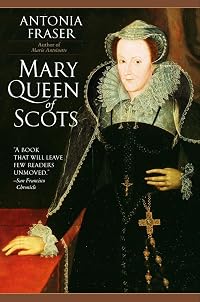
Mary Queen of Scots
by Antonia Fraser
On This Page
Description
She was the quintessential queen: statuesque, regal, dazzlingly beautiful. Her royal birth gave her claim to the thrones of two nations; her marriage to the young French dauphin promised to place a third glorious crown on her noble head. Instead, Mary Stuart became the victim of her own impulsive heart, scandalizing her world with a foolish passion that would lead to abduction, rape, and even murder. Betrayed by those she most trusted, she would be lured into a deadly game of power, only to show more lose to her envious and unforgiving cousin, Elizabeth I. Here is her story, a queen who lost a throne for love, a monarch pampered and adored even as she was led to her beheading, the unforgettable woman who became a legend for all time. show lessTags
Recommendations









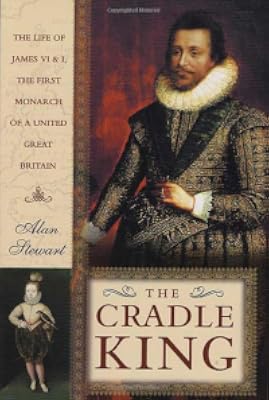

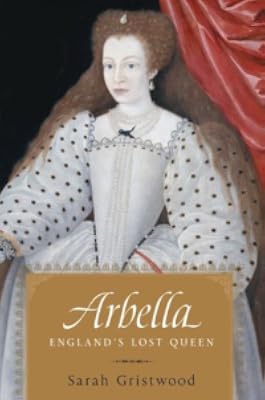
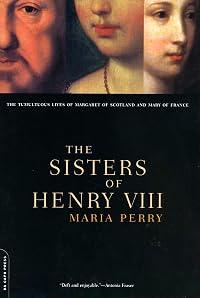
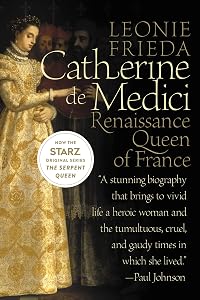






Member Reviews
The life and death of Mary Stuart remains one of the most movingly tragic life stories I know. More than fifty-five years after publication, and forty years after I picked up a copy at a library sale but only now got around to reading, Antonia Fraser’s biography is apparently still the best “life and times” for the general reader. Fraser provides a readable narrative, covering Mary’s mistakes yet remaining overall sympathetic. As far as I can tell, she also did an impressive amount of research, resulting in a detailed narrative that runs 555 pages without counting an appendix, notes, and index. That makes for a thick book, perhaps one reason it took me so long to set aside the time to read it. And even now, I’ll confess I show more skimmed her discussion of the casket letters, crucial though they are to how one views Mary. I took in enough of Fraser’s discussion to trust her conclusion at the end of the chapter.
Fraser presents Mary as an attractive personality. She had barely been born when her father died, making her queen of Scotland. Her actual reign was brief, though, starting when she returned, still a teenager, as the widowed dowager queen of France. It did not go well, but what are you to do if you are destined by birth to rule an ungovernable country?
Perhaps Mary’s worst blunder was when she escaped her Scottish imprisonment and fled to England rather than France. This presented her cousin Elizabeth with an intractable problem whose solution seems inevitable in retrospect. For Many was, in addition to being the deposed queen of Scotland and the dowager queen of France, the next in line to the throne of England. A fatal complication was that Mary was Catholic. Thus, in the eyes of all the English who clung to the old faith, she—and not the excommunicated Elizabeth— already was the legitimate queen. As long as Mary remained alive, she was thus a factor in every plot to assassinate Elizabeth.
This led to framing a law that made not only assassins but also those in whose name they concocted their plots guilty of treason. Clearly, the law was meant to bring the downfall of only one person, leading to a trial that Fraser calls “one of the strangest judicial proceedings in the history of the British Isles.”
In a chapter entitled “The Uses of Adversity,” Fraser describes how Mary’s character was deepened by the long years of captivity in ways typical of the long line of imprisoned philosopher-monarchs. She also shows how Mary ensured that the death she knew she could not escape would fit the pattern of “the classic Christian manner of martyrdom and triumph.”
To that extent, Mary won. Her execution remains a blot on Elizabeth’s reputation. Meanwhile, as Fraser points out, all subsequent British monarchs, beginning with Mary’s son James, have descended from her, not Elizabeth.
My only reservation about Fraser’s portrayal of this remarkable person is that Mary comes off as more modern than the times in which she lived. She is clearly Fraser’s kind of Catholic — tolerant, discrete, yet unwavering. Fraser’s sympathy for Mary makes not only Elizabeth but even more so Scottish reformer John Knox inimical to her. Perhaps Fraser has accurately depicted Mary (she presents her case convincingly). But it’s also true that biographies inform us not only about their subjects but also about their authors. show less
Fraser presents Mary as an attractive personality. She had barely been born when her father died, making her queen of Scotland. Her actual reign was brief, though, starting when she returned, still a teenager, as the widowed dowager queen of France. It did not go well, but what are you to do if you are destined by birth to rule an ungovernable country?
Perhaps Mary’s worst blunder was when she escaped her Scottish imprisonment and fled to England rather than France. This presented her cousin Elizabeth with an intractable problem whose solution seems inevitable in retrospect. For Many was, in addition to being the deposed queen of Scotland and the dowager queen of France, the next in line to the throne of England. A fatal complication was that Mary was Catholic. Thus, in the eyes of all the English who clung to the old faith, she—and not the excommunicated Elizabeth— already was the legitimate queen. As long as Mary remained alive, she was thus a factor in every plot to assassinate Elizabeth.
This led to framing a law that made not only assassins but also those in whose name they concocted their plots guilty of treason. Clearly, the law was meant to bring the downfall of only one person, leading to a trial that Fraser calls “one of the strangest judicial proceedings in the history of the British Isles.”
In a chapter entitled “The Uses of Adversity,” Fraser describes how Mary’s character was deepened by the long years of captivity in ways typical of the long line of imprisoned philosopher-monarchs. She also shows how Mary ensured that the death she knew she could not escape would fit the pattern of “the classic Christian manner of martyrdom and triumph.”
To that extent, Mary won. Her execution remains a blot on Elizabeth’s reputation. Meanwhile, as Fraser points out, all subsequent British monarchs, beginning with Mary’s son James, have descended from her, not Elizabeth.
My only reservation about Fraser’s portrayal of this remarkable person is that Mary comes off as more modern than the times in which she lived. She is clearly Fraser’s kind of Catholic — tolerant, discrete, yet unwavering. Fraser’s sympathy for Mary makes not only Elizabeth but even more so Scottish reformer John Knox inimical to her. Perhaps Fraser has accurately depicted Mary (she presents her case convincingly). But it’s also true that biographies inform us not only about their subjects but also about their authors. show less
Antonia Fraser’s biography tells the story of Mary Queen of Scots, whom the cover bills as the most tragic and romantic figure in history. Mary’s story is told with sympathy but not uncritically; Fraser discusses all aspects of Mary’s character and deals with other major figures, such as Elizabeth I and even Bothwell (Mary’s third husband, the chief suspect in the murder of her second husband), fairly. Her writing is fluid and her footnotes deployed to maximum effect, highlighting areas where she had done extra research or where scholarship was contentious, and recommending other works on certain areas of Scottish history.
This is a comprehensive and deeply moving biography; I was crying during the last chapter, when Mary was show more executed. The detail that underscores the tragedy was Mary’s dog: the Skye terrier had been smuggled in under her skirts, and after its mistress was executed it got out and sat unconsolably whimpering between Mary’s head and her decapitated body.
I highly recommend this biography; even though there may be new scholarship about Mary, given that this was published in 1969, it is a vivid, sensitive and thoughtful portrait of Scotland's best-known queen. show less
This is a comprehensive and deeply moving biography; I was crying during the last chapter, when Mary was show more executed. The detail that underscores the tragedy was Mary’s dog: the Skye terrier had been smuggled in under her skirts, and after its mistress was executed it got out and sat unconsolably whimpering between Mary’s head and her decapitated body.
I highly recommend this biography; even though there may be new scholarship about Mary, given that this was published in 1969, it is a vivid, sensitive and thoughtful portrait of Scotland's best-known queen. show less
I had to read a biography of Mary Queen of Scots to get my facts straight after watching the confusing/unreliable/unfortunate Hollywood film about Mary's life. I'm so glad that I picked up Fraser's biography, because not only did I learn a ton about Mary, but it has also seemed to serve as a gateway drug to get me hooked on reading biographies. The history surrounding this controversial queen gets downright messy at times, which makes for a ridiculously entertaining read. Fraser is favourably biased towards her subject, so expect a sympathetic portrayal of the Queen with some other characters blatantly painted as villains.
Quite a tome to get through with its long sentences and extensive paragraphs of pure exposition (thus the 4 stars, not 5). Having said that, the book was still worth reading. I learned so much about Mary, which was easy to do since I knew nothing when I started -- only her fictionalized Royal Diary, which is how I got hooked on this historical figure. The following comment is not a spoiler since we all know how it ends... but the book was so sad. I'd gotten to know her and like her, and her demise was painful.
My next books will be Jane Dunn's "Elizabeth & Mary" and Andrew Pettegree's "Brand Luther" to understand more about the Protestant Reformation, which was such a huge factor in her story.
My next books will be Jane Dunn's "Elizabeth & Mary" and Andrew Pettegree's "Brand Luther" to understand more about the Protestant Reformation, which was such a huge factor in her story.
Fraser's biography of Mary Queen of Scots is both exhaustive and entertaining to read. She details the life of Mary chronologically, starting with her birth (including some background on her father and mother) through her childhood in France, her brief reign as Queen of France, and her departure for Scotland where she had technically been Queen since the age of 9 months.
In Scotland Fraser studies the dynamics of a staunchly Catholic Queen trying to rule a newly Protestant country. Mary asked to be able to worship in private but never tried to make alliances to overthrow the Protestants and accepted their counsel. Her reign in Scotland is full of turmoil, especially after she marries Henry, Lord Darnley. His murder and the subsequent show more events (her marriage to Bothwell and imprisonment in Scotland) are gone through in detail to dispel the rumors that have abounded since this happened in the 1500s.
The third half of Mary's life is her imprisonment in England. Fraser examines the various plots, real or imagined, to free Mary and her adoption by Catholics as a martyr. Of course, Mary ends up being beheaded at Queen Elizabeth's order after a sham of a trial which is also explored at length.
I thought this was an excellent biography. I found it highly readable but scholarly at the same time. Recommended to anyone who like historical biographies and/or British history. show less
In Scotland Fraser studies the dynamics of a staunchly Catholic Queen trying to rule a newly Protestant country. Mary asked to be able to worship in private but never tried to make alliances to overthrow the Protestants and accepted their counsel. Her reign in Scotland is full of turmoil, especially after she marries Henry, Lord Darnley. His murder and the subsequent show more events (her marriage to Bothwell and imprisonment in Scotland) are gone through in detail to dispel the rumors that have abounded since this happened in the 1500s.
The third half of Mary's life is her imprisonment in England. Fraser examines the various plots, real or imagined, to free Mary and her adoption by Catholics as a martyr. Of course, Mary ends up being beheaded at Queen Elizabeth's order after a sham of a trial which is also explored at length.
I thought this was an excellent biography. I found it highly readable but scholarly at the same time. Recommended to anyone who like historical biographies and/or British history. show less
The ultimate cautionary tale about marrying a man just because he is taller than you, this biography is a testament to the Fraser's meticulous research and the immediacy of her writing (and also the unfortunate mess that seems to be Mary's tragic life, seriously, just the worst luck coupled with terrible decision-making) that even as I was reading and finished reading about events from five centuries ago, I was and still am holding out hope that the story will end differently. Even though it is distinctively less objective - the style is decidedly on the side of a long profile piece in the lift-out magazine of the weekend newspaper, (o)ver(l)y sympathetic and apotheosising - than her later work on Marie-Antoinette, it is nonetheless show more detailed, educational and eminently readable.
Aside #1: Apparently there is a movie of Mary-Elizabeth coming out this year. Current casting aside, as if Ronan would not make a luminous Elizabeth I, instead of what currently looks to be a Helena-Bonham-Carter-in-Alice-in-Wonderland-inspired caricature. As for Mary, Queen of Scots, (who Fraser reports is five feet eleven, just over 180cm), who could possibly play a tall, red-haired Scottish queen with renowned complexion, as if not Amy Pond!
Aside #2, exciting link to my favourite (Decca) Mitford: The Chatsworth House, one of the many places in which Mary was kept prisoner, was the Chatsworth of sister Debo Mitford's duchess life! show less
Aside #1: Apparently there is a movie of Mary-Elizabeth coming out this year. Current casting aside, as if Ronan would not make a luminous Elizabeth I, instead of what currently looks to be a Helena-Bonham-Carter-in-Alice-in-Wonderland-inspired caricature. As for Mary, Queen of Scots, (who Fraser reports is five feet eleven, just over 180cm), who could possibly play a tall, red-haired Scottish queen with renowned complexion, as if not Amy Pond!
Aside #2, exciting link to my favourite (Decca) Mitford: The Chatsworth House, one of the many places in which Mary was kept prisoner, was the Chatsworth of sister Debo Mitford's duchess life! show less
Antonia Fraser's classic biography is divided into three parts, for Mary's time in France, in Scotland, and in England.
For Fraser, Mary was a gentle, charitable soul totally unprepared by her French education and upbringing for the treacherous snakepit she found in Scotland. She made two big mistakes in her life, marrying Darnley and acquiescing to the Babington plot -- though by then after 18 years' imprisonment she was desperate.
Although like everyone I was familiar with the broad outline of her life, this thorough biography placed it all in context giving me at least a much better understanding of the background to Mary's time in France and Scotland. Although she does not indulge in the romanticism of some Marians, nevertheless, I show more found Fraser's account of Mary's last days and her execution unexpectedly moving. show less
For Fraser, Mary was a gentle, charitable soul totally unprepared by her French education and upbringing for the treacherous snakepit she found in Scotland. She made two big mistakes in her life, marrying Darnley and acquiescing to the Babington plot -- though by then after 18 years' imprisonment she was desperate.
Although like everyone I was familiar with the broad outline of her life, this thorough biography placed it all in context giving me at least a much better understanding of the background to Mary's time in France and Scotland. Although she does not indulge in the romanticism of some Marians, nevertheless, I show more found Fraser's account of Mary's last days and her execution unexpectedly moving. show less
Members
- Recently Added By
Published Reviews
ThingScore 100
Lady Antonia Fraser is young, beautiful, and rich, an earl’s daughter married to a busy and successful politician, the mother of a large family; yet she has surmounted all these handicaps to authorship to produce a first-rate historical biography.
added by jburlinson
Lists

Best Biographies
216 works; 24 members

Europe
205 works; 6 members

500 Great Books by Women
507 works; 60 members

Most Popular Books Tagged Scotland
35 works; 2 members

al.vick-parents books
301 works; 1 member

1960s
281 works; 16 members
Folio Society
831 works; 48 members

One Book, Many Authors
441 works; 40 members

Books Read in 2003
257 works; 7 members

Best Biographies of Notable Women
277 works; 101 members

In Our Time books
4,934 works; 2 members
Author Information

83+ Works 22,563 Members
Antonia Fraser is the author of numerous internationally bestselling biographies, including "The Six Wives of Henry VIII" and "Cromwell: Our Chief of Men". (Publisher Provided)
Some Editions
Awards and Honors
Awards
Distinctions
Notable Lists
Series
Belongs to Publisher Series
Work Relationships
Is contained in
Contains
Common Knowledge
- Canonical title
- Mary Queen of Scots
- Original title
- Mary Queen of Scots
- Original publication date
- 1969
- People/Characters
- Mary, Queen of Scots; David Beaton, Archbishop of Glasgow; James Beaton, Cardinal Archibishop of Glasgow; Antoinette de Bourbon; William Cecil, 1st Baron Burghley; Elizabeth I, Queen of England (show all 14); Marie de Guise; James Hepburn, 4th Earl of Bothwell; Madeleine of France; David Riccio; Henry Stuart, Lord Darnley; Sir Francis Walsingham; François I, King of France; François II, King of France
- Important places
- Scotland, UK; France; England, UK; Holyrood Palace, Edinburgh, Scotland, UK
- Epigraph
- 'A King is history's slave. History, that is the unconscious general swarm-life of mankind, uses every moment of the life of kings, as a tool for its own purposes.'
Tolstoy - Dedication
- To Hugh, with love and thanks
for Lila de Nobili - First words
- The winter of 1542 was marked by tempestuous weather throughout the British Isles: in the north, on the borders of Scotland and England, there were heavy snow-falls in December and frost so savage that by January the ships we... (show all)re frozen into the harbour at Newcastle.
- Quotations
- Despite her lonely position without counsel, Mary never for a moment lost her head.
- Last words
- (Click to show. Warning: May contain spoilers.)As Mary herself embroidered so long ago at Sheffield on the royal cloth of state which was destined to hang over the head of a captive queen: In my end is my Beginning.
- Original language
- English
- Canonical DDC/MDS
- 941.05; 941.105092
- Canonical LCC
- DA787.A1
Classifications
- Genres
- History, Biography & Memoir, Nonfiction, General Nonfiction
- DDC/MDS
- 941.105092 — History & geography History of Europe British Isles Scotland 1542-1603 Reformation period Biography
- LCC
- DA787 .A1 — History of Europe, Asia, Africa and Oceania Great Britain History of Great Britain Scotland History By period Early and medieval to 1603 Stuarts, 1371-1603
- BISAC
Statistics
- Members
- 3,185
- Popularity
- 5,433
- Reviews
- 29
- Rating
- (3.95)
- Languages
- 5 — English, French, German, Hungarian, Italian
- Media
- Paper, Audiobook, Ebook
- ISBNs
- 42
- ASINs
- 68