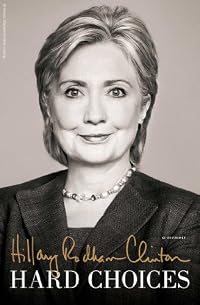
Hard Choices
by Hillary Rodham Clinton
On This Page
Description
Hillary Clinton's candid reflections about the key moments during her time as Secretary of State, as well as her thoughts about how to navigate the challenges of the 21st century.Tags
Recommendations






Member Recommendations
Member Reviews
The book comes across as more of a resumé than a memoir. It was incredibly informative, especially for someone (ahem) that was only just becoming more politically aware during Clinton's time as Secretary of State. There are brief, fleeting moments when Clinton the politician turns into Hilary the person, but it is definitely a platform for to prove her qualifications.
I give kudos to the producers for finding a narrator that sound like Clinton with a head cold. Clinton reads the introduction, but then Chalfant takes over. I took a break after the intro, and it took me awhile to figure out that Clinton wasn't narrating.
I give kudos to the producers for finding a narrator that sound like Clinton with a head cold. Clinton reads the introduction, but then Chalfant takes over. I took a break after the intro, and it took me awhile to figure out that Clinton wasn't narrating.
Hillary Clinton writes like a lawyer and a problem-solver. To that legal perspective, she now clearly adds a diplomatic "charm", as she limns her outreach to parties encountered during her years of public service as Secretary of State. The mix of pragmatic solutions she urges comes through in “Hard Choices”.
This is not a light-weight skimmer. She takes us along with her in the interactions and travels of Department of State. For 600 pages. She makes little of how grueling her schedule was, but I was exhausted just by imagining it!
In spite of the detail, she makes it interesting, and supplements so many of the events we questioned at the time. I was frankly on the edge of my seat to read what next!
She devotes several chapters to the show more attack on Benghazi and her friendship and admiration for Ambassador Stevens. He was fluent in Arabic and cherished the Middle East. His murder sent State into mourning, and hardened diplomats still in tears were caught by surprise as Congress sent prosecutorial investigators into the unstable theater to find evidence of wrong-doing against our own Administration.
The Libyan example is only one of dozens which the book sorts out during this period when American foreign policy was a mess. The example of Libya shows how the demands of other nations played a major role. Hillary clearly fought to protect Americans, and the Libyan people. She kept the international coalition together. The book carefully reviews situations in Syria, Egypt, Afghanistan and even China, showing the international interests and candid portraits of the personalities in play.
She brings light to events by providing actual specific quotes of conversations with world leaders. She indulges almost no finger-pointing or blaming others. Even crediting Senator McConnell for working with her in the outreach to Myanmar even though he had slashed the Benghazi security budget.
I am surprised by how much attention she gave to listening to what others have to say. Experts, other world leaders, and also their staffs, the working teams, the practical-minded problem-solving engineers, the suffering victims of loss. Many parts of the book are emotional, but the Secretary maintains a steely-zen composure, like "It's what it is". show less
This is not a light-weight skimmer. She takes us along with her in the interactions and travels of Department of State. For 600 pages. She makes little of how grueling her schedule was, but I was exhausted just by imagining it!
In spite of the detail, she makes it interesting, and supplements so many of the events we questioned at the time. I was frankly on the edge of my seat to read what next!
She devotes several chapters to the show more attack on Benghazi and her friendship and admiration for Ambassador Stevens. He was fluent in Arabic and cherished the Middle East. His murder sent State into mourning, and hardened diplomats still in tears were caught by surprise as Congress sent prosecutorial investigators into the unstable theater to find evidence of wrong-doing against our own Administration.
The Libyan example is only one of dozens which the book sorts out during this period when American foreign policy was a mess. The example of Libya shows how the demands of other nations played a major role. Hillary clearly fought to protect Americans, and the Libyan people. She kept the international coalition together. The book carefully reviews situations in Syria, Egypt, Afghanistan and even China, showing the international interests and candid portraits of the personalities in play.
She brings light to events by providing actual specific quotes of conversations with world leaders. She indulges almost no finger-pointing or blaming others. Even crediting Senator McConnell for working with her in the outreach to Myanmar even though he had slashed the Benghazi security budget.
I am surprised by how much attention she gave to listening to what others have to say. Experts, other world leaders, and also their staffs, the working teams, the practical-minded problem-solving engineers, the suffering victims of loss. Many parts of the book are emotional, but the Secretary maintains a steely-zen composure, like "It's what it is". show less
It is what it is. The tone of the book is optimistic and professional, and emphasizes Hillary's experience and achievement along with her basic stances on big issues along with her side of major events like Benghazi. It is exactly what folks were asking for during the 2016 election. (Naturally this is the main point of contention for Hill-haters, who have dismissed the book as lies, propaganda, or cherry-picked, despite it providing the exact information they were demanding.)
Its well-organized and articulate. While outlining the real complexity of being a diplomat in a globalized society, conveys a sense of optimism, compassion, empathy, and an orientation on the future. However, I don't think Hillary's voice and personality came show more through on this - its a bit too polished, a bit too safe, a bit too sanitized. I imagine it had to be that way, though. A female politician writing with passion would be labeled emotional, bitchy, volatile. (Again, there's no winning for the female politician. Anything polished or calm is untrustworthy, robotic, and manipulative. Anything more raw is unprofessional and emotional. There is no middle ground.)
It seemed to run out of steam about 400 pages in - I had to push myself to finish it despite my enthusiasm and enjoyment going in. This book would have really benefited from tightening up. But again - this is Hillary, and you have to look at her work through the lens of how the rabid Clinton-haters interpret everything. Her statements are constantly taken out of context, so it makes sense that she provides as much context as possible in an attempt to make that at least a little difficult.
There is no doubt that Hillary is knowledgeable, experienced, and accomplished. The book is interesting and informative, but needs to be condensed. I took the time to look up her claims and fact check as much as possible - and it all checked out. I have to admire her work and dedication, especially for a country that continues to shit on her and her family due to paranoid conspiracy theories.
I have no real problem with the book - it did what it set out to do. I just wish I could have read the version that let her true voice shine. show less
Its well-organized and articulate. While outlining the real complexity of being a diplomat in a globalized society, conveys a sense of optimism, compassion, empathy, and an orientation on the future. However, I don't think Hillary's voice and personality came show more through on this - its a bit too polished, a bit too safe, a bit too sanitized. I imagine it had to be that way, though. A female politician writing with passion would be labeled emotional, bitchy, volatile. (Again, there's no winning for the female politician. Anything polished or calm is untrustworthy, robotic, and manipulative. Anything more raw is unprofessional and emotional. There is no middle ground.)
It seemed to run out of steam about 400 pages in - I had to push myself to finish it despite my enthusiasm and enjoyment going in. This book would have really benefited from tightening up. But again - this is Hillary, and you have to look at her work through the lens of how the rabid Clinton-haters interpret everything. Her statements are constantly taken out of context, so it makes sense that she provides as much context as possible in an attempt to make that at least a little difficult.
There is no doubt that Hillary is knowledgeable, experienced, and accomplished. The book is interesting and informative, but needs to be condensed. I took the time to look up her claims and fact check as much as possible - and it all checked out. I have to admire her work and dedication, especially for a country that continues to shit on her and her family due to paranoid conspiracy theories.
I have no real problem with the book - it did what it set out to do. I just wish I could have read the version that let her true voice shine. show less
Clinton sets herself up to be compared with Dean Acheson by recalling his Pulitzer Prize-winning book at the outset. It is typical of Clinton to set her sights high. One must remember that Acheson wrote at a time when faith in government was at an all-time high, and many folks read it before criticizing it. I am not at all sure the same could be said for Clinton’s comprehensive memoir about her four-year (2009-2013) term as Secretary of State for the Obama Administration.
I come away thinking there is perhaps no person with better credentials to be president. She could handle the job, certainly. But we would have to decide if she is the person we want to lead our country and the world into the future. She would be an activist president show more for sure, clearly convinced that American leadership is all we should or could consider. Clinton blasts critics who proclaimed Obama “led from behind” on Libya, and said his leadership was in fact critical to the success of that international involvement.
Clinton’s time as senator from New York was good preparation for the prodding, jockeying, and cajoling that is done in international forums and with government heads of state. Robert Gates, Secretary of Defense while Clinton was Secretary of State, expressed a vast admiration for Clinton’s intelligence, experience, restraint, and pragmatism in his own memoir, Duty. Both longtime Washington insiders, Gates and Clinton shared a sense of service, a clear-eyed realism, and a healthy skepticism. I believe they also shared a mutual distrust of Vladimir Putin and both sought to marginalize, where possible, his inputs.
A lot happens in four years when the world is the stage, as Hillary Clinton’s memoir of her time as Secretary reminds us. Clinton logged nearly a million miles in her role as Chief Diplomat, though like all managers, spends more time dealing with and talking about trouble areas than about countries whose troubles were not catastrophic.
Most revealing and interesting for me were her discussions about Syria, Iran, Gaza, Libya, Russia, and Afghanistan, including the Bin Laden raid and Benghazi. She was remarkably open about the steps that led to backdoor talks with Iran, and the calculations she had to make when considering deteriorating situations in Syria, Libya, and Gaza.
The Syria section reveals the calculus around the support for rebels. The Iran talks were equally revealing—Clinton is remarkably frank about her assessment of country rulers and their personal ‘styles.’ It almost reads like a Wikileaks cache in this section and perhaps she is willing to talk it about because of those leaks. When it comes to Gaza, Clinton hauls out the (surely tattered by now) “strong support for Israel” that we have come to expect, but tempers it with unenthusiastic observations about Prime Minister Netanyahu’s political history, party backing, and current positions. She managed to avoid the wider invasion of Gaza that we are experiencing now, but consistently reiterated the increasingly critical need and strong support for a two-state solution.
The Edward Snowdon leaks in May 2013 came after Clinton resigned in February 2013. Clinton must have been aware of and not in opposition to the information collected during her tenure…perhaps even using it in fact. It would have been interesting to hear what she would say to Angela Merkel about the taps on Merkel’s personal phone, when Clinton makes the observation that she and Merkel are often considered two of a kind and expresses admiration for what Merkel has been able to do while she has been in office.
Clinton had areas of concern that she championed wherever she went: women’s rights and human rights. She is a tough negotiator and gave plenty of government leaders some restless nights with those “hard choices” she talks about. Clinton recognized and harnessed the power of the connected world, and the tendency of the world to shrink as telecommunications, cell phone connection, and social media improved. Fortunately, she is not afraid of changes in the status of women, LGBT citizens, and minority voices, and instead welcomes them.
She recognizes that all talent will be needed in a 21st Century world facing climate change, shifts in energy dependencies, and the economic upheavals that will bring. We cannot afford to shun anyone with a good idea and had better take advantage of all the skills our citizens can bring. It’s a question of making sure they are all able to grasp opportunity when it presents itself. I like this concept a lot, and think her insistence on human and economic and political rights for all citizens may be her longest legacy.
Clinton felt so strongly about energy policy, economics, and the interdependencies of trade that her role as a wide-view activist Secretary of State surely encroached on the roles of other cabinet-level officials. In her memoir she sounds positively Presidential in making decisions, deciding directions, and in the scope and definition of her role. Obama had much on his plate in handling domestic intransigence so he was probably pleased to have someone with Clinton’s understanding, reach, and clout. She says they worked well together, and I’m sure it worked about as well as any team with high stakes and powerful players.
What struck me as I listened to Clinton’s memoir is the number of times familiar names were recycled again and again in different jobs, some from much earlier administrations, as though they are the only ones who could handle the work. I suppose it is true that experience counts, but isn’t that one reason Obama was elected to office…that he actually didn’t have all the experience (and all the baggage)? Foreign countries trying to keep tabs on who is doing what in the American government must be pleased they don't have to research the background of anyone new. There simply has to be some transfer of responsibilities to new players: a requirement of top-level posts should be finding and training their own replacements. Sometimes it just sounded like a closed system though I can appreciate the time constraints in finding someone able to handle a task effectively and with grace. If anyone is interested in trying to solve the intractable problems involved with government work, they should make their wishes known, and be known, because it is who you know that counts.
I do not think there is any certainty about Hillary Clinton taking on another campaign for President, though there is probably no person better equipped to handle her activist agenda, despite her age. She is both revered and feared at home and abroad. Enormously motivated, she believes she has and can still make a difference in people’s lives. I feel confident that this seasoned political actor wants to see what American voters decide in November. [Biden says he is doing the same.] If the attitudes and will of the American people were to significantly change the balance of power in the Congress in favor of Republicans, she may be swayed one way or the other. On the other side of the equation, the Democrats must find and field another credible candidate for Clinton to relax her sense of responsibility. In many ways, we'd be lucky to have her--she is a dogged American proponent. She can't be the only person able to take this on, though we have seen what lack of leadership has done for other countries, the Middle East in particular. That wouldn't happen on Clinton's watch.
Readers who lived through this period may feel they’ve “heard all that” Clinton has to say, but I don’t think anyone can say they’ve heard it all until they hear it from the woman who did the driving. It was a tumultuous period in world history and it was completely enlightening to hear what our Chief Diplomat had to say about it. Hillary Clinton remains something of a marvel.
Clinton only narrated the introduction and the epilogue, but Kathleen Chalfant had a voice that recreated Clinton’s accents and speaking style so completely, I was unsure sometimes who was narrating. Chalfant did a fantastic job with the place and personal names and the pacing. show less
I come away thinking there is perhaps no person with better credentials to be president. She could handle the job, certainly. But we would have to decide if she is the person we want to lead our country and the world into the future. She would be an activist president show more for sure, clearly convinced that American leadership is all we should or could consider. Clinton blasts critics who proclaimed Obama “led from behind” on Libya, and said his leadership was in fact critical to the success of that international involvement.
Clinton’s time as senator from New York was good preparation for the prodding, jockeying, and cajoling that is done in international forums and with government heads of state. Robert Gates, Secretary of Defense while Clinton was Secretary of State, expressed a vast admiration for Clinton’s intelligence, experience, restraint, and pragmatism in his own memoir, Duty. Both longtime Washington insiders, Gates and Clinton shared a sense of service, a clear-eyed realism, and a healthy skepticism. I believe they also shared a mutual distrust of Vladimir Putin and both sought to marginalize, where possible, his inputs.
A lot happens in four years when the world is the stage, as Hillary Clinton’s memoir of her time as Secretary reminds us. Clinton logged nearly a million miles in her role as Chief Diplomat, though like all managers, spends more time dealing with and talking about trouble areas than about countries whose troubles were not catastrophic.
Most revealing and interesting for me were her discussions about Syria, Iran, Gaza, Libya, Russia, and Afghanistan, including the Bin Laden raid and Benghazi. She was remarkably open about the steps that led to backdoor talks with Iran, and the calculations she had to make when considering deteriorating situations in Syria, Libya, and Gaza.
The Syria section reveals the calculus around the support for rebels. The Iran talks were equally revealing—Clinton is remarkably frank about her assessment of country rulers and their personal ‘styles.’ It almost reads like a Wikileaks cache in this section and perhaps she is willing to talk it about because of those leaks. When it comes to Gaza, Clinton hauls out the (surely tattered by now) “strong support for Israel” that we have come to expect, but tempers it with unenthusiastic observations about Prime Minister Netanyahu’s political history, party backing, and current positions. She managed to avoid the wider invasion of Gaza that we are experiencing now, but consistently reiterated the increasingly critical need and strong support for a two-state solution.
The Edward Snowdon leaks in May 2013 came after Clinton resigned in February 2013. Clinton must have been aware of and not in opposition to the information collected during her tenure…perhaps even using it in fact. It would have been interesting to hear what she would say to Angela Merkel about the taps on Merkel’s personal phone, when Clinton makes the observation that she and Merkel are often considered two of a kind and expresses admiration for what Merkel has been able to do while she has been in office.
Clinton had areas of concern that she championed wherever she went: women’s rights and human rights. She is a tough negotiator and gave plenty of government leaders some restless nights with those “hard choices” she talks about. Clinton recognized and harnessed the power of the connected world, and the tendency of the world to shrink as telecommunications, cell phone connection, and social media improved. Fortunately, she is not afraid of changes in the status of women, LGBT citizens, and minority voices, and instead welcomes them.
She recognizes that all talent will be needed in a 21st Century world facing climate change, shifts in energy dependencies, and the economic upheavals that will bring. We cannot afford to shun anyone with a good idea and had better take advantage of all the skills our citizens can bring. It’s a question of making sure they are all able to grasp opportunity when it presents itself. I like this concept a lot, and think her insistence on human and economic and political rights for all citizens may be her longest legacy.
Clinton felt so strongly about energy policy, economics, and the interdependencies of trade that her role as a wide-view activist Secretary of State surely encroached on the roles of other cabinet-level officials. In her memoir she sounds positively Presidential in making decisions, deciding directions, and in the scope and definition of her role. Obama had much on his plate in handling domestic intransigence so he was probably pleased to have someone with Clinton’s understanding, reach, and clout. She says they worked well together, and I’m sure it worked about as well as any team with high stakes and powerful players.
What struck me as I listened to Clinton’s memoir is the number of times familiar names were recycled again and again in different jobs, some from much earlier administrations, as though they are the only ones who could handle the work. I suppose it is true that experience counts, but isn’t that one reason Obama was elected to office…that he actually didn’t have all the experience (and all the baggage)? Foreign countries trying to keep tabs on who is doing what in the American government must be pleased they don't have to research the background of anyone new. There simply has to be some transfer of responsibilities to new players: a requirement of top-level posts should be finding and training their own replacements. Sometimes it just sounded like a closed system though I can appreciate the time constraints in finding someone able to handle a task effectively and with grace. If anyone is interested in trying to solve the intractable problems involved with government work, they should make their wishes known, and be known, because it is who you know that counts.
I do not think there is any certainty about Hillary Clinton taking on another campaign for President, though there is probably no person better equipped to handle her activist agenda, despite her age. She is both revered and feared at home and abroad. Enormously motivated, she believes she has and can still make a difference in people’s lives. I feel confident that this seasoned political actor wants to see what American voters decide in November. [Biden says he is doing the same.] If the attitudes and will of the American people were to significantly change the balance of power in the Congress in favor of Republicans, she may be swayed one way or the other. On the other side of the equation, the Democrats must find and field another credible candidate for Clinton to relax her sense of responsibility. In many ways, we'd be lucky to have her--she is a dogged American proponent. She can't be the only person able to take this on, though we have seen what lack of leadership has done for other countries, the Middle East in particular. That wouldn't happen on Clinton's watch.
Readers who lived through this period may feel they’ve “heard all that” Clinton has to say, but I don’t think anyone can say they’ve heard it all until they hear it from the woman who did the driving. It was a tumultuous period in world history and it was completely enlightening to hear what our Chief Diplomat had to say about it. Hillary Clinton remains something of a marvel.
Clinton only narrated the introduction and the epilogue, but Kathleen Chalfant had a voice that recreated Clinton’s accents and speaking style so completely, I was unsure sometimes who was narrating. Chalfant did a fantastic job with the place and personal names and the pacing. show less
I have read Hillary Rodham Clinton's (HRC) previous memoir as well as a couple biographies of her. This is the third book I have read by a Secretary of State and the third memoir by an Obama cabinet member (Gates' and Geithner's memoirs the others). Secretaries of State write the most interesting memoirs because they get to see the most cultures and both the initial and after effects of American foreign policy. Hillary Rodham Clinton's (HRC) book is fairly sterile, the reader has to occasionally read between the lines to get a sense of whether she sparred with Obama or not. There are occassional flashbacks to her days traveling with the Clinton White House there are few, if any, comparisons between administrations or styles.
Most show more disappointing for me was that there was very little about how HRC managed her office, particularly when it came time to making tough decisions. Colin Powell and Robert Gates included their own management styles and philosophies in their books. I work in a cabinet agency in state government so I'm fully aware that the cabinet secretary rarely gets involved in micromanaging day-to-day operations but he or she does set the tone for how the cabinet gets things done and it's not clear how deliberate HRC was in her tone.
Obama comes across mostly as "upset" and "frustrated." He is often impatient, not able to get the information he wants. Staffers, when mentioned, come across as young, naive, and reactionary as Gates described them.
Since we know from Gates' memoir and various articles that VP Biden is heavily involved in day-to-day affairs, including foreign policy, it's a bit of a surprise that he does not appear much at all in the book. HRC, running for President, probably does not want to air grievances but that certainly would have helped differentiate her from others in the administration that she was perhaps frustrated with.
This memoir is chronological and geographical, stopping at each place and giving HRC's personal history with the country or region and the events that unfolded while she was Secretary. One of the most intriguing stories involved her decision to assist and grant asylum to Chen Guangcheng who was under Chinese house arrest. Clinton makes some forthright statement about her beliefs on American values of freedom and human rights and the importance of not backing down once the decision was made. She maintains that the peaceful settlement of the Chen crisis made possible only through her great emphasis on prior negotiations and respectful communication with China.
Dealing with Burma and the issues arising around Aung San Suu Kyi was another interesting story. Sen. Mitch McConnell's support of Suu Kyi and his assistance were previously unknown to me, and perhaps illuminate while she did not criticize the Senator by name when she was campaigning in Kentucky for his opponent in 2014. Clinton and McConnell were both furious at the crazed American who swam to Suu Kyi's residence but Clinton also recognized her duty to help the American as his Secretary of State.
While discussing events leading up to the "Afghan Surge," Clinton tells some interesting revisionist history in regards to Iraq. HRC claims she clamored on behalf of UN weapons inspectors for "just a few more weeks" against the wishes of the Bush Administration. She rejects the notion that Congress gave Bush authority to start the war and also regregs "giving Bush the benefit of the doubt" in regards to WMD. The reality is we know that she did not read the CIA's declassified intelligence report (almost no one in Congress did) and she didn't do the investigation she claims to have done. These were all issues in the 2008 presidential campaign, how quickly we forget.
HRC elaborates on the difficult relationship with Hamid Karzai and trying to foster democratic transition in Afghanistan. She takes credit for introducing the late Amb. Richard Holbrooke to Gen. Petraeus and relates that they hit it right off and talked policy for nights on end. Clinton praises her friend Holbrooke profusely (he was an advisor to her on the campaign trail). Holbrooke served as special representative for Afghanistan and Pakistan and died shortly after initiating negotiations with the Taliban; HRC and others' mourning make up one of the more emotional parts of the book. One can contrast HRC's recollection of events with Holbrooke with that of Gates who wrote of the "clumsy and failed putsch" orchestrated in part by Holbrooke. HRC also doesn't mention that Holbrooke was fairly critical of Obama's policies, stating he could never tell if Obama's intentions were for negotiated transition or hasty withdrawal.
Her historic overview of modern Turkey is, in my view, largely correct. She gives many anecdotes of dealing with both Erdoğan (then Prime Minister, now President and still in charge) and Davutoğlu (then Foreign Secretary, now Prime Minister). HRC writes that Davutoğlu was openly talking of "war" between Turkey and Israel after Israeli soldiers boarded a vessel running the Gaza blockade and killed several Turks. (Obama later helped heal that rift by having Netanyahu call Erdoğan, but comments after the Paris Charlie Hebdo attacks of 2015 suggest those wounds are wide open again.) HRC also tried to smooth relations with Turkey during the Libyan intervention. Turkey was quite frustrated with France and Sarkozy over Sarkozy's opposition to Turkey ever gaining EU accession. The balancing act with Turkey over Syria comes up in the book as well.
Contra Gates' memoir (and George Kennan's beliefs), HRC praises NATO expansion outright with no reservations. HRC mentions that accords after NATO involvement in Kosovo were aimed at keeping Russia in check and were forward-looking to something like the 2014 annexation of Crimea. She argues Crimea would be a bigger mess without united NATO to threaten further aggression.
This book lacks the deep attempts at insight into the Russian foreign policy psyche that Gates', Condi Rice's, and George W. Bush's memoirs attempted. She describes the similar ups and downs with Russia as those memoirs outline but in perhaps a less-sharp tone. She retells a story that Vladimir Putin told her about his family history. He claimed that his dad found his mom half-alive in St. Petersburg while he was on leave from the army and he nursed her back to health. Ambassador McFaul also had never heard the story, apparently no Russia hands were aware of it. I'm intrigued she published in the book and offers it as potential insight into Putin's views on the importance of Russian independence and suspicion of the West.
Supposedly, Clinton opposed intervention in Libya until she saw favorable developments in Egypt and the Arab League. Sarkozy was supposedly "deeply moved by the suffering under the dictator" recorded by a Frenchman traveling in Libya. The cost and benefits of this operation are not outlined cleanly. (Gates opposed both the operation and the Administration's later micromanagement). HRC relays the near-disaster of almost losing a pilot downed in Libyan airspace and remarks that American sentiment would have turned sharply had he not been rescued safely.
She talks pretty candidly about the hard choice of propping up dictators during the Cold War, forming strategic partnerships with them, then having a dilemma when the people want democracy. She does not reach any conclusions here, there is a that's-just-how-it-is mentality. She tells of how she pushed privately for individual human rights cases in Saudi Arabia, acknowledging that 9/11 hijackers came from there and oil money is used to foment extremist violence around the world... "but they partner with us in security and against Iran," so apparently it's supposed to even out.
There is a long recount of Benghazi, a defense of her role, and an attempt to correct the record from misinformation constantly circulated by opponents who knew better. HRC managed an agency with 70,000 employees, and surprisingly applications increased after Benghazi. The most emotional moment in the book comes with the funeral of the Benghazi staff and conversations with their relatives. I accept her explanations and sincerity here.
In regards to Syria, HRC and Petraeus favored arming a "small group" of "moderates" more as a signaling device than anything, so that Assad's allies would continue to defect and the regime would collapse internally. Obama demurred, only favoring it after revelations of more chemical attacks. She hedges that it was the "least bad of very bad options." There is no thought, however, to what the aftermath would have been if the Assad regime had fallen. Clinton makes pains to stress the lessons learned from Iraq on nation-building, the concerns the Administration had about what would come after Mubarak in Egypt and Qaddafi in Libya, and the transition of power in Afghanistan. But no mention of "after Assad..." Today's New York Times is writing that the Obama administration has reversed course, continuing to arm rebels but only to fight ISIS groups and working with the Assad regime while giving reassurances. One gathers that Obama's foreign policy is fairly inconsistent. As HRC said in an interview after the release of this book "'Don't do stupid things' is not a policy."
She includes a section on dealings with Iran and their "clenched fist." She hopes for reform but an understanding that the Supreme Leader is in charge. She regrets the Administration not speaking out more during the Iranian uprisings after Ahmadinejad was re-elected. There are very few regrets listed in the book, but that is one. Frustrations in dealing with Israel are universal, but it's clear from the book that there was a real serious rift between Obama and Netanyahu.
On climate change HRC gives an inside look at how Obama & she barged into the meeting with Chinese, Indian, Brazilian, and South African heads. This meeting is a reminder that foreign policy is perhaps the one area of influence Presidents really consistently have, and is perhaps where Obama comes across the best in the book.
She claims to have increased the State Department's emphasis on economics in the aftermath of the financial crisis. She states outright that she wanted to work with Economics FSOs to fight against protectionist and mercantilist policies. I'm not sure her political rhetoric favoring unions and protectionism matches this at all. Which policy is really preferred by HRC? She equipped USAID to do more entrepreneurial development, something that she had some familiarity with through the Clinton Global Initiative. In some cases it sounds like she's taking credit for pre-Obama initiatives like the Millenium Challenge Accounts, which were set up under the Bush Administration. "That's why we created the MCAs..." "we" here apparently means America and not her administration.
She discusses the need to respond to government & corporate espionage and claims (like Colin Powell claimed on his watch) that she greatly boosted State Department investments in technology. She encouraged Russian Ambassador Michael McFaul to be front-and-center on social media, even calling him on open channels to praise him. This is interesting because he was shunned by Kremlin for being too vocal, saying things everyone knew to be true but did not say publicly, and his term in Moscow did not end positively.
The greatest red flag for me comes in the chapters on human rights. HRC finishes the book with a look at her efforts toward women and LGBT rights around the world. She quotes Eleanor Roosevelt on human rights. This section comes immediately after discussing her Methodist faith, repeating the oft-told story of how her youth pastor made a huge difference in her life and career choices by emphasizing faith in action. But her statements on the importance of human rights lack any faith grounding whatsoever. According to HRC, humans have rights simply because they are of the human species, not because they are "endowed by their Creator," or made in the image of God as is essential to American law. While HRC trumpets defending rights as an American virtue, the Founders' view of human rights came from Western thought from Aristotle and Augustine onward-- that there is a divine spark within us. To hard-core liberals or atheists reading this, I remind you that even President Obama has claimed a belief in God as a reason for respecting the rights of others to exist. HRC does not mention as such in her book, which is what really separates it from the work Condoleeza Rice's book in addressing the same subjects.
In all, I enjoyed the work. There are a few insights into how HRC would do foreign policy and where she stands on dealing with China, Russia, Israel, and more. I give this book 4 stars out of 5. It would have been better with more insights into how she runs her office, her own leadership and management philosophies and such, given that she's running for President. I recommend the book as a work of American and international history. show less
Most show more disappointing for me was that there was very little about how HRC managed her office, particularly when it came time to making tough decisions. Colin Powell and Robert Gates included their own management styles and philosophies in their books. I work in a cabinet agency in state government so I'm fully aware that the cabinet secretary rarely gets involved in micromanaging day-to-day operations but he or she does set the tone for how the cabinet gets things done and it's not clear how deliberate HRC was in her tone.
Obama comes across mostly as "upset" and "frustrated." He is often impatient, not able to get the information he wants. Staffers, when mentioned, come across as young, naive, and reactionary as Gates described them.
Since we know from Gates' memoir and various articles that VP Biden is heavily involved in day-to-day affairs, including foreign policy, it's a bit of a surprise that he does not appear much at all in the book. HRC, running for President, probably does not want to air grievances but that certainly would have helped differentiate her from others in the administration that she was perhaps frustrated with.
This memoir is chronological and geographical, stopping at each place and giving HRC's personal history with the country or region and the events that unfolded while she was Secretary. One of the most intriguing stories involved her decision to assist and grant asylum to Chen Guangcheng who was under Chinese house arrest. Clinton makes some forthright statement about her beliefs on American values of freedom and human rights and the importance of not backing down once the decision was made. She maintains that the peaceful settlement of the Chen crisis made possible only through her great emphasis on prior negotiations and respectful communication with China.
Dealing with Burma and the issues arising around Aung San Suu Kyi was another interesting story. Sen. Mitch McConnell's support of Suu Kyi and his assistance were previously unknown to me, and perhaps illuminate while she did not criticize the Senator by name when she was campaigning in Kentucky for his opponent in 2014. Clinton and McConnell were both furious at the crazed American who swam to Suu Kyi's residence but Clinton also recognized her duty to help the American as his Secretary of State.
While discussing events leading up to the "Afghan Surge," Clinton tells some interesting revisionist history in regards to Iraq. HRC claims she clamored on behalf of UN weapons inspectors for "just a few more weeks" against the wishes of the Bush Administration. She rejects the notion that Congress gave Bush authority to start the war and also regregs "giving Bush the benefit of the doubt" in regards to WMD. The reality is we know that she did not read the CIA's declassified intelligence report (almost no one in Congress did) and she didn't do the investigation she claims to have done. These were all issues in the 2008 presidential campaign, how quickly we forget.
HRC elaborates on the difficult relationship with Hamid Karzai and trying to foster democratic transition in Afghanistan. She takes credit for introducing the late Amb. Richard Holbrooke to Gen. Petraeus and relates that they hit it right off and talked policy for nights on end. Clinton praises her friend Holbrooke profusely (he was an advisor to her on the campaign trail). Holbrooke served as special representative for Afghanistan and Pakistan and died shortly after initiating negotiations with the Taliban; HRC and others' mourning make up one of the more emotional parts of the book. One can contrast HRC's recollection of events with Holbrooke with that of Gates who wrote of the "clumsy and failed putsch" orchestrated in part by Holbrooke. HRC also doesn't mention that Holbrooke was fairly critical of Obama's policies, stating he could never tell if Obama's intentions were for negotiated transition or hasty withdrawal.
Her historic overview of modern Turkey is, in my view, largely correct. She gives many anecdotes of dealing with both Erdoğan (then Prime Minister, now President and still in charge) and Davutoğlu (then Foreign Secretary, now Prime Minister). HRC writes that Davutoğlu was openly talking of "war" between Turkey and Israel after Israeli soldiers boarded a vessel running the Gaza blockade and killed several Turks. (Obama later helped heal that rift by having Netanyahu call Erdoğan, but comments after the Paris Charlie Hebdo attacks of 2015 suggest those wounds are wide open again.) HRC also tried to smooth relations with Turkey during the Libyan intervention. Turkey was quite frustrated with France and Sarkozy over Sarkozy's opposition to Turkey ever gaining EU accession. The balancing act with Turkey over Syria comes up in the book as well.
Contra Gates' memoir (and George Kennan's beliefs), HRC praises NATO expansion outright with no reservations. HRC mentions that accords after NATO involvement in Kosovo were aimed at keeping Russia in check and were forward-looking to something like the 2014 annexation of Crimea. She argues Crimea would be a bigger mess without united NATO to threaten further aggression.
This book lacks the deep attempts at insight into the Russian foreign policy psyche that Gates', Condi Rice's, and George W. Bush's memoirs attempted. She describes the similar ups and downs with Russia as those memoirs outline but in perhaps a less-sharp tone. She retells a story that Vladimir Putin told her about his family history. He claimed that his dad found his mom half-alive in St. Petersburg while he was on leave from the army and he nursed her back to health. Ambassador McFaul also had never heard the story, apparently no Russia hands were aware of it. I'm intrigued she published in the book and offers it as potential insight into Putin's views on the importance of Russian independence and suspicion of the West.
Supposedly, Clinton opposed intervention in Libya until she saw favorable developments in Egypt and the Arab League. Sarkozy was supposedly "deeply moved by the suffering under the dictator" recorded by a Frenchman traveling in Libya. The cost and benefits of this operation are not outlined cleanly. (Gates opposed both the operation and the Administration's later micromanagement). HRC relays the near-disaster of almost losing a pilot downed in Libyan airspace and remarks that American sentiment would have turned sharply had he not been rescued safely.
She talks pretty candidly about the hard choice of propping up dictators during the Cold War, forming strategic partnerships with them, then having a dilemma when the people want democracy. She does not reach any conclusions here, there is a that's-just-how-it-is mentality. She tells of how she pushed privately for individual human rights cases in Saudi Arabia, acknowledging that 9/11 hijackers came from there and oil money is used to foment extremist violence around the world... "but they partner with us in security and against Iran," so apparently it's supposed to even out.
There is a long recount of Benghazi, a defense of her role, and an attempt to correct the record from misinformation constantly circulated by opponents who knew better. HRC managed an agency with 70,000 employees, and surprisingly applications increased after Benghazi. The most emotional moment in the book comes with the funeral of the Benghazi staff and conversations with their relatives. I accept her explanations and sincerity here.
In regards to Syria, HRC and Petraeus favored arming a "small group" of "moderates" more as a signaling device than anything, so that Assad's allies would continue to defect and the regime would collapse internally. Obama demurred, only favoring it after revelations of more chemical attacks. She hedges that it was the "least bad of very bad options." There is no thought, however, to what the aftermath would have been if the Assad regime had fallen. Clinton makes pains to stress the lessons learned from Iraq on nation-building, the concerns the Administration had about what would come after Mubarak in Egypt and Qaddafi in Libya, and the transition of power in Afghanistan. But no mention of "after Assad..." Today's New York Times is writing that the Obama administration has reversed course, continuing to arm rebels but only to fight ISIS groups and working with the Assad regime while giving reassurances. One gathers that Obama's foreign policy is fairly inconsistent. As HRC said in an interview after the release of this book "'Don't do stupid things' is not a policy."
She includes a section on dealings with Iran and their "clenched fist." She hopes for reform but an understanding that the Supreme Leader is in charge. She regrets the Administration not speaking out more during the Iranian uprisings after Ahmadinejad was re-elected. There are very few regrets listed in the book, but that is one. Frustrations in dealing with Israel are universal, but it's clear from the book that there was a real serious rift between Obama and Netanyahu.
On climate change HRC gives an inside look at how Obama & she barged into the meeting with Chinese, Indian, Brazilian, and South African heads. This meeting is a reminder that foreign policy is perhaps the one area of influence Presidents really consistently have, and is perhaps where Obama comes across the best in the book.
She claims to have increased the State Department's emphasis on economics in the aftermath of the financial crisis. She states outright that she wanted to work with Economics FSOs to fight against protectionist and mercantilist policies. I'm not sure her political rhetoric favoring unions and protectionism matches this at all. Which policy is really preferred by HRC? She equipped USAID to do more entrepreneurial development, something that she had some familiarity with through the Clinton Global Initiative. In some cases it sounds like she's taking credit for pre-Obama initiatives like the Millenium Challenge Accounts, which were set up under the Bush Administration. "That's why we created the MCAs..." "we" here apparently means America and not her administration.
She discusses the need to respond to government & corporate espionage and claims (like Colin Powell claimed on his watch) that she greatly boosted State Department investments in technology. She encouraged Russian Ambassador Michael McFaul to be front-and-center on social media, even calling him on open channels to praise him. This is interesting because he was shunned by Kremlin for being too vocal, saying things everyone knew to be true but did not say publicly, and his term in Moscow did not end positively.
The greatest red flag for me comes in the chapters on human rights. HRC finishes the book with a look at her efforts toward women and LGBT rights around the world. She quotes Eleanor Roosevelt on human rights. This section comes immediately after discussing her Methodist faith, repeating the oft-told story of how her youth pastor made a huge difference in her life and career choices by emphasizing faith in action. But her statements on the importance of human rights lack any faith grounding whatsoever. According to HRC, humans have rights simply because they are of the human species, not because they are "endowed by their Creator," or made in the image of God as is essential to American law. While HRC trumpets defending rights as an American virtue, the Founders' view of human rights came from Western thought from Aristotle and Augustine onward-- that there is a divine spark within us. To hard-core liberals or atheists reading this, I remind you that even President Obama has claimed a belief in God as a reason for respecting the rights of others to exist. HRC does not mention as such in her book, which is what really separates it from the work Condoleeza Rice's book in addressing the same subjects.
In all, I enjoyed the work. There are a few insights into how HRC would do foreign policy and where she stands on dealing with China, Russia, Israel, and more. I give this book 4 stars out of 5. It would have been better with more insights into how she runs her office, her own leadership and management philosophies and such, given that she's running for President. I recommend the book as a work of American and international history. show less
I liked this book for the reason a lot of people didn't: it's very impersonal. Most of it is just a textbook of what happened under the Obama admin and is very foreign policy focused. I certainly don't support Hillary any more than I did (aka not at all) but I do realize now even more what a disaster it was to oust Mubarak...
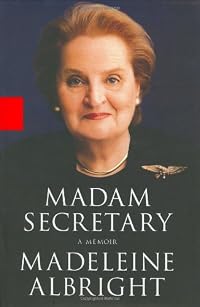
Hard Choices by Hillary Rodham Clinton is not a light summer beach read. It is however a worthy one, and a book that I was anxious to read to gain insight to Hilary's years as Secretary of State. I was also interested In comparing the stories and experiences to those of Madeleine Albright, who served as Secretary of State for eight years, during Bill Clinton's years in the white house. I would like to mention that her book, Madam Secretary is well worth reading, quite compelling and very personal at times.
During Hillary's early years, shortly after college and after marrying Bill she moved to Arkansas and was a co-founder of the Arkansas Advocates for Children and families. She served as chairman for the Legal Services Corporation and show more became a partner in a prestigious law firm, and was First Lady of the state of Arkansas, where she tasked herself with reforming the state's education system. As First Lady of the United States, her concentrations were the Clinton health care plan,the State Children's Health Insurance Program and Safe Families act. Then she became a Senator for the state of New York, making her the the first First Lady of the United States to hold a public office.
But getting back to Hard Choices, I have to admit that the first thing I did when opening the covers of this book was to turn to the pages of photographs that are included in the book. Some of them were familiar, others more personal and all of them thought provoking in some way, or at the very least fascinating to see these captured moments of time.
The book opens during the days following the election of 2008, in the days before the then President elect requested that Hilary join his team as Secretary of State. Here, she chronicles the letdown that she herself and her team felt after the election. Hilary then addresses her decision to not only support our newly elected president, but how she encouraged her team and her followers to do the same, to unite in order to do what was best for our country. At first unwilling to take on the office, she remembered that one of the historic figures who had been most inspiring to her over the years, William Henry Seward, First Governor then Senator of New York, and Secretary of State for Abraham Lincoln, who invited Seward to that office after defeating him in the Republican nomination. A story chronicled in Doris Kearns fantastic book Team of Rivals
After accepting the office of Secretary of State, Clinton visited 112 countries, traveled nearly a million miles with her staff. This book is a sort of diagram of the strategies employed during her years in office, interspersed with personal experiences and opinions. We are treated to behind the scenes looks at what went down during the many diplomatic missions and military situations with which she was involved over her four years in this office.
There are explanations of of how the media affects politics, how our country works like a finely built clock, with many parts, may teams working in conjunction with each other to form just the right balance to hopefully, reach the outcome that is best. We are told about the successes and failures. There are entertaining stories of meetings and friendships formed with the heads of state of many countries, and how these same connections hold and affect our government even today.
The Middle East and of course Vladimir Putin are frequently mentioned, and the importance of our relationships with Asian countries. An altogether satisfying and informative read. show less
During Hillary's early years, shortly after college and after marrying Bill she moved to Arkansas and was a co-founder of the Arkansas Advocates for Children and families. She served as chairman for the Legal Services Corporation and show more became a partner in a prestigious law firm, and was First Lady of the state of Arkansas, where she tasked herself with reforming the state's education system. As First Lady of the United States, her concentrations were the Clinton health care plan,the State Children's Health Insurance Program and Safe Families act. Then she became a Senator for the state of New York, making her the the first First Lady of the United States to hold a public office.
But getting back to Hard Choices, I have to admit that the first thing I did when opening the covers of this book was to turn to the pages of photographs that are included in the book. Some of them were familiar, others more personal and all of them thought provoking in some way, or at the very least fascinating to see these captured moments of time.
The book opens during the days following the election of 2008, in the days before the then President elect requested that Hilary join his team as Secretary of State. Here, she chronicles the letdown that she herself and her team felt after the election. Hilary then addresses her decision to not only support our newly elected president, but how she encouraged her team and her followers to do the same, to unite in order to do what was best for our country. At first unwilling to take on the office, she remembered that one of the historic figures who had been most inspiring to her over the years, William Henry Seward, First Governor then Senator of New York, and Secretary of State for Abraham Lincoln, who invited Seward to that office after defeating him in the Republican nomination. A story chronicled in Doris Kearns fantastic book Team of Rivals
After accepting the office of Secretary of State, Clinton visited 112 countries, traveled nearly a million miles with her staff. This book is a sort of diagram of the strategies employed during her years in office, interspersed with personal experiences and opinions. We are treated to behind the scenes looks at what went down during the many diplomatic missions and military situations with which she was involved over her four years in this office.
There are explanations of of how the media affects politics, how our country works like a finely built clock, with many parts, may teams working in conjunction with each other to form just the right balance to hopefully, reach the outcome that is best. We are told about the successes and failures. There are entertaining stories of meetings and friendships formed with the heads of state of many countries, and how these same connections hold and affect our government even today.
The Middle East and of course Vladimir Putin are frequently mentioned, and the importance of our relationships with Asian countries. An altogether satisfying and informative read. show less
Members
- Recently Added By
Author Information

47+ Works 11,314 Members
Hillary Diane Rodham Clinton was born on October 26, 1947 in Chicago, Illinois to Dorothy and Hugh Rodham. She grew up in Park Ridge, Illinois with her two younger brothers. As a child, she was a Girl Scout and a member of the local Methodist youth group. She attended Wellesley College, beginning in 1965, graduated with honors and enrolled in Yale show more Law School, which is where she met Bill Clinton. She served on the Board of Editors of the Yale Review of Law and Social Action. In 1973, she became a staff attorney for the Children's Defense Fund. In 1974, she joined the Impeachment Inquiry staff of the Judiciary Committee of the U.S. House Representatives to work on the Watergate impeachment proceedings. She then left Washington to go to Arkansas, where she married Bill Clinton in 1975. They both taught on the law faculty of the University of Arkansas at Fayetteville. In 1980, their daughter Chelsea was born. Hillary was the first lady of Arkansas for twelve years and worked on behalf of children and families. Hillary chaired the Arkansas Education Standards Committee, founded the Arkansas Advocates for Children and Families, served on the board of the Arkansas Children's Hospital and introduced a pioneering program called Arkansas' Home Instruction Program for Preschool youth, which trains parents to work with their children in preschool preparedness and literacy. Hillary was named Arkansas Woman of the Year in 1983 and Arkansas Mother of the Year in 1984. Hillary served as first lady of the United States for eight years (January 20, 1993--January 20, 2001), where she headed the Task Force on National Health Care Reform. On January 3, 2001 she was sworn in as United States Senator from New York, where she served until January 21, 2009. On that date she was made the 67th United States Secretary of State. Her last day as Secretary of State was February 1, 2013. In 2003, Clinton released an autobiography entitled, Living History. The books sold more than one million copies and was translated into 12 languages. Clinton's audio recording of the book won her a nomination for the Grammy Award for the Best Spoken Word Album. As a politician, Clinton continues to gain consistently high approval ratings from the United States people. In 2014, she released her bestselling nonfiction book about the inside account of her years as Secretary of State, Hard Choices. In 2017 her book, What Happened, which recounted the 2016 presidential election, made several Best Seller Lists. (Bowker Author Biography) show less
Some Editions
Common Knowledge
- Canonical title
- Hard Choices
- Original publication date
- 2014
- People/Characters
- Hillary Rodham Clinton
- Dedication
- For America's diplomats and development experts,
who represent our country and our values so well
in places large and small, peaceful and perilous
all over the world.
and
In memory of my parents:
Hu... (show all)gh Ellsworth Rodman (1911-1993)
Dorothy Emma Howell Rod ham (1919-2011) - First words
- (Author's note) All of us face hard choices in our lives.
Why on earth was I lying on the backseat of a blue minivan with tinted windows? - Quotations
- "The Scrunchie Chronicles: 112 Countries and It's Still All About My Hair"
- title for this book, suggested by a reader of the Washington Post - Last words
- (Click to show. Warning: May contain spoilers.)That's our unfinished business.
(Click to show. Warning: May contain spoilers.)(Epilogue) The time for another hard choice will come soon enough. - Original language
- English US
Classifications
- Genres
- Biography & Memoir, Nonfiction, General Nonfiction, Politics and Government, History
- DDC/MDS
- 328.73 — Society, Government, and Culture Political science U.S. Congress - Legislation & Legislative Process North America United States
- LCC
- E887 .C55 .A3 — History of the United States United States Later twentieth century, 1961-2000 Clinton's administrations, 1993-2001
- BISAC
Statistics
- Members
- 1,153
- Popularity
- 21,701
- Reviews
- 18
- Rating
- (3.49)
- Languages
- 9 — Chinese, Dutch, English, Finnish, French, German, Portuguese, Spanish, Swedish
- Media
- Paper, Audiobook, Ebook
- ISBNs
- 37
- ASINs
- 9