

Ben Rhodes
Author of The World As It Is: Inside the Obama White House
About the Author
Ben Rhodes was born in 1977 in New York City. He graduated from Rice University with a BA and from New York University with an MFA. His career highlights include working for former congressman Lee Hamilton (2002-2007), senior speechwriter and foreign policy advisor to the Obama campaign show more (2007-2008), serving as deputy national security advisor to President Barack Obama, overseeing the administration's national security communications, speechwriting, public diplomacy, and global engagement programming (2009-2017). He is a co-author, with Thomas Kean and Lee Hamilton of, Without Precedent: The Inside Story of the 9/11 Commission (2006). His most recent book is entitled, The World As It Is: A Memoir of the Obama White House (2018). (Bowker Author Biography) show less
Works by Ben Rhodes
Tagged
Common Knowledge
- Gender
- male
- Occupations
- national security advisor
presidential advisor
memoirist
public speaker
podcaster - Organizations
- Democratic Party
- Nationality
- USA
- Birthplace
- Manhattan, New York, USA
- Places of residence
- Washington, D.C., USA
Venice Beach, California, USA - Associated Place (for map)
- USA
Members
Reviews
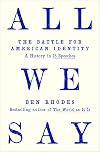
What does it mean to be American? And who gets to decide? from All We Say by Ben Rhodes
Fifteen speeches from across American history illustrate the progressing and shifting views on who gets to be called American and who gets to claim the rights of a citizenship. Rhode’s choices reflect the historical conflicts, from the Revolution to the current administration. The history shows both the progress of inclusion and the reactionary limiting of rights.
He begins with Benjamin Franklin willing show more to compromise over slavery, noting that views can and will change. He moves on to Native American Red Jacket, African Americans Maria Stewart and Frederick Douglas, and suffragette Anna Dickinson. He includes Southern white supremist slave owner Alexander Stephens and Abraham Lincoln.
The populist Mary Lease attacked a government controlled by Wall Street during the Gilded Age. “It is no longer a government of the people, by the people, and for the people, but a government of Wall Street, by Wall Street, and for Wall Street,” she proclaimed.
History swings back and forth. Action, reaction.
Reformers arose. Louis Brandies promoted change for the working class and supported immigrants. Franklin Roosevelt asserted four freedoms were basic to a healthy democracy. Martin Luther King dreamed of racial harmony. Dolores Huerta organized farm laborers.
The turmoil of the 60s brought Ronald Reagan’s coalition in reaction to “a Godless bureaucracy”, but also signed immigration reform allowing undocumented people legal status. Barack Obama returned to a dream of inclusion, unity, and the end of divisive politics. And of course, the backlash resulted in the rise of Donald J. Trump, whose second inaugural speech spelled out a desire to resurrect a 19th c America and claimed complete power.
Progress is not preordained, Rhodes concludes, and our success as a wealthy and powerful nation does not mean we have become a better nation. “The progress we have made, the fairness and equality that has been achieved, has never been inevitable–most often, it has been won through extraordinary efforts that were synergistic with extraordinary words.”
A thoughtful book that both inspired and caused me to soberly consider where we are as a country.
Thanks to Random House for a free book through NetGalley. show less
Fifteen speeches from across American history illustrate the progressing and shifting views on who gets to be called American and who gets to claim the rights of a citizenship. Rhode’s choices reflect the historical conflicts, from the Revolution to the current administration. The history shows both the progress of inclusion and the reactionary limiting of rights.
He begins with Benjamin Franklin willing show more to compromise over slavery, noting that views can and will change. He moves on to Native American Red Jacket, African Americans Maria Stewart and Frederick Douglas, and suffragette Anna Dickinson. He includes Southern white supremist slave owner Alexander Stephens and Abraham Lincoln.
The populist Mary Lease attacked a government controlled by Wall Street during the Gilded Age. “It is no longer a government of the people, by the people, and for the people, but a government of Wall Street, by Wall Street, and for Wall Street,” she proclaimed.
History swings back and forth. Action, reaction.
Reformers arose. Louis Brandies promoted change for the working class and supported immigrants. Franklin Roosevelt asserted four freedoms were basic to a healthy democracy. Martin Luther King dreamed of racial harmony. Dolores Huerta organized farm laborers.
The turmoil of the 60s brought Ronald Reagan’s coalition in reaction to “a Godless bureaucracy”, but also signed immigration reform allowing undocumented people legal status. Barack Obama returned to a dream of inclusion, unity, and the end of divisive politics. And of course, the backlash resulted in the rise of Donald J. Trump, whose second inaugural speech spelled out a desire to resurrect a 19th c America and claimed complete power.
Progress is not preordained, Rhodes concludes, and our success as a wealthy and powerful nation does not mean we have become a better nation. “The progress we have made, the fairness and equality that has been achieved, has never been inevitable–most often, it has been won through extraordinary efforts that were synergistic with extraordinary words.”
A thoughtful book that both inspired and caused me to soberly consider where we are as a country.
Thanks to Random House for a free book through NetGalley. show less
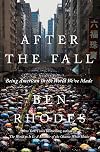
Like all human beings, we are fallen, able to do both good and evil. ~from After the Fall by Ben Rhodes
Ben Rhodes calls After the Fall a book of stories, the story of his journey from idealist patriot to questioning the myths we share, from working with President Obama to seeing their legacy dismantled.
Endeavoring to understand the rise of authoritarianism and nationalism across the world, he tells the stories of people who fight for democratic rights in increasingly authoritarian show more countries' and how they are imprisoned, tortured, poisoned, and silenced.
And he tells the story of how America has veered from its ideals and helped to create the world we live in today: how unconstrained capitalism destroyed the global economy in 2008, eroding faith in democracy and capitalism; how 'forever wars' eroded individual rights and created ethnic hate: how love of money trumped concern for human rights.: how technology impacted us for better and for worse; how a pandemic revealed "our most profound failings."
...Values like equality are no longer the business of governments around the world, they have been left to individuals to defend.~ from After the Fall by Ben Rhodes
Rhodes sees the cycle "between autocracy and democracy, the powerful and the oppressed, corrupted system and the uncorrupted masses," but holds onto the hope that, overall, the world arcs toward justice.
We have the opportunity, he writes, to "make capitalism about something more than money, to make national security about something other than subjugation, to make technology work better as a tool for human enlightenment. To learn from others around the world instead of thinking that is is always we who have something to teach them."
I have read other books about these subjects. What sets this one apart is Rhodes' heart and passion, his openness about his journey, and his empathy for the resistance leaders he meets.
I received a free egalley from the publisher through NetGalley. My review is fair and unbiased. show less
Ben Rhodes calls After the Fall a book of stories, the story of his journey from idealist patriot to questioning the myths we share, from working with President Obama to seeing their legacy dismantled.
Endeavoring to understand the rise of authoritarianism and nationalism across the world, he tells the stories of people who fight for democratic rights in increasingly authoritarian show more countries' and how they are imprisoned, tortured, poisoned, and silenced.
And he tells the story of how America has veered from its ideals and helped to create the world we live in today: how unconstrained capitalism destroyed the global economy in 2008, eroding faith in democracy and capitalism; how 'forever wars' eroded individual rights and created ethnic hate: how love of money trumped concern for human rights.: how technology impacted us for better and for worse; how a pandemic revealed "our most profound failings."
...Values like equality are no longer the business of governments around the world, they have been left to individuals to defend.~ from After the Fall by Ben Rhodes
Rhodes sees the cycle "between autocracy and democracy, the powerful and the oppressed, corrupted system and the uncorrupted masses," but holds onto the hope that, overall, the world arcs toward justice.
We have the opportunity, he writes, to "make capitalism about something more than money, to make national security about something other than subjugation, to make technology work better as a tool for human enlightenment. To learn from others around the world instead of thinking that is is always we who have something to teach them."
I have read other books about these subjects. What sets this one apart is Rhodes' heart and passion, his openness about his journey, and his empathy for the resistance leaders he meets.
I received a free egalley from the publisher through NetGalley. My review is fair and unbiased. show less
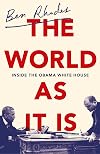
Before you wax nostalgic about an American presidency before Donald Trump when Barak Obama was admired the world over, when we weren’t waiting for the next ranting tweet from the White House, when Cabinet members weren’t falling like flies and Capitol Hill was a place where the representatives dutifully did their work as representatives of the people, read Ben Rhodes’ thrilling account as Barak Obama’s foreign policy speechwriter and Deputy National Security Officer.
Trump’s spectre show more was there all the time with his birtherism, his slander against Mexican immigrants, and barely concealed white nationalism.
Mitch McConnell was there frustrating almost all attempts to turn a Democrat agenda into law.
And Vladimir Putin was executing his disinformation campaigns in Latvia, Italy, Ukraine, and eventually America.
Obama took it on the chin from almost all quarters and his deputies suffered through endless Congressional investigations into palace intrigue, made up conspiracies, and press scrutiny.
Rhodes brought himself into politics through the door of the 9/11 commission. He was a young man with little direction after college. He didn’t appear to be a man driven to “serve” before 9/11 but it sure turned him into a believer afterward.
The problem was he made that transition in his idealistic years. As a White House aide he travelled a million miles in Air Force One, he broke off family holidays and family obligations to attend world changing events and meetings.
When he left after eight years of this grind, tired and dispirited from the verbal abuse he and his friends took, the world hadn’t changed all that much. Yes, there was an Arab Spring, but the few liberated Arab territories were moving toward a new totalitarianism.
Donald Trump was about to tear up American participation in the Trans Pacific Partnership, tear up the Iran nuclear deal, opt out of the Paris environmental accord, make friends with the invader of Crimea, and line his own pocket with endorsements for his hotels and country clubs.
Rhodes tells us that he orchestrated the Camelot moment of Anthony Bourdain and Barak Obama chewing noodles together in a Hanoi eatery. He tells us about his role in the thaw over Cuban policy, and funding to remove unexploded ordnance in Laos.
But in general this isn’t a story that makes you want to jump up and work in high places. It’s a cautionary tale that politics is a blood sport. show less
Trump’s spectre show more was there all the time with his birtherism, his slander against Mexican immigrants, and barely concealed white nationalism.
Mitch McConnell was there frustrating almost all attempts to turn a Democrat agenda into law.
And Vladimir Putin was executing his disinformation campaigns in Latvia, Italy, Ukraine, and eventually America.
Obama took it on the chin from almost all quarters and his deputies suffered through endless Congressional investigations into palace intrigue, made up conspiracies, and press scrutiny.
Rhodes brought himself into politics through the door of the 9/11 commission. He was a young man with little direction after college. He didn’t appear to be a man driven to “serve” before 9/11 but it sure turned him into a believer afterward.
The problem was he made that transition in his idealistic years. As a White House aide he travelled a million miles in Air Force One, he broke off family holidays and family obligations to attend world changing events and meetings.
When he left after eight years of this grind, tired and dispirited from the verbal abuse he and his friends took, the world hadn’t changed all that much. Yes, there was an Arab Spring, but the few liberated Arab territories were moving toward a new totalitarianism.
Donald Trump was about to tear up American participation in the Trans Pacific Partnership, tear up the Iran nuclear deal, opt out of the Paris environmental accord, make friends with the invader of Crimea, and line his own pocket with endorsements for his hotels and country clubs.
Rhodes tells us that he orchestrated the Camelot moment of Anthony Bourdain and Barak Obama chewing noodles together in a Hanoi eatery. He tells us about his role in the thaw over Cuban policy, and funding to remove unexploded ordnance in Laos.
But in general this isn’t a story that makes you want to jump up and work in high places. It’s a cautionary tale that politics is a blood sport. show less
By "the fall", Rhodes means the recent (post-Cold-War) world instances of descent into authoritarianism epitomized so far by the elevation of a "fascistic lunatic" (p 301) in the 2016 US presidential election. By "the world we've made", he partly means the toxic social media and online culture first created in the US. With input from some of his many international contacts, he delves into the cases of Hungary, Russia, and Hong Kong. As for the US, "to help fix what has gone wrong in the show more world, we have to begin fixing what has gone wrong with ourselves" (p 320). This, I'd say, would have to involve the Republican Party's death, the unlikeliness of which would suggest that the Biden years will just be a last-gasp bubble of enlightened government preceding a permanent descent into benightedness. show less
Lists
Awards

You May Also Like


Statistics
- Works
- 8
- Members
- 865
- Popularity
- #29,594
- Rating
- 4.2
- Reviews
- 19
- ISBNs
- 30
- Languages
- 5
- Favorited
- 1