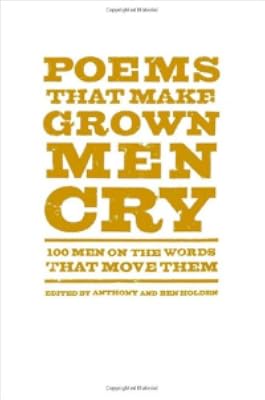
Poems That Make Grown Men Cry: 100 Men on the Words That Move Them
by Anthony Holden (Editor), Ben Holden (Editor)
On This Page
Description
"A unique collection of poetry so powerful that 100 grown men--bestselling authors, poets laureate, and other eminent figures from the arts, sciences, and politics--have been moved to tears. Here they deliver touching and insightful personal introductions to a range of beloved poems. Grown men aren't supposed to cry. Poems That Make Grown Men Cry, however, a rare and fascinating collection, will profoundly move the strongest men--and women--to heartfelt tears. Father-and-son team Anthony and show more Ben Holden, a British writer and movie producer respectively, have teamed up to compile a poetry anthology unlike any other. Poets whose work is represented in this collection include W.H. Auden, Charles Bukowski, Samuel Taylor Coleridge, Emily Dickinson, D.H. Lawrence, Harold Pinter, Ezra Pound, William Shakespeare, Walt Whitman, and a host of other notables. Familiar personalities who have confessed to breaking down range from J.J. Abrams to John le Carre;, Seamus Heaney to Richard Dawkins, Salman Rushdie to Jonathan Franzen, and Stanley Tucci to Colin Firth. Each explains why the poems have made them cry--often in words as moving as the poetry itself--delivering private insight into the souls of men whose writing, acting, or thinking you have enjoyed and admired. In Poems That Make Grown Men Cry, not only will you savor old favorites and discover new gems; you will share private moments through the joys and sorrows of some of the most moving poetry ever written. Most important, you will learn more about yourself in the process"-- "A unique collection of the world's finest poets and their most touching poems that has moved one hundred internationally renowned men to tears"-- show lessTags
Recommendations

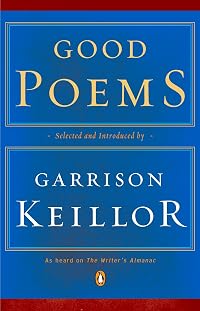
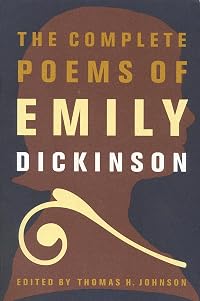
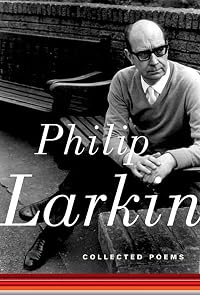

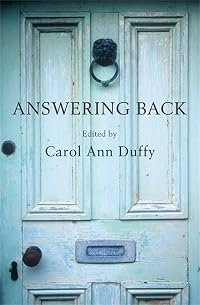

Member Recommendations
Member Reviews
An interesting collection of poetry, but one that doesn't always hit with the force you expect. It wisely steers away from mawkishness and sentimentality, but doesn't really replace it with much more than a sense of pathos. It is this sense of pathos which is dominant, rather than hard-hitting, raw emotion. One problem is that many of the contributors are literary types (poets, writers and the like), and their suggestions are often flowery and enigmatic poems that might not necessarily endear them to ordinary readers like myself. It is notable that the more accessible selections often come from those not quite so invested in the literary zeitgeist, such as actors and directors. I don't consider myself a cultural Neanderthal, but I think show more that if you have to work to decipher what a poet is trying to convey, you're trying too hard and, whilst you may be aware of the emotion, it won't hit you honestly.
Another problem is that the reasons some of the contributors have selected certain poems are often intensely personal, reminding them of something or someone in their own past. Such poems don't always have the same impact on readers: for example, what to one contributor may transport them back to the carefree days of their youth may, to someone else, just be a poem about a tree or a field or the night sky. In this respect, one of the best potential uses of this book is as an unguarded window into the souls of each of the contributors.
That said, there are a number of great poems on offer, if not as many as I would like in order to dub this a 'great' anthology. The anthologists could have also benefited from expanding their focus group; the contributors are mostly British and, as I have said, are heavily involved in the literary zeitgeist. At times, it just felt a little bit like the anthologists were consulting their own circle of friends from among the literati. More musicians could have perhaps been consulted (Nick Cave's contribution is interesting, to say the least), perhaps some politicians and, as their selections proved to be among the most interesting, more actors. More young people too; to my mind, Daniel Radcliffe was the only contributor who one could truly class as 'young'. Certainly, there is scope and potential for a second collection of this sort: 'More Poems That Make Grown Men Cry' is a book that, despite my ambivalence to certain selections here, I would welcome. show less
Another problem is that the reasons some of the contributors have selected certain poems are often intensely personal, reminding them of something or someone in their own past. Such poems don't always have the same impact on readers: for example, what to one contributor may transport them back to the carefree days of their youth may, to someone else, just be a poem about a tree or a field or the night sky. In this respect, one of the best potential uses of this book is as an unguarded window into the souls of each of the contributors.
That said, there are a number of great poems on offer, if not as many as I would like in order to dub this a 'great' anthology. The anthologists could have also benefited from expanding their focus group; the contributors are mostly British and, as I have said, are heavily involved in the literary zeitgeist. At times, it just felt a little bit like the anthologists were consulting their own circle of friends from among the literati. More musicians could have perhaps been consulted (Nick Cave's contribution is interesting, to say the least), perhaps some politicians and, as their selections proved to be among the most interesting, more actors. More young people too; to my mind, Daniel Radcliffe was the only contributor who one could truly class as 'young'. Certainly, there is scope and potential for a second collection of this sort: 'More Poems That Make Grown Men Cry' is a book that, despite my ambivalence to certain selections here, I would welcome. show less
You don’t have to say it: I am fully aware that I am not a man. Also, I’m an embarrassingly easy crier and will shed a tear at the drop of a hat. (I’ve recently taken to speed-reading through sad scenes in books because otherwise I’d have to tag far too many reviews with “Made Me Cry.”) So what made me request this one from Edelweiss? Basically, I figured that this had to be a collection of damn good poems in order to move so many eminent men so deeply. Also, the range of contributors seemed pretty broad, and it included a lot of my favorites. I’m always interested in finding out if my tastes match the tastes of the writers/performers/etc. I admire.
The editors allowed each contributor to include a brief piece explaining show more why he chose his particular poem. I found it particularly interesting when two men chose the same poem for different reasons, which happened more than once. After the poem, there’s a brief bio on the selector. Although I recognized most of the names, there were a few I didn’t, and I found this feature helpful.
The poetry itself comes from various time periods and languages, though most were written in English in the last 100-150 years. Some are beautiful but not particularly emotional, some seemed chosen for strictly personal reasons (and therefore felt a bit distant for me), and some left me pacing the floors of my home while sobbing.
Some of the poems didn’t make me cry, but they opened my eyes to a new poet and a style that I admired (I’ve included links when I could find them): Abioseh Nicol’s “The Meaning of Africa,” chosen by James Earl Jones, with its sweeping descriptions; Elizabeth Bishop’s powerfully evocative “Crusoe in England,” chosen by Andrew Solomon; Philip Larkin’s terrifying “Aubade,” chosen by William Sieghart; and — one I’d read previously and forgotten about — Bukowski’s “Eulogy to a Hell of a Dame,” chosen by Mike Leigh.
Other poems’ messages moved me: Consantine P. Cavafy’s “Ithaka,” chosen by Walter Salles, and Derek Walcott’s “Love After Love,” chosen by Tom Hiddleston.
Poems that hit me the hardest — the ones that made me out-and-out cry — were the ones about family, whether having/losing a parent (Tony Harrison’s “Long Distance II,” chosen by Daniel Radcliffe) or being one (John N. Morris’s “For Julia, In the Deep Water,” chosen by Tobias Wolff; Victoria Redel’s “Bedecked,” chosen by Billy Collins; and Rabindranath Tagore’s “Those Who Are Near Me Do Not Know,” chosen by Chris Cooper).
All in all: There’s something for everyone in here. Buy a stack of copies and gift them! show less
The editors allowed each contributor to include a brief piece explaining show more why he chose his particular poem. I found it particularly interesting when two men chose the same poem for different reasons, which happened more than once. After the poem, there’s a brief bio on the selector. Although I recognized most of the names, there were a few I didn’t, and I found this feature helpful.
The poetry itself comes from various time periods and languages, though most were written in English in the last 100-150 years. Some are beautiful but not particularly emotional, some seemed chosen for strictly personal reasons (and therefore felt a bit distant for me), and some left me pacing the floors of my home while sobbing.
Some of the poems didn’t make me cry, but they opened my eyes to a new poet and a style that I admired (I’ve included links when I could find them): Abioseh Nicol’s “The Meaning of Africa,” chosen by James Earl Jones, with its sweeping descriptions; Elizabeth Bishop’s powerfully evocative “Crusoe in England,” chosen by Andrew Solomon; Philip Larkin’s terrifying “Aubade,” chosen by William Sieghart; and — one I’d read previously and forgotten about — Bukowski’s “Eulogy to a Hell of a Dame,” chosen by Mike Leigh.
Other poems’ messages moved me: Consantine P. Cavafy’s “Ithaka,” chosen by Walter Salles, and Derek Walcott’s “Love After Love,” chosen by Tom Hiddleston.
Poems that hit me the hardest — the ones that made me out-and-out cry — were the ones about family, whether having/losing a parent (Tony Harrison’s “Long Distance II,” chosen by Daniel Radcliffe) or being one (John N. Morris’s “For Julia, In the Deep Water,” chosen by Tobias Wolff; Victoria Redel’s “Bedecked,” chosen by Billy Collins; and Rabindranath Tagore’s “Those Who Are Near Me Do Not Know,” chosen by Chris Cooper).
All in all: There’s something for everyone in here. Buy a stack of copies and gift them! show less
Whatever about men shedding a precious tear, this is a superior collection of poems whose stated organizing principle at least has the merit of placing the best attraction of poetry - its ability to move a reader's emotions in a carefully crafted relative minimum of words - fully forward. And it's also fun to see what poem some of your favorite famous personalities - Nick Cave, Patrick Stewart; they didn't disappoint- select, and briefly hear from them how they relate to it.
Though the extent of my own outer demonstrative range when reading a poem ends at a furrowed brow, a bit lip, a deep breath, I'd add the following selection to this collection: Northern Irish poet Michael Longley had the poem "Ceasefire" published in The Irish Times show more on the occasion of the IRA ceasefire in 1994, and the combination of an emotional connection to the Northern Irish Troubles, a connection to The Iliad, and imagining the pain of losing one of my own sons, combine to rank this one way up there for me.
I
Put in mind of his own father and moved to tears
Achilles took him by the hand and pushed the old king
Gently away, but Priam curled up at his feet and
Wept with him until their sadness filled the building.
II
Taking Hector's corpse into his own hands Achilles
Made sure it was washed and, for the old king's sake,
Laid out in uniform, ready for Priam to carry
Wrapped like a present home to Troy at daybreak.
III
When they had eaten together, it pleased them both
To stare at each other's beauty as lovers might,
Achilles built like a god, Priam good-looking still
And full of conversation, who earlier had sighed:
IV
'I get down on my knees and do what must be done
And kiss Achilles' hand, the killer of my son.' show less
Though the extent of my own outer demonstrative range when reading a poem ends at a furrowed brow, a bit lip, a deep breath, I'd add the following selection to this collection: Northern Irish poet Michael Longley had the poem "Ceasefire" published in The Irish Times show more on the occasion of the IRA ceasefire in 1994, and the combination of an emotional connection to the Northern Irish Troubles, a connection to The Iliad, and imagining the pain of losing one of my own sons, combine to rank this one way up there for me.
I
Put in mind of his own father and moved to tears
Achilles took him by the hand and pushed the old king
Gently away, but Priam curled up at his feet and
Wept with him until their sadness filled the building.
II
Taking Hector's corpse into his own hands Achilles
Made sure it was washed and, for the old king's sake,
Laid out in uniform, ready for Priam to carry
Wrapped like a present home to Troy at daybreak.
III
When they had eaten together, it pleased them both
To stare at each other's beauty as lovers might,
Achilles built like a god, Priam good-looking still
And full of conversation, who earlier had sighed:
IV
'I get down on my knees and do what must be done
And kiss Achilles' hand, the killer of my son.' show less
This is a very enjoyable collection of poems, many of the British and most of them written since 1900, each of which has been selected by a particular author, artist, or other notable person. As the title suggests, they have been selected for emotional impact, and I did indeed find many of them very moving. I read the book shortly after the death of a dear friend, and it really was cathartic -- I cried a fair bit, and I felt the better for it. Now, I am not a man, so the fact that I cried is not a statistically significant test of the title. I shall, however, give it to my husband for Christmas, and see how it works on him. I thought about giving it four stars instead of five, since writers from this side of the pond seem to me somewhat show more underrepresented, and women writers more than somewhat underrepresented. Those are stock objections, however, and shouldn't put the interested reader off this valuable book. Anything that makes people feel that poetry is something to read for emotion and connection and enjoyment, not for academic credit, is all to the good. So I compromised on 4.5. show less
This receives Five stars because of the sentiment it carries within. When I picked up the book and glanced through the index, I instantly decided to read it, also being impressed by the book title. Because, which men admit to crying for poetry in public? I read this on a train journey and something during the moving train also moved me to tears while reading through every single page. The people who have chosen their favorite poems have also given a little backdrop of the reason they love these poems. More often than the poems, it was this synopsis that made me cry. I admit, I sobbed on the train.
Those poems about the death of a beloved especially, parents or children are so sorrowful that I wanted to comfort all who encountered that show more loss. It's not easy to dwell in memory of our beloved who are no longer in the world, for every memory really breaks us more than that immediate sense of loss. I can't handle death in poetry or literature, as I can't handle it in real life as well. That is also a reason I took almost a month to finish it because I would just start from the first poem, every single time. I thought those poems spoke to me differently each time I read them.
If some poems didn't make me cry but instead amused and made me laugh, I was just glad for that distraction. One can't thrive on a pool of sorrow for long. That being said, this is one really good keep. It is one of those rare books that we could go through years after first reading it. I see myself, taking this poetry collection and leafing through it many years from now; maybe in sorrow, or maybe in my moments of happiness. show less
Those poems about the death of a beloved especially, parents or children are so sorrowful that I wanted to comfort all who encountered that show more loss. It's not easy to dwell in memory of our beloved who are no longer in the world, for every memory really breaks us more than that immediate sense of loss. I can't handle death in poetry or literature, as I can't handle it in real life as well. That is also a reason I took almost a month to finish it because I would just start from the first poem, every single time. I thought those poems spoke to me differently each time I read them.
If some poems didn't make me cry but instead amused and made me laugh, I was just glad for that distraction. One can't thrive on a pool of sorrow for long. That being said, this is one really good keep. It is one of those rare books that we could go through years after first reading it. I see myself, taking this poetry collection and leafing through it many years from now; maybe in sorrow, or maybe in my moments of happiness. show less
If not for the poetry anthology, I would never have happened upon most of the poems and poets I now love. In this collection of poems chosen by famous men, the only criterion being that the poems are tearjerkers, I found some old friends and some new ones. I also enjoyed the brief introduction to each poem, written by the man who chose it. This was like having a new lens through which to read. If time allows, a satisfying way to read this book might be to read a poem, then go back and read the chooser's introduction to it, then read the poem again with that person's angle in mind.
One of my favorite new friends from this book is "Ithaka," by C.P. Cavafy.
One of my favorite new friends from this book is "Ithaka," by C.P. Cavafy.
The editors of this nice volume of poetry asked a hundred notable men to submit poems that move, inspire or influence them, sometimes to tears. The resulting collection is a set of wonderful, sometimes well-known, sometimes obscure poetry that gives insight into the minds and feelings of the people who submitted them and also stir and release feelings within the reader.
I particularly liked the introduction to each poem. In these, the men submitting the poems explained how they selected them or why they found them so meaningful.
The entire collection is a "good read," but I found few offerings that had anywhere near the impact on me that they apparently had on those who submitted them. But, of course, art is like that--some people are show more moved by it, others are not. I am just glad to have had the chance to read this volume and realize that I am not the only man who likes a good, moving and inspirational poem. show less
I particularly liked the introduction to each poem. In these, the men submitting the poems explained how they selected them or why they found them so meaningful.
The entire collection is a "good read," but I found few offerings that had anywhere near the impact on me that they apparently had on those who submitted them. But, of course, art is like that--some people are show more moved by it, others are not. I am just glad to have had the chance to read this volume and realize that I am not the only man who likes a good, moving and inspirational poem. show less
Members
- Recently Added By
Author Information

Classifications
- Genres
- Poetry, Fiction and Literature
- DDC/MDS
- 821.008 — Literature & rhetoric English & Old English literatures British Poetry English poetry {by more than one author} Modified standard subdivisions Collections of literary texts not limited by time period or kind of form
- LCC
- PR1175 .P6317 — Language and Literature English English Literature Collections of English literature
- BISAC
Statistics
- Members
- 316
- Popularity
- 100,641
- Reviews
- 14
- Rating
- (3.79)
- Languages
- English
- Media
- Paper, Ebook
- ISBNs
- 6
- ASINs
- 2