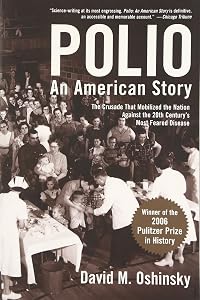
Polio: An American Story
by David M. Oshinsky
On This Page
Description
Multiple New York Times Notable Book winner and University of Texas professor, David M. Oshinsky is a leading American political and cultural historian. Garnering the 2006 Pulitzer Prize in History, this comprehensive and gripping narrative covers all the challenges, characters, and controversies in America's relentless struggle against polio. Funded by philanthropy and grassroots contributions, Salk's killed-virus vaccine (1954) and Sabin's live-virus vaccine (1961) began to eradicate this show more dreaded disease. show lessTags
Recommendations

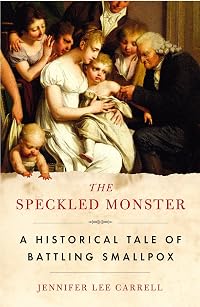
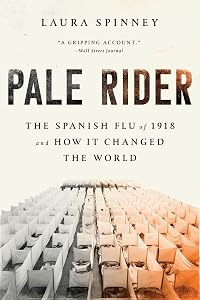
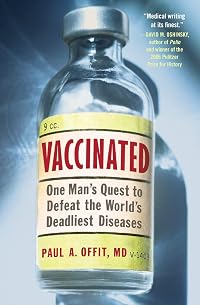
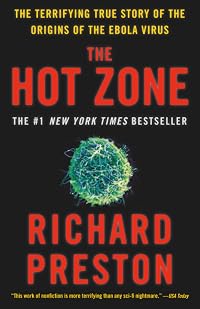





Member Recommendations
Member Reviews
When was the last time you heard the word “polio?” It was probably in reference to a vaccine, not the disease. So thoroughly have the effects of polio vaccination been felt that less than 2,000 cases exist each year and only in remote regions of Nigeria, India, and Pakistan. Ridding the world of it forever (in other words, complete eradication, like with smallpox) is in sight.
Polio once caused swimming pools and movie theaters to shut down in order to prevent possible venues to transmit disease, so Oshinsky tells us in this well-told history. The verification of the Salk vaccine produced utter euphoria in America and amplified the American ethic of can-do-know-how-ism.
He also shares the tale of the rivalry between polio virologists show more Jonas Salk and Albert Sabin (and truth be told, other virologists as well). Both deserve credit for their cure and for their respective work, each producing an effective vaccine. However, both had different methods, different audiences, and different attitudes. Fortunately for us, each vaccine could serve its part to contribute to the global effort to eradicate polio – even if their respective inventors could not get along.
As such, this book teaches functions not merely as another history of disease but also as an important commentary on the culture of science. It teaches us how to get along and how to work together – especially when we work differently than the people sitting next to us. This intricately human story should not perish among the annals of American history. show less
Polio once caused swimming pools and movie theaters to shut down in order to prevent possible venues to transmit disease, so Oshinsky tells us in this well-told history. The verification of the Salk vaccine produced utter euphoria in America and amplified the American ethic of can-do-know-how-ism.
He also shares the tale of the rivalry between polio virologists show more Jonas Salk and Albert Sabin (and truth be told, other virologists as well). Both deserve credit for their cure and for their respective work, each producing an effective vaccine. However, both had different methods, different audiences, and different attitudes. Fortunately for us, each vaccine could serve its part to contribute to the global effort to eradicate polio – even if their respective inventors could not get along.
As such, this book teaches functions not merely as another history of disease but also as an important commentary on the culture of science. It teaches us how to get along and how to work together – especially when we work differently than the people sitting next to us. This intricately human story should not perish among the annals of American history. show less
Professional jealousy. Capitalist profiteering. Derision. Elitism. Greed. Laboratory incompetence. Glory hogging. Slighting coworkers. Jealousy. Governmental dereliction. Vaccines that killed. All of these and more are part of the “American Story” in David Oshinsky's history Polio: An American Story. Most Americans, at least most of those of a certain age, recognize the name of Jonas Salk as in “Salk vaccine.” Slightly fewer still recognize the name of Albert Sabin. Few will recognize the name of the National Foundation for Infantile Paralysis although more will remember its fund raising campaign “The March of Dimes.” Then there are the names that few, if any, of today's general public will recognize: Hilary Koprowski, show more Mikhail Chumakov, David Bodian, Basil O'Connor, Julius Youngner,...
Hopefully, nearly all Americans will recognize the name of Franklin Delano Roosevelt, FDR, but do they know of his involvement in the nascent fund-raising activities that culminated years after in the widely known March of Dimes movement? Are there any FDR dimes in their coin collections? Do they know when those dimes were struck and why their date of issuance was significant?
How well known is the lengthy scientific tug-of-war between adherents of a killed-virus vaccine and a live but attenuated virus vaccine? How many know which type is in favor today and why?
What happened to the hundreds of youngsters and young adults encased in prisons of iron lungs, kept alive and breathing only by the rhythmic fluctuation of air pressure inside those metal capsules?
In which country was the development and distribution of the polio vaccine left up to profit-making capitalist laboratories and in which country did the government ensure production and distribution of vaccine because it cared more to protect its children than to safeguard the profits of private enterprise? If one guesses the United States as the former and the post-Stalinist Soviet Union as the latter, one has guessed correctly. The Republican Eisenhower administration in the U.S. was averse to anything that even suggested the possibility of “socialized medicine,” children's continuing paralysis and death notwithstanding.
Oshinsky's book is the backstory of the spread of poliomyelitis in the U.S., with some mention of its prevalence in other countries as well, and of the research that went into development of a vaccine to subdue the easily-spread virus. Contrary to what many likely assume, research and development efforts were characterized more by antagonisms and hostile competition than by any spirit of mutual cooperation to achieve a common goal for the benefit of the nation's children. Even after a vaccine was developed and declared safe, incompetence by one manufacturer, Cutter laboratories, turned its vaccines into agents of further infection. There is much to the story of polio and its impact on U.S. scientific and academic communities that is not widely known among today's general populace. Oshinsky's book is a highly readable history that fills in numerous gaps in our knowledge.
Readers who lived through the 1940s and 50s will find their memories of those decades refreshed, particularly insofar as the polio epidemics are concerned—closed swimming pools, shuttered movie theaters, avoidance of groups, cancellation of birthday parties. Younger readers may find themselves amazed at what transpired in the U.S. not all that long before their births. I myself was left with a thought that the book does not actually address: Given the “anti-vaxxer” movement of today, fueled as it is by ignorance and superstition and promulgated through various social media, and given the fact that wild polio virus still thrives in some countries, it is far from impossible that polio may again make its ugly appearance in any of our neighborhoods.
Polio: An American Story gives us a fascinating look at a rather recent era in U.S. (and, to a lesser extent, world) history that should be of interest to every reader, and I found it completely worth the time that I devoted to its reading. show less
Hopefully, nearly all Americans will recognize the name of Franklin Delano Roosevelt, FDR, but do they know of his involvement in the nascent fund-raising activities that culminated years after in the widely known March of Dimes movement? Are there any FDR dimes in their coin collections? Do they know when those dimes were struck and why their date of issuance was significant?
How well known is the lengthy scientific tug-of-war between adherents of a killed-virus vaccine and a live but attenuated virus vaccine? How many know which type is in favor today and why?
What happened to the hundreds of youngsters and young adults encased in prisons of iron lungs, kept alive and breathing only by the rhythmic fluctuation of air pressure inside those metal capsules?
In which country was the development and distribution of the polio vaccine left up to profit-making capitalist laboratories and in which country did the government ensure production and distribution of vaccine because it cared more to protect its children than to safeguard the profits of private enterprise? If one guesses the United States as the former and the post-Stalinist Soviet Union as the latter, one has guessed correctly. The Republican Eisenhower administration in the U.S. was averse to anything that even suggested the possibility of “socialized medicine,” children's continuing paralysis and death notwithstanding.
Oshinsky's book is the backstory of the spread of poliomyelitis in the U.S., with some mention of its prevalence in other countries as well, and of the research that went into development of a vaccine to subdue the easily-spread virus. Contrary to what many likely assume, research and development efforts were characterized more by antagonisms and hostile competition than by any spirit of mutual cooperation to achieve a common goal for the benefit of the nation's children. Even after a vaccine was developed and declared safe, incompetence by one manufacturer, Cutter laboratories, turned its vaccines into agents of further infection. There is much to the story of polio and its impact on U.S. scientific and academic communities that is not widely known among today's general populace. Oshinsky's book is a highly readable history that fills in numerous gaps in our knowledge.
Readers who lived through the 1940s and 50s will find their memories of those decades refreshed, particularly insofar as the polio epidemics are concerned—closed swimming pools, shuttered movie theaters, avoidance of groups, cancellation of birthday parties. Younger readers may find themselves amazed at what transpired in the U.S. not all that long before their births. I myself was left with a thought that the book does not actually address: Given the “anti-vaxxer” movement of today, fueled as it is by ignorance and superstition and promulgated through various social media, and given the fact that wild polio virus still thrives in some countries, it is far from impossible that polio may again make its ugly appearance in any of our neighborhoods.
Polio: An American Story gives us a fascinating look at a rather recent era in U.S. (and, to a lesser extent, world) history that should be of interest to every reader, and I found it completely worth the time that I devoted to its reading. show less
I remember, in school, getting containers like the 8 oz square milk carton with a slot for dimes to be put. Through the month of March, we would collect as many dimes as we could to put into the cartons and then give them to the teacher, unopened. The kid who collected the most dimes got prizes. I never got a prize. Boys always won. It was not acceptable for girls to go around in public asking for money. Girls could sell cookies, but the rest was the domain of boys. I remember when the collections stopped. But by the time I was involved in the collection, polio was already a "distant" memory, by kid standards and the collecting was for the March of Dimes, the "mother" having been dropped along with "on polio". I don't know that any of show more us knew what the march was for. Leukemia was the big killer of children then.
The thing that surprised me with this book was that, compared to population size, polio was not that widespread compared to other diseases of the time. But it was devastating because it attacked children and mostly children of middle and upper classes, those best poised to press for something to be done. And of course, FDR being diagnosed with it was a game changer for attention to the disease.
I was dismayed by all the in-fighting that went on among researchers and the fact that neither Salk nor Sabin were ever awarded a Nobel Prize. Like many, I thought Salk had been given the prize! I was intrigued by the charge that the manufacturing of one form of the serum was responsible for the AIDS virus moving from monkeys into humans. With the realization that the Sabin serum was actually giving some children polio, they moved to a combo serum. I remember my daughter being given the Sabin/Salk polio serum. I had no idea what was behind it, but now I see why some women are refusing the vaccine for their children at all saying it is connected with several other types of problems children have in increasing numbers, autism and ADHD among them. But the book does not mention these. I wish it had. show less
The thing that surprised me with this book was that, compared to population size, polio was not that widespread compared to other diseases of the time. But it was devastating because it attacked children and mostly children of middle and upper classes, those best poised to press for something to be done. And of course, FDR being diagnosed with it was a game changer for attention to the disease.
I was dismayed by all the in-fighting that went on among researchers and the fact that neither Salk nor Sabin were ever awarded a Nobel Prize. Like many, I thought Salk had been given the prize! I was intrigued by the charge that the manufacturing of one form of the serum was responsible for the AIDS virus moving from monkeys into humans. With the realization that the Sabin serum was actually giving some children polio, they moved to a combo serum. I remember my daughter being given the Sabin/Salk polio serum. I had no idea what was behind it, but now I see why some women are refusing the vaccine for their children at all saying it is connected with several other types of problems children have in increasing numbers, autism and ADHD among them. But the book does not mention these. I wish it had. show less
The Race to Cure Polio
In this highly engaging historical narrative, Historian David M. Oshinsky highlights the race for a vaccine for poliomyetitis. The story is one of tragedy and triumph, controversy and concensus.
What makes this story worth telling? The triumph over Polio in the United States during the post-war period represents a landmark in the history of medicine and technology, of human progress. The process that led to the Salk and Sabine vaccines is a true American success story, borne out of the good old American values of hard work and determination.
The story of how America conquered Polio is not without its controversies and skeptics. There was a real sense both at the time and looking back that "Polio had been oversold as show more a menace to public health" (p.239). That the Dimes March On campaign, the posters with the poor suffering children, had created a false panic. That this relatively uncommon disease had been turned into a public-relations media blitz which threatened the ethics of scientific research. It was the first campaign of its kind, and though controversial as it was, it was ultimately successful through its relentless advertising, fund-raising and lobbying efforts; it helped pave the way for all future disease awareness campaigns.
At the heart of Oshinsky's narrative is the intense competition between rivals Jonas Salk and Albert Sabine over the race to a vaccine. Salk was the first to come up with his killed-virus vaccine but not without his critics who labeled Salk a quack and sell-out for rushing to market his vaccine. Oshinsky calls the 1954 Salk polio vaccine field trials, "the biggest medical gamble in history" (p.189). And indeed it was, and almost failed miserably after the Cutter fiasco where 1 pharmacy manufacturer had mishandled the production of the Salk vaccine allowing some live viruses to mix with the production batch.
Oshinsky further provides insights into the ethical dilemmas all scientists face such as conducting vaccination trials on "volunteers" and the treatment of lab animals. The story is not so black and white as it may appear.
It is also worth noting that during the period, 1945-1956, regulation of public health was nowhere near the level it is today in the United States.
Overall, Oshinsky delivers both as a Historian and a great storyteller. Oshinsky is well deserving of the 2006 Pulitzer Prize in history for this significant contribution to the scientific and social history of the post-war US period. show less
In this highly engaging historical narrative, Historian David M. Oshinsky highlights the race for a vaccine for poliomyetitis. The story is one of tragedy and triumph, controversy and concensus.
What makes this story worth telling? The triumph over Polio in the United States during the post-war period represents a landmark in the history of medicine and technology, of human progress. The process that led to the Salk and Sabine vaccines is a true American success story, borne out of the good old American values of hard work and determination.
The story of how America conquered Polio is not without its controversies and skeptics. There was a real sense both at the time and looking back that "Polio had been oversold as show more a menace to public health" (p.239). That the Dimes March On campaign, the posters with the poor suffering children, had created a false panic. That this relatively uncommon disease had been turned into a public-relations media blitz which threatened the ethics of scientific research. It was the first campaign of its kind, and though controversial as it was, it was ultimately successful through its relentless advertising, fund-raising and lobbying efforts; it helped pave the way for all future disease awareness campaigns.
At the heart of Oshinsky's narrative is the intense competition between rivals Jonas Salk and Albert Sabine over the race to a vaccine. Salk was the first to come up with his killed-virus vaccine but not without his critics who labeled Salk a quack and sell-out for rushing to market his vaccine. Oshinsky calls the 1954 Salk polio vaccine field trials, "the biggest medical gamble in history" (p.189). And indeed it was, and almost failed miserably after the Cutter fiasco where 1 pharmacy manufacturer had mishandled the production of the Salk vaccine allowing some live viruses to mix with the production batch.
Oshinsky further provides insights into the ethical dilemmas all scientists face such as conducting vaccination trials on "volunteers" and the treatment of lab animals. The story is not so black and white as it may appear.
It is also worth noting that during the period, 1945-1956, regulation of public health was nowhere near the level it is today in the United States.
Overall, Oshinsky delivers both as a Historian and a great storyteller. Oshinsky is well deserving of the 2006 Pulitzer Prize in history for this significant contribution to the scientific and social history of the post-war US period. show less
Going into this book, I knew very little about the efforts to eliminate polio in the United States. I'd heard of Jonas Salk but knew nothing about his background or the contribution of other scientists to polio research. This book is an excellent, in-depth look at how polio became the most feared disease in the U.S. (ahead of other, more common and fatal diseases). It details FDR's own struggle with polio, the creation of the March of Dimes, and the race for a vaccine.
I do not have any medical background, so I was pleased that I was able to read this book without feeling bogged down by overly scientific discussions of the disease or the efforts to prevent it. Someone with a medical background might have greater appreciation for some of show more the critical but not hugely publicized breakthroughs in polio research. For example, the overview of John Enders' method of growing polio in different tissues didn't really resonate with me as a huge breakthrough - but the book argues that it was one of the most important discoveries in the effort to find a vaccine (and in fact, the researchers won a Nobel Prize for that discovery). That section felt a little dry to me, but in retrospect, it was a very relevant part of the story. Really, the only thing the layperson needs to be able to understand is the difference between a live virus vaccine and a killed virus vaccine, which I (as a layperson) had no difficulty understanding. Some of the nuance was undoubtedly lost on me, but the author does an excellent job of distilling the necessary facts and explaining them well.
I was also very surprised by the feud between Salk and Sabin (another polio researcher). The book does a great job of explaining how Salk became a popular scientist while Sabin earned the respect of the scientific community. This, plus the in-depth account of the national Salk vaccine trial, is what makes the book such an absorbing read. I highly recommend it for non-fiction fans. show less
I do not have any medical background, so I was pleased that I was able to read this book without feeling bogged down by overly scientific discussions of the disease or the efforts to prevent it. Someone with a medical background might have greater appreciation for some of show more the critical but not hugely publicized breakthroughs in polio research. For example, the overview of John Enders' method of growing polio in different tissues didn't really resonate with me as a huge breakthrough - but the book argues that it was one of the most important discoveries in the effort to find a vaccine (and in fact, the researchers won a Nobel Prize for that discovery). That section felt a little dry to me, but in retrospect, it was a very relevant part of the story. Really, the only thing the layperson needs to be able to understand is the difference between a live virus vaccine and a killed virus vaccine, which I (as a layperson) had no difficulty understanding. Some of the nuance was undoubtedly lost on me, but the author does an excellent job of distilling the necessary facts and explaining them well.
I was also very surprised by the feud between Salk and Sabin (another polio researcher). The book does a great job of explaining how Salk became a popular scientist while Sabin earned the respect of the scientific community. This, plus the in-depth account of the national Salk vaccine trial, is what makes the book such an absorbing read. I highly recommend it for non-fiction fans. show less
A NF book about the disease from the 1920's until 2000. A very interesting book, especially about both Salk and Sabin; what scoundrels! I won't tell more so as to not give it away. I know it's cliche, but this NF read like a work of fiction. It was tense and I was on the edge of my seat. 369 pages
Oshinsky's Polio is truly a great American story of the pursuit of Polio vaccination and its eventual eradication. The story telling is intricate, with a healthy dose of politics in the early times of nationwide healthcare initiatives, academic research - with the required jealousy, fighting, and competition.
Members
- Recently Added By
Lists

Best Books About Plagues and Epidemics
99 works; 16 members

Pulitzer Prize for History
16 works; 2 members

So you want to get into medicine
29 works; 6 members
Author Information

11+ Works 1,983 Members
He is also an associate editor of the American National Biography. Oshinsky writes about the brutality of penitentiary life in his book, Worse Than Slavery: Parchman Farm and the Ordeal of Jim Crow Justice. He earned a Senior Fellowship from the National Endowment for the Humanities and an appointment as Distinguished Professor of History at the show more University of Texas, Austin for his work on the penitentiary project. Oshinsky also received the 17th Annual Robert F. Kennedy Book Award for his novel. (Bowker Author Biography) show less
Awards and Honors
Awards
Work Relationships
Is contained in
Common Knowledge
- Original publication date
- 2005
- People/Characters
- Jonas Edward Salk; Franklin Delano Roosevelt; Carl Byoir; Eddie Cantor; Fred Snite (Jr); Donald Anderson (show all 26); Benjamin Spock; Thomas Rivers; Simon Flexner; Basil O'Conner; Harry Weaver; Sister Elizabeth Kenny; Albert Sabin; David Bodian; Isabel Morgan; Elaine Whiteclaw; Percival Bazeley; John Enders; Thomas Francis (Jr); Jim Lewis; Byron Bennett; Tony Penko; Lorraine Friedman; Joseph Bell; Dorothy Horstmann; polio
- Important places
- Rockefeller Institute for Medical Research, New York, New York, USA; Johns Hopkins University, Baltimore, Maryland, USA; Warm Springs, Georgia, USA; Hickory, North Carolina, USA; University of Pittsburgh, Pittsburgh, Pennsylvania, USA; Ann Arbor, Michigan, USA
- Important events
- Great Depression (1930s); National Foundation for Infantile Paralysis (1938); World War II (1939 | 1945); Second Red Scare (1940s | 1950s)
- Dedication
- For Jane. Her love, her compassion, her sense of family; her extraordinary courage in the face of adversity - all make her the indispensable one.
- First words
- Polio has been called many things since it was first described in the medical literature several hundred years ago.
- Last words
- (Click to show. Warning: May contain spoilers.)If the world "seizes the opportunity," it adds, "no child will ever again know the crippling effects of this devastating disease."
Classifications
- Genres
- Nonfiction, General Nonfiction, Science & Nature, History
- DDC/MDS
- 614.5490973 — Applied science & technology Medicine & health Epidemics and poisons Incidence of and public measures to prevent specific diseases and kinds of diseases Other contagious and infectious diseases
- LCC
- RC181 .U5 .O83 — Medicine Internal medicine Internal medicine Infectious and parasitic diseases
- BISAC
Statistics
- Members
- 805
- Popularity
- 34,572
- Reviews
- 17
- Rating
- (4.07)
- Languages
- English
- Media
- Paper, Audiobook, Ebook
- ISBNs
- 13
- ASINs
- 4