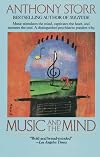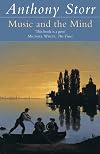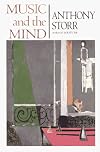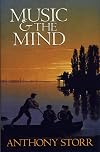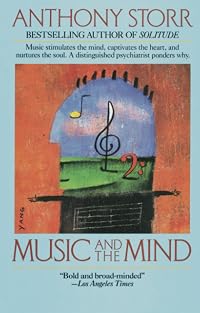
Music and the Mind
by Anthony Storr
On This Page
Description
History. Music. Philosophy. Nonfiction. Why does music have such a powerful effect on our minds and bodies? It is the most mysterious and most tangible of all forms of art. Yet, Anthony Storr believes, music today is a deeply significant experience for a greater number of people than ever before. In this book, he explores why this should be so. Drawing on a wide variety of opinions, Storr argues that the patterns of music make sense of our inner experience, giving both structure and show more coherence to our feelings and emotions. It is because music possesses this capacity to restore our sense of personal wholeness in a culture which requires us to separate rational thought from feelings that many people find it so life-enhancing that it justifies existence. show lessTags
Recommendations


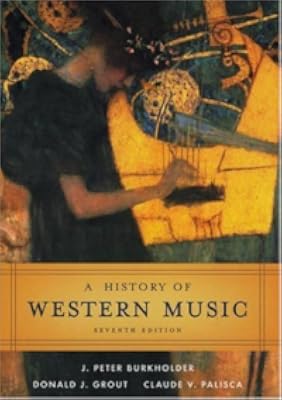
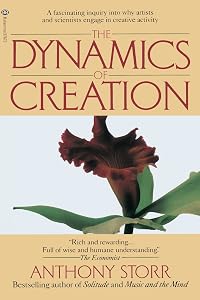
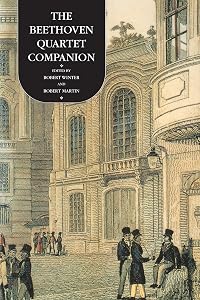
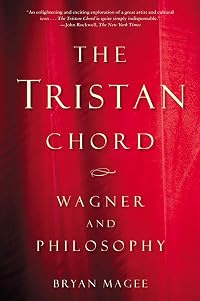





Member Reviews
In our logos-dominated society, music (not possessing any discernible relation to the external world) often seems a meaningless indulgence ('auditory cheesecake', as Steven Pinker once scathingly observed) - but this is profoundly untrue, especially for those love music.
But this latter group of people are often clueless when it comes to describing why music moves them so profoundly - after all, they are just tones, sounds - arranged in a particular sequence and perceived through the hearing apparatus of homo sapiens..
But like, that famous haiku goes "but yet, but yet.."
The search for this elusive 'more' that music provides to its supplicants is basically at the heart of this fairly dense book. The writing is like quicksilver, dense and show more light at the same time, as the author (a psychiatrist by profession) wears his erudition lightly, weaving a tapestry of informed speculation drawn from the coils of anthropology, ethnomusicology, psychoanalysis (of course), and philosophy. This exploration is conducted through several pointed chapters, each a dense article in itself, dealing with questions that only a music obsessive would ponder : where exactly does music come from? (possibly from our primate heritage) is it true, as freud suspected, that the fundamental attraction of music is that it represents an escape from depressing reality? (sort of, but not entirely) He even takes a gander at the speculation that solitary listening to music (an evolutionarily novel, and historically very recent phenomenon) can be construed as neurotic phenomenon.
The conclusion that the author arrives at (after several detours and pitstops) is that music is meaningful precisely because we are, by necessity, meaning-making creatures - we do not grasp individual phenomena as they are by themselves, but their relations. In this, music's well-known affinity with mathematics is made clear, both are concerned with the implicit ordering of abstract phenomena (the relation between tones in music, and the process of ordering itself in mathematics), but mathematics does not have the bodily component that music does. We are inescapably bodily creatures, and music is inescapably bodily. Music thus manages to be both abstract and concrete, mind and body, at the same time - it moves us so profoundly and at our whole being, because it is a synthesis and a re-unity of aspects of ourselves that are very often divided. It is the ur-phenomenon of the primal human process of meaning-making, the crystalline model of our intuitively-felt flow of life.
The author quotes Nietzsche (who has a chapter devoted to him) approvingly, "If not for music, existence would most certainly be considered a mistake." - and the author himself, ends his treatise with the expansive declaration that "music is an unasked-for, and undeserved blessing - transcendent."
I feel as though the author, given the opportunity to write about the love of his life, has just thrown the kitchen sink at it - like all love letters, it is passionate, a bit messy, and a tour-de-force of intellectual synthesis (OK, maybe not the last one) - strongly recommended for anyone who has heard a song.
I would be remiss if I didn't mention that while the author's specialty and focus is the tradition known as Western classical music, a knowledge of music theory is not really required (except for the chapter "Basic Patterns" which purports to investigate the claim for the supposed objective basis for the Western harmonic system), given that the book is written at a sufficiently general level - an achievement I feel is of real credit to the author. show less
But this latter group of people are often clueless when it comes to describing why music moves them so profoundly - after all, they are just tones, sounds - arranged in a particular sequence and perceived through the hearing apparatus of homo sapiens..
But like, that famous haiku goes "but yet, but yet.."
The search for this elusive 'more' that music provides to its supplicants is basically at the heart of this fairly dense book. The writing is like quicksilver, dense and show more light at the same time, as the author (a psychiatrist by profession) wears his erudition lightly, weaving a tapestry of informed speculation drawn from the coils of anthropology, ethnomusicology, psychoanalysis (of course), and philosophy. This exploration is conducted through several pointed chapters, each a dense article in itself, dealing with questions that only a music obsessive would ponder : where exactly does music come from? (possibly from our primate heritage) is it true, as freud suspected, that the fundamental attraction of music is that it represents an escape from depressing reality? (sort of, but not entirely) He even takes a gander at the speculation that solitary listening to music (an evolutionarily novel, and historically very recent phenomenon) can be construed as neurotic phenomenon.
The conclusion that the author arrives at (after several detours and pitstops) is that music is meaningful precisely because we are, by necessity, meaning-making creatures - we do not grasp individual phenomena as they are by themselves, but their relations. In this, music's well-known affinity with mathematics is made clear, both are concerned with the implicit ordering of abstract phenomena (the relation between tones in music, and the process of ordering itself in mathematics), but mathematics does not have the bodily component that music does. We are inescapably bodily creatures, and music is inescapably bodily. Music thus manages to be both abstract and concrete, mind and body, at the same time - it moves us so profoundly and at our whole being, because it is a synthesis and a re-unity of aspects of ourselves that are very often divided. It is the ur-phenomenon of the primal human process of meaning-making, the crystalline model of our intuitively-felt flow of life.
The author quotes Nietzsche (who has a chapter devoted to him) approvingly, "If not for music, existence would most certainly be considered a mistake." - and the author himself, ends his treatise with the expansive declaration that "music is an unasked-for, and undeserved blessing - transcendent."
I feel as though the author, given the opportunity to write about the love of his life, has just thrown the kitchen sink at it - like all love letters, it is passionate, a bit messy, and a tour-de-force of intellectual synthesis (OK, maybe not the last one) - strongly recommended for anyone who has heard a song.
I would be remiss if I didn't mention that while the author's specialty and focus is the tradition known as Western classical music, a knowledge of music theory is not really required (except for the chapter "Basic Patterns" which purports to investigate the claim for the supposed objective basis for the Western harmonic system), given that the book is written at a sufficiently general level - an achievement I feel is of real credit to the author. show less
I am in two minds. In places, most notably the beginning, Storr came across as pretentious. But the last two chapters were wonderful. The book is worth reading, just for them.
Ratings
Members
- Recently Added By
Author Information

22+ Works 4,218 Members
Charles Anthony Storr, May 18, 1920 - March 17, 2001 Charles Anthony Storr was born on May 18, 1920 in London to a Reverend of Westminster Abbey and his wife. The two were first cousins, which may have lead to his poor health and depression. At the age of eight, he attended public school at Winchester and was very unhappy. He graduated from show more Winchester College and proceeded to Christ's Church in Cambridge where he met C. P. Snow who encouraged him to be moral and compassionate. Storr continued his medical studies at Westminster Hospital from 1941 to 1944, and then became a house physician at various hospitals. He is best known for his books on Freud and Jung. After completing his education, Storr practiced psychotherapy privately, but combined his private practice with hospitals as a consultant. In 1974, he retired from private practice to teach post graduate doctors at Oxford where he received dining rights at Wadham College and became a fellow at Green College. After his first attempt at writing proved fruitful, Storr continued his career as a writer, producing 11 books in the next 26 years. Storr's books were very popular in the U. S. and following his literary fame, he became a frequent book reviewer and commentator on British television. He wrote on different themes, but his favorites were gurus, as evidenced in his book, "Feet of Clay, solitude as a helpful tool in recovery, "Solitude: A Return to Self", and the theories of Freud and Jung. Storr died on March 17 in Oxford after having a heart attack during a speech at Wadham College. He was 80 years old. show less
Common Knowledge
- Epigraph
- Music's the medicine of the mind - John Logan (1744-88)
- Dedication
- For Sophia, Poly, and Emma who share my love of music
- First words
- Today, more people listen to music than ever before in the history of the world.
- Last words
- (Click to show. Warning: May contain spoilers.)Music has incomparably enriched my life. It is an irreplaceable, undeserved, transcendental blessing.
- Blurbers
- Dissanayake, Ellen; Jamison, Kay Redfield; Brendel, Alfred; Solnit, Albert J.
Classifications
- Genres
- Music, Nonfiction, General Nonfiction, Philosophy
- DDC/MDS
- 781.11 — Arts & recreation Music General principles and musical forms Basic principles of music Psychological principles of music
- LCC
- ML3830 .S87 — Music Literature on music Literature on music Philosophical and societal aspects of music. Physics Psychology
- BISAC
Statistics
- Members
- 424
- Popularity
- 72,567
- Reviews
- 2
- Rating
- (3.58)
- Languages
- English, French, Spanish
- Media
- Paper, Ebook
- ISBNs
- 10
- ASINs
- 2