On This Page
Description
In 1870s London, a young orphan girl becomes the apprentice to a man who traps monsters for a living.Tags
Recommendations


Member Recommendations
Member Reviews
This was one of the most delightful middle grade books I’ve read in a long time. I love fantasy books, especially those that deal in the real world and incorporate different mythologies, so How to Catch a Bogle drew me in right away. It has a Charles Dickens flair, focusing on Birdie, who was the daughter of a tosher and who is now an apprentice to Alfred the Bogler. Their first assignment brings them into contact with a proper lady, Edith Eames, who’s interested in creating a more scientific approach to catching bogles, especially since it’ll help keep Birdie out of harm’s way. Birdie hates it, but with the money Edith brings in, goes along with it, and finds herself learning some proper manners along with it.
I love Birdie so show more much — she’s such a strong, independent character who knows her own mind and is super smart. She’s completely confident in her abilities and completely trusts Alfred to keep her out of danger, which somehow made it tense for me as a reader when they were bogle hunting, because I kept expecting something horrible to happen. When they weren’t bogle hunting, though, Birdie’s interactions with the pickpockets and the boys who seem to be sweet on her is absolutely hilarious.
While How to Catch a Bogle gives a glimpse as to what life was like in Victorian England, it’s a book that’s based in pure, good adventure. There are tons of twists and turns, and plenty of creepiness with the bogle catching. There isn’t a dull moment in this story, and I cannot wait until I’m able to read the sequel. I definitely recommend this for those who like their fantasy books based in mythology. Middle graders and older readers alike will love Birdie’s strong spirit and the crazy adventures she has in this story.
Also posted on Purple People Readers. show less
I love Birdie so show more much — she’s such a strong, independent character who knows her own mind and is super smart. She’s completely confident in her abilities and completely trusts Alfred to keep her out of danger, which somehow made it tense for me as a reader when they were bogle hunting, because I kept expecting something horrible to happen. When they weren’t bogle hunting, though, Birdie’s interactions with the pickpockets and the boys who seem to be sweet on her is absolutely hilarious.
While How to Catch a Bogle gives a glimpse as to what life was like in Victorian England, it’s a book that’s based in pure, good adventure. There are tons of twists and turns, and plenty of creepiness with the bogle catching. There isn’t a dull moment in this story, and I cannot wait until I’m able to read the sequel. I definitely recommend this for those who like their fantasy books based in mythology. Middle graders and older readers alike will love Birdie’s strong spirit and the crazy adventures she has in this story.
Also posted on Purple People Readers. show less
A plucky heroine, Victorian era language and setting, and monsters - a perfect combination in my opinion. Birdie, the apprentice, Mr. Bunce, her mentor, and Edith, the proper scientist, make quite a trio. Birdie and Mr. Bunce are a bogle-killing team, protecting children from the monsters' unfortunate eating habits. Mr. Bunce draws his circle of salt, Birdie steps inside and sings old shanties to lure the bogle from its dark lair. Birdie must jump clear of the circle at the last minute as Mr. Bunce stabs the monster with his magic spear. Edith wants to observe this technique as part of her research into monster folklore. When she realizes that Birdie is being used as bait, she is horrified. But Birdie loves her job, is good at it, and show more Mr. Bunce is very protective of her. Can Edith convince them to use more scientific methods, such as trying different, less dangerous, baits? Birdie thinks Edith is trying to put her out of a job. Mr. Bunce agrees that he may be putting the girl to undue risk, but scoffs at "learned" methods. The trio is at odds until an evil necromancer theatens all of them. Adventurous, deliciously spooky, and well-paced. Though the ending is quite conclusive, more adventures surely await the bogle-hunters. show less
Catherine Jinks' HOW TO CATCH A BOGLE takes place in a very Dickensian 1870's-ish London where monsters (bogles) are considered by the wealthy and educated to be fictional and generally just folklore beliefs held by the ignorant poor English classes. Except they ARE real as we find out by following ten year old protagonist Birdie McAdam who is apprenticed to a bogler, or professional bogle killer, named Alfred Bunce. The characters are recognizable as types (Birdie is talented, brave, smart, but uneducated; Alfred is her gruff mentor with a heart of gold) but as the plot unfolds we get to learn about them as individuals.
Plot, character, setting, pacing, dialogue - this book has it all. Illustrations too! Sarah Watts' chapter head show more illustrations are simple and effective pen and ink drawings of glowing eyes in black wells and such. I'll go out on a limb here and say that HOW TO CATCH A BOGLE will be considered for the Newberry Medal (I can't say it will win but it really is that good).
One of the book's strengths might be a problematic feature for some. Ms. Jinks relies heavily on actual late 19th century London slang for setting the mood. "Birdie, who was taken aback, offered the caffler an uncertain smile." About half way through this delightful read I found myself wishing for a glossary to keep track of terms like "caffler" and "deadlurk" and "tosher." Turns out there IS a very useful glossary at the end of the book that serves that purpose nicely.
The class divisions in 19th century London are also on full display. Orphans are considered disposable workers who are capable of doing only the most dangerous jobs. Birdie considers herself lucky that she has such a good occupation of being bait for monsters, considering that at birth she was destined to be a "tosher" (sewer scavenger). Since her mother died in the sewers, Alfred has taken her from that life and trained her as his apprentice. A good deal of the plot concerns the collision between the different classes in London at the time, including classes within classes. A bogler's apprentice is held in much higher esteem than a tosher or caffler (rag and bone man).
This would be an excellent book as a leaping off point for middle schoolers to study slang, class divisions (poor vs. rich), and the general idea that some things considered mythological might actually be real. It's a straightforward read with a gritty feel about it, but never comes across as depressing and self-defeating. Life is the way it is and Birdie deals with it.
I will be buying the next book in this series, A PLAGUE OF BOGLES (2014) the minute it is available. This is a great read for adults as well as the intended audience of 9-12 year olds. One of the easiest 5 out of 5 star ratings for a book I've ever reviewed.
Note: I received a free copy of this book for review purposes. show less
Plot, character, setting, pacing, dialogue - this book has it all. Illustrations too! Sarah Watts' chapter head show more illustrations are simple and effective pen and ink drawings of glowing eyes in black wells and such. I'll go out on a limb here and say that HOW TO CATCH A BOGLE will be considered for the Newberry Medal (I can't say it will win but it really is that good).
One of the book's strengths might be a problematic feature for some. Ms. Jinks relies heavily on actual late 19th century London slang for setting the mood. "Birdie, who was taken aback, offered the caffler an uncertain smile." About half way through this delightful read I found myself wishing for a glossary to keep track of terms like "caffler" and "deadlurk" and "tosher." Turns out there IS a very useful glossary at the end of the book that serves that purpose nicely.
The class divisions in 19th century London are also on full display. Orphans are considered disposable workers who are capable of doing only the most dangerous jobs. Birdie considers herself lucky that she has such a good occupation of being bait for monsters, considering that at birth she was destined to be a "tosher" (sewer scavenger). Since her mother died in the sewers, Alfred has taken her from that life and trained her as his apprentice. A good deal of the plot concerns the collision between the different classes in London at the time, including classes within classes. A bogler's apprentice is held in much higher esteem than a tosher or caffler (rag and bone man).
This would be an excellent book as a leaping off point for middle schoolers to study slang, class divisions (poor vs. rich), and the general idea that some things considered mythological might actually be real. It's a straightforward read with a gritty feel about it, but never comes across as depressing and self-defeating. Life is the way it is and Birdie deals with it.
I will be buying the next book in this series, A PLAGUE OF BOGLES (2014) the minute it is available. This is a great read for adults as well as the intended audience of 9-12 year olds. One of the easiest 5 out of 5 star ratings for a book I've ever reviewed.
Note: I received a free copy of this book for review purposes. show less
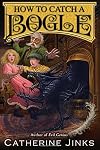
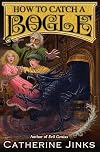
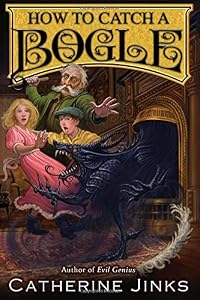
I love books about imps, trolls, and goblins, but bogles? This creature is new to me. Evidently we don’t have bogles in America, but they run rampant in England. They make trolls and goblins look like pushovers. Judging by the book cover, they are downright nasty looking. In fact, they eat children, making their annihilation a matter of great concern. That brings us to the title of this book. To catch a bogle, you need a trained professional, aka a bogler. Alfred is the bogler and Birdie is the bogler’s apprentice. Her job is to lure the bogle into a circle of salt so Alfred can kill it before it eats her. Believe it or not, she likes her job.
We all know Victorian England is full of homeless orphans. Charles Dickens made that clear. show more With bogles running around it isn’t surprising that a few go missing now and then. Alfred and Birdie have their work cut out for them to find out what has happened to these children. Meanwhile, Mrs. Eames finds the whole bogle story suspect and asks to tag along on one of their jobs. Astonished to find bogles are real, she tries unsuccessfully to persuade Birdie to quit the bogling business. Birdie carries on and finds herself in a precarious situation when a doctor holds her against her will in an insane asylum until Alfred agrees to bring him a bogle to carry out his sinister plan.
I enjoy stories set in Victorian England. I’ve always considered it to be a mysterious and foreboding setting, which makes it perfect for monster stories. I love the vernacular and accent of the lower class British folks. Stories with multiple classes represented always have more depth and layers. In short, I liked this story, but I’m not sure how it will go over with kids. The cover doesn’t help sell it. In fact, it’s a deterrent, because it has an old look to it and American kids reject books with old looking covers. If they change the cover, I will buy it. show less
We all know Victorian England is full of homeless orphans. Charles Dickens made that clear. show more With bogles running around it isn’t surprising that a few go missing now and then. Alfred and Birdie have their work cut out for them to find out what has happened to these children. Meanwhile, Mrs. Eames finds the whole bogle story suspect and asks to tag along on one of their jobs. Astonished to find bogles are real, she tries unsuccessfully to persuade Birdie to quit the bogling business. Birdie carries on and finds herself in a precarious situation when a doctor holds her against her will in an insane asylum until Alfred agrees to bring him a bogle to carry out his sinister plan.
I enjoy stories set in Victorian England. I’ve always considered it to be a mysterious and foreboding setting, which makes it perfect for monster stories. I love the vernacular and accent of the lower class British folks. Stories with multiple classes represented always have more depth and layers. In short, I liked this story, but I’m not sure how it will go over with kids. The cover doesn’t help sell it. In fact, it’s a deterrent, because it has an old look to it and American kids reject books with old looking covers. If they change the cover, I will buy it. show less
A fun little romp, with just enough teeth from its Dickensian orphans-of-London setting. As always, Catherine Jinks excels at young characters who still have very real concerns about their own lives, and the gumption to stand up and shout about it.
Quite simply, a bogle is a monster. There are many different kinds, but they generally live in dark places like drain pipes, fireplaces, caves, and cellars. I had one under my bed when I was a kid, and although I was never harmed they generally eat children. But Birdie McAdam is an apprentice to a bogler, which is someone who gets rid of bogles. She's only 10 years old and has the most beautiful singing voice. All she has to do is stand in a circle of salt and sing to lure the bogle out. She keeps watch in a small mirror for Mr. Bunce to give her the signal to move - quickly! - then he kills the bogle. Yes, it's dangerous work, but at least it's honest, and a whole lot better than mudlarking.
I hope the author will forgive me but I show more thought this book was simply trying to ride Harry Potter's coattails and jump ahead of Ms. Rowling's anticipated 'Care of Magical Creatures' book. "Bogle" sounds a little like "boggart" and it even mentioned "grindylows" early on, and Birdie is - of course - an orphan. But despite those similarities, it's actually a very well-written and exciting story with shades of Charles Dickens' London, where children are exploited and the poor have few options. Birdie and Mr. Bunce are engaging characters, and with each job the reader is drawn in and the suspense increases. There are villains, too, and they're pretty mean and nasty, but there's just enough heroes to offset them. Mrs. Jinks writes with the appropriate accents and uses a lot of old slang from the Victorian (or is it 'Dickensian?') era which I found fairly confusing until I realized there's a glossary at the end of the book. And the songs Birdie sings - while rather morbid - had such an air of authenticity I had to wonder if the author made them up or not as I rushed and neglected other things to finish this book.
So maybe there's a bit of Harry Potter with an Oliver Twist in the story, but it's a story well worth reading (especially if you've got kids to read it to). I'm looking forward to the next one. show less
I hope the author will forgive me but I show more thought this book was simply trying to ride Harry Potter's coattails and jump ahead of Ms. Rowling's anticipated 'Care of Magical Creatures' book. "Bogle" sounds a little like "boggart" and it even mentioned "grindylows" early on, and Birdie is - of course - an orphan. But despite those similarities, it's actually a very well-written and exciting story with shades of Charles Dickens' London, where children are exploited and the poor have few options. Birdie and Mr. Bunce are engaging characters, and with each job the reader is drawn in and the suspense increases. There are villains, too, and they're pretty mean and nasty, but there's just enough heroes to offset them. Mrs. Jinks writes with the appropriate accents and uses a lot of old slang from the Victorian (or is it 'Dickensian?') era which I found fairly confusing until I realized there's a glossary at the end of the book. And the songs Birdie sings - while rather morbid - had such an air of authenticity I had to wonder if the author made them up or not as I rushed and neglected other things to finish this book.
So maybe there's a bit of Harry Potter with an Oliver Twist in the story, but it's a story well worth reading (especially if you've got kids to read it to). I'm looking forward to the next one. show less
Even though I like the author i put off reading this book because of the atrocious cover. Quite enjoyed it once I actually started into it though. Genuinly creepy at times and funny at others.
Members
- Recently Added By
Lists

Top Five Books of 2017
757 works; 231 members

Books Read in 2017
4,249 works; 130 members
Author Information

58 Works 6,247 Members
Catherine Jinks was born November 17, 1963 in Brisbane, Queensland. She received a degree in medieval history from the University of Sydney in 1986. After college, she worked as a journalist and editor before becoming a full-time writer. She has written more than 30 books for both children and adults including Pagan's Vows, Eye to Eye, Piggy in show more the Middle, The Reformed Vampire Support Group, and The Abused Werewolf Rescue Group. She is also the author of the Pagan Chronicles and Allie's Ghost Hunters series. She has won numerous awards including the Children's Book Council of Australia Book of the Year Award three times, the Victorian Premier's Literary Award, the Aurealis Award for Science Fiction, the Australian Ibby Award, and the Davitt Award for Crime Fiction. (Bowker Author Biography) show less
Some Editions
Awards and Honors
Awards
Distinctions
Notable Lists
Series

Common Knowledge
- Canonical title
- How to Catch a Bogle
- Original title
- A Very Unusual Pursuit
- People/Characters
- Birdie McAdam; Alfred Bunce; Edith Eames
- Important places
- London, England, UK
- First words
- The front door was painted black, with a shiny brass knocker that made a satisfying noise when Alfred used it.
Classifications
Statistics
- Members
- 281
- Popularity
- 114,199
- Reviews
- 17
- Rating
- (4.00)
- Languages
- English
- Media
- Paper, Audiobook, Ebook
- ISBNs
- 14
- ASINs
- 3