Sayonara
by James A. Michener
On This Page
Description
HTML:From a great master of historical fiction comes a brilliant tale of love amid war. James A. Michener combines powerful storytelling with deep sensitivity in this novel of a U.S. Army man who, against all odds, falls for a fascinating Japanese woman. Stationed in the exotic Far East, Major Lloyd Gruver considers himself lucky. The son of a general, dating the daughter of another powerful military family, he can look forward to a bright future. And he just can’t understand guys like show more Private Joe Kelly, who throw away their lives in the States by marrying local girls. But then Lloyd meets Hana-ogi. After that, nothing matters anymore . . . nothing but her.Praise for James A. Michener
“A master storyteller . . . Michener, by any standards, is a phenomenon.”—The Wall Street Journal
“Sentence for sentence, writing’s fastest attention grabber.”—The New York Times
“Michener has become an institution in America, ranking somewhere between Disneyland and the Library of Congress. You learn a lot from him.”—Chicago Tribune
“While he fascinates and engrosses, Michener also educates.”—Los Angeles Times. Historical Fiction. Literature. Thriller. Fiction. show less
Tags
Recommendations






































Member Reviews
There was a time around 20 years ago when I read several of Michener's epic historical novels, but none since I finished The Source in January 2004. So after a gap of 18 and a half years, I am reading this shorter novel, inspired by seeing the musical South Pacific last weekend. And yes I know that musical is based on a different Michener book, but this one has similar themes, specifically racial tension between US military forces and the native populations of, in the case of this book, Japan in the early 1950s.
Major Ace Gruver is the son of a four star general, engaged to Eileen Webster, daughter of a slightly less highly ranked US general. He is posted to Kobe in Japan to help to dissuade an acquaintance and former member of his unit show more in the war in Korea, Joe Kelly, from marrying a Japanese woman, Katsumi. This argument is advanced partly on simple racist grounds, but also on not embarrassing the US and its armed forced by fraternising with "the enemy" (though the war is in the past and Japan and the US are allies in the war against the communists in Korea). But as he gets to know them better as a married couple, he comes to recognise the quality of their union, which he contrasts favourably with his relationship with Eileen, who he sees as becoming like her battle-axe of a mother, a woman whose overriding concern is to promote her husband's military career and to preserve the proprieties of military life, including not "consorting" with Japanese women.
Gruver in turn falls in love with a beautiful classical dancer, Hana-ogi and wishes to marry her, even at the cost of abandoning his military career and not returning to the States. Eventually Kelly's and Gruver's relationships with their Japanese partners reach a tragic crisis point due to the pressures they are placed under (the film version, as so often, ends in a more upbeat way). This novel explores racial and cultural tensions very movingly and effectively, with Gruver coming to appreciate what he sees as the simple and honest life of the ordinary Japanese people compared to the complex and manipulative lives of his American compatriots, combined with anger at the naked racism of many of his military superiors. At the end, when he is parted from Hana-ogi seemingly permanently, he presciently remarks that "All this should have happened fifty years from now. Then maybe there would have been a chance. In my day there was no chance for such a marriage.” A moving and powerful novel about love across racial and cultural boundaries. show less
Major Ace Gruver is the son of a four star general, engaged to Eileen Webster, daughter of a slightly less highly ranked US general. He is posted to Kobe in Japan to help to dissuade an acquaintance and former member of his unit show more in the war in Korea, Joe Kelly, from marrying a Japanese woman, Katsumi. This argument is advanced partly on simple racist grounds, but also on not embarrassing the US and its armed forced by fraternising with "the enemy" (though the war is in the past and Japan and the US are allies in the war against the communists in Korea). But as he gets to know them better as a married couple, he comes to recognise the quality of their union, which he contrasts favourably with his relationship with Eileen, who he sees as becoming like her battle-axe of a mother, a woman whose overriding concern is to promote her husband's military career and to preserve the proprieties of military life, including not "consorting" with Japanese women.
Gruver in turn falls in love with a beautiful classical dancer, Hana-ogi and wishes to marry her, even at the cost of abandoning his military career and not returning to the States. Eventually Kelly's and Gruver's relationships with their Japanese partners reach a tragic crisis point due to the pressures they are placed under (the film version, as so often, ends in a more upbeat way). This novel explores racial and cultural tensions very movingly and effectively, with Gruver coming to appreciate what he sees as the simple and honest life of the ordinary Japanese people compared to the complex and manipulative lives of his American compatriots, combined with anger at the naked racism of many of his military superiors. At the end, when he is parted from Hana-ogi seemingly permanently, he presciently remarks that "All this should have happened fifty years from now. Then maybe there would have been a chance. In my day there was no chance for such a marriage.” A moving and powerful novel about love across racial and cultural boundaries. show less
Allusions to Madame Butterfly, I believe, are somewhat misleading, when thinking about the influences on Michener's Sayonara. Instead, I see Melville's Typee, where an iconic "native girl" provides a tragic lure into a world where the protagonist can never hope to dwell. And that is what you have with Maj. Lloyd Gruve and Airman Joe Kelly in Sayonara. They are two people entering a rite of passage. One of them manages to reaggregate into his previous life. But the cost is enormous. The other man refuses to pay that price. This is what gives Michener's novel its thrust.
Of course there are other issues. Michener can never really help being a bit preachy. And he does so in this novel, especially about race relations at the end of the book. show more Social class is also a matter under examination, that of Kelly's and that of Gruve. But those are blindingly obvious throughout. What else is going on is the very interesting representations of ambiguous sexuality among the Tarakazuka girls, one of whom, Hana-ogi, becomes the lodestone towards which Gruve is drawn and his morality, honor, and beliefs tested. In this regard, I keep thinking of Gruve's belief that he was fifty years too early. Maybe Michener was too, in exploring this particular theme too much further. show less
Of course there are other issues. Michener can never really help being a bit preachy. And he does so in this novel, especially about race relations at the end of the book. show more Social class is also a matter under examination, that of Kelly's and that of Gruve. But those are blindingly obvious throughout. What else is going on is the very interesting representations of ambiguous sexuality among the Tarakazuka girls, one of whom, Hana-ogi, becomes the lodestone towards which Gruve is drawn and his morality, honor, and beliefs tested. In this regard, I keep thinking of Gruve's belief that he was fifty years too early. Maybe Michener was too, in exploring this particular theme too much further. show less
This is the first book of this author I have ever read. I love historical fiction, and I thought that perhaps this book might be a good introduction to the author's other novels and let me see if I had a taste for his writing.
Well. I have mixed feelings. By today's standards, some would see this book as racist. This book was published in the 1950's, where the Orient was still seen as exotic to many, (and really, many today still consider it as such) so I tried to not hold how dated this book was against it. But I gotta say, it simply has not aged very well.
I found the romance to be rushed. I'm glad this book was relatively short though. To me, the most realistic part of the book was the protagonist's relationship with his girlfriend, show more and his feelings about her and their respective mothers and their relationships with their husbands, what he wants for his future when pondering a life with the girl he'd always intended to marry, and the allure that an exotic girl like Hana-ogi had for him compared to he thought his American girl had to offer.
I'm not sure if I want to read more of this author's work, I know this is a shorter story than most of his other works but if he wrote them like he wrote this one, then ehhh... show less
Well. I have mixed feelings. By today's standards, some would see this book as racist. This book was published in the 1950's, where the Orient was still seen as exotic to many, (and really, many today still consider it as such) so I tried to not hold how dated this book was against it. But I gotta say, it simply has not aged very well.
I found the romance to be rushed. I'm glad this book was relatively short though. To me, the most realistic part of the book was the protagonist's relationship with his girlfriend, show more and his feelings about her and their respective mothers and their relationships with their husbands, what he wants for his future when pondering a life with the girl he'd always intended to marry, and the allure that an exotic girl like Hana-ogi had for him compared to he thought his American girl had to offer.
I'm not sure if I want to read more of this author's work, I know this is a shorter story than most of his other works but if he wrote them like he wrote this one, then ehhh... show less
Captivating, as are all Michener's books. but, knowing a bit of Japanese, the title told me something about the story that I suspected would not sit well with me. That turned out to be the case. However it is beautifully written and describes a time in our history during the Korean war where American soldiers and people in the lands they lived in and visited had to make difficult choices. Definitely worth reading for the artistry and to compare with our psychology today.
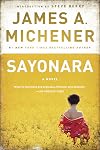
The romance-look cover of this book is deceptive. I thought this was a great book. I enjoyed it even more because I was living in Japan when I read it. There were a lot of things the author included that I found interesting and/or familiar. And the ending: perfect. Michener uses foreshadowing so well and still manages to surprise.
Sayonara takes place during the Korean War in Kobe, Japan, the site of a vacation resort for the American military. It tells the story of Major Lloyd Gruver and Private Joe Kelly, who both fall in love with and want to marry Japanese women. The US military policy of the time was to discourage these types or marriages in any way possible, and the law would not allow American soldiers to bring their Japanese wives home to the US. Gruver and Kelly defy the rules, and learn exactly what true love is.
This is definitely a story of star-crossed lovers. It was pretty obvious from the beginning of the book on that there was no way any happy ending could come out of this story. That made it hard for me to enjoy it. As usual, Michener paints a show more great picture of what life was like for both Americans and Japanese during the Korean War, but it just couldn’t make up for the fact that I knew the characters were not making good choices. show less
This is definitely a story of star-crossed lovers. It was pretty obvious from the beginning of the book on that there was no way any happy ending could come out of this story. That made it hard for me to enjoy it. As usual, Michener paints a show more great picture of what life was like for both Americans and Japanese during the Korean War, but it just couldn’t make up for the fact that I knew the characters were not making good choices. show less
I enjoyed it much. A short book by Michener standards. It's a story about a romantic interracial (Japan and America) romance in Japan during the Korean War. I felt the story was heartwarming, sad and illuminating. The best part of the book for me was the discussions regarding the different points of view (culture) of the then Japanese and American societies. It also has a bit to say about the emotion of love and it's place many people's life. I found my reading time very worthwhile .
Members
- Recently Added By
Lists

Historical Fiction Lovers
88 works; 4 members

Authors from the United States
245 works; 3 members
Author Information

210+ Works 49,395 Members
James A. Michener, 1907 - 1997 James Albert Michener was born on February 3, 1907 in Doylestown, Pa. He earned an A.B. from Swarthmore College, an A.M. from Colorado State College of Education, and an M.A. from Harvard University. He taught for many years and was an editor for Macmillan Publishing Company. His first book, "Tales of the South show more Pacific," derived from Michener's service in the Pacific in World War II, won the 1947 Pulitzer Prize for Fiction and was the basis for the Rodgers and Hammerstein Broadway musical South Pacific, which won the 1950 Pulitzer Prize for Drama. Michener completed close to 40 novels. Some other epic works include "Hawaii," "Centennial," "Space," and "Caribbean." He also wrote a significant amount of nonfiction including his autobiography "The World Is My Home." Among his many other honors, James Michener received the Presidential Medal of Freedom in 1977. He was married to Patti Koon in 1935; they divorced in 1948. He married Vange Nord in 1948 (divorced 1955) and Mari Yoriko Sabusawa in 1955 (deceased 1994). He died in 1997 in Austin, Texas. (Bowker Author Biography) show less
Some Editions
Awards and Honors
Distinctions
Work Relationships
Is contained in
Has the adaptation
Common Knowledge
- Canonical title
- Sayonara
- Original publication date
- 1954
- People/Characters
- Hana-ogi; Lloyd Gruver; Katsumi; Joe; Eileen
- Important places
- Takarazuka, Japan; Osaka, Japan
- Related movies
- Sayonara (1957 | IMDb)
- Dedication*
- Sayonara is een droevig laatste woord: "En jij, Japan, overbevolkte eilanden, tragisch land: sayonara, jij vijand, jij vriend."
- First words
- On April 4, 1952, I shot down my sixth and seventh MIGs.
- Last words
- (Click to show. Warning: May contain spoilers.)"Eileen wants to drive us to the airport."
*Some information comes from Common Knowledge in other languages. Click "Edit" for more information.
Classifications
- Genres
- Fiction and Literature, General Fiction, Historical Fiction, Romance
- DDC/MDS
- 813 — Literature & rhetoric American literature in English American fiction in English
- LCC
- PZ3 .M583 — Language and Literature Fiction and juvenile belles lettres Fiction and juvenile belles lettres Fiction in English
- BISAC
Statistics
- Members
- 666
- Popularity
- 43,306
- Reviews
- 13
- Rating
- (3.58)
- Languages
- 10 — Czech, Dutch, English, Finnish, French, German, Japanese, Korean, Spanish, Swedish
- Media
- Paper, Audiobook, Ebook
- ISBNs
- 40
- ASINs
- 34