On This Page
Description
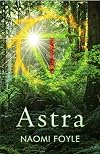
"Like every child in Is-Land, all Astra Ordott wants is to have her Security Shot, do her National Service and defend her Gaian homeland from Non-Lander "infiltrators". But when one of her Shelter mothers, the formidable Dr Hokma Blesser, tells her the shot will limit her chances of becoming a scientist and offers her an alternative, Astra agrees to her plan. When the orphaned Lil arrives to share Astra's home, Astra is torn between jealousy and fascination. Lil's father taught her some show more alarming ideas about Is-Land and the world, but when she pushes Astra too far, the heartache that results goes far beyond the loss of a friend. If she is to survive, Astra must learn to deal with devastating truths about Is-Land, Non-Land and the secret web of adult relationships that surrounds her."--Dust jacket, p. [2] show lessTags
Recommendations














Member Reviews
If there's one thing I learned from reading Seoul Survivors and now Astra, it's that author Naomi Foyle has a remarkable way of making me feel. I have been shocked and disturbed by some of the ideas in her books, but likewise there have also been times where the touching beauty of her writing has bought me to tears. Her stories might not necessarily be heart pounding thrillers or page-turners, but no matter what, they always pack a powerful punch.
That most certainly describes Astra, a bold dystopian tale about a girl growing up in a closed and isolated nature-worshipping community called Is-Land. The novel is divided into three parts, detailing the journey of its eponymous heroine as she ages from a child to young adulthood. Because of show more the format in which her story is told, it's probably going to be easier for me to summarize and give my thoughts and opinions on each part separately.
The first part begins when Astra is only seven years old. In this section, we learn a lot about the nation of Is-Land from her perspective. Life seems wonderful and perfect in her little town of Or, where the social structure is highly fluid and everyone lives naked and in harmony with Gaia's creatures. At the same time, advanced technology exists in his world, used to do things like engineer alt-meat for consumption, or allow children to be educated on the ways of Is-Land and Gaia on devices called "tablettes". Starting with Astra's generation, children will also be getting the Security Serum, a shot that would make the subject physically stronger, but also give them a more obedient and pliable personality.
Not surprisingly, many of the details we about in this section are filtered through the lens of Astra's youth and innocence. She's lively, curious, and not just a little bit impish. It's challenging to write young characters, but I believe Naomi Foyle nailed it perfectly. Astra thinks and acts like a very bright seven-year-old, and thinking about the loss of that precociousness really hits home, which is what I think the author intended. Receiving the "Sec Shot" would be the end of everything that makes Astra who she is, and so her Shelter-Mother Hokma devises and carries out a plan to help the young girl avoid getting it.
Then the book skips ahead to when Astra is twelve years old. This is probably the longest section, but also the one I found the most interesting, because while the previous part amazed me with the depth of the world-building, this part blew me away with its character development and unique take on the classic coming-of-age tale. All sorts of changes are happening to Astra at this point, both physical and emotional, especially since she feels like an outcast, knowing that she has not received her Sec Shot like the rest of her peers. The theme of sexuality also features heavily in this section, and I thought Foyle's bold and fearless writing style did an excellent job of describing this stage of Astra's life with all the excitement and poignancy that comes with it. Once again, she gives Astra a voice that is both age-appropriate and believable.
The final part, which is also the shortest, focuses on Astra when she is seventeen. This is the section where everything comes to a head. For the last decade, she has grown up seeing the world differently than her "Sec Gen" friends, and that fateful decision that she made with Hokma all those years ago finally leads to some widespread repercussions. A lot of dystopian novels come to a point where the main protagonist's worldview is shattered by a life-changing event, and it is also the case here. However, I can honestly say that there was just no way I could have predicted what would happen afterwards, and indeed the conclusion may come as quite a shock.
Like I said, this book isn't exactly a page-turner, and don't go in expecting too much action or adventure because that's not what it is about. But by following Astra through all three life stages, I feel like I've come to know her so well, and the author has managed to make me care about her character quite a bit. I didn't even realize how completely I had been sucked into the story until I reached the end and tears started coming to my eyes during one of the final scenes that was particularly touching. I don't know if it would have hit me so hard emotionally if the book overall hadn't been so well-written.
The next book will no doubt focus more on the bigger world, now that Astra has discovered some truths about herself and Is-Land. This book, however, was a very deep, complex and thought-provoking narrative of the main character's life. It's a beautiful story, distinct and daring, and which I'm sure provides a solid foundation for everything else to come. show less
That most certainly describes Astra, a bold dystopian tale about a girl growing up in a closed and isolated nature-worshipping community called Is-Land. The novel is divided into three parts, detailing the journey of its eponymous heroine as she ages from a child to young adulthood. Because of show more the format in which her story is told, it's probably going to be easier for me to summarize and give my thoughts and opinions on each part separately.
The first part begins when Astra is only seven years old. In this section, we learn a lot about the nation of Is-Land from her perspective. Life seems wonderful and perfect in her little town of Or, where the social structure is highly fluid and everyone lives naked and in harmony with Gaia's creatures. At the same time, advanced technology exists in his world, used to do things like engineer alt-meat for consumption, or allow children to be educated on the ways of Is-Land and Gaia on devices called "tablettes". Starting with Astra's generation, children will also be getting the Security Serum, a shot that would make the subject physically stronger, but also give them a more obedient and pliable personality.
Not surprisingly, many of the details we about in this section are filtered through the lens of Astra's youth and innocence. She's lively, curious, and not just a little bit impish. It's challenging to write young characters, but I believe Naomi Foyle nailed it perfectly. Astra thinks and acts like a very bright seven-year-old, and thinking about the loss of that precociousness really hits home, which is what I think the author intended. Receiving the "Sec Shot" would be the end of everything that makes Astra who she is, and so her Shelter-Mother Hokma devises and carries out a plan to help the young girl avoid getting it.
Then the book skips ahead to when Astra is twelve years old. This is probably the longest section, but also the one I found the most interesting, because while the previous part amazed me with the depth of the world-building, this part blew me away with its character development and unique take on the classic coming-of-age tale. All sorts of changes are happening to Astra at this point, both physical and emotional, especially since she feels like an outcast, knowing that she has not received her Sec Shot like the rest of her peers. The theme of sexuality also features heavily in this section, and I thought Foyle's bold and fearless writing style did an excellent job of describing this stage of Astra's life with all the excitement and poignancy that comes with it. Once again, she gives Astra a voice that is both age-appropriate and believable.
The final part, which is also the shortest, focuses on Astra when she is seventeen. This is the section where everything comes to a head. For the last decade, she has grown up seeing the world differently than her "Sec Gen" friends, and that fateful decision that she made with Hokma all those years ago finally leads to some widespread repercussions. A lot of dystopian novels come to a point where the main protagonist's worldview is shattered by a life-changing event, and it is also the case here. However, I can honestly say that there was just no way I could have predicted what would happen afterwards, and indeed the conclusion may come as quite a shock.
Like I said, this book isn't exactly a page-turner, and don't go in expecting too much action or adventure because that's not what it is about. But by following Astra through all three life stages, I feel like I've come to know her so well, and the author has managed to make me care about her character quite a bit. I didn't even realize how completely I had been sucked into the story until I reached the end and tears started coming to my eyes during one of the final scenes that was particularly touching. I don't know if it would have hit me so hard emotionally if the book overall hadn't been so well-written.
The next book will no doubt focus more on the bigger world, now that Astra has discovered some truths about herself and Is-Land. This book, however, was a very deep, complex and thought-provoking narrative of the main character's life. It's a beautiful story, distinct and daring, and which I'm sure provides a solid foundation for everything else to come. show less
[Disclaimer: I received a copy of this book from the publisher via Edelweiss in exchange for an honest review.]
In a dystopian future that has led to a culture who has turned back to a simpler life that is reverent to nature, Astra lives the life of a happy little girl. She has a bright future ahead of her, but all of that changes when one of her Shelter mothers shares a secret with her that causes her to rethink everything she knows. And when a young orphan girl comes to stay with them, Astra's life changes again, and so do the lives of everyone around her.
I wanted to love this book, and when I read the description, I thought I would. It's a dystopian story with some fantasy elements and everything about it screamed "THIS IS UP YOUR show more ALLEY!" And while the core of the story might be, there are some really, really problematic elements of this story that got in the way of what could be an otherwise great book. First, though the main character here is nearing adolescence, this is NOT a young adult book. There is a heavy focus on sex and sexuality, including between the children, and the focus on it really detracted from what the book could have been. There were several times I had to flip ahead and also considered stopping reading entirely at one point. It didn't advance the story, either, which made it seem even more gratuitous. As a result, I can't recommend this one... show less
In a dystopian future that has led to a culture who has turned back to a simpler life that is reverent to nature, Astra lives the life of a happy little girl. She has a bright future ahead of her, but all of that changes when one of her Shelter mothers shares a secret with her that causes her to rethink everything she knows. And when a young orphan girl comes to stay with them, Astra's life changes again, and so do the lives of everyone around her.
I wanted to love this book, and when I read the description, I thought I would. It's a dystopian story with some fantasy elements and everything about it screamed "THIS IS UP YOUR show more ALLEY!" And while the core of the story might be, there are some really, really problematic elements of this story that got in the way of what could be an otherwise great book. First, though the main character here is nearing adolescence, this is NOT a young adult book. There is a heavy focus on sex and sexuality, including between the children, and the focus on it really detracted from what the book could have been. There were several times I had to flip ahead and also considered stopping reading entirely at one point. It didn't advance the story, either, which made it seem even more gratuitous. As a result, I can't recommend this one... show less
I'm going to be a dissident and say that I rather liked it! You have both used the word "compelling" and I'd agree; I'll admit that the ending was a bit weak (and of course it is the first book in a series) but overall I found it fresh and interesting.
...What I felt Astra has going for it, is the way Foyle handles what to reveal to the reader and how. The limited perception of the young Astra and the numerous unreliable tales spread throughout the novel make the reader feel uneasy about the true nature of Gaian society but als prevented me from jumping to conclusions. I don't think the pacing of the novel is perfect, Foyle does tend to elaborate on some aspects of the community Astra lives in, but the tension present in the mail character is very well built up. The climax of the novel left me curious about which challenges Astra would be facing next. I probably would have missed the release of this book without the giveaway but I'm going to be keeping an eye out for volume two.
Full show more Random comments review show less
Full show more Random comments review show less
Overall Impression: There was an interesting concept here that just wasn't executed very well. The plot was bogged down with unnecessary scenes and exposition, and would have been better as a stand alone novel rather than the series it apparently is going to be.
Recommended for: Readers interested in environmental issues and post-apocalyptic literature
The world that Foyle has created is interesting in that it addresses many current environmental issues that we are facing and what could potentially happen if we don't start making changes now. Basically, the world has gone through a semi-apocalypse in which humans have ruined the Earth. Groups of people who refer to themselves as Gaians work to help the Earth become what it used to be by show more living in a highly environmentally conscious way that involves renewable energy and apparent veganism. (At least it sounds like veganism, but it's not completely clear.) It seems that the Gaians have been working with the government to not only help restore the Earth but to also keep those who would go against the government and Gaian ideals out of the safe oases they have created. It's a little difficult to explain, but hopefully that makes some sense.
This book definitely touched on some important issues about the environment, and a little bit about the terrors of total government control, however, I felt that it got a little preachy at times. The action was very slow throughout the book, and there were times when I just wanted the narrative to move a little faster. There was almost too much world building going on in this book, and there were huge sections that just acted as info dumps for the reader that would have been just as effective if they were woven into the plot. Because of these sections, I sometimes felt that I was being beaten over the head with a lot of ideas, many of which I couldn't totally keep track of. This book touched on a lot of things, and it probably would have helped if only two, maybe three, were the main focus. Instead, there are like six issues that it tries to examine which is just too much. This was my main complaint about the book.
I also thought that too much of the book was about Astra's young life. I would have liked to see the majority of the book be about her teen years since this is where the plot really starts to take off. While the first two sections are good for providing background and such, these could have been greatly reduced, and much of it could have come from reflections on her past when she is a teen. I believe that this book is going to be the first in a series, since the Goodreads page mentions that it is the first in The Gaia Chronicles, however, I believe that this book could have easily been a stand alone novel. I believe the story is stretched out more than it should be, and that makes this a rather slow read despite the fact that it's not very long. show less
Recommended for: Readers interested in environmental issues and post-apocalyptic literature
The world that Foyle has created is interesting in that it addresses many current environmental issues that we are facing and what could potentially happen if we don't start making changes now. Basically, the world has gone through a semi-apocalypse in which humans have ruined the Earth. Groups of people who refer to themselves as Gaians work to help the Earth become what it used to be by show more living in a highly environmentally conscious way that involves renewable energy and apparent veganism. (At least it sounds like veganism, but it's not completely clear.) It seems that the Gaians have been working with the government to not only help restore the Earth but to also keep those who would go against the government and Gaian ideals out of the safe oases they have created. It's a little difficult to explain, but hopefully that makes some sense.
This book definitely touched on some important issues about the environment, and a little bit about the terrors of total government control, however, I felt that it got a little preachy at times. The action was very slow throughout the book, and there were times when I just wanted the narrative to move a little faster. There was almost too much world building going on in this book, and there were huge sections that just acted as info dumps for the reader that would have been just as effective if they were woven into the plot. Because of these sections, I sometimes felt that I was being beaten over the head with a lot of ideas, many of which I couldn't totally keep track of. This book touched on a lot of things, and it probably would have helped if only two, maybe three, were the main focus. Instead, there are like six issues that it tries to examine which is just too much. This was my main complaint about the book.
I also thought that too much of the book was about Astra's young life. I would have liked to see the majority of the book be about her teen years since this is where the plot really starts to take off. While the first two sections are good for providing background and such, these could have been greatly reduced, and much of it could have come from reflections on her past when she is a teen. I believe that this book is going to be the first in a series, since the Goodreads page mentions that it is the first in The Gaia Chronicles, however, I believe that this book could have easily been a stand alone novel. I believe the story is stretched out more than it should be, and that makes this a rather slow read despite the fact that it's not very long. show less
Book was way too long. Good concepts in it, decent plot lines but needed editing down. Not sure will bother with next book.
Ratings
Members
- Recently Added By
Lists

2016 Hugo Eligible Novels
90 works; 32 members
Author Information

11+ Works 65 Members
Series

Classifications
Statistics
- Members
- 20
- Popularity
- 1,283,452
- Reviews
- 6
- Rating
- (3.04)
- Languages
- English
- Media
- Paper, Audiobook, Ebook
- ISBNs
- 10
- ASINs
- 4