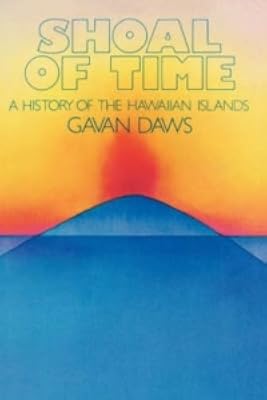
Shoal of Time: A History of the Hawaiian Islands
by Gavan Daws
On This Page
Description
A detailed history of the Hawaiian Islands up to their becoming the 50th state, giving due attention to many personages important in the islands' last three centuries of dramatic change.Tags
Recommendations














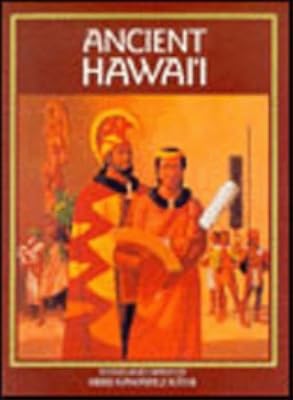



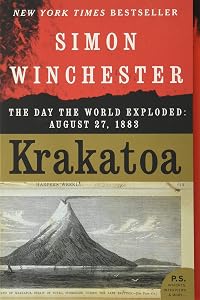


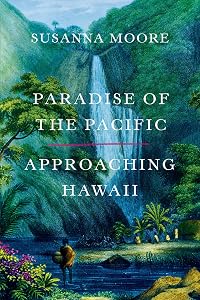
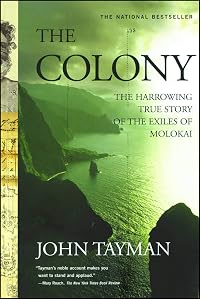








Member Recommendations

Member Reviews
I was on vacation in Hawaii and picked this book up to get a better idea about the history of the now US state. (I was at an airport bookstore, so I didn't exactly have a ton of options to choose from to read.)
This book is thorough, and at times very hard to read. It goes into a lot of minutia about seemingly every encounter between Hawaiians and white colonialists to the point where you think "wow this book is well-researched" and "holy crap this book is boring and my mind started wandering a few minutes ago and now I'm not sure what I just read in the last three pages." This is the only book I've read where I thought that it would be better to watch a Netflix Original Series about the history of Hawaii rather than read it in this show more book.
Also, this book is extremely racist and pretty much glosses over every aspect of native Hawaiians, except that they weren't "industrious" like white people and preferred to spend their time dancing. On their own island. (The nerve of them!) This book very clearly refers to white colonialists (my word, not the author's) as civilized, and the native Hawaiians as savages. The bayonet constitution is only once referred to using those words, and only in passing many, many pages after first discussing it. The word "Oriental" is used so many times that I wanted to wash my eyes out with soap. I feel like even though this book was published in 1968, people back then should have known better, right?
I feel like I have a good idea for the broad strokes of the history of Hawaii (as in the current US state) after having read this book, but I wish I knew more about actual Hawaiian culture and history. show less
This book is thorough, and at times very hard to read. It goes into a lot of minutia about seemingly every encounter between Hawaiians and white colonialists to the point where you think "wow this book is well-researched" and "holy crap this book is boring and my mind started wandering a few minutes ago and now I'm not sure what I just read in the last three pages." This is the only book I've read where I thought that it would be better to watch a Netflix Original Series about the history of Hawaii rather than read it in this show more book.
Also, this book is extremely racist and pretty much glosses over every aspect of native Hawaiians, except that they weren't "industrious" like white people and preferred to spend their time dancing. On their own island. (The nerve of them!) This book very clearly refers to white colonialists (my word, not the author's) as civilized, and the native Hawaiians as savages. The bayonet constitution is only once referred to using those words, and only in passing many, many pages after first discussing it. The word "Oriental" is used so many times that I wanted to wash my eyes out with soap. I feel like even though this book was published in 1968, people back then should have known better, right?
I feel like I have a good idea for the broad strokes of the history of Hawaii (as in the current US state) after having read this book, but I wish I knew more about actual Hawaiian culture and history. show less
Shoal of Time may be tedious at times, but it's also incredibly comprehensive and fascinating. It took me weeks to make it through this book, and in the process, I created dozens of bookmarks for research purposes. The approach of the book feels very fair in its treatment of haoles (whites), native Hawaiians, and the islands' history of misunderstanding, racism, and political corruption. It goes into detail on the first arrivals of foreigners, to Kamehameha, to the takeover of haoles and sugar companies and American annexation, to the attack on Pearl Harbor, to Hawaii gaining statehood. I had no idea that statehood was delayed for years because Hawaii, with its heavy populations of "foreigners" and union labor, was regarded as a hotbed show more of communism. The book contains a lot of interesting data like that.
While the book did require skimming in spots, it was a good read overall, and I can see why it has stayed in print for decades. show less
While the book did require skimming in spots, it was a good read overall, and I can see why it has stayed in print for decades. show less
This is a history of Hawaii that reflects the era in which it was written - the late 1960s.
It starts with Captain Cook's arrival in 1778. The amazing history of the settlement of Hawaii by Polynesian mariners from Tahiti is not covered in any detail.
We then move on to the reign of Kamehameha, which is quite well covered, but again with a strong slant to the perspective of European traders, settlers and vagabonds. The crushing impact of alien diseases which decimated the original population is barely mentioned.
Then comes the missionaries. A sequence of events unfolds through to the late 1930s, told almost exclusively through the eyes of the missionaries, traders and business settlers. There seems to be no curiosity for the impact of the show more changes on the lives of the Hawaiian people. Missionaries and Consuls come and go, but it is almost impossible to gain and understanding of the massive social changes that the Hawaiians undergo.
And so on through the development of the sugar industry, with the sugar barons virtually capturing the state, the mass importation of labour from China, Japan, the Philippines and the consequent social issues, WW2, and Statehood.
But gradually through the book, the author finds his voice.
From the start, the author is absent. Documentary information is provided without comment. And as the average Hawaiians left no documents, they don't appear. But in telling the story of the early 20th century, the author increasingly inserts the occasional comment on the documents - and what a relief it is! He shows insight. The evidence might be bland, but with the author adding his views, the story becomes more real. One doesn't have to agree with the commentary to appreciate the author's presence - but I found the comments valid and insightful.
So, a good book. A thorough coverage of the post European contact history of Hawaii, but sadly missing the human story of the original Hawaiians. show less
It starts with Captain Cook's arrival in 1778. The amazing history of the settlement of Hawaii by Polynesian mariners from Tahiti is not covered in any detail.
We then move on to the reign of Kamehameha, which is quite well covered, but again with a strong slant to the perspective of European traders, settlers and vagabonds. The crushing impact of alien diseases which decimated the original population is barely mentioned.
Then comes the missionaries. A sequence of events unfolds through to the late 1930s, told almost exclusively through the eyes of the missionaries, traders and business settlers. There seems to be no curiosity for the impact of the show more changes on the lives of the Hawaiian people. Missionaries and Consuls come and go, but it is almost impossible to gain and understanding of the massive social changes that the Hawaiians undergo.
And so on through the development of the sugar industry, with the sugar barons virtually capturing the state, the mass importation of labour from China, Japan, the Philippines and the consequent social issues, WW2, and Statehood.
But gradually through the book, the author finds his voice.
From the start, the author is absent. Documentary information is provided without comment. And as the average Hawaiians left no documents, they don't appear. But in telling the story of the early 20th century, the author increasingly inserts the occasional comment on the documents - and what a relief it is! He shows insight. The evidence might be bland, but with the author adding his views, the story becomes more real. One doesn't have to agree with the commentary to appreciate the author's presence - but I found the comments valid and insightful.
So, a good book. A thorough coverage of the post European contact history of Hawaii, but sadly missing the human story of the original Hawaiians. show less
Ratings
Members
- Recently Added By
Lists

University Presses
155 works; 1 member
Author Information

17+ Works 1,192 Members
Common Knowledge
- Original publication date
- 1968
- People/Characters
- Kamehameha I; Kalakaua; Captain James Cook, RN, FRS; Liliʻuokalani (Liliuokalani)
- Important places
- Hawai'i, USA
- Important events
- Hawaiian Revolution; World War II (1939 | 1945); World War II, Pacific Theater (1941-12-07 | 1945-09-02); Attack on Pearl Harbor (1941-12-07)
- Dedication
- To my wife.
- Original language
- English
Classifications
- Genres
- History, Nonfiction, General Nonfiction
- DDC/MDS
- 996.9 — History & geography Oceania & Polar Regions Polynesia Hawaii and neighboring north central Pacific Ocean islands
- LCC
- DU625 .D28 — History of Europe, Asia, Africa and Oceania Oceania (South Seas) History of Oceania (South Seas) Smaller island groups Hawaiian Islands. Hawaii
- BISAC
Statistics
- Members
- 451
- Popularity
- 67,830
- Reviews
- 3
- Rating
- (3.44)
- Languages
- English
- Media
- Paper, Audiobook, Ebook
- ISBNs
- 4
- ASINs
- 4