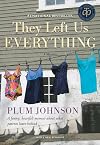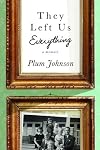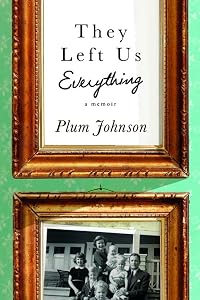
They Left Us Everything: A Memoir
by Plum Johnson
On This Page
Description
"A warm, heartfelt memoir of family, loss, and a house jam-packed with decades of goods and memories. After almost twenty years of caring for elderly parents--first for their senile father, and then for their cantankerous ninety-three-year old mother--author Plum Johnson and her three younger brothers have finally fallen to their middle-aged knees with conflicted feelings of grief and relief. Now they must empty and sell the beloved family home, twenty-three rooms bulging with history, show more antiques, and oxygen tanks. Plum thought: How tough will that be? I know how to buy garbage bags. But the task turns out to be much harder and more rewarding than she ever imagined. Items from childhood trigger difficult memories of her eccentric family growing up in the 1950s and '60s, but unearthing new facts about her parents helps her reconcile those relationships, with a more accepting perspective about who they were and what they valued. They Left Us Everything is a funny, touching memoir about the importance of preserving family history to make sense of the past, and nurturing family bonds to safeguard the future"-- show lessTags
Recommendations







Member Reviews
In 2017 I spent 2 weeks caring for my mom after some back surgery. Originally my dad was to have been there to help, but he had a big health crisis and I had to call 911 on my first morning at their house. When I originally said I’d fly back to care for her, my dad was healthy and a 5 day visit ballooned into 14. While I was there I had a lot of down time since mom slept for most of the day. This gave me time to contemplate their home (the only one they’ve had for over 50 years), their stuff, their health and their future. It’s complicated, emotional and fraught with contradictions and compromises which is why I could totally relate to this memoir even though both my parents are still living.
Plum and her brothers have to deal with show more not only their parents’ deaths, but the enormous house and all it contains. I was a bit surprised everyone was calm and no fights erupted over stuff. There weren’t any factions or games over who got what or who was entitled to what. Maybe if they’d been left a big pile of money things would have taken that more common turn, but I was happy for them that they all remained close and loving.
A lot of memoirs about this kind of thing can get maudlin in the extreme or can be written to exculpate and canonize either the kids or the parents. Not so with this. People have some warts and bad habits, but they aren’t horrible. I guess it also helps to have interesting parents with interesting pasts. Those bits of the story were woven into the present narrative with skill and a lightness that connected them well and in the right places. At times Plum feels and expresses a little self-pity, but she doesn’t languish there and soon she’s off to delve into the pantry shelves, her parents’ letters or her dad’s war memorabilia. I liked how easy the story flowed and how I had to remind myself it wasn’t a novel from time to time. show less
Plum and her brothers have to deal with show more not only their parents’ deaths, but the enormous house and all it contains. I was a bit surprised everyone was calm and no fights erupted over stuff. There weren’t any factions or games over who got what or who was entitled to what. Maybe if they’d been left a big pile of money things would have taken that more common turn, but I was happy for them that they all remained close and loving.
A lot of memoirs about this kind of thing can get maudlin in the extreme or can be written to exculpate and canonize either the kids or the parents. Not so with this. People have some warts and bad habits, but they aren’t horrible. I guess it also helps to have interesting parents with interesting pasts. Those bits of the story were woven into the present narrative with skill and a lightness that connected them well and in the right places. At times Plum feels and expresses a little self-pity, but she doesn’t languish there and soon she’s off to delve into the pantry shelves, her parents’ letters or her dad’s war memorabilia. I liked how easy the story flowed and how I had to remind myself it wasn’t a novel from time to time. show less
This was an unexpected 5-star read for me. I received this in a box of books that had made its rounds through several states, each friend along the way putting in a few biographies/memoirs and taking out a few. As I went through the box last week, this one stood out to me and I set it aside to begin that night. I am SO glad I did---it really spoke to me.
My own mother's mother died at the very young (and getting younger all the time) age of 49. I was 7 years old and my mother was 30. I had no perspective at the time but, now looking back, I can't imagine how lost my mother must have felt losing her own so very young. It's heartbreaking, really. My mom didn't get a chance to go through her mother's things after she passed away and there show more probably wasn't a whole lot to disperse anyway. Grandma lived with us the last few months of her life and I'm sure mom held on to most everything she'd brought into our home during that time---at least for awhile.
Losing my mother will probably be different. I think about it sometimes---going through her stuff, I mean. I imagine her husband, dazed and crazy in his chair, watching nonsense on TV while I am locked in their bedroom crying and boxing up every. single. thing. to go through back at home by myself. Or maybe her husband has passed on first and it's just me. I imagine then that I'd lock myself inside and hermit for a few weeks as I slowly come to grips with all the beauty I want to remember and all the regrets I want to forget. Writing this out makes me feel like I'm suffocating.
Once a few years ago, my mom posted an article on Facebook about how my generation doesn't want to be left with all their parents' stuff. It said it would be better for retired/elderly parents to disperse their things early and donate the rest so it will just be a quick and easy wrap up for this generation of too-busy adult children. I was horrified. No. I want to be able to go through her things. I need that closure and that coming-to-grips. It is my right and a step of mourning that I don't want to be denied.
I was fascinated that Plum's mom had enough written correspondence, diaries, and more to fill up a room on her third floor. I wish my mom and I had more letters. We have years of daily Facebook messages---but that's not the same. I've decided I'll start copying them and printing them out, though. It's something. I do have several years of letters from my teenage years when we lived apart---but we were different people then. I don't want my grandchildren to have a skewed view of what our relationship was like. As Plum says, "What's going to happen to all our histories if computers crash? What happens when software formats change? Storing things is one thing. Retrieving them is a whole other matter...With computers, the more we think we have preserved, the more we may have lost." I don't know if the older generation realizes this. The written word on good old fashioned paper is still the most important form of communication in letters.
This book sparked so many thoughts and emotions in me. I feel like writing it all out would lessen the effect for the next reader. There's a lot I want my mom to get out of this book and I'm curious what her thoughts will be as she didn't have this experience with her mother. (Though I've heard some horror stories about my great-grandmother Annabelle...ha!) I'll be passing it along to her this week. show less
My own mother's mother died at the very young (and getting younger all the time) age of 49. I was 7 years old and my mother was 30. I had no perspective at the time but, now looking back, I can't imagine how lost my mother must have felt losing her own so very young. It's heartbreaking, really. My mom didn't get a chance to go through her mother's things after she passed away and there show more probably wasn't a whole lot to disperse anyway. Grandma lived with us the last few months of her life and I'm sure mom held on to most everything she'd brought into our home during that time---at least for awhile.
Losing my mother will probably be different. I think about it sometimes---going through her stuff, I mean. I imagine her husband, dazed and crazy in his chair, watching nonsense on TV while I am locked in their bedroom crying and boxing up every. single. thing. to go through back at home by myself. Or maybe her husband has passed on first and it's just me. I imagine then that I'd lock myself inside and hermit for a few weeks as I slowly come to grips with all the beauty I want to remember and all the regrets I want to forget. Writing this out makes me feel like I'm suffocating.
Once a few years ago, my mom posted an article on Facebook about how my generation doesn't want to be left with all their parents' stuff. It said it would be better for retired/elderly parents to disperse their things early and donate the rest so it will just be a quick and easy wrap up for this generation of too-busy adult children. I was horrified. No. I want to be able to go through her things. I need that closure and that coming-to-grips. It is my right and a step of mourning that I don't want to be denied.
I was fascinated that Plum's mom had enough written correspondence, diaries, and more to fill up a room on her third floor. I wish my mom and I had more letters. We have years of daily Facebook messages---but that's not the same. I've decided I'll start copying them and printing them out, though. It's something. I do have several years of letters from my teenage years when we lived apart---but we were different people then. I don't want my grandchildren to have a skewed view of what our relationship was like. As Plum says, "What's going to happen to all our histories if computers crash? What happens when software formats change? Storing things is one thing. Retrieving them is a whole other matter...With computers, the more we think we have preserved, the more we may have lost." I don't know if the older generation realizes this. The written word on good old fashioned paper is still the most important form of communication in letters.
This book sparked so many thoughts and emotions in me. I feel like writing it all out would lessen the effect for the next reader. There's a lot I want my mom to get out of this book and I'm curious what her thoughts will be as she didn't have this experience with her mother. (Though I've heard some horror stories about my great-grandmother Annabelle...ha!) I'll be passing it along to her this week. show less
I read this book at the right time of my life. I recently lost my own mother, well it has been two years but still feels like yesterday. My father is super organized and within a week, had my mother's things donated or given to me and my brother. So, I won't have the "stuff" to go through like Plum because he's also cleaning out and dispersing items he considers superfluous. If I want to save anything, I have to be quick! Divorced and self-employed, Plum was the obvious choice to serve as caregiver to her parents. For 13 long years she cared for her father through his Alzheimer's. Three years after his death, Plum is still the primary caregiver for her mother. Her mother has become even more difficult to deal with. Then, her mother show more dies. Plum spends 18 months going through the house and her parents' things to get the house ready to sell. This is how she and her siblings learn more about their parents and themselves. I have to admit it has given me second thoughts about cleaning out my own stuff so my daughters won't have to do it later! However, I'm more like my father and other than books, I don't like clutter. I enjoyed this book and I'm glad I read it. show less
I enjoyed this memoir about a woman dealing with the death of her mother and how she and her brothers discover wonderful personal mysteries hidden in the home as they clear it out. I especially liked the way the story of the parents' experiences unfolded and was intrigued by how these two very different people managed to make their marriage work.
At times, the book seemed written with tremendous honesty and candour. The author is open about her frustration as serving as a caregiver to her aging parents, and her guilt when they pass on. At other times, I wonder whether things are being glossed over, such as the impact of her mother's drinking, her father's use of capital punishment and the relationships between/among the siblings, who show more seem to get along so well.
The author's experience is hardly typical, I think. There are few of us who could afford 16 months of gradually cleaning out a house, cataloging belongings without the stress of other pressing obligations.
This book makes me wonder what kind of legacy I'll leave my children...and whether my inclination towards constant decluttering is really the best thing I can do for them? show less
At times, the book seemed written with tremendous honesty and candour. The author is open about her frustration as serving as a caregiver to her aging parents, and her guilt when they pass on. At other times, I wonder whether things are being glossed over, such as the impact of her mother's drinking, her father's use of capital punishment and the relationships between/among the siblings, who show more seem to get along so well.
The author's experience is hardly typical, I think. There are few of us who could afford 16 months of gradually cleaning out a house, cataloging belongings without the stress of other pressing obligations.
This book makes me wonder what kind of legacy I'll leave my children...and whether my inclination towards constant decluttering is really the best thing I can do for them? show less
It was SO easy to relate to the author's experiences---all it takes is an elderly relative!! The writing was honest and funny and so descriptive---Johnson paints, too, and maybe that's why her words form so many pictures. It was great to see the relationships of the brothers, and Plum, as well as the discovery of a relationship between their parents that maybe none of them fully appreciated, especially in the mother's final years of life. A great look at ONE family---no one has the same experience but it's always an education to see how other people manage an experience.
I decided to read this since we lost our dad last year. This memoir really encompasses the overwhelming feeling of cleaning out after you lose your parents, and the healing experience that comes with learning the history of your parents. Anyone who has cleaned out after a parent passes away will learn something about them they never knew. This is the most interesting statement in the book was about parents wanting to clean their house as they grow older so their children don't have to clean up after they die. But the author states that it's important to allow the children to clean out after them so they learn who their parent(s) really were.
I also love the story being told through letters shared between the parents when they met, show more married, and went to war. Who doesn't love 1940's love stories? show less
I also love the story being told through letters shared between the parents when they met, show more married, and went to war. Who doesn't love 1940's love stories? show less
This award winning Canadian memoir of the death of aging parents will be available in the US in July of 2016. If this topic scares you, don't go away! Her family will amaze you with its rich history! If you or anyone in your family has become a caregiver, you will find that you are not alone in your feelings. Johnson has handled this story with grace and dignity.
Plum Johnson's Toronto message machine blasts her cantankerous 92 year-old Mum's voice. "Promise you'll drive out first thing tomorrow! Damn this machine call me!"
For "First Daughter" Plum Johnson the death of her 92 year old mother marks the end of a tumultuous and emotionally painful 20 years as caregiver that has left her painfully stranded between who she was before, who she show more has become and what she will be next. As she opens the garden gate and leads us inside the family home, she shares the emotional turmoil in the intimate corners of herself. The physical tour of the house and its belongings taken in step with the inventory of her feelings and self reflection will stir up sadness, joy, amazement, anger and love.
The wartime marriage of a British Naval officer and an American Red Cross Director endured and left a legacy of treasures measured in 5 children, memories and 23 rooms filled with mementos, artifacts and yes, junk. After their deaths, the children discover incredible personal mysteries hidden in the home and answers to questions they wish they knew to ask while they are alive.
Divorced, self-employed and an empty nester, Plum was the obvious choice to serve as caregiver to her parents. For 13 long years she cared for her father as she watched his retreat from life into Alzheimer's deep fog. Three years after his death, Plum is still in life limbo caring for her mother. But her mother's ever growing cantankerous disposition and demanding nature have eroded any remaining compassion or patience. All encounters become jousting matches that leave no winners.
"Friends of mine who lost their mother's early kept telling me, 'You don't know how lucky you are... I'd give anything to have my mother back for just one minute.'...All I wanted was my freedom. I looked into the future and thought, 'will I ever get my life back?'"
Grief has no expiration date. It has no parameters. It can't be exchanged or coerced. This heartfelt story of one person's experience expressed honestly and candidly. In the end, she and her siblings learn one of life's greatest lessons. Parents are people with their own dreams, ambitions, faults, and tragedies. When we stop seeing Mom as mother and we stop seeing ourselves as a wronged child, it is possible to love Plum as Plum and Anne as Anne. And with that knowledge a person regains compassion, understanding and the freedom to move on....
Reviewers note:
There are references to other non-fiction books about members of this family. I encourage others to read the gripping tale of her father's escape from a Japanese POW camp. I was, at first, very angry at her father's harsh disciplinary style but as I learned more about him personally I came to see that he was doing his best with what he knew from his own experience. It doesn't excuse his actions but shows that he is at heart a deeply loving father.
Plum Johnson's childhood is far from average and goes to show that you can not make assumptions about another's life. As stated above, Grief knows no bounds and we are all more than one dimensional beings.
I want to thank the author for permission to use her personal photo in my review. I also want to thank her for reminding me of things in my life that I discovered when we cleaned out the closets and basement of my family home. show less
Plum Johnson's Toronto message machine blasts her cantankerous 92 year-old Mum's voice. "Promise you'll drive out first thing tomorrow! Damn this machine call me!"
For "First Daughter" Plum Johnson the death of her 92 year old mother marks the end of a tumultuous and emotionally painful 20 years as caregiver that has left her painfully stranded between who she was before, who she show more has become and what she will be next. As she opens the garden gate and leads us inside the family home, she shares the emotional turmoil in the intimate corners of herself. The physical tour of the house and its belongings taken in step with the inventory of her feelings and self reflection will stir up sadness, joy, amazement, anger and love.
The wartime marriage of a British Naval officer and an American Red Cross Director endured and left a legacy of treasures measured in 5 children, memories and 23 rooms filled with mementos, artifacts and yes, junk. After their deaths, the children discover incredible personal mysteries hidden in the home and answers to questions they wish they knew to ask while they are alive.
Divorced, self-employed and an empty nester, Plum was the obvious choice to serve as caregiver to her parents. For 13 long years she cared for her father as she watched his retreat from life into Alzheimer's deep fog. Three years after his death, Plum is still in life limbo caring for her mother. But her mother's ever growing cantankerous disposition and demanding nature have eroded any remaining compassion or patience. All encounters become jousting matches that leave no winners.
"Friends of mine who lost their mother's early kept telling me, 'You don't know how lucky you are... I'd give anything to have my mother back for just one minute.'...All I wanted was my freedom. I looked into the future and thought, 'will I ever get my life back?'"
Grief has no expiration date. It has no parameters. It can't be exchanged or coerced. This heartfelt story of one person's experience expressed honestly and candidly. In the end, she and her siblings learn one of life's greatest lessons. Parents are people with their own dreams, ambitions, faults, and tragedies. When we stop seeing Mom as mother and we stop seeing ourselves as a wronged child, it is possible to love Plum as Plum and Anne as Anne. And with that knowledge a person regains compassion, understanding and the freedom to move on....
Reviewers note:
There are references to other non-fiction books about members of this family. I encourage others to read the gripping tale of her father's escape from a Japanese POW camp. I was, at first, very angry at her father's harsh disciplinary style but as I learned more about him personally I came to see that he was doing his best with what he knew from his own experience. It doesn't excuse his actions but shows that he is at heart a deeply loving father.
Plum Johnson's childhood is far from average and goes to show that you can not make assumptions about another's life. As stated above, Grief knows no bounds and we are all more than one dimensional beings.
I want to thank the author for permission to use her personal photo in my review. I also want to thank her for reminding me of things in my life that I discovered when we cleaned out the closets and basement of my family home. show less
Members
- Recently Added By
Published Reviews
ThingScore 75
There is no instruction manual for grief. When someone we love dies, there are socially acceptable ways to deal with it publicly, but privately, in that place where we are honest with ourselves, it’s a free for all. ...They Left Us Everything is precisely that book. It’s the kind of slim, unassuming memoir that hits you deep in the gut, leaving you bruised and thoughtful long after its show more last page... show less
added by vancouverdeb
Lists

CBC's 100 True Stories
100 works; 6 members

Books Read in 2017
4,249 works; 130 members

CBC's Great Canadian Reading List
149 works; 5 members

Evergreen Award™ Winners and Nominees 2005–2024
200 works; 3 members

Globe and Mail | Canadian Non-Fiction: March 14, 2026
10 works; 1 member
Author Information
4 Works 303 Members
Plum Johnson was born in Virginia. She studied education at Wheelock College in Boston and theatre at York University in Toronto. In 1983, she established her own company, KidsCanada Publishing, to publish parenting publications such as the periodical Kids Toronto and children's and family service directories in both Toronto and Vancouver. In show more 2002, she launched Help¿s Here!, a similar resource publication for senior citizens and caregivers. In 2015 she won the RBC Taylor Prize for nonfiction for her memoir They Left Us Everything. This book tells the story of Johnson's relationship with her parents and the task of clearing their house after they died. (Bowker Author Biography) show less
Awards and Honors
Awards
Common Knowledge
- Original publication date
- 2015
Classifications
- Genres
- Biography & Memoir, Nonfiction, General Nonfiction
- DDC/MDS
- 306.874 — Society, government, & culture Social sciences, sociology & anthropology Social Behavior - Dating, Marriage, Divorce Marriage, partnerships, unions; family Intrafamily relationships Parent-child relationship
- LCC
- HQ1063.6 .J636 — Social sciences The family. Marriage, Women and Sexuality The Family. Marriage. Women The family. Marriage. Home Aged. Gerontology (Social aspects).
- BISAC
Statistics
- Members
- 295
- Popularity
- 109,013
- Reviews
- 17
- Rating
- (4.01)
- Languages
- English
- Media
- Paper, Audiobook, Ebook
- ISBNs
- 12
- ASINs
- 6