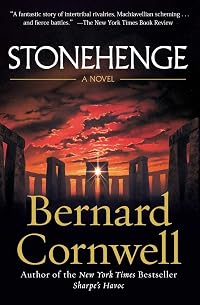
Stonehenge
by Bernard Cornwell
On This Page
Description
From New York Times bestselling author Bernard Cornwell, the tale of three brothers and of their rivalry that created the mysterious Stonehenge. One summer's day, a dying stranger carrying great wealth in gold comes to the settlement of Ratharryn. The three sons of Ratharryn's chief each perceive the great gift in a different way. The eldest, Lengar, the warrior, harnesses his murderous ambition to be a ruler and take great power for his tribe. Camaban becomes a great visionary and feared show more wise man, and it is his vision that will force the youngest brother, Saban, to create the great temple on the green hill where the gods will appear on earth. Saban's love for Aurenna, the sun bride whose destiny is to die for the gods, finally brings the rivalries of the brothers to a head. But it is also his skills that will build the vast temple, a place for the gods, certainly, but also a place that will confirm for ever the supreme power of the tribe that built it. show lessTags
Recommendations
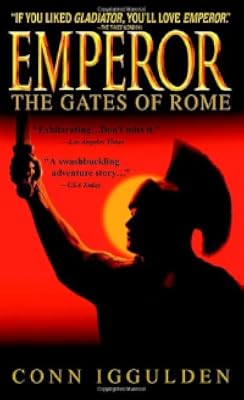
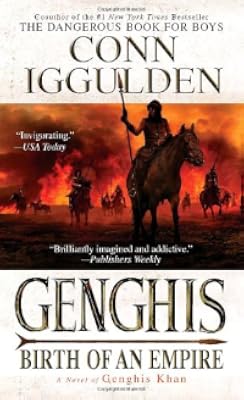
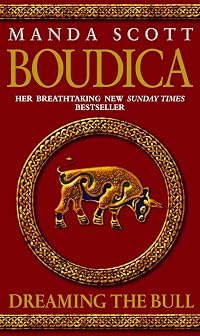
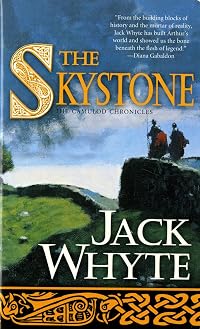




Member Recommendations
Member Reviews
I find myself torn over this one. At one level, it tells a deeply dramatic tale of the construction of Stonehenge, all within one man's lifetime. At another it is so intensely male that you can almost feel the testosterone and misogyny oozing out of the pages. Until beyond page 50 no women feature in person. There is one instance where 2 women meet (at about page 550), all the rest of the interactions are with men. Women are slaves, wives (and usually invisible wives at that), sorceresses or beautiful goddesses/sacrificial victims. It all get very wearing. I find it hard to believe that work was all done by men with the women singing encouraging songs. If you can get over the overt sexism, then it's not too bad, but it kept annoying me show more too much to ignore. He does finish with a historical note that some of his incidents are supported by archeological evidence, but that doesn't make up for the rest. I finished it, I can't say I thought it terribly good, I will not be reading it again, this one is heading to the charity shop. show less
Excellent work of historical fiction depicting the early Bronze Age (circa 2000 BC) building of Stonehenge in England. The author is a seasoned writer with a real grip on his craft and the tribal culture of the communities who dug up great stones, carved, hauled and shipped them hundreds of miles, and then up-ended them in a huge circle aligned with the mid-summer sun. The plot is narrated from the Point of View of the builder, and his two brothers -- a fierce warrior, and a crippled priest. All three men fell in love with the same two women. More or less. And a great lust for flesh and power and even gold.
The story includes trading trips, to the coast with an ingenious strong man and his huge, loyal, but mentally "slow" son. Priests show more have considerable power, though most folks are skeptical of them: "So most priests are weak men, but like all men, given some small authority, they become tyrants." [159]
The conceit of the book is that the builders of Stonehenge believed they would change the world. The alignments would restore the patterns, the cycles of sun and moon would "balance". Gods would appreciate this and reward humans with prosperity otherwise eluding them.
I particularly like the detailed combat strategy unveiled during the several battles. How a small group of hidden archers can break a heavy charge, and expose a warlord whose early death in an engagement can turn the advantage even for an outnumbered host. [356]
And Cornwell relentlessly explores and exposes the role of "religious" belief behind the fears and motivations of the lords and slaves who pulled off this remarkable feat -- the construction of Stonehenge. He touches upon the great themes of redemption, the affinities of trinities, the magisterial mysteries of birth. The mother stone.
"The gods talk by signs. It may be a leaf falling in summer, the cry of a dying beast or the ripple of wind on calm water." Well, right there he has me.
And lots of nature is invoked describing the lives of people who are henged about with great forests and lots of streams. "Saban and Derrewyn went eastward across Mail's river, then north past the settlement until they reached a place where the valley was steep and narrow and thick trees arched high above the running water. Sunlight splashed through the leaves. The call of the corncrakes in the wheatfields had long faded and all they could hear now was the river's rippling and the whisper of the wind and she scrabble of squirrel's claws and the staccato flap of a pigeon bursting through the high leaves. Orchids grew purple among the water mint at the river's edge while the haze of the fading bluebells clouded the shadows beneath the trees. Kingfishers whipped bright above the river where red-dabbed moorhen chicks paddled between the rushes." [103] This is the setting for romance. And he does not indulge "nature" writing too much in what is essentially a work of great actions orchestrated by a plotting sorcer and two women who are smarter than he is. show less
The story includes trading trips, to the coast with an ingenious strong man and his huge, loyal, but mentally "slow" son. Priests show more have considerable power, though most folks are skeptical of them: "So most priests are weak men, but like all men, given some small authority, they become tyrants." [159]
The conceit of the book is that the builders of Stonehenge believed they would change the world. The alignments would restore the patterns, the cycles of sun and moon would "balance". Gods would appreciate this and reward humans with prosperity otherwise eluding them.
I particularly like the detailed combat strategy unveiled during the several battles. How a small group of hidden archers can break a heavy charge, and expose a warlord whose early death in an engagement can turn the advantage even for an outnumbered host. [356]
And Cornwell relentlessly explores and exposes the role of "religious" belief behind the fears and motivations of the lords and slaves who pulled off this remarkable feat -- the construction of Stonehenge. He touches upon the great themes of redemption, the affinities of trinities, the magisterial mysteries of birth. The mother stone.
"The gods talk by signs. It may be a leaf falling in summer, the cry of a dying beast or the ripple of wind on calm water." Well, right there he has me.
And lots of nature is invoked describing the lives of people who are henged about with great forests and lots of streams. "Saban and Derrewyn went eastward across Mail's river, then north past the settlement until they reached a place where the valley was steep and narrow and thick trees arched high above the running water. Sunlight splashed through the leaves. The call of the corncrakes in the wheatfields had long faded and all they could hear now was the river's rippling and the whisper of the wind and she scrabble of squirrel's claws and the staccato flap of a pigeon bursting through the high leaves. Orchids grew purple among the water mint at the river's edge while the haze of the fading bluebells clouded the shadows beneath the trees. Kingfishers whipped bright above the river where red-dabbed moorhen chicks paddled between the rushes." [103] This is the setting for romance. And he does not indulge "nature" writing too much in what is essentially a work of great actions orchestrated by a plotting sorcer and two women who are smarter than he is. show less
Ein Buch mit einigen Längen, das auch einige Motive aus den Arthur-Büchern wieder aufgreift. Insgesamt aber ein faszinierender Versuch, das Leben und die Glaubenswelt der Bronzezeit lebendig werden zu lassen.
One summer's day a stranger carrying great wealth in gold comes to the settlement and is murdered by one of the chief's three sons in the old temple. The mysterious gold, thought by some to be a gift from the gods, causes great dissension within the tribe but the three brothers all share one dream, to build a vast temple to the gods. Lengar, the eldest and a warrior, wants to use the temple to fuel his ambition to be a great ruler by force of arms. Camaban, wants to create a place that will bring the gods together to ends all pain and suffering. But it is the third and youngest son, Saban, a man of peace, who will become the master-builder of the 'Temple of Shadows'.
Now I should point out that I'm a great fan of Cornwell's Arthurian show more novels and this book is quite different from most of the author's other books that I've read. This isn't a thrilling rollercoaster ride but an epic story of determination, betrayal, love and war that is also thought provoking in its own way if perhaps a little overly long.
The story follows the main character Saban and although he is a little naive, he is also believable and one that I could empathise with. The novel is also liberally peppered with some interesting minor characters, some good some bad.
Although there are some fighting scenes the main empathise of this book is most definitely the building of the temple and it's apparent that he has also done his research into the artefacts that have since been uncovered. I really enjoy reading about paganism, worshipping the sun and the moon seems to make a lot of sense.
Overall, I found this an interesting if rather methodical read. One of the great things about writing about a time some 4000 years ago is that it is really open to interpretation as no one really knows what was happening back then. There are loads of different theories and this is simply Cornwell's own interpretation of how these Bronze aged people lived, why they built this temple and most importantly how it was built. How it was built is probably the one thing that everyone who has seen it thinks about and Cornwell gives a plausible explanation.
Was Stonehenge built in a lifetime? Did they move the stones using boats and sledges? Did bronze age people use the temple for other purposes, marriages, funerals, coronations we can only speculate but I like to think that the person who thought of the design saw it finished. show less
Now I should point out that I'm a great fan of Cornwell's Arthurian show more novels and this book is quite different from most of the author's other books that I've read. This isn't a thrilling rollercoaster ride but an epic story of determination, betrayal, love and war that is also thought provoking in its own way if perhaps a little overly long.
The story follows the main character Saban and although he is a little naive, he is also believable and one that I could empathise with. The novel is also liberally peppered with some interesting minor characters, some good some bad.
Although there are some fighting scenes the main empathise of this book is most definitely the building of the temple and it's apparent that he has also done his research into the artefacts that have since been uncovered. I really enjoy reading about paganism, worshipping the sun and the moon seems to make a lot of sense.
Overall, I found this an interesting if rather methodical read. One of the great things about writing about a time some 4000 years ago is that it is really open to interpretation as no one really knows what was happening back then. There are loads of different theories and this is simply Cornwell's own interpretation of how these Bronze aged people lived, why they built this temple and most importantly how it was built. How it was built is probably the one thing that everyone who has seen it thinks about and Cornwell gives a plausible explanation.
Was Stonehenge built in a lifetime? Did they move the stones using boats and sledges? Did bronze age people use the temple for other purposes, marriages, funerals, coronations we can only speculate but I like to think that the person who thought of the design saw it finished. show less
A stranger appears one day at an old unused temple near Ratharryn. He is not a member of any of the local tribes. He is also injured, and with a little help from the two who found him, soon dies from his wounds. This stranger carried gold with him and it is this gold that will bring forth a feud that will tear brothers apart, inspire religions, and cause war among the local tribes.
Brothers Lengar, Saban, and Camaban have little in common. Lengar is strong, defiant, and always willing to fight; Saban is the peacemaker and builder; and Camaban is unacknowledged by his father and cast out of the tribe because of a deformed foot. Lengar uses fear and brutality to eventually take over the tribe, overthrowing his father and virtually show more enslaving his own people. He casts Saban out but is unaware of a plan by Camaban to keep him safe until he can return to rule the tribe. In the end, it is Camaban who cleverly uses religion and sorcery to inspire the building of Stonehenge and bring about the near destruction of his people. Saban, who unwillingly shares his brother's vision for the temple, is the one that is able to finally bring it to fruition and peace to his people.
As with most Cornwell novels I have read, there is usually a long list of characters and this one is no exception. There are several tribes, sorcerers, gods, and places to keep track of in this book. He manages to blend the stories of the different people well and it feels cohesive even when several events are taking place at the same time.
I put this book down at one point and wasn't sure if I would go back to it. Eventually I did and once a certain character was out of the picture, I found I liked the book much more and found the remainder quite interesting. The building of the temple was fascinating --- the way the stones were moved, fashioned, and positioned was a story unto itself. The religious aspect and invoking of several gods was also intriguing. The superstitions and rituals were so ingrained in the characters that it felt very natural for some of the events to take place even if they were barbaric and not something one would consider necessary for religion.
I didn't like this book as much as other Cornwell books I have read but found it rather interesting in terms of the religious aspects portrayed here and how the societies were torn apart by gold and gods. Cornwell's imagining of the building of Stonehenge is engrossing and made me want to find out more about it in the end. show less
Brothers Lengar, Saban, and Camaban have little in common. Lengar is strong, defiant, and always willing to fight; Saban is the peacemaker and builder; and Camaban is unacknowledged by his father and cast out of the tribe because of a deformed foot. Lengar uses fear and brutality to eventually take over the tribe, overthrowing his father and virtually show more enslaving his own people. He casts Saban out but is unaware of a plan by Camaban to keep him safe until he can return to rule the tribe. In the end, it is Camaban who cleverly uses religion and sorcery to inspire the building of Stonehenge and bring about the near destruction of his people. Saban, who unwillingly shares his brother's vision for the temple, is the one that is able to finally bring it to fruition and peace to his people.
As with most Cornwell novels I have read, there is usually a long list of characters and this one is no exception. There are several tribes, sorcerers, gods, and places to keep track of in this book. He manages to blend the stories of the different people well and it feels cohesive even when several events are taking place at the same time.
I put this book down at one point and wasn't sure if I would go back to it. Eventually I did and once a certain character was out of the picture, I found I liked the book much more and found the remainder quite interesting. The building of the temple was fascinating --- the way the stones were moved, fashioned, and positioned was a story unto itself. The religious aspect and invoking of several gods was also intriguing. The superstitions and rituals were so ingrained in the characters that it felt very natural for some of the events to take place even if they were barbaric and not something one would consider necessary for religion.
I didn't like this book as much as other Cornwell books I have read but found it rather interesting in terms of the religious aspects portrayed here and how the societies were torn apart by gold and gods. Cornwell's imagining of the building of Stonehenge is engrossing and made me want to find out more about it in the end. show less
4.5 stars
This is one of those books where, at least I feel, cannot be given a one or two star review. Very little is known about the history of the Stonehenge, and what it was truly used for.
At about a hundred pages or so into it, I was really kind of getting frustrated because, well... it was quite boring. I guess I went into the book expecting STONEHENGE. It didn't happen until the very end of the book. The rest of it read like a bronze-aged soap opera of sorts.
And then I realized something. For the very same reason I mentioned in my beginning statement, very little is known about this wonder. When I took this into account, and being that Bernard Cornwell is such an amazing writer, I began to really enjoy it. The characters are show more simple, but yet extremely complex. I really think he captured the essence of what a typical people from this age would live like and how they would behave or believe. There was of course much poetic license involved, which one would really need to practice with a system of which we have very little knowledge of. I think the concept of touching one's groin to protect themselves from evil was kind of a neat... touch. It's funny, if that really was the practice back then, today, in some parts of this country (USA), it would practically ATTRACT evil show less
This is one of those books where, at least I feel, cannot be given a one or two star review. Very little is known about the history of the Stonehenge, and what it was truly used for.
At about a hundred pages or so into it, I was really kind of getting frustrated because, well... it was quite boring. I guess I went into the book expecting STONEHENGE. It didn't happen until the very end of the book. The rest of it read like a bronze-aged soap opera of sorts.
And then I realized something. For the very same reason I mentioned in my beginning statement, very little is known about this wonder. When I took this into account, and being that Bernard Cornwell is such an amazing writer, I began to really enjoy it. The characters are show more simple, but yet extremely complex. I really think he captured the essence of what a typical people from this age would live like and how they would behave or believe. There was of course much poetic license involved, which one would really need to practice with a system of which we have very little knowledge of. I think the concept of touching one's groin to protect themselves from evil was kind of a neat... touch. It's funny, if that really was the practice back then, today, in some parts of this country (USA), it would practically ATTRACT evil show less
Good solid storytelling based on an interesting theory of why Stonehenge was built. Of course we don't know why, but archaeology has given us insight into how Stonehenge was built and Cornwell does a credible job building a world in which this extraordinary labor could have taken place. Vivid details and compelling character round out the action and plot.
Members
- Recently Added By
Lists

Historical Fiction
889 works; 91 members
Favourite Books
1,820 works; 316 members

Books Read in 2016
4,666 works; 199 members

aborted books in 2022
14 works; 1 member

Best Prehistoric Novels
64 works; 10 members
Author Information

187+ Works 94,164 Members
Bernard Cornwell was born in London, England, on February 23, 1944, and came to the United States in 1980. He received a B.A. from the University of London in 1967. Cornwell served as producer of the British Broadcasting Corporation from 1969-1976. After this he was head of current affairs for BBC-TV in Belfast, Northern Ireland. In 1979 he became show more editor of television news for Thames Television of London. Since 1980 he has been a freelance writer. he lives with his wife on Cape Cod. Cornwell's Sharpe series, adventure stories about a British soldier set in the Peninsula War of 1808-1814, are built on the author's interest in the Duke of Wellington's army. Titles include Sharpe's Rifles, Sharpe's Revenge, Sharpe's Siege, Sharpe's Regiment, and Sharpe's Waterloo. The Last Kingdom series has ten books. Book ten, The Flame Bearer is on the bestsellers list. He has also written other works including Wildtrack, Killer's Wake, Sea Lord, Stormchild, Rebel, Copperhead, and Battle Flag. His title Death of Kings made The New York Times Best Seller List in 2012 and In 2014 his title The Pagan Lord made the list again. (Bowker Author Biography) show less
Series
Belongs to Publisher Series
Common Knowledge
- Canonical title*
- Stonehenge
- Original title
- Stonehenge
- Alternate titles
- Stonehenge: A Novel of 2000 B.C.
- Original publication date
- 1999
- People/Characters
- Saban; Camaban; Hengall
- Important places
- Stonehenge, Wiltshire, England, UK
- Epigraph*
- "Os bosques dos druidas se foram - tanto melhor:
Stonehenge não - mas que diabo é aquilo?"
Lord Byron, Don Juan
Canto XI, verso XXV - Dedication*
- Em memória de BILL MOIR
1943-1998 - First words
- The gods talk by signs.
- Last words*
- (Click to show. Warning: May contain spoilers.)Que ainda as dominam.
- Original language
- English
*Some information comes from Common Knowledge in other languages. Click "Edit" for more information.
Classifications
Statistics
- Members
- 2,175
- Popularity
- 9,402
- Reviews
- 58
- Rating
- (3.46)
- Languages
- 8 — Dutch, English, French, German, Hungarian, Italian, Spanish, Portuguese (Brazil)
- Media
- Paper, Audiobook, Ebook
- ISBNs
- 71
- ASINs
- 15