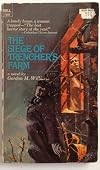
Straw Dogs
by Gordon Williams
On This Page
Description
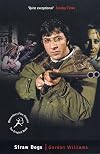
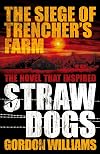
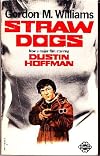
The original novel on which Sam Peckinpah's controversial movie Straw Dogs was based, and which has now been made into a brand-new movie by Rod Lurie, starring Alexander Skarsgård and Kate Bosworth - due for release in September 2011.American professor George Magruder, his wife Louise and their daughter rent an old, isolated house known as Trencher's Farm in Cornwall, so George can finish his book. When George accidentally runs over a convicted child killer on the loose from a mental show more asylum, he confronts the brutal locals and sets in train a series of violent events that threaten his very survival and that of his family.
. show less
Tags
Recommendations


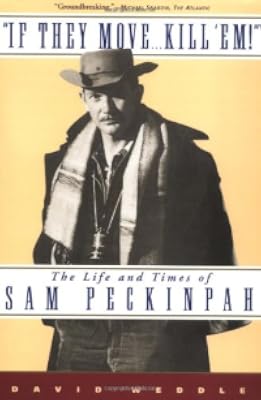










Member Recommendations

Member Reviews
Gordon Williams' novel is full of allusions to ancient blood and hidden rites of England's West Country. Its moody, threatening atmosphere established in just a few pages, The Siege of Trencher's Farm goes on to describe a terror that takes place over just a few hours one night, in the midst of a winter snow storm, just before Christmas.
Williams has a gift for describing visceral situations, as we see the rational George Magruder, an American professor of English, plunged into a primal fight for survival in which only his instincts will matter. The wimpish Magruder becomes transformed. From a henpecked husband, he turns into a one man combat team, defending his home, wife, and daughter. The novel seemingly flies in the face of show more contemporary feminism (1969) and reexamines the role of masculinity in modern life. Magruder has literally allowed himself and his family to become vulnerable to murder because of his commitment to "civilized values" that dismiss the evolutionary needs to protect home and family from wild intruders.
The novel provides a cathartic experience. Not just for the reader but for Magruder as well. Only at the end, upon vanquishing his foes, does he regain his manhood--literally.
It is easy to see how Sam Peckinpah became enthralled with this book as the subject for his film, Straw Dogs. Peckinpah was an enthusiast of Robert Ardrey and Ardrey's notions of Territoriality. Ardrey himself was a screenwriter, but his true interest remained in ethology, where he was a populizer of such academicians as Konrad Lorenz. According to Ardrey's explanation of Territoriality, animals, especially primates, gained a sense of self identity through their association with a home territory, for which they would always be able to leverage greater psychological advantages over intruders in defending it to the death. Much of that seems to be at work in both Peckinpah's film and in Williams' novel. show less
Williams has a gift for describing visceral situations, as we see the rational George Magruder, an American professor of English, plunged into a primal fight for survival in which only his instincts will matter. The wimpish Magruder becomes transformed. From a henpecked husband, he turns into a one man combat team, defending his home, wife, and daughter. The novel seemingly flies in the face of show more contemporary feminism (1969) and reexamines the role of masculinity in modern life. Magruder has literally allowed himself and his family to become vulnerable to murder because of his commitment to "civilized values" that dismiss the evolutionary needs to protect home and family from wild intruders.
The novel provides a cathartic experience. Not just for the reader but for Magruder as well. Only at the end, upon vanquishing his foes, does he regain his manhood--literally.
It is easy to see how Sam Peckinpah became enthralled with this book as the subject for his film, Straw Dogs. Peckinpah was an enthusiast of Robert Ardrey and Ardrey's notions of Territoriality. Ardrey himself was a screenwriter, but his true interest remained in ethology, where he was a populizer of such academicians as Konrad Lorenz. According to Ardrey's explanation of Territoriality, animals, especially primates, gained a sense of self identity through their association with a home territory, for which they would always be able to leverage greater psychological advantages over intruders in defending it to the death. Much of that seems to be at work in both Peckinpah's film and in Williams' novel. show less
Sam Peckinpah is quoted on the blurb saying "this book makes you want to drown in your own puke", which is obviously what he drew from it to go on to make his viscerally disturbing exploitation flick. But it seems almost as if he was reading a different book to the one I read. The violence in the novel isn't gratuitous and the motivation of the villagers becoming a mob is credible.
The pacifism/liberalism of the protagonist isn't handled particularly convincingly. Also, the moral compass and sexual politics of the novel are clumsy and suspect, but the plotting is tight and the action unremitting.
The pacifism/liberalism of the protagonist isn't handled particularly convincingly. Also, the moral compass and sexual politics of the novel are clumsy and suspect, but the plotting is tight and the action unremitting.
I've just finished reading this book and I have to say I have rather mixed feelings about it.
(For what it's worth, I decided to chase it down here at the Brooklyn Public Library after I'd seen both versions of "Straw Dogs." I was simply curious to know something about a story that had gotten so much directorial/cinematic attention.)
My overall reaction? I think that Sam Pekinpah's original version (with Dustin Hoffman and Susan George) was better than Rod Lurie's version (with Alexander Skarsgård and Kate Bosworth), and that both film versions were better than Gordon Williams's book.
Obviously, it takes a good story (or at least a well-written script) -- just for starters -- to make a good movie. And Gordon Williams's story is not show more without its virtues.
But I, for one, struggled continually with a little thing called 'pronominal reference' -- i. e., I just didn't know exactly who was the author of a particular action much of the time, and consequently had to go back and re-read -- sometimes, paragraphs at a time -- to figure it out. This, to my way of thinking, is not star-quality story-telling.
I also couldn't authenticate a lot of the dialect he uses for the principal antagonists in this story. It's a British vernacular I've not only never heard, but also can't imagine.
All of the above notwithstanding, the story is an entertaining one. I would simply suggest that you skip the book and see Sam Peckinpah's film version of "Straw Dogs."
RRB
07/22/13 show less
(For what it's worth, I decided to chase it down here at the Brooklyn Public Library after I'd seen both versions of "Straw Dogs." I was simply curious to know something about a story that had gotten so much directorial/cinematic attention.)
My overall reaction? I think that Sam Pekinpah's original version (with Dustin Hoffman and Susan George) was better than Rod Lurie's version (with Alexander Skarsgård and Kate Bosworth), and that both film versions were better than Gordon Williams's book.
Obviously, it takes a good story (or at least a well-written script) -- just for starters -- to make a good movie. And Gordon Williams's story is not show more without its virtues.
But I, for one, struggled continually with a little thing called 'pronominal reference' -- i. e., I just didn't know exactly who was the author of a particular action much of the time, and consequently had to go back and re-read -- sometimes, paragraphs at a time -- to figure it out. This, to my way of thinking, is not star-quality story-telling.
I also couldn't authenticate a lot of the dialect he uses for the principal antagonists in this story. It's a British vernacular I've not only never heard, but also can't imagine.
All of the above notwithstanding, the story is an entertaining one. I would simply suggest that you skip the book and see Sam Peckinpah's film version of "Straw Dogs."
RRB
07/22/13 show less
çok hoş
Ratings
Members
- Recently Added By
Lists

Books Read in 2015
3,299 works; 129 members

Cheesy pleasures and odd lots!
119 works; 7 members
Author Information

11+ Works 504 Members
Awards and Honors
Notable Lists
Common Knowledge
- Original title
- The Siege of Trencher's Farm
- Original publication date
- 1969
- People/Characters
- George Magruder; Louise Magruder
- Disambiguation notice
- Straw Dogs (Original title: The Seige of Trencher's Farm)
Classifications
Statistics
- Members
- 146
- Popularity
- 225,516
- Reviews
- 4
- Rating
- (3.33)
- Languages
- English, French
- Media
- Paper, Ebook
- ISBNs
- 9
- ASINs
- 11