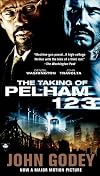
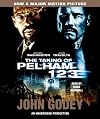
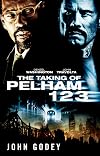
The Taking of Pelham One Two Three
by John Godey
On This Page
Description
"You will all remain seated. Anyone who tries to get up, or even moves, will be shot. There will be no further warning. If you move you will be killed ..." Four men seize a New York City subway train, and hold its passengers hostage. The identities of the hijackers are unknown. Their demands seem impossible. Their threats are real. Their escape would seem inconceivable. Only one thing is certain: they aren't stopping for anything.Tags
Recommendations




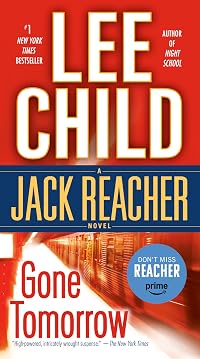


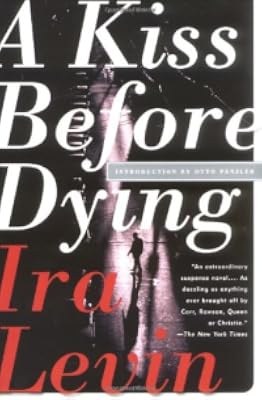

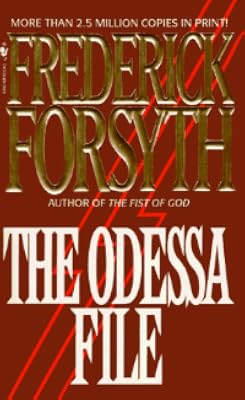
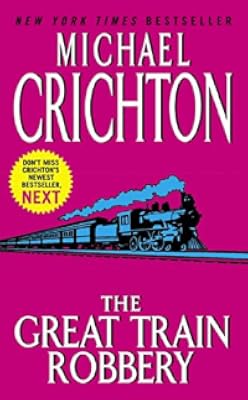


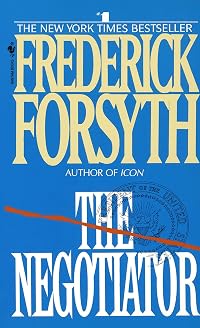
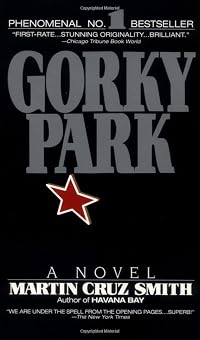
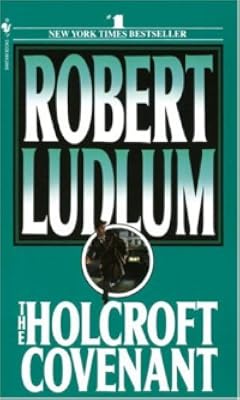
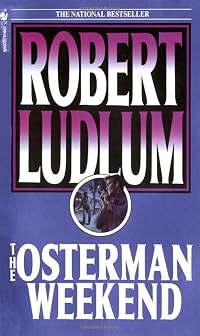










Member Recommendations


Member Reviews
Such a grinding indictment of humanity that after reading it I had to look at cute cat videos for medical reasons. It's dissolution porn, like Death Wish and The Poseidon Adventure. In a way that only occurred to me after I was finished, it's also a celebration of a society that can make the trains run on time despite the apathy, betrayal and animosity of the people. And the bad guys are brought to justice. Still, my impression reading the book was that any benefit to society was accomplished because earlier generations were harder and tougher; there is a sense that it would not have been possible to take the train and hold hostages even 20 years before because nobody would have done something so crazy and the response of the police show more would have been to charge in and kill everybody. Like they should have done. show less
What happens when four men hatch a daring plot to take a New York City subway train hostage, demanding one million dollars ransom for its passengers? Will the city agree to pay the ransom? Can the police figure out how to stop the criminals without risking the lives of the 17 passengers? Even if they receive the money, how on earth does the gang think it can escape from a subway tunnel that’s crawling with cops both above and below ground? John Godey’s 1973 novel offers up an original caper at the heart of a novel that captures very well the cultural vibe of its time and place. Unfortunately, there seems to be something essential missing from what should be a pulse-quickening suspense story that leaves the end result somewhat short show more of excellence.
Perhaps it’s Godey’s choice of telling the story from the points of view of a plethora of characters: each of the four criminals, an undercover cop who is on board the hijacked train, the flu-stricken mayor and his chief of staff, a half dozen or so cops and and equal numbers of Transit Authority officials and hostages. Godey switches the viewpoint rapidly among them in short little passages that were never really long enough to build tension. Even worse, the short vignettes don’t allow the reader to get to know each character. Several times I would read the subheading that was simply a name and have to stop and think about which character that actually was. Perhaps to compensate, Godey gave each of them one or more very distinctive characteristics that leave them seeming a bit cartoonish. (Part of this exaggerated sensation might also come from the very dated feel of the novel; it probably didn’t seem so over-the-top to a contemporary reader.)
The Taking of Pelham One Two Three is not without its strong points, however. Godey effectively portrays the societal tensions of the time period between blacks and white, between squares and hippies, between elites and working class. In particular, the passages featuring the mayor, while almost entirely extraneous to the plot, give Godey a chance to wax cynical about politicians. Several of the characters exhibit the sort of casual racism that barely merited a raised eyebrow back then, which Godey does not overtly condone or condemn. Nor does he settle for stereotypes in his characterizations. There are black and white racists, there are black and white heroes, some of the racists are also heroes. And the gang’s plan for escaping the tunnel was both clever and plausible.
In the end, though, the story never developed the sort of suspense and tension that makes a reader compulsively keep going to find out what happens next. I found it all too easy to put the book down after reading a chapter or two, and while I remained interested in what would happen next I was never in much doubt about the general way things would end. There have been at least three film adaptations of the story, though it’s hard to imagine how the book’s extensive interior monologues were presented in a cinematic way. I suspect the films took significant liberties with Godey’s presentation if not his plot. I’d still like to watch the 1974 original (starring Walter Matthau, Robert Shaw, and Martin Balsam), if not the 2009 version starring John Travolta and Denzel Washington (though I do love me some Denzel). In short, I’m glad I read this novel. Even if it fell considerably short of a classic suspense tale, it was reasonably entertaining and interesting for its depiction of early 1970s New York City. show less
Perhaps it’s Godey’s choice of telling the story from the points of view of a plethora of characters: each of the four criminals, an undercover cop who is on board the hijacked train, the flu-stricken mayor and his chief of staff, a half dozen or so cops and and equal numbers of Transit Authority officials and hostages. Godey switches the viewpoint rapidly among them in short little passages that were never really long enough to build tension. Even worse, the short vignettes don’t allow the reader to get to know each character. Several times I would read the subheading that was simply a name and have to stop and think about which character that actually was. Perhaps to compensate, Godey gave each of them one or more very distinctive characteristics that leave them seeming a bit cartoonish. (Part of this exaggerated sensation might also come from the very dated feel of the novel; it probably didn’t seem so over-the-top to a contemporary reader.)
The Taking of Pelham One Two Three is not without its strong points, however. Godey effectively portrays the societal tensions of the time period between blacks and white, between squares and hippies, between elites and working class. In particular, the passages featuring the mayor, while almost entirely extraneous to the plot, give Godey a chance to wax cynical about politicians. Several of the characters exhibit the sort of casual racism that barely merited a raised eyebrow back then, which Godey does not overtly condone or condemn. Nor does he settle for stereotypes in his characterizations. There are black and white racists, there are black and white heroes, some of the racists are also heroes. And the gang’s plan for escaping the tunnel was both clever and plausible.
In the end, though, the story never developed the sort of suspense and tension that makes a reader compulsively keep going to find out what happens next. I found it all too easy to put the book down after reading a chapter or two, and while I remained interested in what would happen next I was never in much doubt about the general way things would end. There have been at least three film adaptations of the story, though it’s hard to imagine how the book’s extensive interior monologues were presented in a cinematic way. I suspect the films took significant liberties with Godey’s presentation if not his plot. I’d still like to watch the 1974 original (starring Walter Matthau, Robert Shaw, and Martin Balsam), if not the 2009 version starring John Travolta and Denzel Washington (though I do love me some Denzel). In short, I’m glad I read this novel. Even if it fell considerably short of a classic suspense tale, it was reasonably entertaining and interesting for its depiction of early 1970s New York City. show less
I finally completed my reading of this somewhat leisurely paced subway thriller set in New York City with all the holidays' hoopla going on. Two movies were made based on the story, and I have not seen either one. I'd prefer to see the first one if only because I don't have much luck at enjoying the Hollywood reboots. Anyway, four men of very different temperaments plan out and then hold riders as hostages on a subway car (Pelham 123) for a million dollar ransom. The author hits all the suspenseful highpoints in the lurid drama, but he takes up a lot of ink by delving into his characters' lives and thoughts. That tends to slow down the pace. I can't decide if that is good or bad for this particular tale. I appreciated the humor, show more especially the jabs taken at the police top brass and mayor's office. The final scene is terrific. One of the hostage takers is named Welcome which I found a bit jarring while I was reading along. All in all, I liked Pelham enough to stick with reading it until the final page. Your mileage may vary, of course. It's not your by-the-numbers, adrenaline junkie thriller which at least sets it apart from the pack. show less
A novel of only fair quality that is dated in its awkward handling of characters of different ethnicities. The plot idea is clever and imaginative, but the 1974 movie with Walter Matthau carries it out better than does the book.
A pretty good read -- makes me want to see the original movie again. Things from the late 60's to early 70's have a unique feel to them and I thought this captured that.
A thriller dated by its ties to then-current political and social history, but still exciting in chasing down the bad guys. The movie to see for this is the original with Walter Matthau as the transit cop, Robert Shaw as Mr. Blue leading the gang (consisting of Martin Balsam, Hector Elizondo, and Earl Hindman) and Matthew's dad, James Broderick as the conductor. The film is tighter than than book and ends more satisfactorily, but nonetheless, this is an intriguing crime to consider.
In 1973 the book came out, in 1974 they made a movie, then in 2009 they made another movie.
This book is unlike the movie (beyond there being a train, a robbery, police, bad guys and guns).
In the book we have four desperadoes one ex-soldier/mercenary, one ex-mobster, one ruffian and one ex-train driver. The ex-soldier/mercenary meets the ex-train driver at the unemployment office and together they hatch a plan to hold a train & it's passengers for ransom.
It's a reasonably simple plot but is well delivered by cutting from person to person telling the story from each characters perspective; the story is set in 1970s New York where black & white friction was amply evident and this is reflected in the writing.
This book is unlike the movie (beyond there being a train, a robbery, police, bad guys and guns).
In the book we have four desperadoes one ex-soldier/mercenary, one ex-mobster, one ruffian and one ex-train driver. The ex-soldier/mercenary meets the ex-train driver at the unemployment office and together they hatch a plan to hold a train & it's passengers for ransom.
It's a reasonably simple plot but is well delivered by cutting from person to person telling the story from each characters perspective; the story is set in 1970s New York where black & white friction was amply evident and this is reflected in the writing.
Members
- Recently Added By
Lists

Watched the Movie, Probably Won't Read the Book
185 works; 34 members

Books With Numbers in the Title
308 works; 13 members

Read the book and saw the movie
1,170 works; 192 members

Ten Train Thrillers
10 works; 1 member
Author Information

30+ Works 903 Members
Awards and Honors
Distinctions
Work Relationships
Is contained in
Has the adaptation
Common Knowledge
- Canonical title
- The Taking of Pelham One Two Three
- Original title
- The Taking of Pelham One Two Three
- Original publication date
- 1973
- Important places
- NYC Subway, New York, New York, USA
- Related movies
- The Taking of Pelham One Two Three (1974 | IMDb); The Taking of Pelham One Two Three (1998 | IMDb); The Taking of Pelham 1 2 3 (2009 | IMDb)
- First words
- Steever stood on the southbound local platform of the Lexington Avenue line at Fifty-ninth Street and chewed his gum with a gentle motion of his heavy jaws, like a soft-mouthed retriever schooled to hold game firmly but witho... (show all)ut bruising it.
- Last words
- (Click to show. Warning: May contain spoilers.)"Surprise," Haskins said.
Classifications
- Genres
- Fiction and Literature, Suspense & Thriller, Mystery
- DDC/MDS
- 813.54 — Literature & rhetoric American literature in English American fiction in English 1900-1999 1945-1999
- LCC
- PZ3 .G54225 — Language and Literature Fiction and juvenile belles lettres Fiction and juvenile belles lettres Fiction in English
- BISAC
Statistics
- Members
- 598
- Popularity
- 49,010
- Reviews
- 13
- Rating
- (3.53)
- Languages
- 8 — Danish, Dutch, English, German, Hungarian, Italian, Spanish, Swedish
- Media
- Paper, Audiobook, Ebook
- ISBNs
- 37
- UPCs
- 1
- ASINs
- 20