
Trevanian (1931–2005)
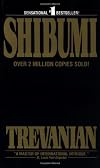
Author of Shibumi
About the Author
Image credit: From an article in the Tennesseean
Series
Works by Trevanian
Trevanian, and Rod Whitaker 2 copies
2011 1 copy
La sanción del Loo (II) 1 copy
La sanción del Eiger (I) 1 copy
La sanción del Eiger (II) 1 copy
La sanción del Loo (I) 1 copy
Shibumi (English Edition) 1 copy
Associated Works
Tagged
Common Knowledge
- Legal name
- Whitaker, Rodney William
- Other names
- Seare, Nicholas
Le Cagot, Beñat
Moran, Edoard - Birthdate
- 1931-06-12
- Date of death
- 2005-12-14
- Gender
- male
- Education
- University of Washington (BA, MA)
Northwestern University (PhD) - Occupations
- professor (Dana College)
professor (University of Texas)
novelist
film scholar
short story writer - Organizations
- United States Navy
Dana College
University of Texas - Agent
- Michael V. Carlisle
- Short biography
- Rodney William Whitaker wrote best-selling novels in a variety of genres and published under several pseudonyms, the best known of which was Trevanian. He revealed his real identity in 1979 in an interview with the New York Times. He published The Language of Film (1970) under his legal name.
- Cause of death
- COPD
- Nationality
- USA
- Birthplace
- Granville, New York, USA
- Places of residence
- Granville, New York, USA (birth)
Albany, New York, USA
Blair, Nebraska, USA
Austin, Texas, USA
France
England - Place of death
- Somerset, West Country, England, UK
- Associated Place (for map)
- USA
Members
Discussions
God's mum . . . in Happy Heathens (May 2022)
Adult Fiction: Spy is gifted a concubine, due to explosion she becomes blind, they fall in love and disappear forever in Name that Book (September 2014)
Reviews

Dr John Hemlock has just excused his students for the semester but finds out in a quick meeting that his work is far from over. For when he’s not lecturing, Hemlock funds his lifestyle and his blackmarket collection of Impressionists by performing contract assassinations for CII. This mission will take him to the Eiger, a mountain Hemlock has twice failed to summit, but he’s the only man the agency has with climbing experience. Conquering the mountain is only half the challenge though, show more because CII’s intelligence can’t pinpoint which man on the expedition is the target. Hemlock is finally blackmailed into going but he knows this will be his last sanction for the agency, one way or another.
Earlier this year both LibraryThing and Netflix began recommending The Eiger Sanction to me. I don’t know much about algorithms but it didn’t take long for me to realize this remarkable conflux between the two came about because of my occasional weakness for James Bond books and films. And so without too much concern over my decision to let the internet influence my choice of entertainment, I gave it a go.
Trevanian (a pen-name of Rodney William Whitaker) wrote Eiger as a spoof of Ian Fleming’s work. It’s clearly an effort to tweak the Bond character, to make his agency less patriotic and his conquests colder than casual. I don’t mean spoof as in funny, because a few scenes were so bad that I couldn’t even laugh (although I’m sure a few people do). Sometimes this type of fiction (especially 1940s-1960s) needles my modern sensibility, although if taken as satire, I try to put it in its place.
I enjoyed the second half of the novel the best, due in large part to the action on the Eiger. I do love a good mountaineering set piece. The mountain came off beautifully in the movie adaptation too. Directed by and starring Clint Eastwood, the film had several scenes verbatim from the book, which surprised me. Not a bad piece of popcorn fiction. show less
Earlier this year both LibraryThing and Netflix began recommending The Eiger Sanction to me. I don’t know much about algorithms but it didn’t take long for me to realize this remarkable conflux between the two came about because of my occasional weakness for James Bond books and films. And so without too much concern over my decision to let the internet influence my choice of entertainment, I gave it a go.
Trevanian (a pen-name of Rodney William Whitaker) wrote Eiger as a spoof of Ian Fleming’s work. It’s clearly an effort to tweak the Bond character, to make his agency less patriotic and his conquests colder than casual. I don’t mean spoof as in funny, because a few scenes were so bad that I couldn’t even laugh (although I’m sure a few people do). Sometimes this type of fiction (especially 1940s-1960s) needles my modern sensibility, although if taken as satire, I try to put it in its place.
I enjoyed the second half of the novel the best, due in large part to the action on the Eiger. I do love a good mountaineering set piece. The mountain came off beautifully in the movie adaptation too. Directed by and starring Clint Eastwood, the film had several scenes verbatim from the book, which surprised me. Not a bad piece of popcorn fiction. show less
This is a masterpiece of the genre. OK I don't read spy thrillers very often - what, one a decade maybe? But this thing is marvelously put together. Nikko is what James Bond wishes he were. The whole thing is so over the top - it definitely crosses into being a spoof or satire, but it doesn't just stay there. It's got multiple facets that all fit together wonderfully.
I like wearing a beret... I have a couple walking sticks, but maybe I need a makila, a Basque walking stick. That's one facet, show more just a lot of nice cultural description - Basque and Japanese mostly. Then there is caving - a rich description of the exploration of a particular cave in the Pyrenees. I've done a bit of caving - this felt very real.
Nikko is an assassin and the bodies do pile up a bit here, but there is not much gore here at all. It's like one of those monster films where the monster is mostly off-screen.
There is a kind of social philosophy angle here that reminds me of maybe Julius Evola, a kind of traditionalist verging on fascist - contemptuous of modern democratic enlightenment ideals.
All this in a page-turning thriller! What a delight! show less
I like wearing a beret... I have a couple walking sticks, but maybe I need a makila, a Basque walking stick. That's one facet, show more just a lot of nice cultural description - Basque and Japanese mostly. Then there is caving - a rich description of the exploration of a particular cave in the Pyrenees. I've done a bit of caving - this felt very real.
Nikko is an assassin and the bodies do pile up a bit here, but there is not much gore here at all. It's like one of those monster films where the monster is mostly off-screen.
There is a kind of social philosophy angle here that reminds me of maybe Julius Evola, a kind of traditionalist verging on fascist - contemptuous of modern democratic enlightenment ideals.
All this in a page-turning thriller! What a delight! show less

More a set of character studies than a true blue mystery novel, the Main is simply wonderful. Even though it is not filled with huge events, it never lags. The protagonist, an aging police detective has made Montreal's Saint Laurent Boulevard, better known as The Main, his personal responsibility. He is known and respected, though certainly not loved, by everyone. When a man is murdered in an alley, an investigation begins that takes us into various corners of Montreal society. It's amazing show more that Trevanian, who was born in Albany, NY and spent a long time teaching at the University of Texas, seems to know Montreal so well. The setting and the characters work together to tell an atmospheric story that goes well beyond the read it-enjoy it-forget it pattern of much detective fiction. Highly recommended. show less

I first read SHIBUMI when I was around fifteen, and then I read it again a few years later. Almost thirty years later, I found a copy of the same paperback edition I'd first read, and opening the book was like opening a window to my earlier reader-self.
In many ways, SHIBUMI is a messy thriller. The first half of the novel jumps back and forth between third-person-limited points of view and between its modern storyline (late 1970s), 1930s Shanghai, and then pre- and post-WWII Japan. It has show more some ludicrous plot elements, like an early Bond film without the sense of self-aware camp just underneath the surface. Its protagonist, Nicholai Hel, has almost mystical powers of perception. It contains gross ethnic generalizations (maybe a polite way of saying "racist"), particularly about Arabs.
And yet...
While at fifteen I was already aware of stories with supposed good guys who were revealed to be corrupt or evil, those characters were generally the exceptions that proved the rule that the U.S.A. was good and fought a necessary and morally just war against evil, particularly the Soviet Union. SHIBUMI rips this view to shreds. It was the first novel I read that portrayed America and the Western world in such a cynical light. The real world power is the Mother Company, a monolithic conglomeration of corporations with a monopoly on the energy sector. The Mother Company essentially runs governments. Whatever it cannot influence or corrupt, it removes from the board, often messily. The CIA is a group of blundering fools under the thumb of the Mother Company. The PLO is a ridiculed but necessary ally of convenience. Israel and the Arab states are pawns on a chessboard, maneuvered in the interests of oil. The Soviet Union is hardly mentioned at all, surprising for a book published a year before the election of Ronald Reagan. Think of Enron or Halliburton running the world.
With the advantage of hindsight, I can see how this novel portrays the post-Watergate suspicion of government. There are no good guys, no tarnished heroes who strive for some sort of nobility in a dirty world of compromise. Instead, the story opens with a CIA cowboy and a giggling PLO liaison watching on film the assassination of a hit squad of Jewish agents in the Rome airport. The agents were on their way to take out a group of Black Septemberist terrorists who participated in the notorious murders of Israelis at the 1972 Munich Olympic games. The CIA and the PLO operating together, killing four of their five targets and several civilians in the process? Maybe I was very naive when I was fifteen, but the novel made this idea both shocking and believable within the parameters of a thriller.
But this is all window dressing. The real story of SHIBUMI is the story of Nicholai Hel, described as the world's greatest assassin. His back story of growing up on the streets of Shanghai in the 1930s, then later in Japan before, during, and after WWII, is fascinating, dramatic, and philosophical. The child of a Russian mother and a German nobleman he never knew, Hel is a mongrel, a man of no nation. One might think he would then become American, which after all is a nation of immigrants, but Hel's view of the United States is formed by his view of American-made bombers leveling Shanghai as the Chinese and Japanese armies fight over the city, and later confirmed by the post-WWII Occupation of Japan. Americans are "merchants," loud child-men with money on their minds and a fascination with collecting and possessing objects. In contrast, Hel is "culturally Japanese," valuing the intellect, the spiritual and philosophical, and desires to attain a rare aesthetic state of paradox: an elegant simplicity. Along the way, as it were, Hel becomes a master linguist, a mystic capable of meditative transport that leaves him rested and refreshed, and the possessor of a "proximity sense" through which he can not only find his way through utter darkness but can also detect the presence of others and their emotional thoughts and intentions. Jedi meets ninja.
This all could easily be overblown mumbo-jumbo, and in the hands of a lesser writer, it would be. But Trevanian can write scenes of violence and cynical dialogue as well as clear and beautiful scenic descriptions, inner turmoil, and philosophical abstraction. His portrayal of the Mother Company operatives and their access to virtually complete knowledge of anyone via their computer system, Fat Boy, rings uneasily true today in an NSA world. Hel becomes our hero almost by default, but his desire for achieving "elegant simplicity" is an attractive goal, especially when compared to the Mother Company. Trevanian keeps all of these balls more or less in the air.
There's a lot more I could mention--the stark beauty of the Basque country; the author's apparent fascination with and incorporation of the Japanese game of Go; the tragic diminishment of pre-war Japanese life and ideals; Hel's beautiful courtesan Hana; his bombastic Falstaffian friend Le Cagot; the detailed scenes of Hel engaged in his hobby of caving or spelunking, which I found fascinating (and, at times, terrifying). But I'll end by saying that a few scenes from this book have stayed with me from the first time I read it three decades ago: the opening scene of the hit in the Rome airport; the first time we see Hel's mountain estate in the Basque region of France; Hel and Le Cagot negotiating treacherous caves far underground; a fatal encounter in the fog-shrouded Basque mountains. How many thrillers stay with you like this?
If you like THE BOURNE IDENTITY, you should read SHIBUMI. show less
In many ways, SHIBUMI is a messy thriller. The first half of the novel jumps back and forth between third-person-limited points of view and between its modern storyline (late 1970s), 1930s Shanghai, and then pre- and post-WWII Japan. It has show more some ludicrous plot elements, like an early Bond film without the sense of self-aware camp just underneath the surface. Its protagonist, Nicholai Hel, has almost mystical powers of perception. It contains gross ethnic generalizations (maybe a polite way of saying "racist"), particularly about Arabs.
And yet...
While at fifteen I was already aware of stories with supposed good guys who were revealed to be corrupt or evil, those characters were generally the exceptions that proved the rule that the U.S.A. was good and fought a necessary and morally just war against evil, particularly the Soviet Union. SHIBUMI rips this view to shreds. It was the first novel I read that portrayed America and the Western world in such a cynical light. The real world power is the Mother Company, a monolithic conglomeration of corporations with a monopoly on the energy sector. The Mother Company essentially runs governments. Whatever it cannot influence or corrupt, it removes from the board, often messily. The CIA is a group of blundering fools under the thumb of the Mother Company. The PLO is a ridiculed but necessary ally of convenience. Israel and the Arab states are pawns on a chessboard, maneuvered in the interests of oil. The Soviet Union is hardly mentioned at all, surprising for a book published a year before the election of Ronald Reagan. Think of Enron or Halliburton running the world.
With the advantage of hindsight, I can see how this novel portrays the post-Watergate suspicion of government. There are no good guys, no tarnished heroes who strive for some sort of nobility in a dirty world of compromise. Instead, the story opens with a CIA cowboy and a giggling PLO liaison watching on film the assassination of a hit squad of Jewish agents in the Rome airport. The agents were on their way to take out a group of Black Septemberist terrorists who participated in the notorious murders of Israelis at the 1972 Munich Olympic games. The CIA and the PLO operating together, killing four of their five targets and several civilians in the process? Maybe I was very naive when I was fifteen, but the novel made this idea both shocking and believable within the parameters of a thriller.
But this is all window dressing. The real story of SHIBUMI is the story of Nicholai Hel, described as the world's greatest assassin. His back story of growing up on the streets of Shanghai in the 1930s, then later in Japan before, during, and after WWII, is fascinating, dramatic, and philosophical. The child of a Russian mother and a German nobleman he never knew, Hel is a mongrel, a man of no nation. One might think he would then become American, which after all is a nation of immigrants, but Hel's view of the United States is formed by his view of American-made bombers leveling Shanghai as the Chinese and Japanese armies fight over the city, and later confirmed by the post-WWII Occupation of Japan. Americans are "merchants," loud child-men with money on their minds and a fascination with collecting and possessing objects. In contrast, Hel is "culturally Japanese," valuing the intellect, the spiritual and philosophical, and desires to attain a rare aesthetic state of paradox: an elegant simplicity. Along the way, as it were, Hel becomes a master linguist, a mystic capable of meditative transport that leaves him rested and refreshed, and the possessor of a "proximity sense" through which he can not only find his way through utter darkness but can also detect the presence of others and their emotional thoughts and intentions. Jedi meets ninja.
This all could easily be overblown mumbo-jumbo, and in the hands of a lesser writer, it would be. But Trevanian can write scenes of violence and cynical dialogue as well as clear and beautiful scenic descriptions, inner turmoil, and philosophical abstraction. His portrayal of the Mother Company operatives and their access to virtually complete knowledge of anyone via their computer system, Fat Boy, rings uneasily true today in an NSA world. Hel becomes our hero almost by default, but his desire for achieving "elegant simplicity" is an attractive goal, especially when compared to the Mother Company. Trevanian keeps all of these balls more or less in the air.
There's a lot more I could mention--the stark beauty of the Basque country; the author's apparent fascination with and incorporation of the Japanese game of Go; the tragic diminishment of pre-war Japanese life and ideals; Hel's beautiful courtesan Hana; his bombastic Falstaffian friend Le Cagot; the detailed scenes of Hel engaged in his hobby of caving or spelunking, which I found fascinating (and, at times, terrifying). But I'll end by saying that a few scenes from this book have stayed with me from the first time I read it three decades ago: the opening scene of the hit in the Rome airport; the first time we see Hel's mountain estate in the Basque region of France; Hel and Le Cagot negotiating treacherous caves far underground; a fatal encounter in the fog-shrouded Basque mountains. How many thrillers stay with you like this?
If you like THE BOURNE IDENTITY, you should read SHIBUMI. show less
Lists
Five star books (1)
Fiction For Men (1)
Awards


You May Also Like


Associated Authors
Statistics
- Works
- 26
- Also by
- 2
- Members
- 5,487
- Popularity
- #4,538
- Rating
- 3.8
- Reviews
- 110
- ISBNs
- 230
- Languages
- 14
- Favorited
- 17
