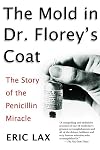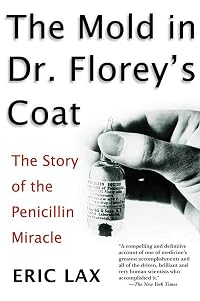
The Mold in Dr. Florey's Coat: The Story of the Penicillin Miracle
by Eric Lax
On This Page
Description
"Admirable, superbly researched ... perhaps the most exciting tale of science since the apple dropped on Newton's head."--Simon Winchester, The New York Times. Alexander Fleming's discovery of penicillin in his London laboratory in 1928 and its eventual development as the first antibiotic by a team at Oxford University headed by Howard Florey and Ernst Chain in 1942 led to the introduction of the most important family of drugs of the twentieth century. Yet credit for penicillin is largely show more misplaced. Neither Fleming nor Florey and his associates ever made real money from their achievements; instead it was the American labs that won patents on penicillin's manufacture and drew royalties from its sale. Why this happened, why it took fourteen years to develop penicillin, and how it was finally done is a fascinating story of quirky individuals, missed opportunities, medical prejudice, brilliant science, shoestring research, wartime pressures, misplaced modesty, conflicts between mentors and their proteges, and the passage of medicine from one era to the next. show lessTags
Recommendations

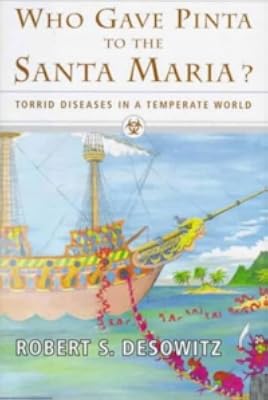
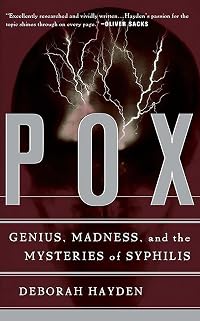
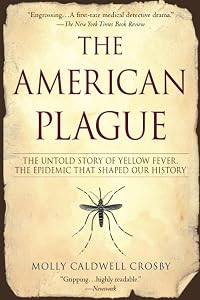
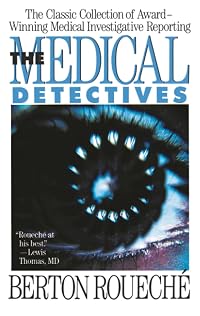
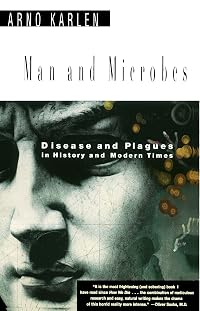
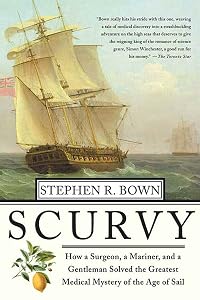
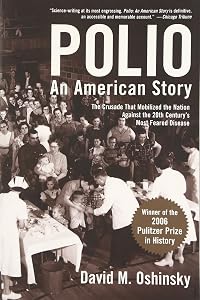


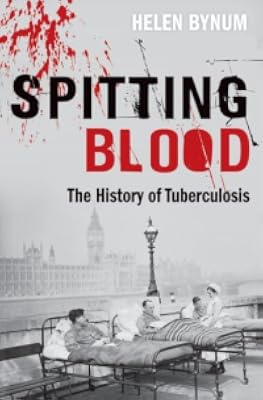

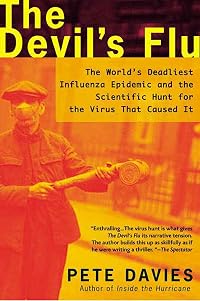
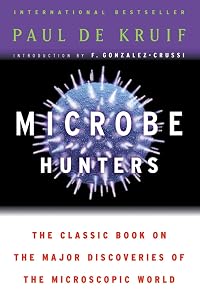
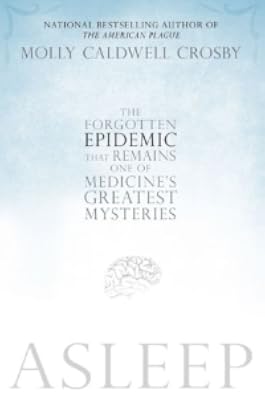
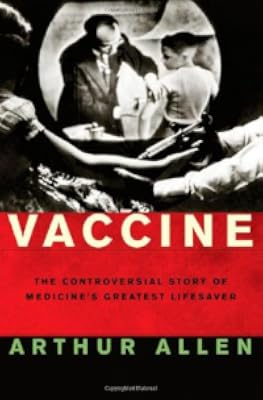
Member Recommendations
Member Reviews
This book was a history/biography of the team who were involved in the development of penicillin. It was full of all the ups and downs, ins and outs, and personalities and peccadillos of the people involved in this endeavor. It didn't hide all of the academic shenanigans that went on during the research phase and it showed the world of academe in all its flawed truth. People as smart and innovative as those on Howard Florey's research team, as well as those brought on board, had egos to match and it made life very difficult for Dr. Florey. Add to that the desperate times of the early years of WWII and the drama seemed more like a novel than real life.
The book was also a mythbuster. Alexander Fleming may have discovered the penicillin show more mold, but he did nothing with it after that because mold was not his area of research and he thought penicillin was not very promising as a research field. However, when it came time for the interviews and accolades that accompanied the revelation of the miracle that penicillin was, he was eager to step up and talk. This made him a media darling and led to the false assumption that he was the person who gave the world penicillin. That was not the case. It as up to Howard Florey, Ernst Chain, and Norman Heatley to figure out what penicillin was good for, and how to synthesize it. Florey and Chain shared a Nobel Prize with Fleming for penicillin but Heatley was left out. This was a fascinating story filled with brilliant innovation by the scientists and all the tension caused by the real life events of World War II. It is not over long and that makes it a very accessible book. The arguments put forth by the author to clarify the murky history of the development of penicillin are well formulated and reasoned while not be overly detailed, keeping the narrative flowing at a good pace.
Very well done book for all readers interested in science or medicine. Even for those interested in the history of WWII. show less
The book was also a mythbuster. Alexander Fleming may have discovered the penicillin show more mold, but he did nothing with it after that because mold was not his area of research and he thought penicillin was not very promising as a research field. However, when it came time for the interviews and accolades that accompanied the revelation of the miracle that penicillin was, he was eager to step up and talk. This made him a media darling and led to the false assumption that he was the person who gave the world penicillin. That was not the case. It as up to Howard Florey, Ernst Chain, and Norman Heatley to figure out what penicillin was good for, and how to synthesize it. Florey and Chain shared a Nobel Prize with Fleming for penicillin but Heatley was left out. This was a fascinating story filled with brilliant innovation by the scientists and all the tension caused by the real life events of World War II. It is not over long and that makes it a very accessible book. The arguments put forth by the author to clarify the murky history of the development of penicillin are well formulated and reasoned while not be overly detailed, keeping the narrative flowing at a good pace.
Very well done book for all readers interested in science or medicine. Even for those interested in the history of WWII. show less
In 1928, Alexander Fleming, an eccentric Scottish microbiologist, saw how, by chance, penicillium mold inhibited the growth of certain dangerous and lethal bacteria. After a few years dabbling with his find, he gave up on it entirely to focus on other enzyme research. Ten years later, a group of dedicated chemists and other assorted scientists--Howard Florey, Ernst Chain, and Norman Heatley among them--happened upon Fleming's earlier research and decided to try to conduct large-scale experiments on the nature and mechanisms of the mold extract itself. The work that these fellows from Oxford conducted eventually resulted in Nobel Prizes and the virtual death-knoll for war-inflicted septicemia and lethal secondary infections. Eric Lax show more presents the history of the research with a rich fountain of personal correspondence and just enough cattiness to make scientists look like real people. A quick and engaging read. show less
A readable account of Floreys teams efforts to synthesise penicillin after Fleming first described it. Interesting and set against the historical context of the Second World War, there's a sense of urgency about the story which is nicely conveyed. Overall, there's not an overwhelming amount of technical details but enough to keep you intrigued. A good, robust account of what happened and the subsequent misappropriation of credit, but this will appeal mainly to those with an interest in the history of medicine, mycology, and historical biography
Skvěle napsaná a velmi čtivá kniha, která rozhodně zaujme i ty, kteří o problematice medicíny nebo vědeckého výzkumu mnoho nevědí
Aug 26, 2009Czech
Ratings
Members
- Recently Added By
Lists

Books in the Bibliography of The Alchemy of Us by Ainissa Ramirez
181 works; 1 member

In Our Time books
4,934 works; 2 members
Author Information

12+ Works 1,327 Members
Eric Lax's work has appeared in many magazines and newspapers, including The New York Times Magazine, Vanity Fair, The Atlantic, Life, and Esquire. He lives in Los Angeles with his wife and two sons
Awards and Honors
Distinctions
Common Knowledge
- Canonical title
- The Mold in Dr. Florey's Coat: The Story of the Penicillin Miracle
- Original publication date
- 2004-04-11
- People/Characters
- Howard Florey; Alexander Fleming; Ernst Boris Chain
- Epigraph
- "The more intelligent the question you ask of Mother Nature, the more intelligent will be her reply."
Sir Charles Sherrington - Dedication
- For my son John
- First words
- On March 14, 1942, thirty-three-year-old Anne Miller lay in New Haven Hospital dying of blood poisoning.
Classifications
- Genres
- Nonfiction, Science & Nature, History, General Nonfiction, Biography & Memoir
- DDC/MDS
- 615.3295654 — Applied science & technology Medicine & health Pharmacology and therapeutics Organic drugs Drugs from plants and microorganisms
- LCC
- RM666 .P35 .L39 — Medicine Therapeutics. Pharmacology Therapeutics. Pharmacology Drugs and their actions
- BISAC
Statistics
- Members
- 241
- Popularity
- 134,679
- Reviews
- 5
- Rating
- (4.24)
- Languages
- Czech, English
- Media
- Paper, Ebook
- ISBNs
- 7
- UPCs
- 1
- ASINs
- 3