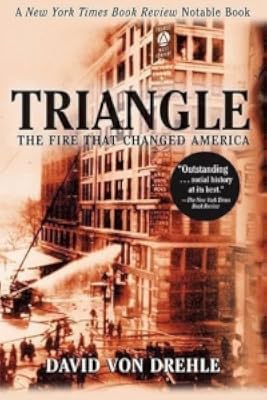
Triangle: The Fire that Changed America
by David Von Drehle
On This Page
Description
This "outstanding history" of the 1911 disaster that changed the course of 20th-century politics and labor relations "is social history at its best" (Kevin Baker, The New York Times Book Review). New York City, 1911. As the workday was about to end, a fire broke out in the Triangle shirtwaist factory of Greenwich Village. Within minutes it consumed the building's upper three stories. Firemen were powerless to rescue those trapped inside: their ladders simply weren't tall enough. People on show more the street watched in horror as desperate workers jumped to their deaths. Triangle is both a harrowing chronicle of the Triangle shirtwaist fire and a vibrant portrait of an era. It follows the waves of Jewish and Italian immigration that supplied New York City's garment factories with cheap, mostly female labor. It portrays the Dickensian work conditions that led to a massive waist-worker's strike in which an unlikely coalition of socialists, socialites, and suffragettes took on bosses, police, and magistrates. And it shows how a public outcry over the fire led to an unprecedented alliance between labor reformers and Tammany Hall politicians. With a memorable cast of characters, including J.P. Morgan's blue-blooded activist daughter Anne, and political king maker Charles F. Murphy, as well as the many workers who lost their lives in the fire, Triangle presents a dramatic account of early 20th century New York and the events that gave rise to urban liberalism. A New York Times Book Review Notable Book. show lessTags
Recommendations



Member Recommendations
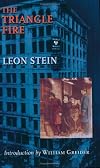
oregonobsessionz David von Drehle used Leon Stein's book as a reference for his 2003 book on the Triangle Shirtwaist fire.
Also recommended by AnnaClaire

Member Reviews
This is one of the best history books I've read in quite a while. To understand the importance of the Triangle Waist Company fire in labor history, it is also important to understand the context in which it occurred. I hadn't realized how the rise and fall of Tammany Hall was so intimately tied in with a business and political climate that would permit a situation in which such a deadly fire could occur, and also with the reformist aftermath, which was instrumental in leading to New Deal policies. The story of the trial, and the political maneuvering leading up to it, was fascinating.
Von Drehle is a fine writer. The most moving chapter must be the one he calls, "Three Minutes", referring to the fact that had the alarm been sounded three show more minutes sooner, many lives might have been saved. His descriptions of how many of the workers died had me in tears. While it is very easy to pile horror on horror, von Drehle shows you the people, both the survivors and the lost. There is one extraordinary section of this chapter in which, after telling of the people standing in the windows "cry[ing] 'fire!' because what else was there to say?", and the fire ladders not tall enough, and the watchers below "their tiny hands . . . up, as if a gesture could hold the doomed workers forever in the mouth of a furnace" he then describes the view from the windows. "[T]he cool, clear air beyond the furnace; the gray-brown tracery of bare trees quilting Washington Square (faintly washed with the first whisper of new green) . . .the birds starting from nearby eaves and wheeling through the sky; the elegant campanile of the church on the square, and the pleasing aesthetic echoes of it in the two orange brick loft building that faced the Asch Building . . .one of the least decorated in the neighborhood, [it] featured miniature terra-cotta columns, fluted in the classical style, as dividers between the upper-floor windows. Workers were clinging to these decorations now."
In 1913, two years after the fire, the New York State legislature passed a series of fire safety laws, including requiring automatic sprinklers in high-rises, and unlocked doors. in the fall of 2003, 6 people died in a high-rise office building in Chicago. There were no automatic sprinklers, and the victims were trapped in a stairwell because the fire doors were locked. show less
Von Drehle is a fine writer. The most moving chapter must be the one he calls, "Three Minutes", referring to the fact that had the alarm been sounded three show more minutes sooner, many lives might have been saved. His descriptions of how many of the workers died had me in tears. While it is very easy to pile horror on horror, von Drehle shows you the people, both the survivors and the lost. There is one extraordinary section of this chapter in which, after telling of the people standing in the windows "cry[ing] 'fire!' because what else was there to say?", and the fire ladders not tall enough, and the watchers below "their tiny hands . . . up, as if a gesture could hold the doomed workers forever in the mouth of a furnace" he then describes the view from the windows. "[T]he cool, clear air beyond the furnace; the gray-brown tracery of bare trees quilting Washington Square (faintly washed with the first whisper of new green) . . .the birds starting from nearby eaves and wheeling through the sky; the elegant campanile of the church on the square, and the pleasing aesthetic echoes of it in the two orange brick loft building that faced the Asch Building . . .one of the least decorated in the neighborhood, [it] featured miniature terra-cotta columns, fluted in the classical style, as dividers between the upper-floor windows. Workers were clinging to these decorations now."
In 1913, two years after the fire, the New York State legislature passed a series of fire safety laws, including requiring automatic sprinklers in high-rises, and unlocked doors. in the fall of 2003, 6 people died in a high-rise office building in Chicago. There were no automatic sprinklers, and the victims were trapped in a stairwell because the fire doors were locked. show less
Beginning with a garment worker's strike and then moving onto the day the Triangle Shirtwaist Factory went up in flames, the book tells the story of immigrant labor in unsafe conditions. The fire department could not reach building floors housing the factory. The fire escapes were flawed. Locked doors impeded exit for many. Some jumped to their deaths in efforts to escape the flames. The book goes on to detail the reforms brought about by the human tragedy and the trials of the plant's owners. The narrative holds the reader's attention. An annotated list of casualties appears before the "blind end notes." I hate blind end notes. Please number them so we know they exist!
Excellent in research and writing
This book, while using the Triangle shirtwaist fire as an example, is mostly about power. The author demonstrates the macro power of money, government, life, and death to allow the reader to appreciate the key players' motives, how they resulted in the tragedy and what changes resulted from the fire and its aftermath.
The powerful owners of the late Gilded Age are easily recognized despite more than one hundred years elapsed between them. Nor have these industrialists changed their behavior toward those whose toil butters their bread. Instead, the resulting moguls of the information age are allowed to grow increasingly powerful and even less answerable for their crimes than those gilded forefathers.
In show more 1911, shirtwaist workers were stripped of their dignity by locked doors and a twisted need to control their employees' lives. The prosecution revealed in his investigation that the owners paid investigators and muscle men hundreds of dollars to recover losses of less than $25. The result was to blame workers for making the excessive expenditure necessary.
The same kind of behavior, refusing breaks and crushing unions, happens all the time even today. Amazon refuses to provide for its workers' health and safety despite the fact that those worker's dedication earned billions of dollars for their bosses during the pandemic.
The author demonstrates the necessary data collection that bolsters the Labor Department's regulations and led to the New Deal Era and reminds us what our representatives have failed to protect.
The abuse of workers reduces the future ability for the US to earn money. Millions are driven onto disability because we fail to protect our greatest asset. Other countries realize that their workforce is their future. They force owners to treat their workers well. But in the US, we hand over the most precious part of the economy to anyone regardless of their history of abuse.
The fact that the owners of the shirtwaist factory made millions more from insurance than the factory was worth was barely noticed and quickly forgotten by the business community. These two wealthy men, tricked out in diamonds, locked others into their workplaces even AFTER the Triangle fire. Those men should never have been allowed to hire a cab again, much less another factory.
The author's meticulous research showed the long view of the tragedy. By following the careers defined by that tragedy, he shows that change resulted from the cooperation of unions, government and the labor researchers who gathered and analyzed the data to verify the new laws actually helped protect this country's investment in workers.
Once the government began to protect workers and enforced their rights to unionize. The US entered the longest period of growth ever seen in the world.
The fire, while tragic, wasn't particularly horrifying as commercial accidents go even today. The importance of that fire and its tragic loss of life is key because it began a period in which the government, armed with data, and workers armed with unions, finally gained power over the owners armed with money. They recognized that no fortune is made without employees and the better educated and healthier that workforce is, the more successful the entire country is. Then they wrote and enacted laws to defend workers from predation.
Our workforce is the greatest asset of the United States and the reforms made to protect workers raised our economy to heights that made owners so powerful that they can flout laws made to protect their workers.
After reading this book no one should be too surprised that the people who hoped and acted to end our country were company owners indistinguishable from the two men who locked the doors on the women at the Triangle factory. Even after nearly losing their own lives in the fire, their factory doors remained locked.
Indistinguishable. show less
This book, while using the Triangle shirtwaist fire as an example, is mostly about power. The author demonstrates the macro power of money, government, life, and death to allow the reader to appreciate the key players' motives, how they resulted in the tragedy and what changes resulted from the fire and its aftermath.
The powerful owners of the late Gilded Age are easily recognized despite more than one hundred years elapsed between them. Nor have these industrialists changed their behavior toward those whose toil butters their bread. Instead, the resulting moguls of the information age are allowed to grow increasingly powerful and even less answerable for their crimes than those gilded forefathers.
In show more 1911, shirtwaist workers were stripped of their dignity by locked doors and a twisted need to control their employees' lives. The prosecution revealed in his investigation that the owners paid investigators and muscle men hundreds of dollars to recover losses of less than $25. The result was to blame workers for making the excessive expenditure necessary.
The same kind of behavior, refusing breaks and crushing unions, happens all the time even today. Amazon refuses to provide for its workers' health and safety despite the fact that those worker's dedication earned billions of dollars for their bosses during the pandemic.
The author demonstrates the necessary data collection that bolsters the Labor Department's regulations and led to the New Deal Era and reminds us what our representatives have failed to protect.
The abuse of workers reduces the future ability for the US to earn money. Millions are driven onto disability because we fail to protect our greatest asset. Other countries realize that their workforce is their future. They force owners to treat their workers well. But in the US, we hand over the most precious part of the economy to anyone regardless of their history of abuse.
The fact that the owners of the shirtwaist factory made millions more from insurance than the factory was worth was barely noticed and quickly forgotten by the business community. These two wealthy men, tricked out in diamonds, locked others into their workplaces even AFTER the Triangle fire. Those men should never have been allowed to hire a cab again, much less another factory.
The author's meticulous research showed the long view of the tragedy. By following the careers defined by that tragedy, he shows that change resulted from the cooperation of unions, government and the labor researchers who gathered and analyzed the data to verify the new laws actually helped protect this country's investment in workers.
Once the government began to protect workers and enforced their rights to unionize. The US entered the longest period of growth ever seen in the world.
The fire, while tragic, wasn't particularly horrifying as commercial accidents go even today. The importance of that fire and its tragic loss of life is key because it began a period in which the government, armed with data, and workers armed with unions, finally gained power over the owners armed with money. They recognized that no fortune is made without employees and the better educated and healthier that workforce is, the more successful the entire country is. Then they wrote and enacted laws to defend workers from predation.
Our workforce is the greatest asset of the United States and the reforms made to protect workers raised our economy to heights that made owners so powerful that they can flout laws made to protect their workers.
After reading this book no one should be too surprised that the people who hoped and acted to end our country were company owners indistinguishable from the two men who locked the doors on the women at the Triangle factory. Even after nearly losing their own lives in the fire, their factory doors remained locked.
Indistinguishable. show less
Von Drehle has embedded the intense, moving tale of the tragic Triangle Shirtwaist Factory fire in a fascinating, meticulously documented account of a crucial period in U.S. history. In addition to using an impressive list of secondary sources, the author has drawn heavily on newspaper articles, author Leon Stine's interviews with survivors, and trial transcripts. In a short prologue, he provides a poignant account of stunned, grieving relatives trying to identify burned bodies. To show why the tragedy occurred, he then goes back two years to the beginning of the 1909 general strike. The stifling, dingy tenements and the horrific conditions of the factories where immigrant workers toiled for 84-hour workweeks are described in evocative show more detail. Stories of the hardships they left behind in Italy and Eastern Europe contribute to the portraits of the victims and villains. Readers unfamiliar with Tammany Hall, the Progressive movement, or the rise of trade unions benefit from clear, concise background information. The account of the fire, the investigation, and the trial are both heartbreaking and enraging. The courtroom drama of defense attorney Max Steuer brazenly defending the factory owners overshadows any modern comparison. After concluding with the announcement of the trial verdict, the author provides an epilogue covering the final years of the key figures. show less
On a recent trip to NYC, we walked past a plaque in memory of the victims of the Triangle Shirtwaist Factory fire that happened in 1911. I had heard of the fire, but seeing this in person reminded me that I would like to read more about it. David von Drehle's book does a great job describing how the fire happened and the safety failures that made the outcome and loss of 146 lives so much worse than it needed to be. He also solidly places the event in the history of the time. He explores the political background and shift of power between Tammany Hall politicians towards more progressive politicians. He also explores the lives of immigrants, because many of the victims were first generation immigrants. He also delves into women's rights show more since all but about a dozen of the victims were women.
Some stretches of this book work better than others, but overall I thought it was well done. Organized well, some vivid writing, and well-placed amongst other historical trends of the time. show less
Some stretches of this book work better than others, but overall I thought it was well done. Organized well, some vivid writing, and well-placed amongst other historical trends of the time. show less
At closing time on Saturday, March 25, 1911, a fire started at the Triangle Shirtwaist Factory on the 8th, 9th, and 10th floors of the Asch Building in New York's Greenwich Village. 146 people - mostly young women and girls - died as result of the fire, many of them jumping to their deaths because locked doorways prevented their exit. The fire proved pivotal in leading to legislation for factory safety and the growth of the International Ladies' Garment Workers' Union (ILGWU), a union that lives on today in UNITE HERE.
Von Drehle provides a thorough but concise history of the fire, with all the grim details, and the ensuing trial which failed to find the company owners guilty of manslaughter. There's also a lot of background before the show more fire. This includes the history of the factory owners, themselves immigrant strivers who rose to wealth and prominence. The stories of many of the garment workers are also included, most of them immigrants from Eastern Europe and Italy, who had survived pogroms in Poland and volcanic eruptions in Italy before seemingly finding stability in New York. A massive strike lead by the ILGWU in 1909 is also covered in some detail.
If there's any flaw in this book it is that it doesn't quite live up to it's subtitle "The Fire That Changed America." For the aftereffects of the fire, Von Drehle emphasizes the rise of progressive Tammany Hall politicians Alfred E. Smith and Robert F. Wagner, and how they brought about an urban liberalism that lead to the New Deal. I wouldn't say this is a stretch but I think it's a more high-level approach to history than it would be to detail what women and immigrant communities did in response to the fire. Nevertheless, I did find the book to be very interesting and informative. show less
Von Drehle provides a thorough but concise history of the fire, with all the grim details, and the ensuing trial which failed to find the company owners guilty of manslaughter. There's also a lot of background before the show more fire. This includes the history of the factory owners, themselves immigrant strivers who rose to wealth and prominence. The stories of many of the garment workers are also included, most of them immigrants from Eastern Europe and Italy, who had survived pogroms in Poland and volcanic eruptions in Italy before seemingly finding stability in New York. A massive strike lead by the ILGWU in 1909 is also covered in some detail.
If there's any flaw in this book it is that it doesn't quite live up to it's subtitle "The Fire That Changed America." For the aftereffects of the fire, Von Drehle emphasizes the rise of progressive Tammany Hall politicians Alfred E. Smith and Robert F. Wagner, and how they brought about an urban liberalism that lead to the New Deal. I wouldn't say this is a stretch but I think it's a more high-level approach to history than it would be to detail what women and immigrant communities did in response to the fire. Nevertheless, I did find the book to be very interesting and informative. show less
In 1911, a fire at the Triangle Waist Company in New York City killed 146 people, mostly young immigrant women who were unable to escape the 8th and 9th floors. Some of them jumped from the factory's windows; some jumped down the elevator shaft; some burned a few feet from a door that was likely locked. I'd heard about this disaster and how it led to major labor reforms in the United States, but I knew little of the specifics. Von Drehle has written a solid history, which covers a major strike at the factory in 1909, conditions under which so many Eastern European immigrants came to the US, reform efforts before and after the fire, and the influence of the fire on American politics through the New Deal. Parts of the book are a bit dry, show more but the background stories of some of the major figures involved and of the victims is interesting, and the description of the fire itself is harrowing.
4 stars show less
4 stars show less
Members
- Recently Added By
Lists

Disaster Books
74 works; 19 members

Best History Books about Disasters
33 works; 19 members

The 99% -- Most Readable Non-Fiction
37 works; 8 members

Good Nonfiction about New York City
62 works; 10 members

Accidents, Disasters, and Tragedies
175 works; 7 members

History can be Interesting (or Horrifying or Fun...)
14 works; 2 members

Non-Fiction Worth Reading
1,016 works; 262 members

Books Read in 2014
2,343 works; 89 members
Author Information

17+ Works 2,152 Members
Some Editions
Awards and Honors
Awards
Distinctions
Common Knowledge
- Canonical title
- Triangle: The Fire that Changed America
- Original publication date
- 2003
- Important places
- New York, New York, USA; Manhattan, New York, New York, USA; Triangle Shirtwaist Factory, New York, New York, USA
- Important events
- Triangle Shirtwaist Factory Fire (1911-03-25)
- Epigraph
- The "Triangle" company...With blood this name will be written in the history of the American workers' movement, and with feeling will this history recall the names of the strikers of this shop - of the crusaders.
--Jew... (show all)ish Daily Forward
January 10,1910 - Dedication
- for Karen
- First words
- Prologue: Manhattan's Charities Pier was known as Misery Lane because that was where the bodies were put whenever disaster struck.
- Last words
- (Click to show. Warning: May contain spoilers.)Their individual lives are mostly lost to us, but their monument and legacy are stitched into our world.
- Canonical DDC/MDS
- 974.71041
- Canonical LCC
- F128.5
- Disambiguation notice
- Full title (2003): Triangle : the fire that changed America / David Von Drehle.
Classifications
- Genres
- History, Nonfiction, General Nonfiction
- DDC/MDS
- 974.71041 — History & geography History of North America Northeastern United States (New England and Middle Atlantic states) New York New York (N.Y.)
- LCC
- F128.5 — Local History of the United States, Canada and Latin America United States local history New York
- BISAC
Statistics
- Members
- 1,373
- Popularity
- 17,335
- Reviews
- 34
- Rating
- (3.90)
- Languages
- English
- Media
- Paper, Audiobook, Ebook
- ISBNs
- 8
- ASINs
- 5