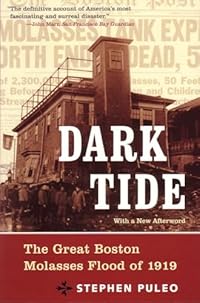
Dark Tide: The Great Boston Molasses Flood of 1919
by Stephen Puleo
On This Page
Description
Around noon on January 15, 1919, a group of firefighters was playing cards in Boston's North End when they heard a tremendous crash. It was like roaring surf, one of them said later. Like a runaway two-horse team smashing through a fence, said another. A third firefighter jumped up from his chair to look out a window-"Oh my God!" he shouted to the other men, "Run!"A 50-foot-tall steel tank filled with 2.3 million gallons of molasses had just collapsed on Boston's waterfront, disgorging its show more contents as a 15-foot-high wave of molasses that at its outset traveled at 35 miles an hour. It demolished wooden homes, even the brick fire station. The number of dead wasn't known for days. It would be years before a landmark court battle determined who was responsible for the disaster.
. show less
Tags
Recommendations














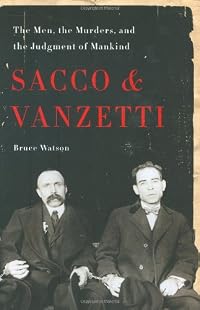

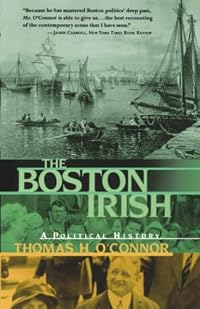


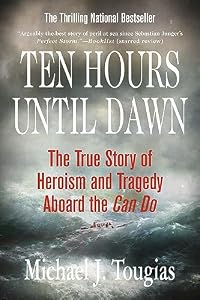














Member Recommendations
jessiebennett Another Boston book by the same author.
20


fundevogel Discusses the science and history of deadly elements. Includes many historical anecdotes about bizarre poisonings...like deadly wallpaper and how canned goods doomed the Franklin expedition

Trapped Under the Sea: One Engineering Marvel, Five Men, and a Disaster Ten Miles Into the Darkness by Neil Swidey
pbirch01 Both books deal with a major public works accident, the role of corporate responsibility and are both set in Boston
Member Reviews
Once you read this book, never again will you put any credence in that old saying, “as slow as molasses in January.” On January 15, 1919, a torrent of fast-moving, sticky molasses burst from its confines in a fifty-foot tank. Within seconds, the beginning tidal wave, 25 feet high and 160 feet wide, pulverized the entire waterfront and a half-mile swath of Commercial Street, where the tank had been located. This comprehensive and well-researched account of that tragedy is a gripping tale of those whose lives were snuffed out and of those who survived but suffered the ill effects for the remainder of their days. Author Stephen Puleo has written a clear and well-organized account of the flood in this book that reads like a novel but is show more all too true. He gives an overview of the history of that time period, of the politics and the anarchists who made headlines, of the flood itself, and of the trial that ensued. It’s a tragedy that changed lives, but it also changed laws and the way big business is viewed by society. Puleo has captured the heart of the neighborhood and the horror of the disaster waiting to unfold in this compelling read. show less
A remarkable tale about a little known, regrettable incident in American (and, particularly, Boston) history. On January 15, 1919, a 90 foot tall tank of molasses, destined for distillation into industrial alcohol for munitions manufacture, flew apart, sending a 25 foot high wave of the dark sticky substance racing through the crowded North End at speeds up to 35 mph. (So much for 'slow as molasses!') The first third of the book supplies background of the molasses trade, Boston at the turn of the century and introduces us to those who played a significant role in the tragedy. Most harrowing is the central portion, detailing the enormous failure of the tank and the unthinkable destruction it wrought, with attendant suffering and near show more misses. The last third is a chilling courtroom drama, pitting the mostly immigrant plaintiffs against a large corporation, USIA.
This story has long played at the edges of Bostonian folklore, but has never received "spotlight" treatment. Stephen Puleo rectifies this oversight with an absolutely gripping volume. The story is amazing in its own right. Puleo goes further, placing it in the context of the political and economic exigencies faced by WWI America. While the author doesn't do so, I found echos resonating to our modern era. Anti-immigrant feeling, persecution for political expression, worker safety concerns, questions over the ability of Big Business to police itself (and its culpability when it fails to do so), lack of government regulation and the effects of military/industrial spending are all issues with which we continue to struggle. This book continues to have relevance beyond the events of a near century ago.
Puleo draws largely upon primary sources, including the 25,000 page transcript of the legal proceedings. One wishes for careful footnoting or end notes, particularly where Puleo ascribes inner thoughts and feelings to someone. Puleo notes that there is little prior written work work on this topic. All the more important in the interests of history and future researchers, I would think, to carefully note one's sources. This is admittedly nit-picking. As a Bostonian, I found this book particularly intriguing. However, I think that it would have broad appeal. show less
This story has long played at the edges of Bostonian folklore, but has never received "spotlight" treatment. Stephen Puleo rectifies this oversight with an absolutely gripping volume. The story is amazing in its own right. Puleo goes further, placing it in the context of the political and economic exigencies faced by WWI America. While the author doesn't do so, I found echos resonating to our modern era. Anti-immigrant feeling, persecution for political expression, worker safety concerns, questions over the ability of Big Business to police itself (and its culpability when it fails to do so), lack of government regulation and the effects of military/industrial spending are all issues with which we continue to struggle. This book continues to have relevance beyond the events of a near century ago.
Puleo draws largely upon primary sources, including the 25,000 page transcript of the legal proceedings. One wishes for careful footnoting or end notes, particularly where Puleo ascribes inner thoughts and feelings to someone. Puleo notes that there is little prior written work work on this topic. All the more important in the interests of history and future researchers, I would think, to carefully note one's sources. This is admittedly nit-picking. As a Bostonian, I found this book particularly intriguing. However, I think that it would have broad appeal. show less
In January 1919, an enormous molasses tank on the Boston waterfront burst, and unleashed a flood of molasses on one of the most congested sections of the city.
"Molasses flood" sounds like a joke. It sounds funny. It was January. We all know the expression, "as slow as cold molasses."
Twenty-one people died. 150 were injured, many of them very seriously, resulting in life-long crippling problems that either ended or seriously hampered their ability to work. Also, hundreds of working horses were killed by the molasses flood--some directly, some shot afterwards, because there was no way to extract them from the molasses before they would be suffocated by the weight of it.
Children died. Workers died. Houses, businesses, and the local fire show more station were crushed, shattered, knocked off their foundations and nearly swept into the harbor.
It was an enormous tragedy.
An important part of Puleo's book is making abundantly clear that it shouldn't have happened. Despite the company's claims, there was no bomb, no "evilly disposed persons," no outside malicious action. But neither was it "just" an accident.
Molasses wasn't just sweetener, or an important raw material for making rum. It was also an important source of industrial alcohol, used in, among other things, munitions. This became critically important with the start of World War One. This resulted in the new Boston tank being built in a great rush, to cash in on the war, under the direction of--an accountant. A man with no experience in construction of any kind, who was under pressure from his bosses to get it done by the last day of 1915 so that it could receive a delivery and spare the company the need to buy molasses for processing. Puleo lays out for us, in highly readable fashion, all the mistakes in construction, the warnings from an ordinary employee about the signs of structural unsoundness, the effects of the disaster, and the subsequent legal case. The company strongly pushed the theory that anarchists planted a bomb in the tank, and this wasn't, in the context of the time, as crazy an idea as it might sound. Anarchists, and anarchist violence, was a significant factor at the time. There just wasn't any supporting evidence for an anarchist having planted a bomb in this molasses tank, and there was a lot of evidence of sloppy construction and ignored warnings of structural unsoundness.
The molasses flood was a major disaster for Boston, but by itself, it wasn't a major, history-changing moment. However, it connected and interacted with a lot of other forces at work at the time. World War One, Prohibition, laissez-faire capitalism (Puleo doesn't use the phrase, but describes it at work), the assimilation, or lack thereof, of the Italian immigrants, anarchist political activity, the Sacco and Vanzetti case...all played a role in what happened. And the legal case over the molasses flood, which became, in practice even if not officially, the largest class action lawsuit thus far.
It's a fascinating story, and well, even if not perfectly, told.
Recommended.
I borrowed this book from my local library. show less
"Molasses flood" sounds like a joke. It sounds funny. It was January. We all know the expression, "as slow as cold molasses."
Twenty-one people died. 150 were injured, many of them very seriously, resulting in life-long crippling problems that either ended or seriously hampered their ability to work. Also, hundreds of working horses were killed by the molasses flood--some directly, some shot afterwards, because there was no way to extract them from the molasses before they would be suffocated by the weight of it.
Children died. Workers died. Houses, businesses, and the local fire show more station were crushed, shattered, knocked off their foundations and nearly swept into the harbor.
It was an enormous tragedy.
An important part of Puleo's book is making abundantly clear that it shouldn't have happened. Despite the company's claims, there was no bomb, no "evilly disposed persons," no outside malicious action. But neither was it "just" an accident.
Molasses wasn't just sweetener, or an important raw material for making rum. It was also an important source of industrial alcohol, used in, among other things, munitions. This became critically important with the start of World War One. This resulted in the new Boston tank being built in a great rush, to cash in on the war, under the direction of--an accountant. A man with no experience in construction of any kind, who was under pressure from his bosses to get it done by the last day of 1915 so that it could receive a delivery and spare the company the need to buy molasses for processing. Puleo lays out for us, in highly readable fashion, all the mistakes in construction, the warnings from an ordinary employee about the signs of structural unsoundness, the effects of the disaster, and the subsequent legal case. The company strongly pushed the theory that anarchists planted a bomb in the tank, and this wasn't, in the context of the time, as crazy an idea as it might sound. Anarchists, and anarchist violence, was a significant factor at the time. There just wasn't any supporting evidence for an anarchist having planted a bomb in this molasses tank, and there was a lot of evidence of sloppy construction and ignored warnings of structural unsoundness.
The molasses flood was a major disaster for Boston, but by itself, it wasn't a major, history-changing moment. However, it connected and interacted with a lot of other forces at work at the time. World War One, Prohibition, laissez-faire capitalism (Puleo doesn't use the phrase, but describes it at work), the assimilation, or lack thereof, of the Italian immigrants, anarchist political activity, the Sacco and Vanzetti case...all played a role in what happened. And the legal case over the molasses flood, which became, in practice even if not officially, the largest class action lawsuit thus far.
It's a fascinating story, and well, even if not perfectly, told.
Recommended.
I borrowed this book from my local library. show less
A flood of molasses. It sounds like a punishment in a surreal candy-coated children's story. But to the citizens of Boston's North End in January 1915, it was a real event, one that claimed twenty-one lives and injured around 150. As author Stephen Puleo points out in his "Author's Note" prefacing his Dark Tide, it's a story that sounds too ridiculous to be true, and perhaps due to that, there had been no thorough analysis of the flood and its aftermath.
Dark Tide remedies that: it's a very compelling story of the peculiar disaster. Puleo introduces about a dozen characters who were all impacted by the molasses flood, most of them working-class people living in Boston's North End. Puleo also notes the general tenor of everyday life, with show more Americans generally nervous about the European war and wondering about the future of Prohibition. He points out the "red scare" of the day: the anarchists, many of whom were Italians (the two most famous ones -- Sacco and Vanzetti -- would be arrested and tried just to the south of Boston a few years after the molasses flood).
And then there's the story of the molasses tank itself. Essentially constructed by a paper-pusher, the fifty-foot tall tank was leaking almost its very first day; the owners painted it brown just so the dripping molasses wouldn't show as readily. Molasses could be used for munitions (Puelo repeats this several times, but the details are mostly left out), and with America supplying European allies with military equipment, having stockpiles of the sticky substance meant increased profits. It's clear from this story that profits were more important than proper construction and safety measures.
So on a frigid January day, with the tank almost at its two-and-a-half million gallon capacity, the molasses came charging out. It was as awful as it sounds. Puelo provides some pictures of the aftermath, but the primitive cameras of the day really can't show the destruction. (While we're all familiar with the "slow as molasses" phrase, it was estimated the goo oozed at about 35 miles an hour!) The stories of people and animals (especially horses) suffocating -- drowning -- in molasses is both bizarre and heart-breaking.
Then, of course, came the lawsuits, which were consolidated into one mass hearing. The molasses tank company argued that unseen anarchists destroyed the tank, and there was enough circumstantial evidence to believe that might have happened. But the company also had to refute the "leaky tank" accounts that had plagued it since the tank's construction. The case stretched on for three long years (ending almost a decade after the flood), and was ultimately settled.
The book sells itself with the crazy event. Puleo does take a few liberties with some of the characters, letting them ponder things that they may or may not have known about. Interestingly, Puleo ends the story almost immediately after the settlement. He made no effort to examine the "aftermath" in Boston; for example, a gas tank a few blocks south of the molasses tank -- but still very close to densely-populated housing -- would eventually be dismantled for safety reasons after public opposition after the molasses flood and turned into a park (which still has the unfortunate nickname of "Gassy"). There's really not even a mention that the molasses tank site is currently a park connected to a baseball field. Even with those few faults, it's still a fascinating book which tells an easy-to-read history of the bizarre flood.
----------------------
LT Haiku:
Molasses flood was
Sticky situation but
Nothing to laugh at. show less
Dark Tide remedies that: it's a very compelling story of the peculiar disaster. Puleo introduces about a dozen characters who were all impacted by the molasses flood, most of them working-class people living in Boston's North End. Puleo also notes the general tenor of everyday life, with show more Americans generally nervous about the European war and wondering about the future of Prohibition. He points out the "red scare" of the day: the anarchists, many of whom were Italians (the two most famous ones -- Sacco and Vanzetti -- would be arrested and tried just to the south of Boston a few years after the molasses flood).
And then there's the story of the molasses tank itself. Essentially constructed by a paper-pusher, the fifty-foot tall tank was leaking almost its very first day; the owners painted it brown just so the dripping molasses wouldn't show as readily. Molasses could be used for munitions (Puelo repeats this several times, but the details are mostly left out), and with America supplying European allies with military equipment, having stockpiles of the sticky substance meant increased profits. It's clear from this story that profits were more important than proper construction and safety measures.
So on a frigid January day, with the tank almost at its two-and-a-half million gallon capacity, the molasses came charging out. It was as awful as it sounds. Puelo provides some pictures of the aftermath, but the primitive cameras of the day really can't show the destruction. (While we're all familiar with the "slow as molasses" phrase, it was estimated the goo oozed at about 35 miles an hour!) The stories of people and animals (especially horses) suffocating -- drowning -- in molasses is both bizarre and heart-breaking.
Then, of course, came the lawsuits, which were consolidated into one mass hearing. The molasses tank company argued that unseen anarchists destroyed the tank, and there was enough circumstantial evidence to believe that might have happened. But the company also had to refute the "leaky tank" accounts that had plagued it since the tank's construction. The case stretched on for three long years (ending almost a decade after the flood), and was ultimately settled.
The book sells itself with the crazy event. Puleo does take a few liberties with some of the characters, letting them ponder things that they may or may not have known about. Interestingly, Puleo ends the story almost immediately after the settlement. He made no effort to examine the "aftermath" in Boston; for example, a gas tank a few blocks south of the molasses tank -- but still very close to densely-populated housing -- would eventually be dismantled for safety reasons after public opposition after the molasses flood and turned into a park (which still has the unfortunate nickname of "Gassy"). There's really not even a mention that the molasses tank site is currently a park connected to a baseball field. Even with those few faults, it's still a fascinating book which tells an easy-to-read history of the bizarre flood.
----------------------
LT Haiku:
Molasses flood was
Sticky situation but
Nothing to laugh at. show less
If you aren't aware of the Molasses Flood of 1919, you are likely, as I was, to chuckle just thinking about the Boston waterfront coated in the sticky stuff. But Stephen Puleo's narrative of this event is terrifying, heartbreaking, dramatic, yet never seems sensationalist. He opens the door to reveal a history not just of an isolated terrible tragedy, but the ongoing struggle between corporate power, politics, and ethnic/class stratification. This book isn't just about the fifteen foot high wave that killed over 20 people (according the legal ruling) and injured multitudes of others, but is about what justice really means when an unexpected tragedy takes center stage against the backdrop of society's everyday tragedies. Beautifully show more written and extensively researched, this is one of the riveting historical accounts I've ever read. show less
What an interesting book on an unusual happening.
WHO'D a Thunk????
Sounds so weird that a massive wall of molasses (in January, no less)would burst out over Boston waterfront, but just look over your shoulder and suppose you saw a 15 ft wall of molasses flowing your way at 35 mph??? Gulp........
You can read about it on Wikipedia, but I recommend the book for it's well developed insights into the people affected, the particulars of the injuries/deaths/damage and just as much for the background on the politics and events in the country at the time that played into the reason and the aftermaths.
Fascinating!
WHO'D a Thunk????
Sounds so weird that a massive wall of molasses (in January, no less)would burst out over Boston waterfront, but just look over your shoulder and suppose you saw a 15 ft wall of molasses flowing your way at 35 mph??? Gulp........
You can read about it on Wikipedia, but I recommend the book for it's well developed insights into the people affected, the particulars of the injuries/deaths/damage and just as much for the background on the politics and events in the country at the time that played into the reason and the aftermaths.
Fascinating!
Spanning approximately ten years - from 1915, when the molasses tank was constructed in Boston's North End, to 1925, when the civil case was finally settled - Dark Tide tells the story of the molasses flood of 1919, setting it in the context of America's entry into WWI and the postwar years: depression, labor movement, anarchist activity, Warren G. Harding's Republican pro-Big Business administration replacing Woodrow Wilson's government, and the Roaring Twenties. Certain characters stand out, either for their culpability (Arthur P. Jell of US Industrial Alcohol) or their fair-mindedness and sense of justice (Hugh W. Ogden). Thousands of pages of court transcription provided an excellent primary source for Puleo to construct this story show more of a disaster peculiar in one way (molasses!) and all to common in another (corporations being careless with safety and people's lives).
Quotes/notes
p. 17 The Boston Building Department considered the tank a "receptacle" and not a "building," thus only required a permit for the foundation.
p. 17 in violation of the contract with Hammond, Jell did not test the tank for leaks by filling it with water before the first shipment of molasses.
p. 47 the "Triangle Trade": slaving ships left New England for the coast of West Africa; traded rum for slaves; sailed to the West Indies and sold slaves for molasses (and other goods); returned to New England to process the molasses into rum (repeat)
p. 70 "If the leaks were clear enough for others to see, why didn't his company do something? What if the tank collapsed? What if someone bombed it? Wasn't the tank more vulnerable to dynamite if it was structurally weak to begin with? Why did Mr. Jell and Mr. White ignore his warnings?" (Isaac Gonzales)
p. 70 August, 1918: tank painted (from gray to rust-brown, better to camouflage the molasses dripping down the sides)
p. 158 "Police never apprehended anyone for the Brooklyn fire [at the USIA's factory]."
p. 197 Would it stifle the expansion of plants and factories if they were required to attain unattainable levels of safety? (Choate's argument)
Epilogue (p. 234-235)
effects of Boston molasses flood: (1) ended 300 years' worth of high-volume molasses trade in Boston and New England, (2) had a long-term impact on construction safety standards in Boston and across the country ("Interestingly, the Boston molasses flood did for building construction regulations what a subsequent Boston disaster, the great Coconut Grove nightclub fire, did for fire code laws"), (3) increased citizenship and assimilation among Italians (who realized "the importance of becoming involved in the political process to protect their rights and their interests").
The feeling that Big Business could not be trusted to police itself grew stronger in the late 1920s and early 1930s. Citizens demanded, and got, broader regulations and government oversight... show less
Quotes/notes
p. 17 The Boston Building Department considered the tank a "receptacle" and not a "building," thus only required a permit for the foundation.
p. 17 in violation of the contract with Hammond, Jell did not test the tank for leaks by filling it with water before the first shipment of molasses.
p. 47 the "Triangle Trade": slaving ships left New England for the coast of West Africa; traded rum for slaves; sailed to the West Indies and sold slaves for molasses (and other goods); returned to New England to process the molasses into rum (repeat)
p. 70 "If the leaks were clear enough for others to see, why didn't his company do something? What if the tank collapsed? What if someone bombed it? Wasn't the tank more vulnerable to dynamite if it was structurally weak to begin with? Why did Mr. Jell and Mr. White ignore his warnings?" (Isaac Gonzales)
p. 70 August, 1918: tank painted (from gray to rust-brown, better to camouflage the molasses dripping down the sides)
p. 158 "Police never apprehended anyone for the Brooklyn fire [at the USIA's factory]."
p. 197 Would it stifle the expansion of plants and factories if they were required to attain unattainable levels of safety? (Choate's argument)
Epilogue (p. 234-235)
effects of Boston molasses flood: (1) ended 300 years' worth of high-volume molasses trade in Boston and New England, (2) had a long-term impact on construction safety standards in Boston and across the country ("Interestingly, the Boston molasses flood did for building construction regulations what a subsequent Boston disaster, the great Coconut Grove nightclub fire, did for fire code laws"), (3) increased citizenship and assimilation among Italians (who realized "the importance of becoming involved in the political process to protect their rights and their interests").
The feeling that Big Business could not be trusted to police itself grew stronger in the late 1920s and early 1930s. Citizens demanded, and got, broader regulations and government oversight... show less
Members
- Recently Added By
Published Reviews
The sections of the book devoted to actually recounting the flood and the trial are the best moments in the book, particularly the snippets of newspaper articles and court transcripts Puleo includes. Though these sections probably occupy just as many pages as the historical background, they are more interesting and have better dramatic pacing.
added by mysterymax
Lists

Disaster Books
74 works; 19 members

Best History Books about Disasters
33 works; 19 members

Accidents, Disasters, and Tragedies
175 works; 7 members

Top Five Books of 2014
1,064 works; 398 members

Beacon Press
39 works; 1 member

Books discovered on LibraryThing
256 works; 35 members

Books Read in 2016
4,666 works; 197 members

Same Title
115 works; 3 members

AlphaKIT: Brown
21 works; 4 members

A Boston Reading List
120 works; 10 members
Author Information

8 Works 1,275 Members
Stephen Puleo is an award-winning newspaper reporter who now works in corporate public relations in Boston. He has a master's degree in history, has done extensive research on Boston's North End, where the molasses flood took place, and has been a contributor to American History magazine. He lives in the Boston area.
Common Knowledge
- Original publication date
- 2003
- People/Characters
- Isaac Gonzales ("general man" at US Industrial Alcohol); Arthur P Jell (Assistant Treasurer, USIA); Martin Clougherty (owner of the Pen and Pencil Club); George Layhe (firefighter); Giuseppe Iantosca (laborer, Boston & Maine Railroad); Millard Fillmore Cook, Jr. (supervisor, USIA) (show all 14); Frank Van Gelder (Captain, the Miliero); Major Hugh Walker Ogden; Paddy Driscoll; Bill Conner; Maria Di Stasio; Pasquale Iantosca; Charles Francis Choate; George Burgess McGrath
- Important places
- Commercial Street, Boston, Massachusetts, USA; Boston, Massachusetts, USA; Massachusetts, USA
- Important events
- bombing of Salutation Street police station ( [1916]); World War I ( [1914, 1918]); U.S. entered World War I ( [1917]); Influenza pandemic (1918); Great Boston Molasses Flood ( [1919]); Boston Molasses Flood
- Dedication
- For Kate
Your eyes smile, my heart dances - First words
- Isaac Gonzales knew what a terrible thing it was to be afraid at night.
Author's Note: This is the first full accounting of the Great Boston Molasses Flood. - Last words
- (Click to show. Warning: May contain spoilers.)The plaintiffs in the Boston Molasses Flood case would no doubt agree.
(Click to show. Warning: May contain spoilers.)Afterword: We have learned from each other. - Blurbers
- O'Toole, James; O'Connor, Thomas H.
- Canonical DDC/MDS
- 363.119664118
- Canonical LCC
- F73.5
Classifications
- Genres
- History, Nonfiction, General Nonfiction
- DDC/MDS
- 363.119664118 — Social sciences Social problems and social services Other social problems and services Public safety programs Occupational and industrial hazards Occupational and industrial hazards in specific industries and occupations
- LCC
- F73.5 — Local History of the United States, Canada and Latin America United States local history Massachusetts
- BISAC
Statistics
- Members
- 824
- Popularity
- 33,244
- Reviews
- 32
- Rating
- (3.97)
- Languages
- English, Italian
- Media
- Paper, Audiobook, Ebook
- ISBNs
- 8
- UPCs
- 2
- ASINs
- 3