On This Page
Description
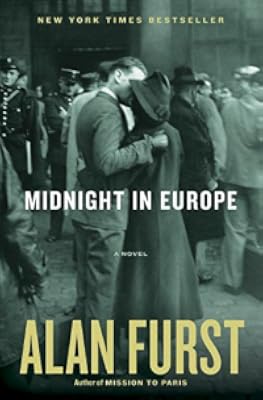
The future of Spain is at stake. Germany and Italy have ensured that Republican forces are starved of weapons and a Franco victory now looks likely. Cristian Ferrar, a Spanish lawyer living in Paris, is a well-connected man. When Ferrar is approached by anti-Franco forces, he readily agrees asked to help smuggle arms into his homeland. Working with de Lyon - an enigmatic man of Slavic descent - Ferrar goes on a quest which will take him from libertine nightclubs in the City of Light to show more volatile bars by the docks in Gdansk, as Europe holds its breath. Failing to secure American support for the Republican side of the Spanish Civil War in 1938, a minor Spanish noble travels to Paris, where he promotes the Republic cause before undertaking a mission to infiltrate the Spanish government. show lessTags
Recommendations


















Member Reviews
This is the second of Alan Furst's WWII spy novels that I've read, Spies of Warsaw being the first. While SOW featured "professional" spies, this one gives us "normal" everyday people as our spy protagonists, who get pulled in because they want to help against Hitler and fascism, or, on the other side of it, may be forced to be involved because of threats against loved ones. Cristian Ferrar is a Spain-born lawyer working at the Coudert Brothers firm in Paris, stirred by patriotism and anti-fascism to help Spanish Republicans get the arms they need to fight. At the same time he is an amorist who needs to be careful whom he falls for. He partners up with experienced Jewish problem solver Max de Lyon, as they take us on some complicated show more thrill rides to help thwart the advance of fascism.
We get flavors of Casablanca and The Thirty-nine Steps, and this one seems destined for a movie some day. I was rooting for Cristian in his muddled romantic life as much as in his careful steps to avoid fatal disclosure or misjudgment. Furst excels at giving us the feeling of being there at this point in history, trying to accomplish some important if relatively small contribution to the wide-ranging war that will help turn the tide. "The bar stood at the foot of a wharf in Gdansk port, where the lights of the quayside building were reflected in the still, black water. Inside, in clouds of cigarette smoke, off-duty stevedores were drinking beer or vodka or both until it was time to load another freighter. Ferrar and de Lyon - Nestor was still battling the Polish roads - had cleaned up at the Bernhof, then found the bar where they were to meet de Lyon's friend, called Bolek, who ran the Polish longshore union in the city." If you're in the mood for clandestine meetings in smoky bars, late night rendezvous with femmes fatales, high tension fakery, and lots of derring-do, put on your fedora and raincoat and grab this one. show less
We get flavors of Casablanca and The Thirty-nine Steps, and this one seems destined for a movie some day. I was rooting for Cristian in his muddled romantic life as much as in his careful steps to avoid fatal disclosure or misjudgment. Furst excels at giving us the feeling of being there at this point in history, trying to accomplish some important if relatively small contribution to the wide-ranging war that will help turn the tide. "The bar stood at the foot of a wharf in Gdansk port, where the lights of the quayside building were reflected in the still, black water. Inside, in clouds of cigarette smoke, off-duty stevedores were drinking beer or vodka or both until it was time to load another freighter. Ferrar and de Lyon - Nestor was still battling the Polish roads - had cleaned up at the Bernhof, then found the bar where they were to meet de Lyon's friend, called Bolek, who ran the Polish longshore union in the city." If you're in the mood for clandestine meetings in smoky bars, late night rendezvous with femmes fatales, high tension fakery, and lots of derring-do, put on your fedora and raincoat and grab this one. show less
 This review was written for LibraryThing Early Reviewers.
Did I already read this? Or did Furst already write it? His books are all good; but they all feel the same. The plots are different -- this one is about a Spanish lawyer in Paris before WWII who gets involved in smuggling arms to the Republican Army in Spain to fight the fascists. But the atmosphere is the same -- the moody fog of pre-war, when no one knows who is on who's side and just which cloak is hiding what dagger. I always enjoy them. I just need time in between so I'm in the mood again.
This review was written for LibraryThing Early Reviewers.Once again, I’ve been introduced to a genre (spy thriller) with which I have very little experience. Who knows why I’ve never been drawn to the likes of Alan Furst? But following some very positive reviews by some fellow LTers (I’m looking at you msf59 and chatterbox) I opted for an ER copy and now find myself mining Furst’s very lengthy backlist, including a 12-book series. I really do not need to add a new series to my reading life but resistance is futile. And why not? I couldn’t have enjoyed this book more.
Christian Ferrar is a Spanish ex-pat, living in Paris and working for an American law firm in late 1937 when the story opens. He is asked by the Spanish Embassy to purchase arms for the besieged Republican army, who are show more fighting a losing battle against Generalissimo Franco’s Nationalist Army in Spain. Of course, Franco is being aided by Hitler and the fascist Italian government.
Ferrar is a protagonist of the old school type: handsome, dashing, a man who appreciates good wine, gourmet food and beautiful women. Although a bachelor, he takes care of his extended family and attends Mass with them every Sunday. And he’s a man who wants to do the right thing which is the reason he feels a moral obligation to throw caution to the wind and become an arms merchant where he mixes with secret agents, SS thugs and secret agents. Furst includes some gritty minor characters who help Ferrar to accomplish the spy missions they attempt including the theft of a train and a shoot-out with Italian sailors and manages to build an incredible amount of tension and suspense.
In his heart, Ferrar knows his cause is hopeless and states more than once that it won’t be long before Hitler begins his occupation of Czechoslovakia and eventually, his beloved Paris.
As I seek out more of Furst’s books, I can only hope they entertain me as much as this one did. Highly recommended. show less
Christian Ferrar is a Spanish ex-pat, living in Paris and working for an American law firm in late 1937 when the story opens. He is asked by the Spanish Embassy to purchase arms for the besieged Republican army, who are show more fighting a losing battle against Generalissimo Franco’s Nationalist Army in Spain. Of course, Franco is being aided by Hitler and the fascist Italian government.
Ferrar is a protagonist of the old school type: handsome, dashing, a man who appreciates good wine, gourmet food and beautiful women. Although a bachelor, he takes care of his extended family and attends Mass with them every Sunday. And he’s a man who wants to do the right thing which is the reason he feels a moral obligation to throw caution to the wind and become an arms merchant where he mixes with secret agents, SS thugs and secret agents. Furst includes some gritty minor characters who help Ferrar to accomplish the spy missions they attempt including the theft of a train and a shoot-out with Italian sailors and manages to build an incredible amount of tension and suspense.
In his heart, Ferrar knows his cause is hopeless and states more than once that it won’t be long before Hitler begins his occupation of Czechoslovakia and eventually, his beloved Paris.
As I seek out more of Furst’s books, I can only hope they entertain me as much as this one did. Highly recommended. show less
This review was written for LibraryThing Early Reviewers.Cristian Ferrer is a lawyer living in Paris in 1938. Born in Spain, he is asked to help the Spanish government obtain arms in its fight against Franco's Nationalist forces. The intrigue in the book centers around this endeavor.
Ferrer is also a bit of a ladies' man, so there's that aspect. While the book has some interesting characters and scenes, it feels somewhat under-edited. There are distractions that pan out to nothing at times. But overall, an entertaining bit of historical espionage fiction. I'll look for Furst's other books.
Ferrer is also a bit of a ladies' man, so there's that aspect. While the book has some interesting characters and scenes, it feels somewhat under-edited. There are distractions that pan out to nothing at times. But overall, an entertaining bit of historical espionage fiction. I'll look for Furst's other books.
This review was written for LibraryThing Early Reviewers.This historical spy novel is set mostly in Paris from late-1937 through much of 1938. The protagonist, Cristian Ferrar, a Spanish emigre living in Paris, is a lawyer for an international firm and travels often for his job, spending time at the main office in New York, where he has a lover, and in Paris. But he also is a supporter of the Republican forces in Spain fighting Franco's fascist army. Unlike most of Furst's novels that I've read, which focus on spying against Germany, in this book, Nazi Germany's actions form a backdrop for the conflict in Spain when Ferrar is enlisted by the Republic's diplomats in Paris to help supply arms to the Republic's army. Since most countries won't ship arms directly to Spain, Ferrar and Max de Lyon, show more a diplomat/arms dealer, engage in dangerous clandestine operations.
The usual Furst thrills are on display, with Cristian becoming involved with a woman who likely is more than she seems, close calls in enemy territory, and even appearances of characters from other of Furst's novels, especially Count Polanyi. As always, I felt like I was part of the time and place, thanks to Furst's impeccable research and attention to detail. His books might not be compulsive pageturners, but they are engrossing, filled with wonderful, fully realized characters. Now, on to the next one! show less
The usual Furst thrills are on display, with Cristian becoming involved with a woman who likely is more than she seems, close calls in enemy territory, and even appearances of characters from other of Furst's novels, especially Count Polanyi. As always, I felt like I was part of the time and place, thanks to Furst's impeccable research and attention to detail. His books might not be compulsive pageturners, but they are engrossing, filled with wonderful, fully realized characters. Now, on to the next one! show less
A new Alan Furst book in my to-read stack is a temptation hard to resist. His ability to evoke the thickening clouds of dread gathering over Europe in the 1930s is unsurpassed, while we, with the benefit of hindsight, would like to reach into the story and propel the characters into different directions and decisions.
This thriller concerns efforts to get weapons to the anti-Fascist forces in the Spanish Civil War, a conflict that gave the Nazis a chance to flex their military muscle on the side of Francisco Franco. The war served as a grim prelude to World War II. This is the Spain of Hemingway’s For Whom the Bell Tolls and the short stories of Julian Zabalbeascoa, the most recent, “Gernika,” published in the fall 2015 Glimmer show more Train.
In Furst’s novel, a Spanish lawyer working in Paris agrees to help in the arms-buy arrangements, which isn’t easy, as several countries have embargoed munitions shipments to Spain, and spies are everywhere. A little romance, too. I particularly like how Furst takes ordinary people—by that I mean people whom readers can identify with, who don’t know all the secrets of arcane martial arts or who in college did not letter in six grueling sports, including sharpshooting, of course, or who aren’t alumni of elite undercover military units—and puts them in situations that test their wits and their nerve.
I’ve read all of Furst’s books and know how he works. Yet putting myself in his hands remains a tension-filled, always interesting ride through a bitter historical time. show less
This thriller concerns efforts to get weapons to the anti-Fascist forces in the Spanish Civil War, a conflict that gave the Nazis a chance to flex their military muscle on the side of Francisco Franco. The war served as a grim prelude to World War II. This is the Spain of Hemingway’s For Whom the Bell Tolls and the short stories of Julian Zabalbeascoa, the most recent, “Gernika,” published in the fall 2015 Glimmer show more Train.
In Furst’s novel, a Spanish lawyer working in Paris agrees to help in the arms-buy arrangements, which isn’t easy, as several countries have embargoed munitions shipments to Spain, and spies are everywhere. A little romance, too. I particularly like how Furst takes ordinary people—by that I mean people whom readers can identify with, who don’t know all the secrets of arcane martial arts or who in college did not letter in six grueling sports, including sharpshooting, of course, or who aren’t alumni of elite undercover military units—and puts them in situations that test their wits and their nerve.
I’ve read all of Furst’s books and know how he works. Yet putting myself in his hands remains a tension-filled, always interesting ride through a bitter historical time. show less
1938. Spain at war, Europe on the brink of war. This is the first World War Two novel I have read about the overlap of the two wars, the impact of one on the other, and the approaching shadow of fascism. Nothing happens in isolation. The Spanish Civil War is notoriously difficult to understand: so many factions, changing names etc. Sensibly, Alan Furst concentrates on one aspect: the supply of weapons to the Republicans fighting the fascist army of Franco.
A secret Spanish agency in Paris sources arms and ammunition for the Republicans. Cristián Ferrar, a Spanish lawyer living in Paris and working for a French law firm, is asked to help. Unsure what he is getting into, but resigned to help his mother country, he is soon looking over his show more shoulder to see if he is being followed – he doesn’t know who by, it could be the Spanish fascists, the Gestapo, the Russians. Inter-cut with Ferrar’s story are excerpts from the front line in Spain where preparations are being made to fight the Battle of the Ebro. The need for the weapons is desperate, as bullets are counted out for each soldier.
Working with an odd mixture of diplomats, gangsters and generally shady characters, Ferrar first travels to Berlin where there is a glimpse of the pre-war country which with hindsight gives us a chill. The Gestapo follows them at every step. Then there is a nail-biting train journey to Gdansk, as an arms shipment goes missing. The climax is a thrilling boat journey from Odessa to Valencia. Ferrar, is a lawyer not a spy, he is simply an ordinary man doing what he can to help. An ordinary man who is, meanwhile, having a sprinkling of love affairs which may or may not be authentic.
If you have been put off before at reading novels about the Spanish Civil War because the politics is confusing, you will enjoy this novel. The shadow of war in Europe is cast over every page, the sense of approaching doom however does not seem to affect the nightclubs of Paris, or the shops of New York where the cheerful atmosphere seems unreal. Ferrar faces moving his family from Louveciennes on the outskirts of Paris, the picturesque country west of the capital which was painted by the Impressionists, to the safety of New York.
This is the first novel by Alan Furst I have read, picked up at random in an airport bookshop. I will read many more.
Read more of my book reviews at http://www.sandradanby.com/book-reviews-a-z/ show less
A secret Spanish agency in Paris sources arms and ammunition for the Republicans. Cristián Ferrar, a Spanish lawyer living in Paris and working for a French law firm, is asked to help. Unsure what he is getting into, but resigned to help his mother country, he is soon looking over his show more shoulder to see if he is being followed – he doesn’t know who by, it could be the Spanish fascists, the Gestapo, the Russians. Inter-cut with Ferrar’s story are excerpts from the front line in Spain where preparations are being made to fight the Battle of the Ebro. The need for the weapons is desperate, as bullets are counted out for each soldier.
Working with an odd mixture of diplomats, gangsters and generally shady characters, Ferrar first travels to Berlin where there is a glimpse of the pre-war country which with hindsight gives us a chill. The Gestapo follows them at every step. Then there is a nail-biting train journey to Gdansk, as an arms shipment goes missing. The climax is a thrilling boat journey from Odessa to Valencia. Ferrar, is a lawyer not a spy, he is simply an ordinary man doing what he can to help. An ordinary man who is, meanwhile, having a sprinkling of love affairs which may or may not be authentic.
If you have been put off before at reading novels about the Spanish Civil War because the politics is confusing, you will enjoy this novel. The shadow of war in Europe is cast over every page, the sense of approaching doom however does not seem to affect the nightclubs of Paris, or the shops of New York where the cheerful atmosphere seems unreal. Ferrar faces moving his family from Louveciennes on the outskirts of Paris, the picturesque country west of the capital which was painted by the Impressionists, to the safety of New York.
This is the first novel by Alan Furst I have read, picked up at random in an airport bookshop. I will read many more.
Read more of my book reviews at http://www.sandradanby.com/book-reviews-a-z/ show less
Members
- Recently Added By
Published Reviews
ThingScore 95
Mr. Furst tells galloping good stories, and “Midnight in Europe” is one of them. But he never needs to end his books on notes of tragedy. History has done the job for him.
added by melmore
Alan Furst’s novels have invoked glowing comparisons with Graham Greene for his idiosyncratic recreations of 1930s Europe; Midnight in Europe shows there is not the slightest diminution in his masterly command.
added by melmore
Furst owns the dark blanket that covers Europe between the two world wars. His latest is a satisfying, thought-provoking read.
added by melmore
Lists

Books Read in 2023
5,638 works; 145 members
Author Information

26+ Works 16,492 Members
Furst received a B.A. from Oberlin College in 1962 and an M.A. from Penn State in 1967. Before becoming a full-time novelist, Furst worked in advertising and wrote magazine articles, most notably for Esquire, and as a columnist for the International Herald Tribune His early novels (1976-1983) achieved limited success. However, the 1988 publication show more of Night Soldiers inspired by a 1984 trip to Eastern Europe on assignment for Esquire revitalized his career. It was the first of his highly original novels about espionage in Europe before and during the Second World War. Born in New York on February 20, 1941, he lived for long periods in France, especially Paris where he was awarded a Fulbright teaching fellowship. In 2011, the Tulsa Library Trust in Tulsa, Oklahoma selected Furst to receive its Helmerich Award, a literary prize given annually to honor a distinguished author's body of work He also made The New York Times Best Seller List in 2012 with his title The Mission to Paris and Midnight in Europe in 2014. Furst again made the New York Times Bestseller in 2016 with his novel a Hero of France. (Publisher Provided) Alan Furst is an American author of spy novels. He was born in New York City on February 20, 1941, and was raised on the Upper West Side of Manhattan. Furst received a B.A. from Oberlin College in 1962 and an M.A. from Penn State in 1967. His novels are set just prior to and during the Second World War. Titles include: Night Soldiers, Kingdom of Shadows (which won the 2001 Hammett Prize), Blood of Victory, Spies of the Balkans and Mission to Paris. In 2011, the Tulsa Library Trust in Tulsa, Oklahoma, selected Furst to receive its Helmerich Award, a literary prize given annually to honor a distinguished author's body of work. Furst made The New York Times Best Seller List in 2012 with his title The Mission to Paris and Midnight in Europe in 2014. Furst again made the New York Times Bestseller in 2016 with his novel A Hero of France. (Bowker Author Biography) show less

Alan Furst is a LibraryThing Author, an author who lists their personal library on LibraryThing.
Some Editions
Series

Common Knowledge
- Canonical title
- Midnight in Europe
- Original title
- Midnight in Europe
- Original publication date
- 2014
- People/Characters
- Cristián Ferrar; Max de Lyon; Marquesa Maria Cristina; Eileen Moore; Stavros; Francisco Franco (General) (show all 15); Adolf Hitler; Benito Mussolini; Coudert Freres; P.J. Delaney; Abuela; George Barabee; Stavros; Fred Courdet; Klara
- Important places
- Paris, France; Barcelona, Catalonia, Spain; Madrid, Spain; Museo del Prado, Madrid, Spain
- Important events
- Spanish Civil War
- Epigraph
- "The lamps are going out all over Europe.
We shall not see them lit again in our time."
-Sir Edward Grey,
British foreign secretary,
on 3 August 1914, the eve
Of the First World War - First words
- On a soft, winter evening in Manhattan, the Fifteenth of December, 1937, it started to snow; big flakes spun lazily in the sky, danced in the lights of office buildings, then melted as they hit the pavement.
- Last words
- (Click to show. Warning: May contain spoilers.)They stared at each other for a time, and, as they did, the loveliest look came over her face, a kind of warm light. Not so very different than the look on his face. Really, much the same.
Classifications
- Genres
- Fiction and Literature, General Fiction, Historical Fiction, Suspense & Thriller
- DDC/MDS
- 813.54 — Literature & rhetoric American literature in English American fiction in English 1900-1999 1945-1999
- LCC
- PS3556 .U76 .M526 — Language and Literature American literature American literature Individual authors 1961-
- BISAC
Statistics
- Members
- 773
- Popularity
- 36,088
- Reviews
- 51
- Rating
- (3.49)
- Languages
- English
- Media
- Paper, Audiobook, Ebook
- ISBNs
- 23
- UPCs
- 1
- ASINs
- 8