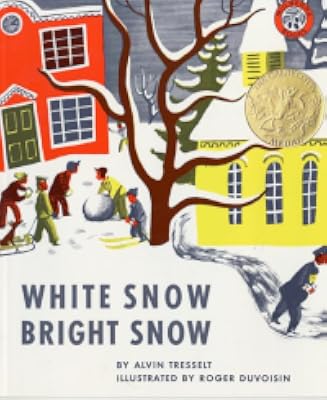
White Snow, Bright Snow
by Alvin Tresselt (Author), Roger Duvoisin (Illustrator)
On This Page
Description
When it begins to look, feel, and smell like snow, everyone prepares for a winter blizzard.Tags
Recommendations






Member Reviews
A small town experiences a heavy snowfall in this Caldecott Medal-winning picture book from 1947. As a number of different townsfolk—the postman and farmer, policeman and his wife—prepare and react in their own ways, a beautiful snowy day dawns, and the local children and rabbits have great fun playing outdoors. The book concludes with the eventual melting of the snow, and the first signs of spring...
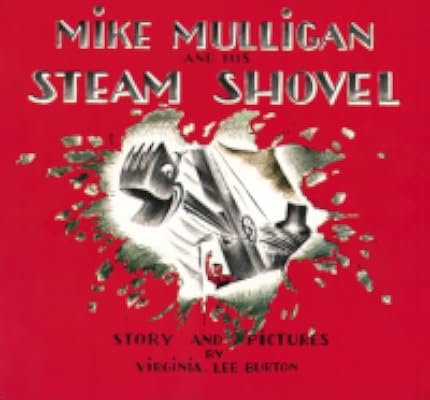
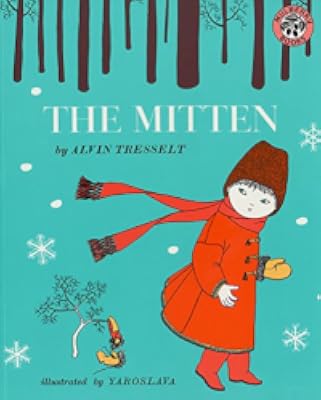
White Snow, Bright Snow is only the second book I have read from author Alvin Tresselt, following upon his 1964 The Mitten: An Old Ukrainian Folktale, and the third from illustrator Roger Duvoisin, following upon Easter Treat (1966) and Wobble, the Witch Cat (1958). I thought it was quite lovely, and although it isn't destined to become show more a personal favorite, I did enjoy both story and artwork. The initial poem was probably my favorite thing about it, as it had such a lovely cadence, and so perfectly captured the peaceful feeling of softly falling snow. It begins: "Softly, gently in the secret night, / Down from the North came the quiet white. / Drifting, sifting, silent flight, / Softly, gently in the secret night." The narrative continues in prose, after the three-stanza poem, and has a charming quality of its own. The accompanying illustrations from Duvoisin, who won the 1948 Caldecott Medal for them, have a vintage, 1940s appeal to them. I was reminded of certain childhood favorites, like Mike Mulligan and His Steam Shovel. Recommended to anyone who appreciates vintage picture books, and to those seeking engaging wintry stories for children. show less
White Snow, Bright Snow is only the second book I have read from author Alvin Tresselt, following upon his 1964 The Mitten: An Old Ukrainian Folktale, and the third from illustrator Roger Duvoisin, following upon Easter Treat (1966) and Wobble, the Witch Cat (1958). I thought it was quite lovely, and although it isn't destined to become show more a personal favorite, I did enjoy both story and artwork. The initial poem was probably my favorite thing about it, as it had such a lovely cadence, and so perfectly captured the peaceful feeling of softly falling snow. It begins: "Softly, gently in the secret night, / Down from the North came the quiet white. / Drifting, sifting, silent flight, / Softly, gently in the secret night." The narrative continues in prose, after the three-stanza poem, and has a charming quality of its own. The accompanying illustrations from Duvoisin, who won the 1948 Caldecott Medal for them, have a vintage, 1940s appeal to them. I was reminded of certain childhood favorites, like Mike Mulligan and His Steam Shovel. Recommended to anyone who appreciates vintage picture books, and to those seeking engaging wintry stories for children. show less
This classic book published in 1947 wraps me in a soft fuzzy blanket of nostalgia and makes me crave the good ol' days of clean white snow and sledding, rubber boots and all the neighborhood children playing together in the huge drifts. It takes me back to being snowed-in, warm fire in the fireplace, hot cocoa and the Postman whose name I knew bringing armloads of Christmas cards. The world depicted in this book does not include the sound of a snow-blower or a snow-mobile. It does not have Doppler radar to let me know it's going to snow. In this book we rely upon the ache in a woman's big toe and the fact that a farmer says it smells like snow. The rabbits know it and the kids search the grey sky waiting for the first snowflakes. This show more book takes us from those first feathery flakes through a really deep snowfall. We're there as the townspeople shovel themselves out. We're there as the grown-ups contend with the winter snow and the children revel in it. Eventually Spring comes and is greeted with as much gladness as the first snowflakes. The simple four color watercolor illustrations are just wonderful and made me yearn for the days when we didn't hurry from climate controlled houses to climate controlled cars to shopping malls with trees and fountains, for the days when we were on speaking terms with the weather. The writing in this book is so lyrical and gentle that it makes a perfect bedtime story and it is sure to warm the heart of the adult who's doing the reading. For example, "Then without a sound, just when everybody was asleep, the snow stopped, and bright stars filled the night. In the morning a clear blue sky was overhead and blue shadows hid in all the corners." show less
White Snow Bright Snow is a poetry, picture book, about the coming of winter and snow. Everyone braces themselves for snow and then endures the cold weather and inches and inches of snow. Soon comes the dripping of water and melting of the snow. In the end the sun in shining, the trees are bare, and the children wait for for the first robin to tell them spring has come.
The book uses poetry to teach about winter and snow. As someone from New Orleans who plans to teach in New Orleans I would love to use this book to teach my students about poetry, but more importantly seasons, a true winter, and snow- things we do not experience often.
The book uses poetry to teach about winter and snow. As someone from New Orleans who plans to teach in New Orleans I would love to use this book to teach my students about poetry, but more importantly seasons, a true winter, and snow- things we do not experience often.
Illustrated by Roger Duvoisin
This 1948 Caldecott winner looks at the effects of a major snowstorm on the people of a town and on the farm. As the snowflakes begin the mailman puts on his galoshes, children play, a farmer feeds his stock, the policeman’s wife makes sure he does not get a chill. When winter really sets in, things look different – softer, rounder. Children make snow forts and have major snowball fights. The mailman puts on heavier clothes and high boots. The policeman succumbs to a cold. The farmer clears a path to his barn. And everyone waits for spring.
At first I really liked Roger Duvoisin’s illustrations, with a grey, wintery palette, interspersed with a touch of color here and there. But over the course of the show more book I grew tired of the muted colors. Even when Spring arrives his palette remains dark. The message of the book was happy, but I didn’t think the illustrations matched that mood. show less
This 1948 Caldecott winner looks at the effects of a major snowstorm on the people of a town and on the farm. As the snowflakes begin the mailman puts on his galoshes, children play, a farmer feeds his stock, the policeman’s wife makes sure he does not get a chill. When winter really sets in, things look different – softer, rounder. Children make snow forts and have major snowball fights. The mailman puts on heavier clothes and high boots. The policeman succumbs to a cold. The farmer clears a path to his barn. And everyone waits for spring.
At first I really liked Roger Duvoisin’s illustrations, with a grey, wintery palette, interspersed with a touch of color here and there. But over the course of the show more book I grew tired of the muted colors. Even when Spring arrives his palette remains dark. The message of the book was happy, but I didn’t think the illustrations matched that mood. show less
The illustrations didn't charm me. I get that it's got a graphic design vibe, like a contemporary 'modern art' poster, and that it shows the contrasts between the warm houses and the cold gray sky, and between the adults' heavier reactions and the children's joy. But I just couldn't bring myself to actually like the art.
Otoh, the text is marvelous. I would love to read this aloud to children. For example, some of the sentences alliterate, some are very short & snappy, some are very long and roll along. Each suits the part of the story it tells.
Otoh, the text is marvelous. I would love to read this aloud to children. For example, some of the sentences alliterate, some are very short & snappy, some are very long and roll along. Each suits the part of the story it tells.
A delightful 1948 Caldecott Medal winning book, harkens back to a simple time as the small town prepares for a snow storm.
Reading this reminded me of my childhood days and the delight of preparation and then the accumulation of snow.
There are gentle images of houses at night, surrounded by snow and twinkling lights in the sky. Lights reflect in the snow and "the automobiles looks like big fat raisins buried in the snowdrifts."
It is a rainy night and a joy to drink a cup of hot tea while reading a lovely picture book.
Reading this reminded me of my childhood days and the delight of preparation and then the accumulation of snow.
There are gentle images of houses at night, surrounded by snow and twinkling lights in the sky. Lights reflect in the snow and "the automobiles looks like big fat raisins buried in the snowdrifts."
It is a rainy night and a joy to drink a cup of hot tea while reading a lovely picture book.
When the first flakes fell from the grey sky, the postman and the farmer and the policeman and his wife scurried about doing all the practical things grown-ups do when a snowstorm comes. But the children laughed and danced, and caught the lacy snowflakes on their tongues.
All the wonder and delight a child feels in a snowfall is caught in the pages of this book—the frost ferns on the windowsill, the snowman in the yard and the mystery and magic of a new white world.
All the wonder and delight a child feels in a snowfall is caught in the pages of this book—the frost ferns on the windowsill, the snowman in the yard and the mystery and magic of a new white world.
Members
- Recently Added By
Lists

Caldecott Medal Books
91 works; 15 members

Brightly Beaming Curriculum Books
281 works; 8 members

Honey For a Child's Heart
1,152 works; 25 members

Before Austen Comes Aesop
318 works; 9 members
Author Information


Roger Duvoisin was born in Geneva, Switzerland on August 28, 1904. Before becoming a children's book illustrator, he designed and painted murals, theatrical scenery, and posters as well as worked in the fashion industry. He immigrated with wife Louise Fatio to the United States in 1925. He created more than 40 books and illustrated more than 140 show more children's books. He created several animal characters including Petunia the foolish goose, Veronica the hippo, Crocus the crocodile, Jasmine the cow, Donkey-Donkey and Hector-Penguin. He also illustrated the Happy Lion series written by his wife. He received several awards for his works including the Caldecott Award for White Snow Bright Snow written by Alvin Tresselt in 1948 and the Caldecott Honor Award for Hide and Seek Fog also written by Tresselt in 1966. He also received the Society of Illustrators Award, the Rutgers Award, the Silver Medallion of the University of Southern Mississippi and the Kerlan Award from the University of Minnesota. He died on June 30, 1980. (Bowker Author Biography) show less
Awards and Honors
Common Knowledge
- Original publication date
- 1947
- Important events
- Winter
- First words
- The postman said it looked like snow.
- Last words
- (Click to show. Warning: May contain spoilers.)And the children watched for the first robin to tell them Spring had really come.
Classifications
Statistics
- Members
- 2,910
- Popularity
- 6,168
- Reviews
- 41
- Rating
- (3.47)
- Languages
- Chinese, English
- Media
- Paper, Audiobook, Ebook
- ISBNs
- 12
- ASINs
- 13